Storia
Family foundations
Winegrowing began as a family craft long before Cantina Canneddu became a commercial winery. Tonino Canneddu learned vineyard work and winemaking from his father, Raffaele, known as tziu Boelle or “Zibbo.” Tonino later inherited a vineyard from his parents-in-law, Gonario and Antonietta, and continued making wine for relatives and friends.
After acquiring Bar Armando in Nuoro, Tonino also sold his wine in bulk to customers and acquaintances. Cannonau was the longstanding focus, while in 2007 he began vinifying Granazza separately on an amateur scale and selling it through the bar.
2015: creation of Cantina Canneddu
The decisive change came in 2015, when the family concluded that the quality of its vineyards and inherited working methods could support a more ambitious project. Marco Canneddu wanted to transform his passion for viticulture into a profession and enrolled in the Oenology faculty in Oristano to deepen his technical knowledge. His goal was to make characterful monovarietal wines for a specialist market beyond the family’s existing circle.
All four immediate family members established the wine business together. Tonino and Marco assumed responsibility for the two hectares of vineyards, winemaking and production. Anna, Tonino’s wife, gave up her previous business to devote herself to the new company. Their elder daughter Grazia, a Law graduate then working in Rome, returned to Sardinia and joined Anna in the commercial and administrative work.
2016: opening and first releases
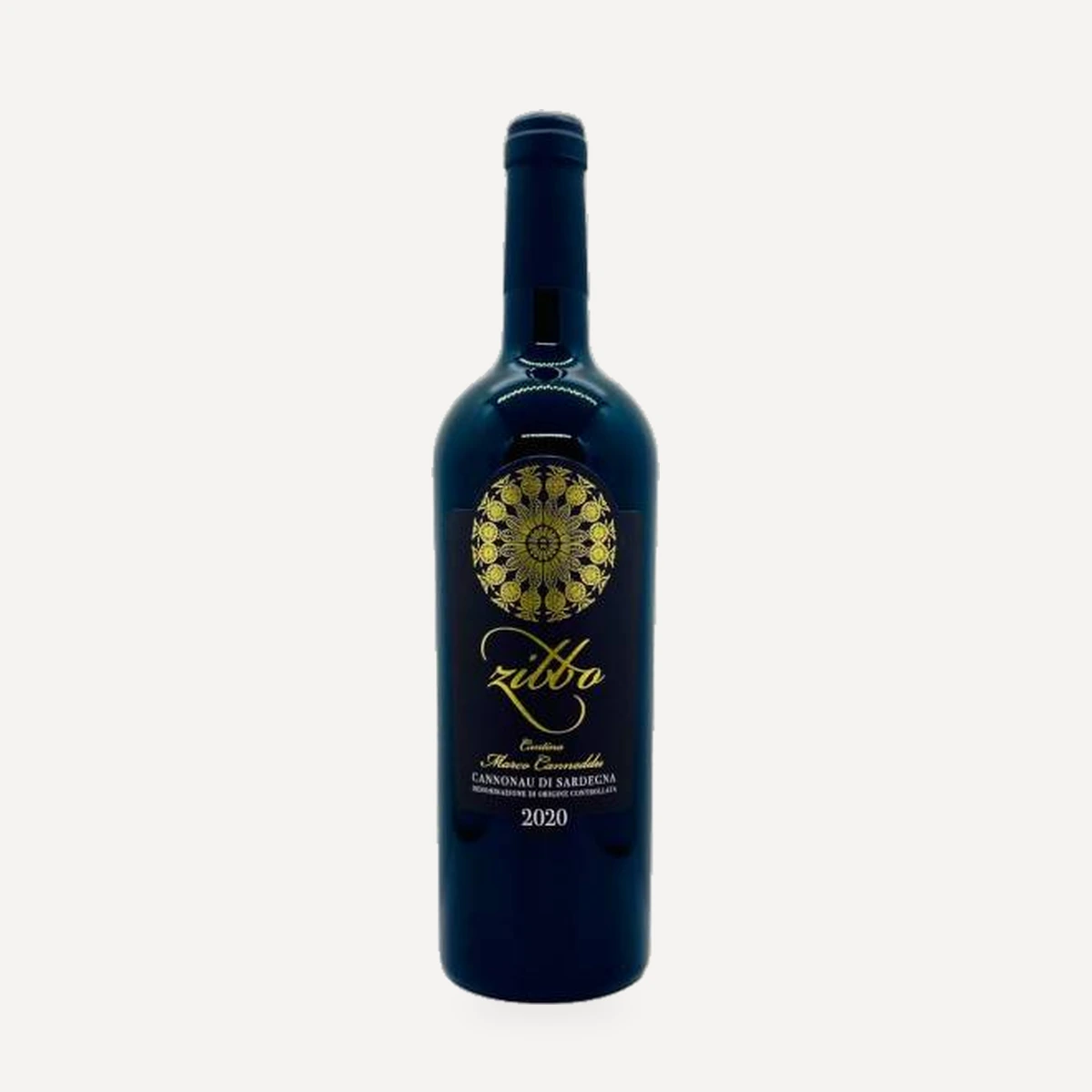
On 30 April 2016, during the inaugural Notte Nighedda evening, the family opened its home and cellar to visitors and formally presented Zibbo. The name commemorates Raffaele Canneddu’s nickname. The first Delissia vintage, made from Granazza, was also 2016, extending Tonino’s work with the variety from informal bulk production to a bottled family wine.
2017: consolidation of the family project
By the first anniversary in April 2017, Tonino had become a full-time winegrower. Anna was developing her role as the company’s sales representative with Grazia, who had permanently moved from Rome to Mamoiada. Marco divided his time between university classes and weekends in the vineyards and cellar.
The 2017 growing season was marked by prolonged drought, unusually warm nights and reduced day–night temperature variation. Ripening was uneven and yields fell below those of previous years, although the family considered the harvested fruit sound. Picking finished on 17 September in the Foddiheddu vineyard.
Traditional cultivation remained central. In the old, tightly spaced bush-vine vineyards, Franco Mercuriu—known as Su Massaiu—ploughed with the oxen Amorosu and Grassiosu. The family combined these inherited practices with Marco’s technical training and a stated commitment to innovation.
2019–2020: new plantings and a younger expression
In July 2019, the winery introduced MAMò, a Cannonau from ten-year-old vines. Its label reproduced artwork Manconi had originally created for Tonino when he sold bulk wine at his Nuoro bar. During 2019, the family also planted new Granazza vines in Loreto Attesu to expand its work with the local white variety and support its recognition among Sardinia’s native grapes. The young plants received natural fertiliser to strengthen their roots, and their rows were individually marked so they could still be identified after becoming integrated into the existing vineyard.
In December 2020, MAMò was restyled and renamed Zimò. The new presentation returned to the visual language of the other family labels, using a truncated Bordeaux bottle and a rosette as the dominant design element.
During the Covid-19 emergency, the family participated in Etichetta Etica, a collaborative project involving eight small Sardinian wineries. Part of the proceeds from two collective wines was directed to ATS Sardegna in support of regional medical and healthcare personnel. The initiative was temporary and did not represent a permanent move into large-scale retail.
2021–2022: recognition and wider participation
The 2021 harvest produced healthy fruit, while demand for the wines exceeded the available stock before Christmas. Cantina Canneddu was a finalist in the Oscar Green programme promoted by Coldiretti Giovani Impresa and won first prize in the Sustainability and Ecological Transition category. The recognition reflected the family’s combination of traditional vineyard work, territorial protection and more recent techniques.
In 2022, the winery made its Vinitaly debut with FIVI, the Federazione Italiana Vignaioli Indipendenti, after approximately five years as a member. The event followed two consecutive postponements during the health emergency.
Terroir
Cantina Canneddu is based in Mamoiada, an inland Sardinian town in the province of Nuoro and within the Barbagia di Ollolai. The town lies at approximately 650 metres above sea level, while vineyards across the Mamoiada area range from about 600 to 900 metres.
Mamoiada’s countryside covers approximately 5,000 hectares, of which about 500 hectares are planted to vines. The soils are predominantly decomposed granite and slightly acidic. Constant exposure to sunlight and wind, elevation and pronounced temperature variation between day and night support healthy grapes and reduce disease pressure.
Cannonau and Granazza are central to the area’s vineyard culture and are traditionally trained as bush vines. Monica is also present in the wider Mamoiada countryside in smaller quantities. Homemade Cannonau has long been embedded in local life, with numerous families tending small vineyards and making their own wine.
Vinificazione
The vineyards, cellar and wines are certified organic. Work in the vines is carried out manually and the vineyards are monitored daily. The 60–80-year-old vines are trained as bush vines, and the narrow spacing of the oldest rows makes mechanisation impractical.
Traditional ox ploughing remains part of the cultivation of the old vineyards. A wooden yoke allows the ploughman to guide the animals precisely between the close-set rows, opening the soil around the vines. The family regards this work as a means of preserving the character of the vineyards while integrating inherited practice with newer technical knowledge.
Sun, wind, elevation, temperature variation and local soils limit disease pressure. Vine protection requires only one or, at most, two sulphur-and-copper treatments per year against downy and powdery mildew. New Granazza vines in Loreto Attesu have been fed with natural fertiliser intended to reinforce their root systems.
Harvesting is manual. The timing is determined by phenolic and overall grape maturity. The difficult 2017 season demonstrated the vintage-sensitive approach: prolonged drought and warm nights caused uneven ripening and lower yields, although fruit quality remained high. The 2021 crop was described as healthy and visually sound.
Tonino and Marco Canneddu carry out the winemaking and production work. Grapes are harvested by hand and crushed before undergoing spontaneous fermentation with indigenous yeasts; selected yeasts are not used. The fermented grapes are softly pressed, and the resulting wine is matured for approximately one year in previously used oak tonneaux.
Cellar work remains manual through the packaging stage: bottling, corking and labelling are performed by the family. The bottled wine then rests for approximately one month to stabilise naturally before release.
The principal alternatives to oak are stainless-steel tanks, used where the family seeks to retain freshness and primary aromas. Across the range, the cellar works with spontaneous fermentation, soft pressing, previously used oak and stainless steel rather than a single uniform maturation regime.
Filosofia
Cantina Canneddu defines itself through family work, organic farming and the relationship between inherited practice and contemporary knowledge. Marco’s guiding principle is that tradition in viticulture should be accompanied by innovation rather than treated as its opposite.
The family’s stated goal is to make healthy, characterful wine capable of conveying the different facets of its place of origin. Daily vineyard attention, manual work, indigenous yeasts and spontaneous fermentation form part of that approach. Respect extends both to the land and to the people who cultivate it.
The preservation of ox ploughing and other traditional practices is paired with university-level oenological training, new plantings and technical development. The winery also frames quality as responsiveness rather than adherence to a fixed timetable: when a wine requires longer maturation, the family allows it additional time.
Production is deliberately small and directed toward a specialist market. Hospitality, participation in independent-wine events and work with local varieties are viewed as ways to communicate Mamoiada’s vineyard culture and strengthen the territory’s wine economy.
Vini