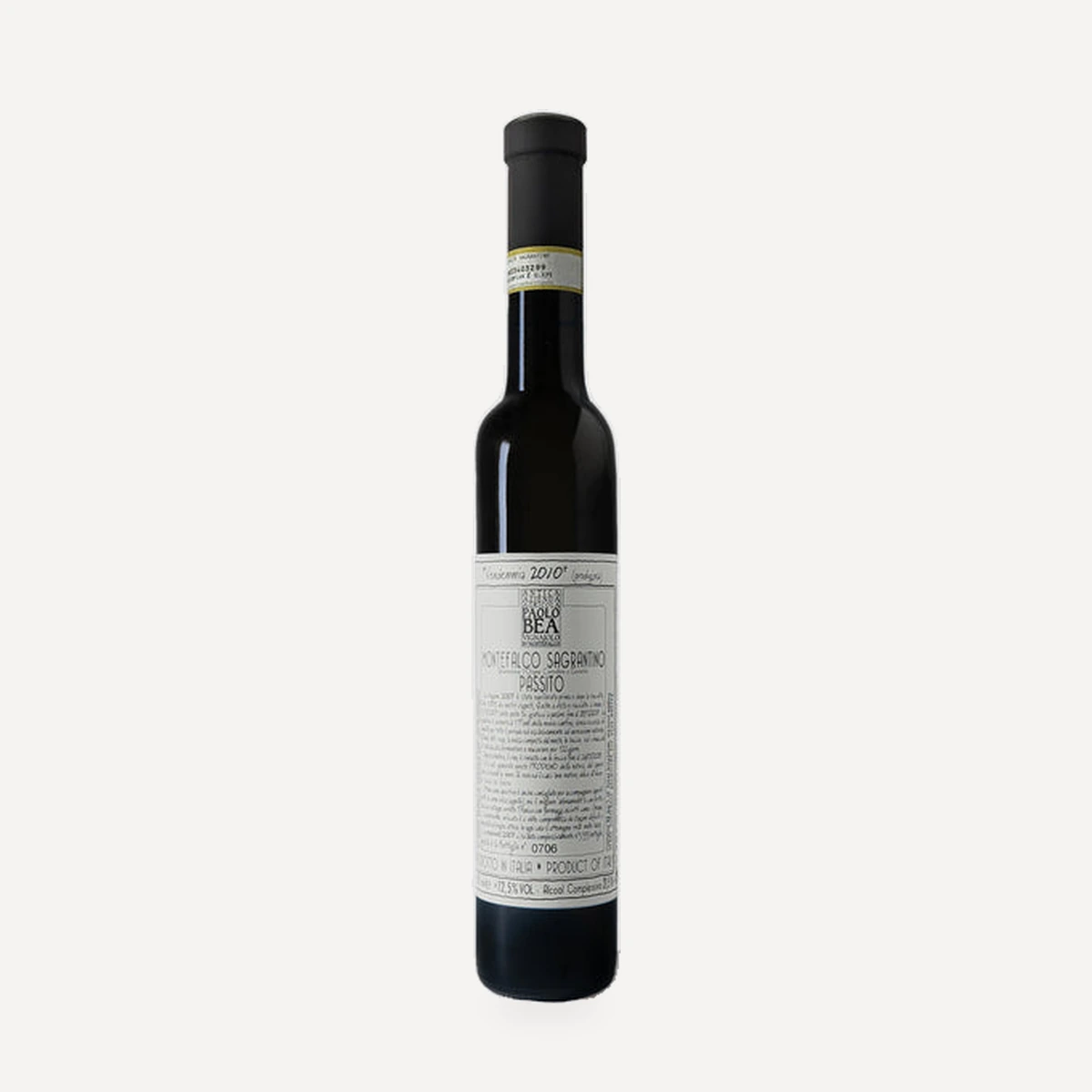
Questo vino
Vineyard and terroir
The Sagrantino comes from Pagliaro, in the hills of Montefalco, at 400 m above sea level. The clay vineyard faces east–southwest and is wire-trained at approximately 2,800 vines per hectare. The 2003 yield was 40 quintals per hectare.
Grapes
100% Sagrantino. The grapes were harvested by hand in the second week of October.
Vinification
After harvest, the grapes underwent the traditional passitura process. They dried for four months on straw mats sourced from the area around Lake Trasimeno, in an open, naturally ventilated environment. The straw promotes airflow during the long drying period and helps protect the grapes from harmful mould.
Following drying, the grapes and skins were separated from the stems. Vinification began at the end of January 2004, and fermentation and maceration lasted 36 days.
Ageing
The wine matured for 50 months in steel. It was transferred to a different container once a year to decant naturally, followed by 12 months in bottle. Although this passito is generally matured longer, the 2003 vintage was judged ready for release after five years.
Technical data
Alcohol is approximately 15%. Production from the 2003 harvest amounted to 2,133 individually numbered bottles.
Tasting profile
Sweet and fruit-driven, with aromas recalling persimmon, blackberry and dried fig. It begins sweet on the palate and finishes smoothly, with a light dryness reminiscent of a traditionally vinified dry red.
Serving and pairing
Pair with dry aged cheeses and dried fruit. The anticipated ageing potential is 10–15 years.
Vintage notes
The 2003 harvest is described as exceptionally successful. During the preceding decade, the passito was produced only in years offering the most favourable weather: ample sunshine moderated by sufficient rainfall.