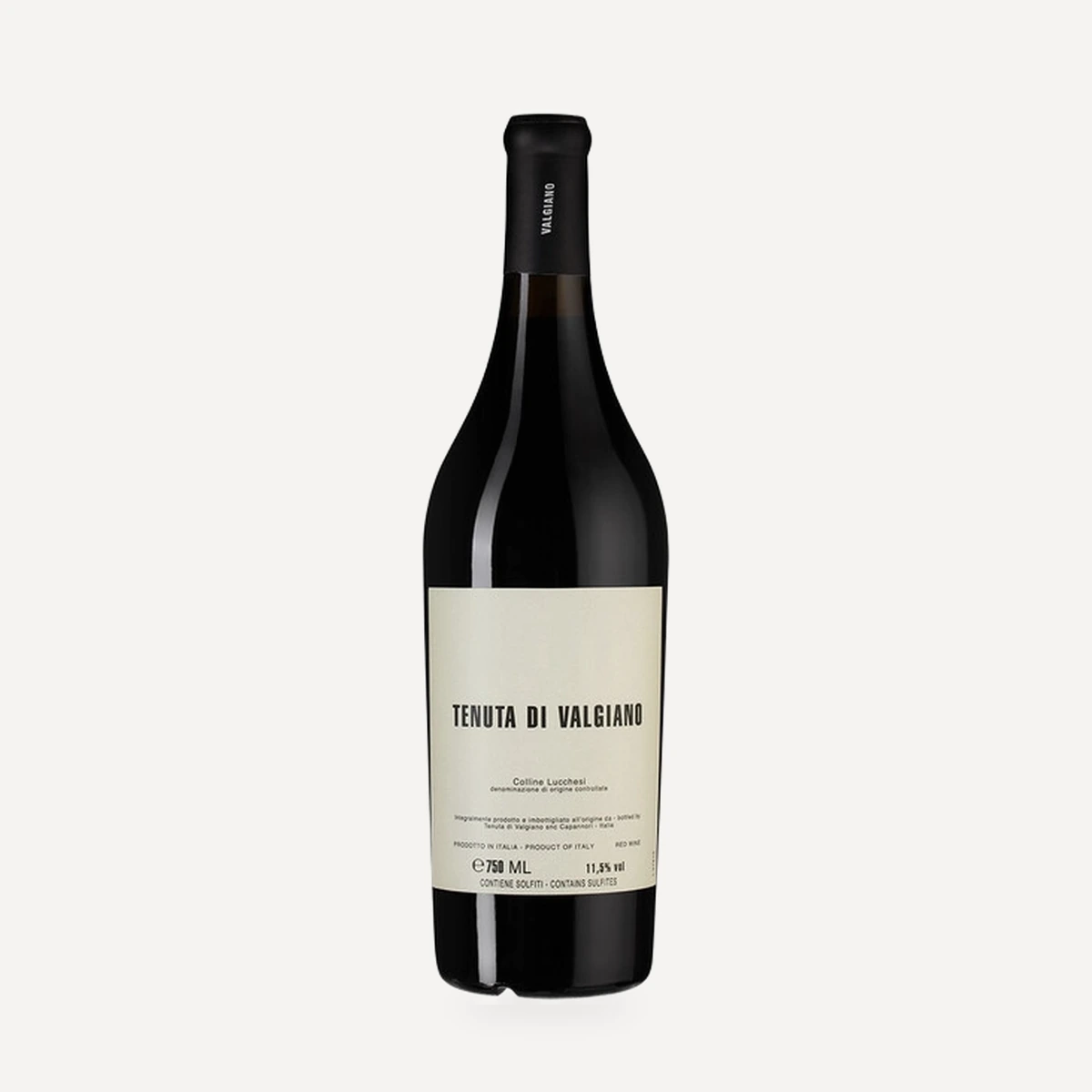
Storia
The historic estate
Tenuta di Valgiano occupies a centuries-old agricultural landscape in the hills of Lucca. Its name is a contraction of Valle di Giano, the Valley of Janus. In Roman tradition, Janus presided over beginnings and transitions and was also associated with the agricultural cycle; traces of this cult survive in rural place names across central Italy.
At the heart of the property stands a 15th-century villa within an architectural and landscape complex organized around water more than five centuries ago. The Compagni family built the villa. When the family sold part of its holdings to the Buonvisi family at the end of the 16th century, the principal properties were already served by an elaborate distribution system carrying water from the abundant rio Sana. That historic system remains in use.
The villa retains evidence of several historical periods. Its high defensive walls preserve traces of the site’s earlier use as a medieval military outpost. In the early 19th century the estate belonged to the French Vidau family, who redecorated the interiors in the prevailing Neoclassical style. Surviving elements include murals, chandeliers, fitted cupboards, billiard furniture and Ushak carpets. The property also preserved late-19th-century ceramic bathroom fittings and a collection of approximately 180 framed engravings dating from the 1780s. The garden was redesigned and planted with maritime pines in the 1850s.
The vineyard before the present ownership
One of the property’s defining vineyards was the 3.5-hectare parcel known as “Imperial.” Its name recalled the fact that it was the last vineyard locally to be ploughed by hand. Shortly after the Second World War, 37 families spent two years completing that work. By the early 1990s the wider property comprised about 70 hectares, including this vineyard, old olive groves, wooded hills and a spring-fed stream.
A new agricultural project
In the early 1990s, Moreno Petrini and Laura di Collobiano decided to exchange urban professional lives for a life close to nature. Moreno, born in Tuscany, had developed an invention involving tempered curved-glass screens; Laura, born in Turin and educated in Britain, worked at a shipyard in Viareggio. Before finding the estate, they spent about a year in a deteriorated village palazzo without electricity or central heating while searching specifically for suitable vineyard land.
The estate has belonged to the Petrini Avogadro di Collobiano family since 1994. Moreno Petrini and Laura di Collobiano began rebuilding its agricultural activity with technical support from oenologist and viticulturist Saverio Petrilli. Their initial priority was the vineyards, olive groves and wider farm rather than the villa itself.
Organic farming was adopted in 1997. Work subsequently moved toward biodynamics, motivated by the desire to avoid harmful substances and rebuild humus. Contacts with Australian growers led to Alex Podolinsky, whose practical approach to biodynamic farming influenced the project. Biodynamic management began in 2002, and the estate later obtained organic certification from ICEA and biodynamic certification from Demeter.
Restoration and consolidation
After establishing the agricultural project, Laura di Collobiano and Moreno Petrini turned to the villa. Restoration proceeded with a small team over several years and sought to preserve the building’s accumulated historical layers. Work uncovered original cotto floors, while the ground-floor reading room was redecorated with murals of ruins and foliage. Historic Lucchese furniture, books and objects were returned to use throughout the rooms.
Agricultural development continued alongside the restoration. The vineyards, olive groves, animals, beehives and rural spaces came to be treated as interconnected parts of one farm organism. Wine production developed with the same emphasis on healthy soil, restrained cellar handling and preservation of fruit integrity, while olive oil and honey became complementary estate products.
Terroir
Position and climate
Tenuta di Valgiano lies in northern Tuscany in the hills of Lucca, between the Apennines and the Tyrrhenian Sea. The estate is in the locality of Valgiano in the commune of Capannori, about 13 km northeast of Lucca. Its vineyards stand at approximately 250 m above sea level and generally face south.
The Apennines bring abundant rainfall distributed through the year and marked night-time temperature changes. The Tyrrhenian Sea contributes ventilation and strong light; during libeccio winds, maritime salt can travel as far as the estate’s olive leaves. The surrounding hills and mountains support extensive woodland and numerous springs, while the estate itself has plentiful water from the rio Sana and a historic distribution network.
Winters are mild and lead into early springs. The hillside position shelters the vineyards from the humidity and frost of the Lucca plain. Southern exposure, steady water availability and the long growing season sustain photosynthesis through summer and support complete development of colour and tannins. Even during dry or climatically extreme years, the combination of water, soil fertility and vigorous vines helps preserve balance and freshness.
Geology and soils
The soils are geologically young and derive principally from two Tuscan formations: clay-rich calcareous marl known as alberese and the sandstone of the Tuscan macigno. The estate describes its pre-glacial geology as an area where the Ligurian and Tuscan plates meet, with successive overlaps and slides creating varied viticultural conditions. The raising of the Apennines and movement of calcareous marl were followed by deposits of acidic sandstone.
The estate vineyards occupy a terrace of pebbles and clay over alberese. Where clay and sandstone occur together, clay contributes structure, power and longevity, while sandstone is associated with finesse and mineral character. Natural fertility gives the vines considerable vigour and resilience.
Varieties are matched to these differences. Sangiovese is preferentially planted along the alberese ridge, where it retains aromatic character while developing structure. Merlot occupies clay outcrops, where it can retain finesse and elegance. Syrah is planted on sandy sandstone pebbles, where it develops both perfume and structure. The approximately eight-hectare plateau used for the principal historic-vine selection combines calcareous marl and acidic pre-glacial sandstone.
Vinificazione
Tenuta di Valgiano has followed biodynamic principles since 2002 and holds Demeter biodynamic and ICEA organic certification. Organic cultivation preceded the biodynamic conversion.
The farm is conceived as a living, substantially self-sufficient organism within the larger environmental system. Soil, people, animals and plants are treated as interdependent participants in a closed agricultural cycle, with external inputs reduced as far as possible. The central agronomic objective is to preserve and increase fertility through the care and formation of humus; after roughly a quarter-century of practice, soil fertility is regarded as the estate’s fundamental capital.
Historic vineyard practice includes preparations 500P and 501. Soil management may involve sowing legumes, crucifers and grasses, maintaining cover or cultivating with particular care. Older English-language material additionally mentions aromatic plants and deep-soil analysis used to understand and preserve the natural relationship among vine, climate and soil.
Plant protection has included milk and sulphur treatments, while another legacy description records restricted use of clay, copper and sulphur together with biological action against parasites. The leaf canopy is managed carefully. New practices are continually explored and experience is shared with other biodynamic growers.
Animals reinforce the idea of the farm as an organism. Cattle, goats and sheep from a neighbouring farm graze on the property, while Tenuta di Valgiano keeps chickens, guinea fowl, pigeons and beehives. Biodynamic management is intended not only to produce balanced vineyards and healthy grapes but also to develop awareness and responsibility among the people working with the land.
Cellar work emphasizes fruit integrity, gentle handling and minimal movement. Red grapes are destemmed and selected on sorting tables before entering small fermentation vats. Historic production material describes three stages of selection and transfer into small wooden vats without pumping. Initial crushing may be performed by foot. Fermentation is spontaneous, extraction relies chiefly on manual punch-downs, and pump-overs are used rarely.
Transfers are kept to a minimum and may be performed gently with compressed air or by gravity. French oak barriques and glass-lined concrete tanks form part of the maturation cellar. For the historic-vine red, older production material records no more than one-fifth new French oak, maturation for 15–18 months and a further year in bottle. Other estate reds have combined French oak and glass-lined concrete, while Mazzapink matures for six months in large concrete tanks.
White-wine production centres on low-temperature maturation in stainless steel. Current material for Palistorti Bianco records six months in stainless steel at low temperature. Earlier cellar practice included low-temperature fermentation in steel and the use of a small proportion of barrel-fermented Vermentino.
Sensitive crystallisation trials with copper chloride have been used to compare the vitality patterns of filtered and unfiltered samples of the same bottled wine. Across the range, the declared cellar objective is limited intervention while retaining precision and the identity of the fruit.
Filosofia
Tenuta di Valgiano treats the farm as a living organism rather than a collection of independent crops. Human work, soil, plants, animals, climate and the surrounding environment are expected to function in relationship with one another. The practical goal is a fertile, humus-rich soil capable of supporting balanced vines and healthy grapes with minimal dependence on external materials.
The agricultural philosophy joins observation and scientific knowledge with the spiritual principles of anthroposophy. It asks collaborators to develop direct awareness of natural processes and links the health of the farm with collective well-being. Landscape conservation, agricultural quality and the responsible use of water are therefore part of the same project as winegrowing.
Moreno Petrini’s articulated position gives primacy to wine quality rather than to biodynamics as a marketing identity. Biodynamic practice is not treated as sufficient in itself, nor as an excuse for imprecise or faulty wine. The aim is to make wines he wants to drink: neither standardized “oenologist’s wines” nor deliberately unconventional wines valued merely for appearing natural.
Laura di Collobiano describes the project as continuing work that requires care, attention and sustained effort to understand nature’s needs. The preservation of the villa’s accumulated historical layers follows a parallel principle: renewal is pursued without erasing the evidence of earlier generations.
Vini
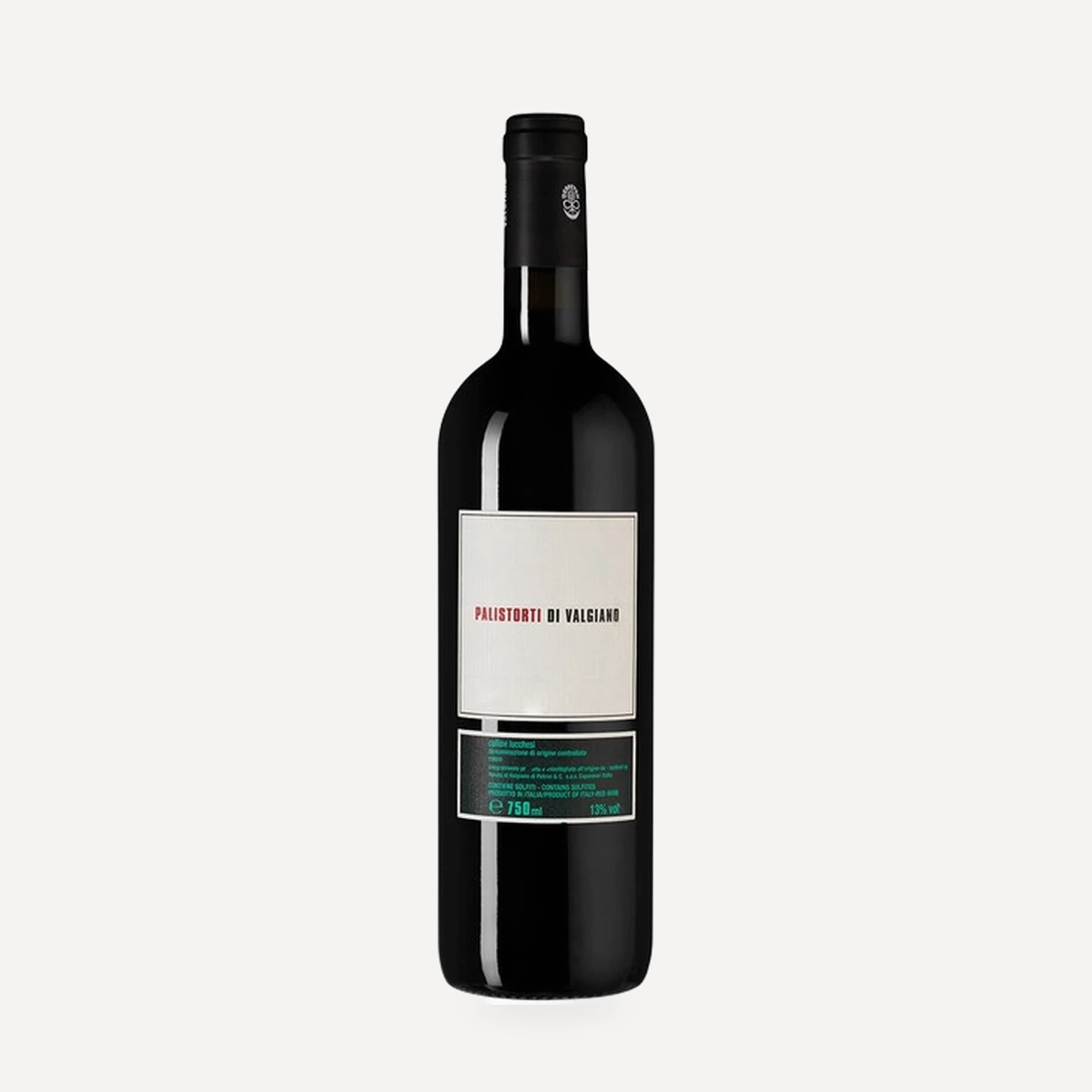
Palistorti Rosso

Palistorti Bianco
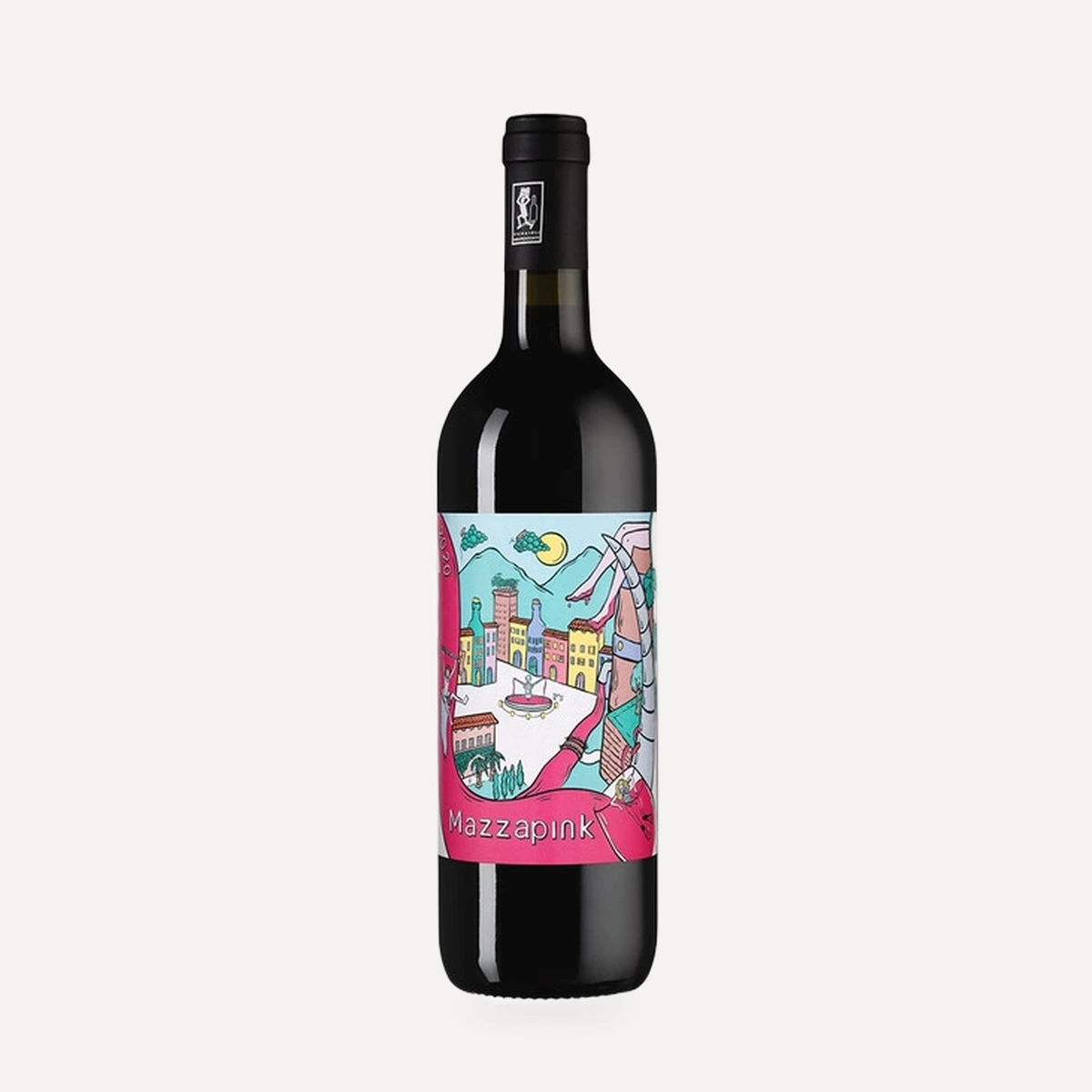
Mazzapink