Storia
The estate at Castelnuovo dell’Abate
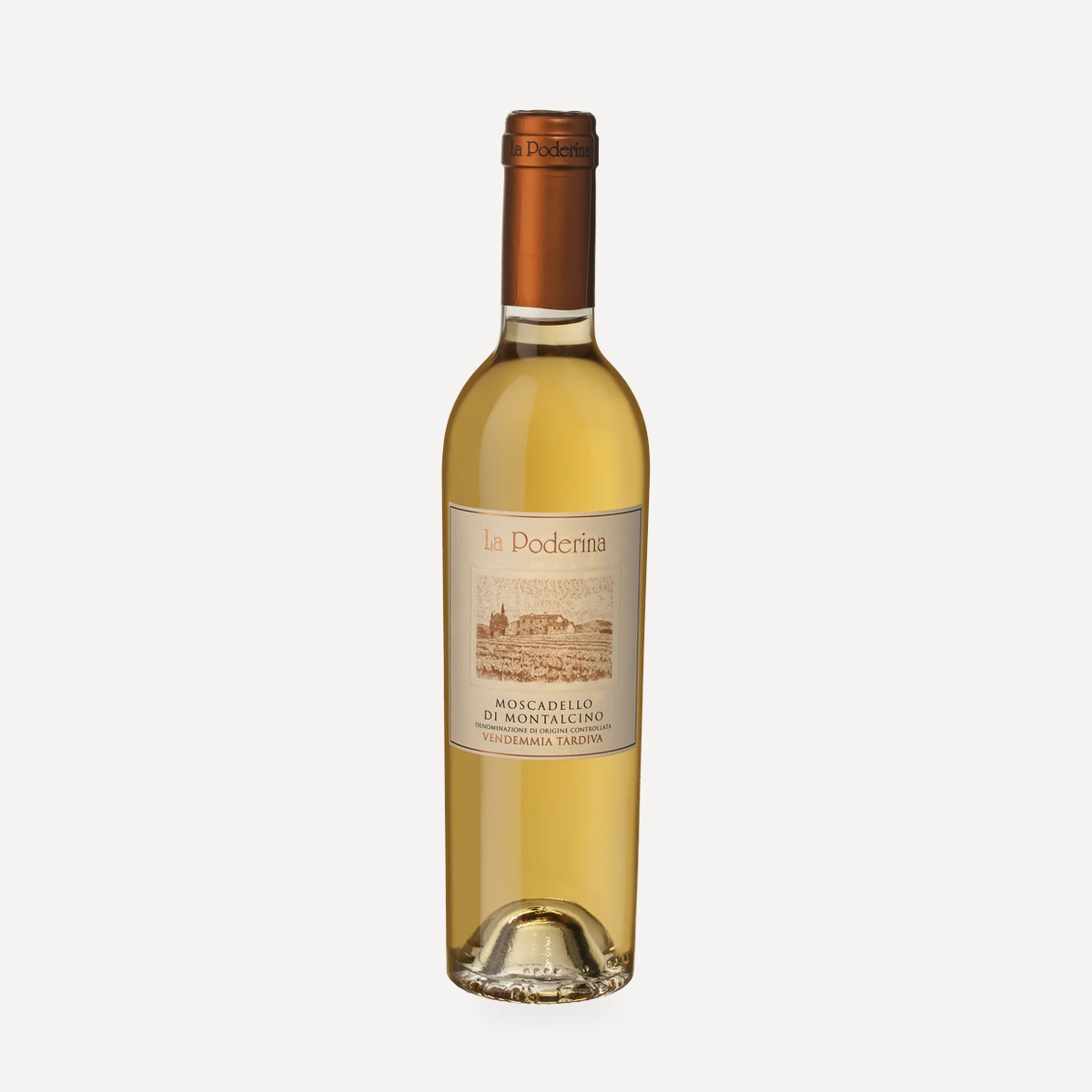
La Poderina is based at Castelnuovo dell’Abate in the commune of Montalcino. Its vineyards supply two expressions of Brunello—Brunello di Montalcino DOCG and “Poggio Abate” Brunello di Montalcino Riserva DOCG—alongside Rosso di Montalcino DOC, Moscadello di Montalcino DOC Vendemmia Tardiva and Rosso di Toscana IGT.
The estate belongs to Tenute del Cerro S.p.A. Società Agricola, a wine-growing company within the Unipol Group. La Poderina forms a distinct Montalcino estate within the company’s portfolio.
Development of precision viticulture
By March 2021, La Poderina was implementing Campi Connessi, a project designed to digitalise its technical vineyard systems. The programme responded to the pronounced variability of a territory where soils and vine conditions can change over very short distances. Intelligent weather stations were introduced to replace reliance on generic municipal-scale meteorological readings with data from individual microzones. Satellite-linked sensors provided real-time information from the vineyards, while dedicated software helped operators identify errors during the preparation of treatment mixtures and enabled more targeted responses to pathogens.
Certified sustainability
La Poderina subsequently entered the Equalitas certification programme. By July 2025, the certification covered La Poderina and Fattoria del Cerro. Equalitas assesses environmental, economic and social sustainability across the entire wine supply chain, including vineyard and cellar work, purchased materials, packaging, logistics and distribution. Carbon-footprint and water-footprint measurements were incorporated into the programme to establish annual objectives for water, electricity, greenhouse-gas emissions, renewable energy and packaging weight.
The estate is also listed among the operating sites covered by the group’s SA8000:2014 social-responsibility certification. The company’s integrated policy identifies La Poderina as one of the sites operating under ISO 9001 procedures and as an Equalitas-certified production site.
Terroir
La Poderina lies at Castelnuovo dell’Abate in Montalcino, within a broader setting influenced by the sea, waterways and areas of volcanic origin. The resulting territory is markedly heterogeneous: soils and vineyard conditions can change over very short distances, while Montalcino’s four principal slopes have their own climatic characteristics.
The estate’s soils include galestro and alberese. These soils are associated here with concentrated, austere expressions of Sangiovese Grosso. The Castelnuovo dell’Abate sector is characterised by grapes combining elegance and balance.
Moscato Bianco grows at the foot of the Abbey of Sant’Antimo, within the heart of the estate. The surrounding agricultural landscape forms part of the Val d’Orcia area inscribed on UNESCO’s World Heritage List in 2004.
Vinificazione
La Poderina combines controlled yields with site-specific digital vineyard management. Average production is held to 60 quintals per hectare (6 t/ha), below the cited regulatory ceiling of 80 quintals per hectare.
The Campi Connessi programme was created to manage the estate’s pronounced variability. Intelligent meteorological stations collect readings for individual microzones rather than relying solely on general municipal data. This allows work to be adjusted to specific areas, vineyard sections or crops.
Satellite-linked sensors support real-time monitoring of conditions and grape distribution within the vineyards. They can prompt immediate corrections and assist operators while treatment mixtures are being prepared. Dedicated software flags preparation errors in real time, supporting precise, localised responses to pathogens and more efficient use of vineyard inputs.
La Poderina is certified under Equalitas, whose assessment covers the environmental, economic and social dimensions of wine production. The programme extends from vineyard inputs through production, packaging, logistics and delivery. Carbon- and water-footprint calculations are used to establish annual improvement targets, including lower water consumption, reduced electricity use and greenhouse-gas emissions, increased renewable energy and lighter bottles.
The wider agricultural management policy includes reducing chemical inputs, managing farming according to sustainability principles, controlling the quality of production wastewater, conserving water and reducing dependence on fossil fuels. The group’s climate-adaptation measures also include rainwater reservoirs and emergency irrigation networks for periods of prolonged drought.
La Poderina’s general cellar approach places innovation at the service of tradition. Maturation uses both French oak barriques and large casks, allowing the estate to work with vessels of different capacities while retaining traditional large-format oak in the ageing programme.
The broader certified supply-chain system evaluates cellar operations together with vineyard work, packaging, logistics and delivery. Carbon- and water-footprint measurements guide annual objectives such as reducing the water used for cellar washing, lowering electricity consumption, increasing photovoltaic capacity and adopting lighter bottles to reduce emissions associated with glass production and transport.
Filosofia
La Poderina defines its approach as innovation at the service of tradition. In practice, this joins traditional large-cask maturation and the established identities of Montalcino’s denominations with French oak barriques, microzone weather stations, satellite-linked sensing and real-time digital controls.
Vineyard decisions are based on the differences among sites rather than treating every parcel alike. The heterogeneity of Montalcino’s soils and slopes determines which fruit is directed toward younger expressions and which vineyards are best suited to long ageing.
Sustainability is treated as a measurable environmental, economic and social responsibility. Equalitas certification subjects the complete chain—from plant material and vineyard work to packaging, employee travel, logistics and final delivery—to third-party assessment. Carbon and water measurements are intended to identify where intervention will produce meaningful improvements and to establish new objectives each year.
The wider corporate policy links product quality and food safety with environmental protection, employee welfare, non-discrimination, transparent labour practices, community wellbeing and long-term economic resilience. Biodiversity is understood as part of this framework: the return of wolves is viewed as a natural means of discouraging wild boar and roe deer from damaging vineyards.
Vini
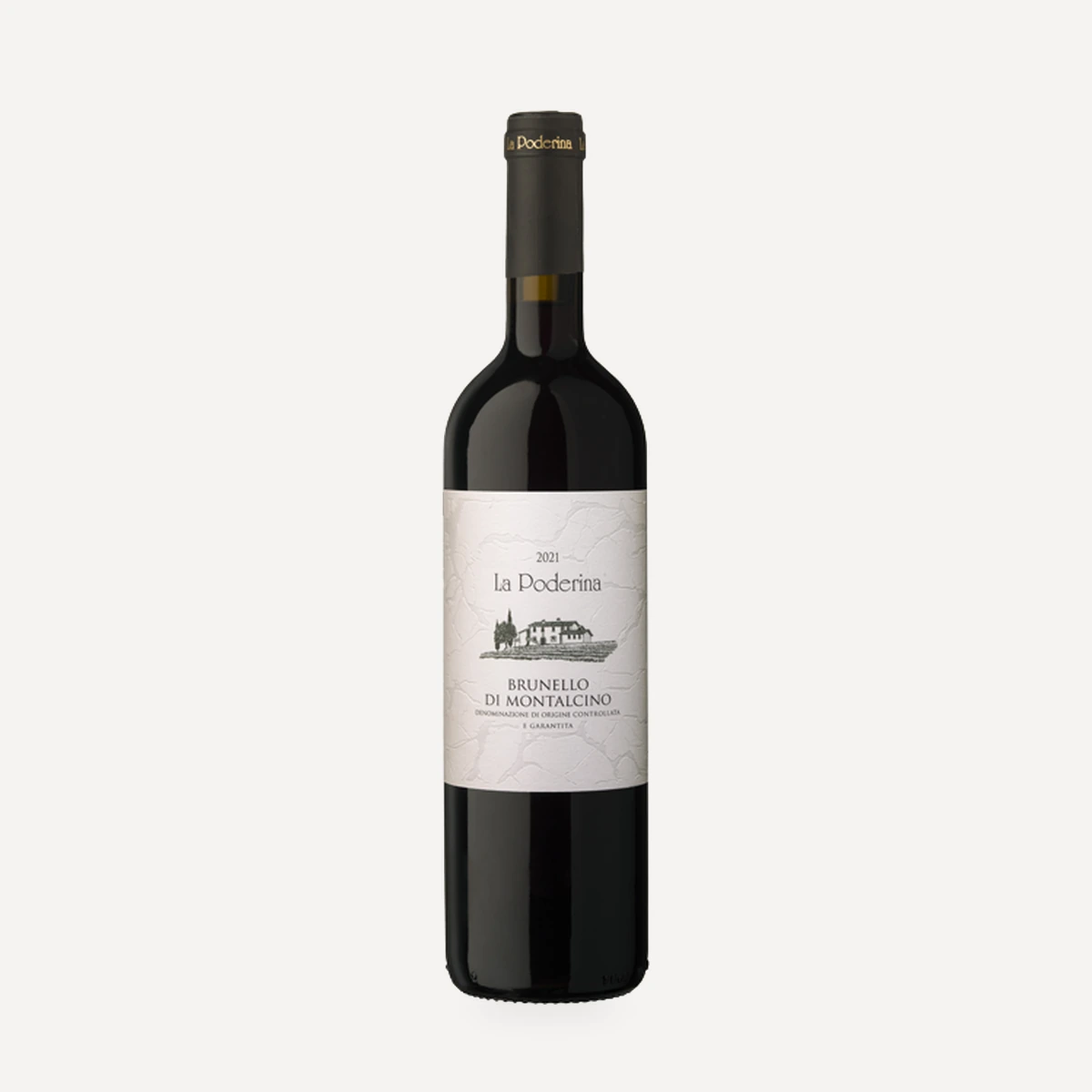
Brunello di Montalcino DOCG
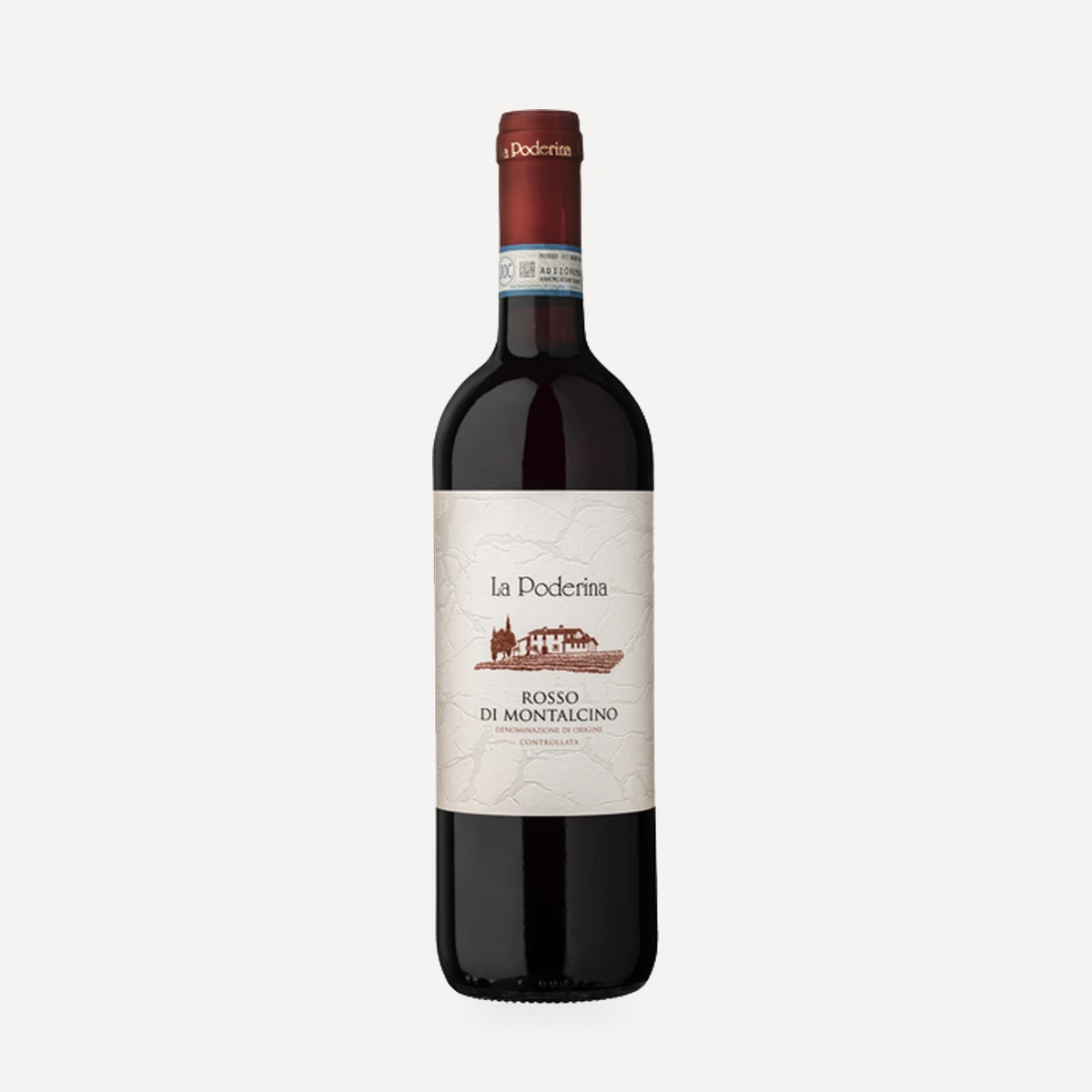
Rosso di Montalcino DOC
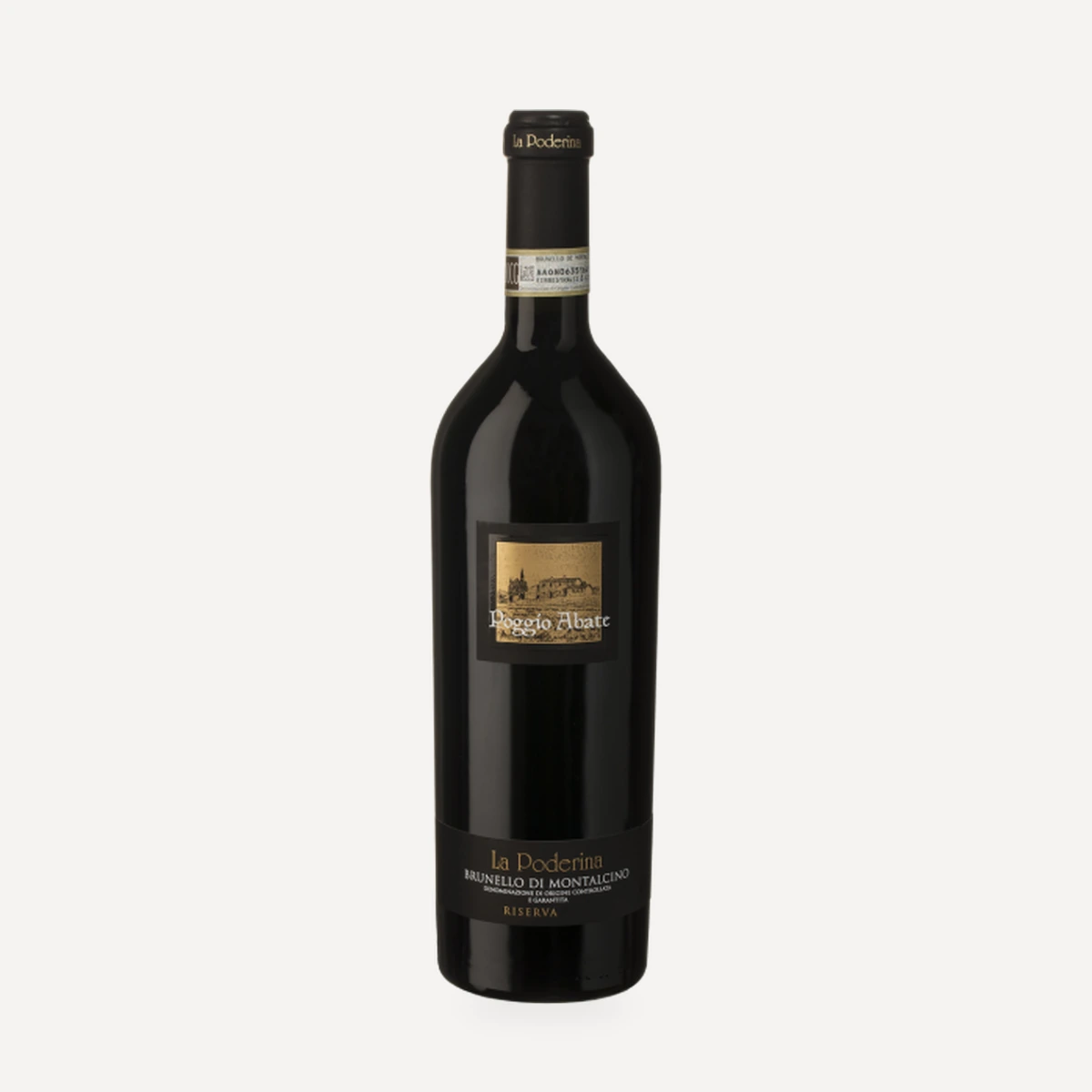
Poggio Abate Brunello di Montalcino Riserva DOCG