Storia
The old vineyards of Sant’Antioco
Until the 1980s, the area around La Sabbiosa on the island of Sant’Antioco was covered with tiny Carignano vineyards. The bush vines were tended like gardens in small parcels extending towards the beaches, among dunes and junipers. Their ungrafted roots grew directly in sandy ground exposed throughout the year to strong, saline mistral winds.
Phylloxera failed to become established in this particular environment. The surviving vines therefore retained their original European roots, while traditional regeneration methods allowed individual plants to remain productive for exceptionally long periods.
Decline from the late 1980s
The island’s long winegrowing tradition began to contract at the end of the 1980s. The very low yields of the old vineyards were increasingly incompatible with market economics, and thousands of monumental vines—many at least a century old—were uprooted.
Small parcels nevertheless survived through the care and persistence of elderly growers. Production under the Tenuta La Sabbiosa name began from one of these remaining vineyards.
Recovery and continued expansion
La Sabbiosa subsequently resumed the cultivation of centuries-old vineyards around Calasetta. Further old parcels were saved from removal and progressively incorporated into a property that continues to grow. The project combines inherited cultivation techniques with modern winegrowing and cellar knowledge, with the recovery of ungrafted Carignano as its central purpose.
The 2019 growing season
The 2019 season brought little rain until balanced spring rainfall arrived. Spring frost damaged some vineyards elsewhere on Sant’Antioco, but La Sabbiosa’s vineyards were spared. The summer was hot and very windy, while an unusually rainy August delayed harvest. Picking began on 24 September; the grapes arrived in good condition with potential alcohol slightly below the average, producing an overall balanced vintage.
Terroir
Coastal dunes of Calasetta
La Sabbiosa lies at Località Cussorgia in Calasetta, on Isola di Sant’Antioco, facing the Sardinian sea. Its vineyards occupy small parcels among coastal dunes, junipers, Mediterranean scrub and wild plants. In the oldest vineyard environment, the sea is only a few hundred metres away.
Sand and ungrafted roots
The vineyards grow on sandy soils that can contain as much as 99% sand. Their low water-holding capacity and limited fertility impose both thirst and nutrient stress, contributing to naturally very low yields. The same sandy environment prevented phylloxera from becoming established, allowing the Carignano vines to remain on their original roots.
Sea, sun and mistral
The vines receive intense Sardinian sunshine and are exposed throughout the year to powerful, saline mistral winds. The sea moderates excessive heat and stabilizes the local climate, while the cool mistral prevents the vineyards from reaching extreme temperatures. Together they extend the ripening period and support slow, complete maturation.
Myrtle, mastic, juniper, cistus, rosemary and helichrysum form part of the surrounding Mediterranean vegetation. The small plots are embedded within this scrub and other wild flora rather than forming a continuous vineyard landscape.
Vinificazione
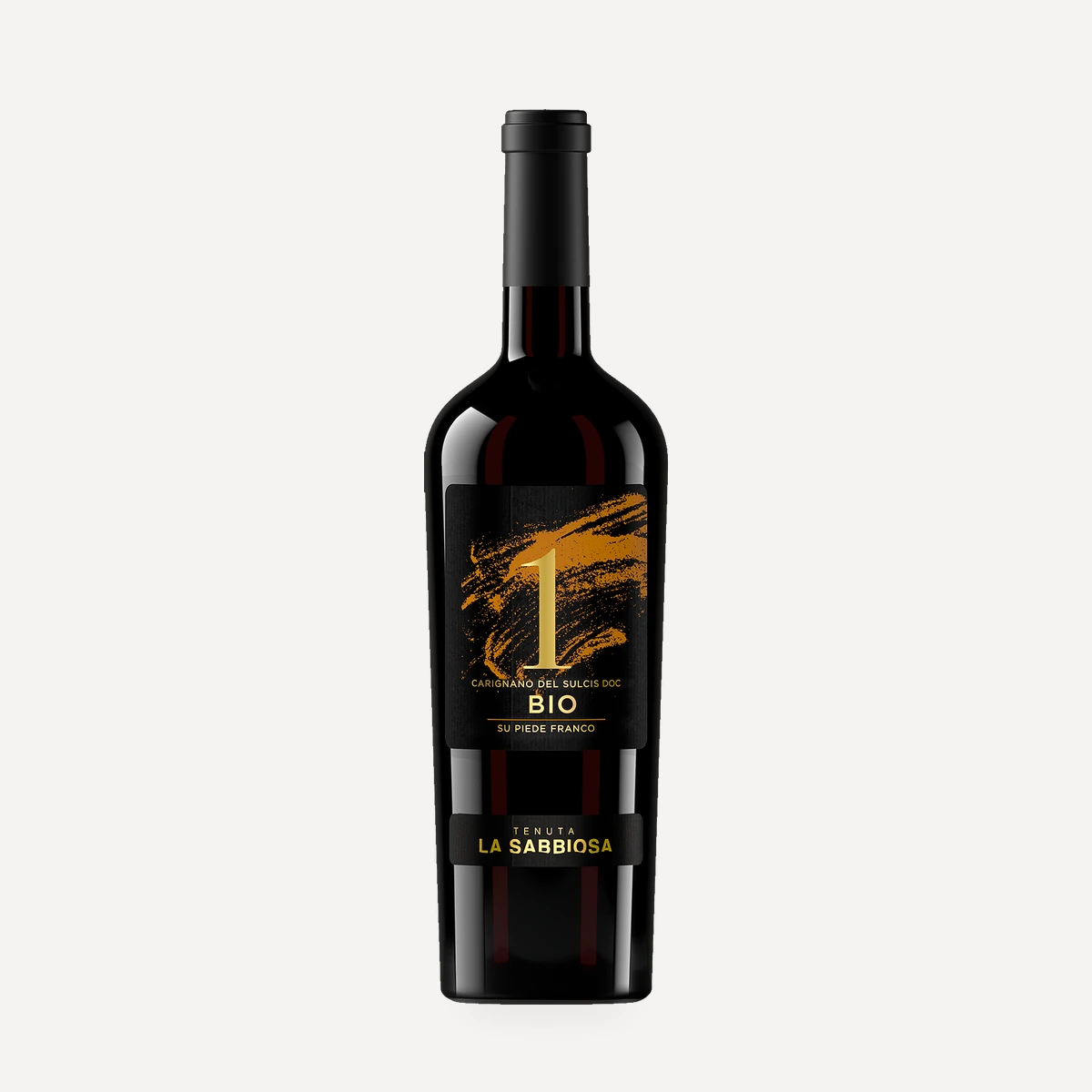
All La Sabbiosa vineyards are certified organic and managed with low-impact practices. Irrigation is reserved for emergency conditions.
Traditional vineyard work includes treatments with sulfur and copper and fertilization with manure and favino, a vetch used as a cover or green-manure crop. Weeds are removed manually or managed through green manuring. These practices are combined with integrated pest management.
The small parcels—each under 1 ha—are surrounded by Mediterranean scrub and spontaneous vegetation that preserve local biodiversity. The oldest ungrafted vines are maintained as alberello or supported alberello; some younger vineyards are trellised. An inherited form of propagation by layering or offshoots has been passed between generations of local growers and is used to regenerate old bush vines, helping individual plants survive for very long periods.
Harvest is manual and generally occurs in the second half of September. Grapes for the principal red vinifications are selected and carried in small boxes. The most selective lots undergo an initial choice of vines and bunches in the vineyard, transport in small shaded boxes to protect the fruit from the sun, and a further grape selection before vinification. Depending on vine age and intended use, declared yields range from 0.8–2.5 kg per vine and 25–60 quintals per hectare.
La Sabbiosa combines traditional work with temperature-controlled stainless-steel vinification and different maturation regimes according to the intended style.
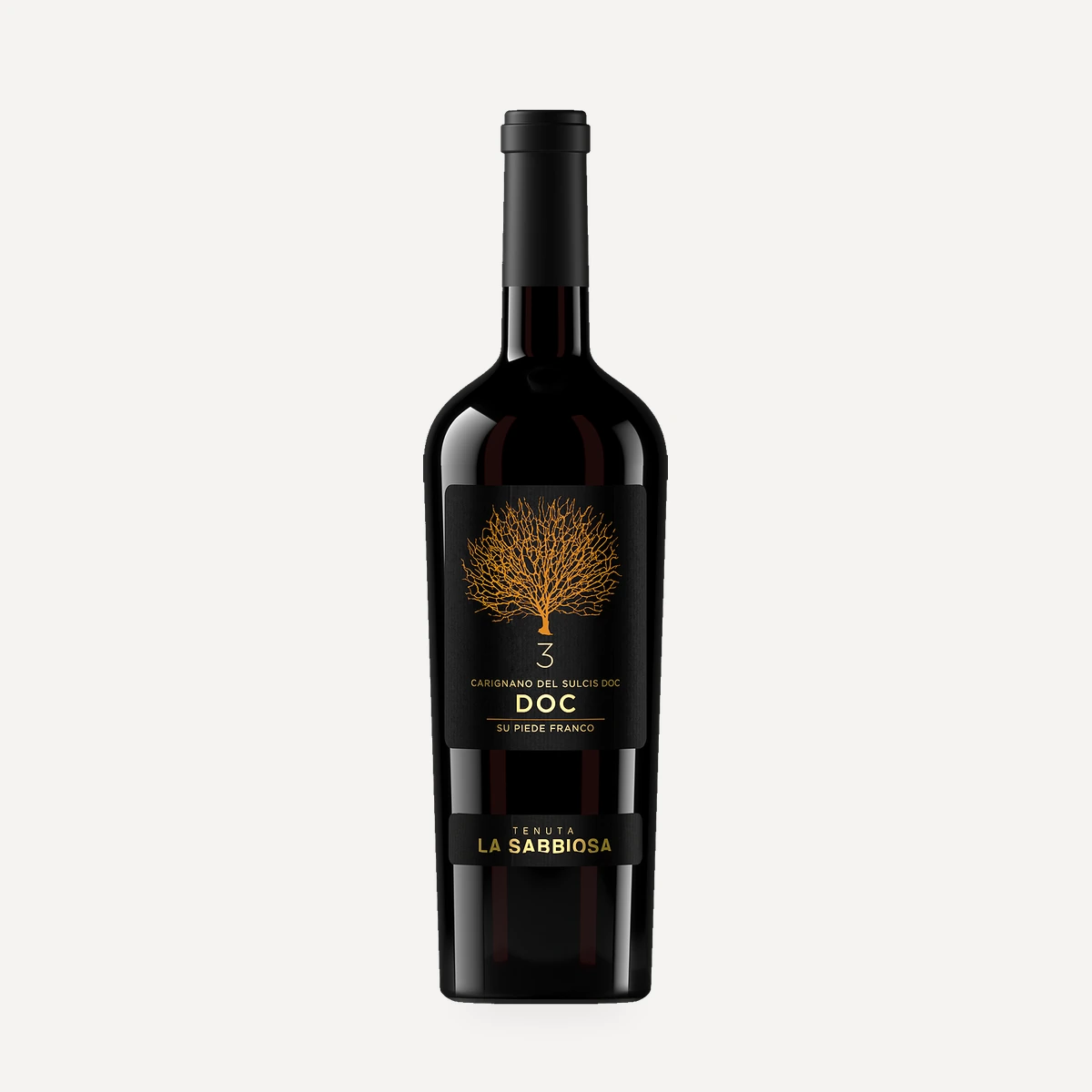
For the principal Carignano red vinifications, hand-picked grapes are selected, transported in small boxes, destemmed and crushed. Fermentation takes place in stainless-steel tanks at 26–28°C. Repeated pump-overs and délestage are used to extract aromatic and colour components. These wines remain in temperature-controlled stainless steel before receiving at least six months of bottle maturation.
The Superiore selection begins in the vineyard with the choice of the best plants and bunches. The fruit travels to the cellar in small shaded boxes and is selected again before processing. Bunches are destemmed while leaving the berries whole and intact. Fermentation takes place in stainless steel at 27–28°C with approximately 20% whole, undestemmed bunches and a 3–5% pied de cuve of indigenous yeasts prepared one week earlier from grapes taken from the same vines. Maceration lasts 15–20 days with pump-overs and délestage. Maturation proceeds for 17–18 months in fine-grained, second-use French oak tonneaux, followed by six months in steel and at least six months in bottle.
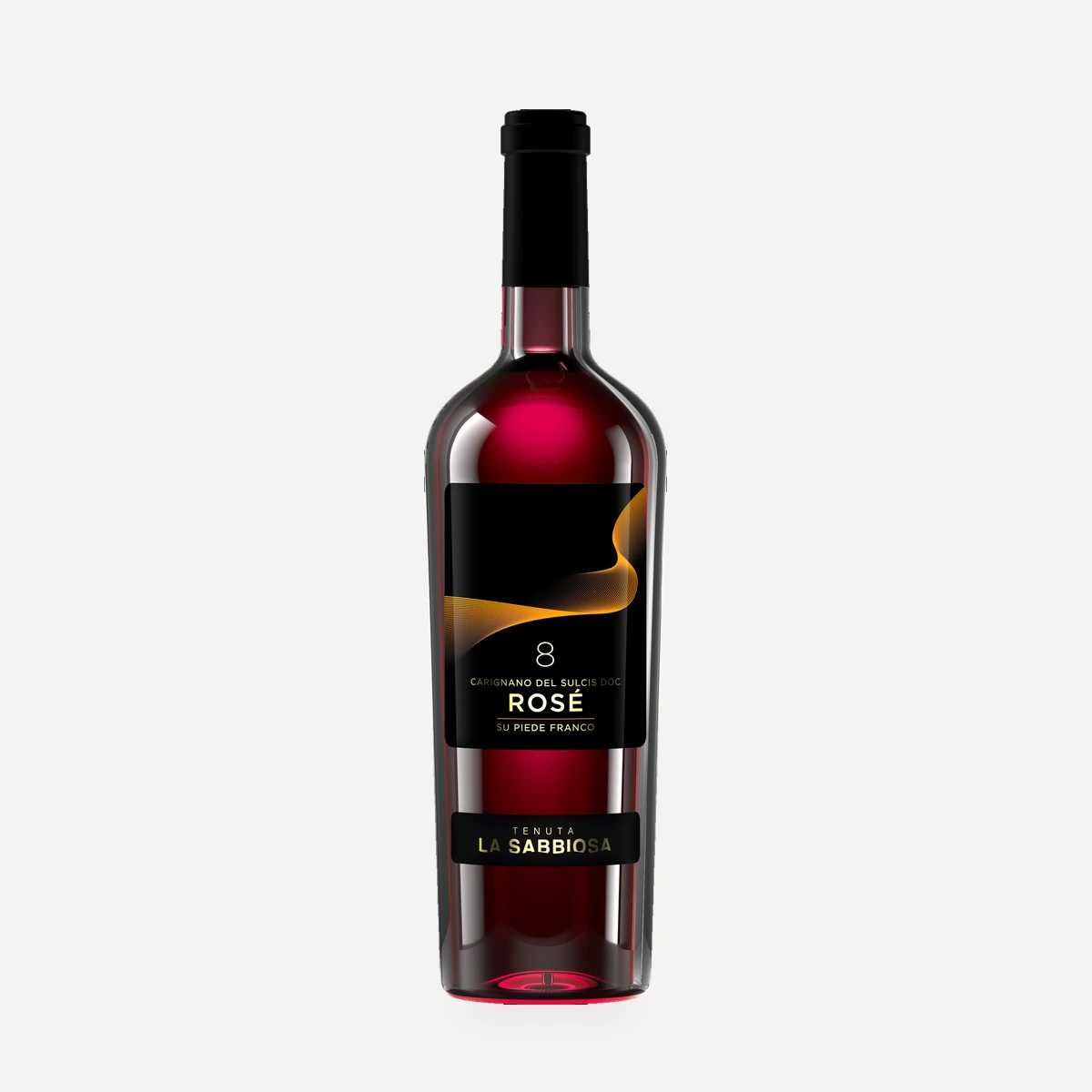
For the rosé vinification, selected hand-picked Carignano undergoes gentle destemming and crushing. The must is statically clarified at 10–12°C, then fermented with selected yeasts for 12 days at 18°C. After fermentation it is racked off the gross lees, stored in stainless steel and subjected to bâtonnage for one month.
Filosofia
La Sabbiosa’s purpose is to recover the essential expression of Carignano from the surviving ungrafted vineyards of Sant’Antioco. This involves accepting the extremely low yields of old vines growing in sand, rather than replacing them solely for greater productivity.
The estate links quality to the demanding conditions experienced by the vines: limited water and fertility, intense sun and continual exposure to the mistral. Its approach does not treat tradition and modern knowledge as opposites. Old cultivation and regeneration techniques are retained alongside organic farming, integrated pest management, controlled cellar temperatures and selective vinification.
Preserving century-old vineyards is also framed as an environmental and cultural commitment. The objective is to keep the coastal vineyard landscape alive, maintain biodiversity around its small parcels and translate the relationship between sand, sea, wind and ungrafted Carignano into the wines.
Vini
Bio
Doc
Rosé
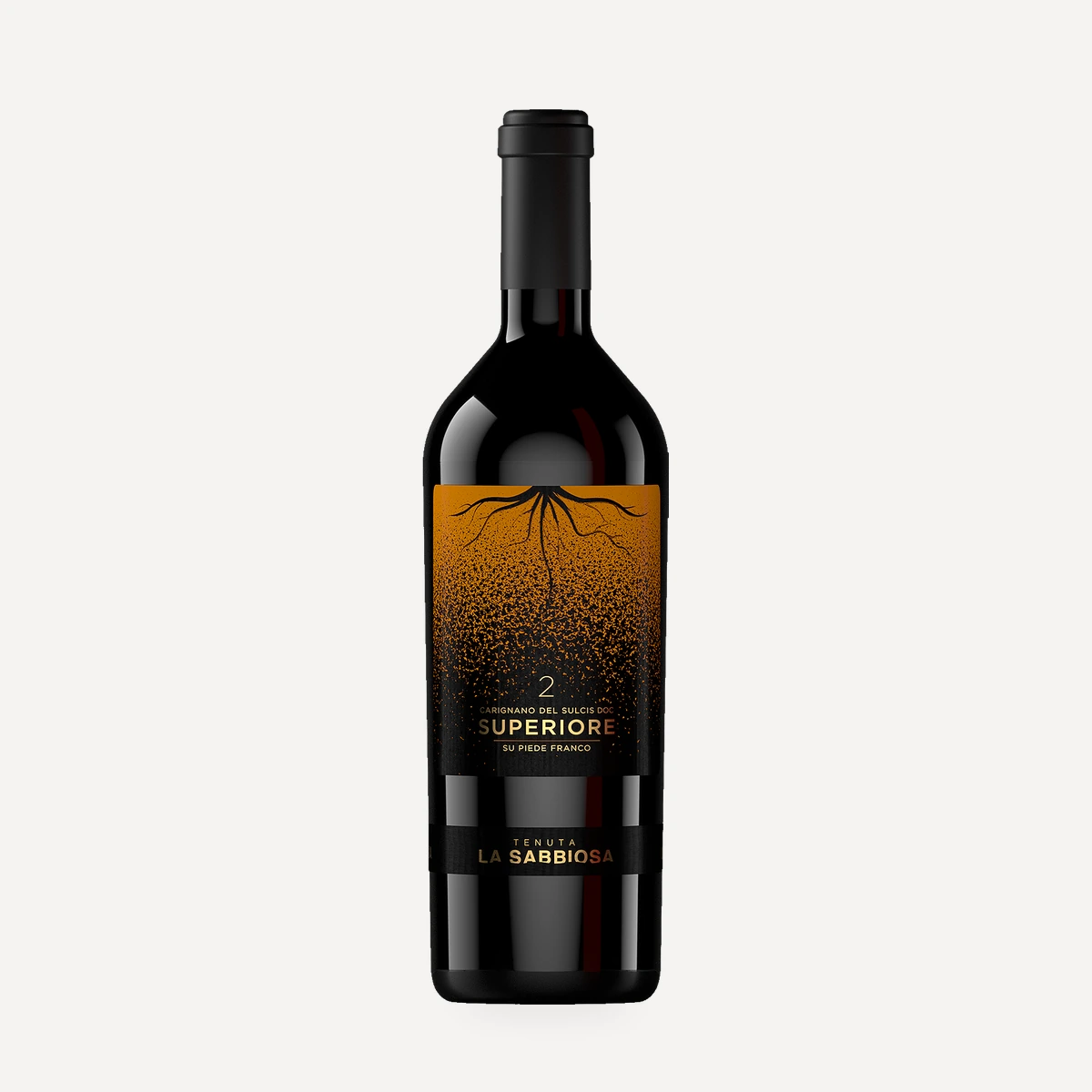
Superiore