Storia
The beginning: 1952
The Lunelli family’s entrepreneurial history began in 1952, when Bruno Lunelli acquired a small Trento winery from Giulio Ferrari. Ferrari, a nurseryman and oenologist without children, had founded the business in 1902 and produced a limited number of carefully selected bottles with the ambition of competing with the finest French Champagnes. Bruno, a Trentino wine merchant and entrepreneur, expanded production without compromising the quality principles on which the winery had been built.
The second generation
Bruno passed the enterprise to his sons Franco, Gino and Mauro. The succession is dated to 1969, while the three brothers took full command during the 1970s. Under their management, Ferrari Trento grew into a leading Italian producer of traditional-method sparkling wine.
Diversification in the 1980s
The family began building a broader premium-beverage group around Ferrari Trento during the 1980s, selecting businesses that shared its emphasis on quality, elegance and territorial identity.
In 1982 it acquired Segnana, a historic Trentino distillery founded in 1860. The business subsequently reframed grappa in a contemporary style, combining inherited distilling knowledge with innovation.
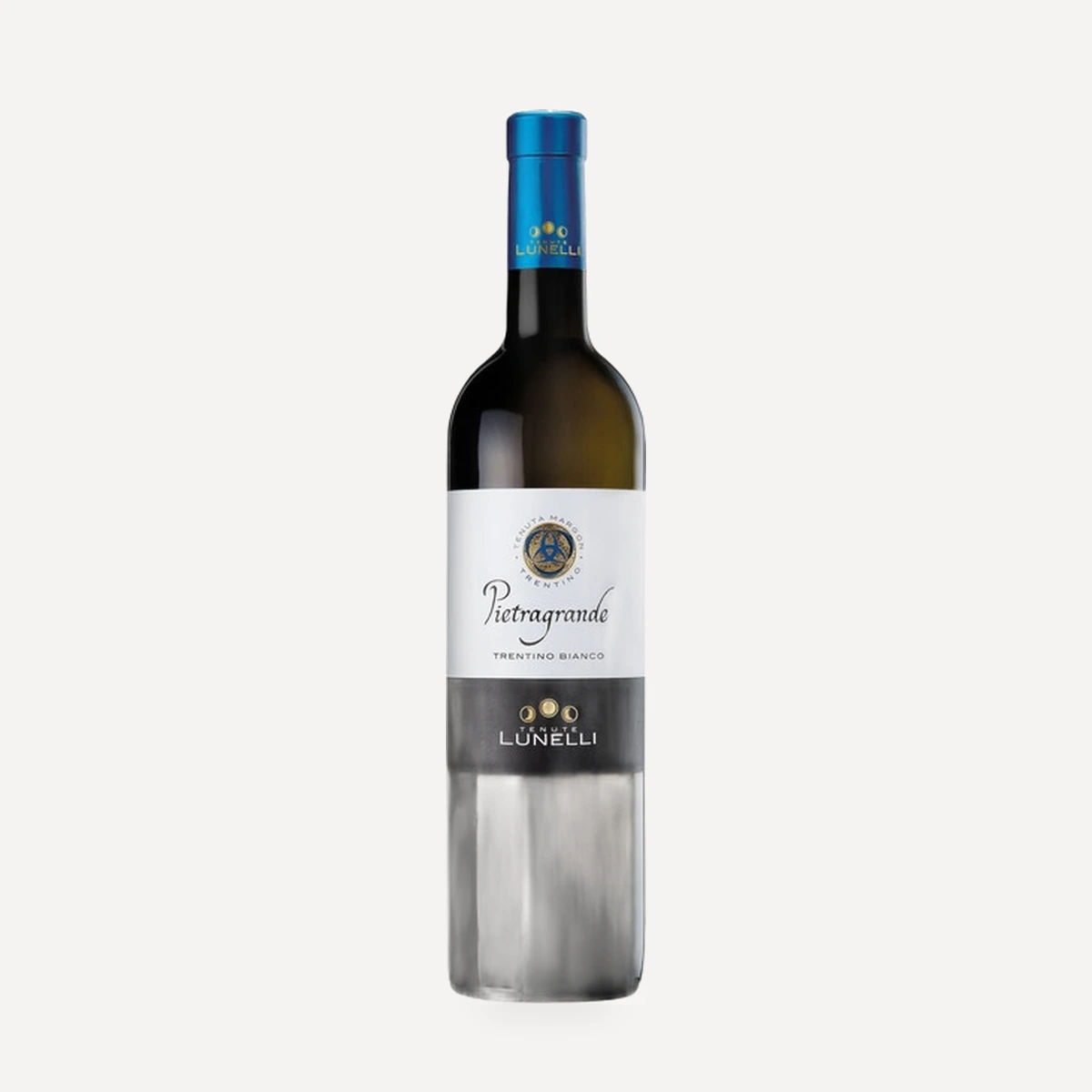
The family’s first still wines in Trentino appeared in 1987, marking the origin of Tenute Lunelli. Surgiva joined the portfolio in 1988. Its mineral water rises at high altitude in the Adamello Brenta Natural Park and was positioned for restaurants and hotels in clear glass bottles.
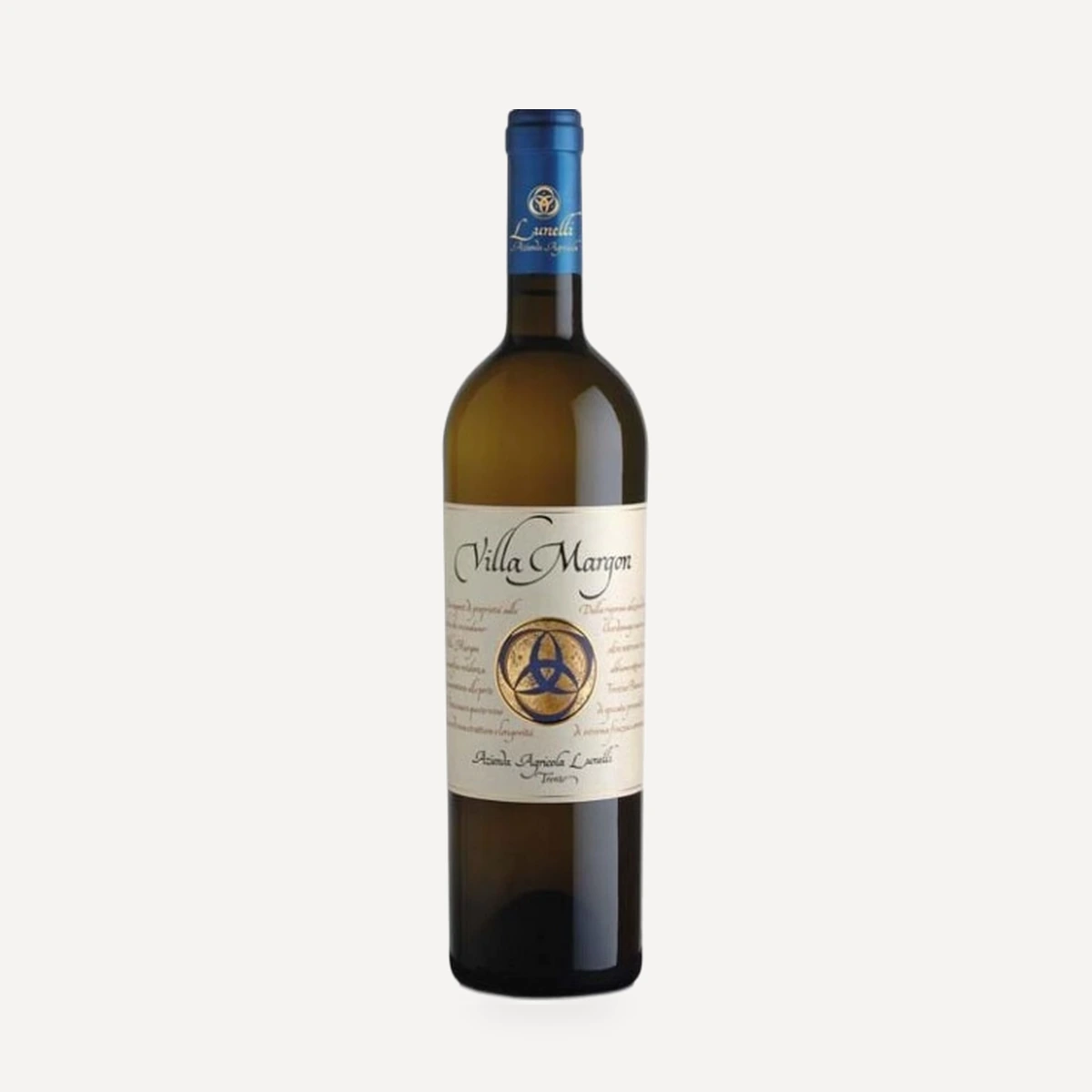
In 1989 the Lunelli family acquired Villa Margon, a sixteenth-century complex surrounded by vineyards, and made it the Group’s representative residence.
Still wines, hospitality and the third generation
The Group increased its investment in still wine during the 2000s. Tenuta Podernovo in Tuscany joined the estates in 2000, extending activity beyond the Chardonnay and Pinot Nero wines made in Trentino since the 1980s. The Tuscan property focused on organically cultivated Sangiovese.
The early 2000s also brought the second family succession. Cousins Marcello, Matteo, Camilla and Alessandro Lunelli became the third generation to lead the enterprise, charged with preserving its family values while developing the Group internationally.
Locanda Margon opened near Trento in 2005 as a restaurant and a setting for exploring food pairings with Trentodoc. Vineyards in the Montefalco Sagrantino DOCG area of Umbria were acquired in 2007, completing the three-territory structure of Tenute Lunelli. The resulting Tenuta Castelbuono was dedicated to Montefalco Sagrantino.
The Carapace winery at Tenuta Castelbuono was inaugurated in 2012. Conceived by Arnaldo Pomodoro, it was designed as a habitable sculpture in which art, architecture, landscape and wine production meet.
Prosecco, soft drinks and corporate development
Bisol1542 entered the Group in 2014, adding Valdobbiadene Prosecco Superiore and strengthening Lunelli’s position in Italian sparkling wine.
Tassoni was acquired in 2021. The company originated as a pharmacy in 1793 and developed into a producer associated particularly with Cedrata and other citrus-based drinks. Lunelli’s objective was to position it as an Italian luxury soft-drink brand.
The Fondazione Gino Lunelli was also established in 2021 to combat social inequality and assist vulnerable people, taking forward several projects previously supported directly by the Group.
Developments in 2024
During 2024, Locanda Margon S.r.l. was merged into Ferrari F.lli Lunelli S.p.A. as part of a wider rationalisation and integration of the corporate structure. Gruppo Lunelli USA Inc. was created to support future promotion of the Group’s brands in the United States.
Matteo Lunelli, chief executive of Gruppo Lunelli and a former president of Fondazione Altagamma, was appointed Cavaliere del Lavoro by the President of the Italian Republic. The distinction recognised his contribution to the national economy and his ethical and social commitment. At the end of 2024, the Group remained under the leadership of third-generation cousins Marcello, Matteo, Camilla and Alessandro Lunelli.
Filosofia
Family enterprise and quality
Lunelli’s purpose is to build a centre of premium Italian beverages around brands united by quality, elegance and a strong connection to their places of origin. The holding combines family-business continuity with modern management. Family Agreements regulate the relationship between family and enterprise, while a steering body meets twice yearly. The intention is for family ownership to remain an advantage within an increasingly managerial organisation capable of attracting external talent.
The Group presents the Italian Art of Living as the cultural thread linking its activities: respect for local culture and inherited craftsmanship, an appreciation of beauty and conviviality, and the international promotion of Italian identity. Tradition is paired with research, innovation and long-term development rather than treated as a fixed production formula.
Sustainability
Sustainability is defined as the reconciliation of shareholder value with well-being, safety and beauty for employees, stakeholders and host communities. Its environmental priorities include climate-change mitigation and adaptation, renewable electricity, lower greenhouse-gas emissions, biodiversity and soil protection, more efficient water use, recyclable packaging, recovery of processing residues and movement toward a circular economy.
The 2024–2030 Sustainability Plan established Group-wide targets including a 20% reduction in Scope 1 and Scope 2 emissions against a 2019 baseline by 2025 and a 40% reduction by 2030. Other continuing objectives include recovery of processing by-products, improved packaging recyclability and a zero-injury workplace.
Ethics and responsible consumption
Loyalty, fairness, honesty, integrity, legal compliance and transparent decision-making form the ethical framework. The Code of Ethics, organisational-control model, whistleblowing system and dedicated policies govern relationships with employees, customers, suppliers, public authorities and other stakeholders.
Alcoholic products are to be communicated only to adults and within a culture of moderate, informed consumption linked to food and conviviality. Marketing must neither encourage excess nor imply that alcohol produces social success, improves mood or provides health benefits. It must not target minors, disparage abstinence or associate drinking with driving, work, machinery, pregnancy, violence or other dangerous situations.
Suppliers are expected to uphold human rights, safe and dignified work, non-discrimination, freedom of association, environmental compliance, biodiversity protection, resource efficiency, lower emissions and circular-economy principles throughout their own supply chains.
Vini
Villa Margon