Storia
Early documented history
Wine and olive oil have been produced at the property since the fifteenth century. By the end of the eighteenth century, the estate was known as Podere di Massa. It became a possession of the Curia of Fiesole and subsequently formed part of the Spedale di Bonifazio della città di Firenze.
Giampaolo Motta and the restoration of La Massa
Giampaolo Motta took over the property in 1992. He began a long-term restoration of both the vineyards and cellars, seeking to transform the neglected estate into his personal vision of an ideal wine property.
Vineyard No. 6 was planted in 1999. The south-west-facing Sangiovese parcel, distinguished by grey schist and sand, later became the source of Carla 6.
Terroir research and vineyard renewal
A formal research project devoted to the estate’s terroir began in 2002. It produced a detailed soil and morphological map intended to match cultivation practices to individual conditions. Seven weather stations were installed to monitor each season and guide harvest decisions.
The research accompanied a comprehensive vineyard renovation. Older, low-density plantings were replaced by vineyards at 6,250 vines per hectare, trained to spurred cordon. The renewed vineyard area reached about 25 hectares.
New collaboration and cellar
The 2010 vintage marked the beginning of a new collaboration with consultant Stéphane Derenoncourt. The work introduced experimental vineyard practices and new winemaking techniques focused on developing the estate’s terroir. In that season, leaf removal was managed to improve bunch aeration and yields were reduced in pursuit of higher grape quality.
The central section of Vineyard No. 6 was vinified separately in 2009 and again in 2010, but neither trial convinced Giampaolo Motta and Stéphane Derenoncourt. A third experiment with the 2011 vintage persuaded them to create a varietal Sangiovese bottling. The grapes were processed in the new cellar, with separate selection of bunches and berries on two sorting tables.
The 2012 vintage was the first to be vinified entirely in the new cellar. Its working methods included spontaneous fermentation, extraction by punching down, transfers with peristaltic pumps, rigorous temperature control and repeated tasting throughout vinification.
Recent projects
A press feature published in February 2023 recorded the planting of a new 2.2-hectare Cabernet Sauvignon vineyard for a project that had not yet been disclosed. The same feature noted that Asiram, a 100% Merlot dedicated to Giampaolo Motta’s mother, had been unveiled with the 2019 vintage, the year of her death.
Terroir
Tenuta La Massa occupies a hilly site in Panzano in Chianti, within the Conca d’Oro, at elevations ranging from 315 to 460 metres above sea level. Its territory covers about 45 hectares.
The Borro della Massa crosses the property and has profoundly shaped its relief, cutting and modelling the slopes. Natural shrub and tree vegetation accompanies the watercourse and steeper ground. The Pesa rises on the north-western side of the estate and gives its name to the adjoining valley.
The vineyards principally face between south-west and south-east. Vineyard No. 6 has a specifically south-western exposure. Older technical descriptions give an average vineyard elevation of approximately 360 metres.
Geological formations
The estate contains several distinct formations:
- Undifferentiated Complexes: predominantly green or grey marly clays and limestone, with frequent bands of fine quartz-calcareous sandstone and siliceous limestone.
- Chaotic Complex: thoroughly decomposed masses of blocks or bundles of grey and greenish marly-limestone strata embedded in a clay matrix.
- Marl of San Polo, Oligocene: yellowish and grey marl with a sharp, splintered fracture.
- Macigno, Oligocene: quartz-derived sandstone containing calcite and phyllosilicates, alternating with clay shale.
Vineyard No. 6 is distinguished by grey schist and sand. Parcels selected for the Bordeaux varieties are described as clayey and schistose, with a high proportion of stone. Across the broader vineyard, scaly clay and galestro—loose marl and limestone—are recurring components.
A detailed soil map created through the estate’s terroir study records the morphology of these formations. Seven weather stations provide season-by-season climatic observations used in cultivation and harvest decisions.
Vinificazione
A terroir research programme begun in 2002 established a detailed map of the estate’s soils and morphology. The map is used to adapt cultivation to the conditions of individual sectors rather than treating the vineyard as uniform. Seven weather stations monitor climatic patterns and support decisions about harvest timing.
The vineyards underwent comprehensive restructuring. Old, low-density plantings were converted to a density of 6,250 vines per hectare. The renewed vines are trained to spurred cordon, with yields held around 800–900 g per vine.
Seasonal work is adjusted to grape health and ripening. In 2010, leaf removal was managed to improve bunch aeration, while production was reduced to support grape quality. During the unusually wet 2014 season, careful leaf removal and cluster thinning promoted ventilation and reduced retained humidity; treatments were selected with the objective of preserving healthy fruit through harvest. In 2017, vineyard work focused on limiting soil dehydration and conserving moisture during a particularly warm, dry summer.
Harvest decisions respond to parcel, variety and season. The estate’s descriptions distinguish earlier Merlot and Alicante B. harvests from the generally later Sangiovese, Cabernet Sauvignon and Petit Verdot parcels. Harvested grapes undergo meticulous selection before vinification, including separate bunch and berry sorting on two tables for the 2011 Vineyard No. 6 harvest.
The cellar approach begins with meticulous selection of the harvested grapes. For the 2011 Vineyard No. 6 harvest, whole bunches and individual berries passed through two sorting tables before fermentation.
Fermentations and macerations are managed to achieve gentle, supple extraction. Methods documented in the new cellar include spontaneous fermentation without selected yeasts, conical stainless-steel fermenters, punching down, transfers and pumping with peristaltic pumps, rigorous temperature control and continuous sensory tasting.
After racking, maturation begins in French-oak barrels. The first 10–11 months take place sur lie, with the wines remaining in contact with fine lees. Frequent bâtonnage and macro-oxygenation keep the lees active, adding structure and promoting greater harmony. Maturation then continues in wood for another 7–8 months, encouraging further polymerisation of phenolic compounds and the development of complexity and elegance.
The new cellar was already handling selected fruit from the 2011 vintage, while 2012 was the first vintage vinified there in its entirety.
Filosofia
La Massa’s guiding idea is to study terroir as a practical means of improving work from vineyard to cellar. Giampaolo Motta describes knowledge of the estate as a long, unfinished journey: understanding how each soil reacts to a season’s climatic conditions is central to interpreting the territory faithfully.
His vineyard philosophy combines humility with restraint. The human task is to make every necessary effort while interfering as little as possible with processes that nature can complete itself. This begins with the estate’s role as a producer of fruit: grape quality is treated as the indispensable foundation of wine quality.
In the cellar, Motta draws a sharper distinction between nature and human authorship. Nature governs the fruit until it reaches the cellar door; thereafter, deliberate human choices interrupt the natural progression from grapes toward vinegar and create wine. The finished wine is intended to carry the signature, soul and personality of its author, with pleasure—and access to the wine’s individual personality—as the ultimate goal.
The range reflects both Panzano’s rugged territorial identity and an explicitly personal enological interpretation. Sangiovese supplies freshness and mineral character, while Merlot and Cabernet Sauvignon contribute the dimensions sought by the estate in blending. The work with Vineyard No. 6 expresses a parallel ambition to confront Sangiovese on its own terms through a single parcel and separate vinification.
Vini
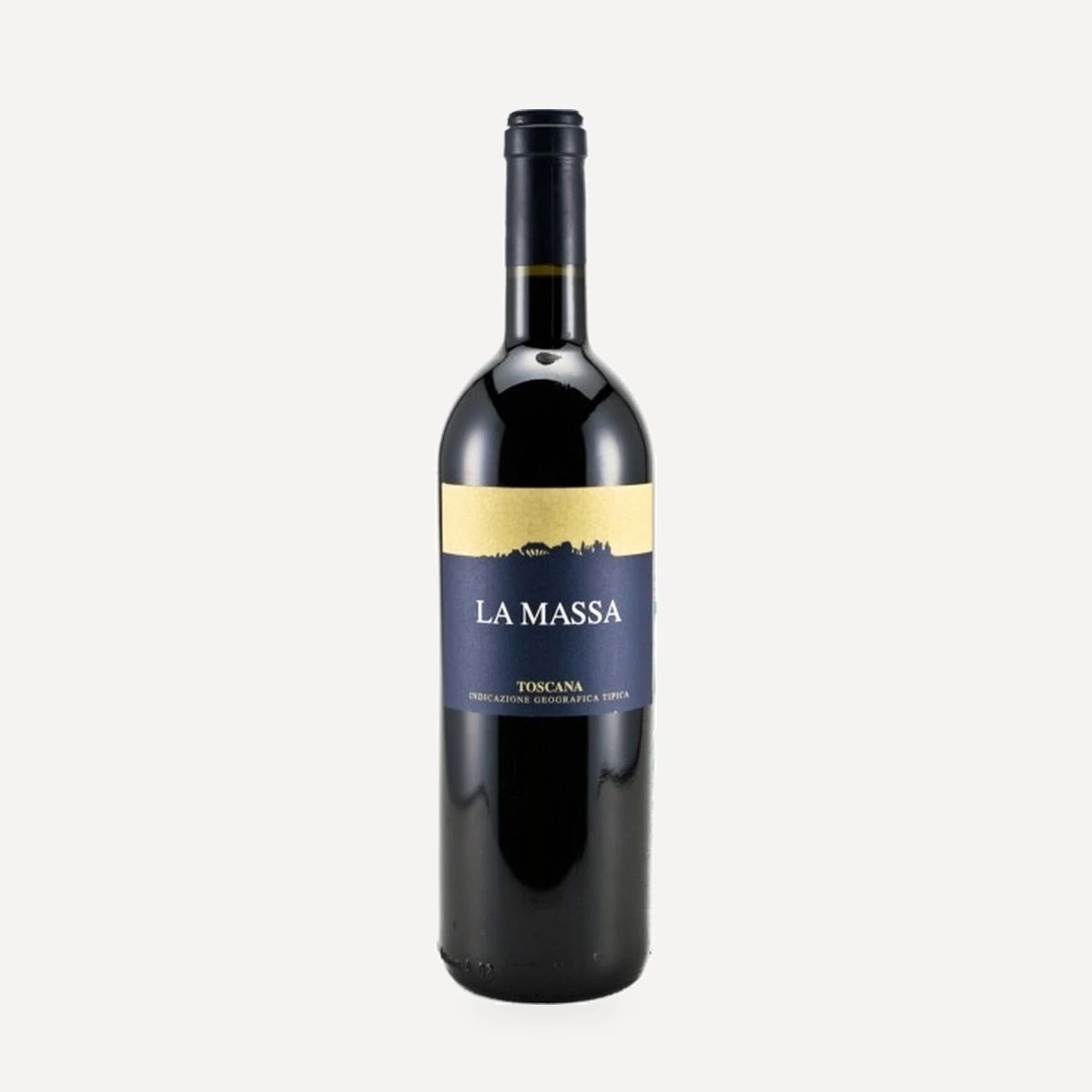
La Massa