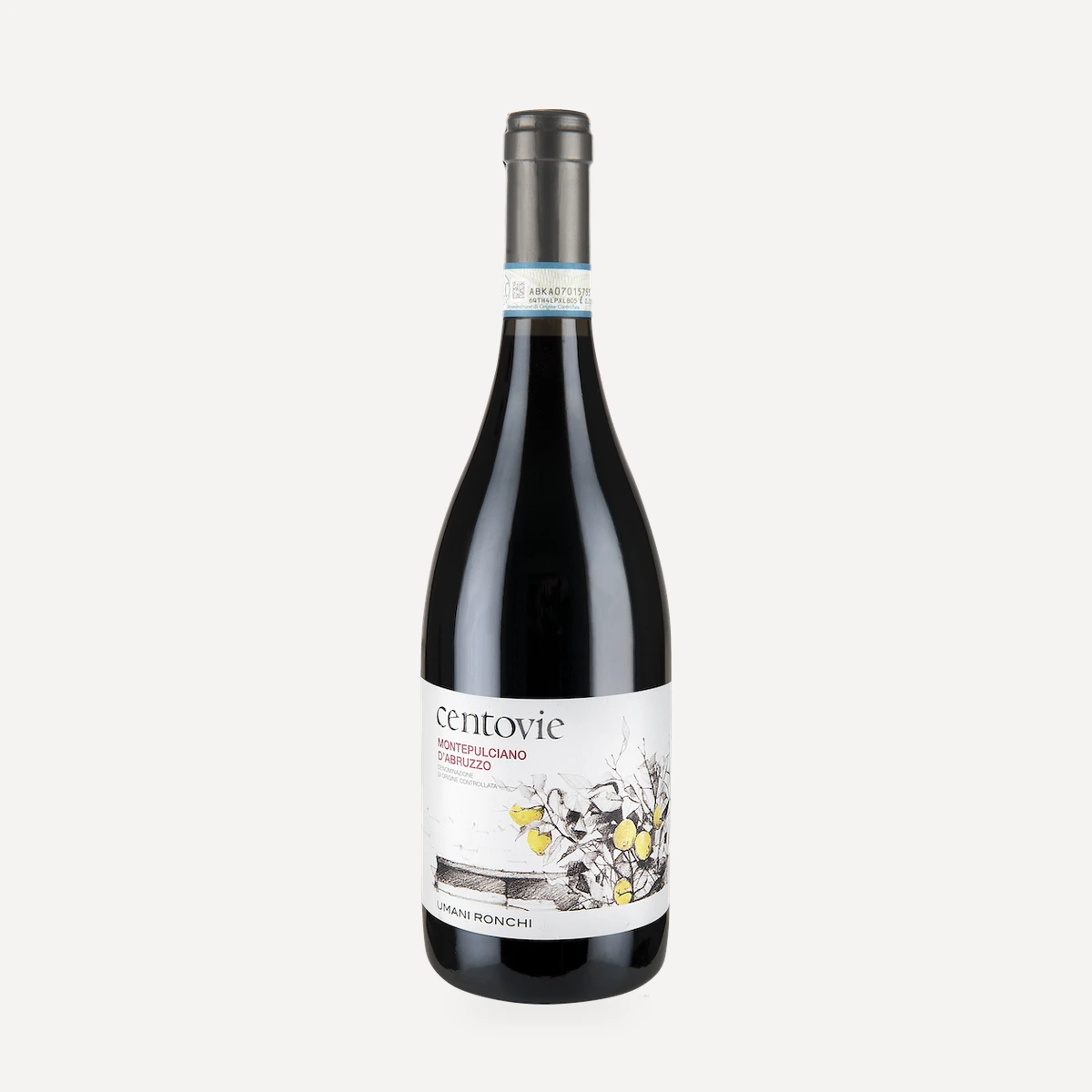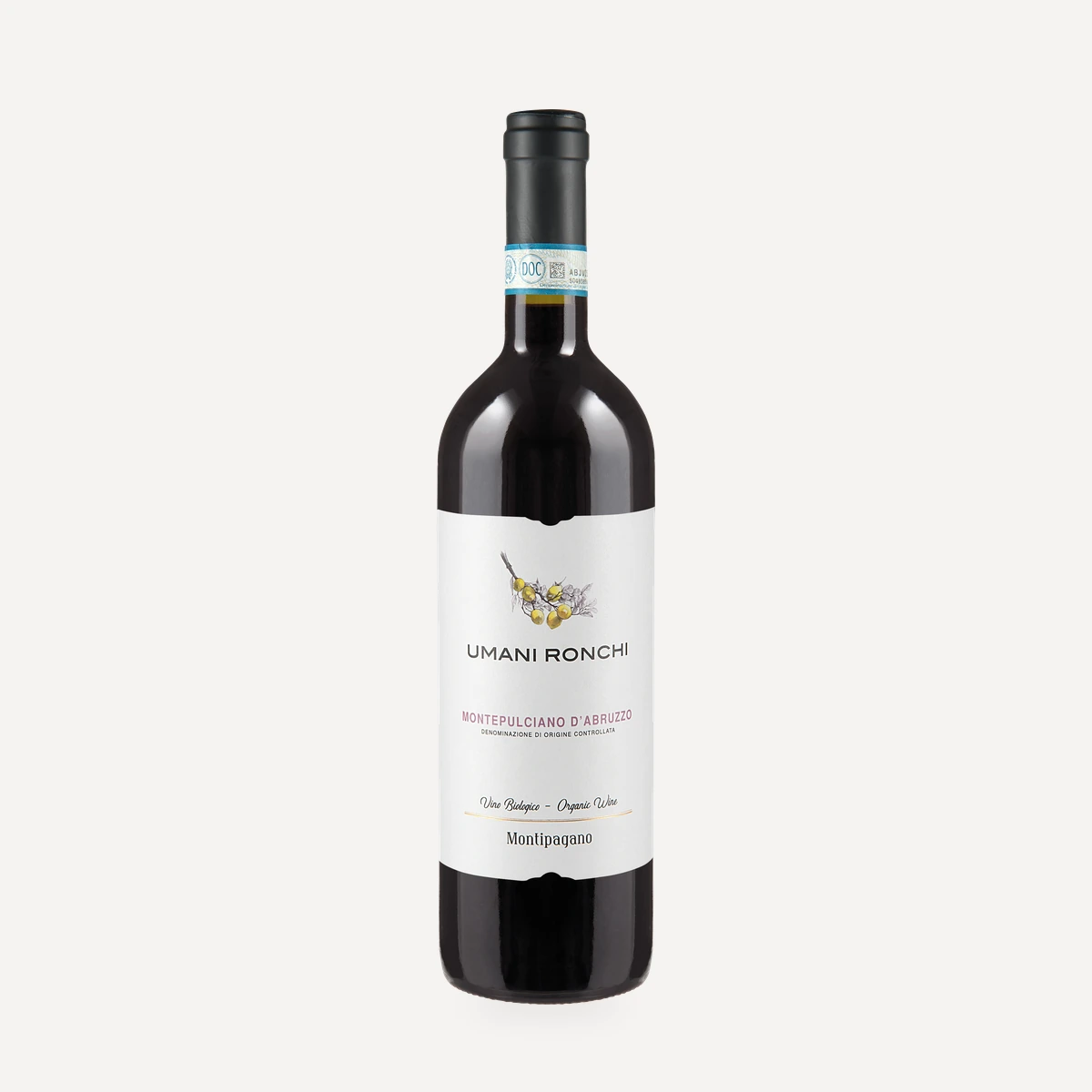
Questo vino
Vineyard and terroir
Jorio is sourced from selected vineyards in several municipalities across Abruzzo. Pruning is managed to restrict crop levels and improve air circulation around the fruiting zone, supporting even ripening of Montepulciano.
Grapes
100% Montepulciano.
Vinification
Harvesting is by hand, normally from late September to mid-October. The grapes are destemmed and lightly crushed, then ferment and macerate in stainless-steel vats for 10–12 days at 26–28°C. Malolactic fermentation begins once alcoholic fermentation is complete.
Ageing
The wine matures for approximately 12 months. About half is kept in oak barrels holding 5,000–8,000 litres, while the remainder ages in barriques on their third or fourth use. After assemblage, it rests in bottle for several months.
Tasting profile
Deep ruby red. Aromas of plum and red cherry are followed by balsamic and saline nuances over ripe liquorice. The palate is full and vigorous, with clean, expressive tannins and a long, intense finish.
Serving and pairing
Serve at 18°C in a medium-sized, roughly spherical glass that allows the complex aromas to develop. Pair with pasta in meat sauces, roast white or red meat, chicken or rabbit chasseur, and mixed grills.
Label / history
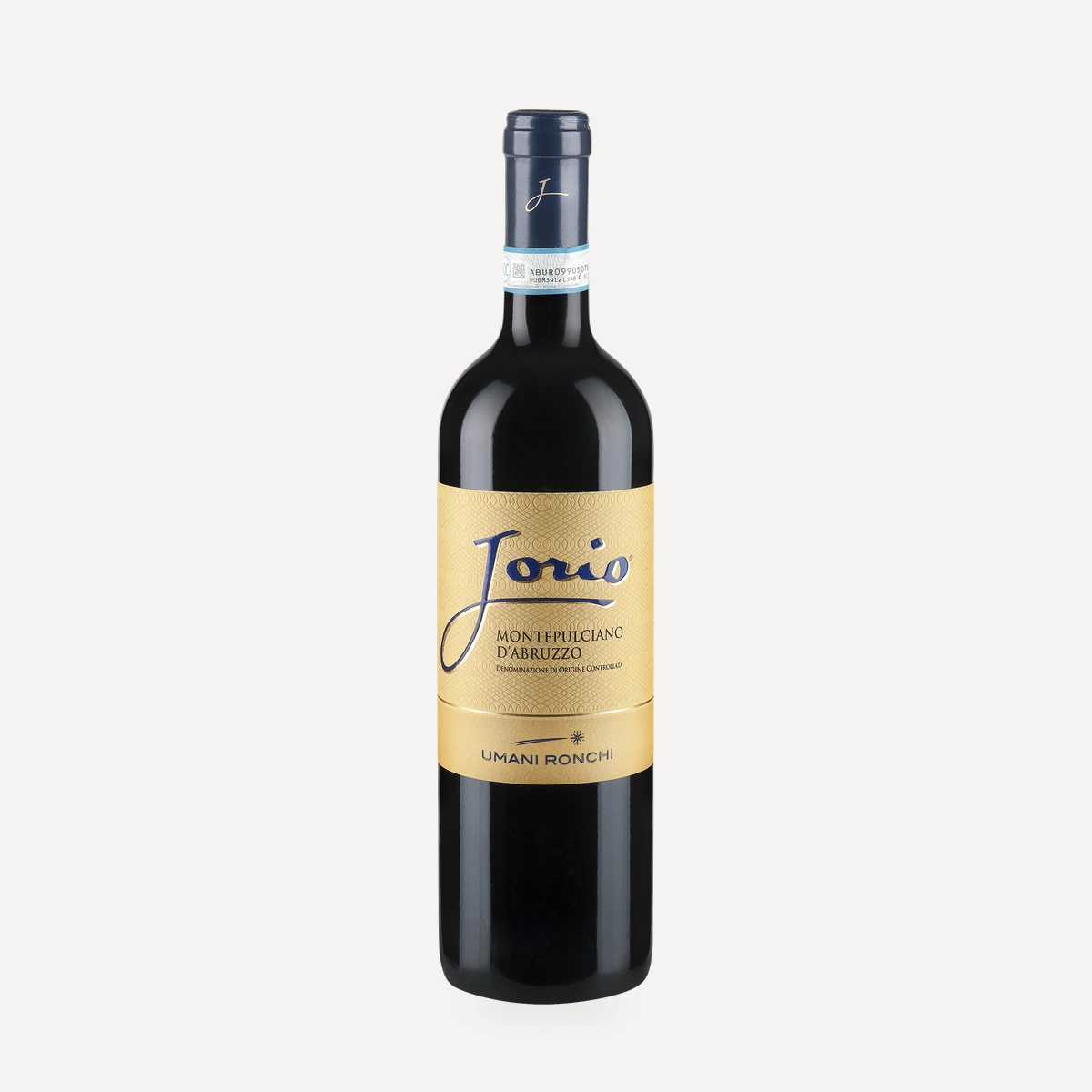
First produced in 1993, Jorio was created in the mid-1990s as a selected expression of Montepulciano d'Abruzzo, working with dedicated growers whose vineyards occupy particularly favourable sites. Its name pays tribute to the twentieth-century Abruzzese poet Gabriele D’Annunzio and his pastoral tragedy The Daughter of Jorio.