Storia
Family origins in the 1930s
The story preceding La Traversa began in the 1930s with Stefano Farina and his wife, Giovanna, who ran a trattoria. Food was not the trattoria’s only concern: wine was also served there, and Stefano’s growing interest in oenology eventually became stronger than his interest in the restaurant trade.
1939: the wine business begins
In 1939, despite the approach of war, Stefano established Farina Stefano, a sole proprietorship devoted to bottling and selling wine. The decision marked the family’s formal entry into the wine trade.
1941: the family settles in Erba
Stefano and Giovanna moved to Erba in 1941. The town became the centre of family life for them and for subsequent generations, including their sons Bruno, Giancarlo and Gino, their sons’ wives and their descendants.
Stefano transmitted his interest in wine and viticulture to Giancarlo, his second son. Giancarlo studied oenology in Alba. Once his studies were complete, he decided that bottling and marketing wines made by others was no longer sufficient: he wanted the family to produce wine itself. His experience in Piedmont shaped a project focused on becoming growers and producers in established Italian wine territories. Stefano, Bruno and Gino supported that plan.
1963: the sons enter the company
In 1963, the sole proprietorship was replaced by Stefano Farina and Sons, formally bringing Bruno, Giancarlo and Gino into the family business.
1975: La Traversa is established
The decisive transition from wine merchants and bottlers to winegrowers came in 1975. The family established Cascina La Traversa di Farina Giancarlo & C. and acquired property in the Barolo area at La Morra. La Traversa became the family group’s first wine estate and the first practical expression of Giancarlo’s Piedmontese project.
The estate was selected for its Nebbiolo vineyards and its position in the hills of the Langhe. La Traversa subsequently became associated principally with vintage Barolo and Barolo Riserva, alongside Barbaresco. It remains one of the five estates assembled by the Farina family in Piedmont, Tuscany and Apulia.
Terroir
Location and landscape
La Traversa is situated at La Morra d’Alba in Piedmont’s Langhe, within the Barolo area. The name Langa is presented as an old Piedmontese word meaning “crest,” an apt description of the narrow chain of hills that winds inland from Liguria along the Tanaro Valley. The landscape consists of successive steep slopes and hilltops, interspersed with old villages and the geometric pattern of vineyards.
The terrain is difficult to work. Its steep hillsides became suitable for vines through sustained, meticulous cultivation.
Elevation and exposure
The estate vineyards are predominantly exposed to the south and south-east, giving Nebbiolo the long hours of sunlight it requires. Their intermediate hillside position avoids both the humidity that can stagnate on valley floors and the excessive ventilation affecting higher plots.
The Barolo vineyards are also described as receiving warm afternoon sunlight. Their soils occur above 170 metres above sea level.
Soils
The broader estate soils have a medium limestone content and are particularly rich in white clay. The Barolo vineyard description adds greyish-white quartz sand to this calcareous profile.
Climate
Spring brings abundant rainfall. This builds a water reserve that helps the vines withstand summers that are often dry and warm, supporting balanced vegetative growth and reproductive development.
Nebbiolo and site variation
Nebbiolo is the estate’s defining grape. Its expression changes with soil composition, exposure and microclimate, making the siting of the vineyards central to the character of the resulting wines.
Vinificazione
La Traversa’s viticultural emphasis is on matching Nebbiolo to well-lit hillside sites. Predominantly south- and south-east-facing vineyards provide extended sunlight, while their intermediate elevation limits both valley humidity and excessive high-slope wind.
The steep Langhe terrain requires careful, sustained work to keep the slopes suitable for viticulture. Spring rainfall supplies the soil with water before the frequently dry, warm summer, helping the vines maintain balance through vegetative and reproductive development.
Vinification is framed as the completion of work begun in the vineyard. The estate’s stated approach centres on meticulous, gentle and passionate handling, with grape quality treated as the indispensable basis of the finished wines.
Filosofia
La Traversa’s philosophy places grape quality before cellar technique: the wines begin with properly situated vineyards and fully expressive Nebbiolo. Soil, exposure and microclimate are understood as active sources of variation, allowing the variety to convey distinct aspects of its place of origin.
The estate combines this terroir-led outlook with meticulous, gentle and passionate vinification. Within the wider Farina family tradition, winegrowing is treated as an inherited responsibility passed between generations. Shared decisions, attachment to the land and the ambition to produce wine directly—rather than merely bottle and sell it—shaped the creation of La Traversa.
Vini
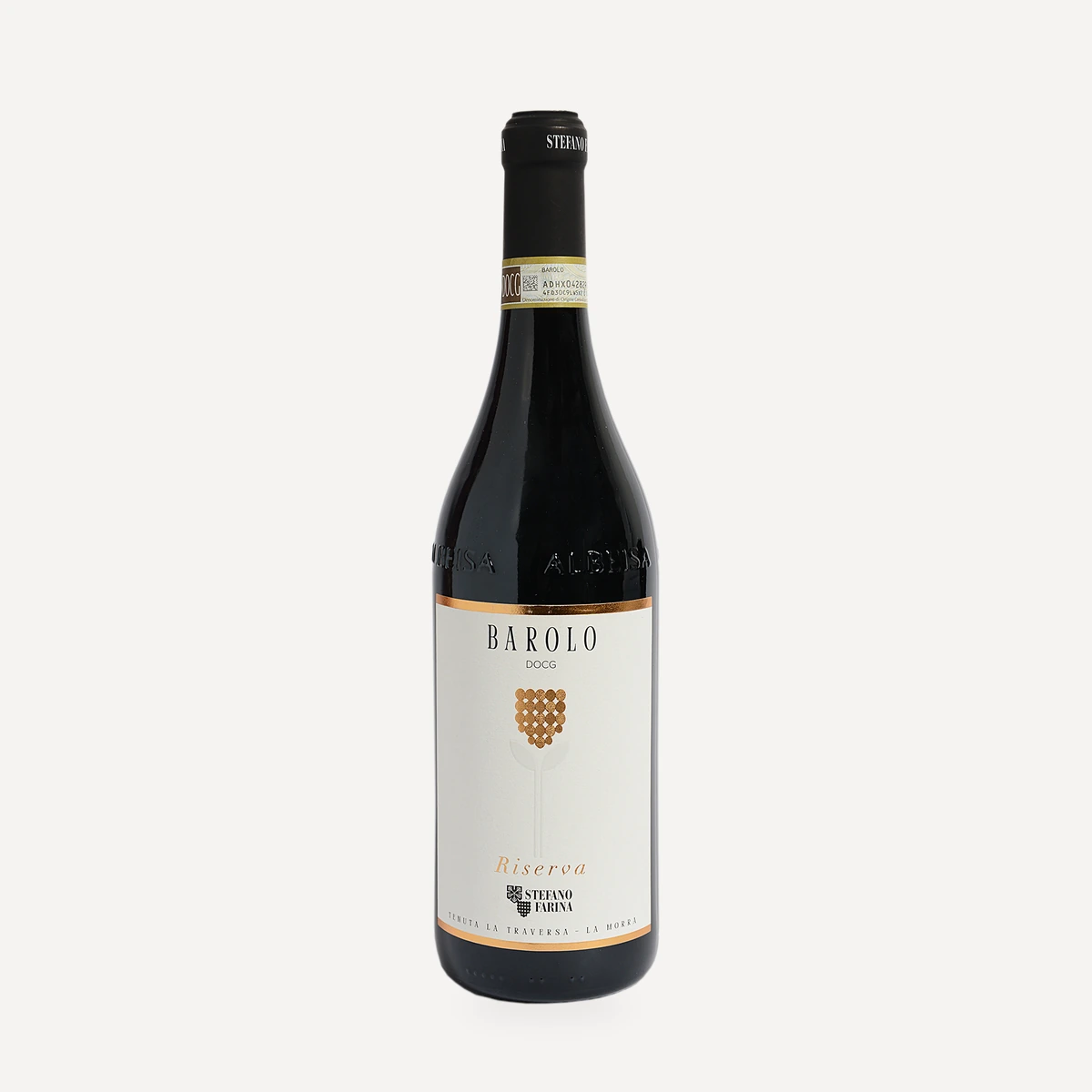
Barolo Riserva
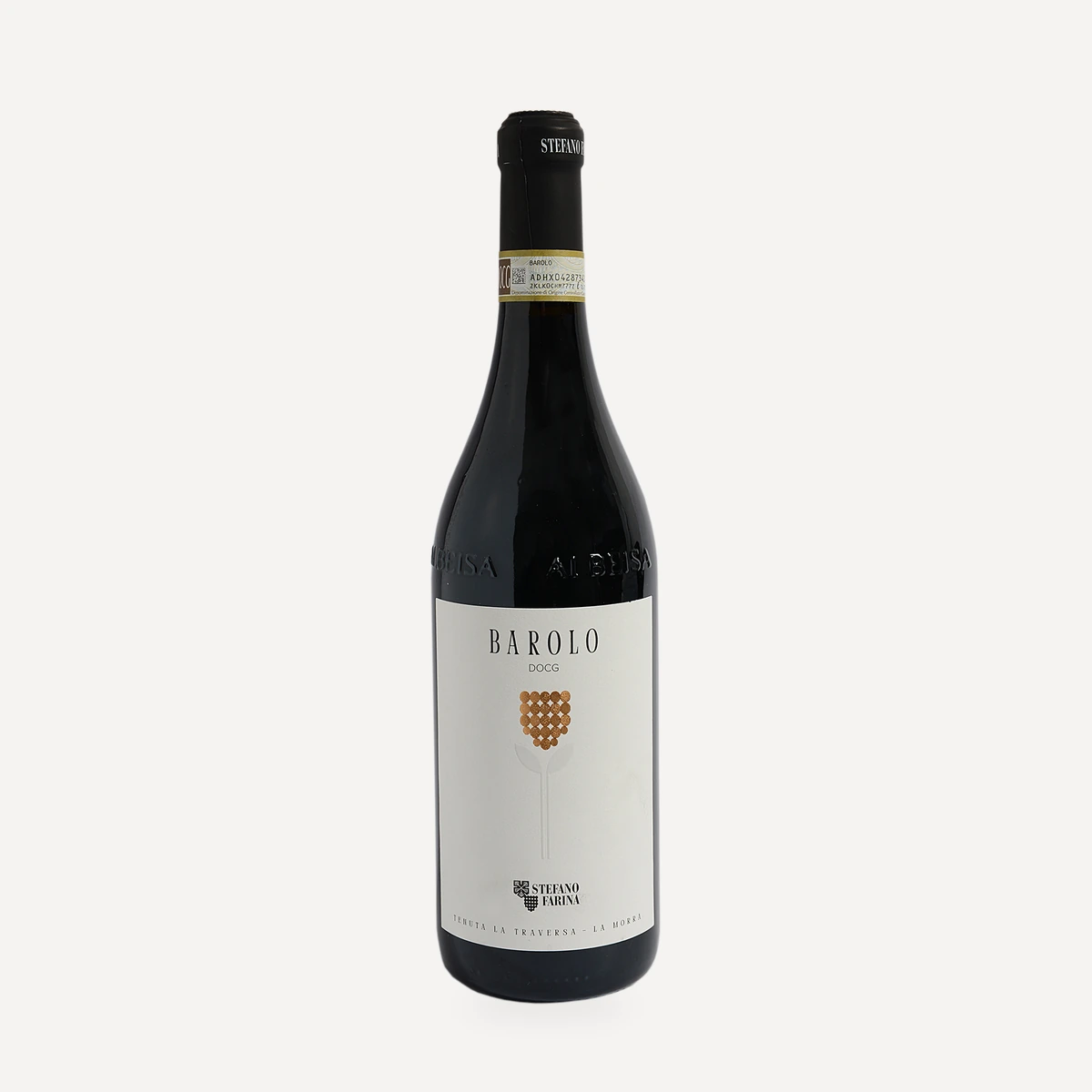
Barolo