History
The farmhouse before Cascina delle Rose
The farmhouse was built by an unnamed farmer more than a century ago. Its original rural layout comprised solid stone walls, two wells, a stable, barn, woodshed, granary, cool cellar, living rooms and a courtyard protected from the winds. It looked across the Rio Sordo valley and its small railway station, the vineyard-covered hills and castles extending from La Morra towards Asti, and the Alpine arc from Monviso to Monte Rosa.
1948: Beatrice and Ferdinando Rizzolio
The story of Cascina delle Rose began immediately after the Second World War. Giovanna’s grandparents, Beatrice and Ferdinando Rizzolio, fell in love with the farmhouse and its panorama of hills and Alps. The Rizzolio family acquired the house and land in 1948. At that time, it belonged to a much larger property encompassing almost the entire Rio Sordo area.
The early farm was not centred exclusively on wine. Family memories include freshly drawn milk, wheat-threshing celebrations in the courtyard, evening corn-husking, hazelnut harvesting, large grape-harvest baskets and the aroma of fermenting grapes in vats. Only enough grapes were initially crushed to make wine for annual family consumption.
1974: Giovanna returns to the farm
In 1974 Giovanna moved permanently into the farmhouse, driven by a desire for a more tangible way of life and by the ambition to continue her grandparents’ agricultural enterprise. The house, vineyards, cellar and family became parts of a single long-term project. Italo subsequently joined the challenge, followed by their sons Davide and Riccardo, establishing the family team that carries the estate into the present.
1984–1985: the entire crop is vinified
Wine production increased gradually from the small quantity reserved for family use. By 1984–1985, the estate was vinifying 100% of its grape harvest. Production later reached approximately 30,000 bottles per year.
1992–1993: the emblem and hospitality
In 1992, a close family friend captured an unusual scene in a drawing: Patata, the family dog, Mimì, the cat, and a swallow playing together. The image became the Cascina delle Rose logo and a representation of harmony.
In September 1993, the family began offering independent holiday apartments within the farmhouse. What had begun as informal hospitality for friends developed into a permanent part of the estate, with the family opening its home to travellers from around the world.
2018–2024: Marcorino and the next generation
In 2018, Cascina delle Rose added the Marcorino cru in Neive to its production. The acquisition brought a small vineyard planted in 1944, divided into two parcels. Its very limited production is offered first to longstanding customers, with the first release scheduled from 2024.
Davide assumed responsibility for agricultural production, working with the collaboration of the entire family. In 2020 he received the Autochtona award for Best Winemaker Under 40. Riccardo contributes what the family describes as a consistently forward-looking vision; together, the brothers also host cellar visits and tastings.
Terroir
Setting
Cascina delle Rose stands at Tre Stelle in the commune of Barbaresco, within Langa. Its surroundings comprise winding vineyard roads and rolling hills, the valley shaped by the Tanaro River and the Alpine panorama. The farmhouse looks towards Barbaresco and across the Rio Sordo valley; the wider view reaches the chain of hilltop castles between La Morra and Asti and the Alps from Monviso to Monte Rosa. Langhe, Roero and Monferrato surround the property.
Geology and water
The vineyard soils are marine in origin and date from the Tertiary era. Their compact, densely layered subsoil is principally composed of silt, clay and sand. Grey-blue, calcareous marl, sandy sections, mineral salts and a notable presence of underground spring water recur across the estate. In some parts of Tre Stelle the bluish marl reaches the surface; elsewhere it lies approximately 1–3 m below ground.
Exposures and microclimate
The estate associates its site-specific microclimate and varied, favourable exposures with the character and finesse sought in its wines. The documented vineyard positions range from 230 to 310 m above sea level and include eastern, southeastern, southern, southwestern, western and northwestern exposures. The three named Barbaresco crus differ geologically: Tre Stelle and Rio Sordo are dominated by bluish, calcareous marl, while Marcorino contains clay-limestone marl with abundant sandstone, clay and silt.
Winemaking
Agricultural production is directed by Davide with the collaboration of the entire family. Vineyard decisions are adjusted to the climatic conditions of each growing season rather than applied as a fixed formula. The vines are tended directly, row by row and year after year, with an emphasis on light, careful and responsible intervention.
All vineyards are certified organic. Ground vegetation is controlled mechanically through inter-row hoeing and shredding, together with a winter soil operation. Copper- and mined-sulfur-based treatments are reduced to a minimum. Across the documented sites, vines are Guyot trained at densities of 4,400–5,000 vines/ha.
Harvesting is performed by hand with close attention to the crop. Some bottlings receive an additional field selection of grapes, including the Nebbiolo destined for Rio Sordo and Marcorino.
The farmhouse incorporates a naturally cool cellar within its original stone agricultural structure. Production developed from a small volume made for family consumption to the vinification of the estate’s entire grape crop by 1984–1985; present output is approximately 30,000 bottles annually.
The family follows traditional production methods while making incremental changes to small technical details. Across the range, grapes are harvested by hand. Mechanical processing is deliberately gentle: whole stems are expelled without crushing the seeds. Alcoholic and malolactic fermentations take place in steel tanks. Skin-contact duration varies by grape and vintage, and submerged or semi-submerged caps and pumping over are used where appropriate.
Maturation is adapted to the material. Some wines remain in steel or concrete without wood, while others mature in large, untoasted Slavonian oak vessels made by Garbellotto and Swiss oak vessels made by Suppiger. The winemaking principle is to preserve the vineyard expression rather than impose toasted-oak character.
Bottling is performed during the waning phase of the moon. The wines are neither filtered nor fined, preserving their structure, and receive a final period of bottle rest before labelling and release.
Philosophy
Cascina delle Rose defines itself as a family of artisans producing wine in harmony with nature and places respect, community and sharing at the centre of its work. Its stated goal is to make wines that reflect the identity of their territory through complexity, elegance and finesse.
The family links tradition, respect for nature and elegance as inseparable principles. Traditional methods remain the foundation of production, while improvement comes through small, gradual innovations. Direct work among the vines has shaped a conviction that nature is already highly ordered and that human intervention should therefore be light, attentive and responsible.
Vintage variation is treated as a factor requiring judgement: Davide’s agricultural decisions change with the climatic conditions of each year. In the cellar, the principle that wine and vineyard must both be respected “in their own time” is expressed through vintage-dependent maceration, restrained use of wood, avoidance of filtration and fining, and bottle ageing before release.
Harmony also extends beyond production. The 1992 drawing of the family dog, cat and a swallow became the estate emblem because the family saw it as an image of coexistence. Hospitality follows the same outlook: guests are invited into the family home with the aspiration that they leave as friends.
Wines
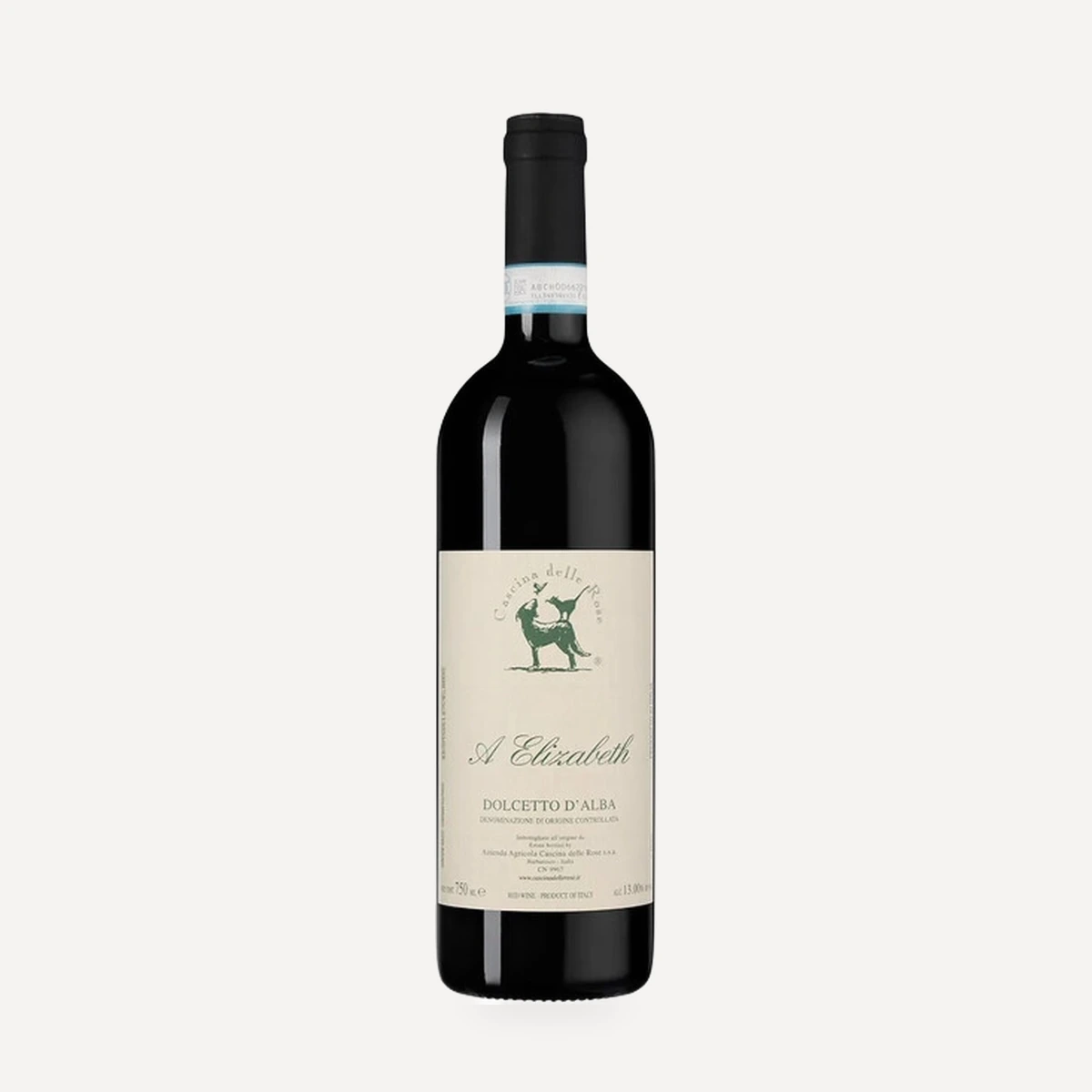
Dolcetto d'Alba A Elizabeth DOC
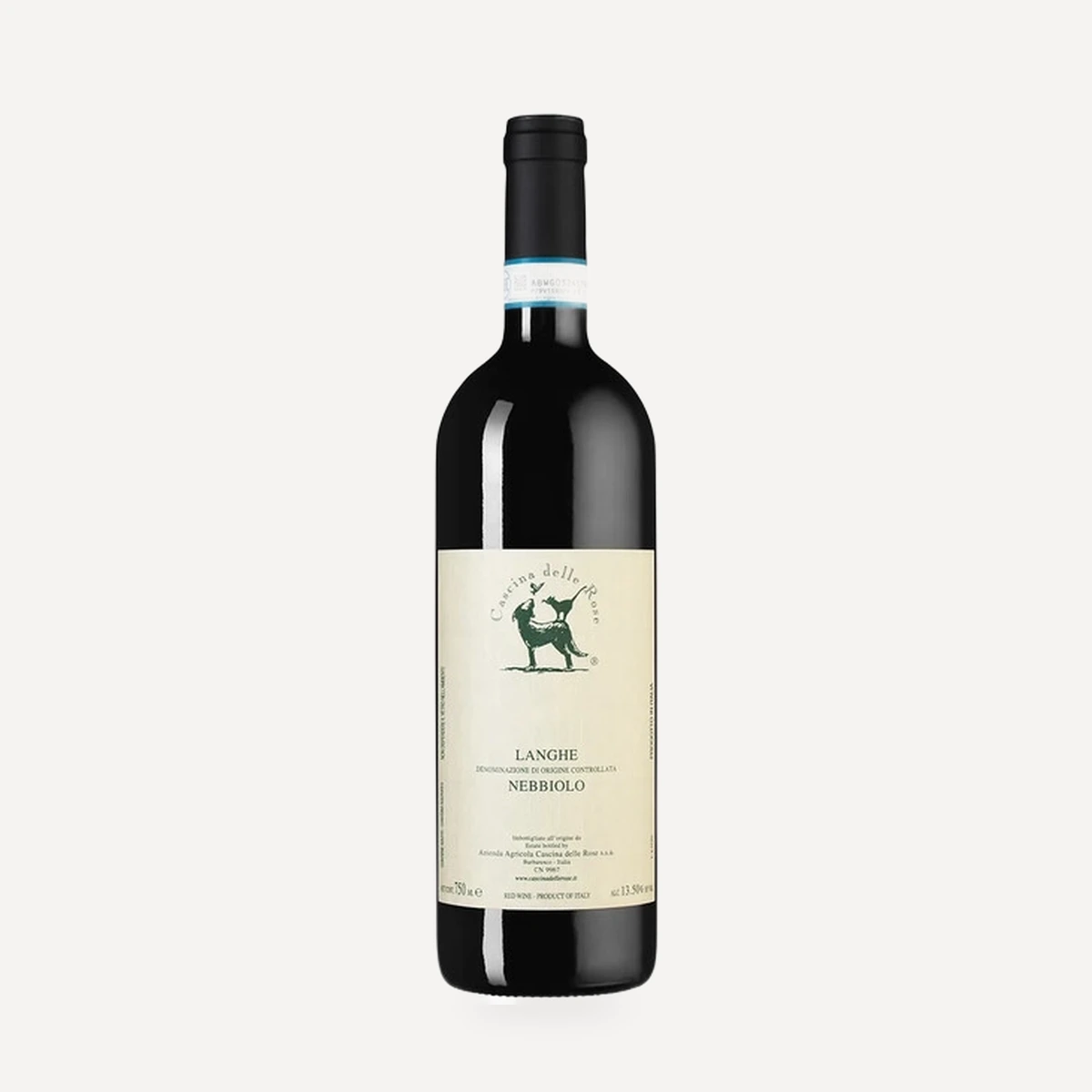
Langhe Nebbiolo DOC
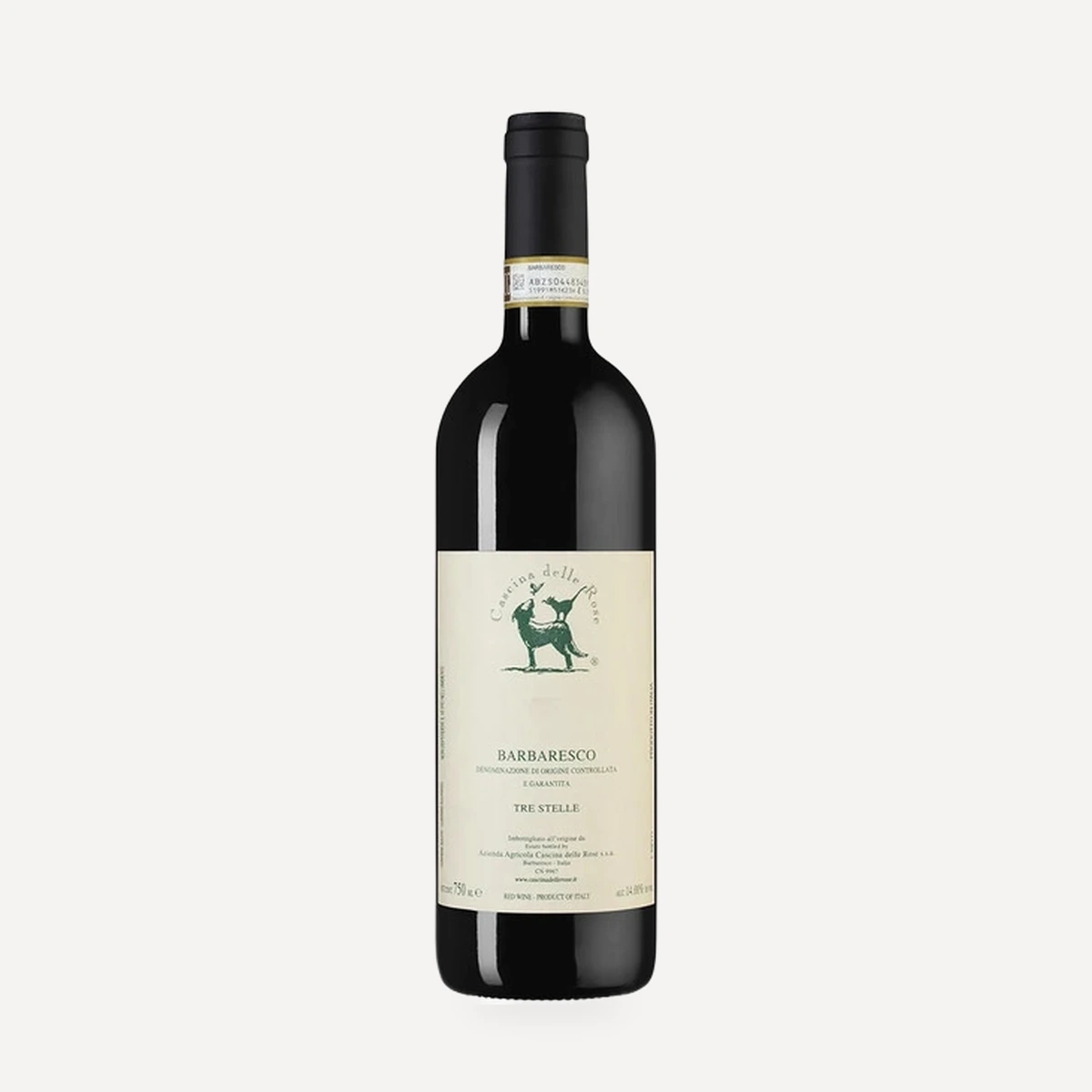
Barbaresco Tre Stelle DOCG