Storia
Eighteenth-century origins
Podere Il Palazzino belongs to the group of Tuscan farmhouses, residences and agricultural properties built or restored during the eighteenth-century agrarian reform promoted by Pietro Leopoldo, Grand Duke of Tuscany and a member of the Habsburg-Lorraine family.
Sderci family ownership
The Sderci family acquired Podere Il Palazzino in the mid-nineteenth century and has retained ownership ever since. The property developed as a small mixed farm, today covering 20 hectares and devoted primarily to vines, with a smaller area under olive trees.
The present vineyards and cellar
Alessandro established the estate’s present vineyards and created a new cellar built entirely below ground. The limited size of the property shaped an artisanal operating model in which most work is performed manually.
Evolution of the vineyards and range
A small part of the Bertinga holding was planted to Colorino. Its deeply coloured wine was originally used in small additions to other estate wines; it was subsequently bottled under its own Stagi label after 18 months in used barriques and a further six months in bottle.
Beginning with the 2008 vintage, Bertinga incorporated Merlot from the Argenina vineyard, at up to 40% of the blend, alongside Cabernet Sauvignon from Bertinga and Monti.
Terroir
Podere Il Palazzino lies at Monti in Chianti, 20 km north-east of Siena, in the southern part of the Chianti area toward Gaiole.
The vineyard environments differ substantially across the estate’s locations. The approximately 2-hectare vineyard adjoining the farm buildings at Monti in Chianti stands at about 400 metres above sea level and faces south to south-east. Its medium-textured calcareous soil consists principally of alberese and galestro.
Argenina lies between 310 and 375 metres above sea level, with exposures extending from south-east to south-west. Its soils are described as volcanic in origin and are distinguished by the yellow-ochre colour of tuff; the technical description also identifies tuffaceous, calcareous and clay components. This environment is associated with fruit freshness, floral aromas, harmony and a mineral impression.
Bertinga is near the village of Lecchi in Chianti. The 2-hectare vineyard is at approximately 360 metres above sea level, faces south and combines tuffaceous material with limestone and clay.
The vineyards used for Malvasia Toscana and Trebbiano Toscano are situated in Gaiole in Chianti at approximately 360 metres, on limestone-and-clay soils.
Vinificazione
Viticulture is organised around the estate’s small scale and relies predominantly on manual work. Grapes are harvested and selected by hand.
The owners exclude insecticides, herbicides and all synthetic products from the vineyards. Plant management seeks to preserve the vines’ natural balance by improving ventilation and sunlight exposure and controlling humidity. These interventions are intended to reinforce the plants’ own resistance to disease and harmful insects.
Spurred-cordon training is used in the individually described red-wine vineyards. Vines in the Monti vineyard adjoining the farm buildings are pruned to a maximum of six buds, while Bertinga is restricted to no more than four. Reported yields range from 40 q/ha for the Colorino selection and 50 q/ha for the Cabernet Sauvignon-based selection to 50–60 q/ha for the principal Monti Sangiovese parcel and 60–70 q/ha for Argenina. The white-grape selection is reported at 20 q/ha.
The modern cellar is constructed entirely underground. Fermentations are conducted without the addition of selected yeasts, malolactic fermentation occurs naturally, and antioxidant use is reduced to the minimum considered necessary. These cellar practices accompany an artisanal production model shaped by the estate’s limited size and reliance on manual work.
Filosofia
Podere Il Palazzino presents its small size as the basis of an artisanal approach, with most tasks carried out manually. Its environmental philosophy begins with the protection of the place in which the owners both live and work.
In the vineyard, the guiding principle is respect for the plants’ natural equilibrium. Ventilation, sunlight and humidity are managed to encourage the vines’ inherent defences, while insecticides, herbicides and synthetic products are excluded. In the cellar, the corresponding low-intervention approach favours fermentation without selected yeasts, natural malolactic fermentation and minimal antioxidant use.
Vini
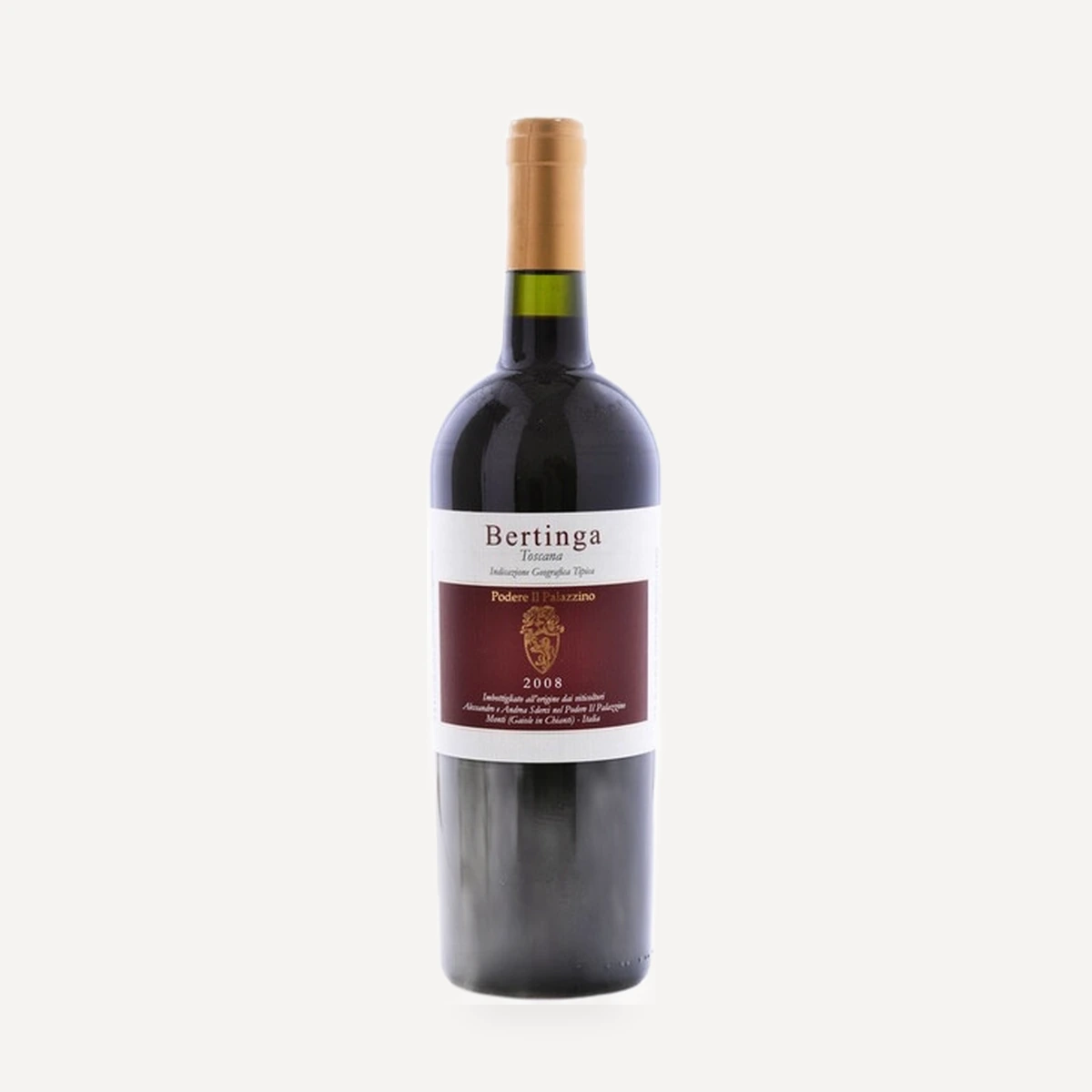
Bertinga
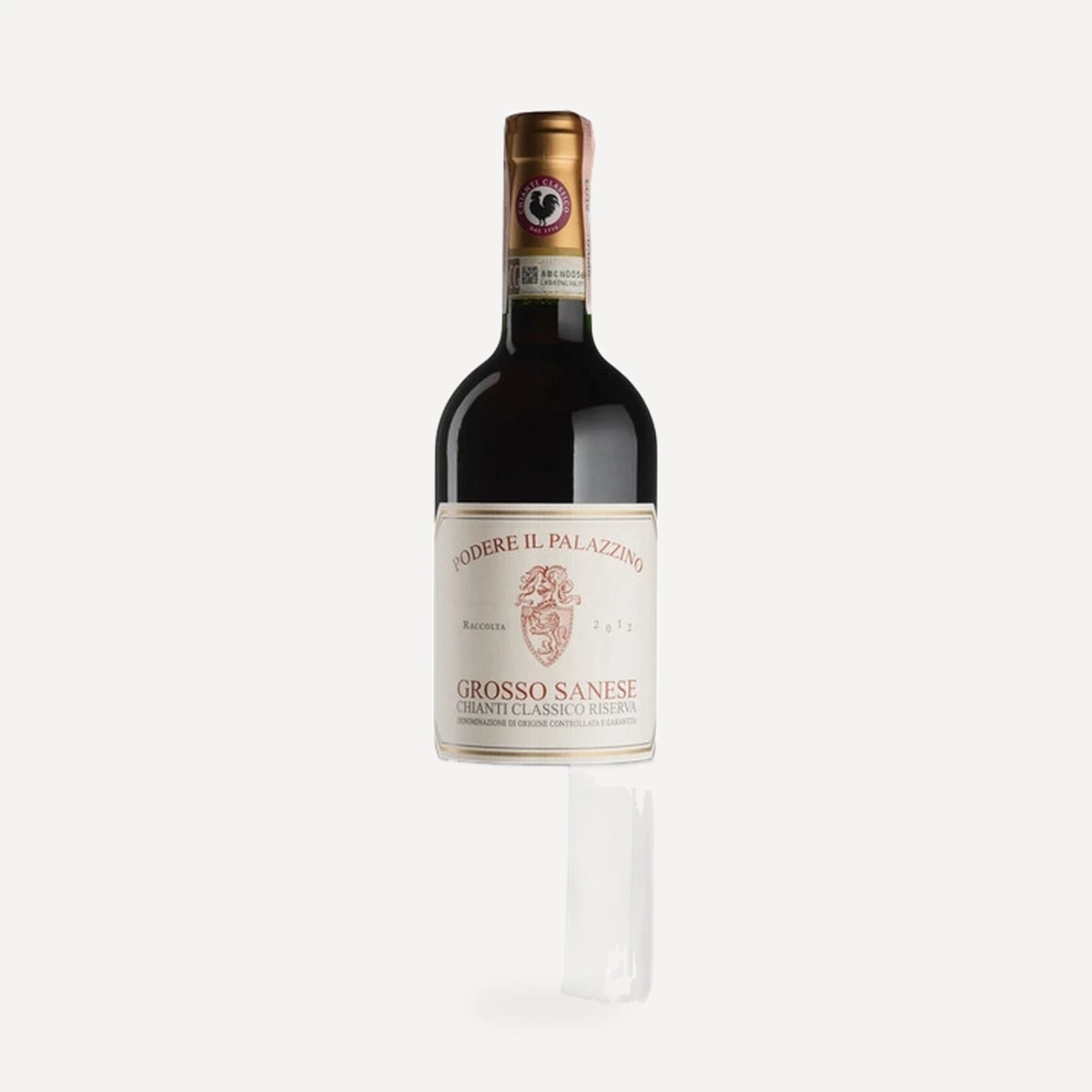
Grosso Sanese
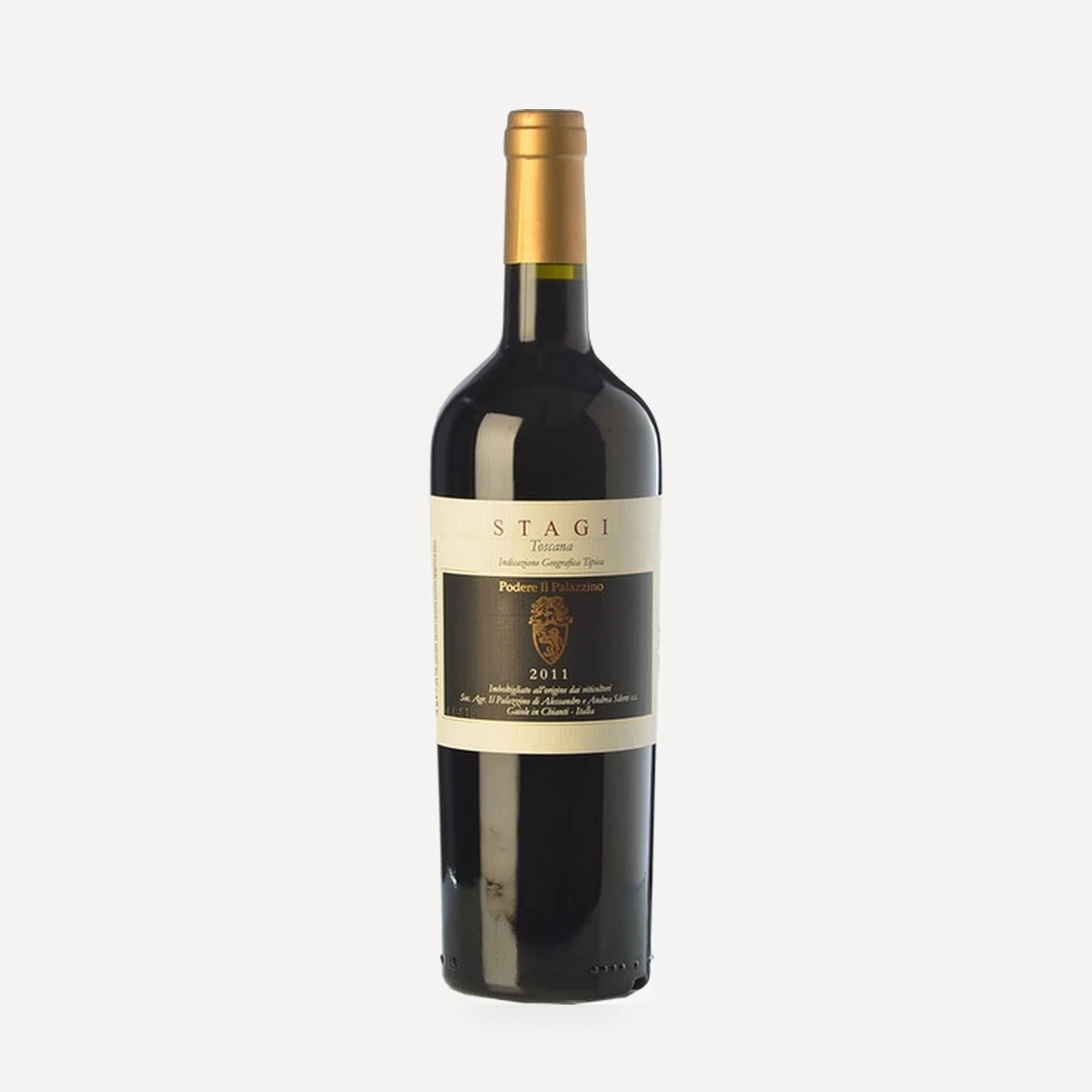
Stagi