Storia
Historical background of Chambave
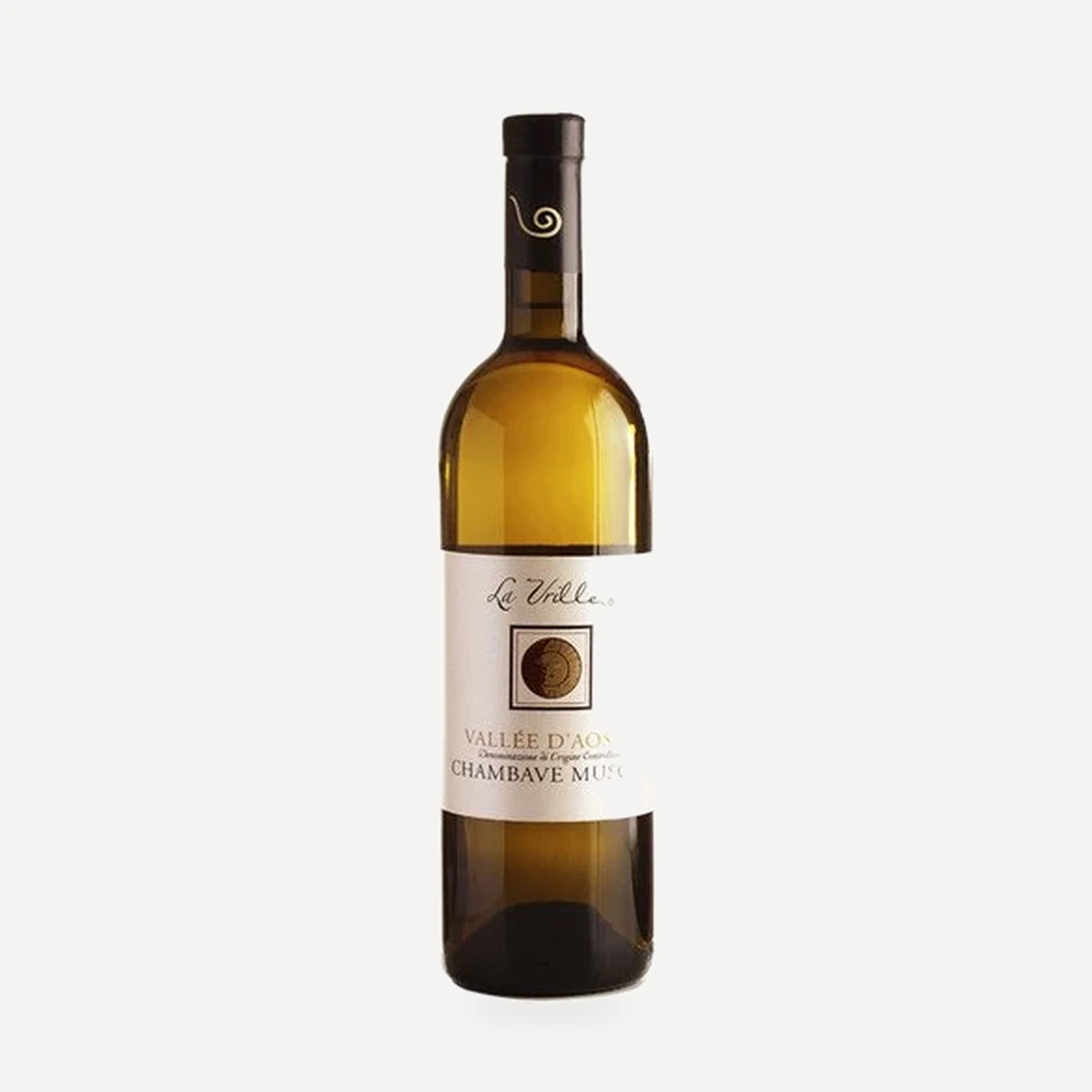
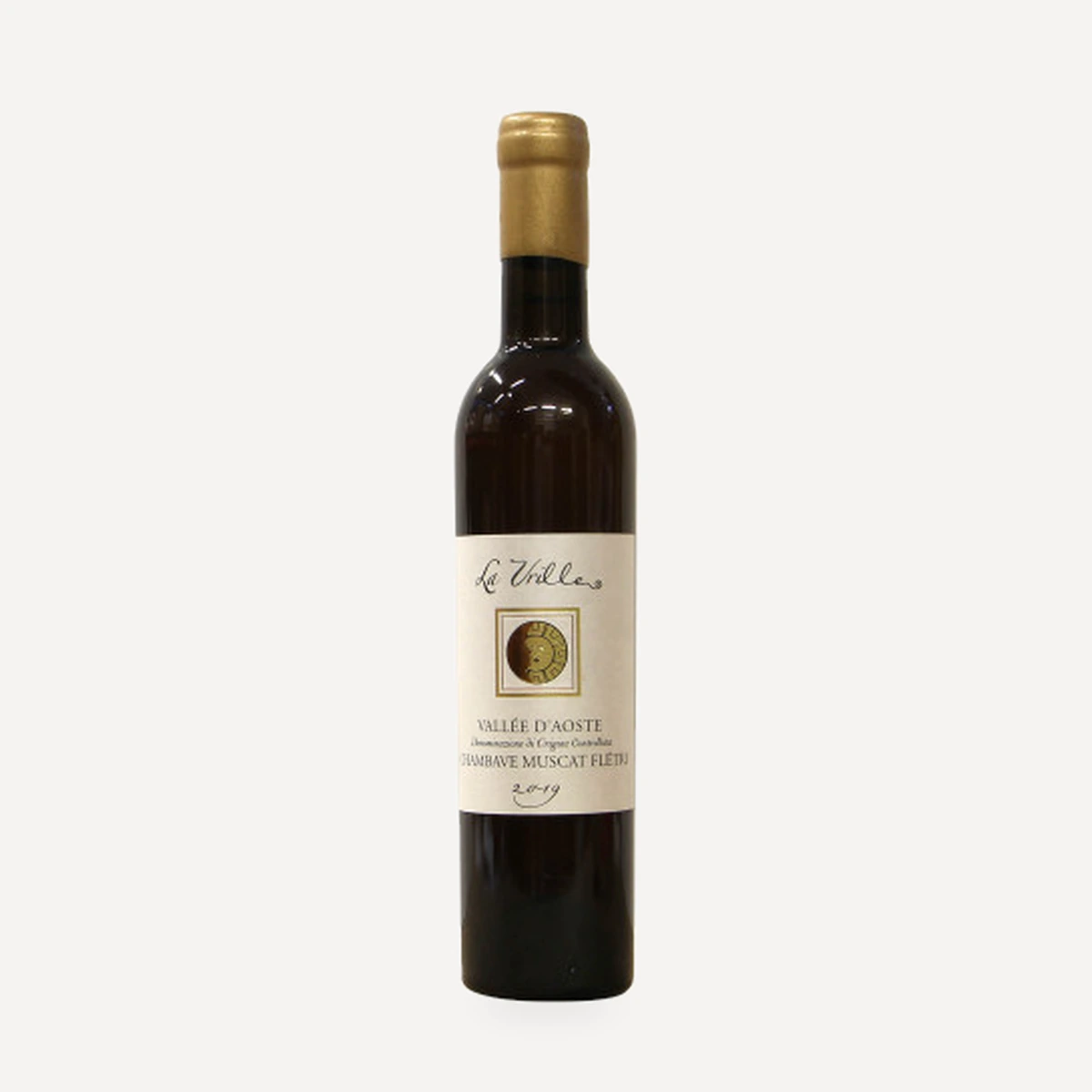
Muscat de Chambave has a documented history extending to 1389, when it was mentioned at the Savoy court. The grape is Moscato Bianco, locally described as à petit grain, and forms part of the historical viticultural identity of the central Valle d’Aosta. La Vrille works it both as dry Chambave Muscat and as naturally dried Chambave Muscat Flétri.
A further historical reference dates to 1494. The wine then known as “Chiaretto di Ciambava,” made by a process compared with that used for sforzato wines and kept for five or six years in cask, was served to Charles VIII of France at the Castello di Issogne in large engraved Murano glasses bearing the Challant family arms.
The family vineyards and the beginning of La Vrille
Hervé Deguillame was born in Marseille and served for several years in the French Navy. He later chose to devote himself to his family’s old vineyards in Valle d’Aosta. The business began growing grapes in the early 1990s, establishing its work around the recovery and cultivation of the area’s native varieties.
The revival of grapes including Cornalin, Fumin, Petit Rouge and the particularly rare Vuillermin coincided with broader identification and selection work undertaken from the 1990s by the Institut Agricole Régional. At La Vrille, these varieties became central to a small-scale model based on native-vine biodiversity, demanding mountain sites and predominantly manual work.
2002 — the agritourism project
In 2002, Luciana and Hervé created La Vrille as an agritourism farm. They converted an old barn and stable with natural materials while preserving Alpine architectural principles. The project also drew on the contribution of Hervé’s parents, Pino and Rita. The former agricultural buildings later evolved into La Vrille’s renewed hospitality accommodation.
2005 — first estate vinification
The first vinification in La Vrille’s own cellar took place in 2005. From that point, the business combined its established vineyard work with on-site wine production. Its stated direction has been to reconcile innovation with tradition while retaining limited volumes and a clear connection to its mountain territory.
The production spaces were developed in rooms excavated into the rock. Temperature-controlled stainless-steel tanks were installed for red-wine production, while two insulated tanks were provided for Muscat to protect and develop its aromas. A separate room was dedicated to the natural drying of Chambave Muscat Flétri. The vaulted barrel cellar was built with green stone from Verrayes and equipped with 300- and 500-litre oak vessels; it also became the setting for tastings.
Expansion and investment under the 2014–2022 rural-development programme
Through the Valle d’Aosta Rural Development Programme 2014–2022, La Vrille received support to acquire new land adjoining the holding. New vineyards were planted on this consolidated land, and equipment was acquired for both cultivation and transformation. These additions extended the vineyard base while retaining the estate’s compact scale.
Limited editions, art and place
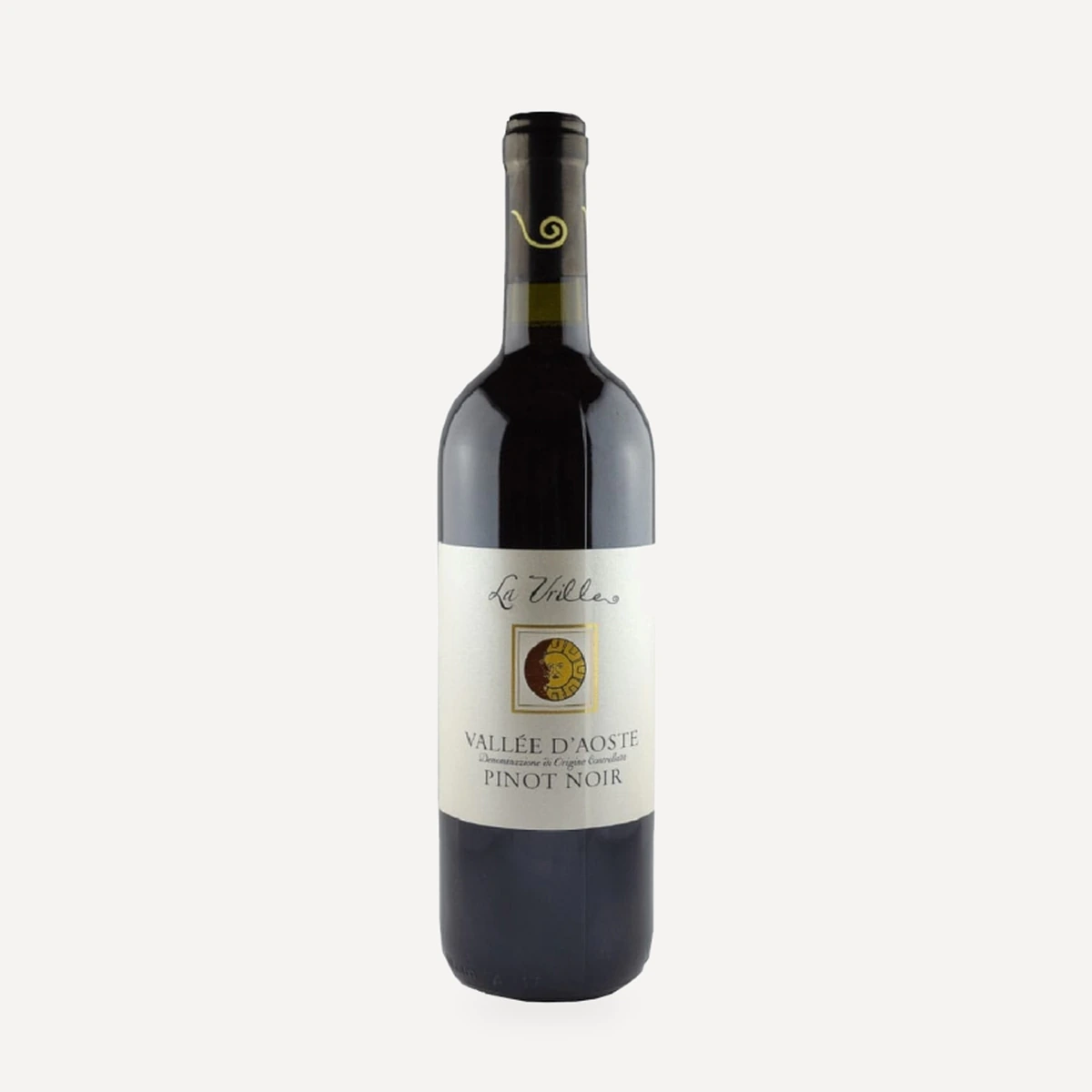
La Vrille introduced annual limited-edition releases, including large-format bottles. The documented 2020 series comprised Cornalin and Pinot Noir; the 2021 series comprised Cornalin, Pinot Noir and Fumin.
In 2022, limited-edition labels were created as a tribute to the nearby Cappella di San Michele at Marseiller. Characters were adapted from 15th-century frescoes by Giacomino da Ivrea, translating imagery from the chapel into a contemporary label design for Pinot Noir, Fumin, Cornalin and Chambave Muscat.
Present-day scale and direction
La Vrille now encompasses approximately 3 ha, including 2.5 ha of vineyards, and produces about 18,000 bottles annually. The winery remains family-run and continues to centre its work on Chambave Muscat, native red grapes, heroic mountain cultivation and limited production. Hospitality, vineyard tastings and the La Vrille Gourmet event have broadened the family project while keeping its vineyards and cellar at the centre of the experience.
Terroir
La Vrille lies in the central Valle d’Aosta, with its winery and vineyards distributed between Verrayes and Chambave. The winery stands at approximately 670 m above sea level along the Via Francigena, with views toward Mont Avic, Mont Emilius, the central valley and the surrounding peaks.
The vineyards occupy a natural mountain amphitheatre around the cellar. Their prevailing exposure is south to south-east, providing abundant sunlight throughout the year. White-wine vineyards in Verrayes are described at about 650 m, while the broader vineyard range extends from approximately 600 to 800 m.
The slopes are steep and are divided into small terraces, including old terraces supported by dry-stone walls. This terrain sharply limits mechanization. Winters are cold and snowy, while summers are hot and dry.
The central valley’s topography shelters the area from humid Mediterranean and Atlantic air currents. The south-facing zone consequently has a notably dry microclimate, with annual precipitation that can fall below 500 mm. The combination of high elevation, aridity and sunny exposure is also associated with the cultivation of Petite Arvine.
The hillsides are morainic, and the Muscat vineyards have sandy morainic soils. These soils are associated with the aromatic expression of Moscato Bianco. The natural amphitheatre also contains xerothermic habitats where Mediterranean and drought-adapted plants grow, including thyme (Thymus vulgaris), wild fennel (Foeniculum vulgare) and wormwood (Artemisia absinthium). La Vrille connects the aromatic presence of these plants—especially thyme and sage—with the character of its vineyards and Muscat wines.
Vinificazione
La Vrille describes its mountain work as heroic viticulture: vines grow on very steep slopes and small terraces where mechanization is minimal, productivity is very low and manual labour is demanding.
Cultivation is carried out almost entirely by hand. Particular attention is given to the soil and to maintaining plant health. Treatments are reduced to a minimum, while ancillary vineyard operations are used to strengthen the vines and create conditions less favourable to disease. Vineyard products are selected from those permitted in organic farming, reflecting an environmental approach rather than a stated organic certification.
The goal is to bring healthy, fully mature bunches to harvest while avoiding unnecessary treatments. The estate also treats the recovery and cultivation of native varieties as a contribution to local biodiversity. Cornalin, Fumin, Petit Rouge and Vuillermin—especially the rare, once nearly extinct Vuillermin—form part of this work, alongside Chambave Muscat.
The estate’s vineyards were expanded after adjoining land was acquired through support under the Valle d’Aosta Rural Development Programme 2014–2022. New vines were planted on the consolidated property, and new cultivation equipment was acquired.
La Vrille’s production facilities are excavated into the rock. The cellar is conceived as an extension of the vineyard approach: natural processes are followed while unnecessary or excessive manipulation is avoided.
The vinification room contains temperature-controlled stainless-steel tanks for red-wine processing. Muscat is handled in two insulated tanks intended to protect and develop its aromas. Chambave Muscat Flétri undergoes natural drying, with bunches laid in boxes, and the cellar includes a separate room dedicated to this stage.
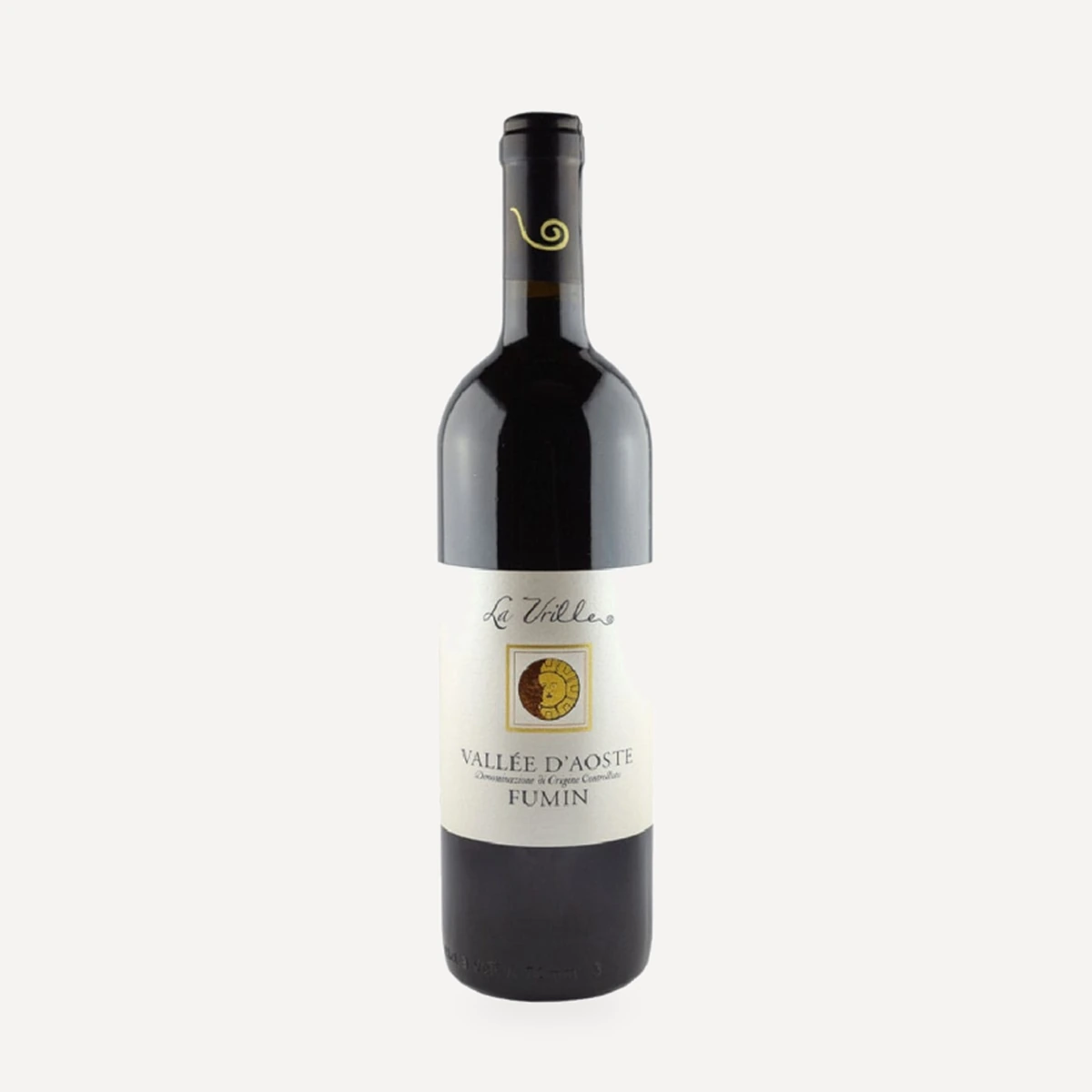
The barrel cellar has a vaulted ceiling built from green stone quarried in Verrayes. Oak vessels of 300 and 500 litres are used for red-wine maturation. Fumin, Pinot Noir and Vuillermin are specifically identified as wines aged in tonneaux. The same compact barrel cellar, which also contains an old wine press, is used for tastings.
The complete cellar workflow encompasses withering, vinification, bottling and maturation. Annual production is approximately 18,000 bottles, deliberately kept limited to preserve the estate’s intended emphasis on quality and territorial identity.
Filosofia
Hervé Deguillame’s approach begins in the vineyard. Vines receive careful, respectful attention intended to avoid unnecessary treatments and deliver healthy, ripe bunches. In the cellar, human work is presented as assistance to natural processes rather than an effort to impose excessive manipulation.
The estate connects quality with soil care, limited yields, manual work and a close relationship with its steep mountain environment. Environmental responsibility is expressed through reduced treatments and the use of products permitted in organic farming, with respect for plants, the wider environment and people.
Native grapes are treated as both a cultural inheritance and a source of biodiversity. Particular emphasis is placed on Chambave Muscat and on the recovery of Cornalin, Fumin, Petit Rouge and rare Vuillermin. Innovation and tradition are intended to coexist: temperature-controlled and insulated tanks support precise production, while native grapes, natural Muscat drying, local green-stone architecture and limited volumes preserve continuity with place.
Production remains deliberately restricted to approximately 18,000 bottles a year. The objective is not expansion for its own sake, but the maintenance of quality and a recognisable connection to the territory and the knowledge of its vignerons.
Vini
DOC Chambave Muscat
DOC Chambave Muscat Flétri
DOC Fumin