Storia
Longobard origins
The estate takes its name from the Rocca di Montegrossi, a strategically positioned fortress overlooking Chianti and the Valdarno Superiore. Geremia, regarded as the progenitor of the Ricasoli Firidolfi family, established the fortress during the Longobard period, in the 7th–8th centuries AD. A Romanesque parish church, the Pieve di San Marcellino, was founded nearby around AD 1000.
Battles, reconstruction and destruction
The fortress became an Imperial Seat during the reign of Frederick II, described as “the Great,” and stood at the centre of repeated military conflicts. Florentine forces inflicted serious damage in 1172. The Aragonese subsequently rebuilt the stronghold, but troops of Charles V destroyed it in 1530.
The family connection
The modern estate is owned and managed by Marco Ricasoli Firidolfi, a descendant of Bettino Ricasoli, whose historical role encompassed both the Chianti Classico territory and the development of Chianti Classico wine. The winery stands near the Pieve di San Marcellino, approximately 7 km south of Gaiole in Chianti.
New plantings and interpretations of Monti in Chianti
In 1997, Marco Ricasoli Firidolfi planted Merlot and Cabernet Sauvignon to explore how the soils of Monti in Chianti would express themselves through non-indigenous varieties. These plantings became the basis of Geremia, conceived as a complementary interpretation of the same land alongside the estate’s Sangiovese-led Chianti Classico production.
In 2000, an additional Canaiolo vineyard was established entirely from material selected in the estate’s older vineyards. Pugnitello was also incorporated into the estate’s Chianti Classico Gran Selezione Vigneto San Marcellino from 2006, at no less than 5% of the blend.
Organic conversion and environmental infrastructure
Vines and olive trees entered an organic regime in 2006, with certification following in 2010. The winery subsequently developed an energy system centred on a 24 kW photovoltaic installation, certified renewable electricity for the remaining demand, solar thermal panels for heating and hot water, and charging stations for electric vehicles.
Expansion of the portfolio
Beginning with the 2015 vintage, the estate introduced Ridolfo, an equal blend of Pugnitello and Cabernet Sauvignon. It was conceived by Marco Ricasoli Firidolfi as another interpretation of Monti in Chianti and is bottled only in individually numbered magnums and jeroboams.
Villa San Marcellino
A former farmhouse a short distance from the cellar was restored as Villa San Marcellino. The property overlooks the historic Vigneto San Marcellino and stands beside the Romanesque parish church.
Terroir
Rocca di Montegrossi lies in the Monti in Chianti micro-area, approximately 7 km south of Gaiole in Chianti and close to the Romanesque Pieve di San Marcellino. The estate occupies a small plateau, while its vineyards extend over gently sloping hills between 340 and 510 metres above sea level.
The principal vineyard exposures are south and southeast. The soils are calcareous and of medium texture. Limestone and calcium-rich marl, locally identified as Marna Calcarea, coexist with sand and clay. This composition provides drainage and is associated with the mineral, elegant and structured character sought in the wines.
The 100-hectare property combines 20 hectares of vineyards, 20 hectares of olive groves and approximately 60 hectares of woodland. The vineyards are concentrated primarily on varieties historically associated with Chianti Classico, supplemented by a smaller proportion of international varieties planted to explore a different expression of the same land.
Vinificazione
Marco Ricasoli Firidolfi personally follows vineyard operations together with consulting agronomists Dr. Stefano Dini and Dr. Dario Ceccatelli and vineyard supervisor Slavko Grabovac. The objective is a balanced relationship between vegetative growth and crop production, pursued through close and nearly daily attention.
Work includes pruning, abundant but targeted applications of organic manure where required, maintenance of ground cover, bunch thinning, shoot topping and leaf removal several weeks before harvest. The estate has followed organic farming practices for its vines and olive trees since 2006 and has held organic certification since 2010.
Harvesting is manual. Pickers use small crates, and a vineyard may be harvested in as many as three passes so that only the best and ripest grapes are selected on each pass.
The cellar was designed to preserve the condition and quality of estate-grown grapes while combining traditional methods with controlled modern equipment. Reception equipment includes a horizontal destemmer. Fermentation and processing vessels include temperature-controlled, glass-lined cement tanks and upright truncated-conical Allier oak vats equipped with temperature control and computer-operated pneumatic plungers for punch-downs. Temperature-controlled stainless-steel tanks are reserved exclusively for Rosato.
Red-wine maturation employs vats, larger oak vessels, barriques and tonneaux. The proportions and vessel choices vary with the wine and the characteristics of each vintage. The oak is from Allier.
Vinsantaia
Vin Santo is made in a naturally ventilated room beneath the roof. The approximately 90 m² space contains 160 movable nets mounted on rails. Bunches are hung individually and inspected every week, allowing deteriorating fruit to be removed throughout drying. Noble rot may develop during this phase. Drying continues for approximately three to four months and concludes in December or, more usually, January following harvest.
The concentrated fruit yields less than 10% wine after pressing. The must ferments and matures for almost eight years in 50- or 100-litre caratelli made from oak, cherry and mulberry wood.
Filosofia
Rocca di Montegrossi defines its work through the combination of Chianti tradition, close observation of the vineyard and carefully selected technology. The primary agronomic objective is equilibrium between vine growth and production rather than yield in isolation.
The estate treats Sangiovese and its traditional complementary varieties as the central expression of Monti in Chianti. At the same time, the 1997 Merlot and Cabernet Sauvignon plantings and the later combination of Cabernet Sauvignon with Pugnitello reflect a willingness to test how the same land speaks through different varieties. Modernity is therefore presented as an additional means of interpreting place rather than a rejection of Chianti’s viticultural history.
In the cellar, equipment is selected to preserve grape quality, while vessel use and maturation are adjusted to the identity of each wine and the conditions of each vintage. Environmental responsibility extends beyond certified organic farming to renewable electricity, solar heating and hot water, and electric-vehicle charging infrastructure.
Vini

Chianti Classico DOCG

Chianti Classico Gran Selezione Vigneto San Marcellino DOCG

Geremia Toscana Rosso IGT
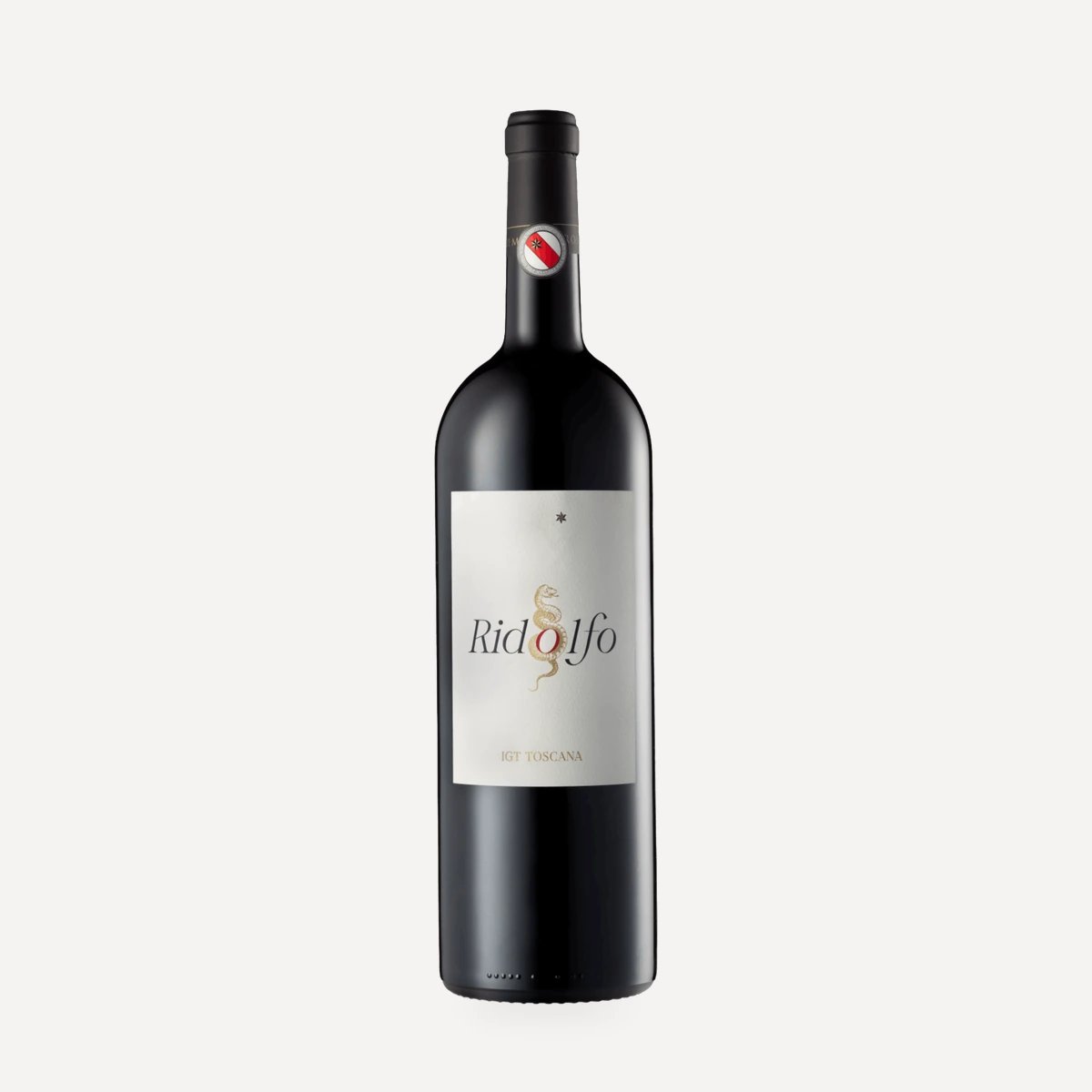
Ridolfo Toscana Rosso IGT

Rosato Toscana IGT
