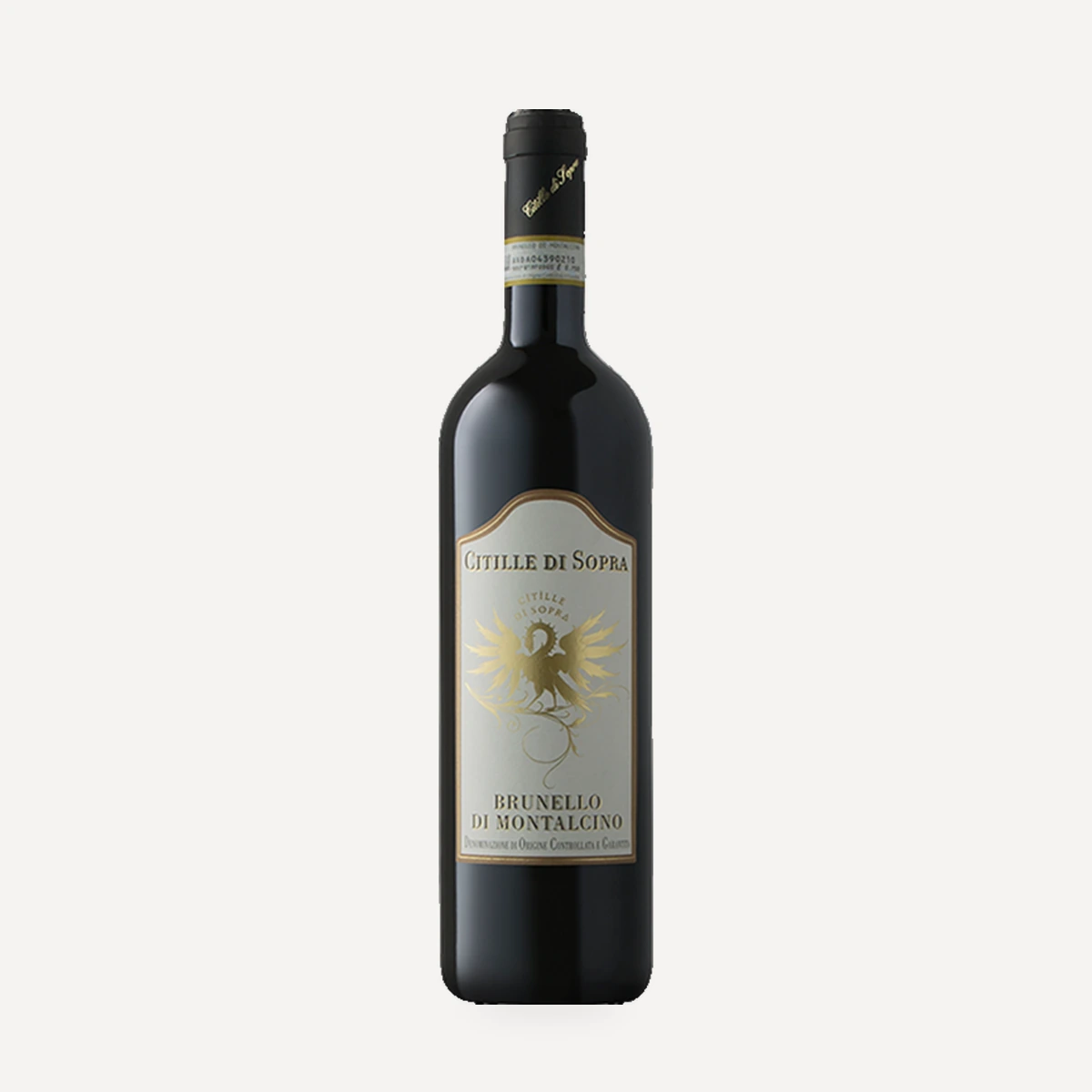
History
1957 — the agricultural estate begins
Citille di Sopra began in 1957, when Fabio’s grandfather Ferruccio and father Fulvio acquired 28 hectares devoted primarily to cereal cultivation. Cereals, legumes and forage formed the basis of the farm, and the Innocenti family subsequently expanded the holding to 105 cultivated hectares encompassing cereals, vines and olive trees.
1992 — Fabio acquires an interest in the farm
Fabio already owned part of Citille di Sopra by 1992. His work built upon the family’s established experience in cereal cultivation.
1997 — transition to winegrowing
In 1997, the Innocenti family transferred management to Fabio. He retained cereal cultivation across most of the property while adding viticulture, giving the agricultural business a new wine-producing identity. The first vineyard development comprised 5.5 hectares planted in the areas considered most suitable for Brunello production; the vineyard holding later increased to 7 hectares.
2001 — construction of the cellar
An underground cellar was completed in 2001. Its layout was conceived to facilitate work throughout the production process, while its temperature and humidity are continuously monitored.
The 2000s — hospitality and short supply chains
The development of the winery was followed by a tasting room and projects based on a short, estate-controlled supply chain. These initiatives connected wine with the farm’s olive oil, grappa, cereals, flour and pasta, as well as dishes prepared in the estate’s professional kitchen.
2012 — energy self-sufficiency
In 2012, Citille di Sopra became self-sufficient in electricity production. Pruning residues were incorporated into the farm’s energy system to produce hot water and heating, extending a broader policy of recovering waste generated by agricultural work.
2020 — cellar expansion
The underground cellar was enlarged in 2020 together with the tasting facilities, strengthening the estate’s capacity to receive visitors and present its products. Citille di Sopra now encompasses 105 hectares, including 7 hectares of vineyard and more than 80 hectares associated with cereals and extra-virgin olive-oil production.
Terroir
Citille di Sopra occupies a ridge between Montalcino, San Giovanni d’Asso and San Quirico d’Orcia, overlooking the hill of Montalcino and the surrounding countryside. The vineyards associated with the estate’s principal wines are situated at approximately 300 metres above sea level.
Fog and frost are rare, while constant ventilation helps protect plants from disease and reduces the need for phytosanitary treatments.
The soils are moderately clayey, rich in limestone and marked by extensive tuffaceous areas. These conditions support the estate’s combined cultivation of vines, cereals and forage. Crop rotation also allows cereals intended for flour production to be grown within the wider farm.
Winemaking
Viticulture forms part of a diversified 105-hectare agricultural system that also includes cereals, forage and olive trees. Crop rotation is practised within the wider farm, including the cultivation of grain for flour.
The vineyards are trained to spurred cordon to facilitate field operations. The ridge position, infrequent fog and frost, and continual airflow provide natural protection against plant diseases and allow phytosanitary treatments to be kept to a minimum.
Field operations—from soil preparation and sowing through to harvesting—are carried out with the estate’s own machinery. Work is organised around environmental care, operational efficiency and product quality. Agricultural residues are also recovered: pruning waste supplies energy for hot water and heating.
Wine is made in an underground cellar constructed in 2001 and enlarged in 2020. The building was designed to facilitate the work performed inside it and to provide a quiet environment for production and maturation.
Grapes are carefully controlled through every stage of transformation. Temperature and humidity are continuously monitored within the cellar to maintain stable production and ageing conditions. The estate characterises its overall approach as traditional.
Philosophy
Citille di Sopra presents tradition and sustainability as complementary principles. Fabio’s approach continues the practical teaching and judgement inherited from his father while adapting the family’s cereal farm to winegrowing, hospitality and estate-controlled food production.
Environmental responsibility is pursued through the efficient organisation of farm work, reduced reliance on phytosanitary treatments where the site’s ventilation permits, recovery of processing residues, electricity self-sufficiency and the use of pruning waste for heating and hot water.
The estate also places importance on direct control of its products. Crops and raw materials are grown and processed within the agricultural business, and short-supply-chain projects connect wine, olive oil, grappa, flour, pasta and hospitality. The team describes passion for its work, winegrowing, the surrounding area and hospitality as the central element of the visitor experience.
Wines
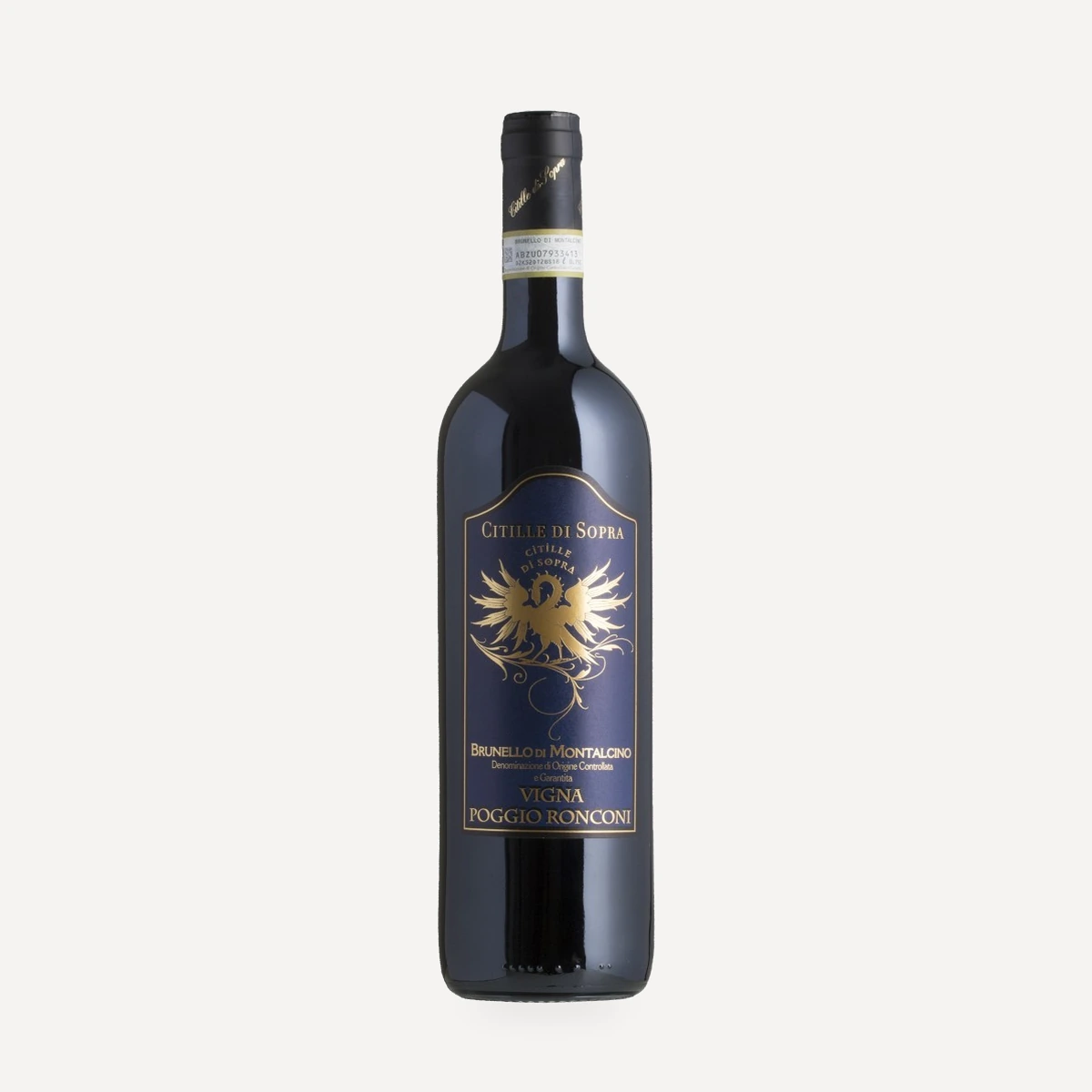
Brunello di Montalcino Poggio Ronconi DOCG