History
Early vineyards and first wines
The oldest named parcels predate the modern wine range. Scalone Vecchia was planted in 1975, La Vecchia in 1977 and Cuspide in 1985. Together, these three old-vine parcels now cover just over 3 hectares. Il Palazzone’s first Brunello di Montalcino vintage was 1990.
Richard Parsons era
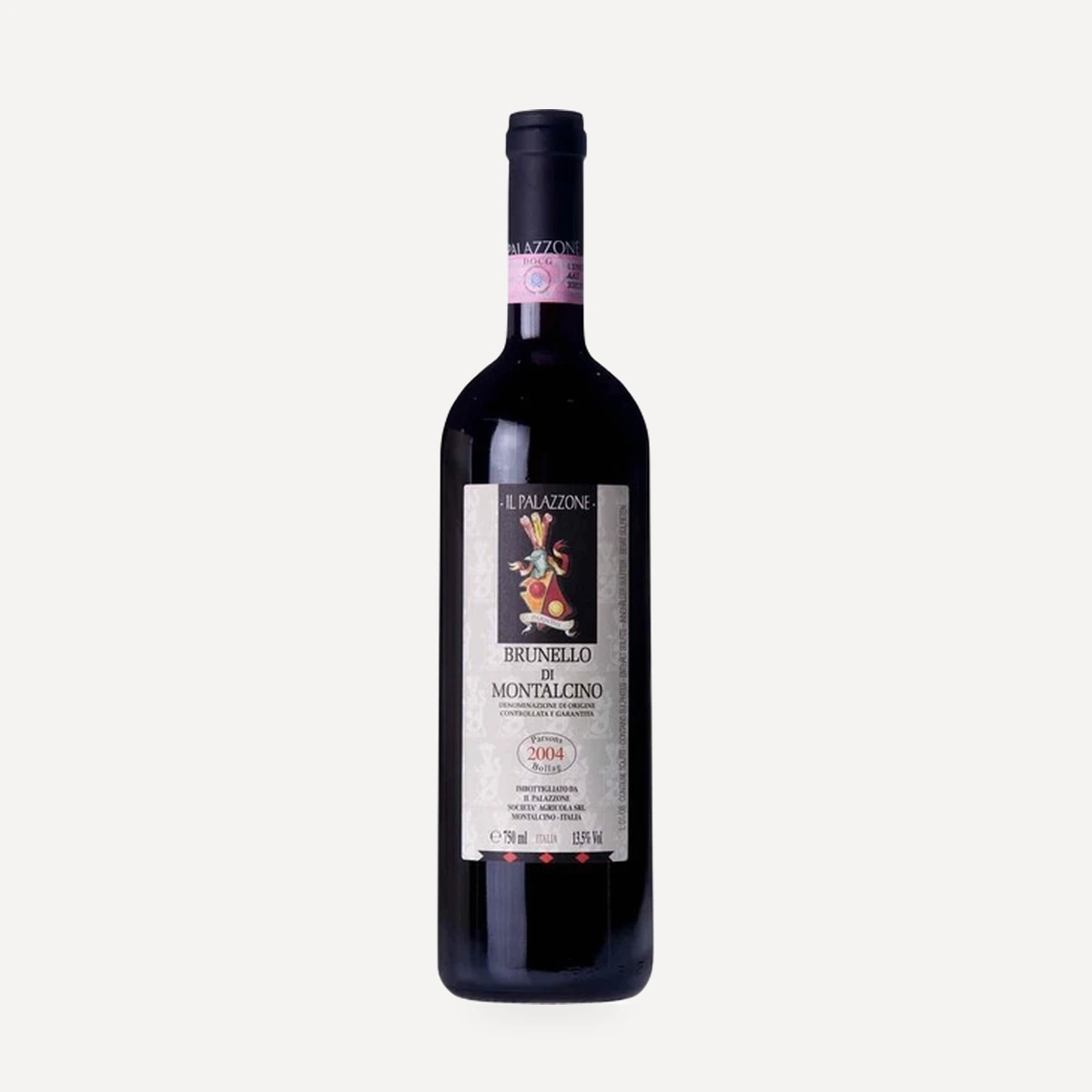
Richard Parsons purchased Il Palazzone in 2000. The 2004 harvest was identified as the first particularly important vintage under his ownership. The estate subsequently created Lorenzo & Isabelle, named in celebration of Parsons’s parents and their marriage; its first production was the 2005 vintage, followed by a second production from 2013.
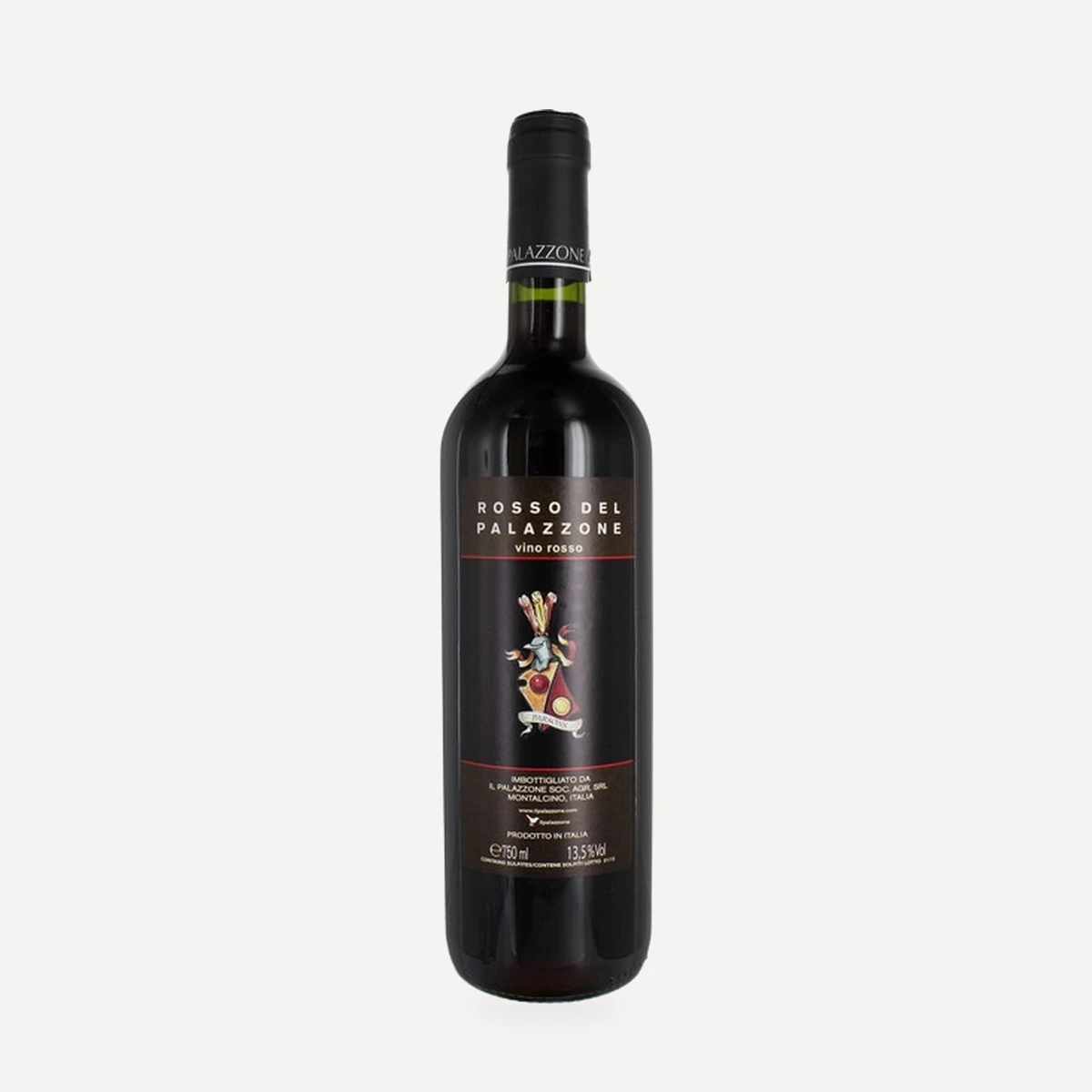
Rosso del Palazzone entered production in 2010 as a non-vintage Sangiovese conceived in the tradition of an everyday Tuscan table wine. That same year, the estate adopted lighter glass bottles, reducing shipment weight by approximately 2.5 kg per case.
A new cantina was completed in October 2012. Its design joined historical Tuscan architectural forms with contemporary production and environmental features. Stone was quarried on the property, recycled bricks were used, and the building incorporated rainwater recovery, reduced thermal-energy requirements and dynamic air exchange.
The first Brunello di Montalcino Vigna Le Due Porte was produced from the 2015 vintage. The wine isolates fruit from the 1.4-hectare cru surrounding the cantina at 540 metres.
Current team and change of ownership
Maurizio Castelli began consulting for Il Palazzone in 2018. Paola B. Martino joined in 2019, bringing formal training in viticulture and oenology and responsibility for continual improvement in cellar practice.
Kirsten and Peter Kern purchased Il Palazzone in June 2021. The 2021 Brunello was the first vintage under their ownership. Tullia Abi Zima Battaglia became estate manager in 2022, overseeing the operation from vineyard and cellar work through sales and visits.
Cellar expansion and Albatreti acquisition
During 2023, Il Palazzone installed new cement fermentation vessels, upgraded harvest machinery, expanded the aging room and converted the old cantina into additional warehouse space. Further renovation of the fermentation and aging rooms was subsequently undertaken to accommodate a growing vineyard area while retaining the original exterior and environmental design.
On 9 October 2023, the estate announced the acquisition of the adjoining Albatreti property. Albatreti had been cared for by the Bizarri family for three generations. Its grandchildren’s generation excavated and planted 5 hectares of vines, which yielded the property’s first Rosso di Montalcino in 2008 and first Brunello di Montalcino in 2009. The acquired vineyards included land dedicated to Brunello, Rosso and Sant’Antimo and brought Il Palazzone’s vineyard footprint to approximately 10.5 hectares. The transaction also included 25 hectares of woodland and a substantial stand of olive trees. The new holding was renamed Le Vigne Basse.
Il Palazzone 595
Development of the new upper vineyard began in 2023, with excavation and construction of terraces above the cantina. Planting followed in 2024. Just under 2.5 hectares of Sangiovese were established at slightly over 600 metres, on three upper terraces and two lower sloping sections reinforced with natural stone excavated during construction. The clone selection ranges from BS1 to newer material chosen for the soil, elevation and exposure.
The land had been abandoned about 30 years earlier because it was considered too cold for quality Sangiovese. Its return to cultivation reflects the owners’ conviction that greater altitude can preserve the balance and elegance associated with traditional Brunello as lower sites become hotter. The first harvest is projected for approximately 2029, with wine expected in 2033.
Terroir
Le Due Porte hill
Most of the vineyards occupy Le Due Porte, a hill rising from roughly 400 metres in the valley to more than 600 metres at its summit. The general orientation is west, while individual parcels range from southwest to northwest. Pietraforte dominates the higher elevations and gives way to Galestro farther down the slope. These formations drain freely and encourage roots to descend in search of water.
The hill is exposed to the Tramontana and largely enclosed by bosco, or forest. Elevation, wind and woodland combine to produce strong ventilation, pronounced day–night temperature shifts and protection from the extreme heat experienced in Montalcino’s lower valleys. Afternoon Mediterranean winds benefit the west-facing upper slopes, while the forest cools them at night.
Other Montalcino sectors
Parcels away from Le Due Porte broaden the estate’s range of soils, elevations and exposures. They contribute greater proportions of clay, salinity and fruit to the components available for blending.
Vigna del Capa is the warmest sector. It lies near Castelnuovo dell’Abate at 325–375 metres, on gentle southeast-facing slopes. Sand, clay and silt occur in approximately equal proportions, together with abundant stones, fine gravel and marine fossils. A nearby river and surrounding trees generate cooling air and preserve wide diurnal shifts despite the warmer position.
The old-vine parcels range from approximately 350 to 450 metres and differ in exposure, mineral composition and soil. Le Vigne Basse covers the middle of the Le Due Porte hill at approximately 350–500 metres. Its Galestro, changing elevation, southern orientation and surrounding forest provide drainage and varied rooting conditions.
At the top of the estate, Il Palazzone 595 rises slightly above 600 metres. Its west-southwest orientation captures afternoon sun and Mediterranean winds, while the surrounding forest supplies nocturnal cooling. Three terraced upper sections and two sloping lower sections are reinforced by walls built from stone excavated on the property.
Winemaking
Il Palazzone defines its approach as agricoltura responsabile. Soil, topography, microclimate, vine health and other influences on yield and grape quality are evaluated throughout the growing season. Because the vineyards differ considerably in elevation, soil and exposure, work is adapted parcel by parcel.
Organic practices, manual operations and natural remedies are preferred wherever feasible. The vineyards are pruned, green-harvested and selected on the vine during the season. Cover crops are used to restore soil fertility and biodiversity, especially nitrogen- and potassium-rich legumes such as lupins and fava beans. These crops are incorporated into the ground to fertilise it, reduce erosion, improve water infiltration, raise organic-matter levels and improve soil structure, with increased carbon sequestration as an additional objective.
Flowers, butterflies, ladybirds, earthworms and other organisms are treated as part of the vineyard ecosystem. Biological responses have been used to rebalance insect populations instead of automatically employing chemical treatments with potential effects on soil and groundwater.
Regular irrigation is not used in the Brunello vineyards. Rainfall is consequently critical to vine health, while recovered rainwater is used elsewhere around the property. Vine-training systems include balanced single-spur cordon and Guyot; Vigna Le Due Porte is trained to Guyot.
The crop is repeatedly selected before harvest, and actual yields generally fall between 2,500 and 4,000 kg/ha. Picking is manual. Small 16 kg crates protect the fruit during transport to the cantina. Lower elevations are generally harvested first, beginning around the third week of September in recent years, and work progresses uphill as each parcel reaches maturity. Vigna Le Due Porte is normally among the last parcels picked, around the end of the second week of October. At the sorting tables, whole clusters are inspected first and individual berries are then selected. Depending on the vintage and lot, fermentation may use intact clusters or destemmed berries.
Under the estate’s earlier management, lunar phases were used to schedule bottling, determine pump-over frequency and plan certain vineyard operations, although the estate explicitly did not identify itself as biodynamic.
Cantina and lot management
The present cantina was completed in October 2012. It uses stone quarried on the property and recycled brick while integrating rainwater recovery, lower thermal-energy requirements and dynamic air exchange. New cement fermentation vessels were installed in 2023, the aging room was expanded, harvest machinery was upgraded and the former cantina was adapted as warehouse space. The fermentation and aging areas continue to be enlarged as vineyard holdings increase.
The estate generally vinifies each vineyard parcel separately, preserving the option to assemble lots during the aging period. Vessel choice is made according to the volume and character of each parcel. Fermentation takes place in 20 or 41 hL cement tanks or 50 hL wooden vessels. Large cement tulips are now the principal fermenters, with excess fruit handled in very large Slavonian-oak vessels.
Reception and fermentation
Hand-picked grapes arrive in small crates. Selection occurs twice: first as intact clusters and then berry by berry. Some lots are fermented as clusters and others as individual berries according to vintage character.
Maceration is long, and natural fermentation continues until dry at a maximum of 25–28°C. Cap management is adjusted tank by tank. Parcels remain separate through alcoholic fermentation and frequently through malolactic fermentation. Cement is used when greater structural definition is desired before wood aging; wooden fermentation vessels provide micro-oxygenation that can assist aromatic and tannin stability.
Aging and release
Traditional Brunello aging is the benchmark. The estate’s general Brunello normally spends 25–35 months in large Slavonian-oak casks, although the broader cellar range can extend to 40 months. The wine then returns briefly to cement before bottling and is released in January of the fifth year after harvest.
Vigna Le Due Porte receives approximately 30–40 months in large Slavonian-oak casks before its brief return to cement. Il Palazzone does not routinely sort fruit into a separate Riserva because it prefers to retain excellent material in every Brunello bottling. An exceptional individual cask may nevertheless be released as Riserva and receives an additional year of aging. The wines are made with extended bottle development in mind.
Philosophy
Il Palazzone’s declared objective is to produce a pure, traditional expression of Brunello di Montalcino, giving greater priority to quality and method than to volume. Each vintage is treated as the intersection of weather, microclimate, altitude, soil, fruit, human decisions and chance rather than as a product to be standardised from year to year.
The estate seeks a classic, vecchio stampo style combining balance, brightness and complexity with sufficient structure for long aging. The different soils, elevations and exposures of its vineyards are used as complementary elements: parcels are vinified separately and blended to express the season and the estate’s varied Montalcino sites.
“Il vino si fa in vigna”—wine is made in the vineyard—summarises the emphasis on grape quality. Vineyard work is adapted to individual parcels, with repeated selection, restrained yields, responsible soil stewardship, biodiversity and manual practices supporting the cellar’s traditional methods.
Environmental responsibility extends beyond the vines. Il Palazzone aims to monitor and reduce its carbon footprint, recover rainwater, reuse materials and maximise energy efficiency. Old bottles have been repurposed as drinking glasses. Lightweight glass has been used since 2010; single-use plastic water bottles have been eliminated; water is served in glass in the tasting room; polystyrene is avoided where possible; and shipping materials are limited to cardboard and wood. Boxes contain 80–85% recycled cardboard, while sustainable capsules, paper tape and sugarcane-derived closures are used where applicable.
The development of Il Palazzone 595 expresses a longer-term response to climatic change. The owners regard greater elevation, afternoon airflow and forest cooling as tools for preserving the elegance and balance associated with earlier Brunello vintages.
Wines
Rosso del Palazzone