History
Late 10th century
Monteraponi developed as a medieval settlement on the hill of the same name, in the historic Chianti area. In the late 10th century it belonged to Count Ugo, Marchese and Governor of Tuscany. Ugo transferred the property by deed of donation to the abbey that he had founded at Poggio Martori, now Poggibonsi Alto.
The settlement was built around three square-plan towers dating from the 10th century. Its central structure, still largely intact, incorporates one of these towers and occupies the highest, most prominent position in the village, suggesting that it served as the lord’s residence.
12th century
The upper part of the central tower retains well-preserved archivolts associated with 12th-century windows. The cellars beneath the tower date from the same period. Their broad, single-vaulted ceiling survives, and the underground space is now used for resting bottled wine.
Present estate
The surviving medieval buildings have been adapted to contemporary estate use. Thick stone walls provide naturally stable temperature and humidity for winemaking and ageing, while additional historic buildings have been restored as independent guest apartments. The agricultural property now encompasses vineyards, olive groves, mature oak and chestnut woodland, and hospitality facilities.
Terroir
The 200-hectare property occupies a natural amphitheatre with a southerly exposure and shelter from northerly winds. The medieval complex stands on the summit of the Monteraponi hill at 470 metres, overlooking a valley that descends toward the Arbia river.
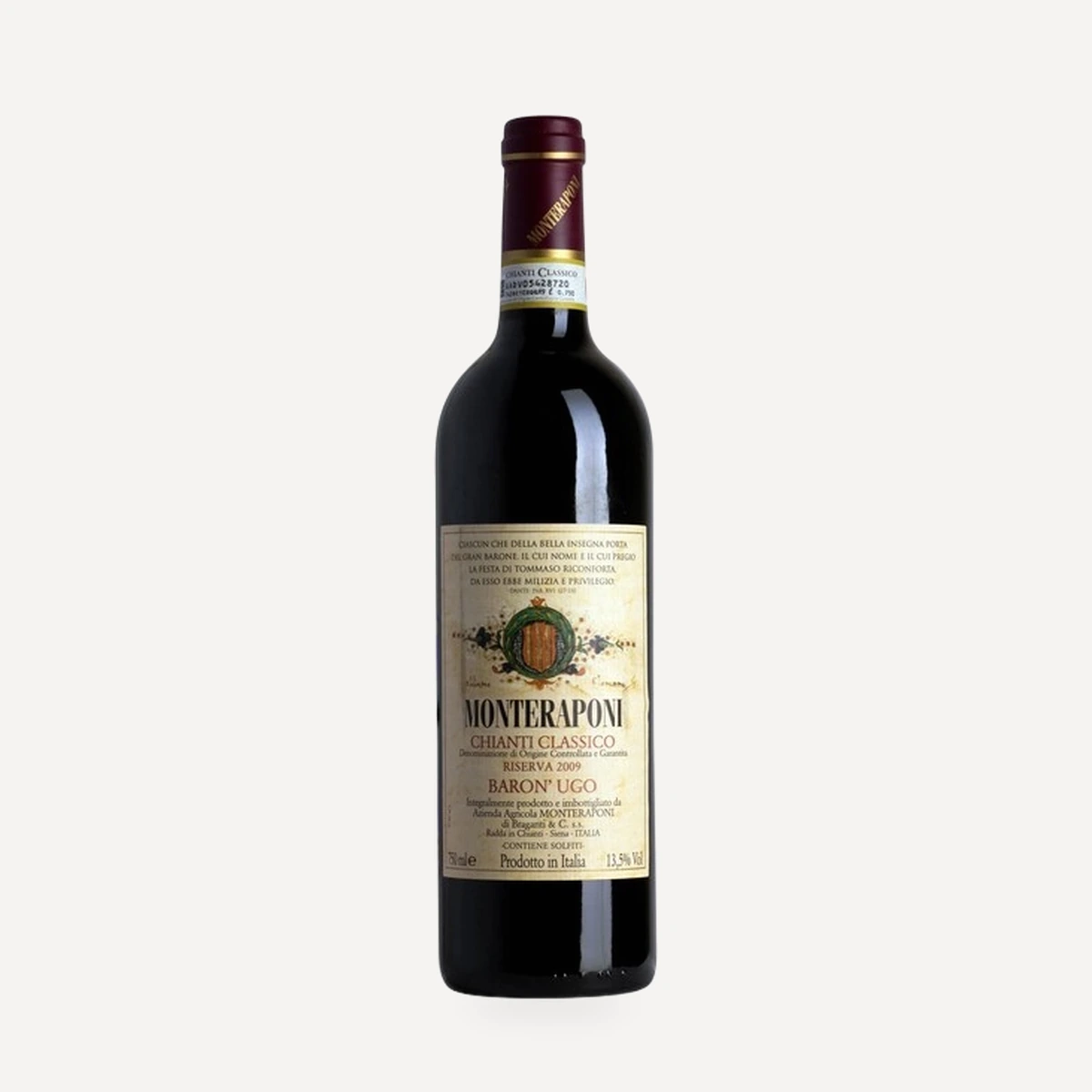
Vineyard elevations span approximately 420–570 metres. Il Campitello lies at 420 metres and is isolated from the other vineyards by woodland. Its soils combine galestro with clay. Baron’ Ugo occupies the estate’s highest vineyard position at 570 metres, on stony, calcareous ground rich in alberese and galestro. Other vineyard material used for the estate’s principal Chianti Classico and red-wine production lies between approximately 450 and 570 metres, with calcareous, stony and marly soils.
The estate is enclosed by mature oak and chestnut woods. This surrounding woodland, together with the amphitheatre’s sheltered form, separates and protects the agricultural area. The olive grove occupies south-to-southwest-facing ground at approximately 470 metres, where the dry conditions eliminate the need for antiparasitic treatments on the olive trees.
Winemaking
All agricultural production is certified organic by ICEA Italia. The estate comprises 12 hectares of vineyards and 8 hectares of olive groves within a 200-hectare property; mature oak and chestnut woodland occupies most of the remaining land and forms a protective natural enclosure around the cultivated areas.
Harvest generally begins around the first week of October and is performed exclusively by hand. Grapes are collected in small crates. At the cellar they are emptied onto a conveyor and washed immediately before moving slowly to a Burgundy-made destemmer designed for delicate varieties such as Sangiovese. Individual berries receive a further selection on a vibrating sorting table, and only the accepted fruit proceeds to gentle pressing.
The estate’s 1,200 registered Chianti Classico olive trees face south to southwest at approximately 470 metres. The dry conditions at that elevation and exposure allow the trees to be cultivated without antiparasitic treatment.
Cellar environment
The winery occupies pre-existing historic buildings whose thick stone walls naturally maintain stable temperature and humidity throughout the year. Technology is deliberately limited. The vinification cellar contains old concrete tanks and elliptical, truncated-cone concrete tanks made by Nomblot. None has a thermal-conditioning system.
The adjoining ageing cellar is also housed in a historic building and is approximately three-quarters underground. Wines destined for wood are held exclusively in large oval oak vessels, with cooperage or oak origins identified as Austria, Burgundy, France and Slavonia. Some estate selections return to concrete after wood ageing for natural settling.
Reception and processing
Hand-picked grapes arrive in small crates, pass over a conveyor and are washed. A slow, Burgundy-made destemmer handles the fruit, followed by berry selection on a vibrating sorting table. Gentle Demoisy-method pressing is intended to preserve skin integrity. A peristaltic pump transfers the must to concrete tanks.
Fermentation and cellar handling
Fermentations are conducted spontaneously in concrete, without selected yeasts or temperature control. Activators, fermentation nutrients or feeders, and added malolactic bacteria are excluded. Red-wine macerations involve daily manual punch-downs and pump-overs, with duration adjusted to the individual selection. Malolactic fermentation, where used, proceeds spontaneously without bacterial starters.
Large oval oak vessels are used for the estate’s wood-aged red wines. Natural settling may follow in concrete. Several estate wines are bottled by gravity during the waning moon, without filtration; red-wine selections are also described as unclarified. Individual white and rosé lots may ferment or mature in used barriques, with lees stirring used where appropriate.
Vin Santo and grappa facilities
Selected Trebbiano and Malvasia Rosa del Chianti bunches dry naturally while suspended in the vinsantaia. They are pressed in January and the must spends at least four years in chestnut caratelli sealed with lime. Seasonal movement from winter cold to summer heat influences fermentation. The wine then moves to oak caratelli for a further four years before gravity bottling during the waning moon.
Fermented pomace selected for the estate’s grappas is dispatched to the distillery on the day of racking while still moist. Distillation is performed by Antica Distilleria Nannoni di Paganico using a discontinuous calderini method. The Baron’ Ugo Riserva grappa subsequently spends 27 months in used barrels from the estate.
Philosophy
Monteraponi’s approach centres on restrained cellar intervention and the preservation of the conditions provided by its hill, vineyards and historic buildings. Stable temperature and humidity come primarily from thick stone walls and underground construction rather than mechanical conditioning. Fermentations are allowed to begin spontaneously, without selected yeasts, activators, nutrient feeders or inoculated malolactic bacteria.
Separate harvesting and vinification of Il Campitello and Baron’ Ugo preserve the identities of the estate’s two named old-vine sites. Concrete is central to fermentation and natural settling, while large oval oak vessels provide maturation without making small-barrel character the dominant element. Manual harvest, berry selection, gentle pressing, gravity bottling and the avoidance of filtration or clarification for several wines extend this low-intervention approach through the production cycle.
Certified organic management applies across the estate’s products. Vineyards, olive groves, mature woodland and the private lake form a single agricultural landscape, with the surrounding oak and chestnut forest functioning as both habitat and a natural protective boundary.
Wines
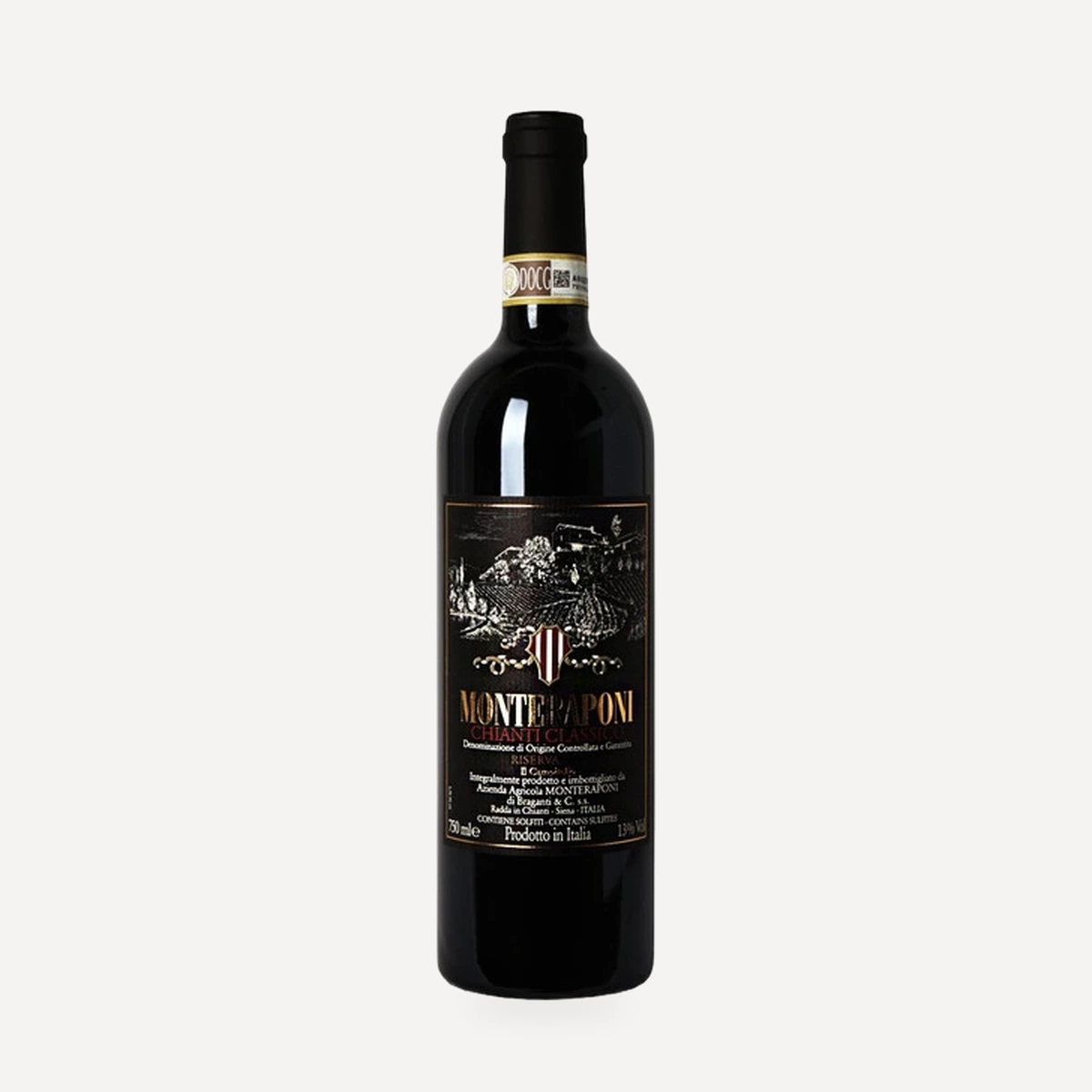
Chianti Classico Riserva Il Campitello DOCG
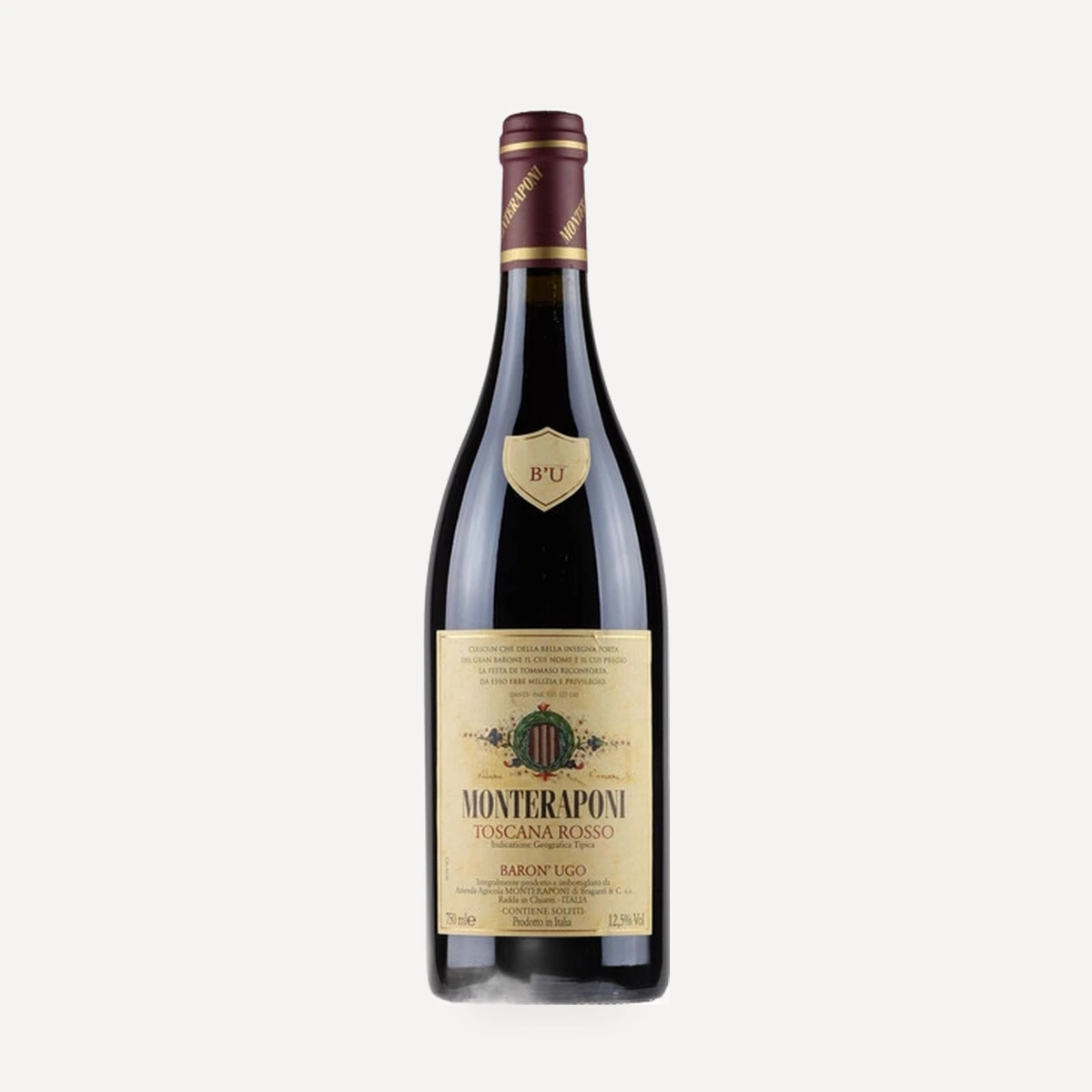
Toscana Rosso Baron’ Ugo IGT
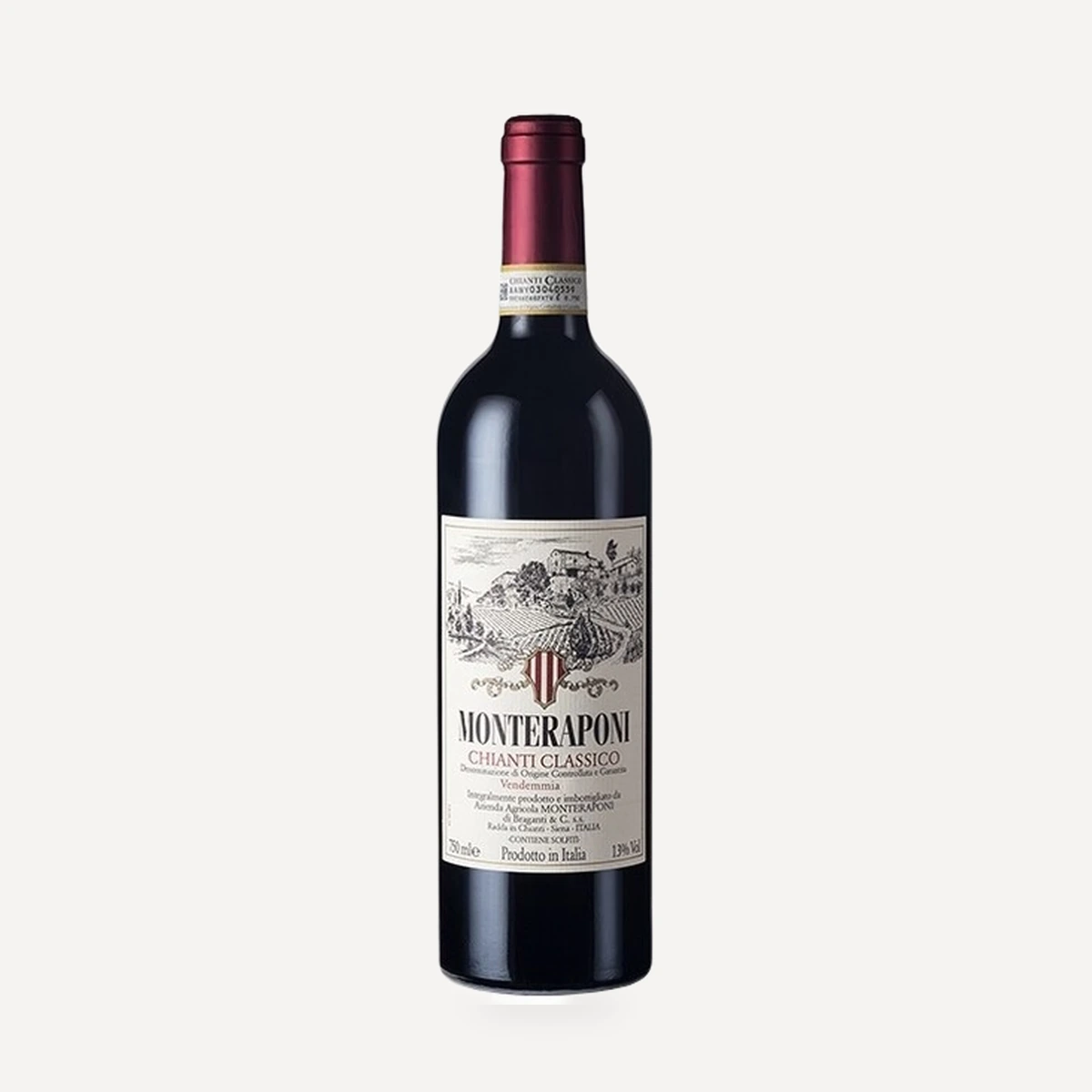
Chianti Classico DOCG