History
1983: Guido Serio and Isa arrive
Guido Serio and his wife Isa arrived at San Fabiano in 1983 and became its owners. They began an investment programme focused on wine quality, renewing the vineyards and both the vinification and ageing cellars. They also assembled a professional estate team.
2009: conversion to organic farming
The conversion to organic production began in 2009 and was extended across the whole estate. It represented a further step in a strategy intended to unite quality and environmental sustainability. The present range is produced exclusively from estate-grown grapes and is certified organic under control code IT BIO 006.
Terroir
San Fabiano Calcinaia occupies 134 ha of Chianti hills on the boundary between Poggibonsi and Castellina in Chianti. The estate has two principal geographical poles: San Fabiano, where the vineyards are situated at approximately 250 m above sea level, and Cellole, whose different vineyard areas range from approximately 450 to 550 m.
The San Fabiano and Cellole production zones used for several wines face southwest. Vigna Valluccia lies at Cellole, beside the small borgo of the same name in Castellina in Chianti. The estate’s accommodation at Cellole overlooks the Val d’Elsa.
The wider Chianti Classico territory extends between Florence and Siena and remains predominantly agricultural. Climate, soil and altitude combine to make this hilly setting suitable for viticulture.
Winemaking
Organic conversion began in 2009 and encompassed the estate’s complete production. Current releases carry organic certification with control code IT BIO 006 under a control body authorized by MiPAAF. The estate also grows its olives organically.
The vines are trained to spur-pruned cordon. Harvest timing varies by site and variety, extending from early September for white varieties and some early-ripening red varieties into mid-October for later parcels. Individual production areas have average yields ranging from approximately 45 to 75 quintals of grapes per hectare.
Selection begins in the vineyard and is repeated at the cellar. The Gran Selezione parcel at Cellole is harvested by hand, with only the best bunches retained during the two-stage selection. Other production descriptions also specify careful field selection followed by further sorting at reception.
The vinification and ageing facilities were renewed following Guido Serio and Isa’s arrival in 1983. The estate maintains a dedicated ageing cellar, including a temperature-controlled area used for post-bottling maturation.
Red-wine reception and fermentation
Red grapes are selected in the vineyard and again upon arrival. For the Gran Selezione selection, bunches are destemmed and the berries are crushed gently. Red fermentations take place at controlled temperatures, commonly 28–32°C for the more structured selections. Selected yeast strains from the Chianti Classico area are used for the Gran Selezione. Skin contact ranges from approximately 10–15 days for some wines to 15–20 days or more for longer-macerated selections. Pressing is gentle, with maximum pressures of approximately 0.6–0.7 atm.
Some lots undergo malolactic fermentation in stainless steel, while the most structured red selection undergoes malolactic fermentation and maturation on the lees in barrel. Grapes from different origins may be vinified and aged separately; blending takes place only after ageing.
Red-wine ageing
The cellar uses stainless steel, cement, tonneaux and barriques. Depending on the selection, wood ageing ranges from about 4–12 months to approximately 24 months. Second-use tonneaux are used for around 12 months for some Sangiovese-based wines, followed by at least six months in bottle. More structured reds mature for approximately 18–22 months in first- and second-use barriques or other wooden vessels and receive at least 12 months in bottle. The Gran Selezione matures for approximately 24 months in first- and second-use barriques followed by at least six months in bottle.
Casa Boschino illustrates the mixed-vessel approach: approximately 70% matures in stainless steel and cement, while about 30% is placed in tonneaux and barriques for 4–12 months.
White-wine production
White grapes are selected in the vineyard and sorted again in the cellar. After crushing, they undergo cryomaceration at 3°C for 12–24 hours, followed by gentle pressing at approximately 0.5 atm. Static clarification takes place at about 0°C for two to three days. The clarified must is inoculated with selected, wine-specific yeasts and ferments in stainless steel at a controlled 14°C for approximately 25 days. Maturation continues in stainless steel on the lees for about 8–10 months.
Vin Santo
Trebbiano, Malvasia, Canaiolo and Sangiovese are used for the estate’s Vin Santo. Fermentation and maturation in wood extend for five to eight years, followed by six months of bottle ageing.
Philosophy
San Fabiano Calcinaia’s stated direction is to combine wine quality with environmental sustainability. The programme initiated by Guido Serio and Isa linked vineyard renewal, cellar investment and the formation of a professional team; the later estate-wide transition to organic production extended that approach into farming.
All wines are made exclusively from grapes grown in the estate’s own vineyards. Selection in both vineyard and cellar, separate handling of lots from different origins and blending only after ageing reflect a preference for retaining distinctions between vineyard sources until the final stages of production.
Wines
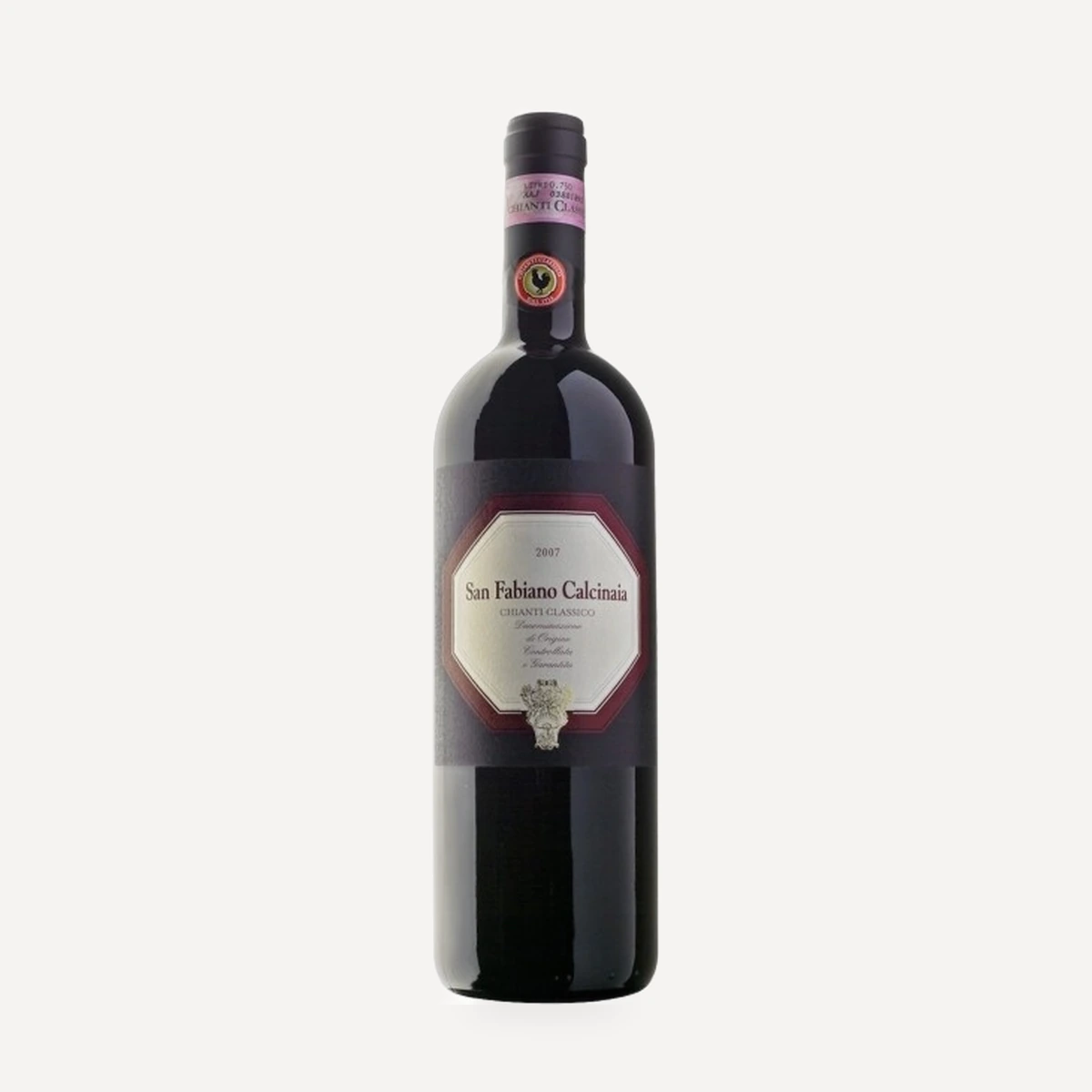
Chianti Classico San Fabiano Calcinaia BIO DOCG
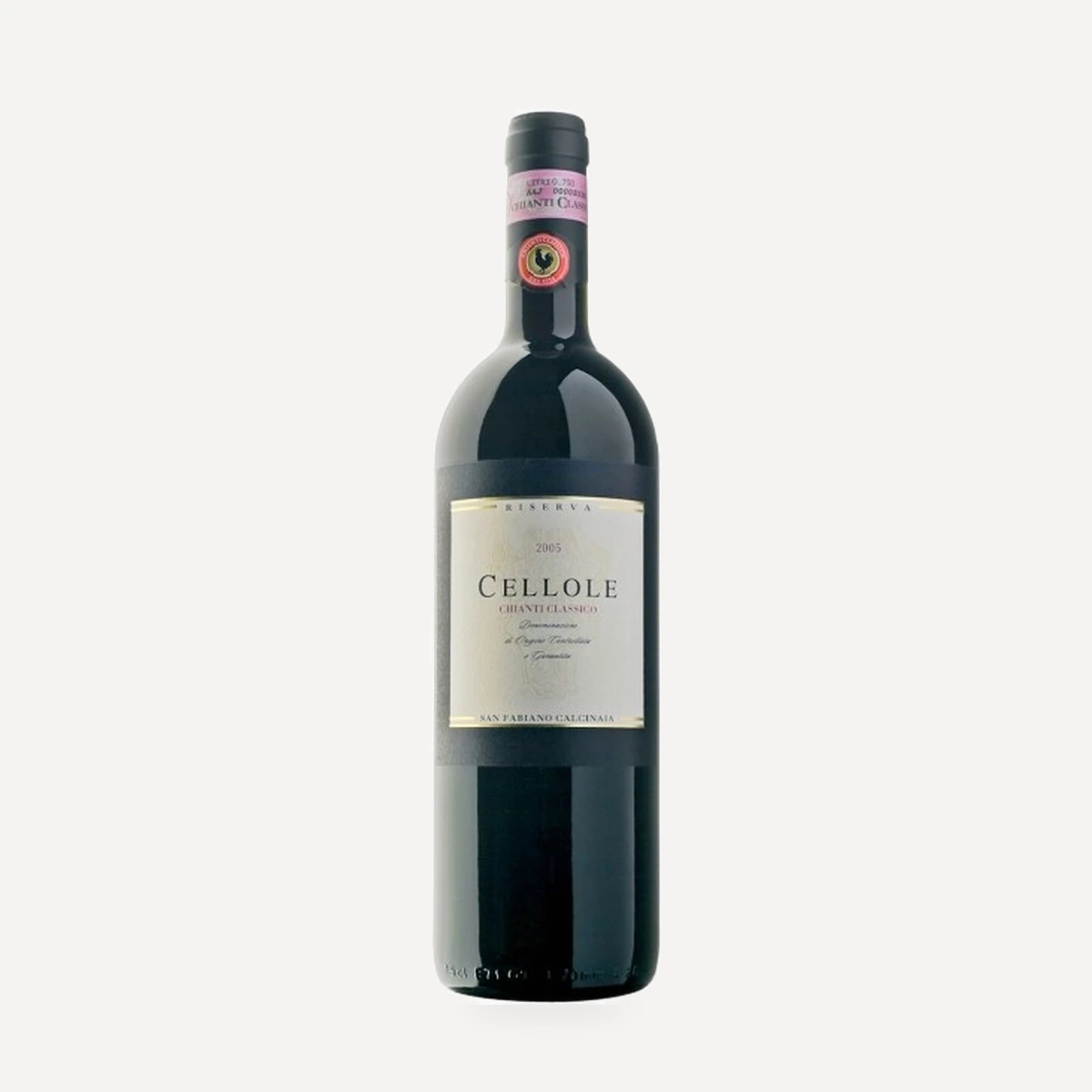
Chianti Classico Gran Selezione Cellole BIO DOCG
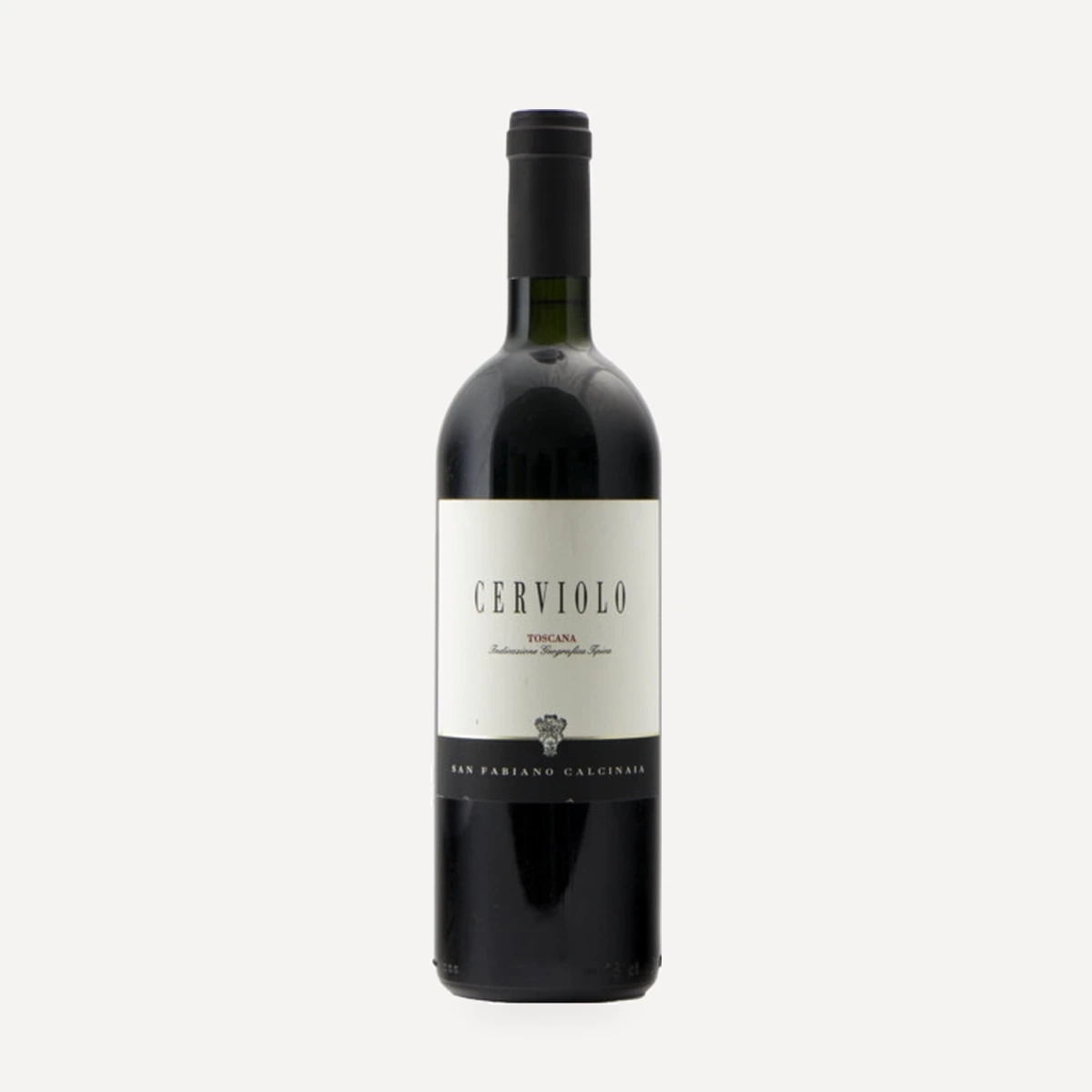
Toscana Rosso Cerviolo BIO – Supertuscan IGT
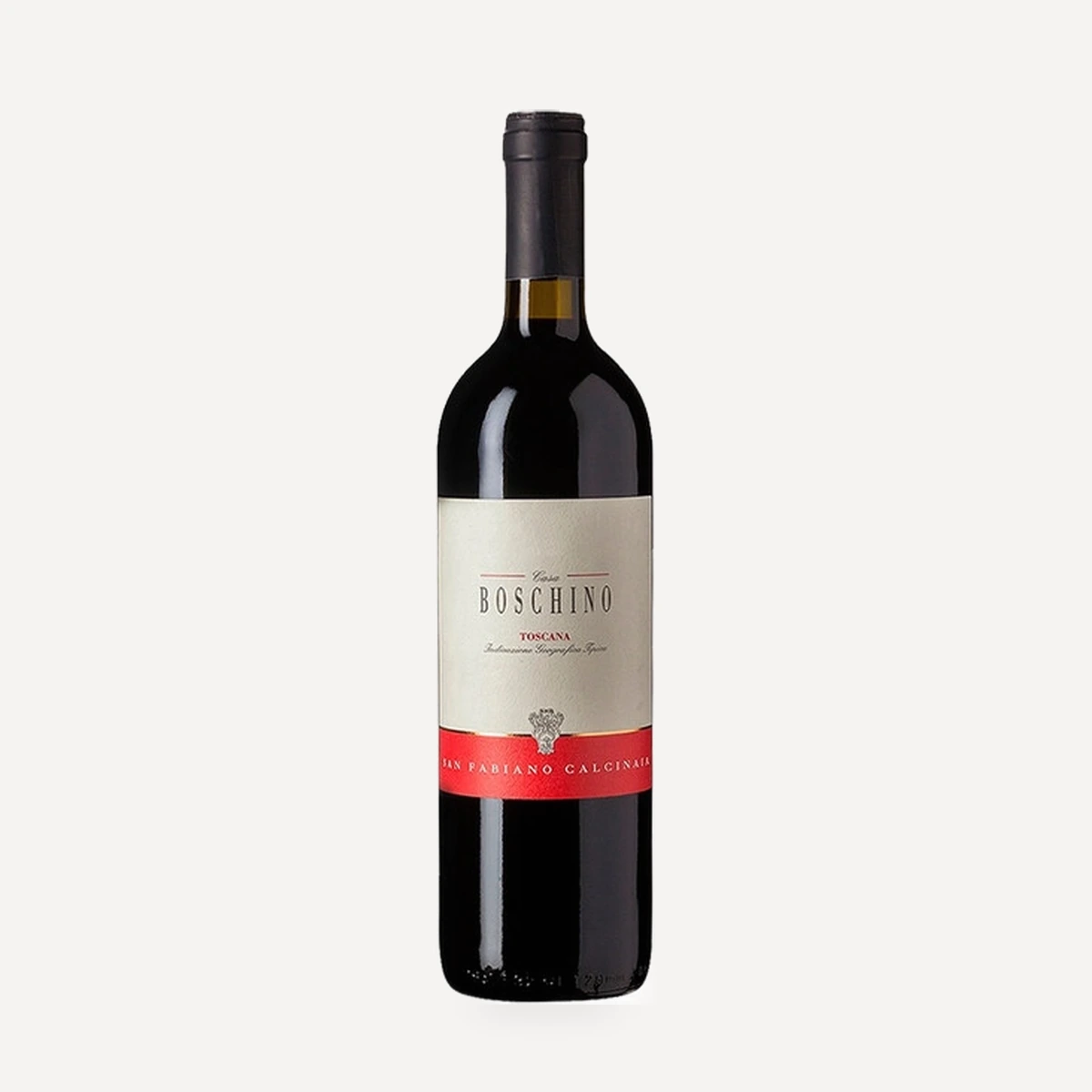
Toscana Rosso Casa Boschino BIO IGT