History
Origins in Schiavenza
The family business was originally called Fratelli Alessandria. It later adopted the name Schiavenza, taken from the Piedmontese dialect term used for the sharecroppers—or keepers of the keys—who cultivated and managed the surrounding fields and vineyards.
During the 1920s, the family’s great-grandfather Maggiore moved from Monforte d’Alba and purchased the farmhouse in the hamlet of Schiavenza, where he settled with his family. The business remains based in the same hamlet, preserving its geographical connection to its origins.
1956: the first label and the winery
The first Schiavenza wine label appeared in 1956. Construction of the cellar began in the same year. During this early period, the family sold wine both in bulk and in bottle.
Expansion during the 1990s
Maura, Enrica, Luciano and Walter entered the business during the 1990s. Their arrival accompanied a period of growth that included the acquisition of important vineyard holdings, among them Broglio and part of Cerretta.
The cellar was subsequently enlarged and modernised. Despite these changes, the family retained its traditional approach to vinification.
1997: from wine to hospitality
Cooking had long existed alongside wine within the family. In 1997, the family opened a trattoria, initially as an informal venture. It later developed into the Schiavenza agriturismo, bringing agriculture, wine and hospitality together in one business.
Emanuela subsequently joined Maura in managing the kitchen. The agriturismo continues to prepare traditional Langa dishes from raw materials produced by the estate.
Terroir
Serralunga d’Alba and Monforte d’Alba
Schiavenza’s vineyards cover 11 hectares divided between Serralunga d’Alba and Perno, in the municipality of Monforte d’Alba. Most of the holdings lie in Serralunga and generally face east or south-east. Morning sunlight is less aggressive than afternoon exposure, helping protect grapes from sunburn and supporting slower ripening. It also dries the vines rapidly in the morning, reducing conditions favourable to fungal disease.
Serralunga: the Formazione di Lequio
The Serralunga vineyards lie on the Formazione di Lequio, described as the oldest geological formation in the Barolo area. Its structure includes layers of silt and cemented sand, with local variations in clay, limestone, tufa and sand among the individual sites.
Perno: Arenaria di Diano
The vineyards at Perno have a contrasting geological identity. Their soils derive from Arenaria di Diano, a predominantly sandy and very dry formation. They are less compact than the clay-rich soils associated with Serralunga, giving the family a contrasting expression of Nebbiolo within the same vinification approach.
Site-specific conditions
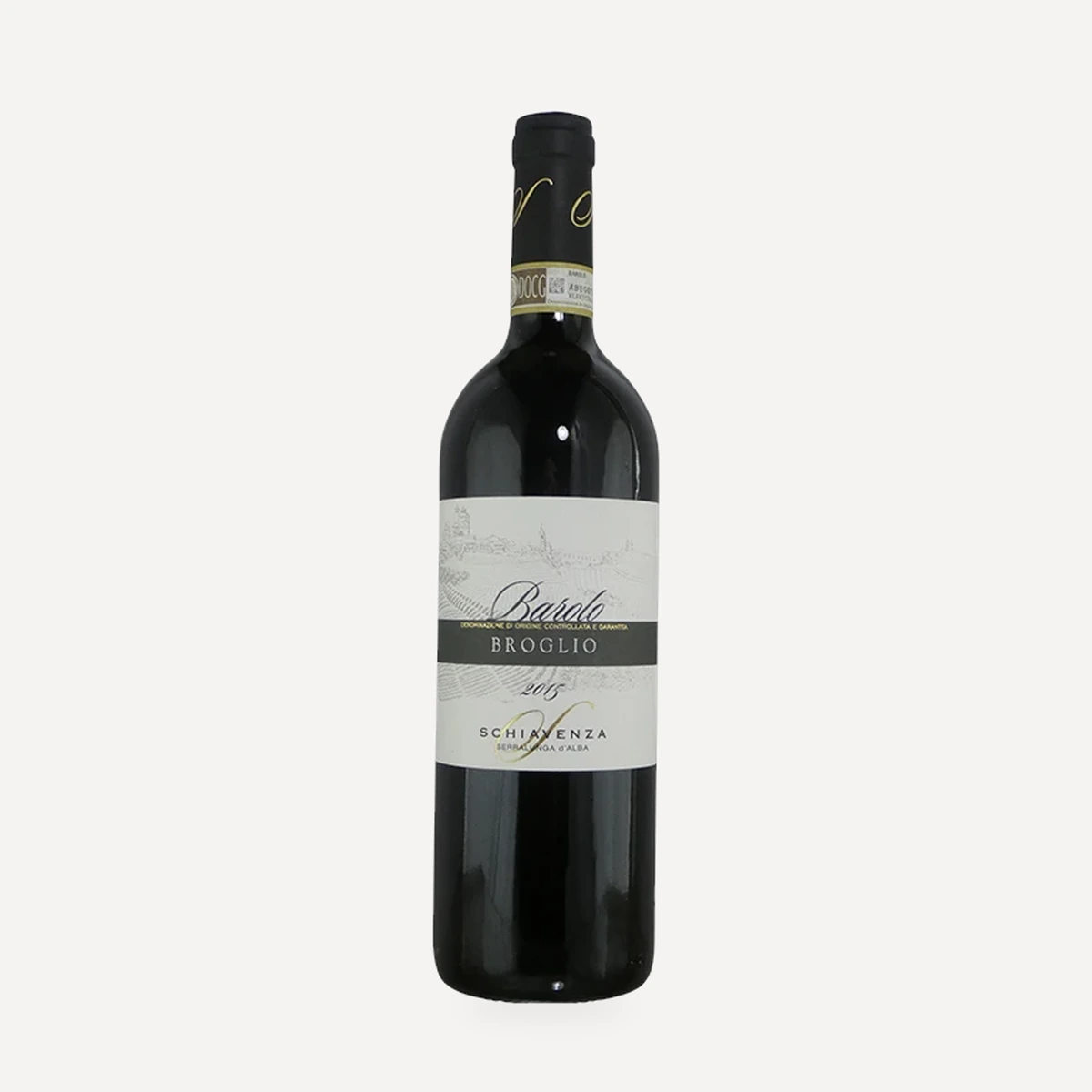
Broglio combines an easterly exposure with terrain that begins steeply and then becomes gentler. The slope promotes drainage and prevents standing water, creating mild water stress and encouraging the roots to penetrate deeply.
Bricco Cerretta is the highest of the estate’s Serralunga sites. Its elevated, east-facing position receives gentler morning sun and dries quickly after night-time moisture.
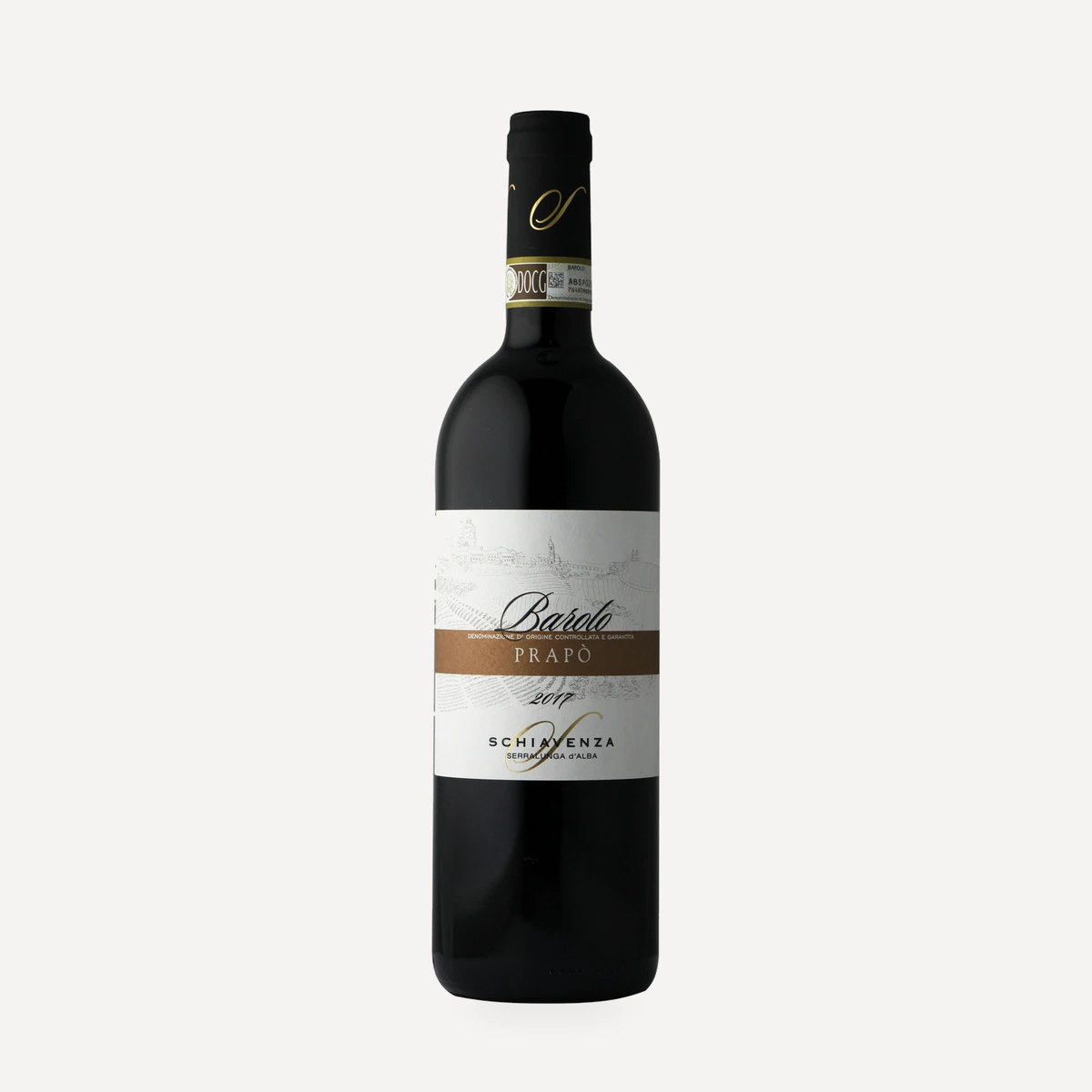
Prapò is among the lowest vineyards. It benefits early from milder spring temperatures, leading to earlier vine development. Its eastern exposure supports gradual ripening and healthier grapes.
Winemaking
Schiavenza connects the future of its wines to the health of its soils and wider vineyard environment. Soil cultivation is kept to a minimum, while the use of heavy machinery and the number of tractor passes are restricted to protect the ground’s physical balance.
Vine protection follows integrated pest management. Treatments are applied only when required, with the stated objective of limiting interventions while maintaining healthy vines and fruit. Easterly exposures contribute to this approach by drying the canopy and grapes quickly in the morning; at Prapò, gradual ripening associated with the exposure also helps reduce treatment requirements.
Every vineyard operation from pruning through harvest is performed manually. Harvesting is therefore by hand across the estate.
The estate holds SQNPI and Green Experience certifications. The sustainability programme encompasses biodiversity, water management and attention to the use of plastic in the vineyards, alongside reduced soil disturbance and machinery use.
Schiavenza produces red wines exclusively. The family follows a traditional vinification philosophy and uses a deliberately consistent method across the range, with particular emphasis on treating its different Barolos alike. The purpose is to avoid obscuring distinctions created by soil and individual vineyard sites.
Construction of the cellar began in 1956, the same year as the first Schiavenza label. The facility has since been enlarged and modernised without abandoning the family’s traditional vinification method. It includes spaces in which the wines rest and mature before release.
Philosophy
Schiavenza describes tradition as its guide, respect for terroir as its compass and sustainability as a continuing commitment. The family sees its role as preserving inherited knowledge while respecting the land and its resources.
The central production objective is to allow the vineyards to express themselves without being masked by cellar technique. A uniform vinification method—particularly among the Barolos—is intended to make differences in soil and individual sites easier to perceive.
The family’s environmental philosophy centres on respect for the land and biodiversity. Living soil is treated as the basis of wine quality, while manual work, minimum tillage, integrated pest management and reduced machinery use are presented as practical expressions of that principle.
Family continuity also informs the estate’s identity. The business remains in the hamlet purchased by Maggiore during the 1920s, retains its traditional winemaking approach after successive expansions and combines winegrowing with traditional Langa cooking and hospitality.
Wines
Barolo Broglio DOCG