Storia
Farming origins and the first bottling venture
Raffaele Librandi was a winegrower, direct farmer and small entrepreneur. His eldest son, Antonio Cataldo Librandi—known as Tonino—worked beside him from childhood. By the beginning of the 1950s, the family operated an equipped cellar in the centre of Cirò and owned about 6 hectares, alongside rented land. Its wine was then sold in bulk in small 2–3-hectolitre casks.
In 1953, after 21-year-old Antonio returned from military service, the 48-year-old Raffaele transferred responsibility to him. Antonio and local entrepreneur Antonio Scala established Scala e Librandi, equipping a small facility in Via Tirone, Cirò Marina, to bottle Cirò. The Gaglioppo and Greco Bianco came from small Cirò DOC-area holdings at Olivitello, San Biase, Frassa and Feudo, which were subsequently sold.
The family purchased Tenuta Ponta in 1955. Its original 6 hectares had been planted by Raffaele during the 1950s and passed to his children. At that time the property was accessible only by fording the nearby Lipuda torrent. Ponta became the historic nucleus of the estate and later the home of Duca Sanfelice.
Independent bottling and the Cirò DOC era
Antonio began bottling independently in 1967. The 1968 harvest produced the first Cirò DOC bearing the Azienda Agricola Librandi Antonio Cataldo name, shortly before Cirò obtained DOC status in 1969. The operation initially employed three workers and used a small truck and driver for deliveries within Calabria.
During the early 1970s, Antonio involved his brother Nicodemo, then a mathematics student in Rome, as the company’s representative in the capital. After returning to Cirò Marina, Nicodemo combined teaching mathematics with work in the business. For about four decades, he led production and commercial development while Antonio managed the cellar, staff and administration.
Severino Garofano joined as oenologist in 1972, supporting the brothers’ ambition to move beyond successful Cirò DOC bottlings and broaden the range with higher-quality wines. In 1973 the Ponta estate was enlarged through the purchase of neighbouring parcels. The same year, Nicodemo’s early trips to Germany opened export markets; the customer network subsequently spread through Belgium, Luxembourg, the Netherlands, England, Switzerland, Austria and Scandinavia. Antonio received a Diploma di Benemerenza at Vinitaly–Fiera di Verona in 1974.
In 1975 Librandi completed and inaugurated its new winery at Contrada San Gennaro on the SS 106 in Cirò Marina. The facility incorporated concrete vats, stainless-steel tanks, vinification equipment and bottling lines and remains the company’s base.
Expansion beyond Cirò
The first vintage of Duca Sanfelice Cirò Rosso Riserva was released in 1983. In 1985 the family acquired land at Strongoli that became Tenuta Arcidiaconato, its first estate outside the Cirò DOC. More than 40 hectares of former farmland were converted to vineyards. The acquisition enabled experimentation with international varieties alongside Calabrian grapes and marked the business’s opening toward foreign markets. Antonio received Vinitaly’s Premio CanGrande–Benemeriti della Viticoltura that year.
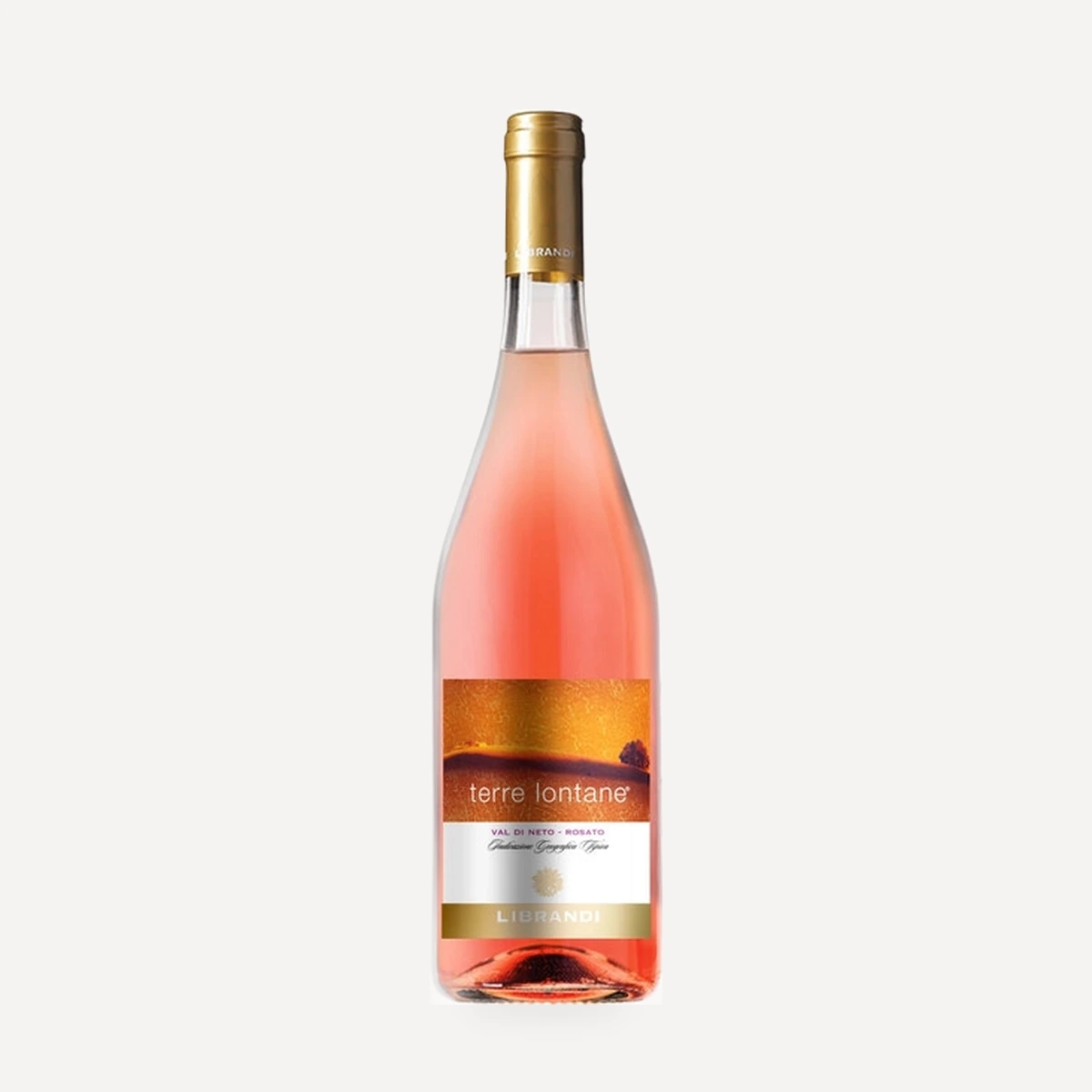
The first vintages of Gravello, Critone and Terre Lontane appeared in 1988. They represented new white, rosé and red interpretations for Calabria, including combinations of native and international varieties. A second Arcidiaconato acquisition followed in 2001, bringing that estate to 51 hectares.
Native-variety research and Rosaneti
Research began in 1993 with an experimental vineyard at Ponta. One account identifies Magliocco, Arvino, Mantonico Bianco and Pecorello as its trial varieties, while the dedicated Ponta account names Magliocco, Castiglione and Pecorello.
The first part of Tenuta Rosaneti, between Rocca di Neto and Casabona, was acquired in 1997. The investment created a substantial production base for the growth achieved in the 1980s and 1990s and signalled a renewed emphasis on native Calabrian varieties. Donato Lanati was entrusted with technical direction in 1998, developing an applied scientific-research programme based on experimental fields and precision viticulture.
The 1995 Magno Megonio was released in 1998, initially only in magnum. Also in 1998, Concetta Sicilia and Enza—the wives of Antonio and Nicodemo—created the cultural centre ‘A Casedda in a restored mid-19th-century farmhouse within the winery complex.
In 2000, following a systematic soil study at Rosaneti, an experimental field was planted to compare presumed clones of 25 native varieties. Pre-harvest sampling and comparative microvinification continued for five years. A region-wide search for undiscovered and endangered Calabrian varieties began in 2001 with Professor Attilio Scienza of the University of Milan.
In 2002 a Rosaneti field was planted with 2,786 own-rooted seedlings obtained through self-fertilisation to explore the intra-varietal variability and genetic expression of Gaglioppo and Magliocco Dolce. The second Rosaneti acquisition was also completed around this period; a historical account dates it to 2003 and describes 89 neighbouring hectares, including a 19th-century manor house.
A spiral-shaped varietal garden was planted in 2003. It now preserves about 200 Calabrian varieties, arranged in groups of ten plants. The same year brought the release of the first Efeso, from the 2001 vintage.
In 2004 Rosaneti received a Magliocco Dolce comparison vineyard with several rootstocks, including four experimental M-series rootstocks from the University of Milan. In 2005 a multidisciplinary study of the collection combined DNA, historical, bibliographical, ampelographic, virological and oenological work. Melissa DOC wines under the Asylia brand and Librandi extra-virgin olive oil also entered the market in 2005.
The first two traditional-method sparkling wines, Rosaneti and Almaneti, were bottled in 2007. In 2008 the research results were published as Il Gaglioppo e i suoi fratelli – I vitigni autoctoni calabresi. A homologation field was planted at Rosaneti for the clonal selection of 24 virus-free Gaglioppo, Magliocco Dolce and Pecorello plants. Librandi also established I Vignaioli del Cirò in 2008; the association later reached 42 members and was conceived to share knowledge, strategies and quality objectives with selected local growers.
Modernisation, scale and succession
The winery was extensively reorganised during its growth phase. Covered space increased tenfold to about 7,000 m², storage capacity reached approximately 60,000 hectolitres, working areas were rationalised, and an analytical laboratory, climate-control equipment, exhibition space and visitor facilities were introduced.
By 2009 production had passed 2.5 million bottles annually. Exports approached 50% of turnover and reached more than 40 countries. The company then employed 25 permanent winery and administrative staff and approximately 100 people across its six estates.
In 2012 an experimental vineyard at Arcidiaconato/Critone compared the same Gaglioppo clone on multiple rootstocks. The research chronology refers to 22 selected rootstocks or seedlings, while the results section describes 20 rootstocks. Scientific works on Calabrian grape selection and modern methods for improving regional viticulture were also published that year. Antonio’s final harvest was 2012; he died on 26 October at the age of 80.
Management passed to the third generation. Librandi is now led by Raffaele, Paolo, Francesco and Teresa Librandi, whose responsibilities range from vineyard management to commercial activity. Walter Librandi works in bottling, while Daniela Librandi belongs to the corporate ownership structure.
Registered clones and continuing research
In 2014 the collaboration between Librandi, IPSP-CNR and Enosis resulted in the registration of the first Calabrian clones in Italy’s Registro Nazionale delle Varietà di Vite: four Gaglioppo, four Magliocco Dolce and two Pecorello clones.
A study identifying suitable rootstocks for Gaglioppo in the warm, dry Cirò environment was published in 2015, together with I Vignaioli del Cirò – Voci e volti di una storia. In 2016 Rosaneti received a homologation field for recovered minor varieties—Gaglioppo, Arvino, Guarnaccia, Marchesana, Toccarino, Iuvarello, Mantonico and Greco Bianco—and virus-sanitised clones were planted in a new experimental field. Magliocco Dolce was officially registered in the national vine-variety register in 2019.
Equalitas certification was obtained in 2021 as Librandi formalised its environmental, social and economic sustainability-management programme and issued its first sustainability report. Nicodemo Librandi subsequently received an honorary doctorate in Agricultural, Food and Forestry Sciences from the Università Mediterranea di Reggio Calabria for his contribution to viticulture. He died in 2023 after a lifetime devoted to Calabrian wine, research and the family enterprise.
Terroir
Librandi’s vineyards extend across eastern Calabria, from the historic Cirò zone near the Ionian Sea to the Neto valley between the coast and the Sila mountains. Cirò is divided into numerous subzones: coastal plains give way to inland hills with both northern and southern exposures. Soils vary from alluvial material to marly clay, while the climate is generally temperate. Gaglioppo and Greco Bianco have their historic centre here.
The Neto rises in the Sila mountains, passes through wooded gorges and broadens into a valley and wildlife-rich estuarine ecosystem. Librandi’s Neto valley vineyards lie between the Ionian Sea and the Sila, where maritime and mountain environments contribute to pronounced biodiversity.
The Melissa DOC adjoins Cirò but is less densely planted. Its principal vineyards are inland around Melissa and Strongoli, on predominantly limestone-clay soils.
The six estates occupy markedly different settings. Rosaneti contains cool, loose-soiled sectors and warmer, exposed clay hills; from its highest ground both the Ionian Sea and the frequently snow-covered Sila can be seen. Arcidiaconato lies at Strongoli at about 80 m. Ponta occupies the crest and edge of a limestone-clay hill at about 80 m, extending onto neighbouring flat ground near the Lipuda torrent. Pittaffo is a small sea-facing valley in Crucoli, around 50 m, with a strong maritime influence. San Biase lies just inland at about 45 m and is distinguished by red clay. Brisi is an urban vineyard at approximately 5 m in a historically favoured part of Cirò Marina.
Vinificazione
The viticultural programme combines traditional practices with systematic research. Historic Gaglioppo at Ponta is head-trained, and traditional local rootstocks and the practical knowledge of Cirò growers remain important reference points. New work includes high-density head-trained Gaglioppo, massal and clonal selection, rootstock trials, soil studies, pre-harvest sampling, microvinification and precision viticulture.
Integrated pest management has been fully adopted, with restrained use of pesticides and treatments. Organic viticulture is treated as a direction of interest, but the farming is not presented as organically certified.
At Rosaneti, reclamation and drainage work was accompanied by water-recovery reservoirs supplying drip irrigation. Water use and possible leaks are monitored, with peak consumption associated with the August–September harvest period.
Native-variety conservation is central to vineyard work. Material recovered across Calabria undergoes DNA, historical, ampelographic, virological and oenological analysis. Virus-affected clones are treated through meristem culture and in-vitro thermotherapy; primary material is safeguarded at the Vivalb nursery screenhouse in Vaccheria, Alba, with the Turin CNR. Sanitised clones are then returned to homologation fields.
Librandi supplements grapes from its six estates with fruit from selected local growers. The I Vignaioli del Cirò association, established in 2008 and numbering 42 members, shares knowledge, training and quality strategies. Producers receive agronomic assistance and support in cultivation decisions, while supplied grapes come exclusively from the Cirò DOC area.
The principal winery has operated at Contrada San Gennaro in Cirò Marina since 1975. Its original equipment included concrete vats, stainless-steel tanks, vinification lines and bottling lines. Later expansion increased covered space tenfold to approximately 7,000 m² and storage capacity to about 60,000 hl. The reorganisation added rationalised processing areas, an analytical laboratory, climate control, visitor facilities, a barrel cellar, logistics areas and dedicated bottling infrastructure.
Winemaking is intended to preserve the character carried by the grapes and retain the imprint of individual vineyards and subzones. Cirò fruit is vinified separately by subzone where required, and the range embraces native varieties alongside international grapes adapted to the estates. Production covers still white, rosé and red wines, traditional-method sparkling wines, Martinotti-method sparkling wines and dessert wine.
The current sustainability programme encompasses vinification, maturation, bottling and packaging. Bottles weighing more than 750 g per 750 ml format were eliminated. A former 750 g Bordeaux bottle used for several key bottlings was replaced with a 600 g version. All current bottles contain at least 70% recyclable glass; paper labels and cartons come from controlled FSC-certified chains, and Librandi supports cork-recovery and recycling. Since 2023, lower-volume purchasing has been aligned more closely with production cycles to reduce unusable packaging stocks. Waste is separated by category, with specialised contractors handling winery by-products, diatomaceous earth, wastewater, detergent containers, cork and other special waste.
Filosofia
Librandi defines origin as more than a geographical boundary: it encompasses territory, traditions, history, customs and landscape. The estates are intended to embody the value, work and time invested by the family across three generations.
The core wine objective is personality rather than stylistic uniformity. Grapes should retain the signature of their vineyards, and the identity of each wine should remain recognisable through vintage variation. Tradition begins with Gaglioppo, Greco Bianco, native varieties, head training, established rootstocks and the knowledge of local growers. Scientific work is used to understand, preserve and improve that inheritance rather than replace or reinvent it.
The company’s stated vision is to interpret Calabria’s viticultural and environmental potential responsibly, transferring the character of grapes, soils and estate microclimates into wine. Sustainability is framed through social, environmental and economic pillars: protection of biodiversity and natural resources, fair treatment and professional development of employees, support and fair remuneration for growers, responsible supplier selection and long-term economic continuity.
Environmental decisions combine proactive investment in efficient machinery and low-impact materials with corrective measures that reward better practices, especially among grape suppliers. The declared principle is that authenticity and diversity should be protected without compromising product or process quality.
Vini
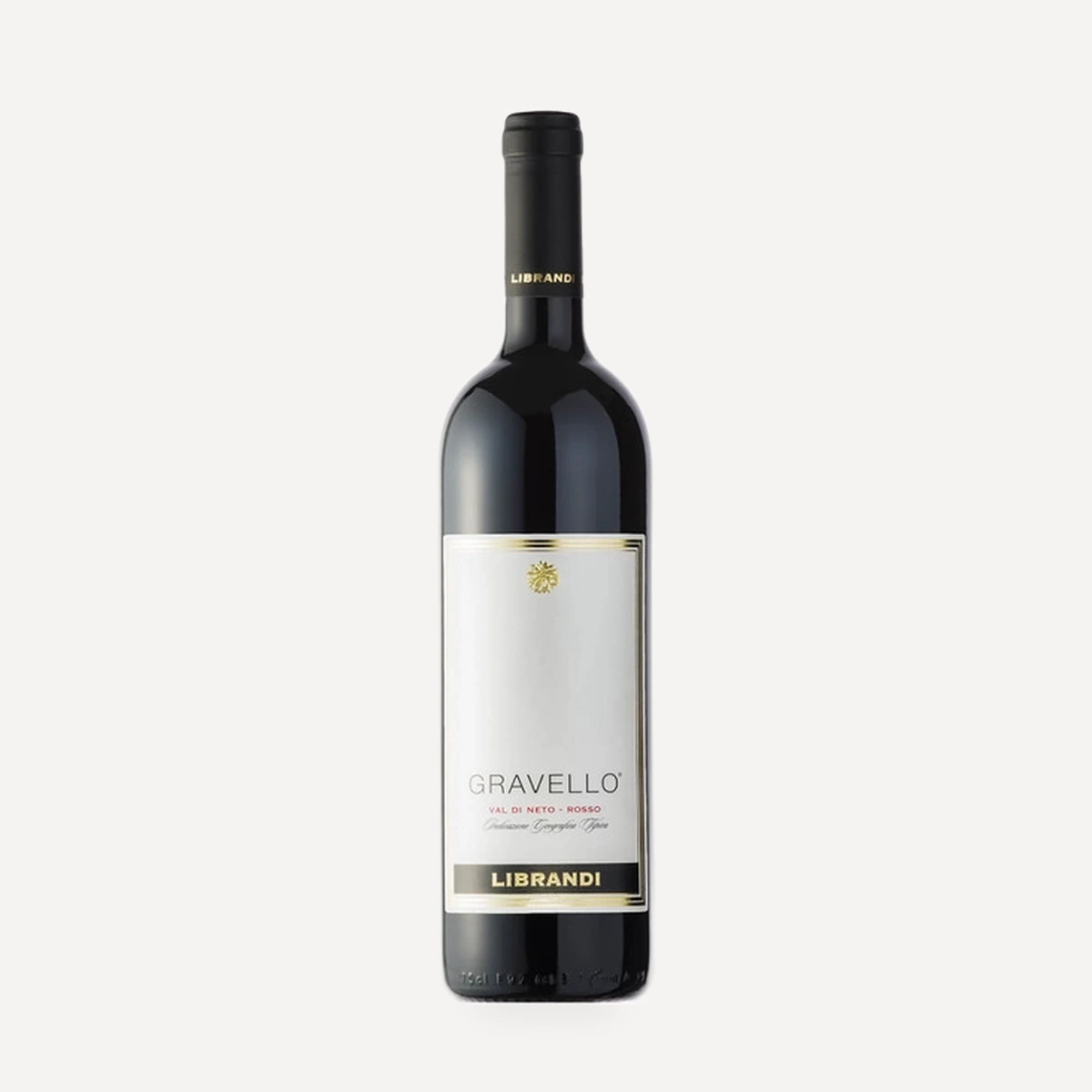
Gravello
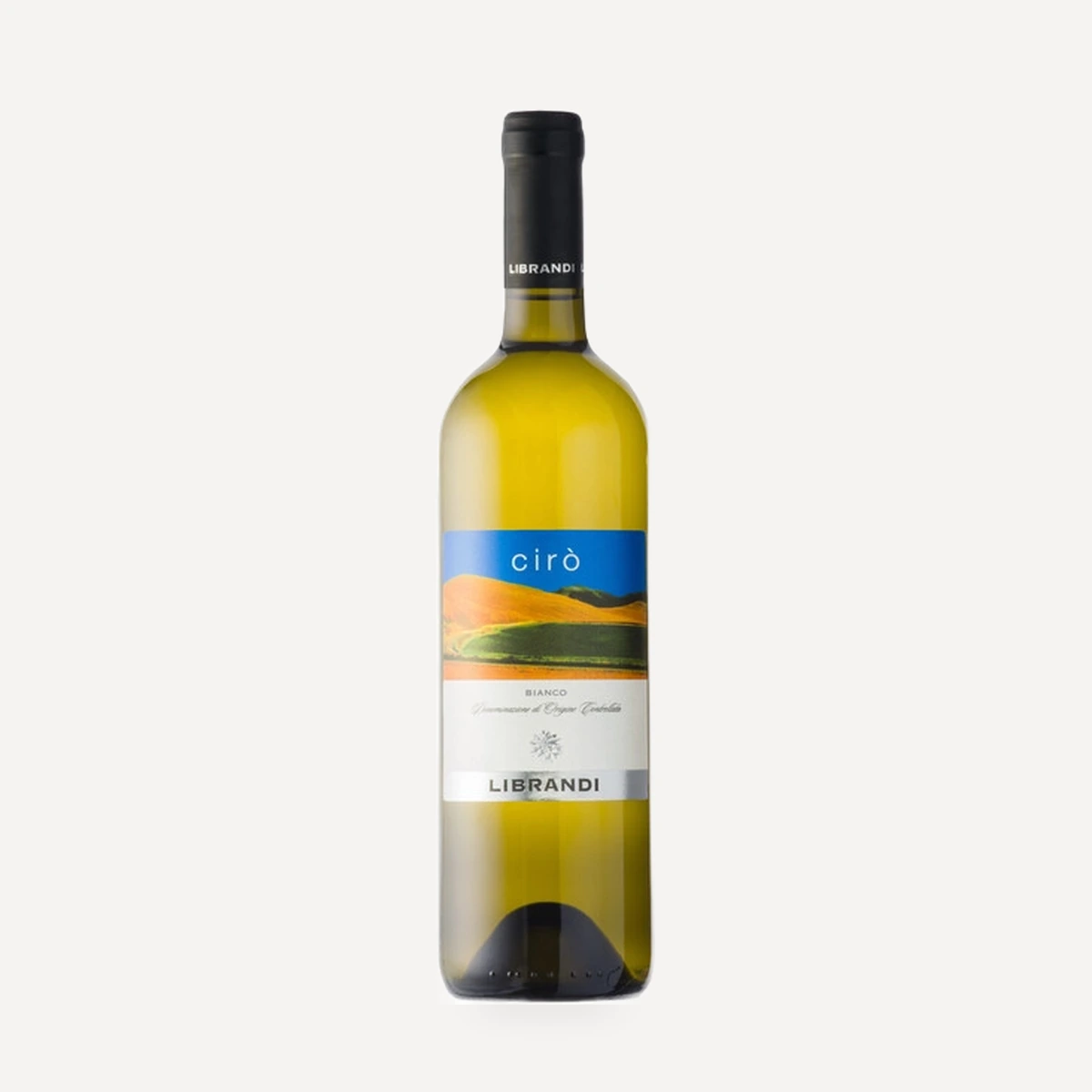
Segno Librandi Cirò Bianco
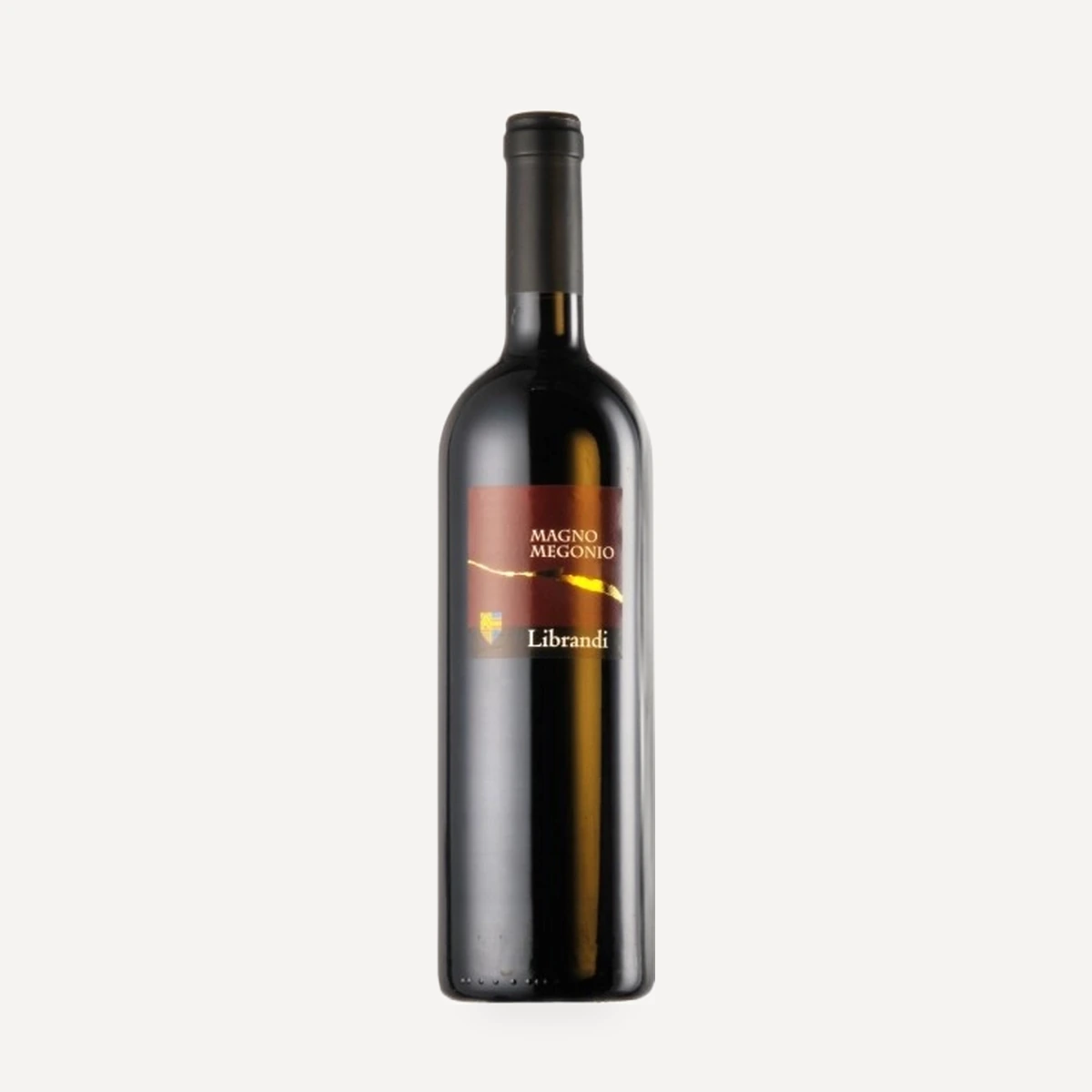
Megonio
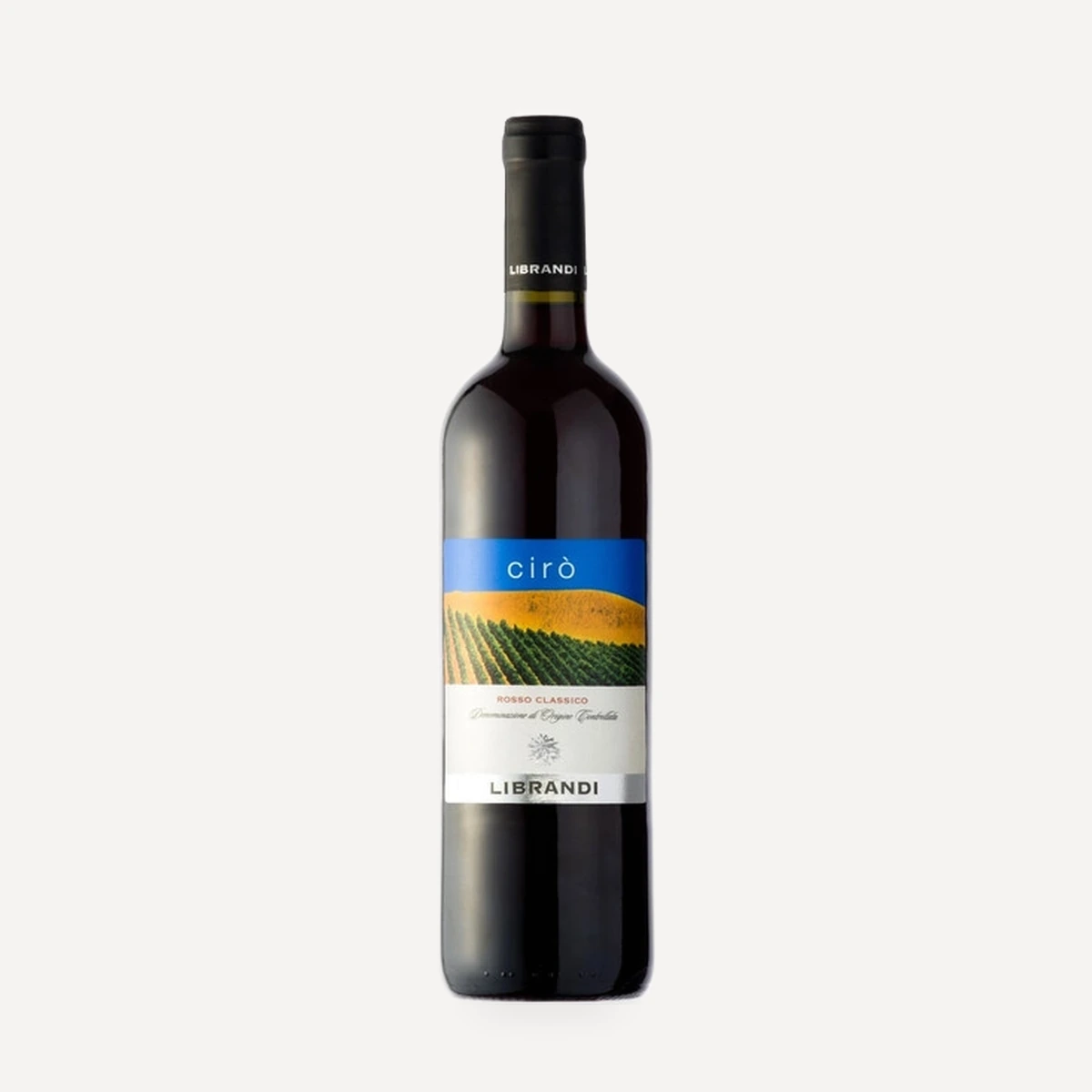
Segno Librandi Cirò Rosso