Storia
Angelo Veglio and the beginnings
The family’s winegrowing story began in the mid-20th century. Angelo Veglio, a sharecropper and farmer, made the decision to invest in native grape varieties and bought his first vineyard in Gattera, in the Annunziata hamlet of La Morra. The acquisition, made during the 1960s, established the vineyard that the family regards as the origin of the winery.
In 1979 Angelo acquired part of Cascina Nuova together with approximately five hectares of vineyards in prominent sites that included Arborina and Rocche dell’Annunziata. The early farm chiefly produced ready-to-drink wine sold in demijohns rather than pursuing an estate-bottled fine-wine model.
Mauro and Daniela: rebuilding around Barolo
Angelo’s illness forced Mauro Veglio to assume responsibility for the winery while still very young. Mauro chose to focus on Barolo at a time when winegrowing in the Langhe involved heavy work and offered limited financial returns. He began substantial renovations of the cellar, renewed the vineyards and pursued new production techniques intended to give greater value to a wine that he believed had been neglected.
Mauro married Daniela in 1987. Her family vineyards in Castelletto subsequently joined the Veglio holdings, extending the estate from La Morra into Monforte d’Alba. The Castelletto plantings date from the late 1970s and 1994.
During this period, a group of Langhe producers exchanged technical knowledge, equipment experience and advice while rethinking Barolo production. Burgundy and the experience of French vignerons provided a reference for wines intended to be cleaner, fresher and approachable sooner. The methanol scandal reinforced the turn toward quality. Chemical fertilisers were abandoned, vineyard care received greater emphasis, and bunch thinning and green harvesting reduced yields in pursuit of healthier, riper fruit. Cellar hygiene and measured use of small oak barrels also became priorities. These changes produced a generational and stylistic dispute between advocates of modernisation and defenders of established practice, while the new interpretation helped bring greater international attention to the Langhe.
Arborina became the source of the family’s first Barolo and the defining expression of Mauro’s style. With the 1996 vintage, Mauro Veglio became the first producer to place the Castelletto name on a label, before Castelletto received official recognition as a Barolo geographical mention.
Environmental adaptation
The estate has followed sustainable organic farming for more than two decades. In 2013 it installed anti-hail nets in the vineyards. Beyond protection from hail, the nets help shield grapes from increasingly aggressive sunlight associated with climate change.
Merger with Alessandro Veglio
In July 2017 Mauro and Daniela merged their winery with the business of Mauro’s nephew, Alessandro Veglio, born in 1982. Alessandro, the son of Mauro’s brother, had already managed his own winery for several years and was considering expansion and further investment. The merger was conceived during a discussion among Alessandro, Mauro and Daniela.
Alessandro contributed five hectares in La Morra and Barolo, including land in Gattera and 0.65 hectares in Paiagallo. These joined the existing fourteen hectares, taking the combined vineyard holding to approximately nineteen hectares. The decision was intended to renew the working team, preserve the winery as a family-run enterprise and begin an intergenerational transition based on continuity.
The merger also changed the composition of Gattera. Grapes from Mauro’s warmer, sunnier, south-west-facing vineyard could be combined with fruit from Alessandro’s cooler, windier, south-east-facing vines, creating a new balance intended to preserve freshness and equilibrium in warm years.
New Barolo sites and releases
Paiagallo became the first Barolo made jointly by Mauro and Alessandro. The 2016 vintage entered the range in 2020, with approximately 4,000 bottles. Its introduction also marked a production change: longer maceration in vertical tanks and maturation in a large 30 hl cask replaced the shorter maceration and barrique-led approach used previously for this expression.
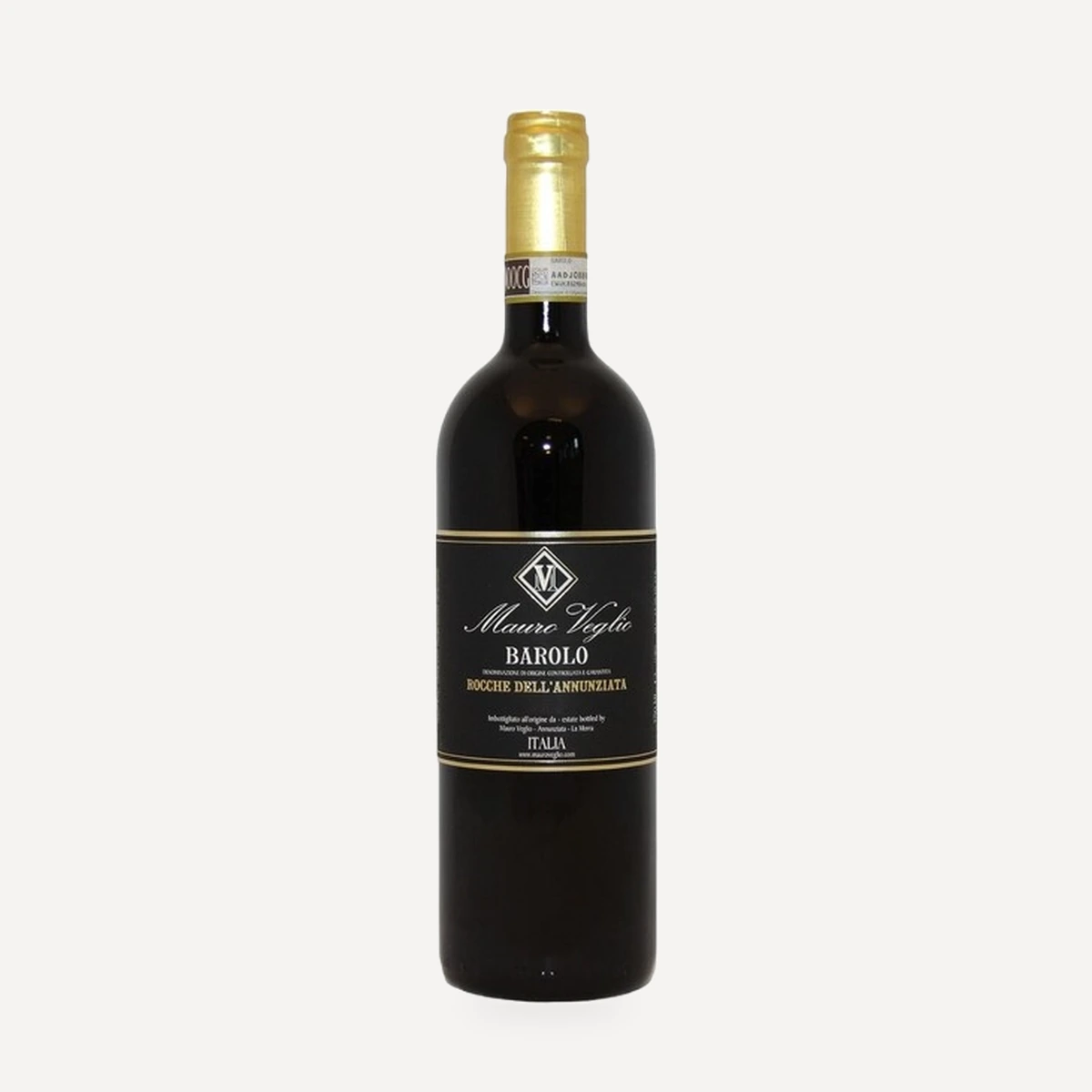
In January 2022, after approximately thirty years of activity, the winery presented its first Barolo Riserva: Rocche dell’Annunziata Riserva 2016. It came from the family’s small parcel in the MGA, held since the 1970s, and comprised 1,900 bottles and 50 magnums. The maturation strategy favoured a restrained period in wood followed by longer bottle ageing.
The range expanded again in 2023 with Barolo DOCG del Comune di Serralunga d’Alba 2019, the winery’s seventh Barolo. The project fulfilled a long-standing ambition to interpret the terroir of Serralunga d’Alba. Its vineyard lies between the Manocino and Lirano MGAs, and the debut production comprised 6,500 bottles.
Terroir
The estate cultivates approximately nineteen hectares across the Langhe communes of La Morra, Monforte d’Alba, Barolo and Serralunga d’Alba. Its sites span different exposures, elevations and geological formations.
In La Morra, Arborina and Cascina Nuova are associated with Tortonian St. Agatha Marls: lean soils composed of clay mixed with fine sand and limestone. Gattera occupies the boundary between La Morra and Castiglione Falletto, where La Morra’s Tortonian clay, sand and limestone meet the compact brown Helvetian marls of Castiglione. Rocche dell’Annunziata is distinguished by abundant crushed stone, the feature behind the name “Rocche,” which gives the site effective drainage.
Castelletto lies between Monforte d’Alba and Perno, close to Serralunga d’Alba. Its comparatively calcareous soil and ventilated microclimate are associated with freshness and firmer tannic structure. Paiagallo, in the commune of Barolo, has gentle, rounded contours; the estate parcel has marly, sandy soils. In Serralunga, the vineyard between Manocino and Lirano belongs to the Lequio Formation, with abundant limestone and grey marl alternating with sandy substrates.
The estate’s documented elevations range from approximately 250 m at Gattera to about 400 m in Serralunga. Exposure and ventilation create pronounced differences among sites: Arborina has a south- to south-east-facing slope and a ventilated north-eastern basin; Mauro’s Gattera vines are warmer and face south-west, while the vines contributed by Alessandro face south-east and are cooler and windier; Castelletto is south-east-facing and well ventilated; Rocche dell’Annunziata is primarily south-east-facing; the Paiagallo parcel faces south-east to east; and Serralunga faces west.
Vinificazione
The vineyards have been managed under a sustainable organic approach for more than twenty years. Herbicides and synthetic fertilisers are excluded, and pest pressure is addressed with sexual-confusion techniques.
Natural cover crops are maintained between the rows, including flowers and beneficial plants. This vegetation counters erosion, supports the return of harmless and beneficial insects, contributes to ecosystem health and encourages the presence of natural yeasts that settle on grape skins.
Vineyard work prioritises natural balance and the expression of individual terroirs. Practices developed during the estate’s quality transition include bunch thinning and green harvesting to reduce yields and obtain healthier, riper grapes. Old-vine Barbera at Cascina Nuova receives selection of the best fruit and deliberately low yields. All plantings documented in the technical material are Guyot-trained.
Anti-hail nets have been used since 2013. They protect the fruit from hail and also moderate the aggressive action of sunlight, an adaptation adopted in response to changing climatic conditions.
Production is organised around controlled, gentle extraction and the preservation of differences among vineyards. The estate attributes 80% of wine quality to vineyard work and seeks structured wines without excessive tannic concentration.
Across the range, fruit is macerated on the skins in temperature-controlled stainless-steel tanks. Documented maceration periods extend from approximately four days for the shortest cycle to 20–25 days for the longer Barolo programs. Several cru protocols begin with 48 hours of cold maceration at 10 °C, followed by slow extraction with only about two pump-overs per day. One whole-berry-oriented protocol destems without crushing, places nearly intact grapes in the tank, begins cold maceration within 36–48 hours and continues with a few daily pump-overs. Alcoholic fermentation may conclude in stainless steel over a total period of about twenty days. Malolactic fermentation also takes place in stainless steel under controlled conditions.
Maturation varies with site and style. The cellar employs French oak barriques and selects cooperages for consistency over time, with the aim that wood should complement rather than dominate the wine. Technical protocols document small-barrel programs containing combinations of new, second- and third-passage oak, generally followed by decanting in stainless steel. Large oak is used for Paiagallo and the Serralunga communal Barolo: documented vessels include a 30 hl cask and 25 hl French oak barrels, with maturation lasting 24 months. Other wood-aged programs run for 18–24 months. Fresher styles remain in stainless steel for several months or until the summer following harvest.
The technical protocols repeatedly specify bottling without fining or filtration after decanting in stainless steel. The Rocche dell’Annunziata Riserva receives more than two and a half additional years of bottle ageing, reflecting a deliberate preference for restrained wood maturation and a longer period in bottle.
Filosofia
Mauro Veglio defines its identity through balance rather than adherence to a rigid opposition between tradition and modernity. The family seeks sincere wines in which appropriate extraction of aromas accompanies respect for grape variety and vineyard of origin.
Innovation is welcomed when it improves precision, cleanliness and quality, but rejected when it becomes manipulation or forcing. Cleanliness, timely action, care and experience form the stated foundations of quality. In the cellar, wood is intended to complete the wine rather than dominate it, preserving freshness, clarity and natural elegance.
The estate regards the vineyard as the source of approximately 80% of a wine’s quality. Its objective is therefore to keep the identity of each terroir recognisable in the glass. This principle supports organic-minded farming, lower yields, gentle extraction and different maturation vessels for different sites.
Family continuity is also central. The 2017 merger with Alessandro Veglio was designed to keep the business in the family, renew the working team and establish a generational transition without abandoning the ideas and practices developed by Mauro and Daniela.
Vini
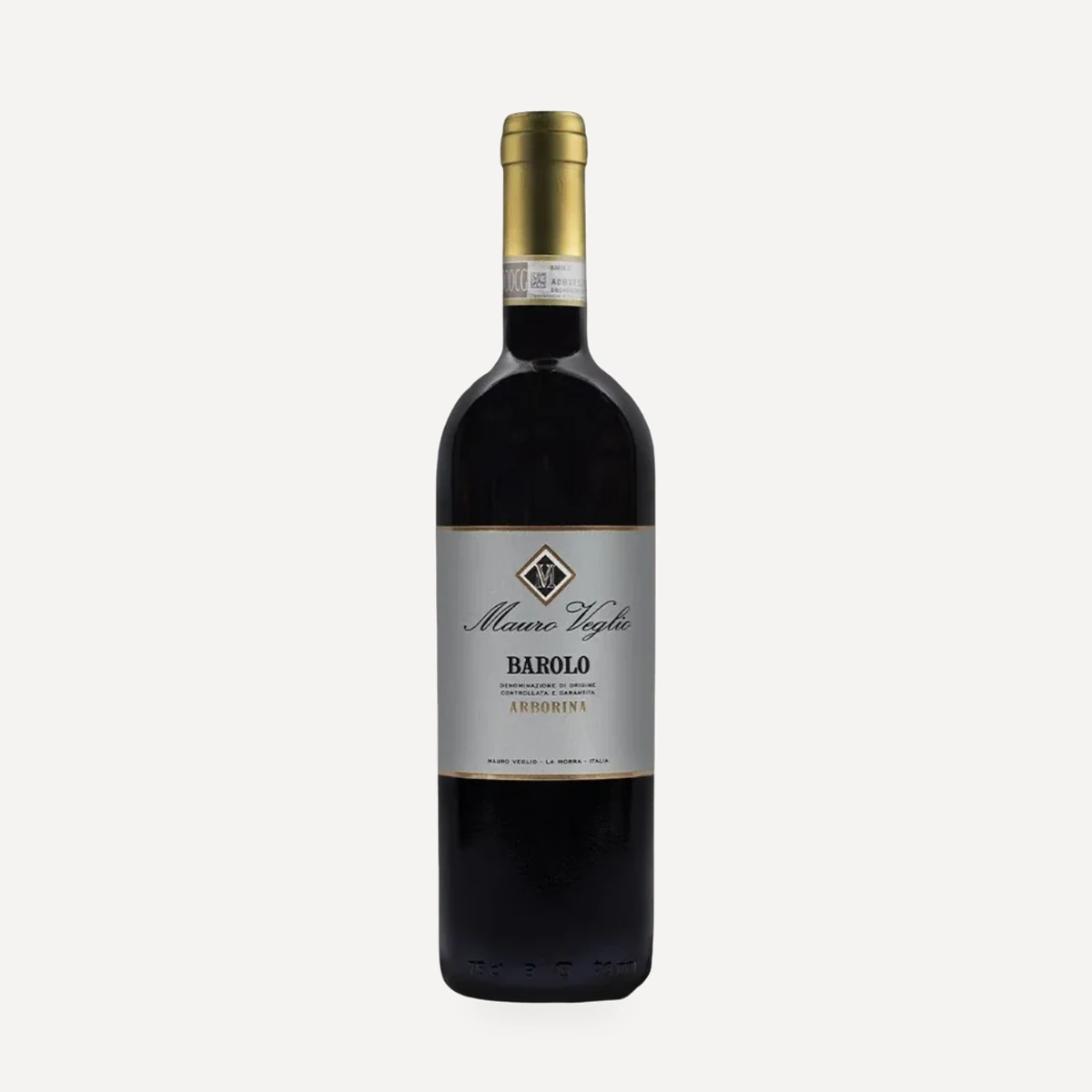
Barolo Arborina DOCG