Storia
Ancient origins of the name
The name Valiano is connected to an ancient Roman commander. During the period of the Gallic Wars, he is said to have received these lands in recognition of his military service under the provisions of the Lex Julia. The commander’s personal name is not preserved in the estate’s account, but his association with the land survives in the name Valiano.
Giovanni Gronchi and the Piccini acquisition
During the 1960s, the property belonged to Giovanni Gronchi, President of the Italian Republic from 1955 to 1962.
Fattoria di Valiano subsequently entered the Piccini family’s holdings during the third-generation leadership of Pierangiolo Piccini. Pierangiolo assumed control of the family company in 1963 and invested in estates in important Tuscan wine areas, including Fattoria di Valiano in Chianti Classico and Tenuta Moraia in the Maremma. These investments formed the early foundations of the project later known as Generazione Vigneti.
For Mario Piccini, Valiano became both the family home and a personal project pursued since his youth. The estate now serves as the Piccini family’s country residence as well as a centre for its Chianti Classico production.
Organic conversion and parcel-focused work
By 2021, all of Valiano’s vineyards were being managed organically. Under technical director and oenologist Pasquale Presutto, the estate began a detailed programme of identifying vineyard parcels with distinct characteristics and assigning them individual names to make field operations more precise. This work was accompanied by cellar trials and by the selection of different types of oak according to the intended wine.
Presutto also introduced an approach favouring relatively prompt bottling after the required maturation. Its purpose is to avoid masking the wine’s identity and to retain the balance needed to represent its place of origin.
Fifth generation and Generazione Vigneti
In 2023, Ginevra, Benedetta and Michelangelo Piccini assumed leadership of Generazione Vigneti, the project that brings the family’s agricultural estates together around the principle “one grape variety – one territory.” Their work combines backgrounds spanning marketing, finance and oenology. After training under their father Mario, they returned to the family estates to apply a new emphasis on terroir, experimentation and environmental responsibility. Fattoria di Valiano was chosen as the starting point for this fifth-generation phase.
Icaro X4
In May 2024, Fattoria di Valiano adopted Icaro X4, developed by the Italian startup Free Green Nature. Described as the first hybrid vineyard robot designed to use UV-C radiation, it was introduced to reduce reliance on plant-protection products and to combat downy mildew, powdery mildew and botrytis.
The electrically powered robot moves autonomously after its route has been mapped. Wing-mounted panels irradiate the vines with UV-C light, while sensors continuously record changes in weather conditions, calculate the risk of infection and determine when treatment should begin. A GPS system helps it navigate the rows. The technology was initially presented working among the vines of Poggio Teo.
Terroir
Fattoria di Valiano occupies 230 ha in the hills of Castelnuovo Berardenga, within the Chianti Classico production area and a short distance from Siena. The vineyards extend across hill slopes and average approximately 350 m above sea level. Most enjoy a south-west exposure.
The prevailing soils combine clay with abundant stony material. Poggio Teo is a distinct exception: sand and stones dominate there, while the upper part of the hill has a sandy texture with a substantial presence of sandstone. Its vineyards occupy three sides of the hill, facing south, east and north.
San Lazzaro rises to 360 m above sea level, faces south-west and has clay-rich soil with stony skeletal material. The vines were planted in 2006.
The lower-yielding Chardonnay and Sauvignon Blanc vineyards associated with Donna di Valiano lie between 200 and 300 m above sea level. They face north-east, experience cooler temperatures and grow in soil rich in limestone and heavy stones.
Harvest timing varies with the vintage but ordinarily falls between late September and early October. The lower-lying valley-floor vineyards are more humid than the higher sites, a difference that also influences pest-management decisions.
Vinificazione
All vineyards are managed organically. The guiding objective is to protect the health of the surrounding environment while making as few interventions as possible and preserving the connection between each grape variety and its place of origin.
Green manure is used among the estate’s vineyard practices. Biological pest control is also employed: at the beginning of March each year, populations of beneficial antagonist insects are released in the more humid valley-floor vineyards to control pests such as mealybug naturally.
Pasquale Presutto’s team monitors individual vineyard parcels and selects the most expressive plots harvest by harvest. Parcels sharing distinctive characteristics are delineated and given names to improve the precision and organisation of field operations.
Harvest dates respond to the conditions of each vintage and usually fall between late September and early October. Bunches are picked by hand in separate passes according to their location and grape variety. Selection begins in the vineyard and continues on a sorting table at the winery.
In 2024, the estate integrated the electrically powered Icaro X4 robot. After mapping its route, the robot moves autonomously through the rows, using weather sensors to assess infection risk. Panels mounted on its wings apply UV-C light against downy mildew, powdery mildew and botrytis, reducing the need for plant-protection products.
During the dry 2022 season, spring rainfall and work intended to direct water toward deeper soil layers created useful reserves. Cultivation techniques were also used to limit evaporation during the summer heat. For the 2024 season, delayed leaf removal helped prevent sunburn on Sangiovese bunches, while spring and light summer rains helped the vineyards avoid water stress.
Selection is central to the production process. Grapes are harvested manually in separate passes according to vineyard position and variety, then selected again on a sorting table when they arrive at the winery. Only the retained bunches are destemmed and gently crushed.
Maceration normally takes place in temperature-controlled stainless-steel tanks for 7–15 days. The cellar works with relatively small lots, allowing different parcels and vinifications to be assessed individually. Gentle pressing follows fermentation to preserve aromatic purity and encourage complexity.
After the skins have been removed, the new wine is racked off its lees. Malolactic fermentation is then allowed to occur naturally. Maturation is intended to develop complexity, soften tannins and shape the wine without suppressing the expression of its grapes or vineyard origin.
Slavonian oak is generally preferred. Smaller quantities may be matured in French oak vessels of 225 or 500 litres, and the specific wood is selected according to the type of wine. Presutto favours moving wines to bottle without unnecessary delay once their required maturation has been completed, seeking balance while avoiding the loss of territorial identity.
Final blending takes place before bottling. The broader production sequence at Società Agricola Valiano also includes stabilisation, filtration, monitoring, laboratory analysis and quality control, preparation and sanitation of equipment, corking, labelling and packaging. Bottling is carried out at the estate after the required quality certification has been obtained. Bottled wines rest for a further 4–6 months before release.
Filosofia
Valiano’s operating principle is to maintain a healthy surrounding environment as the foundation for refined wines. Its production philosophy is expressed through the formula “one grape variety – one territory”: the objective is to preserve the expressiveness of the fruit and make its relationship with its place of origin legible.
The approach combines organic farming, reduced intervention, biological pest control and new agricultural technology. Innovation is treated as compatible with natural rhythms rather than as an alternative to them. Icaro X4 embodies this position by using autonomous monitoring and UV-C treatments to control fungal pressure while reducing plant-protection inputs.
In the cellar, the same philosophy favours expressive parcels, separate assessment of small lots and maturation choices tailored to each wine. Oak should support complexity and balance without distorting the fruit or the identity of the territory. Bottling should take place as soon as the wine has achieved the necessary equilibrium rather than after prolonged maturation for its own sake.
For the fifth Piccini generation, Valiano is both a family home and the point of departure for Generazione Vigneti. Their programme joins inherited family experience with experimentation, technical innovation and renewed attention to individual terroirs.
Vini
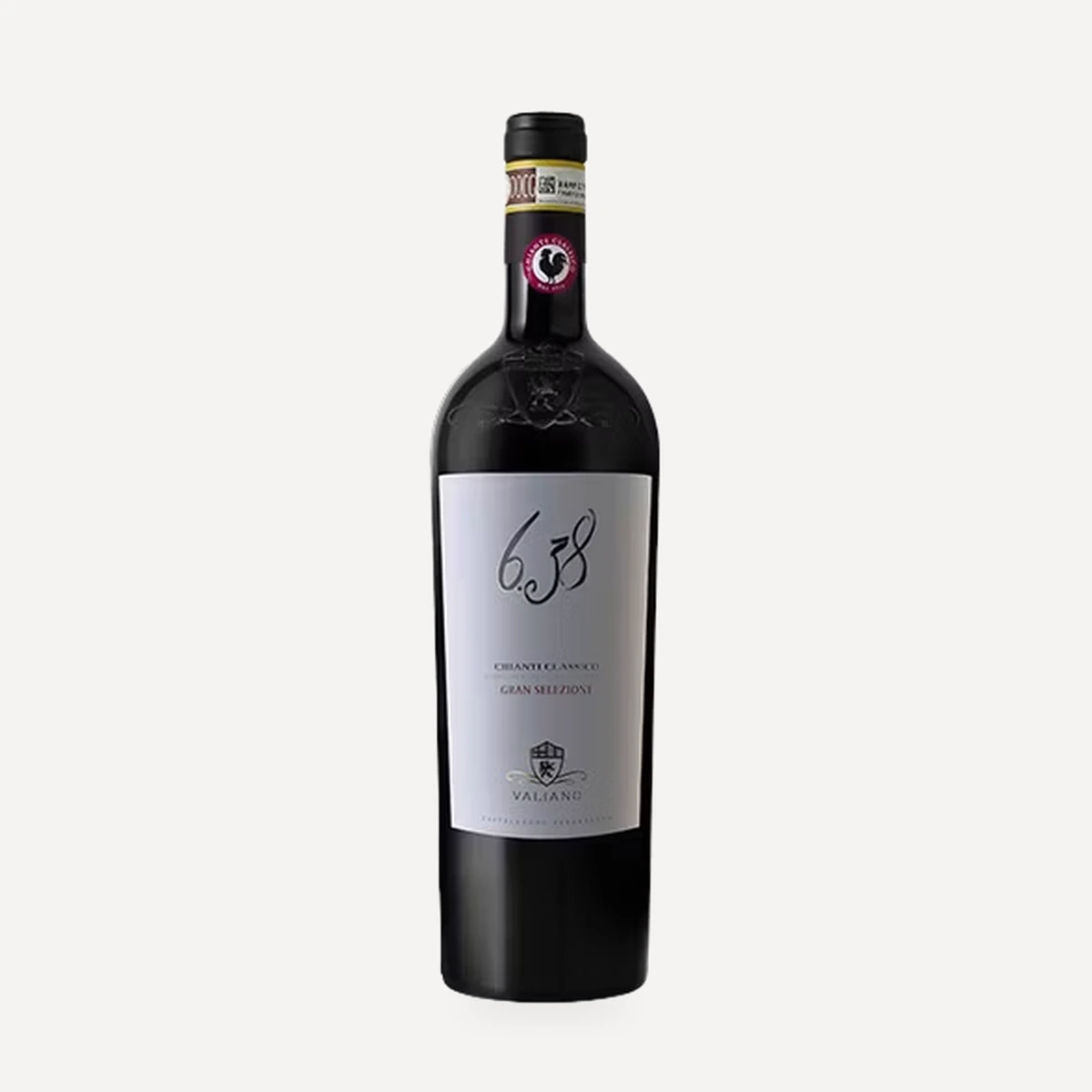
6.38 Chianti Classico Gran Selezione DOCG
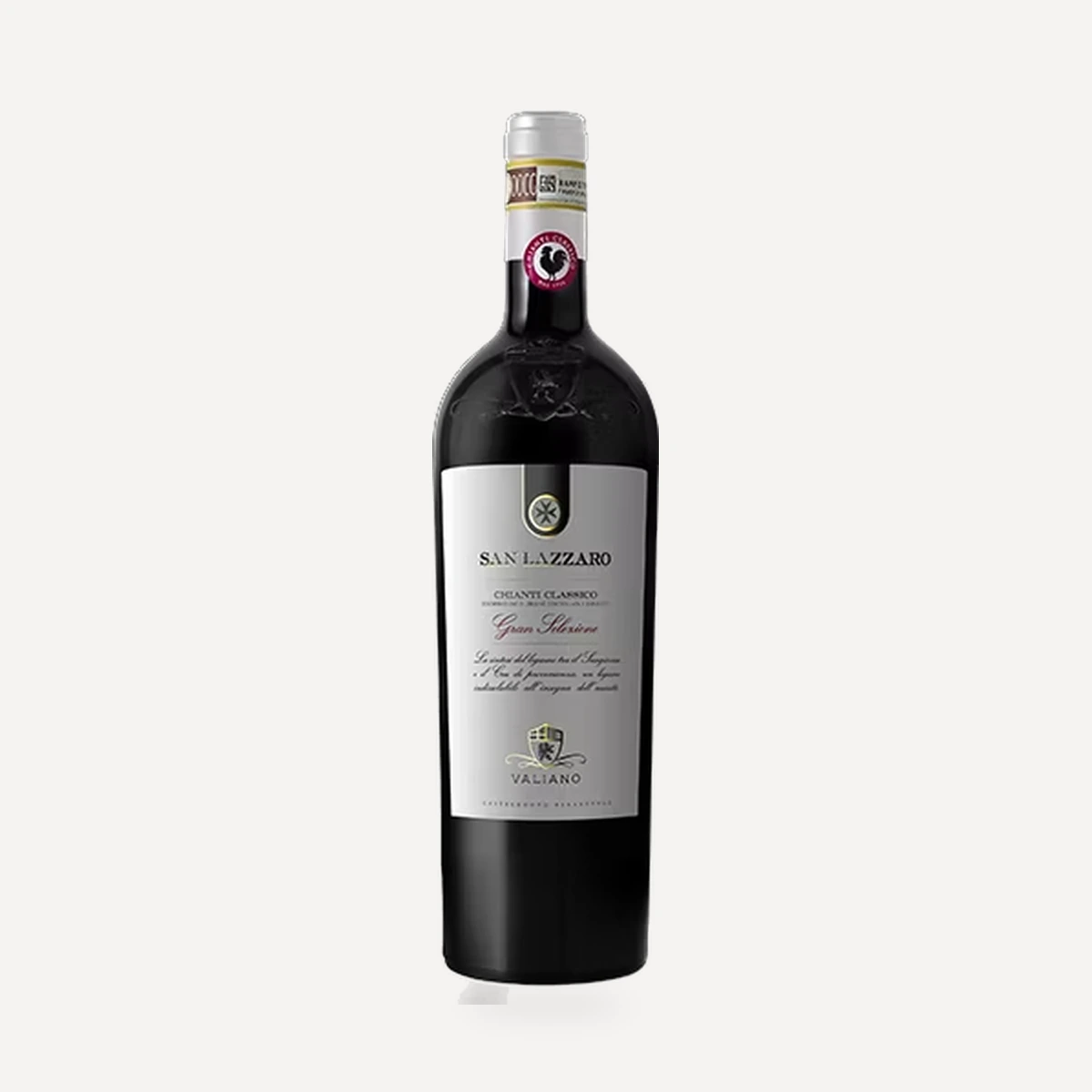
San Lazzaro Chianti Classico Gran Selezione DOCG
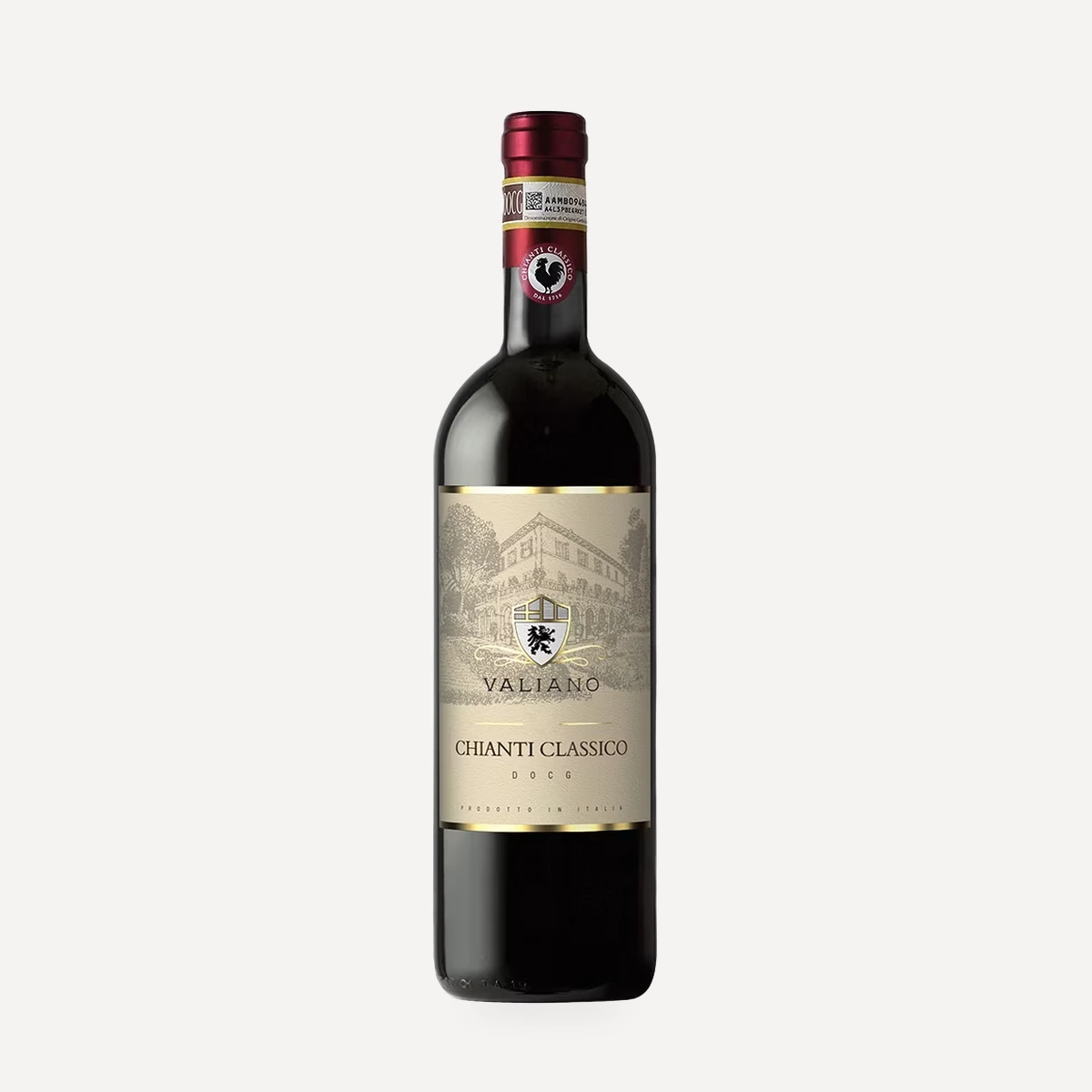
Chianti Classico bio DOCG
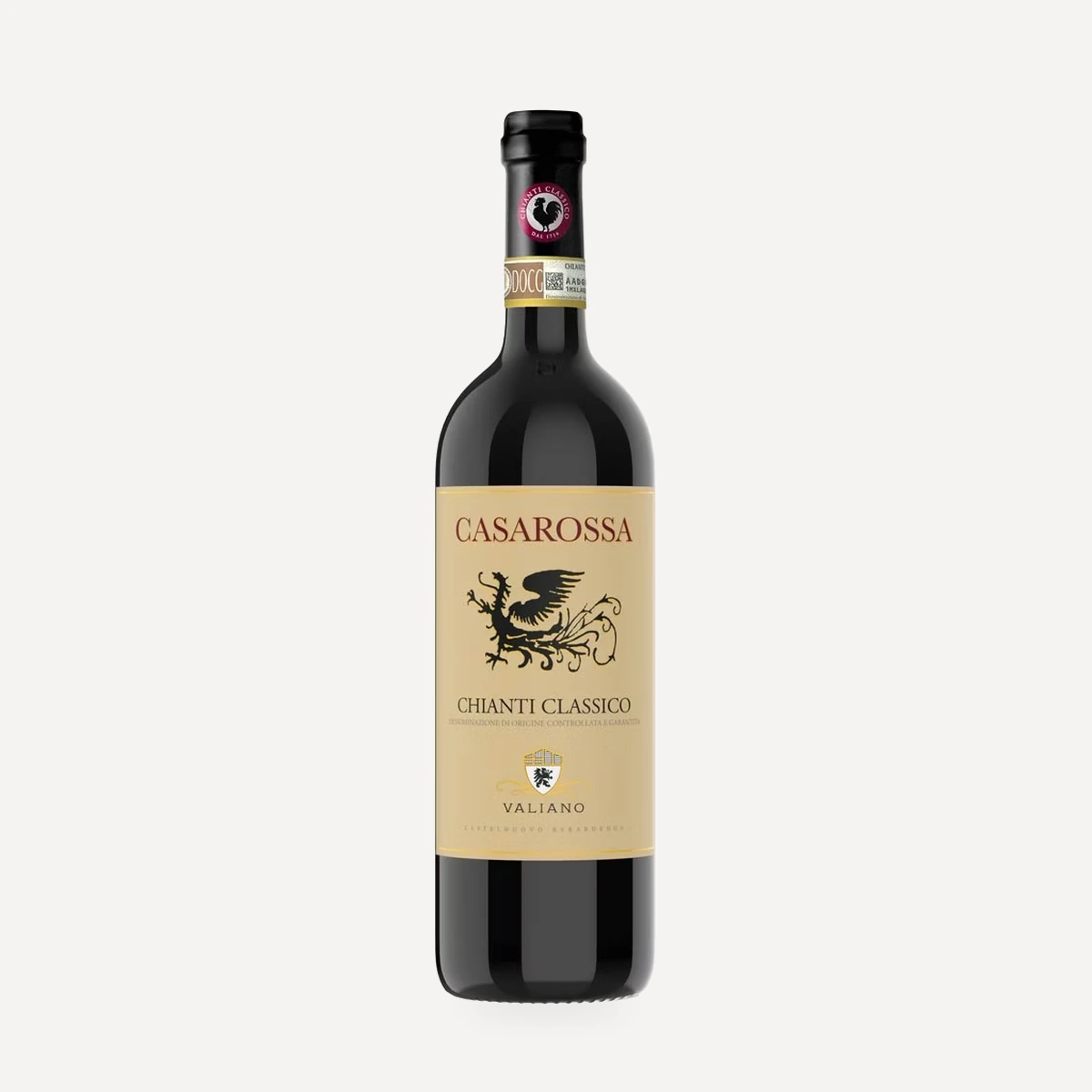
Casarossa Chianti Classico bio DOCG
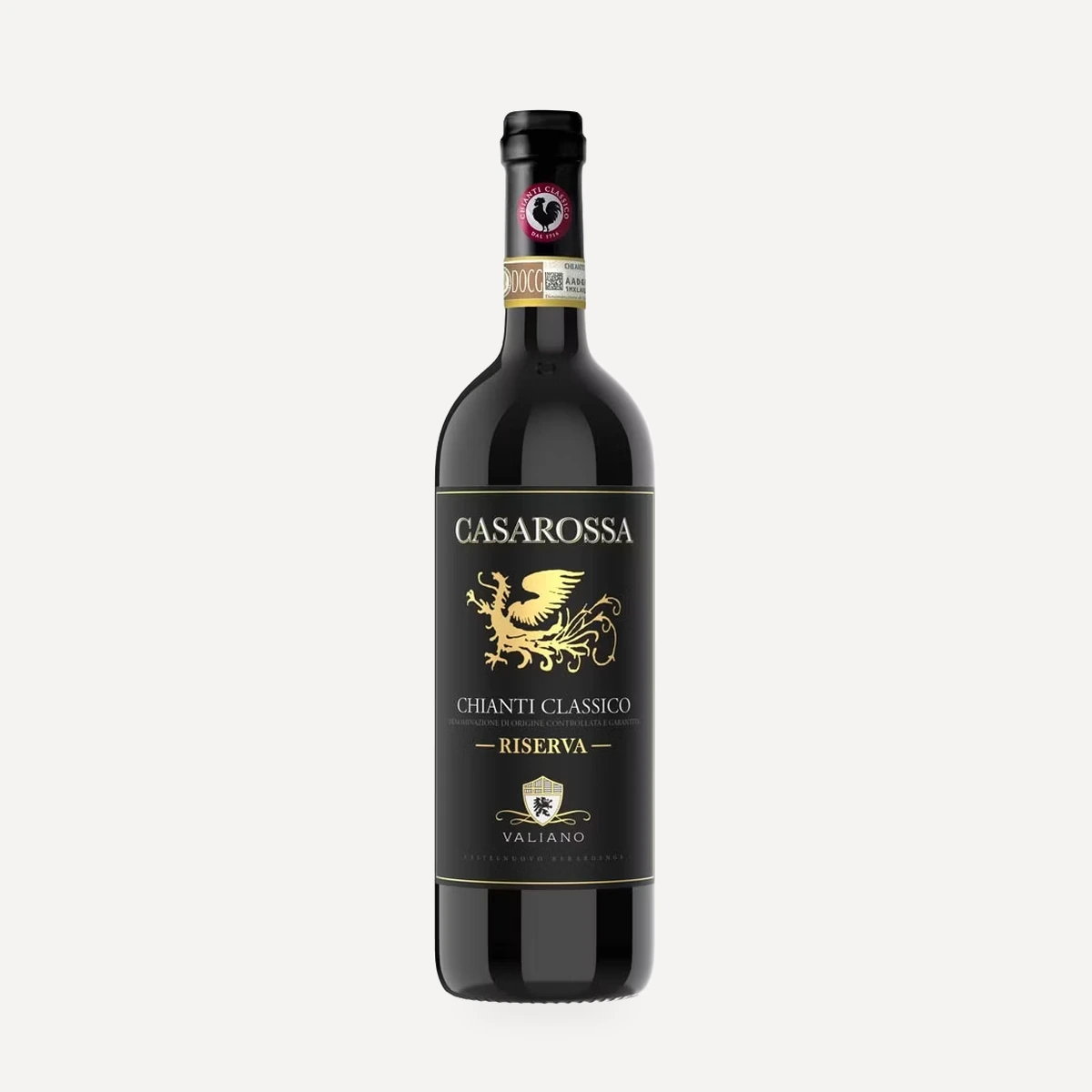
Casarossa Chianti Classico Riserva bio DOCG