History
A long-held ambition
Montalcino and Brunello had been an ambition of the Tommasi family for decades. The family began developing Tommasi Family Estates in 1997, seeking vineyards in selected Italian wine regions; its first Tuscan investment was in Maremma, followed by a search lasting several years for an estate in Montalcino.
2015: acquisition of Casisano
In March 2015, the fourth generation of the Tommasi family acquired Fattoria Casisano, subsequently presented as Podere Casisano or simply Casisano. The family evaluated three possible properties. Casisano was chosen after a tasting demonstrated the potential of its wine.
The acquisition comprised 53 ha on the south-eastern side of Montalcino, including 22 ha of vineyards. The vineyards required substantial cleaning, restoration and reorganization. Abandoned vineyard areas were recovered, and younger Sangiovese Grosso vines were planted during this work. The 2015 vintage became the first Casisano Brunello managed completely by the new owners, from vineyard to cellar, under oenologists Emiliano Falsini and Giancarlo Tommasi.
Vineyard rehabilitation and experimentation
Following the acquisition, the team undertook several years of detailed work to restore the vineyards without making wholesale changes to their established structure. Around 2019, approximately 3 ha were replanted with Sangiovese Grosso. Guyot training was tested on this parcel in place of the estate’s traditional cordon spur system, with the intention of observing its performance before considering any wider conversion.
The estate was progressively organized around the separate management and monitoring of ten vineyard parcels. Soil, exposure and the intended wine determine how each parcel is handled. Microzonation subsequently became a central development objective.
2020: the first fully managed release
After five years of work, the first Brunello vintage made entirely under Tommasi family management, 2015, was presented in 2020. Nine hectares were then reserved for Brunello, seven for Rosso di Montalcino and six for Sant’Antimo. Total production was approximately 100,000 bottles, including 45,000 bottles of Brunello.
2021–2022: identity and communication
In 2021 Casisano launched #CasisanoTales, a sequence of 36 stories connecting the estate with the history, culture, landscape and biodiversity of Montalcino. The project framed Casisano as the family’s home in Tuscany while emphasizing an interpretation rooted in the territory’s origins.
By 2022 the viticultural and cellar project was explicitly focused on microzonation and on preserving differences among vineyard parcels. Emiliano Falsini defined the desired approach as respectful, minimally invasive and intended to express Casisano’s character, elegance and relationship with its territory.
2022–2023: growth and hospitality
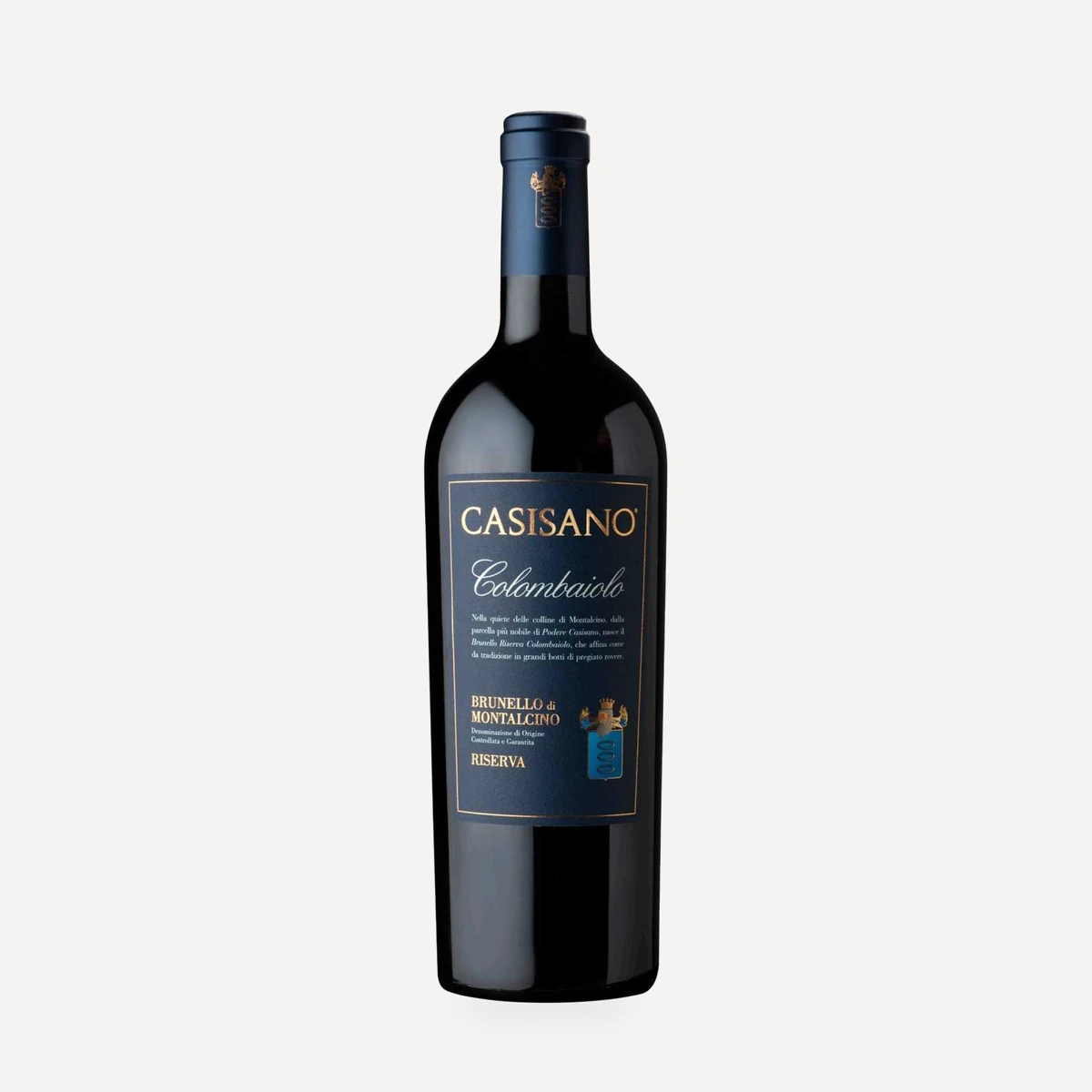
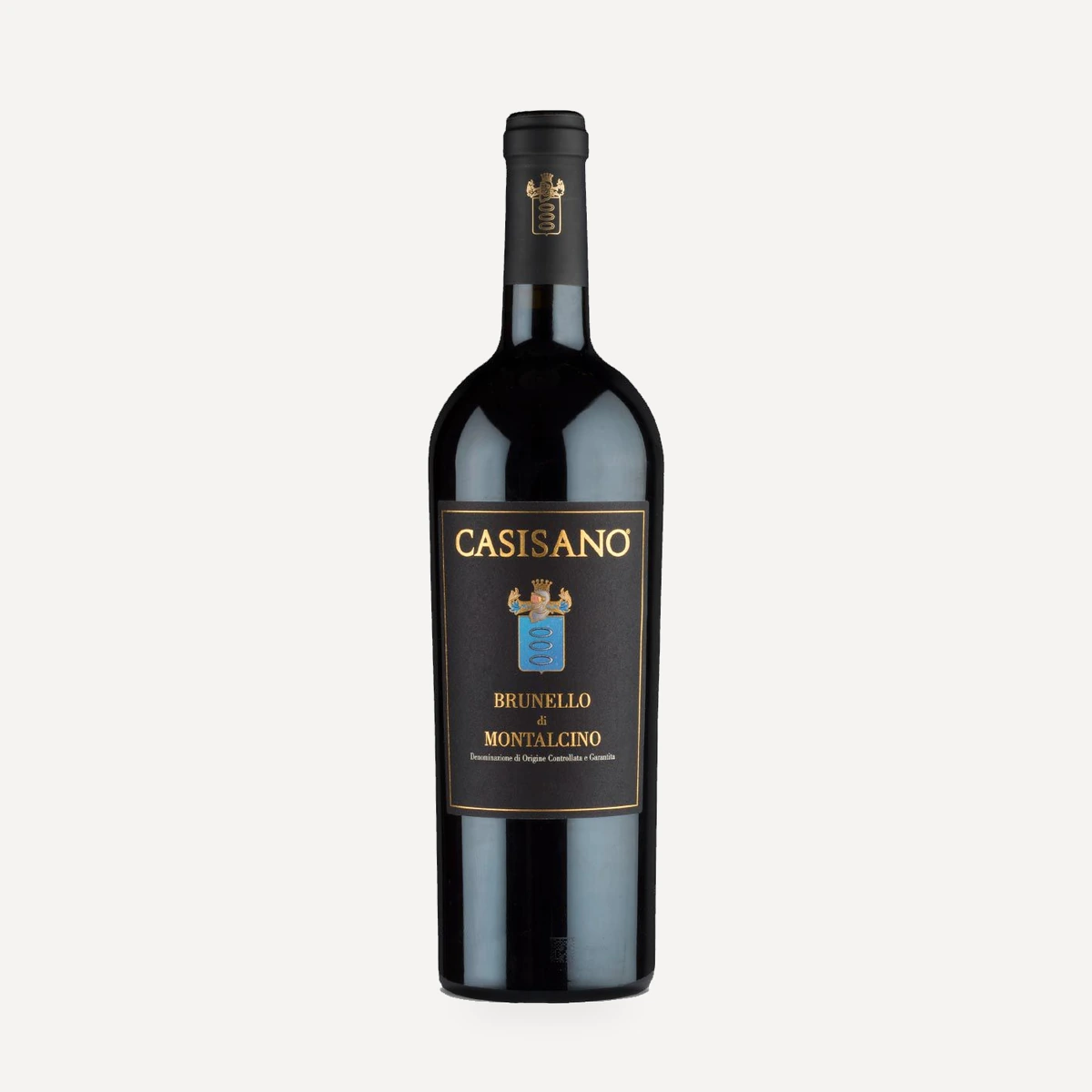
Production reached 115,000 bottles in 2022: approximately 45,000 bottles of Brunello di Montalcino DOCG, 4,000 of Colombaiolo Brunello di Montalcino Riserva DOCG and 65,000 of Rosso di Montalcino DOC. The estate recorded a 10% increase in value that year. Casisano was distributed in 30 of the 80 markets served by Tommasi, with Italy growing by approximately 5%; the leading foreign markets were the United States, Canada and the United Kingdom, followed by Switzerland. Development efforts also targeted South Korea, Hong Kong, Singapore and Japan, while demand for historical vintages was supported by the estate’s wine library.
Casisano opened for visits and tastings in 2023. The itinerary encompasses the vineyards, ageing cellar and tasting room.
The 2023 growing season brought temperature fluctuations, intense heat and abundant early-summer rainfall. The vines slowed their maturation, while winds at the estate’s high elevation helped maintain healthy grapes. Sunny late-summer days and marked day–night temperature changes supported final ripening. Harvest ran from late September to mid-October, returning to a later autumn schedule. Quantities were lower, but the fruit reached full maturity with loose bunches and strong sugar accumulation.
Terroir
Casisano occupies a natural terrace at approximately 480 m above sea level on the south-eastern side of Montalcino. It faces Sant’Angelo in Colle and the Abbey of Sant’Antimo, looking towards Monte Amiata. The vineyards are surrounded by centuries-old woods, including old oak woodland, and olive groves.
The estate contains a mosaic of soil compositions and microclimates. Its soils combine sandstone rock and galestro—schistous marl—with abundant stones, clay and volcanic-origin tuff. The Colombaiolo parcel is particularly rich in galestro with sandstone inclusions.
The microclimate is dry and well ventilated, with pronounced day–night temperature changes. The estate’s relatively high elevation produces cooler conditions than lower sectors of Montalcino, slowing Sangiovese Grosso ripening and helping preserve natural acidity. High-altitude winds also contribute to grape health, a benefit that proved especially important during the wet and thermally unsettled 2023 season.
Differences in elevation, vineyard age, soil and exposure give Sangiovese Grosso several distinct expressions within the property. These variations form the basis for parcel-specific management, separate vinification and the estate’s microzonation work.
Winemaking
Casisano’s 22 ha are entirely planted to Sangiovese Grosso. Traditional cordon spur remains the principal training system, while an approximately 3 ha Guyot parcel was established as a comparative trial. Vineyard restoration after the 2015 acquisition concentrated on cleaning, reorganizing and replanting neglected or abandoned areas.
Each of the ten parcels is monitored and managed according to its soil, exposure and intended cellar role. The objective is to maintain balance between vegetative growth and fruit while keeping the vineyard in harmony with its ecosystem. Differences established in the vineyard are retained through parcel selection and separate vinification.
The estate follows an integrated production system designed for eco-sustainable management of agricultural work. Vineyard practice prioritizes the health of each vine and makes use of the plants’ own defensive mechanisms. Natural vegetation is encouraged along the rows, invasive intervention is avoided, and the soil is periodically loosened to aerate and oxygenate the subsurface.
Planting density is generally 4,000 vines/ha, rising to 5,000 vines/ha in older vineyards. The published average yield is 7,000 kg/ha. Grapes are selected by hand. Harvest timing is determined through repeated tasting and analysis so that sugar and phenolic maturity can develop together while preserving varietal and territorial expression.
Packaging measures associated with the estate’s sustainability program include FSC-certified natural corks, FSC-certified label paper and recycled-paper cartons.
Casisano preserves the distinctions created among its vineyard parcels through separate selection and vinification. The principal vinifications take place in stainless-steel tanks, while fruit intended for the Riserva is fermented in wooden vats. Only indigenous yeasts are used, with the aim of retaining the identity of the site.
After separate vinification and wood maturation, blending is treated as a decisive stage in the interpretation of each vintage. Bottle maturation follows the blend.
Ageing takes place in large Slavonian oak casks, reflecting a classical Montalcino approach and avoiding an overtly forceful influence from wood. The cellar contains 33 casks: 18 have a capacity of 73 hl, while the remainder include vessels of 16, 25, 30, 32 and 50 hl. The variety of sizes helps retain stylistic distinctions established in the vineyard and during fermentation.
No animal-derived products or materials containing allergens are used during wine production. Cellar management focuses on efficient resource use, waste avoidance and recycling whenever possible.
Philosophy
Casisano’s project combines the established viticultural tradition of Montalcino with the Tommasi family’s accumulated oenological experience, while seeking an identity specific to the estate rather than imposing a uniform family style.
The vineyard is the starting point. Soil, exposure, elevation and vine age are studied parcel by parcel, and microzonation guides both agricultural decisions and separate cellar work. The intended style favors elegance, freshness, natural acidity and ageing capacity over sheer power.
Emiliano Falsini characterizes the approach as respectful, minimally invasive and focused on revealing territorial typicity. Giancarlo Tommasi similarly favors limited mechanical intervention, native processes and large Slavonian oak casks that allow wine to evolve gradually rather than forcing maturation.
Patience is treated as a working principle: harvest is delayed until the grapes achieve suitable varietal and phenolic maturity, parcel differences are preserved through vinification, and blending is used to interpret the particular character of each vintage. Tradition remains fundamental, but experimentation—such as the Guyot trial parcel—is used to test possible improvements without abandoning the estate’s established identity.
Environmental commitments extend from integrated vineyard management to natural vegetation between rows, soil aeration, efficient cellar resource use, recycling and FSC-certified or recycled packaging materials.
Wines
Brunello di Montalcino DOCG