History
A defensive stronghold from the year 1000
Castello Nipozzano originated as a defensive stronghold protecting Florence from around the year 1000. The castle stands on the mountainous side of the Chianti Rufina territory above the Arno river valley, close to the Tuscan Apennines. A village grew around it more than a millennium ago and remains surrounded by vineyards and olive trees.
The estate has belonged to the Frescobaldi family for centuries. Popular tradition interprets the name Nipozzano as “without a well,” preserving a memory of the area's scarcity of water and its suitability for grape growing.
Renaissance records
The earliest documentation concerning the reputation of Nipozzano's wine dates from the Renaissance. Donatello and Michelozzo Michelozzi were among the artists who regularly bought wine from the estate. These records place Nipozzano within the Frescobaldi family's longstanding commercial relationships with Florentine artists and workshops.
The 1855 introduction of new varieties
In 1855, a forward-looking Frescobaldi ancestor invested 1,000 silver florins to establish varieties then unfamiliar in Tuscany at Nipozzano: Cabernet Sauvignon, Merlot, Cabernet Franc and Petit Verdot. The family continued tending these varieties for more than a century. Their introduction established the historical foundation for Mormoreto and became one of the defining episodes in the estate's viticultural development.
The first crus
In 1974, the estate created its first cru from the stony Montesodi site. The vineyard had long been regarded as Nipozzano's best area for Sangiovese and lies at 400 metres above sea level. Montesodi is also identified as the first Chianti Rufina cru.
The named Mormoreto vineyard was planted in 1976. It continued the estate's historical work with Cabernet and Petit Verdot on a distinct site at approximately 300 metres. In 1983, Leonardo Frescobaldi transformed the family's long-held ambition into the Mormoreto cru; 1983 was its first vintage. The wine was subsequently made only in suitable years, with the historical technical material recording no production in 1984, 1987, 1989, 1992, 1998 or 2002.
Twenty-first-century development
From 2012, the Frescobaldi estates, including Castello Nipozzano, have held the Tuscany Region's AgriQualità certification for integrated and environmentally sustainable agriculture. Castello Nipozzano and Castello Pomino were also the first estates in Tuscany to receive PEFC certification for sustainable forest management.
Beginning with the 2013 vintage, a small proportion of Sangiovese was introduced into Mormoreto to strengthen its connection with the estate's Tuscan tradition and add elegance.
The castle's ancient underground spaces now preserve the Frescobaldi family's private wine collections. The surrounding borgo also accommodates visits, tastings and overnight stays, extending the estate's agricultural and family history into a hospitality programme.
Terroir
Castello Nipozzano lies in the hills of Tuscany, in the province of Florence and a few kilometres northeast of the city. The castle occupies the mountainous side of the Chianti Rufina territory overlooking the Arno river valley, near the Tuscan Apennines. The estate is approximately 20 minutes from Florence by the hospitality description, while historical wine material places it about 35 km northeast of the city.
The vineyards extend through elevations of approximately 250–500 metres above sea level, with aspects varying from southeast to west. The broader vineyard soils are described as dry, stony and well drained, with alberese limestone, clay and other calcareous material, and with little organic matter. The scarcity of water is embedded in the traditional explanation of the estate's name: Nipozzano is understood as “without a well.”
The two named cru sites have distinct conditions. Montesodi is at 400 metres on schist and has a southwest exposure; its name refers to the stony character of the ground. Mormoreto is at approximately 300 metres, also facing southwest, but lies on sandy soil. Older technical documentation further distinguishes sandy, freely draining sections with moderate calcium and neutral to slightly alkaline pH from pale limestone-and-clay ground rich in calcium, surface stones and alkaline conditions.
The 2023 season illustrated the estate's climatic contrasts. A generally mild winter included a few decisive cold weeks that enabled vegetative rest. Rain early in the year replenished soil-water reserves, while spring remained rainy—particularly from May to mid-June—and cooler than average. Prolonged heat arrived in July, but the stored water helped the vines withstand it. Cooler conditions from late July relieved the first signs of water stress and supported continued ripening.
Winemaking
Viticulture follows the principles of integrated production and sustainable agriculture. Since 2012, the estate has been covered by the Tuscany Region's AgriQualità certification, which recognises ecologically sustainable agricultural techniques compatible with protection of the natural environment.
The mountain and forest setting is managed under PEFC certification. Castello Nipozzano and Castello Pomino were the first estates in Tuscany to obtain this forest-management certification, which covers sustainable stewardship of their woodland.
Harvest practice varies by site and selection. At Montesodi and Mormoreto, harvesting is manual into 15 kg crates. Mormoreto bunches receive an initial selection in the vineyard and another upon arrival at the cellar. Montesodi receives further sorting-table inspection, with individual berries assessed for sanitary condition and polyphenolic quality. Grapes for the broader Nipozzano and old-vine selections are taken to the cellar immediately after harvest.
The vineyards' dry, freely draining conditions and the oldest vines' deep root systems are central to water management. During the hot July of 2023, water accumulated in the soils during winter and spring helped the vines withstand prolonged high temperatures before cooler weather relieved early water stress.
Production uses several cellar pathways matched to different vineyard selections.
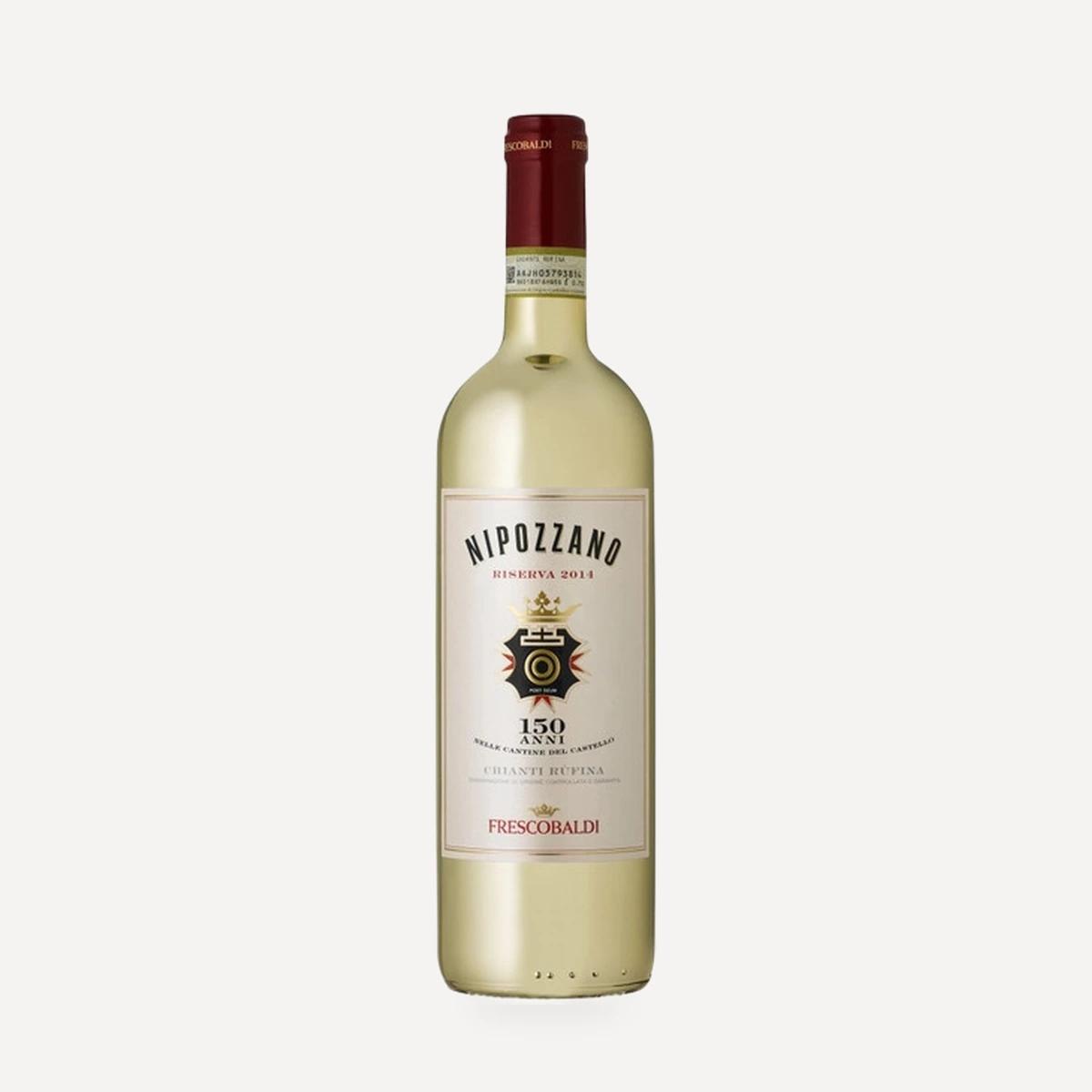
For the principal Chianti Rufina Riserva, harvested grapes are moved immediately to the cellar and destemmed. Spontaneous alcoholic fermentation takes place in temperature-controlled stainless-steel tanks. The wine remains in the vessels to complete skin maceration; after racking, malolactic fermentation also takes place in stainless steel. At the end of the year, maturation begins in barriques, followed by further bottle ageing.
Fruit from the oldest vines is likewise destemmed, but spontaneous fermentation occurs in concrete tanks. Maceration is completed in the same vessels before maturation in wooden barrels and a subsequent period in bottle. The Vecchie Viti selection is matured for 24 months in oak barrels, continuing an older Tuscan maturation practice.
Montesodi is harvested by hand, checked on a sorting table and selected berry by berry. Alcoholic fermentation and maceration are followed by malolactic fermentation immediately after racking. At the end of the year the wine begins 18 months in 30 hL Austrian and French oak casks, followed by several months of bottle ageing.
Mormoreto is harvested by hand and selected both in the vineyard and at the cellar. Malolactic fermentation follows racking. At the end of the year, the wine enters French-oak barriques for 18 months, benefiting from the oak's natural micro-oxygenation, and then continues ageing in bottle.
Historical technical material records separate fermentation and maceration of Mormoreto's varieties in stainless steel, with extended skin contact, immediate malolactic fermentation and maturation in a combination of new and once-used, hand-split oak barrels. The precise regimen has evolved: the current programme uses 18 months in French-oak barriques.
Philosophy
The estate is managed around the individuality of place. Lamberto Frescobaldi's position is that an estate's vineyards and terroir should determine a wine's identity, and that each family property should therefore be treated differently to preserve its own character.
The broader family objective is to make each estate an expression of Tuscany's diversity while respecting the nature and authenticity of the individual terroir. At Nipozzano, this appears in the separate treatment of the schistous, high-altitude Sangiovese of Montesodi, the sandy Mormoreto site, and the deep-rooted old vines.
Tradition and technical refinement operate together. Historical plantings introduced unfamiliar varieties in 1855, while contemporary work uses rigorous selection, temperature-controlled vessels and site-specific élevage. Mormoreto's addition of a small proportion of Sangiovese from 2013 is framed as a way of reinforcing both elegance and its Tuscan identity.
Environmental responsibility is expressed through certified integrated agriculture and sustainable forest management. The Frescobaldi family also presents the transmission of knowledge, passion and stewardship to future generations as a responsibility of the current, 30th generation.
Wines
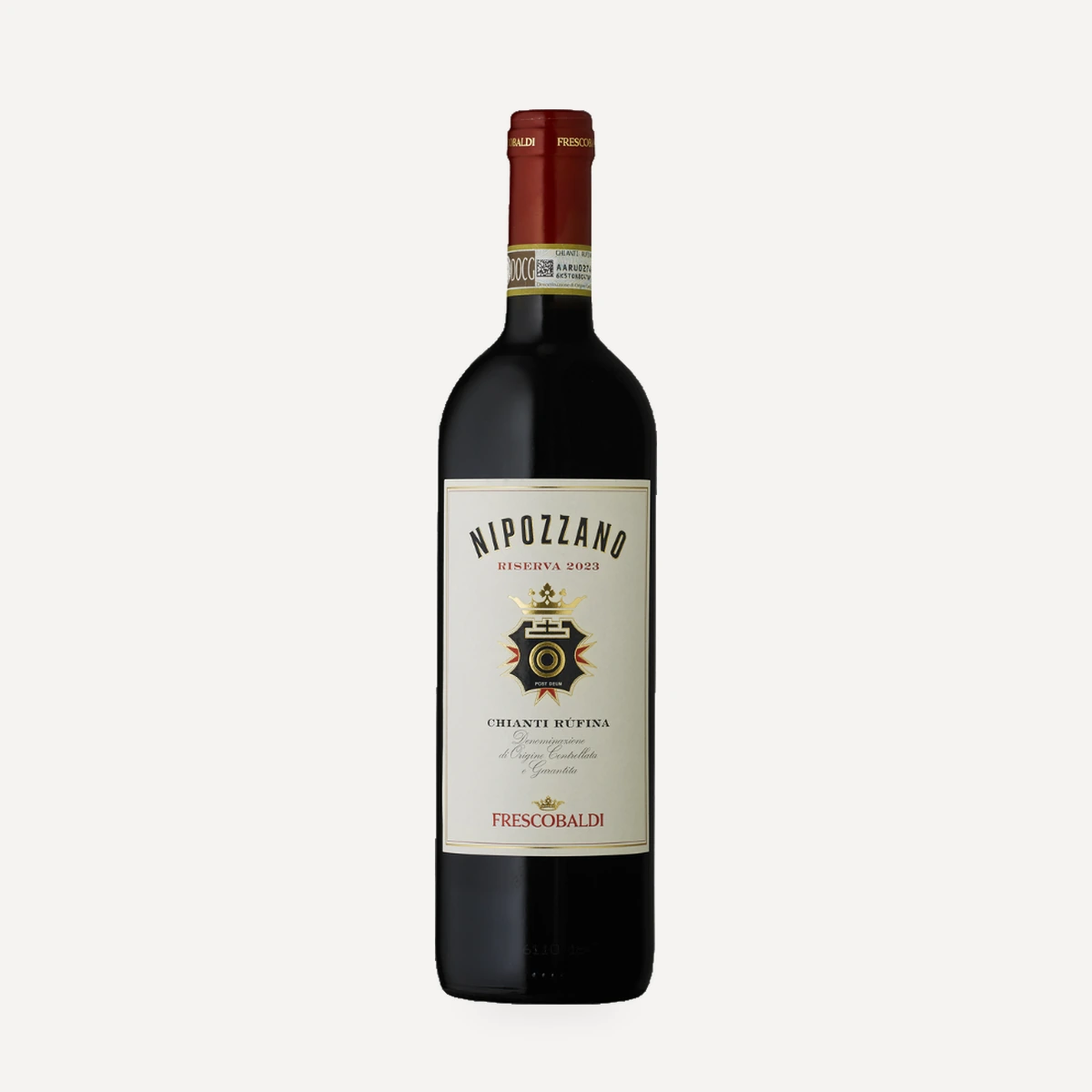
Nipozzano Riserva
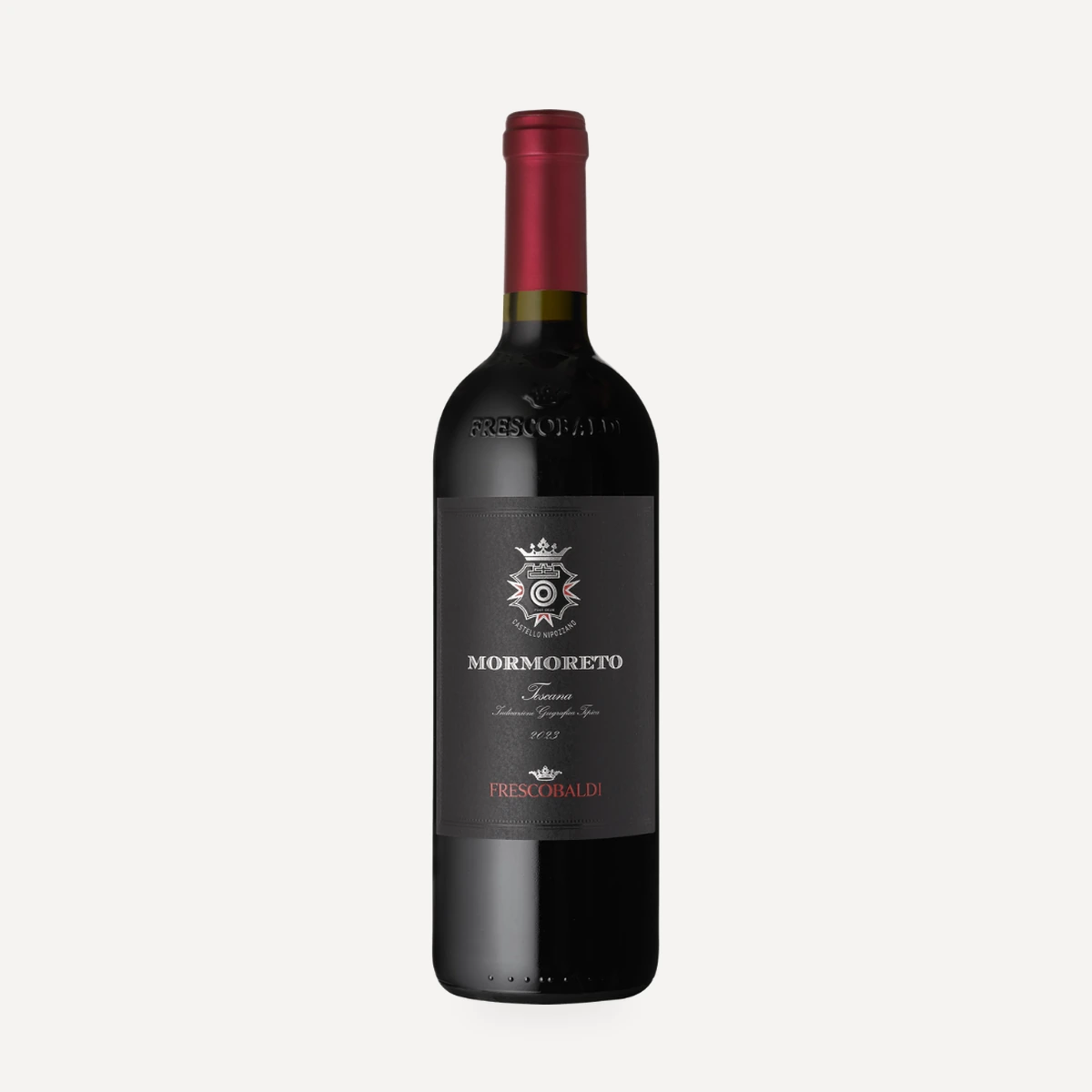
Mormoreto
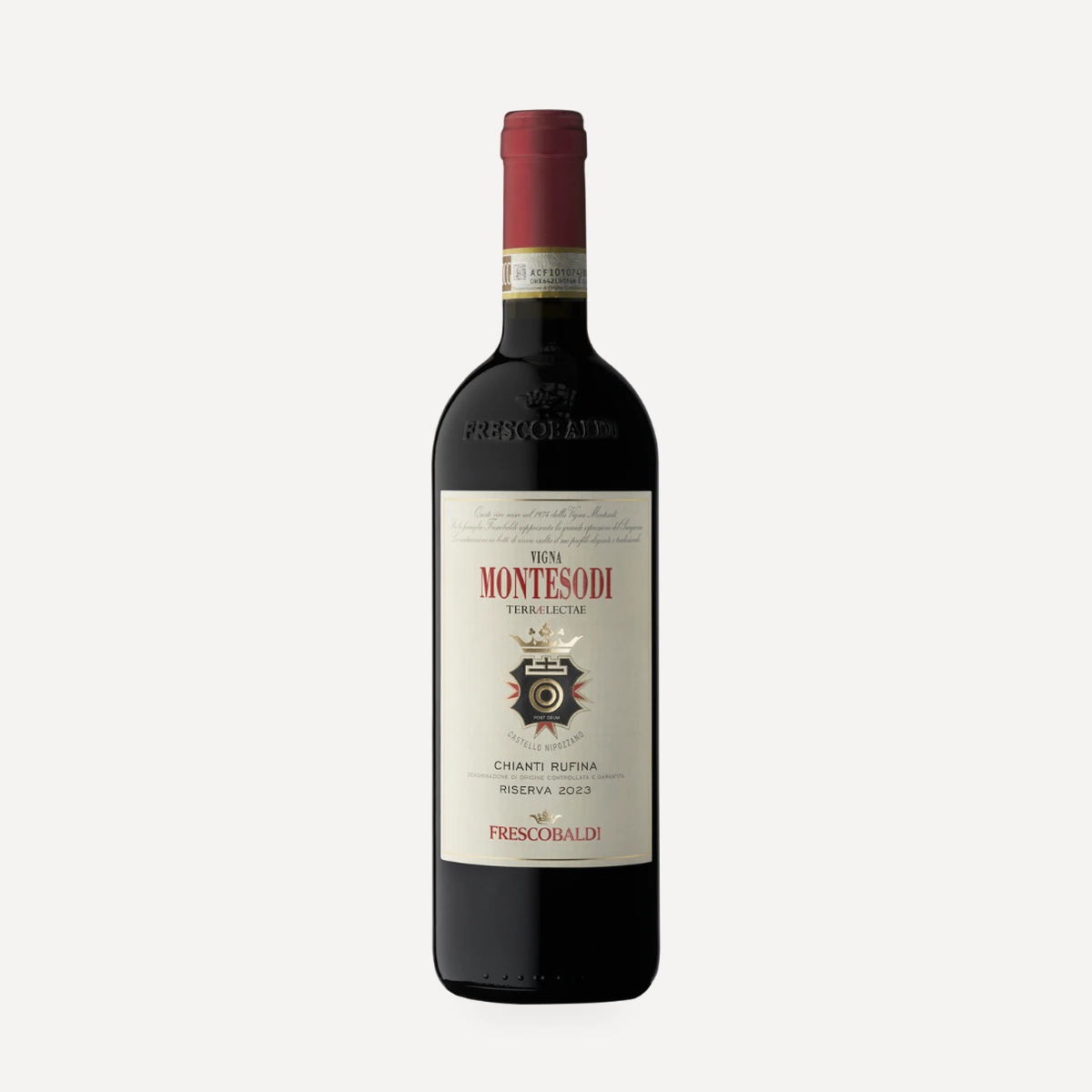
Montesodi
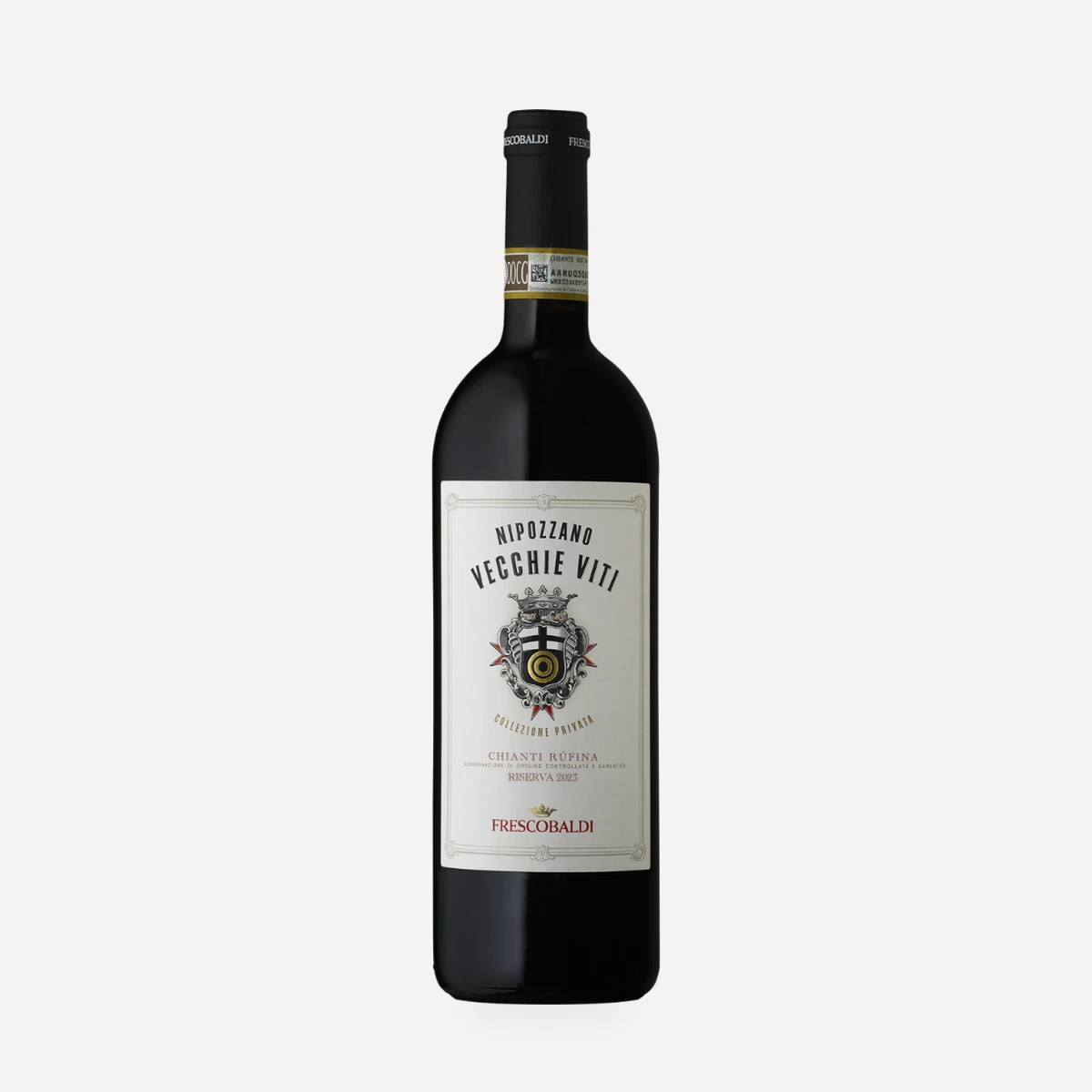
Nipozzano Vecchie Viti