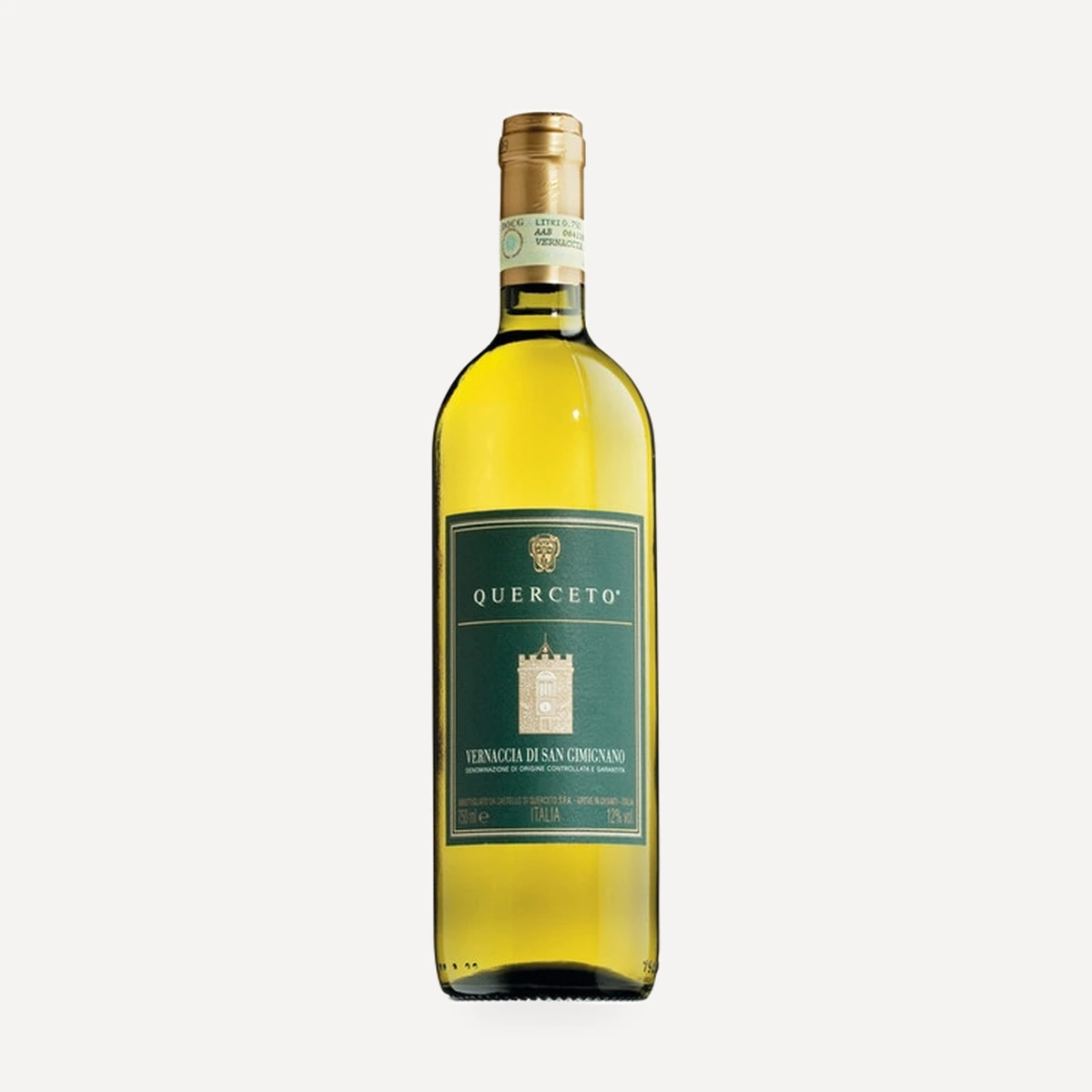
History
The castle before the winery
Castello di Querceto originally guarded the surrounding district and one of the principal Roman routes, the Via Cassia Imperiale, built under Emperor Hadrian in AD 123. The long L-shaped building, its central tower and surviving Guelph battlements preserve the appearance of a medieval fortified residence.
The medieval castle and the houses around it were plundered, burned and destroyed during warfare at the end of the fifteenth century. Almost the entire defensive wall was dismantled; the surviving section above the valley remains visible and partly supports the later structure. A member of the Canigiani family, then owner of the property, initiated reconstruction. The present castle was erected in the sixteenth century. Ownership subsequently passed to the Pitti family, which used it for many years as a country residence, and later to the Barzellotti family.
The François family before Querceto
The earliest recorded François ancestor is Nicod François. On 18 July 1354, in a charter issued in the Bourget chapel, Amadeus VI, Count of Savoy, transferred the castle, village, district and judicial jurisdiction of les Allymes to his treasurer Nicod in return for the remittance of 2,000 gold florins from Florence. Nicod became Count of les Allymes and settled in Haute-Savoie. The family later established itself in Nancy, Lorraine.
In 1740, a branch led by Antonio François moved to Tuscany in the service of the Imperial House. His eldest son, Jean, was appointed inspector of the Grand Duchy of Tuscany’s office of taxes and contracts by Francis III of Lorraine. On 15 July 1749, Holy Roman Emperor Francesco I raised Antonio to the rank of marquis in recognition of his service. Antonio had served as Gentleman of the Bedchamber and Palace, intendant of the court pharmacy and a participant in imperial military campaigns in Hungary. The title and arms were entered in the Libro d’Oro dei Nobili di Firenze.
Alessandro François was born in Florence in 1796 and became an archaeologist. At Fonte Rotella near Chiusi in 1844, he discovered the large sixth-century BC column-krater now called the François Vase, attributed to the potter Ergotimos and painter Kleitas. The vessel is 66 cm high and reaches 1.81 m in circumference. In 1846 he discovered the Tomb of the Monkey at Chiusi, followed in 1857 by the François Tomb at Vulci, noted for murals depicting the sacrifice of Trojan prisoners and combat between Etruscans and Romans. The road leading to Castello di Querceto and the neighboring hamlets bears his name.
1897: creation of the family estate
On 29 November 1897, Carlo François acquired the castle’s farmland, woods and farmhouses for 180,000 lire and founded the family enterprise. He personally established its viticultural and winemaking direction, recognizing wine as a central part of the estate’s future. He matched selected vines to carefully chosen plots and adopted a notably modern outlook. Castello di Querceto was among the first Tuscan estates to purchase a Ford tractor.
Recognition followed early: the estate received a gold medal at the Turin exhibition in 1910 and second prize at the Buenos Aires exhibition in 1911. The estate’s Chianti Classico history begins with a first production dated 1897, while its Riserva, the La Corte selection and the preserved historic-vintage collection date from 1904.
1924: foundation of the Chianti consortium
On 14 May 1924, representatives of 33 wine estates met before notary Baldassarre Pianigiani and signed the founding deed of the Consorzio per la difesa del vino tipico del Chianti e della sua marca d’origine, now the Consorzio Vino Chianti Classico. Castello di Querceto was among those 33 founders. Carlo François’s mother, Elvira Colombini, and his aunt, Marianna Codacci, attended the signing and were the only women present.
The consortium was created to safeguard, supervise and promote the Chianti Classico name. Although its name and graphic presentation evolved, its historic Black Rooster emblem remained. The François family retained uninterrupted ownership of Castello di Querceto for more than a century.
Renewal from the late 1970s
At the end of the 1970s, Alessandro François and his wife, Maria Antonietta Corsi, assumed control and began a radical renovation. The first phase concentrated on the vineyards: they identified the soils best suited to new plantings while retaining traditional Chianti cultivation. They also diversified production through estate crus named for their vineyards of origin.
Alessandro pursued wines from individual vineyards because microclimate and soil composition vary from one part of the estate to another. This site-specific policy established such selections as Il Querciolaia, first produced in 1985; Cignale, in 1986; Il Picchio, in 1988; and Il Sole di Alessandro, in 1998. The renovated business developed a presence in more than 50 countries.
The fifth generation
The family’s fifth generation is represented in leading roles by Alessandro and Maria Antonietta’s children, Simone and Lia, together with their respective spouses. The estate remains associated with continuity of family ownership, vineyard-based diversification, technological modernization and respect for Chianti Classico tradition. In 2022 the family marked 125 years since Carlo François’s acquisition; in 2024 Castello di Querceto participated in the centenary celebration of the consortium it helped establish.
Terroir
Castello di Querceto lies in the commune of Greve in Chianti, among the wooded hills of Chianti Classico. Its vineyards and olive groves occupy slopes above the valle di Dudda, extending from passo del Sugame toward Lucolena and monte San Michele.
The estate vineyards range from 350 to 520 m above sea level. Their aspects turn through an arc from east to south and west. Differences in altitude, exposure, soil composition and microclimate underpin the estate’s use of multiple grape varieties and its policy of isolating individual vineyard selections.
The landscape combines vineyards, olive groves, oak and chestnut woodland and hills. The named sites illustrate the elevation range: Il Sole di Alessandro lies at 350 m; Il Querciolaia at 390–430 m; Il Picchio at 420–450 m; La Corte at 440–470 m; and Cignale at 490–520 m. QueRceto Romantic is associated with the Lucolena valley.
Winemaking
The estate cultivates a deliberately broad range of grapes to match differences in soil, altitude and exposure. Traditional Chianti Classico training systems—spurred cordon and Guyot—are used, with the estate overview placing planting densities between 3,330 and 6,500 vines/ha.
The late-1970s renovation began in the vineyards. Alessandro François and Maria Antonietta Corsi identified soils suitable for new plantings alongside traditional Chianti varieties, then developed individual-vineyard selections in response to differences in microclimate and soil composition.
Castello di Querceto participates in the Italian Ministry of the Environment’s VIVA program. DNV’s organizational verification, first issued on 30 September 2024 and valid until 29 September 2026, covers four indicators: greenhouse-gas emissions under ARIA; winery water use under ACQUA; agronomic practices applied to grape growing under VIGNETO; and core territorial requirements across the wine life cycle under TERRITORIO.
Olive groves are divided among several plots and contain the traditional local cultivars Frantoio, Moraiolo, Leccino, Pendolino and Maurino.
The entire production complex is concentrated near the castle. It includes warehouses, an automatic bottling and packaging room and four cellars dedicated to fermentation and initial processing, storage and maturation. Separate rooms are used for Vin Santo production and ageing and for extra-virgin olive-oil production.
Alcoholic fermentation is managed through an automatic computerized control system designed to accommodate multiple operating programs. A pneumatic press gently presses the grape pomace before it is sent for distillation. The temperature-controlled storage cellar contains stainless-steel tanks and glass-lined concrete vessels.
Ageing cellars occupy the underground levels of the castle and the basement of a newer building. Barriques and tonneaux made from Allier, Tronçais and Limousin oak stand alongside small oak casks holding 10–40 hl. These vessels are used for the estate crus and for Chianti Classico Gran Selezione and Riserva. The old cellar also houses selected bottles from notable vintages beginning with 1904.
The automatic bottling and packaging line has a capacity of approximately 4,000 bottles per hour. Bottles rest before release in a separate temperature-controlled storage area; the duration varies by product type.
The current IFS scope encompasses crushing and pressing grapes, fermentation, blending, filtration, bottling and bottle ageing of still wines. The IFS Food Version 8 certificate was issued on 27 August 2025 after the July 2025 audit, received a Higher Level score of 99.02% and expires on 13 September 2026. The production process is also maintained under BRC food-safety certification, with both BRC and IFS renewed annually.
Philosophy
Castello di Querceto frames continuity as a combination of family stewardship, practical innovation and respect for tradition. Carlo François’s early plot selection and mechanization established the modernizing strand; the late-1970s renewal retained traditional Chianti cultivation while introducing new plantings and a more detailed reading of individual sites.
Alessandro François’s vineyard policy rests on the belief that variations in microclimate and soil composition can give wines distinct characters. This led to limited, single-vineyard productions bearing the names of their sites rather than treating the estate as one uniform growing area.
Environmental protection and respect for people are incorporated through externally controlled standards. The VIVA program monitors air, water, vineyard and territorial indicators, while BRC and IFS address food safety. The company also applies an ethical code and the organizational framework established under Italian Legislative Decree 231/01.
Hospitality forms another stated principle: the family opens its historic buildings, gardens and cellars to visitors and promotes moderate, informed consumption. Across generations, the recurring values are tenacity, work, ingenuity, family involvement and continuity of tradition.
Wines

Castello di Querceto Chianti Classico
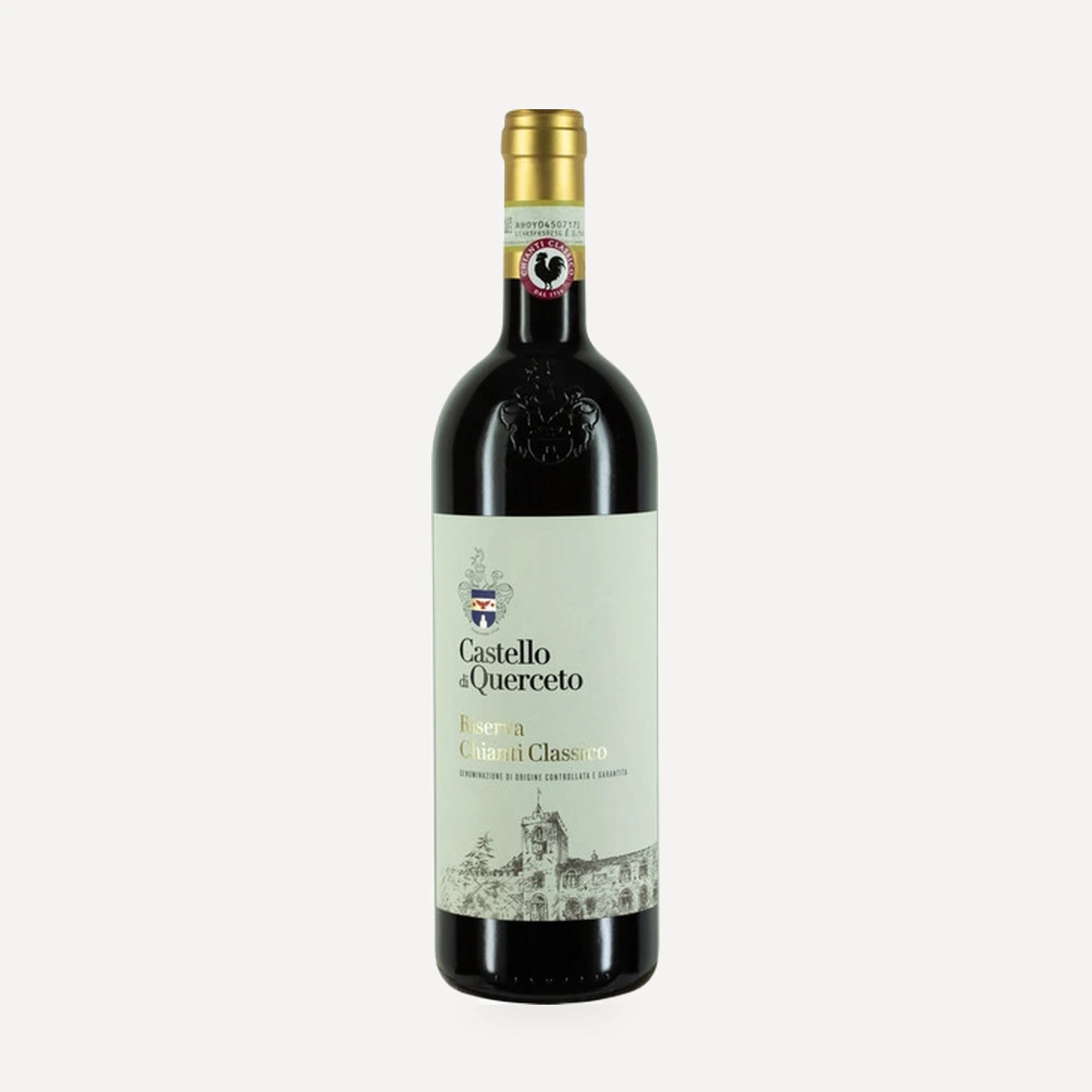
Castello di Querceto Chianti Classico Riserva

Il Picchio Chianti Classico Gran Selezione
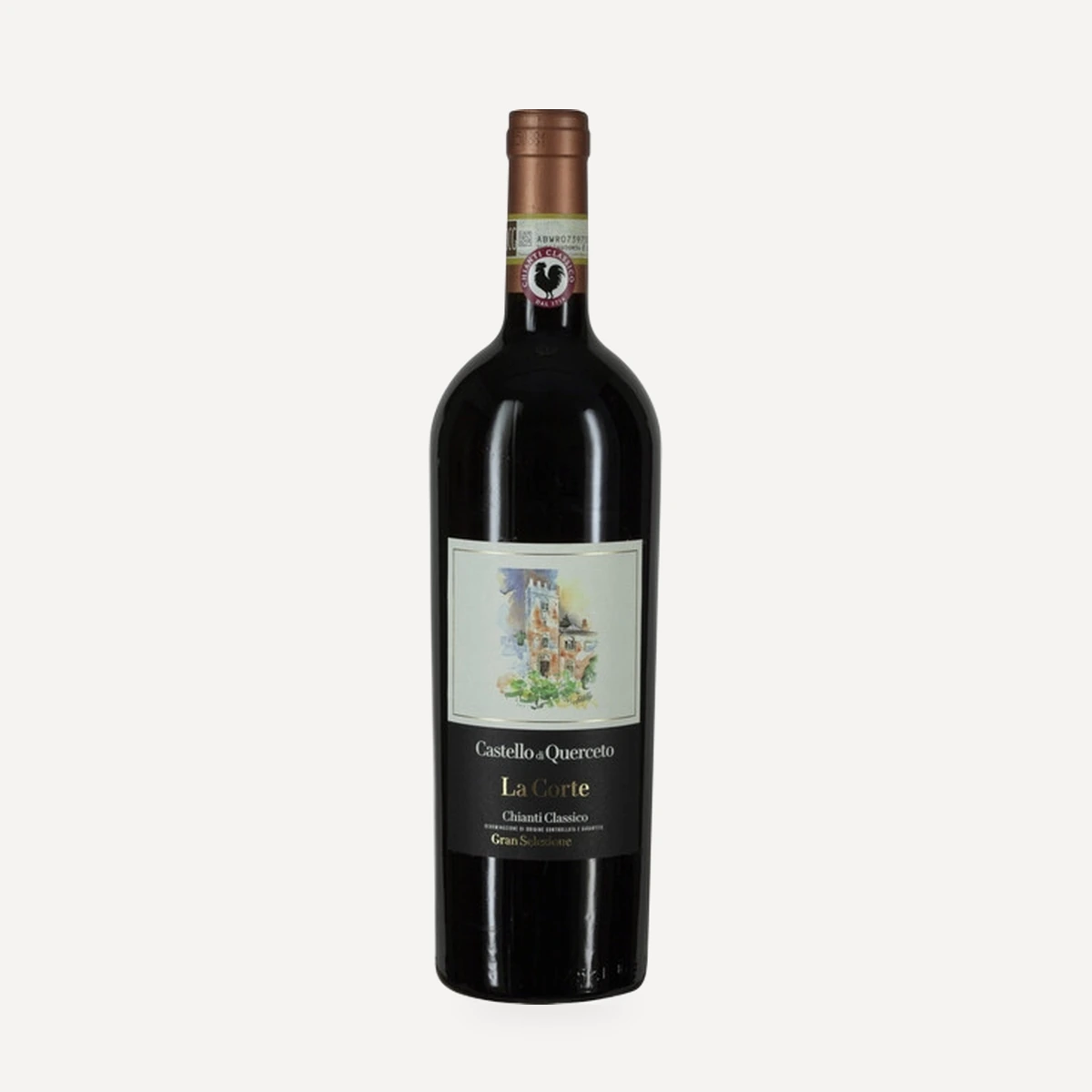
La Corte Chianti Classico Gran Selezione

Il Querciolaia Colli Toscana Centrale IGT
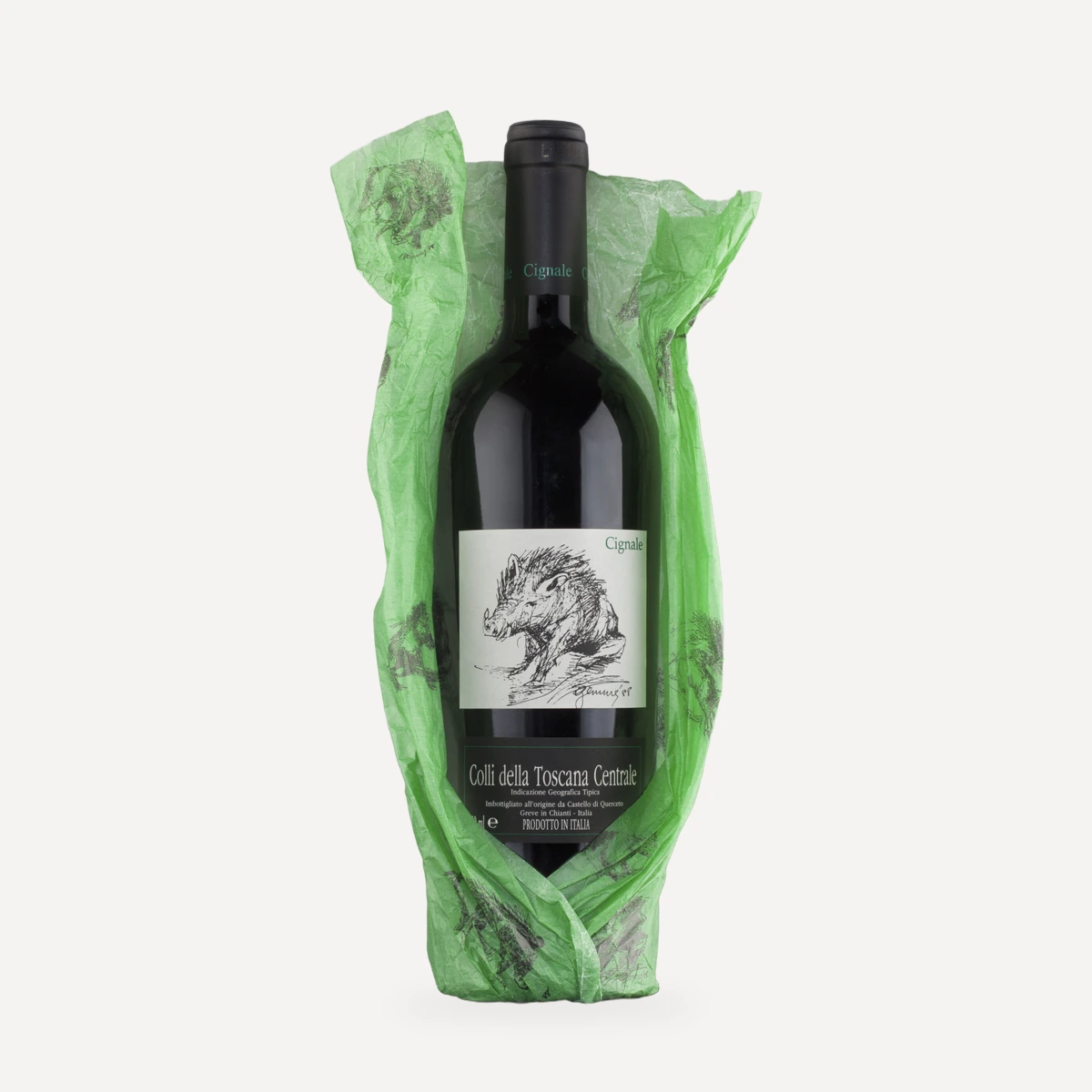
Cignale Colli Toscana Centrale IGT

Il Sole di Alessandro Colli Toscana Centrale IGT
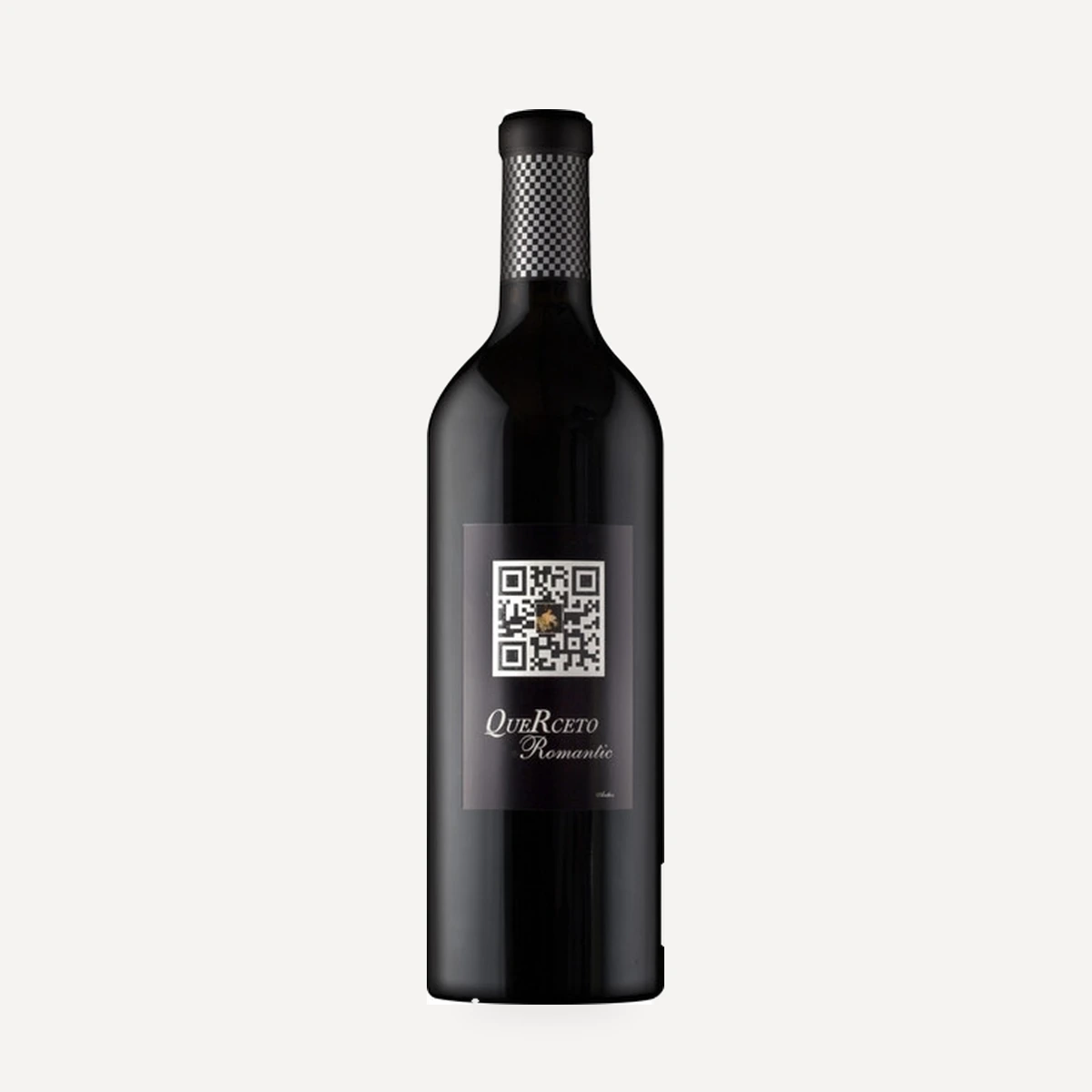
Querceto Romantic Colli Toscana Centrale IGT
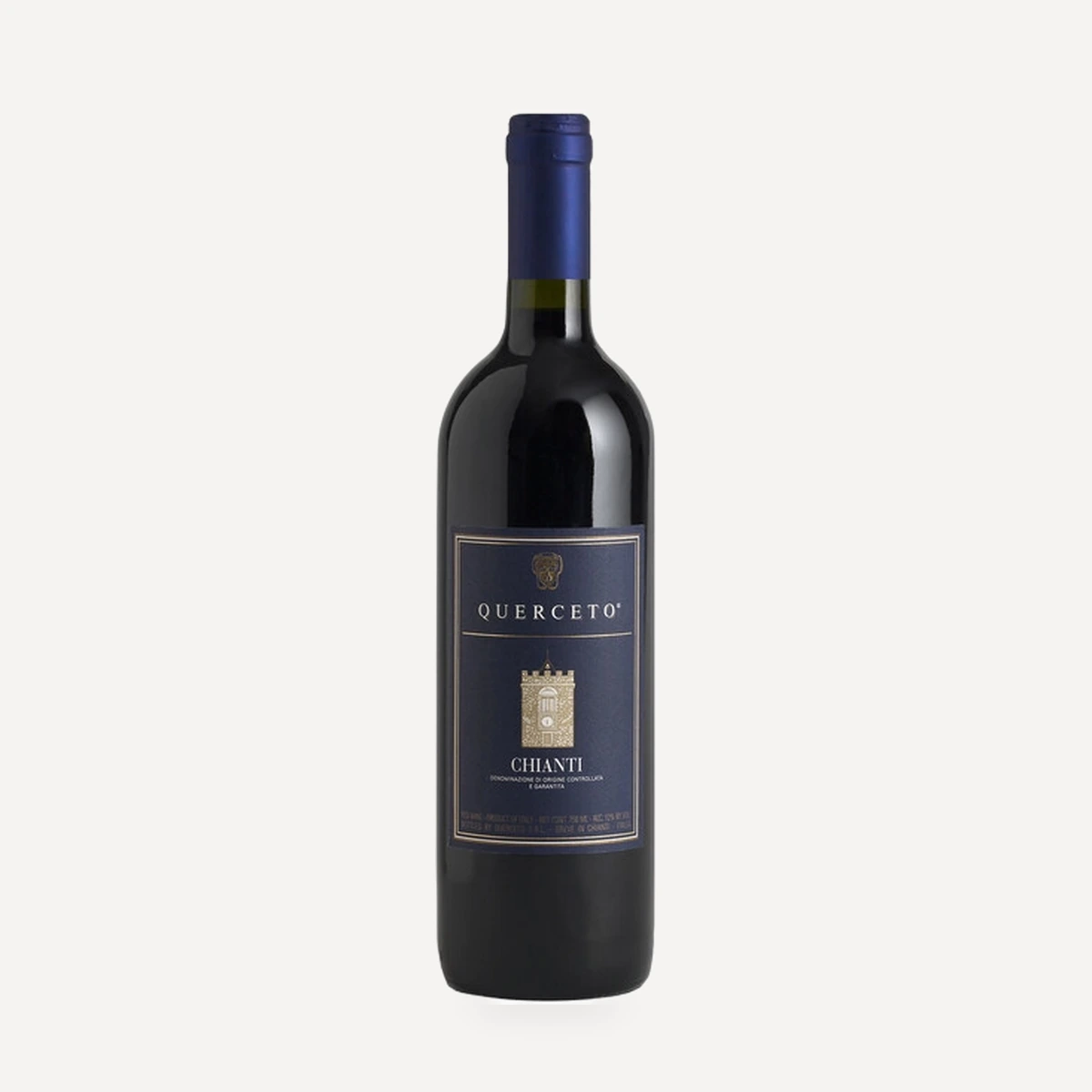
Chianti Querceto
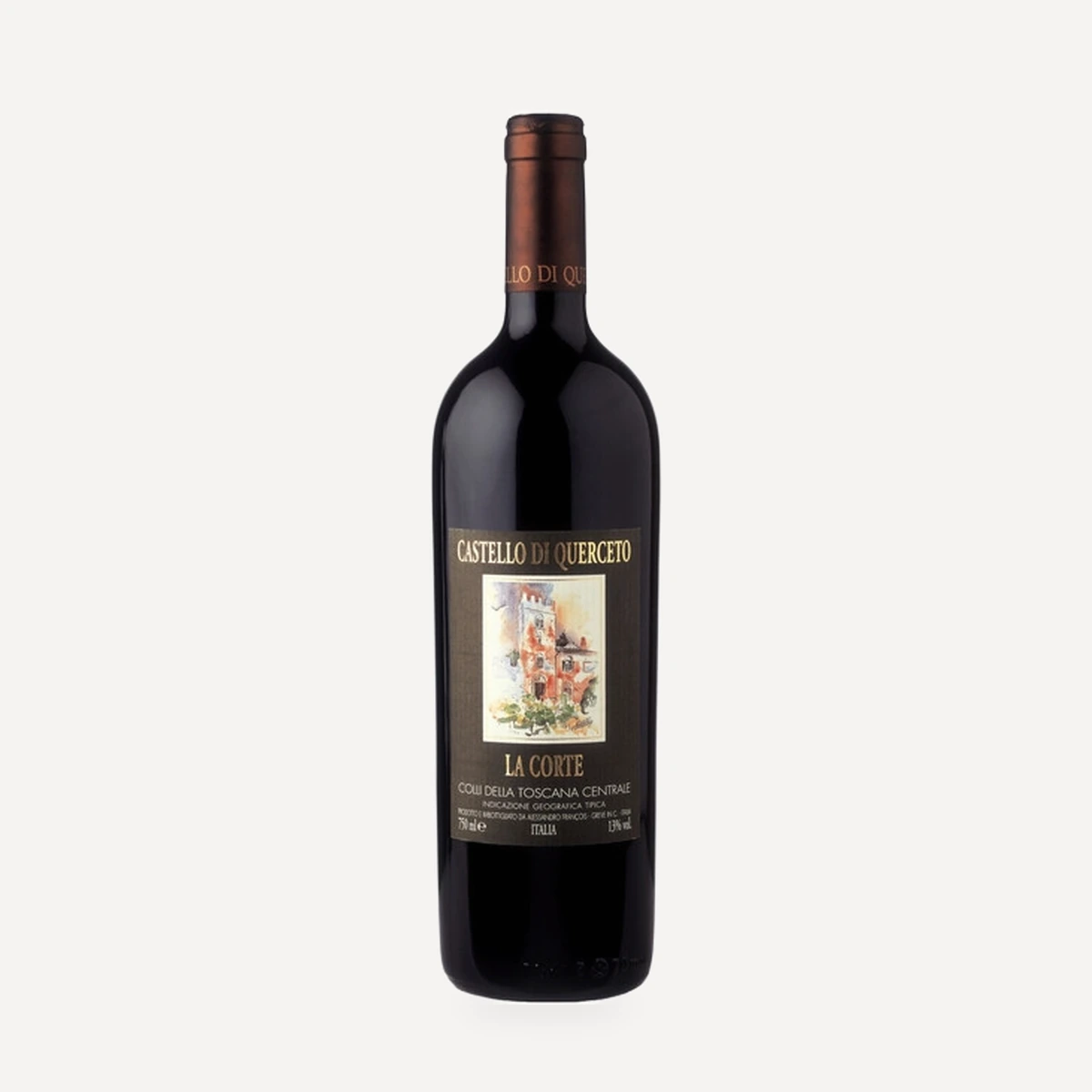
La Corte Colli della Toscana Centrale IGT