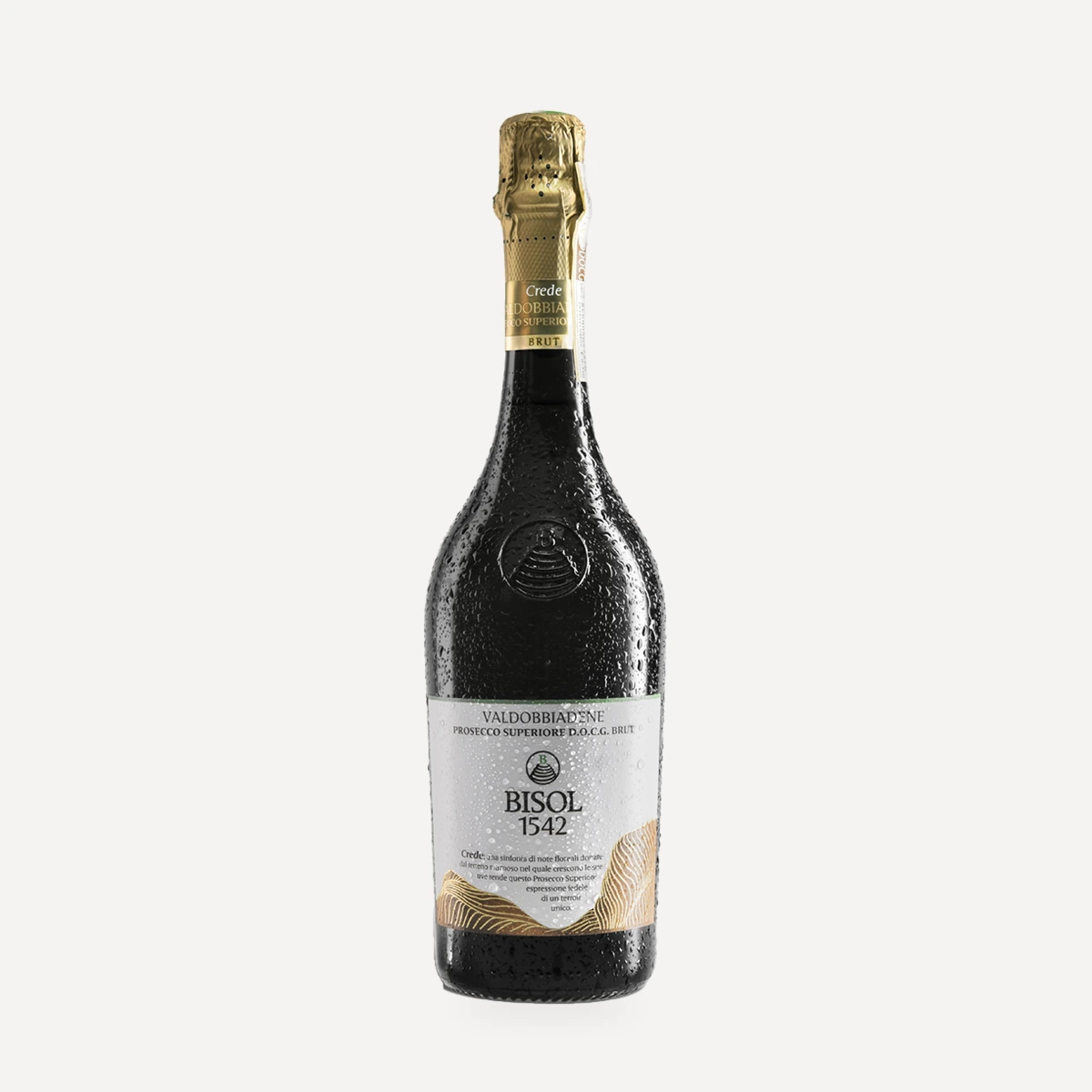
Storia
Roots in Santo Stefano di Valdobbiadene
The earliest records placing the Bisol family in Santo Stefano di Valdobbiadene date to 1542. Sixteenth-century evidence connects the family with Chartice, the historic name of the hill now known as Cartizze. The family history in the area extends across five centuries and 21 generations.
Eliseo Bisol and the First World War
At the beginning of the twentieth century, Eliseo Bisol developed a small but prosperous wine trade. Its progress was interrupted by the First World War: Valdobbiadene lay directly on the frontier between the Italian and Austro-Hungarian armies.
Desiderio “Jeio” Bisol
The family business recovered in the mid-1920s under Eliseo’s son Desiderio Bisol. In the years following the Second World War, Desiderio—affectionately called Jeio by his wife—rode a red Moto Guzzi through the hills between Valdobbiadene and Conegliano, seeking the best parcels to acquire. His purpose was to build a collection of complementary terroirs whose individual characteristics could be expressed separately.
Desiderio assigned responsibilities to his four sons according to their training: Antonio oversaw administration, Eliseo managed oenology, Aurelio was responsible for the vineyards and Claudio directed the company’s general management. Gianluca Bisol later recalled that his grandfather Desiderio and father Antonio consistently sought steep, difficult parcels whose gradients and soil composition were especially suited to Glera.
Cru wines and DOCG recognition
Bisol1542 developed single-vineyard expressions of Prosecco Superiore before Conegliano Valdobbiadene received DOCG recognition in 2009. The estate’s approach rests on keeping harvests separate so that differences in soil, slope, exposure and microclimate remain perceptible in the finished wines.
Gruppo Lunelli and a new phase
In 2014, Bisol1542 became part of Gruppo Lunelli. This opened a new phase of investment in the vineyards and winery, the introduction of new technology and a stronger sustainability programme. Agricultural and methodological vineyard renewal, more careful harvesting in bins and soil-specific processing were pursued to improve precision while protecting biodiversity and the structure of Valdobbiadene’s historic heroic vineyards.
UNESCO recognition and recent development
In 2019, the Conegliano and Valdobbiadene hills were recognised as a UNESCO World Heritage Site. Bisol1542’s contemporary work focuses on bespoke treatment of individual vineyards within this varied landscape.
In 2022, Bisol1542 became the official Prosecco partner of the Venice Gondoliers’ Association and created I Gondolieri, connecting Valdobbiadene’s manual hillside viticulture with Venice. That year Gianluca Bisol also led the brand’s first United States coast-to-coast tour, visiting 14 cities over 25 days.
By 2024, the programme initiated after the Gruppo Lunelli acquisition included the new Cantina dei Cru, designed for separate must processing and vineyard-specific vinification. In 2025, the renewed Rive di Campea project received a second consecutive Tre Bicchieri award for Bisol1542.
Terroir
Between the Dolomites and the Adriatic
Bisol1542 works in the steep hills of the Conegliano Valdobbiadene Prosecco Superiore DOCG, a territory of 15 hillside and hilltop municipalities in the historic Alta Marca Trevigiana. The hills lie between the Dolomites and the Adriatic Sea. Constant breezes, suitable sunlight and marked temperature variation shape the local microclimates.
The rocky gradients are too steep for ordinary mechanisation. Vineyards cling to precipitous slopes, and cultivation and harvest are consequently based on manual work. Differences in slope, aspect and microclimate distinguish individual vineyards even over short distances.
Ancient and highly variable soils
The area’s ancient soils can change structurally within only a few kilometres. Bisol1542 treats this variation as fundamental because Glera is particularly sensitive to changes in soil and microclimate. Harvests are therefore kept separate and vinified according to soil type.
The sites represented in the collection include clay-rich ground, shallow morainic soils over thin limestone layers, sandstone-rich upper slopes, clay-calcareous marl lower slopes, calcareous conglomerate and marine-derived sands.
Cartizze
Cartizze comprises only 107 ha of vineyard divided among approximately 140 families, including the Bisol family since 1542. Its steep ridge reaches roughly 300 m, has strong solar exposure and is sheltered from cold air currents. At the top of the hill, Bisol1542’s site has predominantly calcareous sandstone and marine sand. The deeper ground is rocky while the surface is friable; natural grape acidity is balanced by sugars retained through manual harvesting.
The Rive
The DOCG recognises 43 Rive, steep, favourably exposed hillsides treated as crus. Bisol1542’s principal Rive sites include Campea and Guia. Campea combines multiple orientations, cool and ventilated conditions and a strong day–night temperature range. Ronce in the Rive di Guia is a very steep, north-west-facing old-vine site with a thin sandstone–marl surface over calcareous conglomerate.
Vinificazione
The extreme gradients of Valdobbiadene require heroic viticulture: vineyard work and harvesting are performed largely or entirely by hand. Cultivating one hectare can require as many as 1,000 working hours, around ten times the labour needed in mechanised vineyards on the plain.
Bisol1542’s vineyard programme distinguishes sites by soil, slope, exposure and microclimate. Harvests are kept separate so that these differences can guide individual processing and vinification. Since joining Gruppo Lunelli in 2014, the estate has undertaken agricultural and methodological vineyard rehabilitation, with the stated objectives of raising quality, safeguarding biodiversity and preserving the physical structure of Valdobbiadene’s historic heroic vineyards.
Harvesting is manual, with selected grapes placed in bins. Current technical protocols generally place the harvest in September; some earlier specifications extend picking into early October for the steepest Rive sites. Double-inverted training is used widely, normally at 3,000 vines/ha. The Cartizze and Ronce vineyards use traditional Valdobbiadene pruning related or adapted to the double-inverted system, at up to 3,300 vines/ha.
The Campea project combines modern vineyard management with the traditional structure of the site. Its planting layouts respond to the hill: girapoggio across the upper slope and ritocchino running downhill in the lower section.
Parcel-specific production
Bisol1542 keeps harvests separate and processes them according to soil type. The Cantina dei Cru was created for separate must handling and bespoke vinification, allowing individual vineyards and soil profiles to retain distinct identities. Some cuvées also combine several vintages and soils from the heroic hills.
Pressing and primary fermentation
Selected grapes are harvested manually in bins. Current protocols use gentle pressing and selection of the free-run must. For Rive di Campea, refrigerated grapes are pressed and the free-run selection is limited to as much as 50%. Relio uses refrigerated grapes followed by cold settling of the must for approximately one week.
Primary fermentation takes place in stainless steel. The base wines remain on their fine lees until blending. Frequent bâtonnage is used for Rive di Campea and Relio.
Second fermentation
Second fermentation takes place in autoclave, using the Martinotti method, generally for approximately three months in the spring after harvest. I Gondolieri follows a distinct protocol: its cuvée is composed of roughly equal parts base wine and must, then refermented in autoclave. No dosage is added after the second fermentation, so part of its residual sugar comes from the grapes themselves.
The technical protocols demonstrate a shared production framework—manual selection, gentle pressing, stainless-steel fermentation, fine-lees ageing and spring autoclave refermentation—adjusted to the needs of particular vineyards and cuvées.
Filosofia
Bisol1542 presents its purpose as the precise interpretation of Prosecco Superiore through the individual character of Valdobbiadene’s hills. The approach begins with difficult, steep parcels selected for their suitability to Glera and continues by keeping their harvests separate rather than blending away differences in soil and microclimate.
The collection is built around “variation without compromise”: Glera’s sensitivity to terroir becomes a reason to distinguish sites, exposures and soil structures. Contemporary technology and tailored vinification are used alongside manual hillside work and inherited local practices.
The post-2014 programme connects quality improvement with environmental responsibility. Vineyard rehabilitation, bin harvesting, biodiversity protection and preservation of the traditional heroic-vineyard structure are treated as parts of the same project. The stated goal is not uniformity, but increasingly exact and recognisable expressions of Prosecco Superiore.
Family continuity remains central to the identity: five centuries and 21 generations are framed through dedication to a demanding landscape. Gianluca Bisol has described the international mission as producing a leading expression of Prosecco Superiore while sharing Valdobbiadene through its different terroirs.
Vini
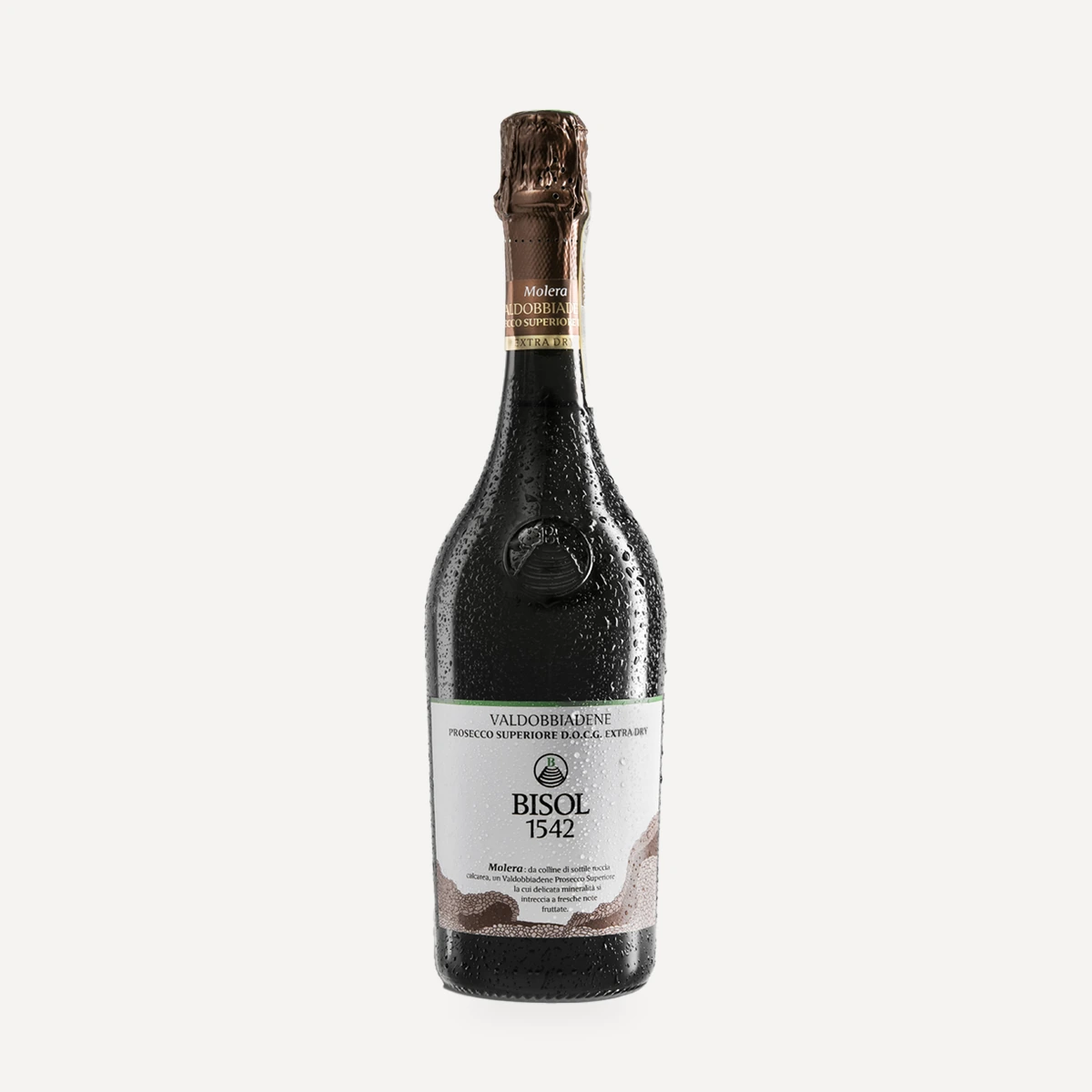
Bisol1542 Molera Extra Dry
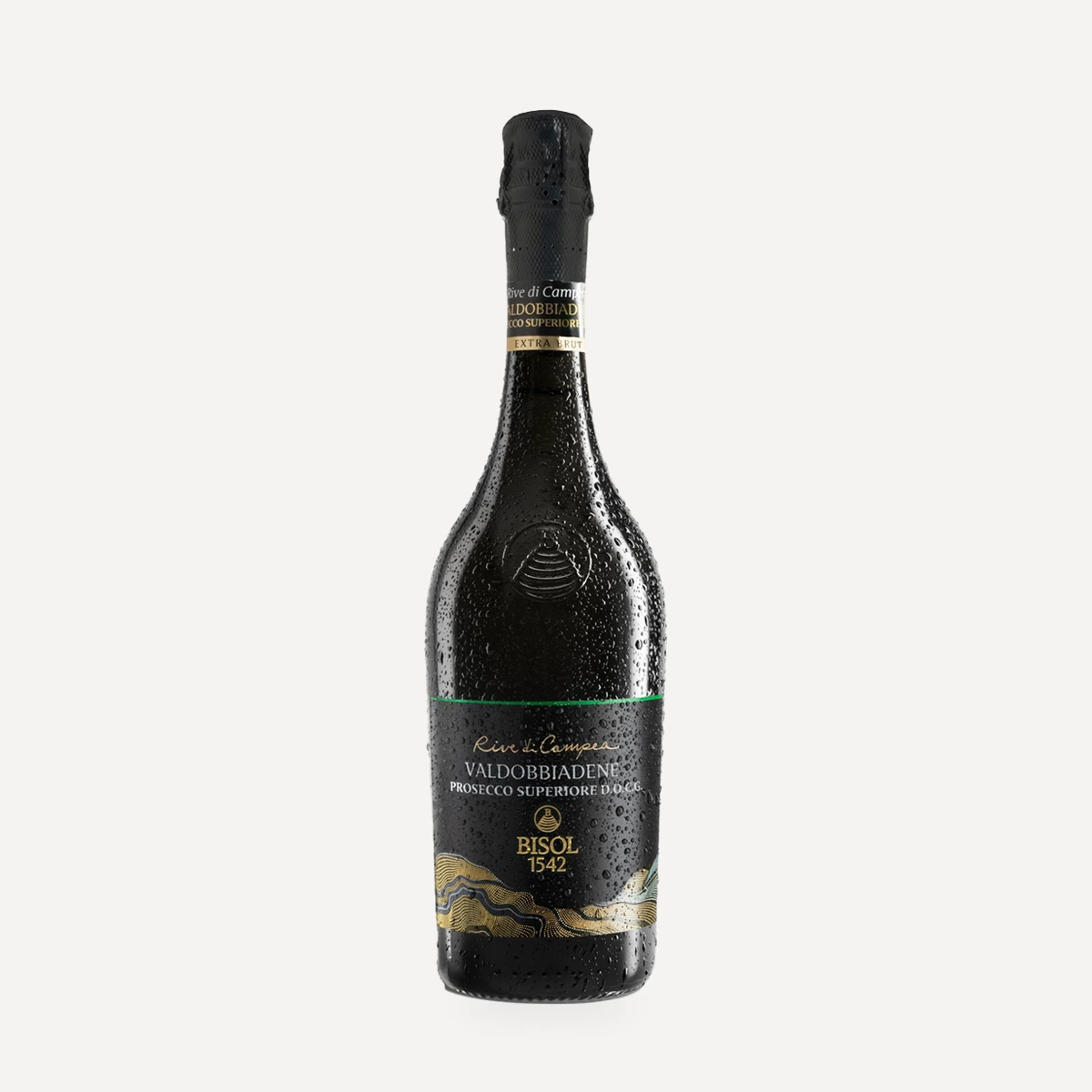
Bisol1542 Rive di Campea Extra Brut
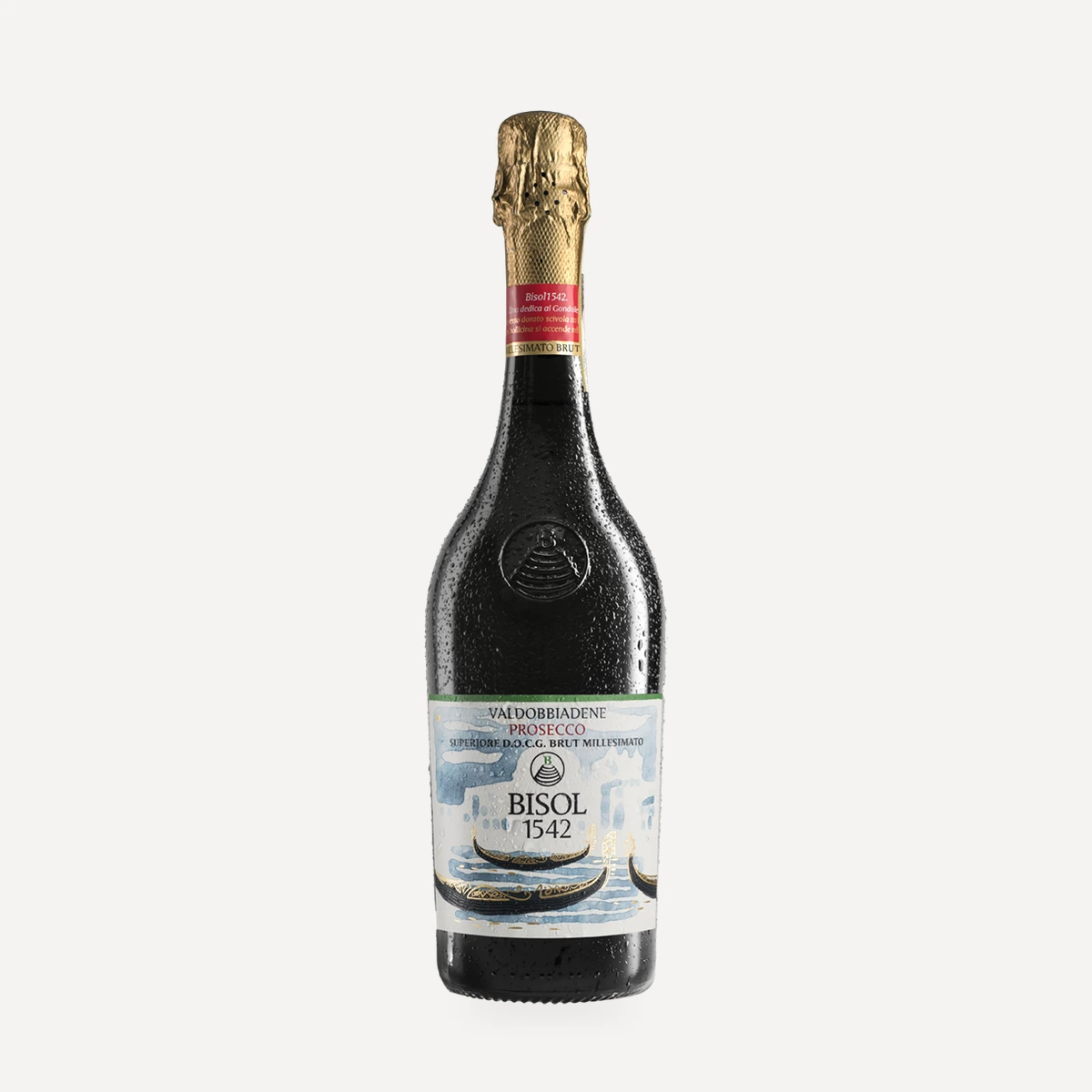
Bisol1542 I Gondolieri Brut
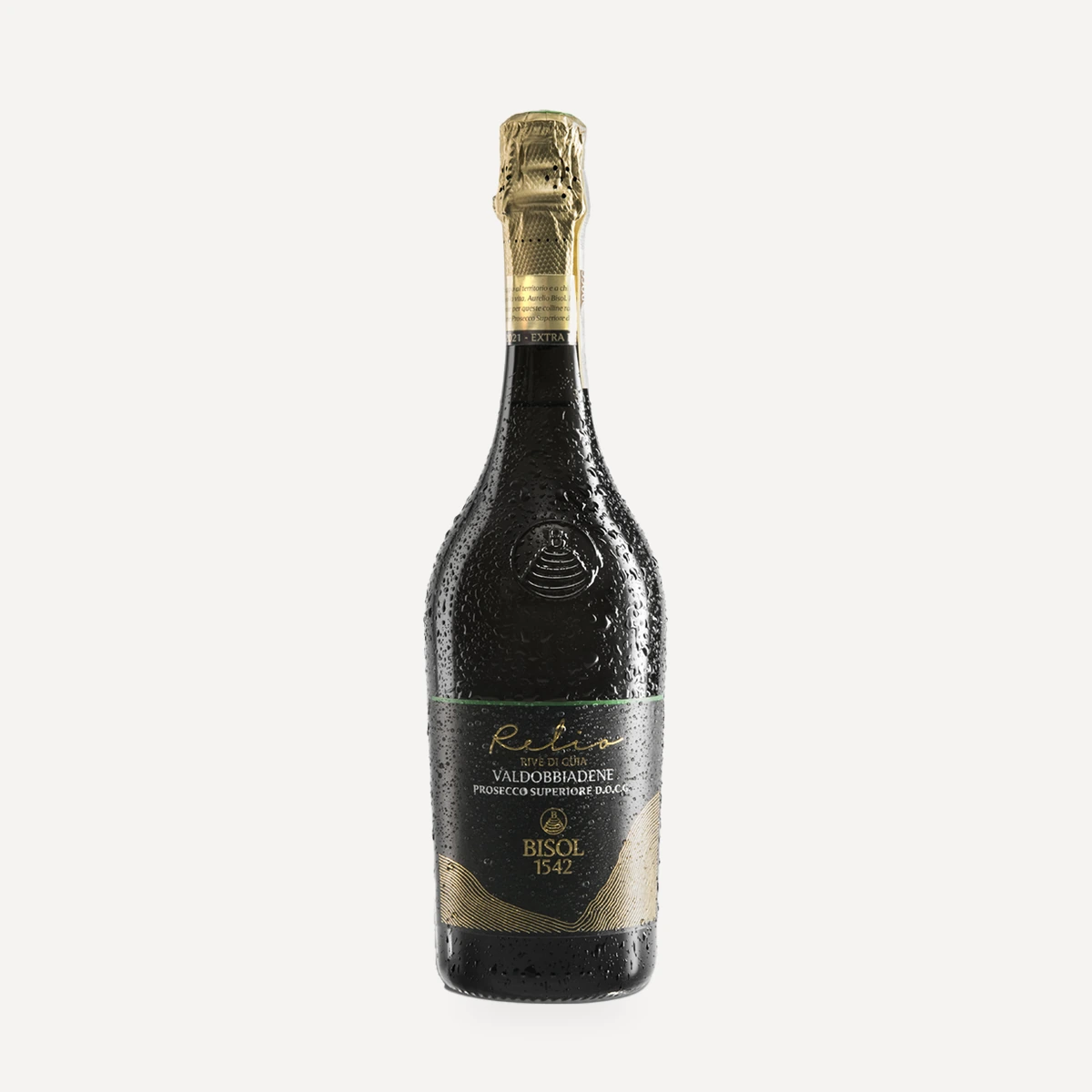
Bisol1542 Relio Extra Brut
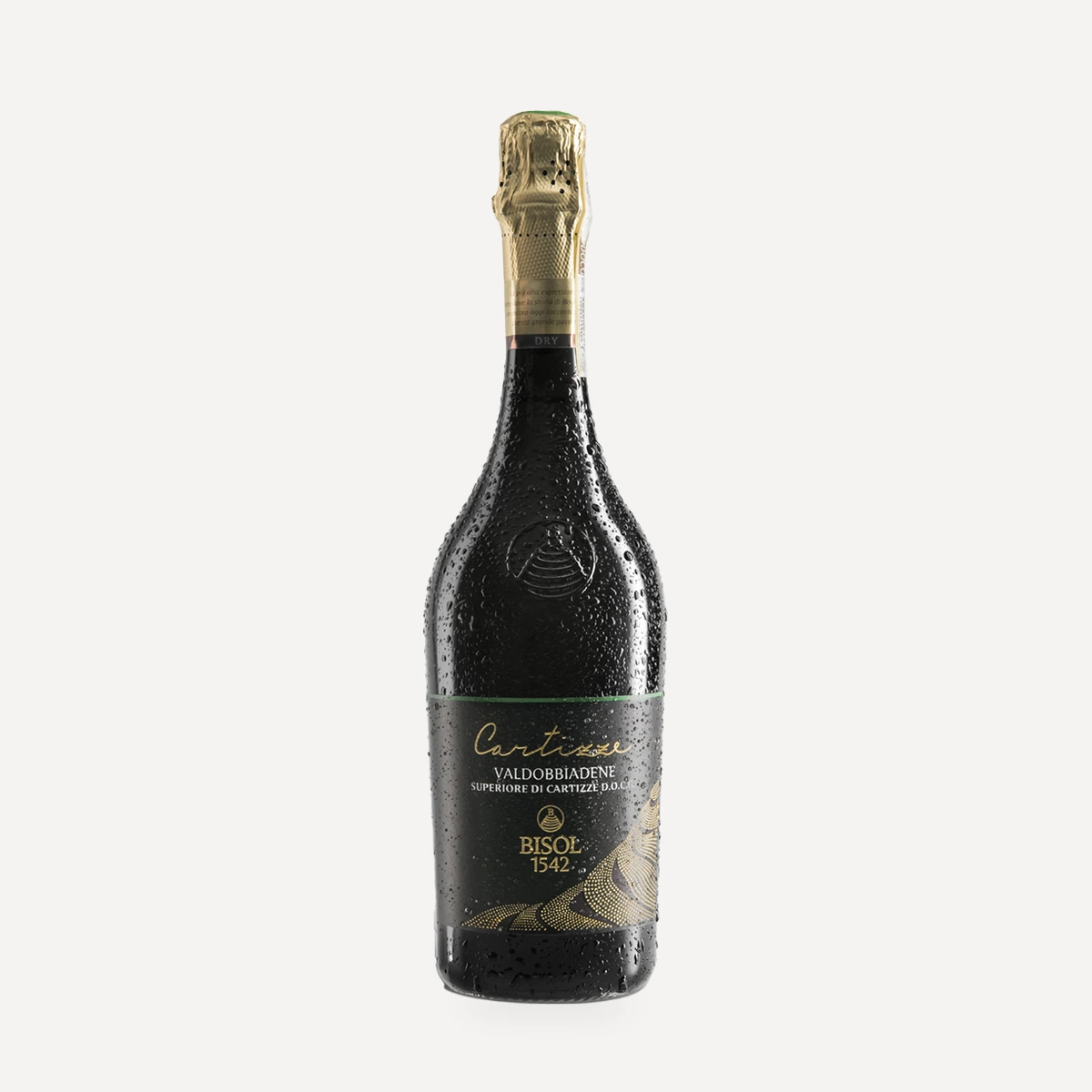
Bisol1542 Cartizze Dry