Storia
Ancient wine culture at San Germano
The land now occupied by Rocca di Frassinello preserves evidence of wine culture extending back almost three millennia. The San Germano necropolis lies on both sides of the Sovata Valley, an important route within the territory of the ancient Etruscan city of Vetulonia. Its better-known burial mounds were built between the second half of the 7th century BC and the first half of the 6th century BC. Eight monumental tombs within the estate’s archaeological area have been recovered, restored and opened to the public.
A larger tumulus examined on the adjacent Poggio all’Olivo estate remained in use from the late 7th to the 3rd century BC. Although looted in antiquity, it yielded objects associated with aristocratic status and wine consumption, including elements of a war chariot, iron axes, Egyptian alabaster vessels, imported pottery and an Attic stamnos made and painted around 480 BC. The vase, reconstructed from fragments, bears a Dionysian procession and was originally used to hold wine.
Formation of the estate and the Italian–French project
Rocca di Frassinello was conceived as a way to reproduce the quality model developed at Castellare di Castellina in another Tuscan territory. The chosen area lay in central Maremma, between Bolgheri and Scansano, across the municipalities of Gavorrano and Roccastrada. Five farms were consolidated over two years to form a 500 ha estate.
The project became the first Italian–French joint venture devoted to wine production. Castellare di Castellina contributed its experience with Tuscany’s principal variety, Sangioveto, while Domaines Barons de Rothschild–Lafite contributed its experience with Cabernet Sauvignon, Merlot, Petit Verdot and Shiraz. Baron Eric de Rothschild and Paolo Panerai represented the two sides of the agreement. The resulting approach deliberately combined Italian and French varieties, unlike Castellare di Castellina’s policy of keeping indigenous and international varieties separate.
2000: early vineyard development
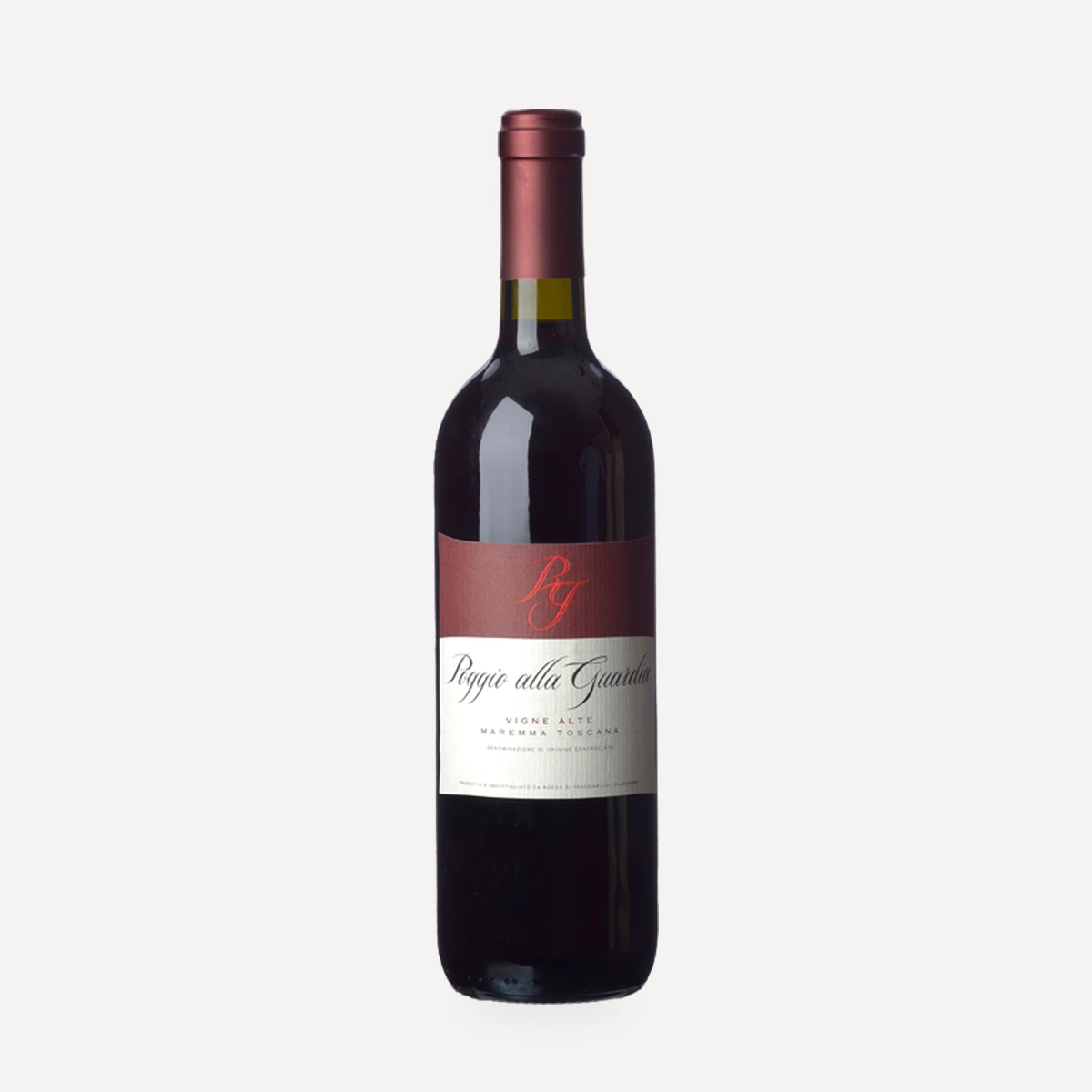
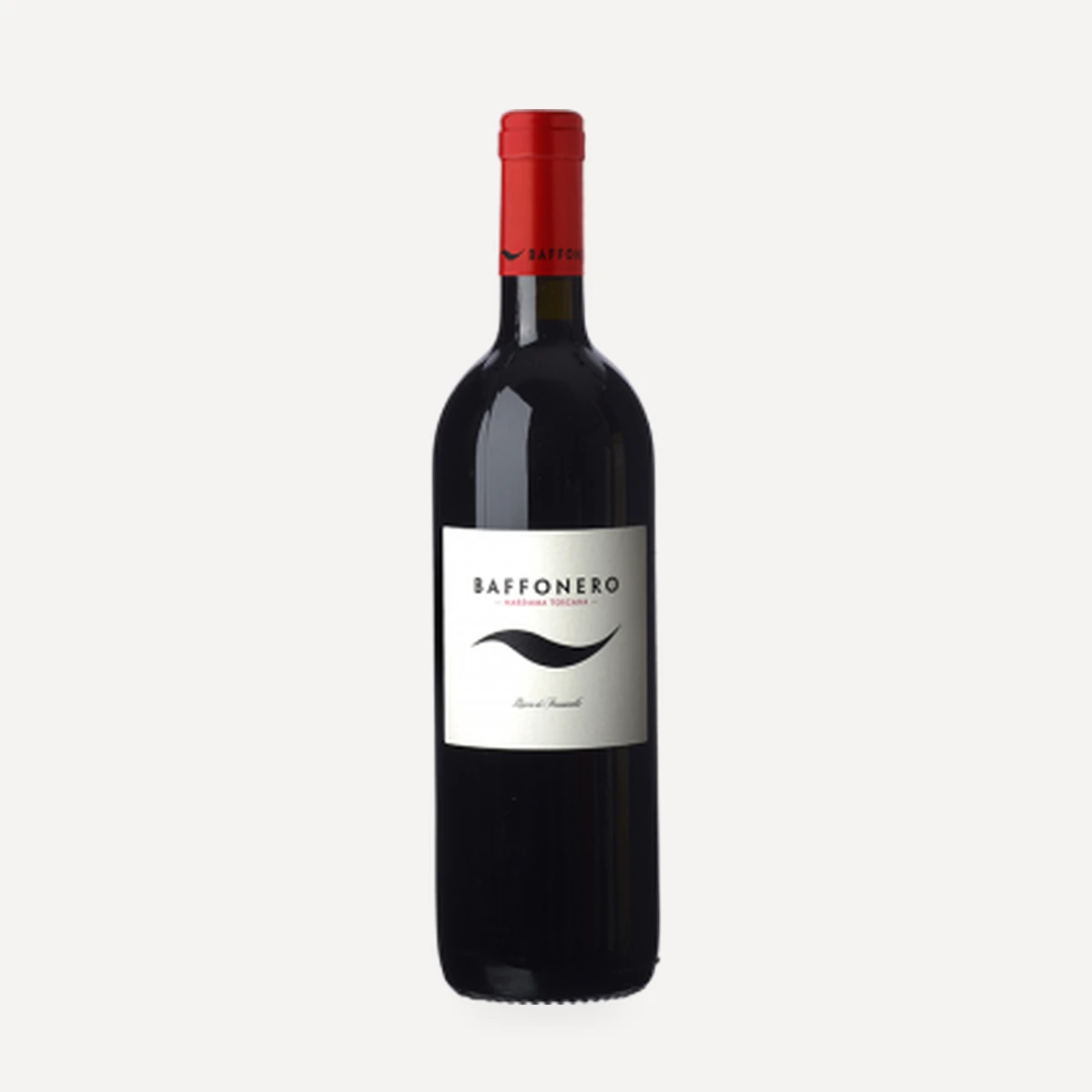
Vigne Vecchie, one of the estate’s first plantings, was established in 2000. Its Sangioveto later became one of the components of the estate’s principal blend. Other early plantings included the Merlot vineyard that gave Baffonero its name.
2004: first harvest
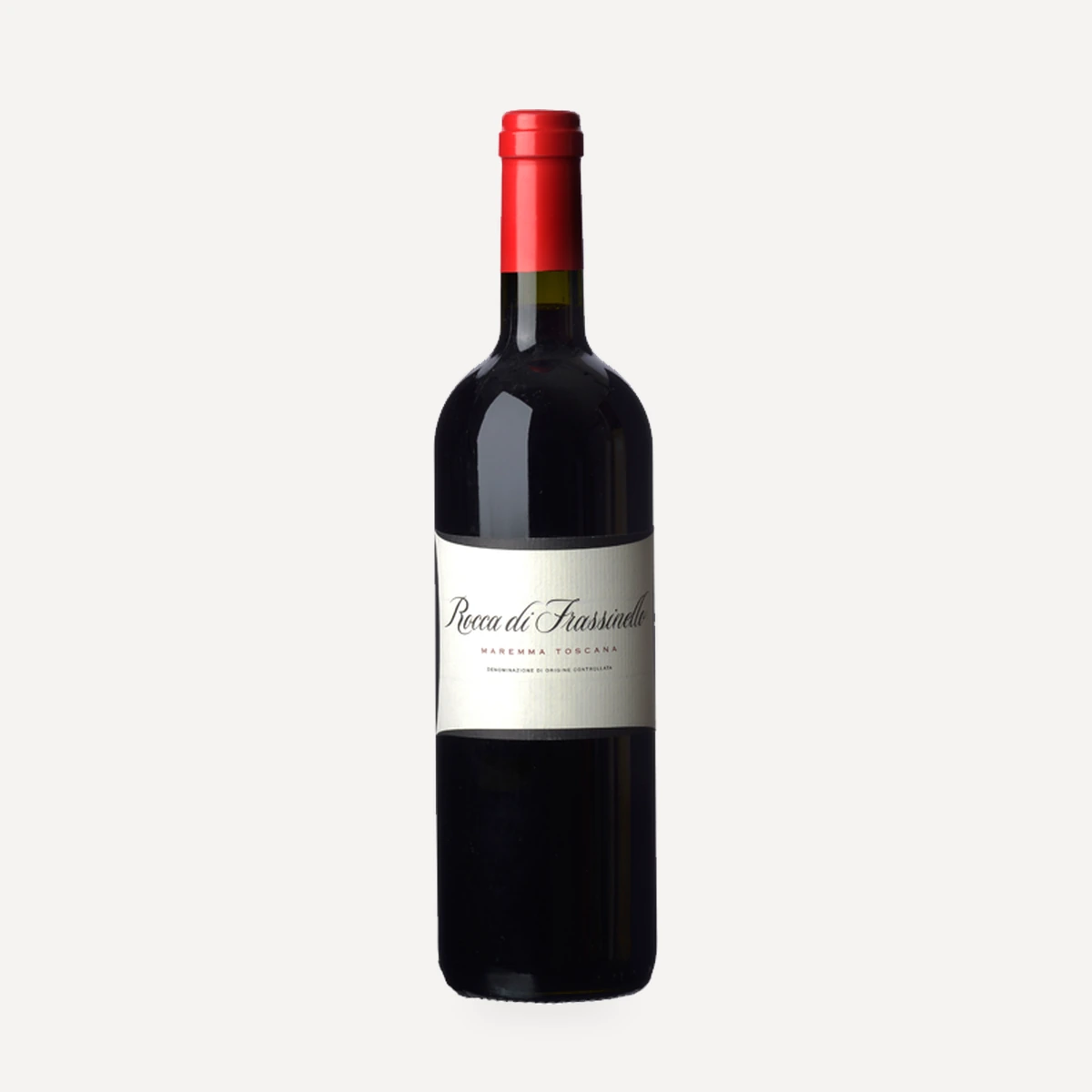
The first estate harvest took place in 2004. Approximately 130,000 bottles were produced from that inaugural vintage. The first label, Rocca di Frassinello, combined Sangioveto, Cabernet Sauvignon and Merlot and was conceived as the project’s grand vin. Christian Le Sommer of Domaines Barons de Rothschild–Lafite created it with Alessandro Cellai.
2007: inauguration of Renzo Piano’s cellar
The purpose-built cellar was inaugurated in 2007. Renzo Piano’s involvement grew from his longstanding friendship with Paolo Panerai and from Piano’s family connection to wine: his father had produced wine, particularly Dolcetto. Piano treated the building as a functional place of work rather than as a self-celebrating monument.
Instead of arranging the production stages in a conventional horizontal sequence, Piano placed the barrel room at the centre, underground, where wine matures. A 40 × 40 m chamber was created without supporting columns beneath its vast ceiling slab. The surrounding production spaces form an approximately 20 m-wide frame. The roof of the barrel room became a large working terrace, called the sagrato or churchyard by Piano. Grapes arriving in crates are selected there and descend through chutes into tanks below without pumps.
2011: photovoltaic installation
A 177 kW photovoltaic system designed by Piano was installed over the large car park behind the winery. Its monitoring system records energy generation, avoided CO₂ emissions, petrol-equivalent savings and reductions in energy expenditure.
First ten harvests and Rapture of the Grape
To celebrate the estate’s first ten harvests, David LaChapelle created Rapture of the Grape. His process involved cutting colour negatives, joining them with adhesive tape and painting the final collage by hand. The cutting echoed harvesting, while the assembly evoked blending. The work was transferred to a limited-edition bottle and placed on permanent display in the winery pavilion.
2017: the cellar’s tenth anniversary
On 16 September 2017, Rocca di Frassinello marked ten years since the cellar’s inauguration while also celebrating the 40th anniversary of Renzo Piano’s Centre Pompidou. The event introduced Rocca Beaubourg, a 2,000-bottle limited edition in large formats bearing two labels: Piano’s first sketch for the winery and his sketch for the Paris museum. Italo Rota also created a 24-image photographic exhibition comparing the two buildings.
In the same year Rocca di Frassinello joined Toscana Wine Architecture, a network of 14 wineries promoted by Regione Toscana with partner organisations to present a contemporary architectural interpretation of Tuscany and its inherited landscape.
2018–2019: architectural recognition and public presentation
In 2018 Architectural Digest included Rocca di Frassinello for the second time in its international selection of design wineries. It was one of three Italian estates among the 19 properties selected that year; the earlier 2014 selection had included 14 wineries worldwide.
Rocca di Frassinello opened Anteprime di Toscana in Florence in February 2019. A film shown to approximately 200 Italian and international wine journalists explored Piano’s ideas about functional architecture, places with a distinct identity and the relationship between the building and wine production.
2022: expansion of the top range
At the 54th Vinitaly in April 2022, the estate introduced Rocca di Frassinello Bianco and Rocca di Frassinello San Germano. The former established Vermentino within the upper tier of the range. The latter drew on Cabernet Sauvignon, Merlot and Sangioveto grown near the San Germano necropolis, explicitly connecting the contemporary estate with the site’s Etruscan viticultural history.
2024: twenty harvests
The estate celebrated its twentieth harvest in October 2024. A commemorative limited edition was presented in the cellar during a masterclass led by Gabriele Gorelli, Italy’s first Master of Wine, together with Alessandro Cellai, identified for the occasion as Rocca di Frassinello’s winemaker and Vice President.
Terroir
Rocca di Frassinello occupies central Tuscan Maremma between Bolgheri and Scansano, across land belonging to the municipalities of Gavorrano and Roccastrada. The estate sits on a geological extension toward the sea of terrain associated with Chianti and Montalcino. Average temperatures are approximately 4–6 °C higher, allowing grapes to ripen three to four weeks earlier.
The vineyards lie on hills beside the old Via Aurelia. The road corridor creates a canyon-like passage through which maritime air moves inland from the plain between Castiglione della Pescaia and Grosseto. This constant breeze removes atmospheric humidity and moderates temperatures in both winter and summer. The tallest local hill stands opposite Giuncarico; its summit, within the Terminuzzo estate, looks across Marina di Grosseto toward the Uccellina Regional Park.
At the broader Maremma scale, hills carry sandstone, galestro and volcanic rock, while the coastal plain consists of alluvial basins. The Mediterranean climate combines the sea’s moderating influence with low rainfall during the growing season.
The estate’s vineyard soils vary by position. Vigne Vecchie is dominated by freely draining galestro. Vigna degli Eucalipti contains clay, abundant stone and calcium. Poggio alla Guardia has sandy-clay soil with a high proportion of stones. The Baffonero Merlot site is medium-clayey and rich in galestro fragments. The Vermentino area is marked by calcareous marl and a substantial marly skeleton. General estate descriptions place the vineyards around 90 m above sea level and characterise many soils as medium-textured or clay-rich with abundant stones.
Vinificazione
The nearly 90 ha of vineyards are divided approximately equally between Italian and French varieties. Italian plantings include Sangioveto and Vermentino; French-origin plantings include Merlot, Cabernet Sauvignon and Syrah, while Petit Verdot also formed part of the original planting concept.
The environmental policy developed at Castellare di Castellina—avoiding herbicides, pesticides and other systemic chemicals—was extended to the group’s other estates, including Rocca di Frassinello. Vineyard design is adapted to individual sites through high-density planting, low spurred-cordon training, row orientation and the use of slope, sun and airflow to control vigour and support ripening.
Harvesting is manual in the individually documented vineyards. Selection takes place in the vineyard at Vigna degli Eucalipti and again at the winery, where bunches arriving in crates are inspected on dedicated worktables before gravity transfer. Timing varies by variety and site: Merlot may be gathered from late August to mid-September, Cabernet Sauvignon generally in the second half of September, and Sangioveto from mid-September into the first half of October at Vigne Vecchie.
Gravity-flow winery
Renzo Piano designed the cellar around gravity transfer. Grapes arrive in crates on the broad roof-level working terrace, are selected on dedicated benches and then descend through chutes to the tanks below. Avoiding pumps reduces mechanical stress on the fruit and lowers electricity consumption.
Central barrel room
The architectural and production centre is the underground barrel room, excavated into rock at a stated depth of 50 m. Its position naturally maintains stable temperature and humidity without artificial conditioning. The chamber measures 40 × 40 m and its large overhead slab spans the space without columns. Approximately 2,000 barrels rest in this dark, naturally regulated environment.
Production layout
A frame approximately 20 m wide surrounds the central room. Steel tanks occupy two sides, each positioned beneath a chute from the working terrace. Bottling, bottle storage, warehousing and logistics are arranged along the other two sides, integrating the full production sequence around the maturation space.
The cellar’s environmental design combines gravity transfer, passive underground temperature and humidity regulation, and the 177 kW photovoltaic installation added in 2011.
Filosofia
Rocca di Frassinello was created to bring together two complementary bodies of experience: Castellare di Castellina’s work with Sangioveto and Domaines Barons de Rothschild–Lafite’s work with French varieties. Its central stylistic principle is therefore the deliberate blending of Italian and French grapes, in contrast to Castellare’s policy of separating indigenous and international varieties.
The architectural philosophy gives production precedence over spectacle. Renzo Piano conceived the cellar as a restrained and functional workplace whose almost ritual character derives from winemaking itself. The barrel room—not a visitor-facing monument—forms the centre, while every surrounding space serves the movement, maturation, bottling and storage of wine.
Environmental principles are embedded in the building rather than treated as additions: gravity replaces pumps, the rock-excavated barrel room provides passive climate stability, and photovoltaic generation reduces outside energy demand. In the vineyards, the broader group policy rejects herbicides, pesticides and systemic chemicals.
The estate also treats wine as a bridge between agriculture, architecture, contemporary art and archaeology. Italo Rota characterised Rocca di Frassinello as a “fortress” resisting banality and as a connection between the Etruscan past and the contemporary work of Piano and Panerai. The archaeological programme, Etruscan exhibition and commissions from David LaChapelle and Rota translate that principle into permanent cultural spaces.
Vini
Baffonero
Rocca di Frassinello
Le Sughere di Frassinello
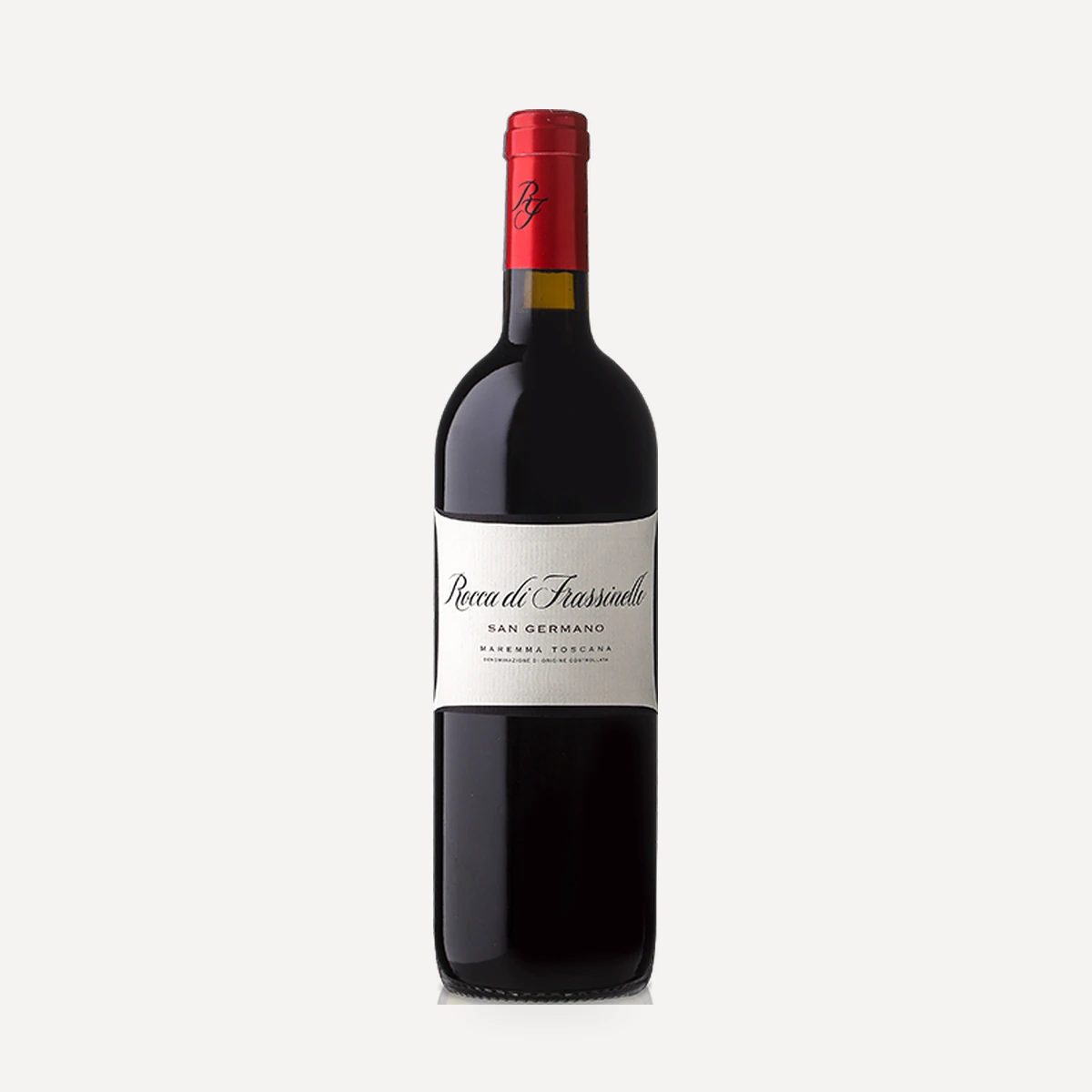
Rocca di Frassinello San Germano
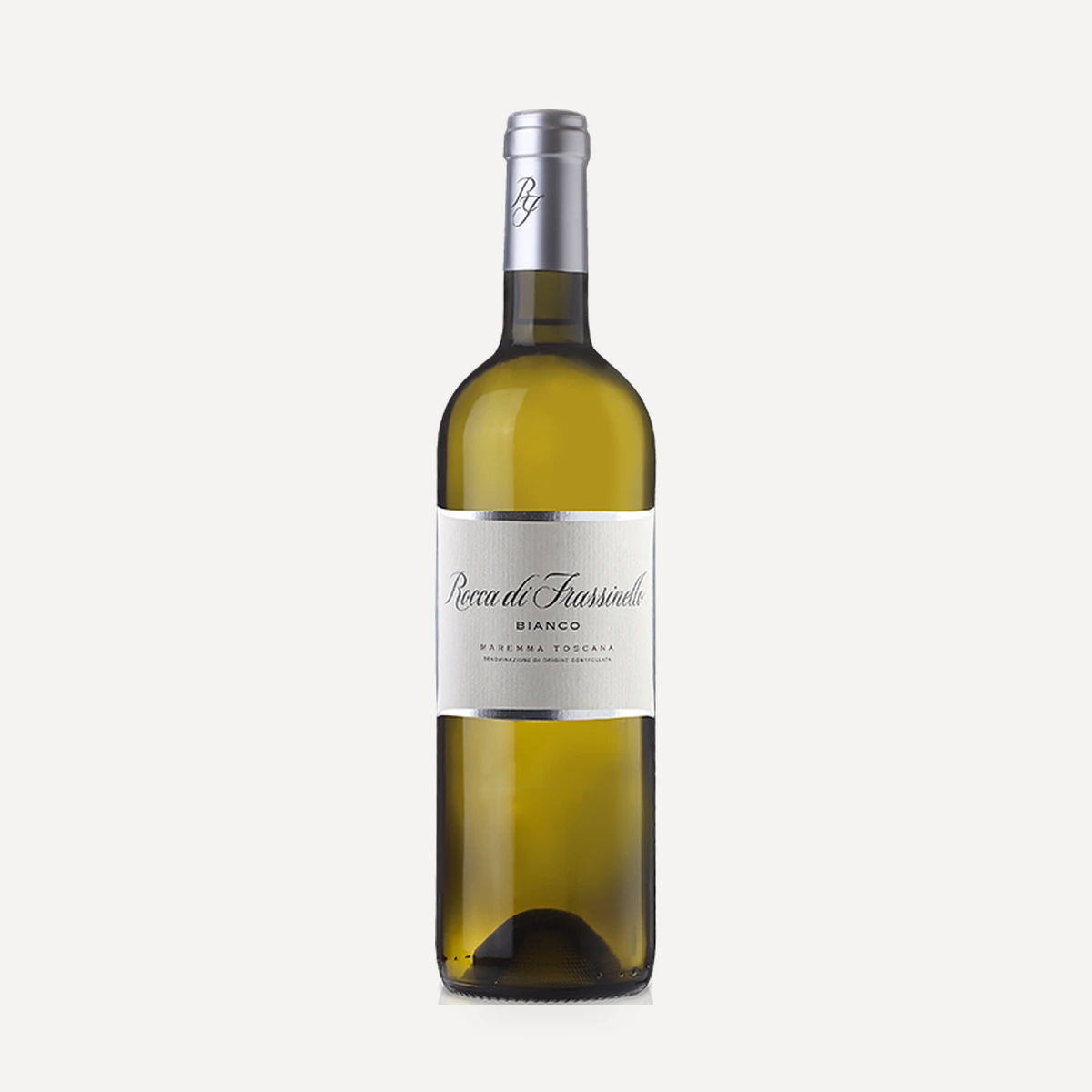
Rocca di Frassinello Bianco
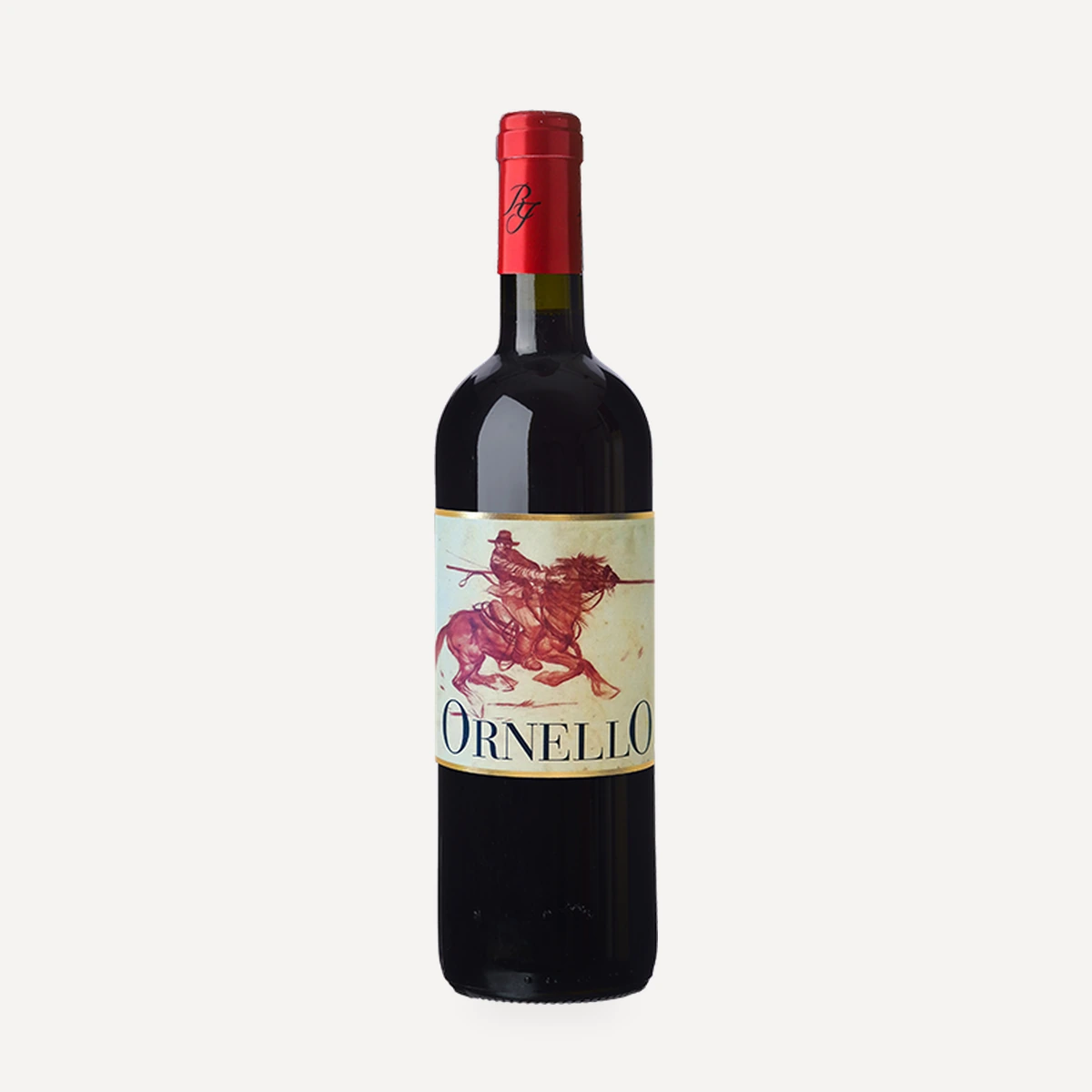
Ornello
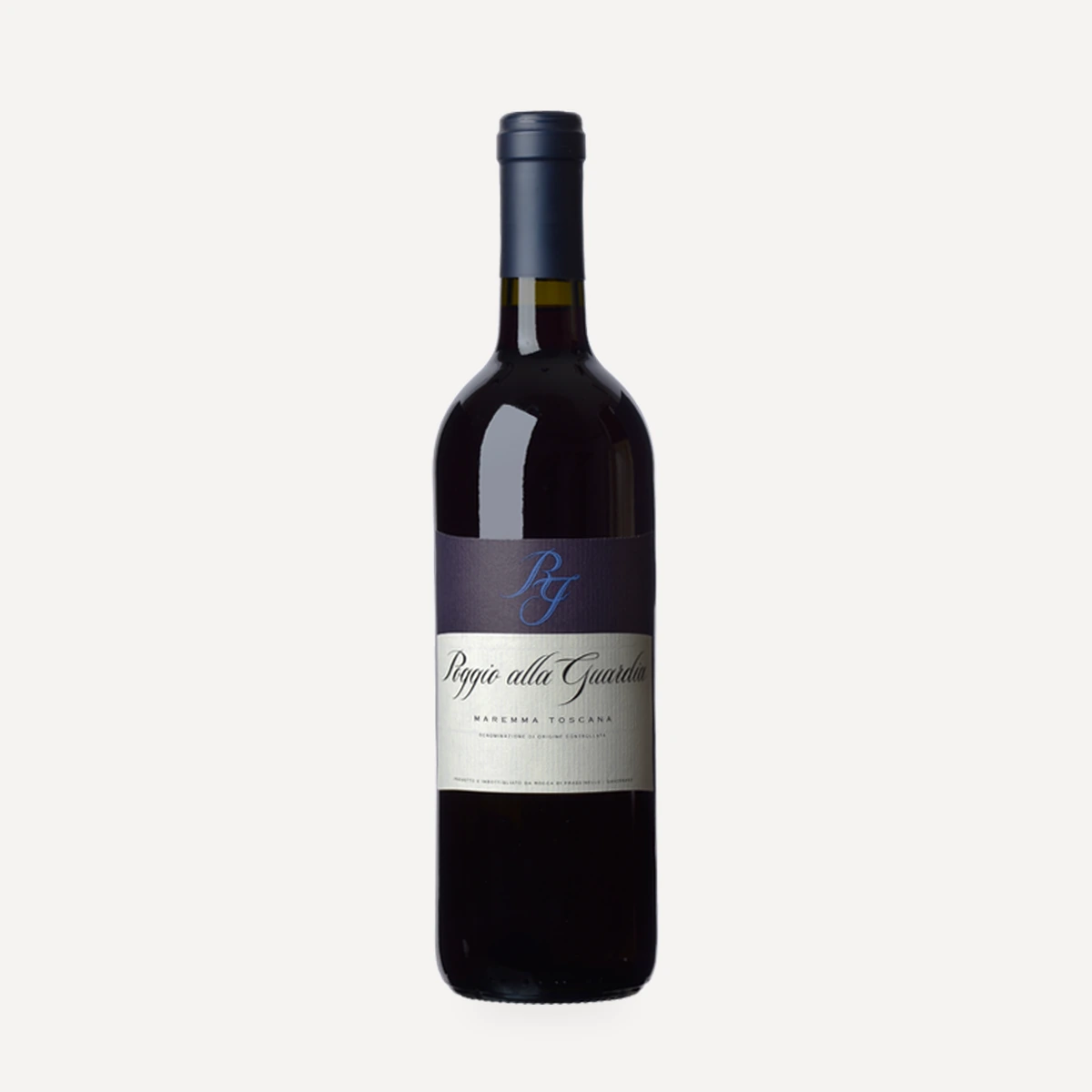
Poggio alla Guardia
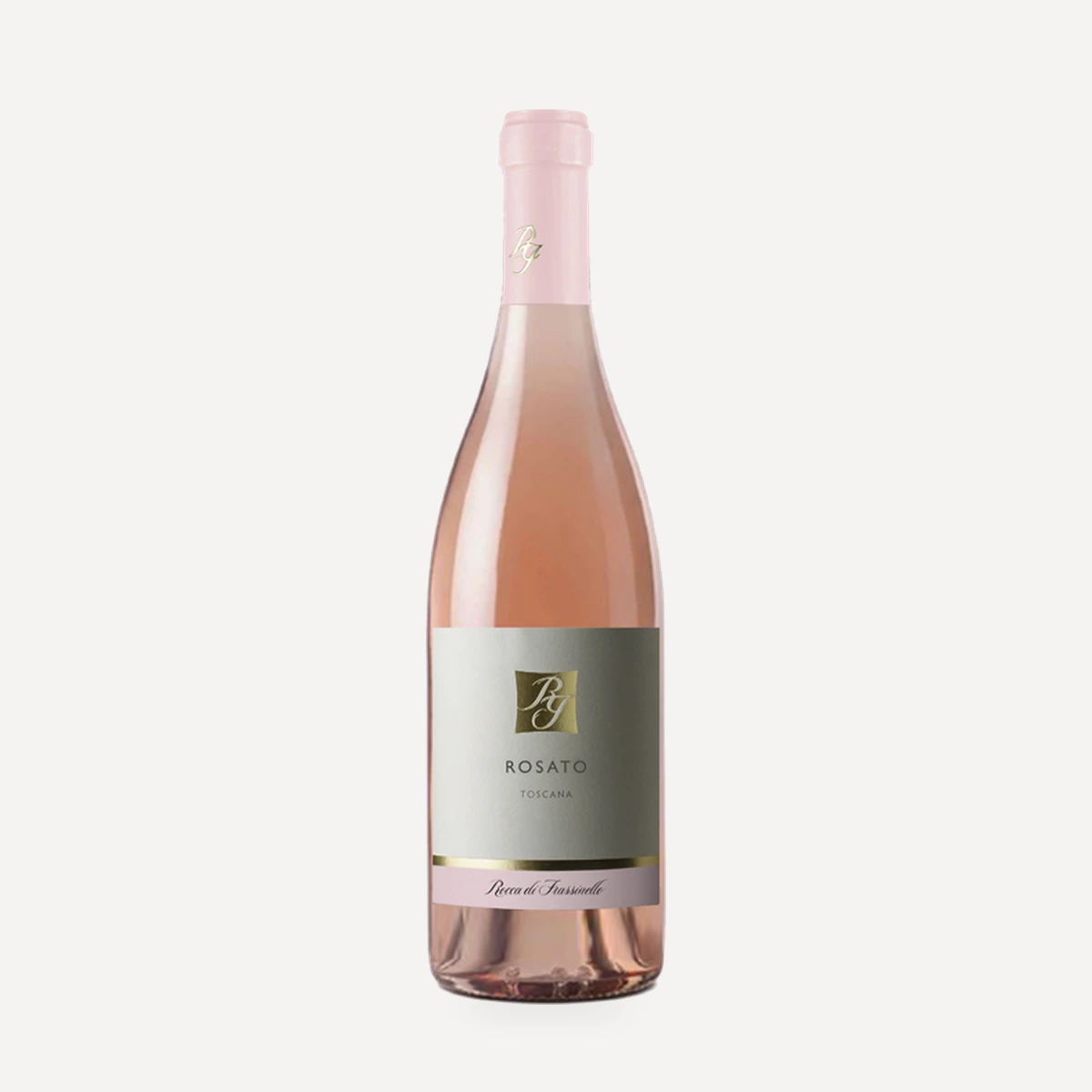
Rosato
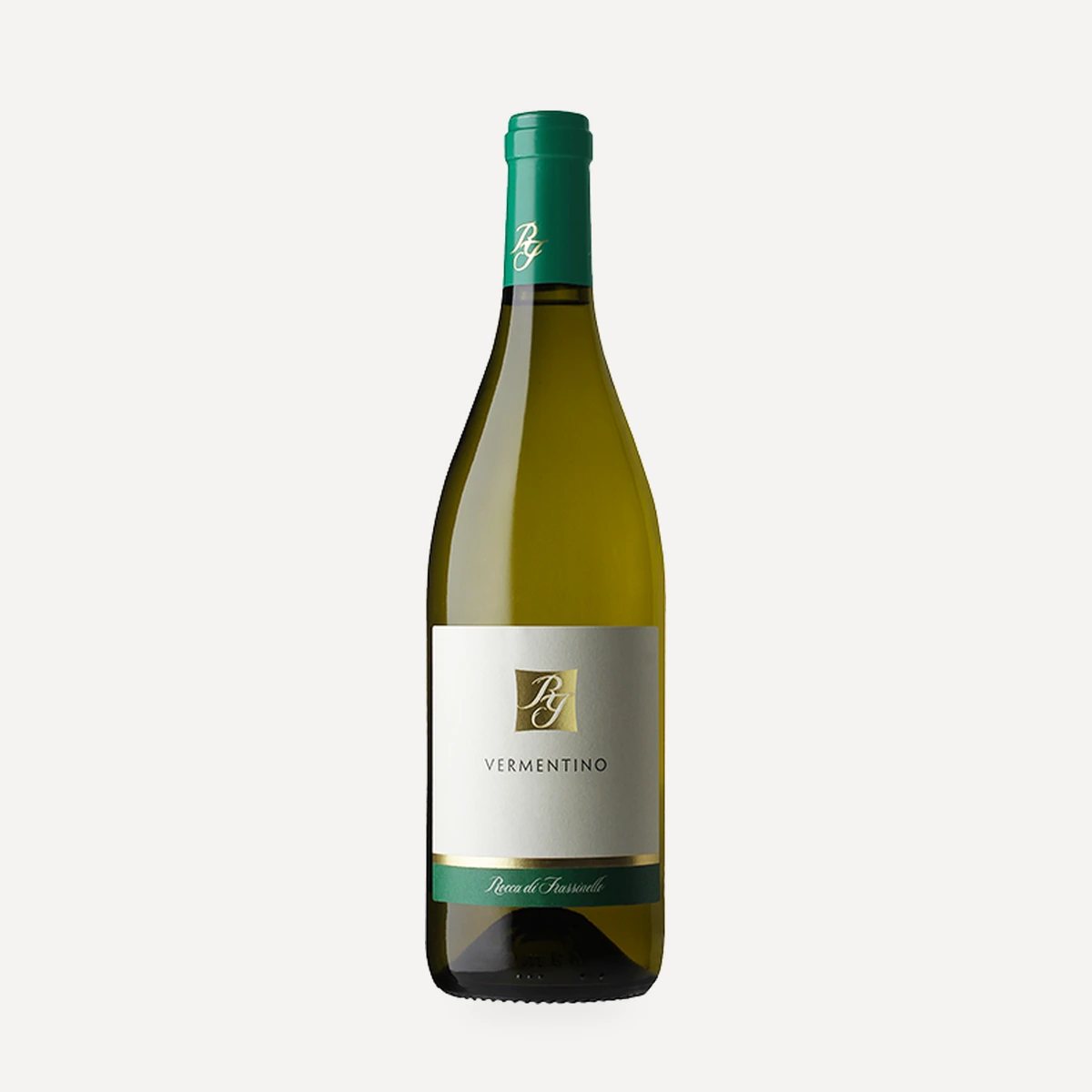
Vermentino
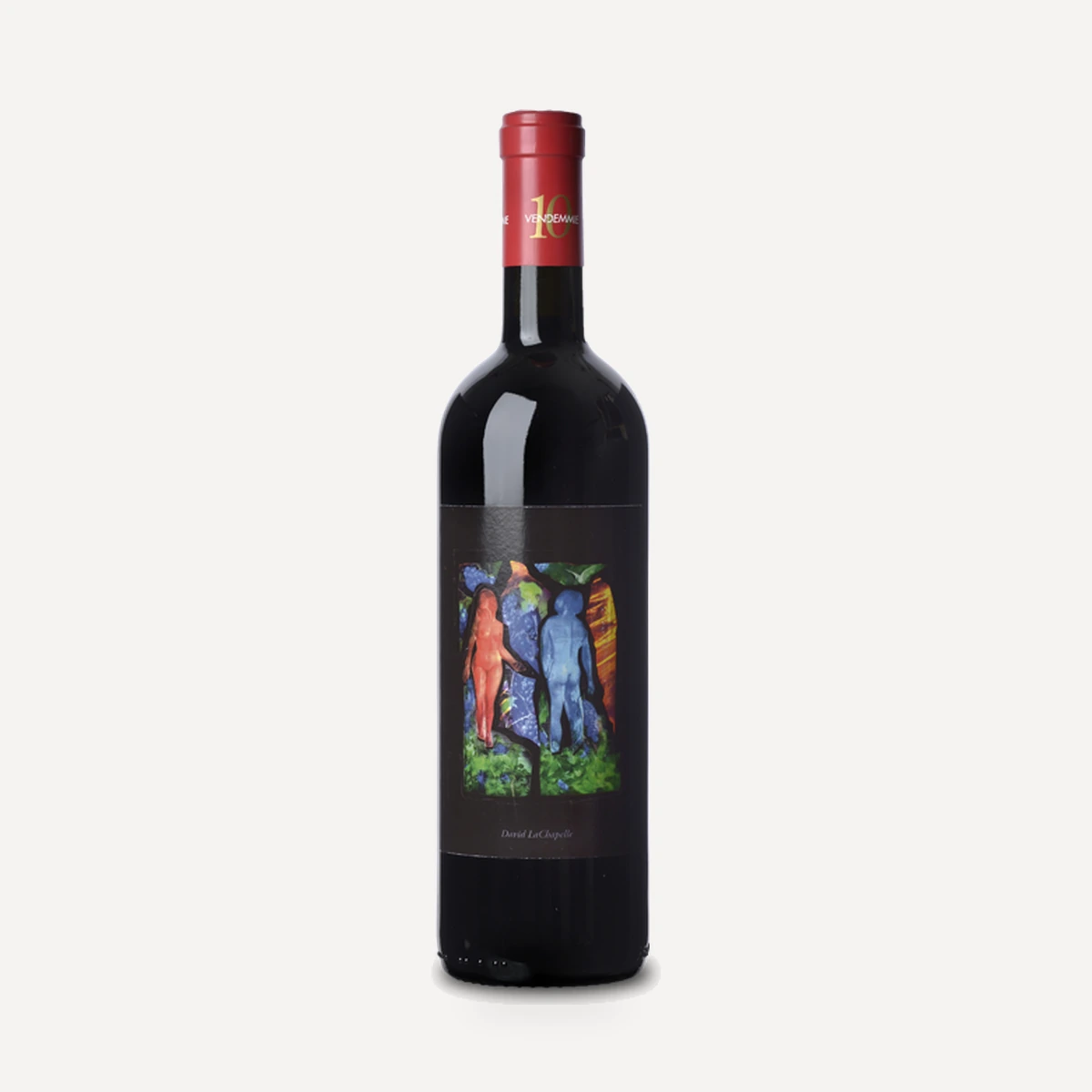
Dieci Vendemmie Rapture of the Grape
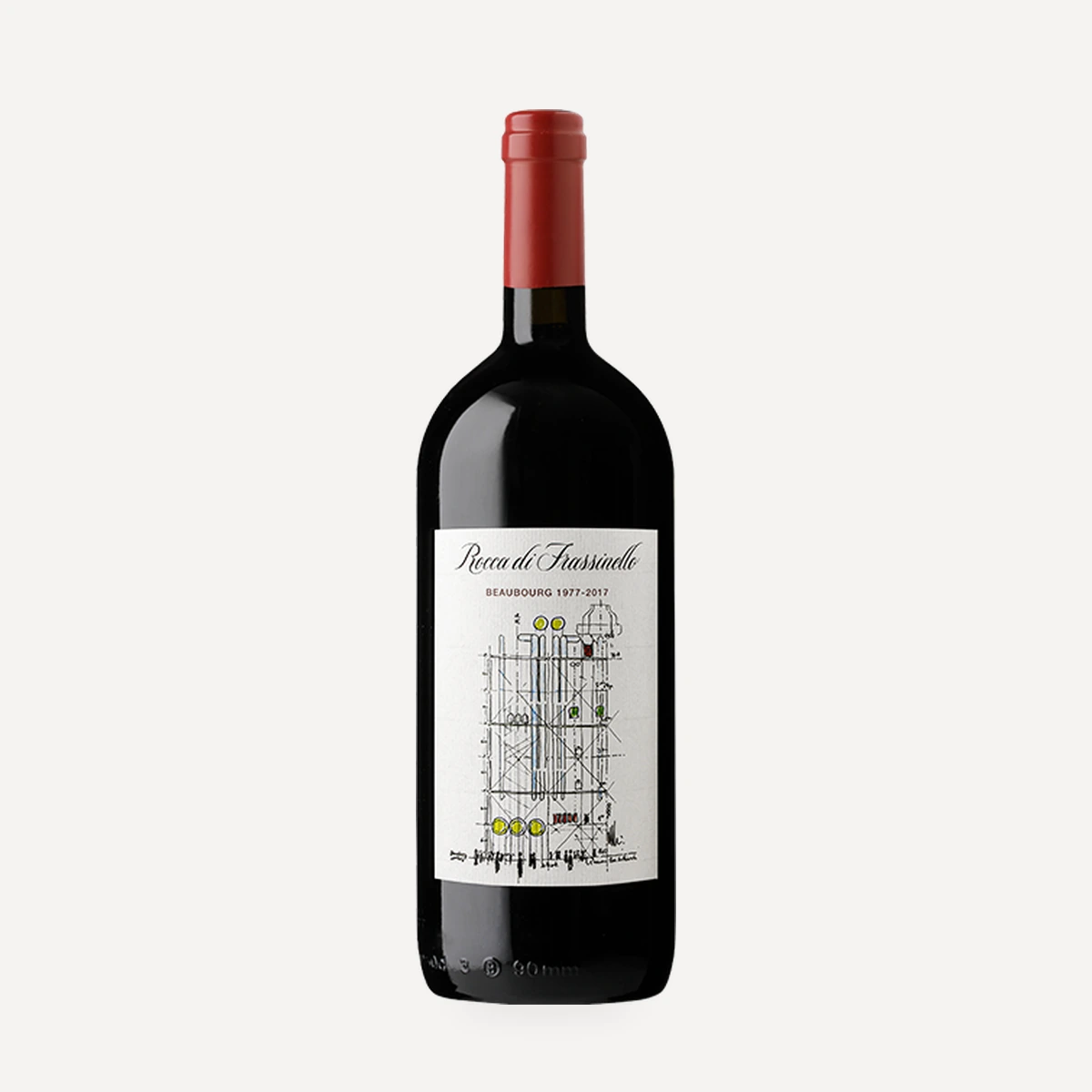
Rocca di Frassinello Edizione Beaubourg
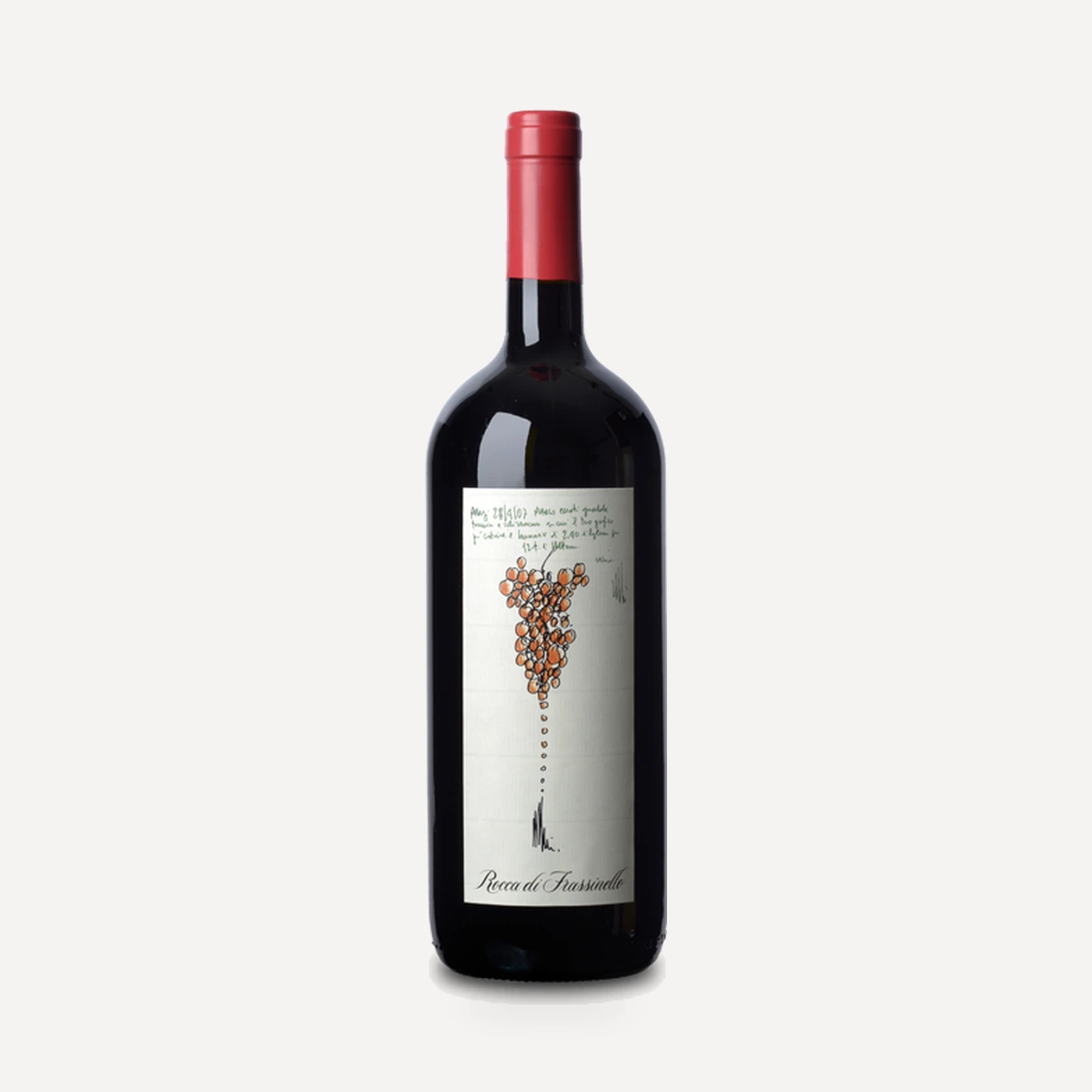
Rocca di Frassinello Renzo Piano Senatore
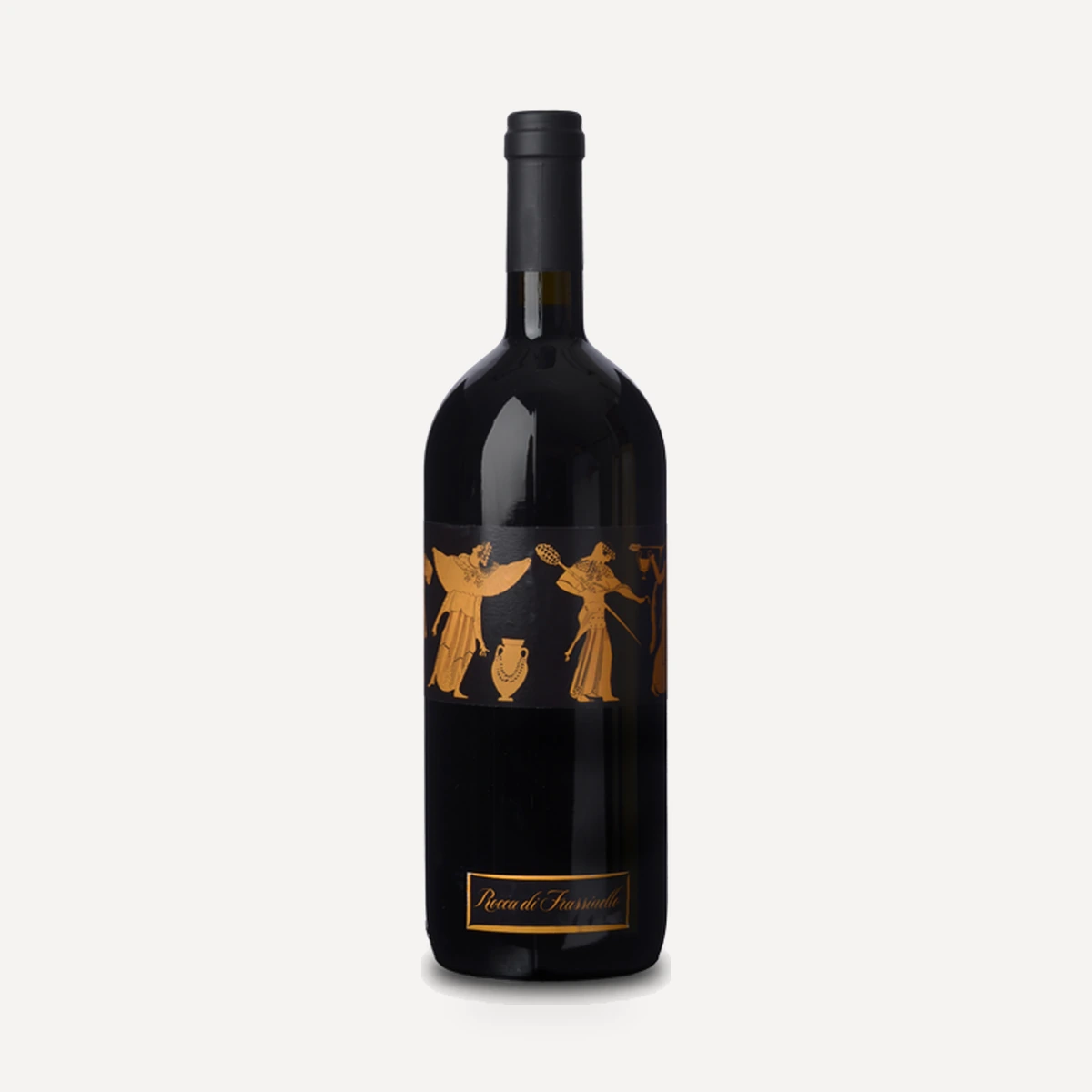
Rocca di Frassinello Edizione Etrusca