Storia
From Sardinia to Castagneto Carducci
Michele Satta was born in Varese into a family of Sardinian origin. His attachment to agriculture began during his childhood in Sardinia, where working the land meant daily effort and dedication. That experience returned with equal intensity after he moved to Tuscany to study at the Faculty of Agriculture in Pisa.
He began his working life as a farm labourer at Tringali Casanova in Castagneto Carducci. The farm cultivated peaches and strawberries, while its wine was made in Maremma and sold for blending. The experience taught Michele to regard traditional farming culture as a heritage to be protected through patience and respect.
1983–1987: an independent wine estate
During the 1980s Michele decided to concentrate exclusively on wine. He established an independent business using rented vineyards and a rented cellar. His first harvest came in 1983, when the first labels bearing his name were released: white and red wines called DIAMBRA, made from traditional vineyards.
In 1984 he produced COSTA DI GIULIA, described as the first varietal Vermentino made in the area. The estate’s development proceeded alongside the formative years of the Bolgheri DOC, established in 1984; Michele was one of its founders.
In 1987 Michele became a vineyard owner by purchasing Costa di Giulia, which he had previously rented. He also built a new cellar suited to contemporary production requirements. Between 1983 and 1987 his broad interest in agriculture had thus become a single, defining commitment to wine.
1990–1993: land, varieties and an Italian-Mediterranean direction
CAVALIERE debuted in 1990 as a pure Sangiovese vinified in wood with the use of barriques.
In the early 1990s Michele progressively relinquished his leases and bought the land that formed the estate, seeking to make wine entirely from estate-grown grapes. In 1991 he planted the first vineyard of this new phase with Merlot, Cabernet Sauvignon, Sangiovese and Syrah. The project became PIASTRAIA: rather than relying solely on Bordeaux varieties or an international taste profile, it was conceived to combine Bordeaux grapes with the Italian identity of Sangiovese and the Mediterranean character of Syrah.
The same 1991 planting included small experimental sections of Tempranillo, Grenache, Petit Verdot, different Syrah clones and Teroldego. Michele regarded direct practical experience as essential before making viticultural decisions and used these plantings to explore the varieties’ behaviour in Bolgheri.
In 1993 he began working with Ornellaia as an agronomist. The collaboration deepened his understanding of the quality potential of the small Bolgheri area and expanded his experience of the international fine-wine market. As investment and vineyard planting accelerated across Bolgheri, he acquired suitable available land close to his cellar while maintaining his pursuit of wines with a distinct estate identity.
1997–2005: white and red varieties broaden the range
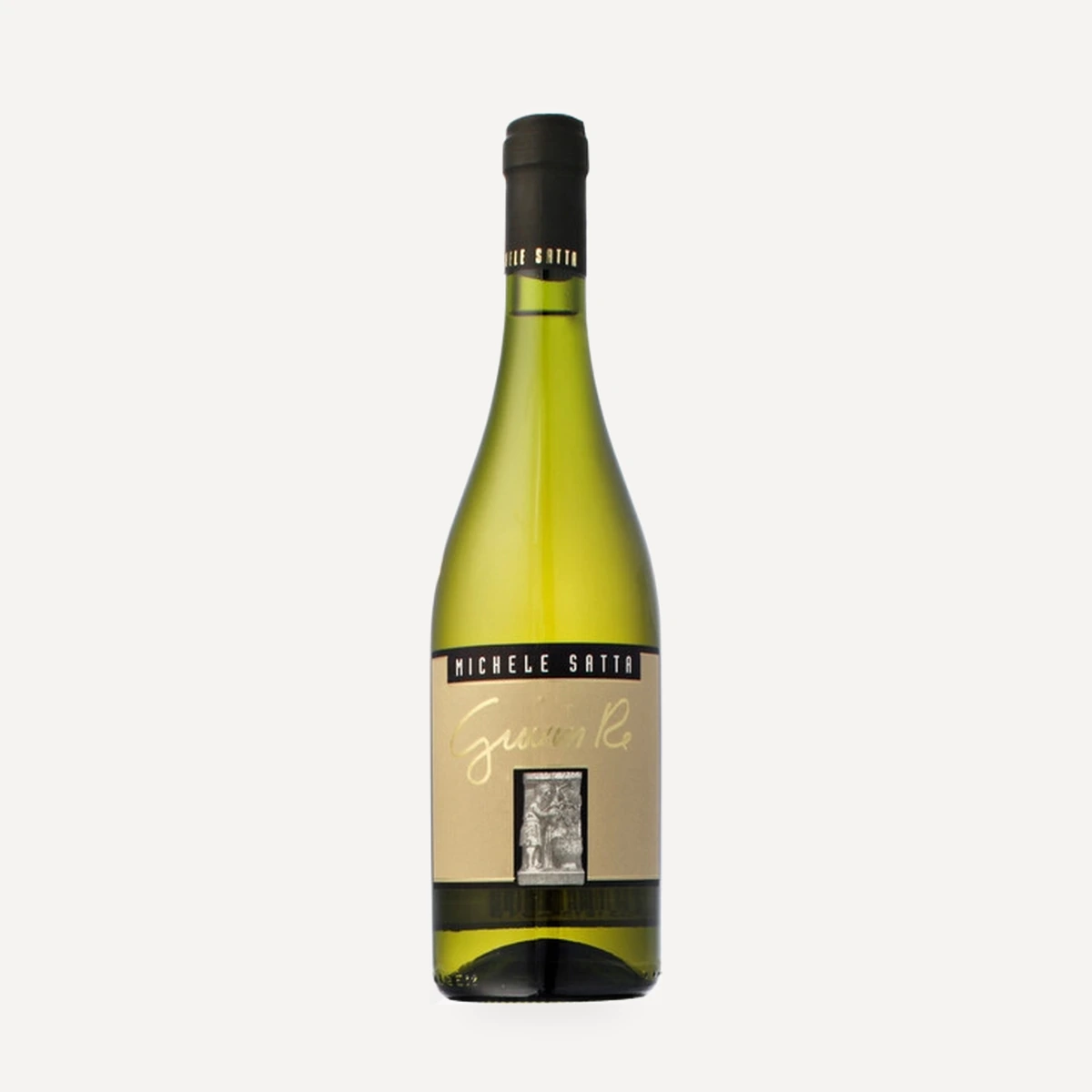
In 1997 Sauvignon Blanc was introduced alongside Vermentino in Costa di Giulia. A Viognier vineyard was also planted that year, initially to enrich the same blend. After Michele tasted the grapes during harvest and recognised their aromatic potential, the fruit was vinified separately; GIOVINRE followed in 2000 as a pure Viognier initially fermented in used barriques.
Teroldego entered the estate’s red blends in 2001. Syrah, first planted in 1991 and initially used in Piastraia, proved sufficiently convincing to become a varietal wine in 2005, once the vineyard had reached maturity. During the same period, the estate continued refining a coastal interpretation of Sangiovese alongside its Bordeaux and Mediterranean varieties.
2012–2023: evolution of Piastraia and the second generation
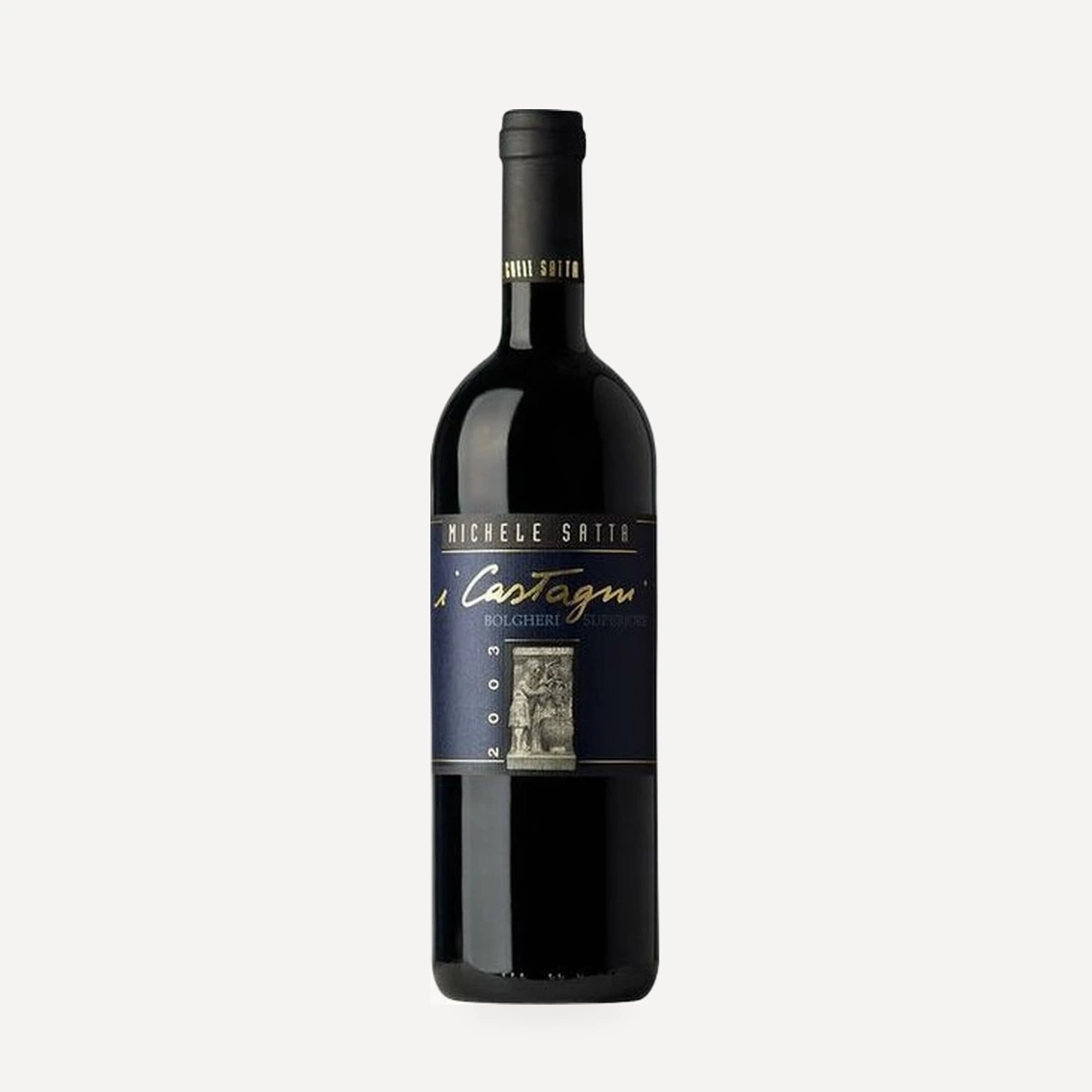
PIASTRAIA became Bolgheri Rosso Superiore in 2012, when the maturity of its vineyards was considered sufficient to express greater complexity. Its composition later evolved: Syrah left the blend with the 2019 vintage, followed by Sangiovese from the 2023 harvest. The wine is now based on Cabernet Sauvignon, Cabernet Franc and Merlot.
Michele’s wife, Lucia, has accompanied him throughout the estate’s development. They have six children. Giacomo joined the business in 2015 after graduating in agriculture in Milan, while Benedetta took responsibility for marketing and communication.
The first vintage of MARIANOVA was also produced in 2015. Created as the first wine project of the second Satta generation, it combines equal parts Sangiovese and Syrah from Vignanova and became the first Bolgheri Superiore made without Bordeaux varieties.
The estate is now entering its second generation while retaining a predominantly family-based organisation. Individual experience and professional skills are joined by a shared commitment to creating wines shaped by the meeting of vineyard and human work.
Terroir
A coastal amphitheatre
The vineyards lie in the southern part of the Bolgheri DOC, in the district known as Accattapane. Bolgheri opens westward towards the Tyrrhenian Sea and is enclosed by hills on its other three sides, creating a natural amphitheatre.
The sea influences the vineyards in three principal ways. Its surface reflects sunlight, increasing the quantity and quality of light available to the vines and supporting complete photosynthetic activity and complex phenolic ripening. It also acts as a thermal regulator, moderating daytime summer heat while keeping nights from becoming excessively cool; this reduces stress and supports the vines’ secondary metabolism.
Sea winds lower the amount of water suspended in the air. This limits conditions conducive to fungal disease and reduces the moisture that would otherwise reflect sunlight away from the plants. These winds are directed by Monte Capanne, the 1,019-metre peak on the island of Elba.
The hills surrounding Bolgheri shelter the vineyards from violent winds and sporadic heavy showers, particularly in summer. This protection reduces the danger posed by August rain and the rot it can trigger shortly before harvest.
Soils
The soils are deep, well drained and medium textured, with pebbles and a substantial loam component. They collect rainfall not absorbed by the surrounding hills while allowing roots to develop deeply and extensively.
The estate vineyards face north and west. Their position, exposure, coastal light, moderated temperatures, wind and deep drainage form the physical setting for the varieties selected after years of observation.
Vinificazione
The vineyards are cultivated using biodynamic agronomic practices. Sustainability measures also include photovoltaic energy generation at the estate.
The north- and west-facing vineyards are Guyot trained. Planting density is intentionally kept low to avoid placing excessive stress on the vines. Variety selection is based on years of direct observation: Viognier, Vermentino and Sauvignon Blanc for white wines, with Cabernet Sauvignon, Cabernet Franc, Merlot, Syrah, Sangiovese and Teroldego represented among the reds.
Michele’s approach developed through practical trials rather than predetermined varietal formulas. The 1991 experimental planting included Tempranillo, Grenache, Petit Verdot, different Syrah clones and Teroldego alongside the principal estate varieties. Vineyard work with Sangiovese places particular emphasis on assessing the productive balance of individual vines and allowing the fruit to reach complete ripeness.
Estate production is based entirely on grapes grown within the family holding.
Production is centred on a historic cellar carved into rock. Its principal vessels include concrete tanks, amphorae and French oak barriques.
The estate characterises its cellar work as traditional. Stems or whole clusters are retained in the vinification of Sangiovese and Syrah. Maturation takes place in a combination of barriques, amphorae and concrete tanks, allowing the choice of vessel to follow the needs of the material rather than a single standard ageing regime.
All 150,000 bottles produced annually come from estate-grown grapes.
Filosofia
Michele Satta’s philosophy begins with agriculture as a complete discipline rather than with cellar technique alone. His early farm work shaped an attitude of patience and respect for rural knowledge, while subsequent vineyard decisions were grounded in direct observation and practical trials.
The central goal is a continual search for quality through the singular encounter between a vineyard and the person who cultivates it. Wine is understood as the transformation of grapes into something that changes with time, but also as the unrepeatable expression of a place, a variety, a season and the accumulated consequences of human decisions—from soil work to cane bending and bud selection.
For Michele, wine resembles a poem: it is made by a particular person in a particular place and cannot be repeated exactly. This idea underpins the estate’s resistance to simply following international varietal trends. Bordeaux grapes have a place in the vineyards, but so do Sangiovese, Syrah, Vermentino, Viognier and Teroldego, selected through experience for their ability to express an Italian and Mediterranean understanding of Bolgheri.
The second generation continues within a family organisation in which each member contributes personal experience, professional competence and passion. The shared objective remains the discovery of latent quality in the land, climate and human relationship with the vineyard.
Environmental responsibility is expressed through biodynamic agronomic practices and photovoltaic energy production. The cultural programme extends the same values of observation, experimentation and individual expression beyond wine, treating art and beauty as essential parts of life rather than decoration.
Vini

Bolgheri Vermentino Bianco DOC

Costa di Giulia Bolgheri Bianco DOC

GiovinRe Bolgheri Bianco DOC

Bolgheri Rosso DOC

Cavaliere Rosso di Toscana IGT

Syrah Rosso di Toscana IGT

Piastraia Bolgheri Superiore DOC

Marianova Bolgheri Superiore DOC

Michè
Giovin Re Toscana IGT