Storia
Development of the estate
Tenuta Ammiraglia developed in Magliano, in the Tuscan Maremma, on hills close to the Tyrrhenian coast. Its vineyards and purpose-built cellar form the core of a project conceived around the territory’s viticultural potential, maritime setting and natural landscape.
2000: Santa Maria
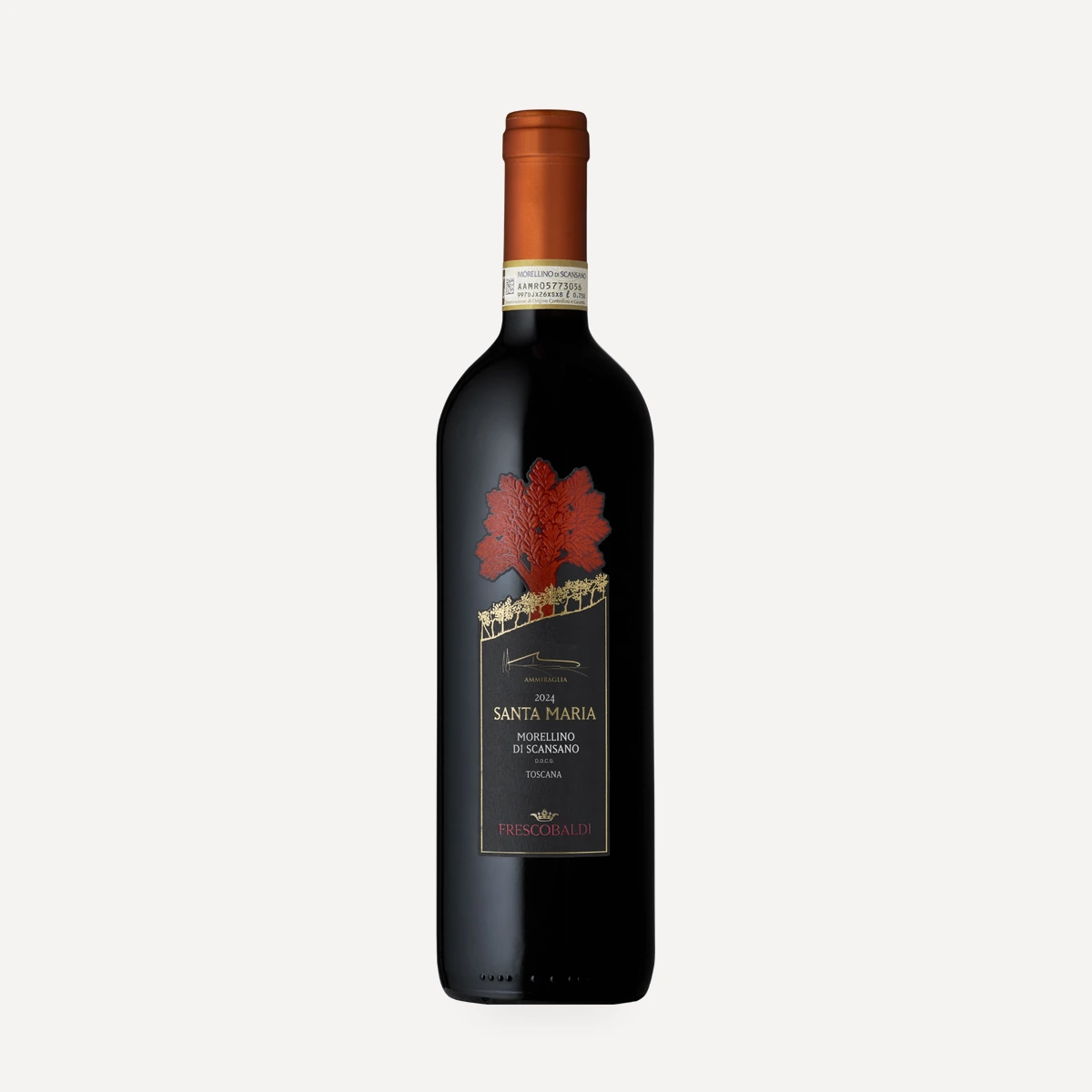
Santa Maria Morellino di Scansano was produced for the first time in 2000, the earliest dated production milestone for Tenuta Ammiraglia.
The architectural winery
Piero Sartogo and Nathalie Grenon designed the estate’s cellar. The project brings design, contemporary technology, production requirements and environmental considerations together in a building conceived to merge into the surrounding landscape. Its long, ship-like architectural form reinforces Ammiraglia’s image of a vessel pointing toward the sea in search of new horizons.
2012: sustainable-agriculture certification
From 2012, the Frescobaldi estates, including Tenuta Ammiraglia, have held Regione Toscana’s AgriQualità certification. The certification covers integrated, environmentally sustainable agricultural practices compatible with protection of the natural environment.
Expansion of the estate range
The estate range grew to encompass red, white and rosé expressions under the Morellino di Scansano DOCG, Maremma Toscana Cabernet DOC and Toscana IGT designations. Terre More was produced for the 2009 vintage. The 2023 vintage represented the tenth harvest of Alìe. Aurea Gran Rosé became the estate’s emblematic cru, conceived after sunrise over the Ammiraglia vineyards inspired an interpretation joining sea and vineyard, Syrah and Vermentino.
Terroir
Location and landscape
Tenuta Ammiraglia lies at Magliano in the heart of the Tuscan Maremma. Its vineyards form geometric patterns across hills that extend toward the nearby Tyrrhenian coast. The land is strongly exposed to the sun, while sea breezes moderate the warmth. This interaction of sunshine, Mediterranean air and coastal proximity is central to the character of the vineyards.
Elevation, exposure and soils
The vineyards occupy more than one elevation band. Cabernet-led, Vermentino and Syrah–Vermentino source vineyards used for vintages between 2009 and 2016 lay at approximately 300 m above sea level, facing south and southwest. These vineyards have calcareous-clay soils with abundant stones; the Vermentino and Syrah–Vermentino sectors are especially rocky.
The vineyards selected for the estate’s principal rosé cru lie at about 150 m above sea level, with southern exposure and stony clay soils. The lower altitude, open exposure and proximity to the sea create a distinct setting within the estate.
Large yellow rocks are a conspicuous feature of the landscape. Where these cyclopean stones emerge from the ground, they are locally called massi vivi, or “living rocks.”
Maritime climate
The sea is a recurring moderating influence. The combination of coastal breezes, warm sunlight and meaningful day–night temperature changes supports ripening while helping the grapes retain freshness.
The 2024 season began with an especially mild winter and widespread rain continuing into early spring. The rainfall established water reserves for the ensuing hot, dry summer. High temperatures supported flowering in June; rain returned from the middle of August, and more regular nocturnal temperature variation accompanied the final ripening period. The harvest combined satisfactory ripeness with freshness and delivered good qualitative and quantitative results.
In 2025, winter was again mild and rainy, with precipitation concentrated in February and continuing through spring. This replenished groundwater and encouraged regular, even budbreak. June and July were particularly hot, and above-average summer temperatures were moderated by rainfall in September.
Vinificazione
Integrated and sustainable agriculture
Tenuta Ammiraglia follows the integrated and sustainable agricultural principles applied across the Frescobaldi estates. Since 2012, these estates have held Regione Toscana’s AgriQualità certification, which recognises ecologically sustainable cultivation compatible with conservation of the natural environment.
Water and seasonal management
Winter and spring rainfall is important to the estate’s water balance. In both 2024 and 2025, rain replenished groundwater before hot summer conditions. The 2024 water reserves helped the vines withstand a hot, dry summer, while the 2025 winter and spring rains supported regular and uniform budbreak.
Harvest selection
Harvest protocols vary by destination. For the estate’s most selective rosé production, grapes are hand-picked from first light and during the coolest part of the day. Bunches undergo close selection in the vineyard, are transferred rapidly to the cellar and receive a further check before pressing.
The cellar
The cellar designed by Piero Sartogo and Nathalie Grenon combines production technology with architecture intended to integrate into the landscape. The building’s conception places technical function, wine quality and respect for its surroundings within a single design.
White and rosé production
The estate’s white and rosé work emphasises rapid transport after harvest, gentle pressing and protection of the fruit. For rosé production, whole bunches can be placed directly into an oxygen-free press. Very soft pressure limits stress on the berries, after which selected must is allowed to settle for at least 12 hours.
Vermentino must may undergo cold static settling before controlled-temperature fermentation in stainless steel. Stainless-steel maturation on fine lees is also employed. The 2015 Vermentino underwent partial cryomaceration without malolactic fermentation, followed by four months in steel and one month in bottle.
Rosé fermentation varies by intended style. Stainless-steel tanks at temperatures below 19 °C are used for the fresher style, followed by several months on fine lees and a subsequent period in bottle. The 2016 Syrah–Vermentino rosé underwent no maceration or malolactic fermentation; it was pressed immediately and matured for three months in steel and one month in bottle.
The cellar also works with 600 L French-oak tonneaux for its more structured rosé, fermenting at 17 °C in medium-toast vessels, 20% of them new. Syrah is vinified as a white wine for this program. After the varieties are assembled, maturation continues on fine fermentation lees. A reserve component from the preceding Syrah harvest, vinified in white and matured for 20 months in barrique, can be incorporated later.
Red production
For the Cabernet-led red program, carefully harvested grapes are destemmed and processed in steel tanks before controlled-temperature fermentation. Maturation takes place partly in second- and third-fill French-oak barriques, followed by additional bottle ageing. The Sangiovese-led Morellino is matured for 12 months in stainless steel.
Filosofia
Tenuta Ammiraglia frames its identity as an exploration of coastal Tuscany: a “ship” directed toward the sea and new horizons. Its identity is built around the meeting of warm sunlight and maritime breezes, vineyards and sea, and contemporary technical knowledge with close attention to nature.
The broader Frescobaldi principle is that each family estate and its wines should express the diversity of its own Tuscan territory while respecting its nature and authenticity. At Ammiraglia, this appears in the site-sensitive cellar architecture, integrated and sustainable farming, differentiation among vineyard elevations and exposures, and production choices adapted to red, white and rosé fruit.
For the most selective rosé work, the guiding principle is meticulous attention from vineyard through cellar: cool-hour harvesting, bunch selection, rapid transport, protective pressing and carefully differentiated élevage. The emblematic rosé is conceived as an expression of harmony between sea and vineyard, Syrah and Vermentino, and human work and natural conditions.
Vini