History
1963 — Assunto Pieri and Bruna Tempori
Assunto Pieri and Bruna Tempori bought Bellaria in 1963 as a place where they could work the land and raise a family. At the time, the farm provided both income and food; in Montalcino, it also offered the opportunity to make wine. The estate has remained in the family ever since. Brunello di Montalcino and extra-virgin olive oil have been produced here from the beginning, following traditional methods.
Assunto planted the vineyard that would later become the basis of the estate’s most selective production. His work established the viticultural inheritance eventually passed to his grandson, Gianni Bernazzi.
1967 — Founding of the Brunello consortium
Assunto Pieri was among the founders of the Consorzio del Vino Brunello di Montalcino. The organization established production rules and a guarantee seal. Its statute was signed by 15 direct winegrowers, three small landowners and seven medium-sized or large landowners.
2000 — Gianni Bernazzi takes charge
Management passed to Assunto’s grandson Gianni Bernazzi in 2000. He developed the estate’s marketing and logistics while continuing the work in the vineyard and cellar according to his grandfather’s principle of taking no shortcuts.
2004 — Creation of Assunto
In 2004 Bellaria introduced the Assunto production, named in honour of the founder. Its Brunello and Rosso di Montalcino were based on fruit from the old vineyard planted by Assunto, distinguished by low yields and tannic grapes intended for long-lived wines.
2016 — A landmark score
James Suckling awarded 100 points to Brunello di Montalcino Assunto Riserva 2010. The recognition became one of the principal milestones in the estate’s published chronology.
The Gianni Bernazzi era
To mark 25 years of Gianni Bernazzi’s leadership and the twentieth anniversary of Brunello production under his direction, Bellaria introduced the Gianni Bernazzi brand. The new identity was conceived as a forward-looking development grounded in the estate’s inherited traditions.
Terroir
Bellaria lies in the commune of Montalcino, in an area devoted to Brunello di Montalcino. The approximately 40-hectare property includes 3 hectares of vines set among woodland and olive groves. The vineyards and estate olive groves lie at approximately 500 metres above sea level.
The surrounding woods and mixed agricultural landscape form the immediate setting of the vineyards. Bellaria’s approach is to preserve the distinctions expressed by its grapes and land rather than standardize them.
Winemaking
Bellaria combines traditional vineyard work with an organic and low-input approach. Systemic treatments are avoided, and the vineyards are neither irrigated nor fertilized. Estate communications describe the production as certified organic and place the preservation of biodiversity and low-impact agriculture among its commitments.
The viticultural year includes winter pruning, green pruning, canopy or hedge management and harvest. Grapes intended for Brunello are selected at harvest, and production from the old Assunto vineyard is deliberately low. Visitors may accompany Gianni Bernazzi during vineyard activities, including pruning, flowering, fruit set and harvest.
Bellaria follows traditional methods and excludes selected yeasts, allowing the character of the grapes and growing place to remain central. The estate’s red-wine production uses stainless-steel vats for vinification, followed by maturation in oak vessels. Across the range these include French and Slavonian oak casks as well as tonneaux and barriques.
The ageing cellar also contains the tasting room, placing visitors alongside the casks and barriques used for maturation. Its architecture combines stone, wood and terracotta with glass and steel.
Vinsanto production follows a separate process. Trebbiano and Malvasia grapes are placed in baskets to dry for three months, then pressed. Fermentation begins before the wine is transferred to 50- or 100-litre wooden caratelli, where it matures for seven years, followed by three months in bottle.
Brunello production is presented as a complete annual cycle encompassing pruning, green operations, harvest, vinification, ageing, bottling and labelling.
Philosophy
Bellaria’s guiding principle is the lesson Gianni Bernazzi attributes to his grandfather Assunto: work without shortcuts. The estate connects this principle to both vineyard cultivation and cellar practice, combining inherited methods with developments in logistics, marketing and presentation.
Its wines are conceived to express the vocation and productive tradition of the land. Avoiding systemic products, irrigation, fertilization and selected yeasts is intended to preserve distinctions in the grapes and growing place. Low yields in the old Assunto vineyard and extended maturation reflect a parallel emphasis on patience and longevity.
The Gianni Bernazzi identity represents the estate’s stated balance between continuity and evolution: looking toward the future while honouring the family’s traditions. Hospitality follows the same family-centred approach, with Gianni personally leading tastings, cooking and vineyard visits.
Wines

Brunello di Montalcino Assunto

Brunello di Montalcino Assunto Riserva
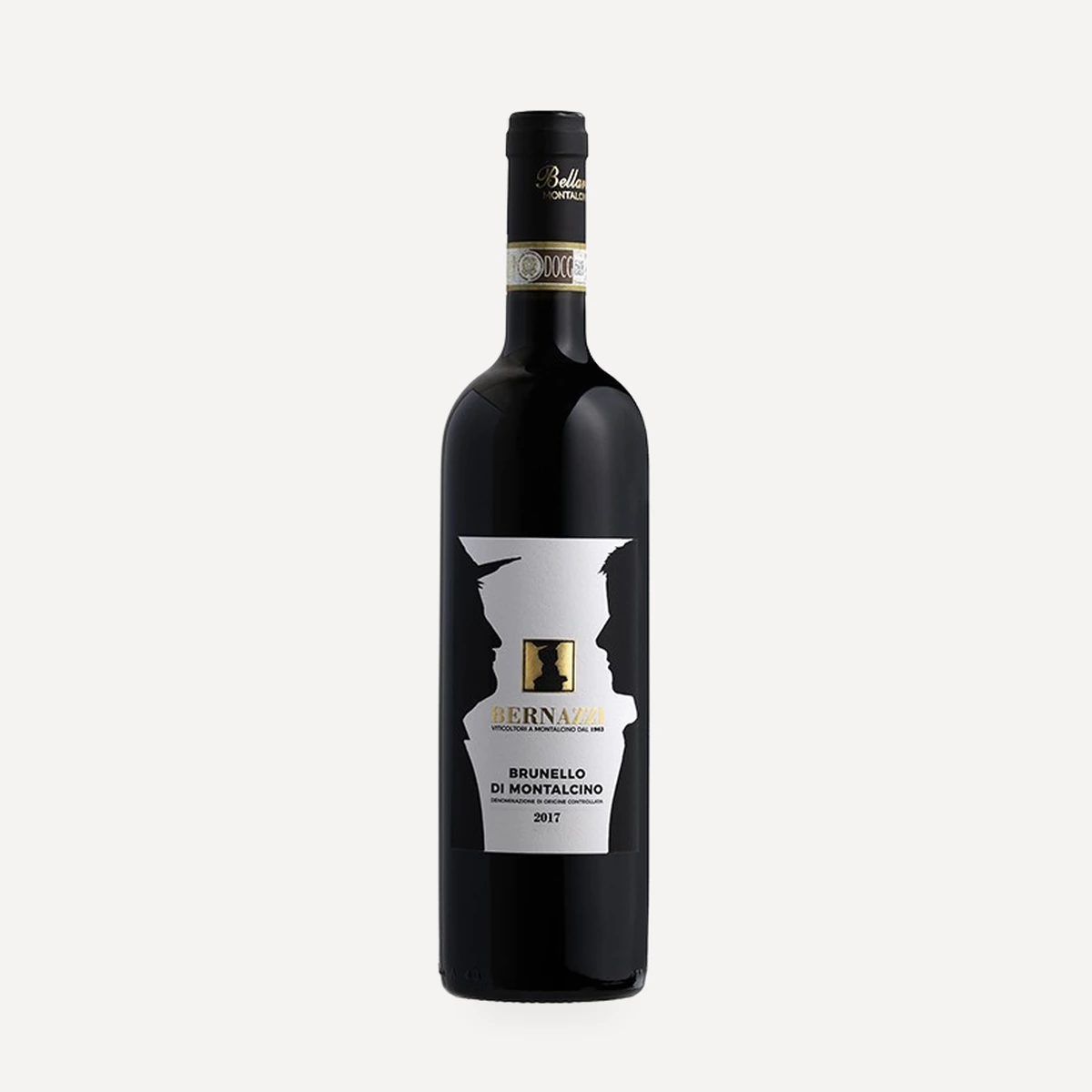
Brunello di Montalcino Bernazzi

Rosso di Montalcino Assunto

Vinsanto del Chianti Assunto

Brunello di Montalcino Gianni Bernazzi

Rosso di Montalcino Gianni Bernazzi

Rosso di Montalcino Bernazzi
