History
The older vineyards
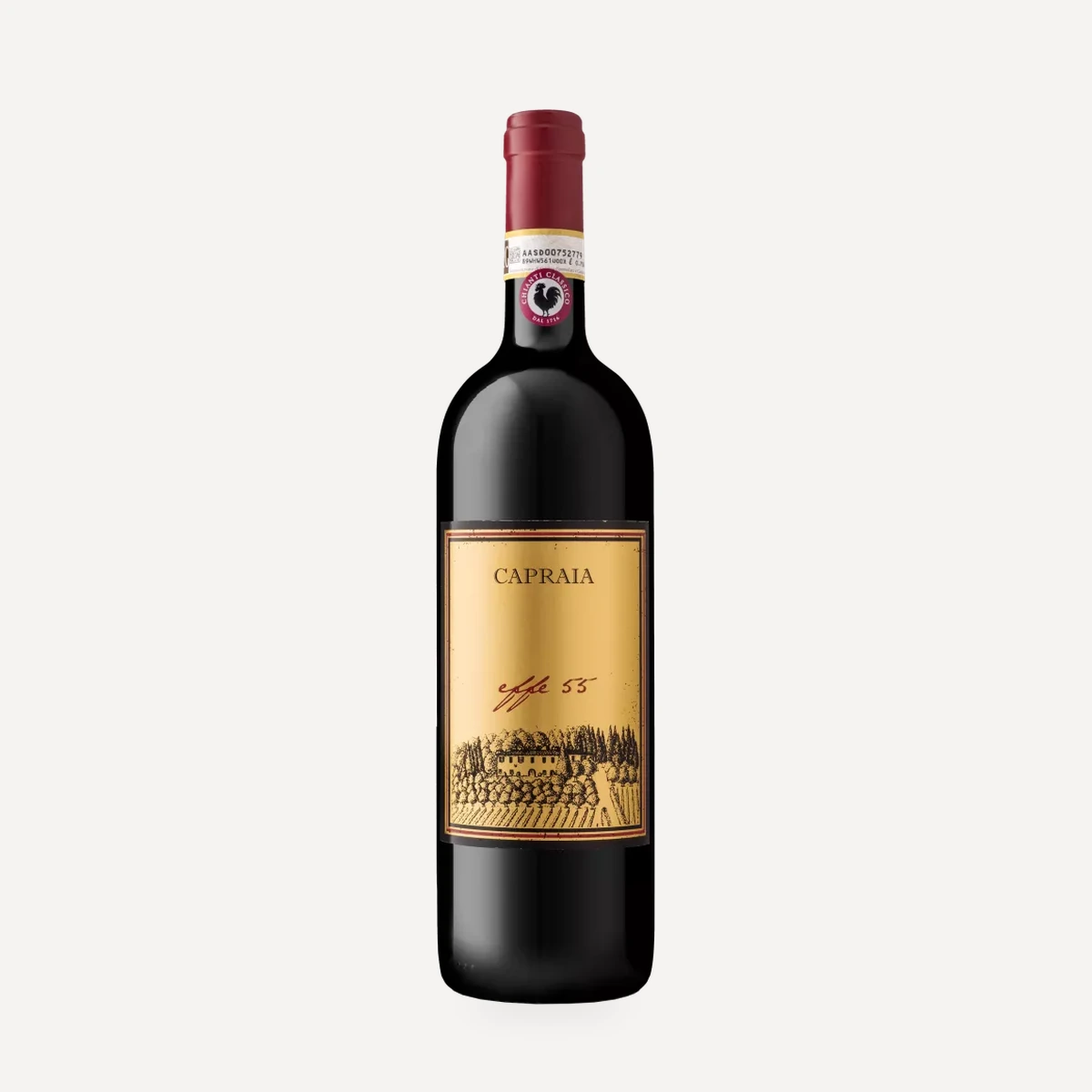
One of the oldest surviving plantings associated with Capraia lies at Casanuova di Pietrafitta. Part of the vineyard was planted in the 1970s and is now more than 50 years old. These mature, deeply rooted vines naturally carry small crops and supply part of the fruit selected for Effe'55 Gran Selezione.
1988: distinguishing Castellina from Gaiole
The Capraia project grew from an effort to express the differences among the historic Chianti Classico municipalities of Gaiole, Radda and Castellina. By 1988, the team had identified a pronounced distinction between the terroirs of Castellina in Chianti and Gaiole in Chianti. Capraia fruit from Castellina was consequently treated as a discrete selection rather than being absorbed into Rocca di Castagnoli's Gaiole production.
For decades, Capraia lots have been kept rigorously separate from the other Rocca di Castagnoli wines during both vinification and ageing. This approach preceded the modern emphasis on Chianti Classico's Additional Geographic Units, or UGA, and made municipal origin a defining element of the project.
2018: expansion into Pietrafitta
In 2018, additional vineyard hectares were purchased in the Pietrafitta area of Castellina in Chianti. The new holdings were reserved for the upper tiers of the Capraia selection, particularly Chianti Classico Riserva and Gran Selezione Effe'55.
The acquisition also formed a response to climate change. Maintaining suitable temperature and humidity had become increasingly difficult on lower-lying ground during longer and more frequent periods of summer heat. Production for the Riserva and Gran Selezione was therefore shifted toward Pietrafitta's higher, cooler and better-ventilated vineyards. The resulting microclimate helps protect the grapes during hot spells and supports complete phenological ripening.
Terroir
Castellina in Chianti
Capraia is based on grapes from the historic territory of Castellina in Chianti. Its broad pedoclimatic profile combines tuffaceous sands with classically clay-rich soils. Compared with other parts of Chianti Classico, the general Castellina description emphasizes a smaller proportion of exposed rocky material such as galestro, limestone and alberese, together with soils capable of generous production in both quality and quantity. The prevailing slope faces south-west, while summers are comparatively warm but well ventilated.
Within this broader profile, individual holdings vary substantially. Canale includes deep, fertile, medium-textured soils with a strong clay component and galestro. The Vermentino parcel is associated with Pliocene-origin galestro and alberese, which form deep, cool and stony ground. Pietrafitta and Casanuova di Pietrafitta contain more rock fragments, alberese and calcareous-clay layers; the Gran Selezione parcel is additionally described as medium-textured and rich in sand and stone.
Elevation and microclimate
The vineyard range extends from approximately 250 m above sea level at the Vermentino parcel in Canale to 300 m for the principal Canale and Località Capraia plots, 530 m for the Riserva sector at Casanuova di Pietrafitta and 580 m for the Effe'55 parcel.
Pietrafitta occupies the upper part of Castellina in Chianti. Its north-eastern slopes are cooler and well ventilated, encouraging even ripening. Forest surrounding the vines buffers and protects the plantings while maintaining the biodiversity of the immediate landscape. The combination of altitude and airflow is particularly important during increasingly frequent periods of intense summer heat.
The warmer, ventilated lower sites and the cooler high-altitude holdings together give Capraia a range of growing conditions. The estate associates the Castellina expression with structure, warmth, supple tannins, longevity and power, while the higher Pietrafitta vineyards add freshness, savoury definition and elegance.
Winemaking
Viticulture is adapted parcel by parcel to differences in altitude, exposure, vine age and intended selection. Planting density is generally 5,000 vines/ha in the red-wine vineyards, while the Canale Vermentino parcel is planted at 4,000 vines/ha.
Spur pruning and cane pruning are both employed in the main Capraia and Riserva vineyards. The Effe'55 parcel is spur pruned, while the Vermentino parcel uses Guyot. Reported average yields are 1.2 kg per vine in the lower Capraia and Canale plots, 1 kg per vine in the Pietrafitta Riserva and Gran Selezione vineyards, and 1.5 kg per vine for Vermentino. The old Pietrafitta vines naturally bear particularly small crops.
Harvest timing follows elevation and variety. Vermentino is picked in September; the principal Canale red plots are harvested from the second half of September through the first half of October; the Pietrafitta Riserva vineyards are harvested in the first half of October; and Effe'55 is picked around mid-October. Grapes from cooler sectors intended to retain freshness are carefully selected and harvested earlier.
The forest surrounding the high Pietrafitta vineyards is retained as a protective and ecological feature. It supports the biodiversity of the surrounding area, shelters the vines and contributes to plant health. Moving the senior selections toward these cooler, ventilated high-altitude sites is also an adaptation to longer and more frequent periods of summer heat.
Capraia is operated as a rigorously separate selection within the wider production structure. For decades, its grapes and resulting wines have been kept apart from the other Rocca di Castagnoli lots during both vinification and ageing. This separation is intended to preserve the recognizably different character of Castellina in Chianti rather than blending it into production from Gaiole in Chianti.
Philosophy
Capraia was conceived to demonstrate that the historic municipalities of Chianti Classico produce materially different expressions. The project treats Castellina in Chianti as a distinct origin and seeks to preserve its character through separate selection, vinification and ageing. This municipal focus was already established in 1988, before the present emphasis on Additional Geographic Units.
The approach connects wine style directly to pedoclimatic conditions: soil, slope, temperature, ventilation and altitude are treated as defining elements rather than incidental differences. The stated objective is to retain the warmth, structure, supple tannins, power and longevity associated with Capraia while allowing each selection to remain faithful to its place of origin.
The expansion into Pietrafitta reflects a pragmatic response to climate change. Higher, cooler and more ventilated vineyards were chosen to preserve phenological ripening and protect fruit from increasingly prolonged summer heat. Old vines, naturally low yields, rigorous grape selection and the preservation of surrounding woodland form part of the same emphasis on concentration, balance, biodiversity and territorial identity.
Wines