Dionysus.
ExploreWines
Chianti Classico DOCGOrganic viticultureEqualitas certified

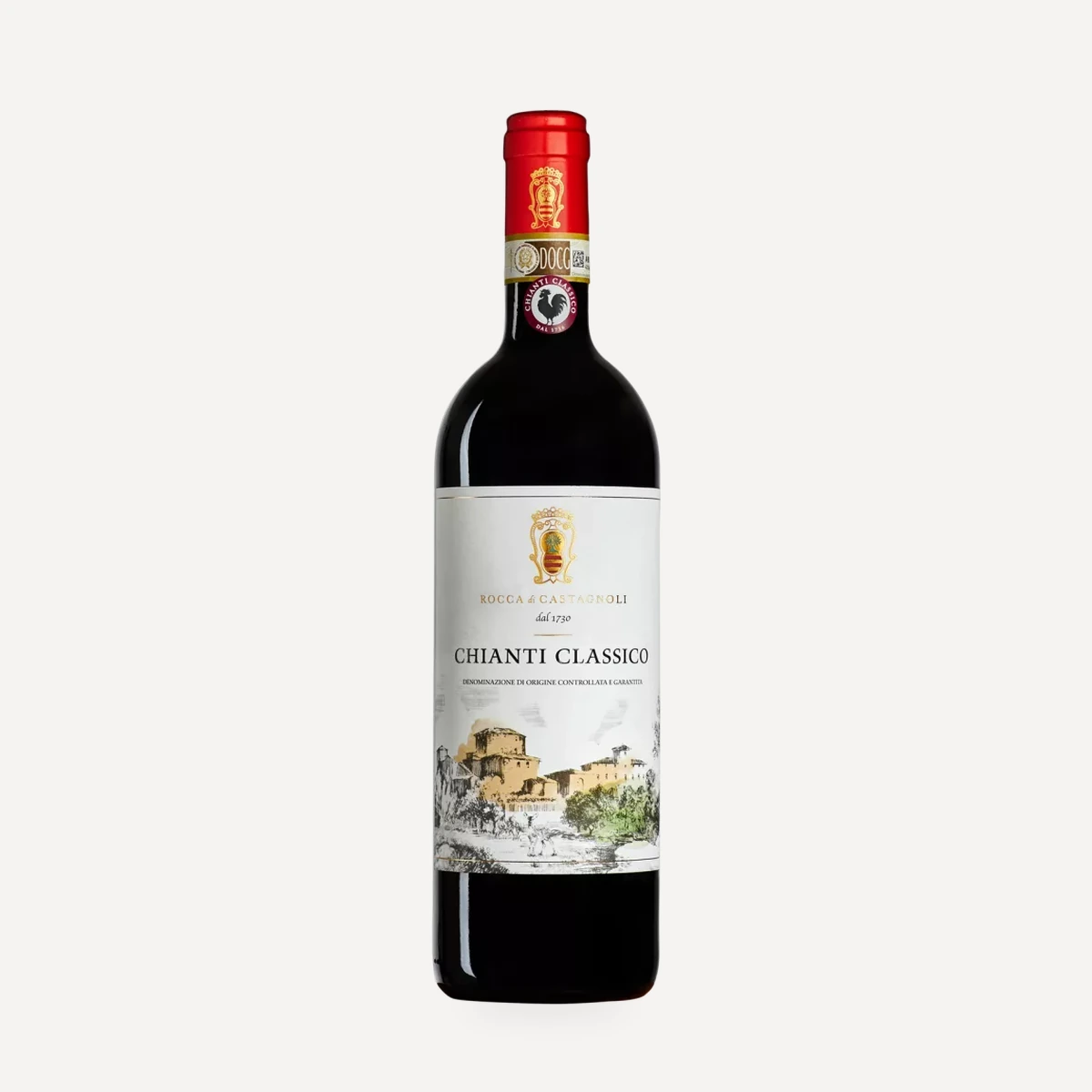
Rocca di Castagnoli

History

Medieval origins and early viticulture

Rocca di Castagnoli occupies an ancient medieval fortress from which the hamlet of Castagnoli developed. The hill had already been frequented by the Etruscans. Documentary evidence preserved by former owners records vine cultivation on the Stielle hill in 1153.

The Tempi and Ricasoli periods

The property passed through several noble families. Among them were the Tempi, whose coat of arms continues to represent the estate, and the Ricasoli. The Tempi expanded the property in 1730. The winery was operating by the 18th century and functioned as the economic centre of the village.

In 1773, Grand Duke Pietro Leopoldo visited Castagnoli and praised the management, maintenance and agricultural innovation of the property. Baron Ricasoli subsequently owned the estate until the 1950s.

Founding the Chianti Classico consortium

In 1924, Rocca di Castagnoli was one of the 33 founding wineries of the consortium created to protect Chianti Classico wine.

Family acquisition and reconstruction

The present family acquired Rocca di Castagnoli in 1981, attracted by the property’s history and setting. The acquisition became the first estate of what developed into the Tenute Calì family wine group.

A substantial programme of work followed. Vineyards were replanted, the villa and medieval fortress were restored, and the cellar was reorganised. A dedicated vinification cellar was created, while the historic underground rooms of the fortress became maturation cellars. A barrique cellar using French oak was established for wood ageing.

New labels and vineyard development

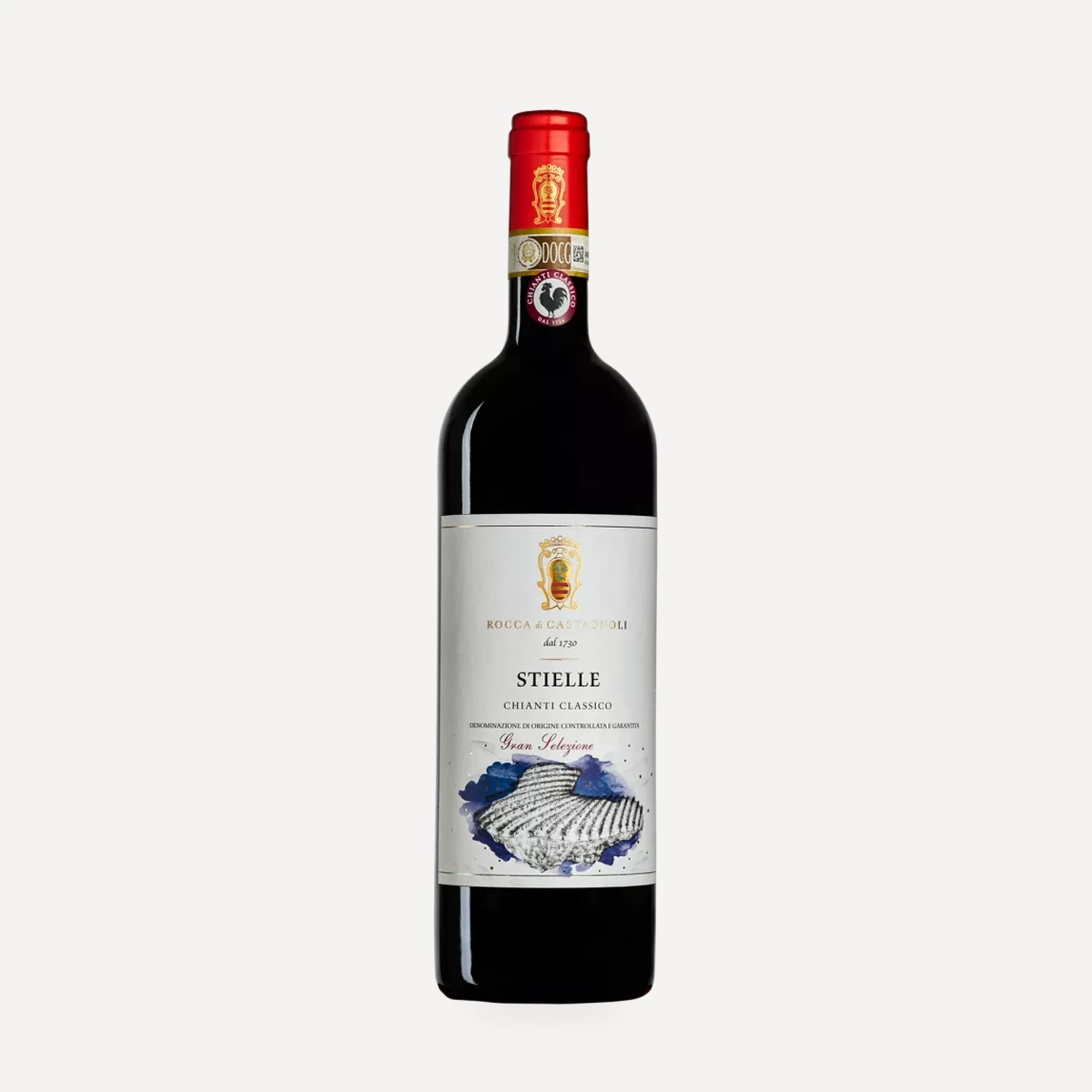
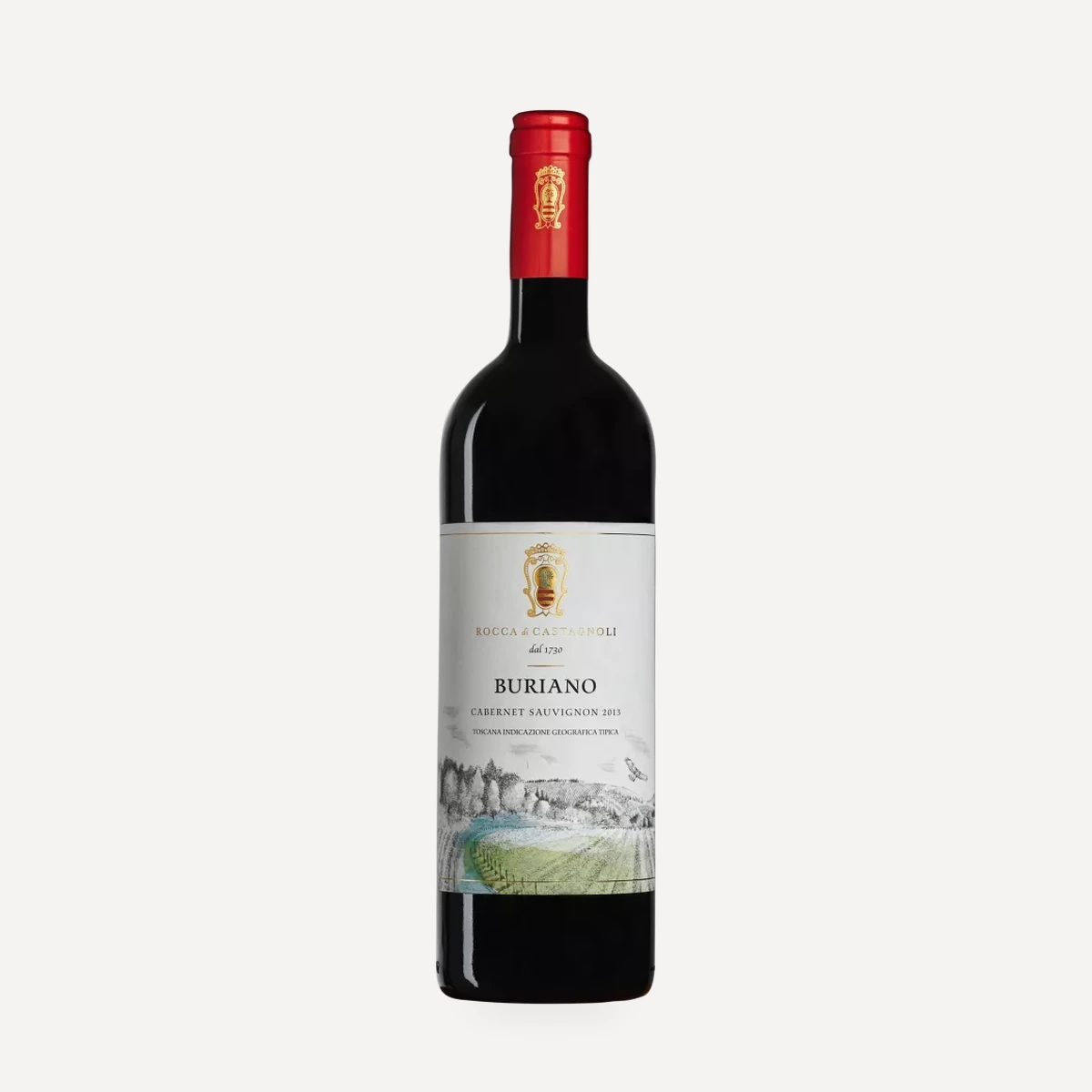
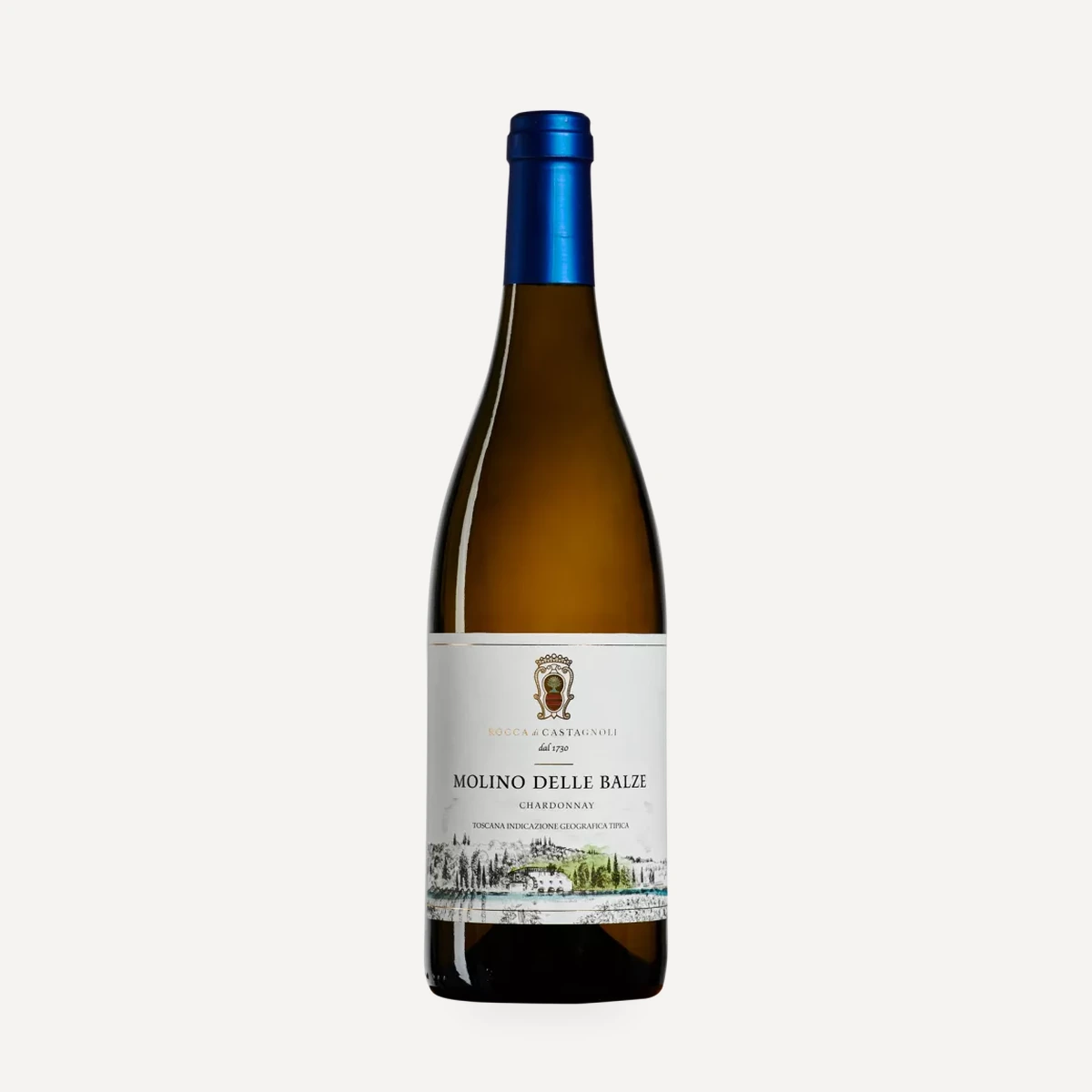
Two long-running estate labels began in 1985: the Chardonnay-based Molino delle Balze and Buriano, produced from Cabernet Sauvignon on the upper side of Stielle. In the 2015 harvest, the estate recorded its first production of Pugnitello.

The Pratola vineyard also underwent a varietal change. Its wine was made entirely from Merlot through the 2015 vintage; from the 2018 vintage, the estate shifted the vineyard expression to the native Colorino grape.

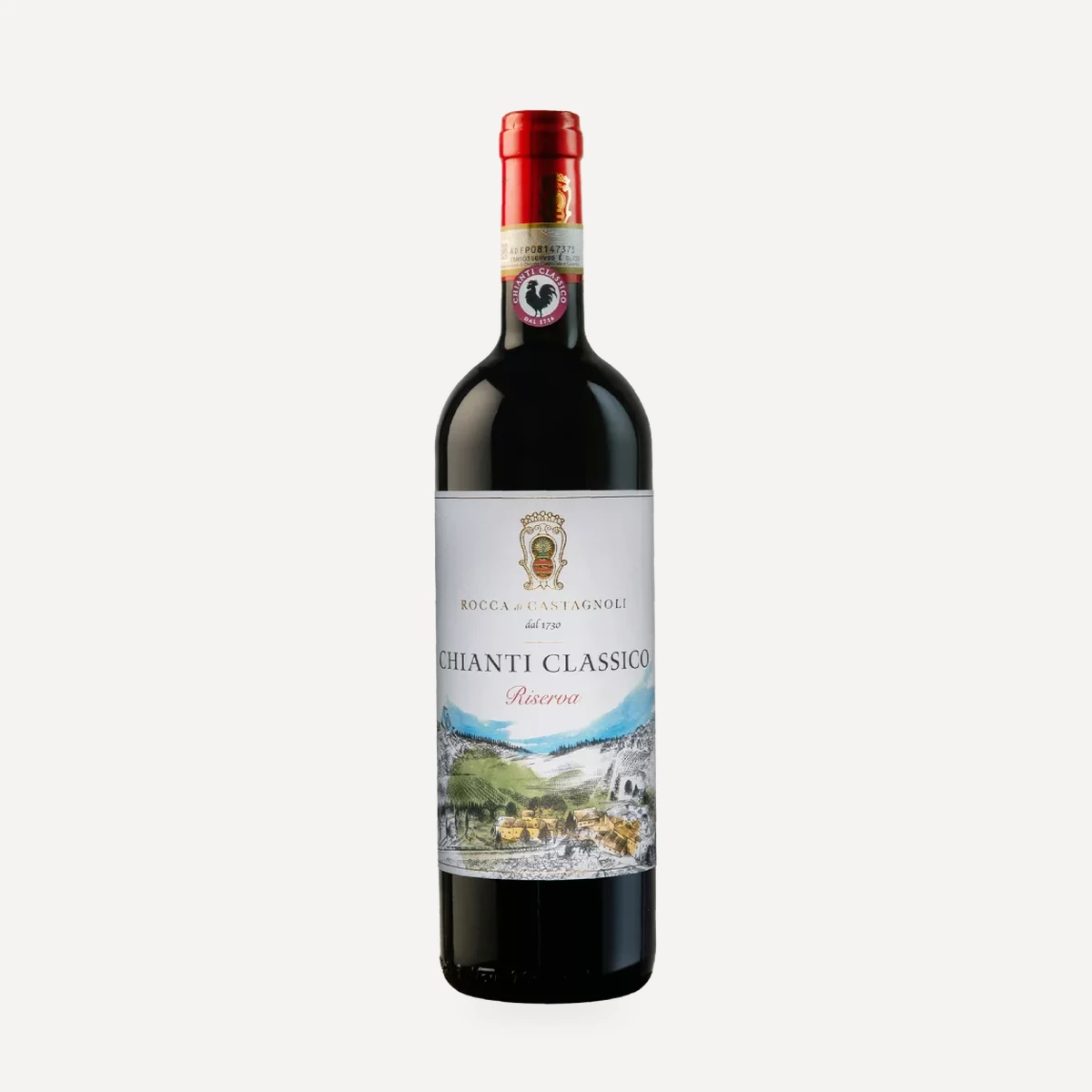
A new Chianti Classico Riserva assembled from multiple Gaiole plots was later introduced to represent the diversity of the commune rather than a single dedicated vineyard. The BoscoRiccio Bianco label debuted with the 2022 vintage, conceived as a contemporary interpretation of Tuscany’s historic Malvasia tradition.

Sustainability

Organic certification documentation identifies Rocca di Castagnoli Società Agricola as both producer and processor of organic wine grapes, red wine, white wine, olives and extra-virgin olive oil. Wine production was eligible for certification beginning with the 2017 harvest. In 2023, Rocca di Castagnoli obtained Equalitas certification addressing environmental, economic and ethical-social sustainability.

1153Deeds preserved by former owners record vine cultivation on the Stielle hill.
1730The Tempi family expanded the property; its coat of arms remains the estate emblem.
18th centuryThe winery was already operating and served as the economic centre of the Castagnoli hamlet.
1773Grand Duke Pietro Leopoldo visited Castagnoli and praised its land management, maintenance and agricultural innovation.
Until the 1950sBaron Ricasoli owned the estate.
1924Rocca di Castagnoli became one of the 33 founding wineries of the Chianti Classico consortium.
1981The present family acquired Rocca di Castagnoli and began vineyard replanting, restoration of the villa and fortress, and major cellar improvements.
1981A vinification cellar was built, while the medieval fortress cellars were adapted for wood maturation and equipped with a French-oak barrique cellar.
1985Production began for the historic Molino delle Balze Chardonnay label.
1985Production began for Buriano, based on Cabernet Sauvignon grown on the upper side of Stielle.
2015The estate recorded its first Pugnitello production during the harvest.
2017 harvestWine became eligible for organic certification under the estate’s Bioagricert documentation.
2018 vintagePratola changed from its former 100% Merlot identity to an expression based on the native Colorino grape.
2022 vintageBoscoRiccio Bianco debuted as a contemporary interpretation of the historic Malvasia tradition.
2023Rocca di Castagnoli obtained Equalitas sustainability certification.
2024The estate marked the centenary of the Chianti Classico consortium as one of its 33 founding wineries.

Terroir

Setting and relief

Castagnoli stands on a hill in the heart of Chianti Classico, overlooking a valley framed by woodland, vineyards and olive groves. The approximately 850-hectare property extends from about 380 metres to 860 metres at Colle di Monte Luco. The estate’s general vineyard account places vines between approximately 320 and 550 metres, while individual plot descriptions range from 300 to 550 metres.

The varied slopes and aspects create a broad range of growing conditions. Estate vineyards include north-, east-, west-, south-east- and south-facing sites. The landscape’s woodland, olive groves, varied elevations and exposures contribute to its biodiversity.

Geology and soils

The soils are deep and contain abundant rock fragments. Calcareous and sandy marls alternate with Galestro, Alberese and sand. Other identified formations include Macigno del Chianti and related sandstones, limestone-rich zones, schistose clay or argillite sequences, Pietraforte and calcareous-clayey deposits.

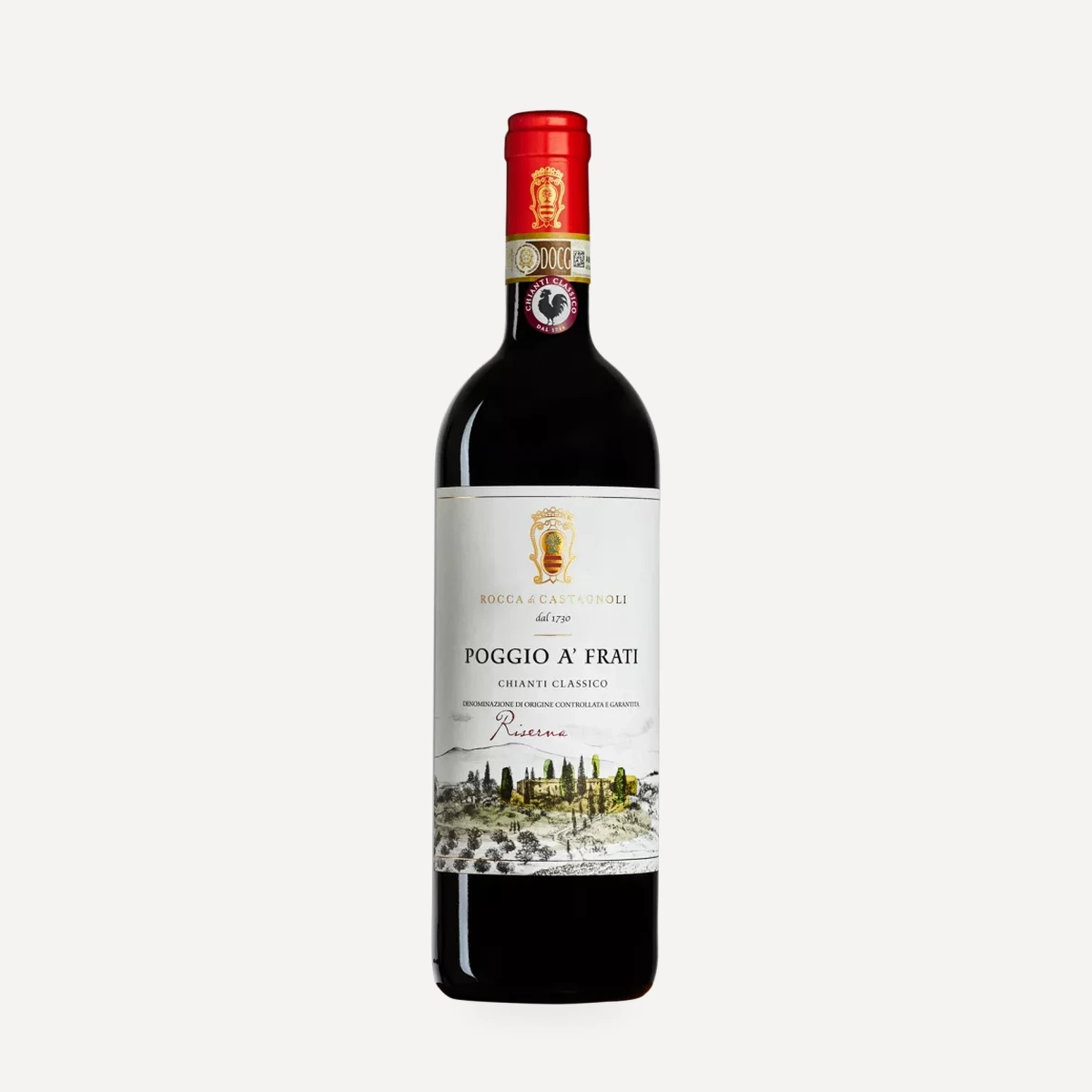
The principal Chianti Classico plots around the fortress display pronounced variation: some are dominated by Macigno and sandstone, others by Alberese, limestone or Galestro-rich schistose clays. Stielle and Poggio a’ Frati are principally associated with Alberese and limestone-clay sequences, while Buriano combines Alberese with limestone veins. Pratola is rich in Alberese and limestone.

Climate

The climate is temperate and characteristic of the inland Tyrrhenian zone. Rainfall is described as above average, while fog and frost are comparatively disfavoured. Ventilation and relatively low humidity support vines and olive trees. Significant day-to-night temperature variation helps preserve acidity and aromatic character, particularly at the higher sites.

The upper Chianti Classico area experiences temperature variation throughout ripening from August to harvest. In Pratola, cool nights support slow, balanced maturation. Stielle and Buriano combine high elevation, light and ventilation; these conditions favour extended ripening. The combination of altitude, exposure, rocky soils and temperature range is associated with structure, acidity, elegance and capacity for ageing.

Winemaking

Organic viticultureWine grapes, red wine and white wine are included in the estate’s Bioagricert organic certification documentation.
Parcel-led harvestPicking dates and repeated passes are adjusted to the exposure, vine age, soil and seasonal risk of each plot.
Native-yeast startersPrincipal Sangiovese selections have been fermented with native pied de cuve starters prepared separately from individual plots.
Whole-cluster adjustmentThe share of undestemmed Stielle fruit is changed according to stem lignification in each vintage.
Historic ageing cellarsThe medieval fortress cellars are used for wood maturation, including French-oak barriques alongside larger vessels.
Multiple maturation vesselsThe cellar works with large barrels, tonneaux, barriques, steel, cement, small Vin Santo casks and amphora for selected lots.

Organic viticulture forms part of the estate’s agricultural strategy. Bioagricert documentation identifies Rocca di Castagnoli Società Agricola as an organic producer and processor of wine grapes, red and white wine, olives and extra-virgin olive oil. The certificate states that wine was certifiable beginning with the 2017 harvest; the displayed document was valid from 2 December 2019 to 10 December 2021.

The vineyard programme combines native varieties—particularly Sangiovese, Colorino, Canaiolo and Ciliegiolo—with smaller plantings of international grapes. Selection of local vine material includes the Sangiovese RDC1 clone and old Sangiovese clones preserved in Stielle. The estate has also returned attention to native Foglia Tonda and Pugnitello; the first Pugnitello production was recorded in 2015.

Many vineyards were replanted during the 15 years preceding the estate’s detailed soil account, while mature blocks were retained to preserve a balance of vine ages. Training is principally spur-pruned cordon and Guyot, with 4 ha maintained as alberello. Densities in the principal Castagnoli plots are generally 5,000 vines/ha, and selected vineyards are managed at approximately 1 kg of fruit per plant.

Harvest decisions are adjusted plot by plot. During the hot 2017 season, younger vineyards, rocky sectors and plots exposed to warm winds were picked early to protect red-fruit character and moderate potential alcohol, while Stielle, Poggio a’ Frati and Alberello remained until mid-September. In the wet 2012 season, every bunch was selected and individual plots were harvested in several passes. Stem lignification is also evaluated before whole-cluster use: the proportion of undestemmed Stielle fruit was reduced when stems had not matured fully.

The 1981 reconstruction created a dedicated vinification cellar. The underground rooms of the medieval fortress were converted into ageing cellars, including a barrique cellar equipped with French oak. Wood maturation therefore takes place within the historic fabric of the property, separate from the principal vinification space.

Vintage records show an adaptable, parcel-led approach. In 2017, the principal Sangiovese selections fermented with native yeasts propagated through small pied de cuve starters prepared from each plot harvested the previous day. Stielle was vinified with 40% undestemmed fruit because its stems had reached maturity despite the heat. In 2016 the whole-cluster share for Stielle was reduced from 40% to 30% after late-August water shortage impeded full stem maturation; the 2015 account records 25% undestemmed fruit and additional bunch-by-bunch selection for that component.

In 2013, vinification was conducted almost entirely with native yeasts, and the number of tanks fermented without added sulfur was increased. During 2016, fermentation generally finished in 10–12 days, while maceration for the best lots continued beyond 30 days. Malolactic conversion is documented in steel for the principal red-wine lots.

The estate employs a range of maturation vessels across its production, including traditional large Chianti barrels, large oak casks, tonneaux, barriques, steel, cement and, for a limited Sangiovese selection, amphora. Vin Santo follows a distinct traditional process: the grapes dry on racks for at least three months, ferment and undergo malolactic conversion in cask, and mature for at least four years in 100-litre casks before further cellar and bottle ageing.

Philosophy

The family’s stated objective is to create wines recognisable for their place of origin and varietal character. Its approach combines innovation with respect for authenticity, the recovery of old native cultivars and organic viticulture.

Vineyard selection begins with altitude, geology, planting characteristics, microclimate and solar exposure. The intention is to preserve the history of individual sites and native varieties rather than shape every wine toward a uniform or fashionable profile. Research and selection begin in the vineyard and continue in the cellar.

The core values defined for the wider family group are authenticity, product quality, environmental respect, innovation, rootedness in the territory and passion. At Rocca di Castagnoli these principles are expressed through the preservation of old local Sangiovese material, the use of varieties such as Colorino, Foglia Tonda and Pugnitello, organic cultivation, plot-specific harvest decisions and the continued use of the medieval fortress for maturation.

Equalitas certification extends this environmental position to social and economic responsibilities across the enterprise. The estate presents certification as one stage in a longer programme rather than a final endpoint.

News

2025-09-12

The prestigious Wine Spectator magazine reports on us

2024-03-10

Chianti Classico Collection 2024 — Centennial of the Consortium

2023-09-14

Equalitas — environmental, ethical and economic sustainability

2022-10-31

Discovering Chianti Classico with Rocca di Castagnoli