History
Ancient settlement and early viticulture
The hilltop property began as an Etruscan settlement and subsequently became a Roman one. Its boundaries have remained almost unchanged for approximately 1,000 years, providing continuity in an area historically marked by political and dynastic conflict.
The castle passed into the ownership of the Verrazzano family in the 7th century. Viticulture and olive growing were already established by the Middle Ages: a manuscript dated 1150 and preserved at the Badia di Passignano records vineyards and olive groves at Verrazzano. The date has sometimes been reproduced incorrectly as 1170.
Giovanni da Verrazzano
Giovanni da Verrazzano was born at the castle in 1485 to the Florentine nobles Pier Andrea di Bernardo da Verrazzano and Fiammetta Capelli. He settled in Dieppe, France, between 1507 and 1508 and established connections with leading figures in the French navy. Between 1522 and 1523, he persuaded King Francis I of France to support an expedition seeking a westward passage from the Atlantic to the Pacific.
On 17 April 1524, Giovanni reached the bay of present-day New York during his exploration of the eastern coast of what is now the United States. He assigned Tuscan names to several places along the coast, including Selva dei Lauri, L’Annunziata, Arcadia, Vendoma, Baia di S. Margherita Angolemme, Rifugio, Terra di Mala Gente and Terra dei Bretoni. Most were later displaced by Spanish- and Portuguese-derived cartography. Giovanni died during his third expedition in 1528 after being captured by a group described in the estate’s historical account as cannibals.
The Ridolfi period
The last descendant of the Verrazzano family died in 1819, after which the Florentine Marchesi Ridolfi succeeded the family at the estate. In the 1920s, Luigi Ridolfi promoted the construction of Florence’s football stadium. He founded the city’s Fiorentina football club in 1926. As president of the athletics association, he also made Verrazzano available to the Italian national athletics team for training ahead of the 1936 Olympic Games.
The historical cellar collection preserves selected vintages beginning with 1924.
Restoration by the Cappellini family
In 1958, Cavalier Luigi Cappellini acquired the declining estate. He began a patient restoration that respected its historic and architectural character, recovered the forms of the medieval castle, restored the villa and cellars, rebuilt the agricultural fabric according to an older model and replanted the vineyards. The replanting programme extended the vines from the edge of the woodland across the valley below.
Cappellini also recognised the potential of the estate’s history, landscape and agricultural production as a unified visitor experience. This approach helped establish the hospitality activity that developed into Verrazzano’s agritourism programme.
The connection with New York
A symbolic exchange linked the castle with the Verrazano-Narrows Bridge. On 17 April 1963, three stones taken from the foundations of Castello di Verrazzano were set into the entrance of the bridge viaduct. On the same day, three stones from the bridge foundations were installed on the façade of the castle villa.
The bridge, designed by O. H. Amman and spanning the Narrows between Brooklyn and Staten Island, was inaugurated on 21 November 1964 and dedicated to the navigator. Its original name used the historical one-z spelling, “Verrazano.”
Organic certification and research
All of the estate’s red wines have been certified organic since the 2014 vintage. The broader farm subsequently developed a certified-organic model covering wine and extra-virgin olive oil, with the remaining agricultural activities managed within the same environmental framework.
In 2017, the estate presented a research project at the Accademia dei Georgofili involving the maturation of a 100% Sangiovese wine from Vigneto Valdonica in chestnut casks made from wood sourced in the Chianti forests. The project explored a locally rooted production chain inspired by the self-sufficiency of older farming communities.
Terroir
Castello di Verrazzano stands on a hilltop in Greve in Chianti, between Florence and Siena, at the centre of a 230 ha estate whose boundaries have remained almost unchanged for approximately 1,000 years. The vineyards extend from the edge of the woodland across the valley below.
The dedicated vineyard description places the 52 ha of vines between 260 and 420 metres above sea level. The terrain is stony and rich in limestone; another estate description characterises it more broadly as clay-calcareous. The vineyards occupy an east-facing position, and individual plantings are distributed across the ground considered best suited to viticulture and endowed with the most favourable microclimatic conditions.
The combination of elevation, east-facing exposure, morphology and calcareous soils is associated with aromatic definition, structure and longevity. The castle’s central position within the property also has a practical effect: harvested grapes can reach the cellars within minutes.
Winemaking
The vineyards have been progressively replanted by the Cappellini family since 1958 and are renewed under a continuing programme that keeps their average age close to 12 years.
Training systems follow established local forms: horizontal spur-pruned cordon positioned 60 cm above the ground and Guyot. The estate practises long pruning and retains a large leaf surface. This canopy strategy is intended to give the vines stronger natural defences and greater reserves during extreme or difficult vintages.
Fertilisation is entirely organic. Weed control is mechanical, and permanent or managed grass cover is used as part of an approach intended to protect environmental balance. Selected bunches are removed during the growing season to reduce crop load and concentrate aromas and flavours in the remaining fruit. Average vineyard yield is approximately 60 quintals per hectare, falling to 50 quintals per hectare in the documented Querciolina selection.
Harvest normally runs from 25 September to 25 October. All grapes are picked by hand and carefully selected. The agricultural programme is certified under IT-BIO-014, operator reference 11687. All red wines have carried organic certification since the 2014 vintage.
The wider farm supports biodiversity and diversified agriculture through woodland, olive groves, a vegetable garden, apiaries arranged across the Verrazzano hillside and wild boar raised in semi-free conditions. Operations use electricity from certified renewable sources, while wood from the estate’s forests provides heating.
The castle stands near the centre of the estate, allowing harvested grapes to reach the winery within minutes. They are gently processed immediately and fermented in small lots under temperature control.
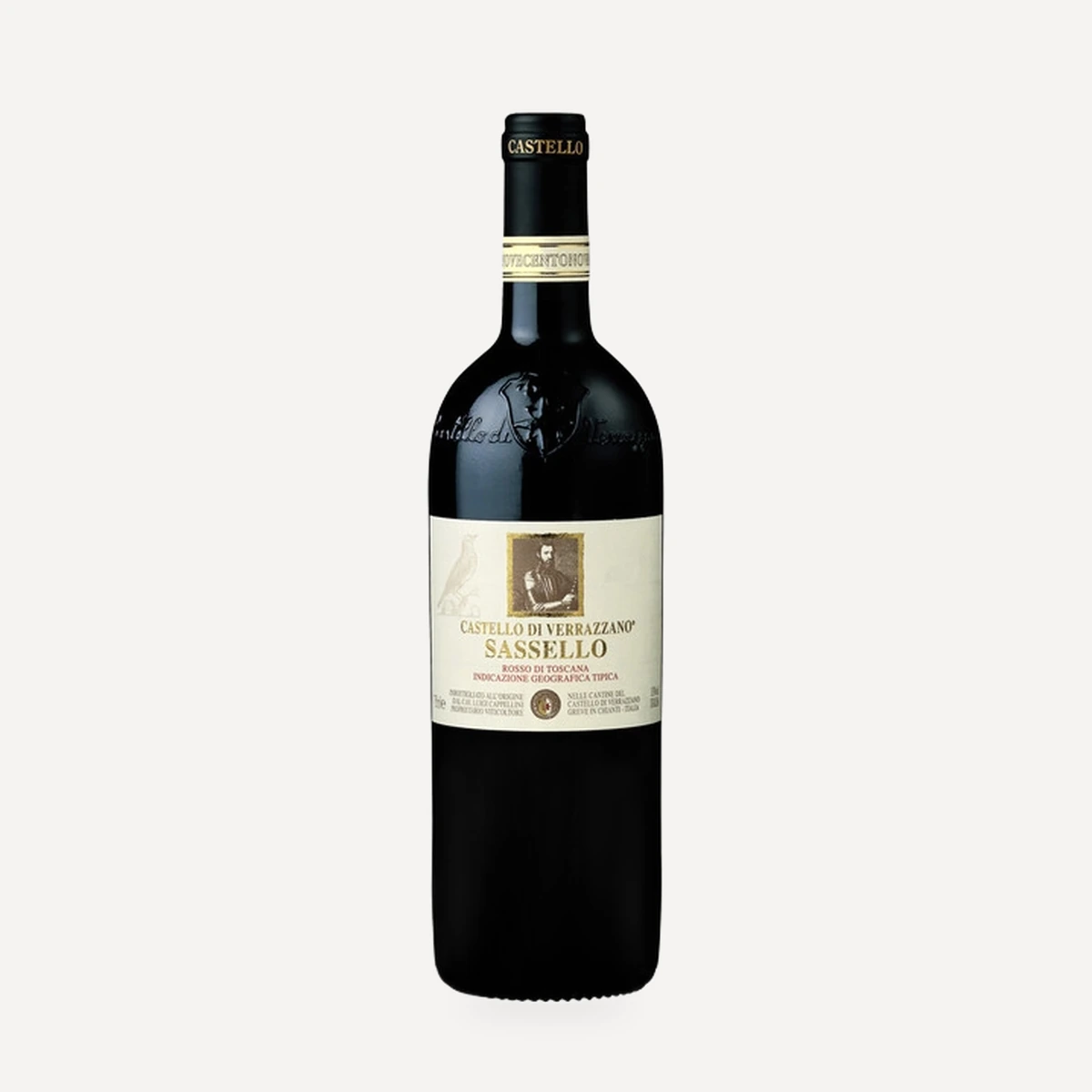
The historic cellars date to the 16th century. Their corridors shelter the ageing vessels from abrupt temperature changes. Slavonian oak casks are used along these passages. The cellar programme includes 30 hl oak casks that are three years old for the Chianti and Chianti Classico Riserva tiers, while new barriques from Allier and Vosges are used for Gran Selezione Sassello and Bottiglia Particolare.
A library of selected vintages is preserved in the heart of the castle, beginning with the 1924 vintage.
Philosophy
The estate’s stated mission is to produce quality wines that evoke the harmony of Chianti Classico through its landscape, history and flavours. Hospitality is treated as part of that mission: visitors are invited to experience Verrazzano through its castle, gardens, cellars, farm products and family-led atmosphere.
In the vineyard, the objective is to express the relationship between terroir and grape variety while maintaining healthy fruit and restrained yields. The approach combines traditional training systems and historic cellar spaces with controlled fermentation, planned vineyard renewal and targeted selection during the growing season.
Sustainability is framed as a farm-wide standard rather than a wine-only programme. Organic certification, mechanical weed control, grass cover, renewable electricity, estate-sourced heating wood, diversified crops, beekeeping and semi-free animal husbandry connect wine production with the larger agricultural landscape. Long pruning and a generous leaf area are intended to build resilience rather than force uniformity in extreme vintages.
Wines
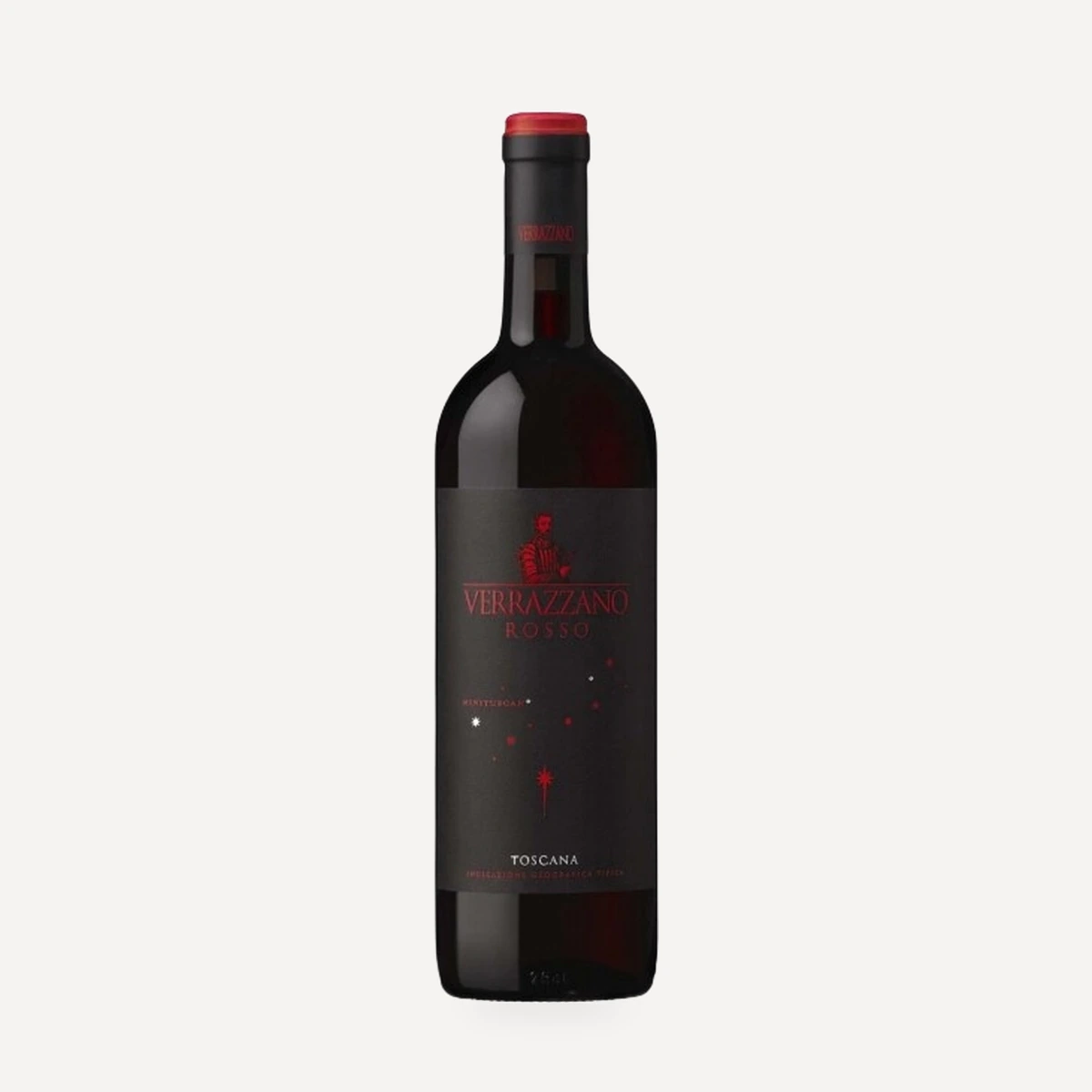
Toscana Verrazzano Rosso IGT
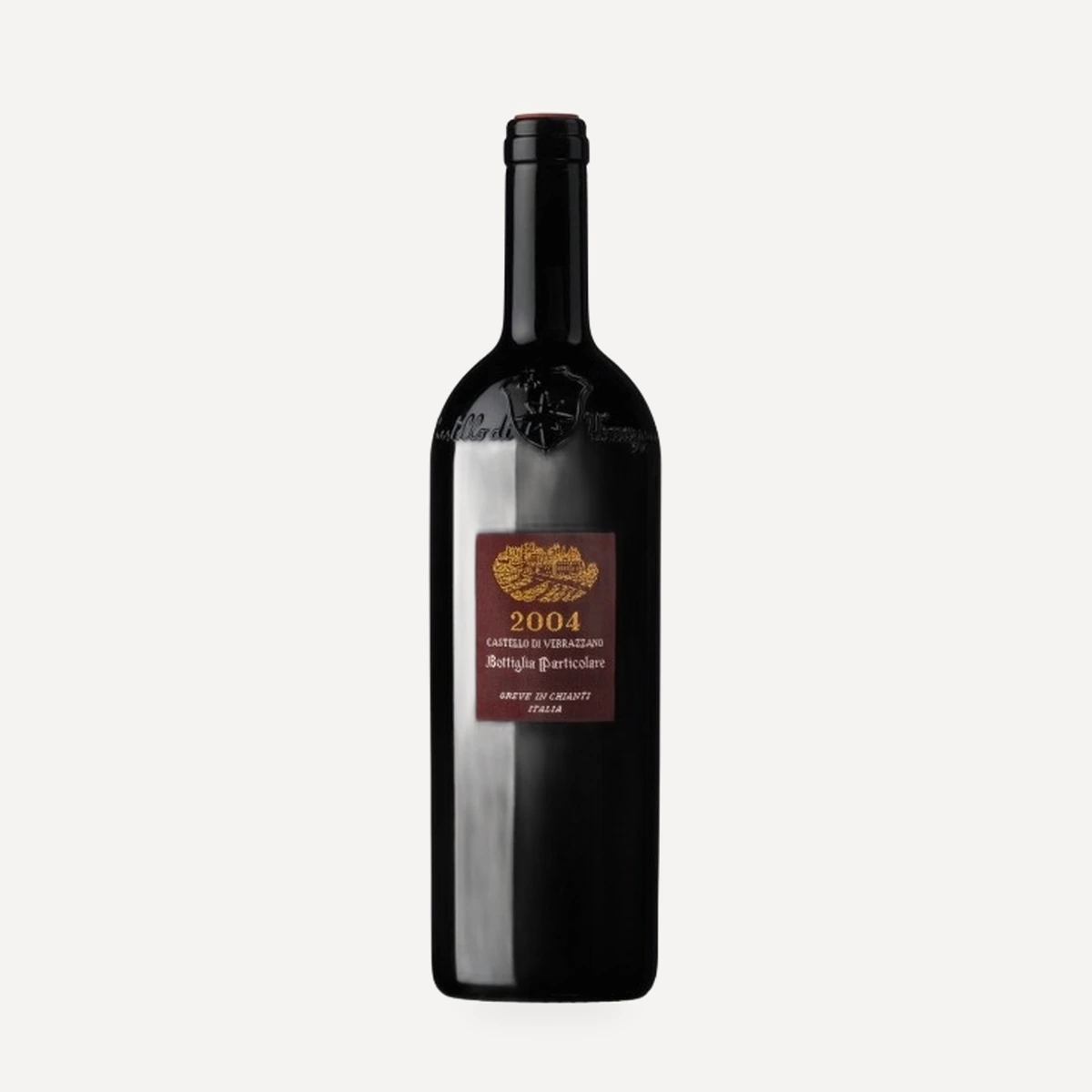
Toscana Bottiglia Particolare IGT