Storia
From the medieval borgo to an agricultural estate
The earliest traces of the settlement date to the beginning of the 8th century, when its land, woodland and houses figured in disputes between the bishops of Arezzo and Siena. The borgo stands in Castelnuovo Berardenga, a few kilometres from Siena, at the southern end of the Chianti Classico territory.
The Grisaldi del Taja family took possession of the borgo and its lands in 1700. In the 1920s, Count Giulio Grisaldi del Taja recognised the estate’s agricultural potential and invested in its rural activities. He also contributed to the establishment of the Consorzio del Chianti Classico in 1924.
A new direction in the vineyard and cellar
In 1968, under wine-operations director Enzo Morganti, San Felice produced the first vintage of Vigorello as a pure Sangiovese. The project was conceived to demonstrate the independent quality potential of Sangiovese at a time when the customary Chianti recipe also employed Canaiolo and Malvasia. It became an early break with local convention and the first of 50 documented Vigorello harvests through the 2018 vintage.
Selected Sangiovese clones were planted repeatedly at Poggio Rosso during the 1970s. Fruit for Poggio Rosso would subsequently be selected from individual parcels within this vineyard and reserved for limited production in suitable vintages.
Allianz Group acquired San Felice in 1978. The new ownership initiated a broad renewal of the borgo and developed a modern wine-producing operation. In 1979, Vigorello changed from pure Sangiovese to a blend incorporating Cabernet Sauvignon, reflecting the estate’s continuing experimentation.
Leonardo Bellaccini joined San Felice as oenologist in 1984 and became the long-serving interpreter of its vineyards and experimental work.
Conserving Tuscan vine diversity
An investigation of old Tuscan varieties began in the early 1980s in response to the erosion of the region’s grapevine genetic heritage. In 1986, this work took physical form in the 2.5-ha Vitiarium experimental vineyard. Its initial collection comprised 270 so-called minor varieties, including 161 red-berried cultivars.
Thirty varieties were advanced to a second phase of study. Researchers assessed their morphological stability over successive harvests and evaluated analytical and sensory performance through small-scale vinifications. Abrusco, Ciliegiolo, Mazzese and Malvasia Nera emerged as varieties of particular interest for blending with Sangiovese. Pugnitello showed sufficiently promising agronomic and qualitative characteristics to be vinified as a varietal wine. The programme became both a genetic-conservation initiative and a practical source of material for San Felice’s wines.
Restoration, hospitality and sustainability
A major restoration of the borgo began in 1991, converting its buildings into a dispersed hotel. The property subsequently became a five-star Relais & Châteaux resort, linking agricultural, scientific, cultural and hospitality activities within the estate.
Environmental investment accelerated in 2012 with a €1 million photovoltaic installation. A biomass boiler followed in 2014, representing an investment of €897,430. In 2020, San Felice invested €240,000 in a modern wastewater-treatment plant designed to enable the progressive agronomic reuse of treated water. That year also marked the first year of the estate’s sustainability-certification programme, and San Felice participated in the Kattivo precision-sprayer project and the Ultrarep deterrent project.
San Felice obtained Equalitas Sustainable Winery certification during 2021. The certification system covered vineyard, cellar, bottling and packaging practices, while the estate formalised targets for water use, waste, employee training and community relations.
New leadership and the Vitiarium identity
Carlo De Biasi became general manager in November 2022, succeeding the management period associated with Davide Profeti. His remit covered the development of the group’s wineries, with stated priorities including product, people, territory and sustainability. In the same month, San Felice joined Association Lien de la Vigne–Vinelink International, a network connecting research centres, producers and professional bodies to exchange viticultural innovation.
A renewed brand identity was introduced under De Biasi’s supervision in 2023. In 2024, the second stage of that repositioning introduced Vitiarium as the name of a four-wine line rooted in the estate’s experimental vineyard and long-running conservation programme. The line brought together Borgo Chianti Classico DOCG, Pugnitello Toscana IGT, In Avane Chardonnay Toscana IGT and La Pieve Chianti Classico DOCG Gran Selezione.
By 2025, investment plans included the adoption of regenerative and organic viticultural practices, recruitment and development in commercial, marketing and production roles, and construction of a new winery.
Terroir
San Felice lies a few kilometres from Siena in Castelnuovo Berardenga, within the southern part of Chianti Classico. The landscape joins wooded hills and vineyards at the meeting point of Chianti’s uplands and the horizons of the Crete Senesi.
The documented vineyard soils are medium-textured and rich in coarse mineral material. Calcareous-marl clays derived from the breakdown of alberese and galestro predominate and rest on rock, with abundant gravel and pebbles. Smaller extensions occupy alluvial ground richer in sand and silt. Tripolo is specifically distinguished by sandy soil.
This variability is treated as a practical viticultural factor. Bare ground for recent plantings has been surveyed for electrical resistivity, distinguishing wetter, lower-resistivity sectors from drier or rockier, higher-resistivity sectors. The resulting maps inform irrigation design, fertilisation, cover-crop mixtures and rootstock choice. Sangiovese vineyards are also mapped by NDVI into low-, medium- and high-vigour zones, linking differences in vine growth to underlying soil variation.
Vinificazione
Precision mapping and new plantings
Recent plantings have been preceded by electrical-resistivity surveys of bare soil. Because water and dissolved ions affect soil conductivity, the maps distinguish wetter sectors from dry or rocky areas. These data are used to plan irrigation, fertilisation, cover-crop mixtures and rootstocks.
Sangiovese vineyards are mapped through the NDVI vegetation index and divided into low-, medium- and high-vigour classes. Each vineyard is georeferenced shortly before harvest, and grapes are sampled separately in the three vigour zones. A reference yield of 75 quintals per hectare is used to relate measured vigour to actual production.
Targeted nutrition
Fertilisation is adjusted to pursue vegetative and productive balance. No fertiliser is applied in high-vigour sectors whose sampled production exceeds the reference yield. Low-vigour areas producing below the reference receive the quantity removed by the crop plus the amount calculated to restore the target. Areas at the reference yield receive only replacement nutrients.
Mixed organic fertilisers are applied once after harvest and do not exceed 50 nitrogen units. Non-Sangiovese vineyards rely on soil analysis and the same post-harvest ceiling. Leaf analysis is conducted at least every three years and soil analysis at least every four years; nitrogen quantities above 60 kg/ha are divided into separate applications.
Soil and plant protection
Herbicides are not used between or beneath the rows. Conservative soil-management methods and inter-row cover are employed, with the cover strategy adapted to soil type, slope, erosion risk and local weather conditions.
Disease and pest pressure is monitored, and treatment decisions and active ingredients are justified through field observations or forecasting models. Plant-protection products are used in the smallest effective quantity, with preference given to options of lower impact on people and the agroecosystem. Products carrying hazard classifications H340, H341, H350, H351, H360, H361, H362, H370 or H371 are excluded.
Wash water from crop-protection machinery is managed under a dedicated plan designed to prevent point-source pollution. The estate’s modern wastewater-treatment plant also enables treated water to be reused for irrigation and plant-protection applications.
Harvest controls and biodiversity
Harvest timing is based at minimum on sugar, titratable acidity and pH, together with the intended oenological use of each parcel. Phenolic maturity is monitored for red grapes. Lots are traceable, and harvested grapes are delivered to the vinification centre within six hours.
Alongside established varieties, San Felice cultivates traditional and native grapes as well as innovative or resistant material. The Vitiarium preserves hundreds of Tuscan accessions and supports continued selection through field observation and experimental vinification. Equalitas Sustainable Winery certification was obtained in 2021. Regenerative and organic practices were being introduced as part of the investment programme described in 2025.
The historic cellars occupy the borgo at San Felice, while the operation developed into a modern winery following the Allianz acquisition. A further new winery was under development in 2025.
Cellar work is governed by written processing protocols covering applicable stages from harvest reception, pre-fermentation treatment, drying and crushing through alcoholic fermentation, maceration, malolactic fermentation, blending, tartaric and protein stabilisation, pre-bottling operations, bottling and bottle cleaning. Every operation is entered in a cellar log, and protocols are reviewed at least annually. Incoming materials are covered by a control plan, while a multi-year database supports production decisions.
Oenological products are used in controlled, measured quantities. The oenologist alone determines whether a treatment is necessary and sets its dose case by case, with particular attention to products classified as allergens. Personnel handling these materials receive appropriate instruction and updates.
Validated cleaning and sanitation plans define operating conditions and selection criteria and are checked annually. Packaged wine is stored under conditions intended to preserve quality while minimising water and energy use. Packaging is selected partly for its ability to protect wine over time, and production waste is measured with reduction targets.
A wastewater-treatment installation operating since the end of 2020 permits progressive reuse of treated water for agricultural purposes. The winery monitors water drawn from wells and the public network and has pursued more detailed metering by production sector.
Filosofia
San Felice’s stated principles centre on authenticity and diversity. Terroir is understood through the interaction of grape variety, place, vintage and human skill, while wine identity is developed through both vineyard observation and precise production choices.
Research is treated as part of the estate’s identity rather than as a separate academic exercise. The Vitiarium programme was created to counter the erosion of Tuscan grapevine diversity, retain genetic material and determine which recovered varieties could make a meaningful contribution in the vineyard and cellar. This approach combines conservation with practical selection and small-scale vinification.
Tradition and innovation are pursued together. Historical vineyards, Sangiovese and the medieval borgo coexist with soil-resistivity mapping, NDVI analysis, precision fertilisation, experimental cultivars and formal cellar protocols. Sustainability encompasses environmental performance, worker welfare, transparent communication and relations with the surrounding community.
The current direction extends this framework into regenerative and organic viticulture, continued investment in people and renewed winery infrastructure. The aim is continuous improvement in quality while preserving the connection among product, people and territory.
Vini

Borgo Chianti Classico DOCG

Il Grigio Riserva Chianti Classico DOCG

San Felice Chianti Classico DOCG

Vigorello Toscana IGT

Pugnitello Toscana IGT

Poggio Rosso Chianti Classico Gran Selezione DOCG

In Avane Chardonnay Toscana IGT

La Pieve Chianti Classico Gran Selezione DOCG

Rosso Toscana IGT

Vermentino Toscana IGT

San Vito Chianti Classico Gran Selezione DOCG

Belcaro Vin Santo Chianti Classico DOC

Vermouth di San Felice
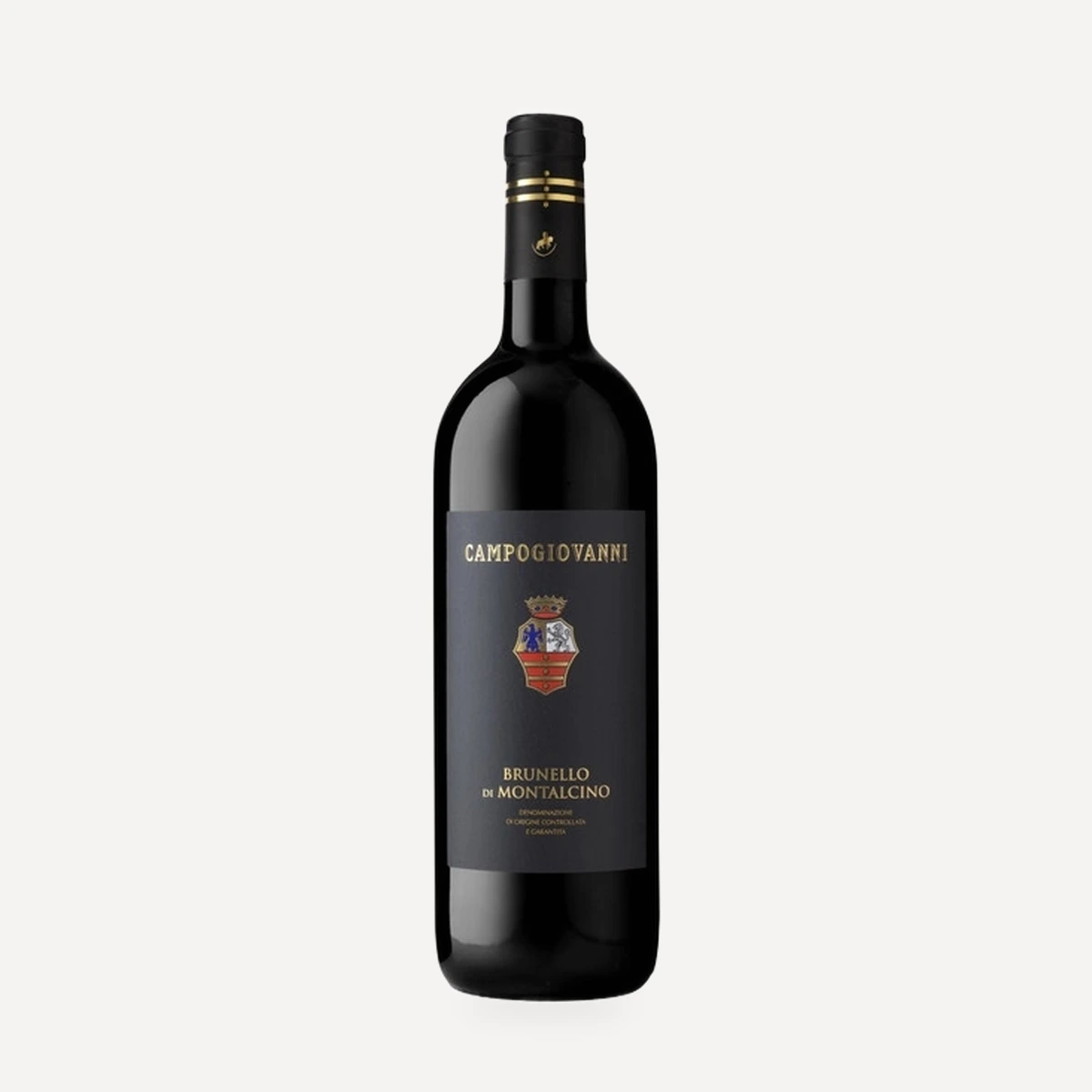
Brunello di Montalcino Campogiovanni DOCG