Storia
The late 1990s: development of Appassimento
La Roncaia developed as Fantinel’s boutique winery in the Colli Orientali del Friuli. By the end of the 1990s, Appassimento had become a defining element of its work, particularly for red wines. The approach revisited the northeastern Italian practice of drying harvested grapes through the action of air, traditionally used in Friuli Venezia Giulia for varieties including Picolit and Verduzzo Dolce.
La Roncaia’s interpretation combined this regional tradition with contemporary technical knowledge and experimentation. The area’s marked temperature variations and high humidity made the drying and maturation of grapes a particularly significant part of the winery’s work.
1999–2005: Tibor Gal and the original Refosco concept
Hungarian winemaker Tibor Gal served as a consultant to La Roncaia from 1999 until his death in 2005. Responding to the Fantinel family’s ambition to create something new, he devised the original production concept for La Roncaia Refosco. The idea was considered highly experimental at the time and established the stylistic direction subsequently associated with the winery’s flagship red.
Gal’s contribution helped La Roncaia apply Appassimento successfully to its red wines, using controlled grape drying to build structure and personality. This work became one of the foundations of the winery’s identity.
2008: a new consulting team
Marco Pecchiari and Alessio Dorigo began consulting for the company in 2008. Their work initiated a new phase for La Roncaia, centred on a close interpretation of its territory, the promotion of individual crus and a deliberately limited selection of native grape varieties.
2009: new identity and packaging
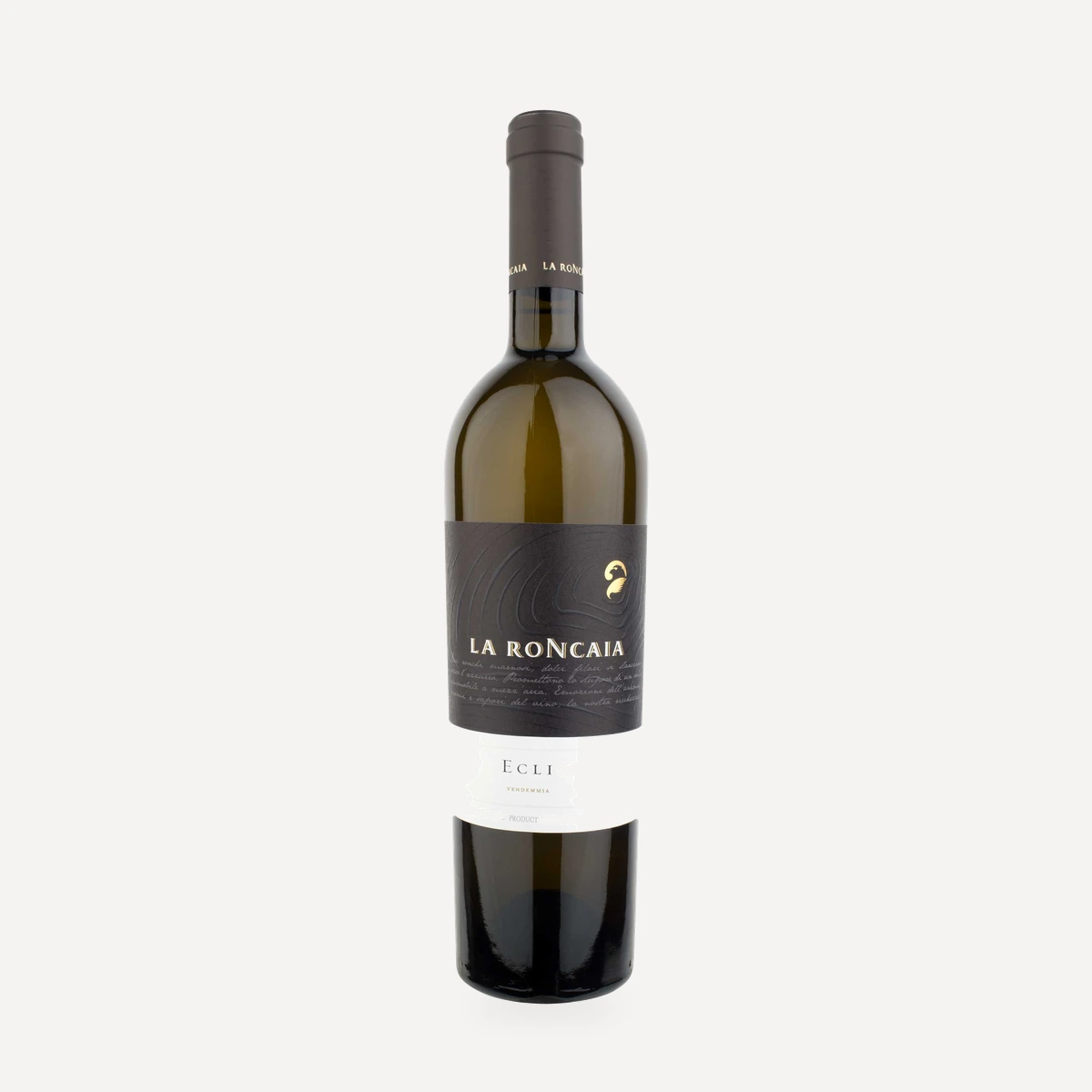
A renewed La Roncaia brand and package design were presented at Vinitaly in April 2009. Developed with the Udine agency Boscolo Design Partners, the design emphasized the collection’s connection with Friuli Venezia Giulia. The accompanying philosophy focused on giving greater prominence to individual crus and interpreting a small number of native varieties with precision.
2010: the first vintage under Dorigo and Pecchiari
At Vinitaly in April 2010, La Roncaia presented the first vintage produced with the consultancy of Alessio Dorigo and Marco Pecchiari. The new white vintages were given particular prominence. The programme was summarized through three priorities: complete commitment to the territory, recognition of individual crus and concentration on a few native grape varieties.
2011: revisiting the Refosco project
On 23 November 2011, the La Roncaia team met at Cergneu di Nimis with wine specialist Claudio Fabbro and Fuocolento director Nicolò Gambarotto for a vertical tasting of Refosco. Six vintages—2001, 2003, 2005, 2006, 2007 and 2008—were examined together.
The tasting revisited Tibor Gal’s original contribution and the development of the wine after his death. At that stage, La Roncaia’s production was guided by Fantinel general manager Maurizio Rocco, with Marco Pecchiari working as winemaker and Adriano Copetti as enotechnician. The retrospective confirmed the continuing importance of Gal’s experimental vision to the winery’s subsequent direction.
2012: the Ramandolo harvest celebrated at the winery
On 3 December 2012, La Roncaia was one of four winery venues for Il Concerto del Gusto dell’Oro di Ramandolo, an event devoted to Ramandolo and its place of origin in the commune of Nimis. La Roncaia enotechnician Adriano Copetti, working with the Associazione Produttori di Ramandolo, supported the organization of the event with Via dei Sapori del Friuli Venezia Giulia.
The central production demonstration was the pressing of dried grapes for the 2012 Ramandolo vintage in front of visitors. La Roncaia, Comelli, Zaccomer and Merlino served as the four participating cellar-auditoriums, combining demonstrations and tastings with regional cuisine.
2015: Appassimento formalized as a wider strategy
By 2015, the results achieved through Appassimento at La Roncaia—especially the added structure and personality of its red wines—had led Fantinel to formalize a broader Appassimento strategy. La Roncaia’s experience, developed since the late 1990s with Tibor Gal’s contribution, served as the starting point for extending the approach to other Fantinel viticultural areas.
2017: the Gabriele Tami period
In 2017, Gabriele Tami was identified as La Roncaia’s enologist. His description of the winery emphasized the cool conditions of the northern Colli Orientali, the proximity of the Prealpi Giulie and the area’s Friulian flysch soils. The winery’s stylistic objective was presented as a balance between authenticity and deliberate style.
Terroir
La Roncaia is a boutique winery in the northern part of the Colli Orientali del Friuli, with its cellar at Cergneu di Nimis. Ramandolo takes its name from the small village within the commune of Nimis from which its grapes originate.
The northern Colli Orientali are close to the Prealpi Giulie and have a relatively cool climate. Pronounced temperature variations and high humidity strongly influence grape maturation and have also shaped the local tradition of drying harvested grapes.
The soils are identified as Friulian flysch. In combination with the cool conditions and proximity to the Prealpi Giulie, this terroir supports pronounced acidity and aromatic expression in the winery’s white varieties.
Vinificazione
La Roncaia’s vineyard philosophy gives priority to the expression of its territory, the interpretation of individual crus and concentration on a deliberately limited group of native varieties. The broader Fantinel approach links fruit quality to respecting natural rhythms and the vegetative balance of each vine.
Appassimento as a defining method
Appassimento has characterized La Roncaia since the end of the 1990s and has been applied particularly to red wines. The method revisits the northeastern Italian practice of drying harvested bunches through the action of air, sun and wind, while interpreting it through contemporary enological knowledge and experimentation.
Tibor Gal’s consultancy was decisive in adapting this approach to La Roncaia. From 1999 to 2005, he helped the technical team develop dried-grape red wines and created the original production concept for the flagship Refosco. The resulting wines showed greater structure and a more pronounced personality, establishing Appassimento as a defining part of the cellar’s identity.
The precise drying percentages, duration, equipment and subsequent fermentation and maturation regime used for La Roncaia are not specified. Technical parameters published for Appassimento wines from Fantinel’s separate Tenuta Sant’Helena estate are not attributed to La Roncaia here.
Dried-grape sweet wines
La Roncaia also works within the dried-grape tradition of Ramandolo and Picolit. During the December 2012 Ramandolo celebration at the cellar, visitors observed the pressing of dried grapes for the 2012 Ramandolo vintage.
Production direction from 2008
The programme introduced by consultants Marco Pecchiari and Alessio Dorigo emphasized a close reading of the territory, the separate interpretation of individual crus and a restricted selection of native varieties. The first vintage made under their consultancy was presented in 2010, with the new white vintages occupying a central role.
Filosofia
La Roncaia’s philosophy is built around the interpretation of Friulian territory rather than a broad portfolio of varieties. From the 2009 renewal onward, its stated priorities were complete commitment to place, recognition of individual crus and focused work with a small number of native grapes.
Its approach to Appassimento joins regional history with experimentation. A longstanding method associated with air-dried grapes is reinterpreted in a contemporary key while retaining a specifically Friulian identity. The technique is treated as a means of shaping structure and personality rather than simply reproducing an inherited formula.
In 2017, enologist Gabriele Tami described the stylistic objective as a balance between authenticity and style. The relatively cool northern Colli Orientali, the Prealpi Giulie and flysch soils provide the environmental framework; cellar decisions are intended to translate those conditions into acidity, aromatic definition and an identifiable La Roncaia character.
Vini