History
Benedictine origins and the medieval castle
Castello di Meleto’s relationship with wine began in the 11th century through the Benedictine monks. The first written mention of the name Meleto dates to 1256. The castle has guarded the territory of Gaiole in Chianti since that period, and its external form has remained almost unchanged: the fortress still presents an essentially intact historic profile.
Wine production accompanied the estate throughout its nearly thousand-year history. The castle became the centre of a mixed agricultural landscape of vineyards, olive groves, woodland, farm buildings and, more recently, apiaries.
Agricultural change in 1966
Italian agriculture entered a period of renewed activity in 1966 following the implementation of the Piano Verde and the removal of customs barriers within the Common Market. Within two years, approximately 100,000 workers returned to the countryside. This broader agricultural context preceded the modern revival of viticulture at Meleto.
Operazione Vigneti, 1968
In May 1968, Gianni Mazzocchi—publisher and director associated with the magazines Quattroruote and Quattrosoldi—conceived Operazione Vigneti. The initiative anticipated modern crowdfunding: readers of the economics magazine Quattrosoldi were invited to purchase company shares for 10,000 lire each, subject to a minimum purchase of 100 shares. The commitment was substantial at a time when an average Italian monthly salary was approximately 120,000 lire.
More than half a billion lire was raised in two months. The capital made it possible to restore viticulture at Meleto, end the sharecropping system and employ the first dedicated vineyard workers. A total of 1,600 participants from throughout Italy pooled their savings to safeguard an agricultural and architectural property considered at risk of abandonment.
Viticola Toscana was established through this operation. Its purpose was to move away from the increasingly industrialised agricultural model of the 1960s and reconnect wine production with older local roots. The company subsequently became Castello di Meleto Società Agricola per Azioni, owner of the castle and estate.
From collective ownership to site-focused viticulture
The collective origins of Viticola Toscana shaped an institutional philosophy that places particular value on people. In the vineyards, the modern focus shifted from estate scale to the identity of individual plots. The Cru Project divided selected land into five zones differentiated by climate, gradient, exposure, soil composition and elevation. Vineyard selections, parcel separation and microvinification were expanded to reveal distinctions among the estate’s sites.
The project identified Vigna Casi, Vigna Poggiarso, Vigna Trebbio and Camboi for individual expression. Parabuio, discovered almost by chance within dense woodland, became the site for Merlot, the sole international variety among the estate’s crus.
Environmental and technical milestones
In 2020, Castello di Meleto joined the Biodistretto del Chianti, where producers, operators and public administrations cooperate in managing resources through organic models of production and consumption. The same year saw the launch of Nel Nome dell’Ape, an adopt-a-hive initiative intended to restore bee populations and reinforce the agricultural ecosystem.
The estate’s first FSSC 22000 food-safety certification also dates to 2 October 2020. The certified scope encompasses crushing, vinification, ageing, blending, stabilisation, racking, filtration, possible sparkling-wine production and bottling of still and sparkling red, white and rosé wines.
In 2021, the Consorzio di Tutela del Chianti Classico introduced the Unità Geografica Aggiuntiva system. Castello di Meleto belongs to the Gaiole UGA, at the foot of the Monti del Chianti. The estate developed its single-vineyard Gran Selezione work within this more precise geographic framework.
The vineyards were mapped row by row with the Netsens system. Weather stations and dozens of wireless sensors positioned inside the vineyards collect, process, analyse and archive real-time data, allowing detailed monitoring and rapid responses to disease risk while supporting organic farming.
Current direction
The current programme combines investment in wine quality, parcel-based production, hospitality and protection of the Gaiole landscape. At Vinitaly 2025, general manager Francesco Montalbano described this development as an effort to respond to market changes through higher wine quality, experiential hospitality and stronger presentation of the territory.
A renewed FSSC 22000 certificate was issued on 10 February 2026 following a certification decision on the same date. Certificate 58379 is valid until 1 October 2026 and covers the estate’s complete wine-production and bottling scope.
Terroir
Castello di Meleto lies at Gaiole in Chianti, 30 km from Siena and 60 km from Florence, within the Chianti Classico territory. Gaiole is among the denomination’s higher communes, and its UGA occupies the foothills of the Monti del Chianti. It is the largest UGA and one of the coolest parts of the denomination.
Vines are less densely distributed than in other UGAs. Vineyards alternate with extensive woodland, maintaining biodiversity and moderating climatic conditions. The scale and topographic diversity of Gaiole produce marked differences from one site to another. Soils range from galestro and alberese to sandstone at higher elevations.
The estate itself forms a mosaic of vineyards, olive groves, forest and apiaries. Approximately 700 ha of surrounding woodland influence the agricultural microclimate. Trees shade vineyard rows and reduce sunburn on clusters, help maintain humidity, soften strong winds and lessen hail impact. Woodland also supports a wider variety of species and spontaneous yeasts on grape skins.
The seven vineyard areas occupy contrasting situations. Meleto is warm and sheltered beside the castle; Casi lies in a cool, wooded valley below Vertine; Poggiarso is steep, dry and cold at almost 530 m; San Piero is open and well ventilated; Cerreta follows hills above the Torrente Piana at 370–450 m; and Parabuio matures slowly in an isolated, protected woodland setting.
Winemaking
The full vineyard area is managed organically and certified under EU Regulation 2018/848. Synthetic fertilizers, plant-protection products and herbicides are excluded. Environmental management extends beyond the vineyards to woodland, olive groves and apiaries.
All grapes are harvested by hand. Vineyard selection is conducted at increasingly fine resolution, and harvested fruit is kept separate by parcel. The Cru Project evaluates five zones according to climate, gradients, exposure, soil composition and elevation, enabling viticulture tailored to individual sites and micro-areas.
The 130 ha vineyard estate is mapped row by row through Netsens. A network of weather stations and dozens of wireless sensors placed within the vineyards—not only around their boundaries—collects, processes, analyses and stores data. Real-time monitoring helps anticipate plant disease and allows prompt, targeted intervention.
Woodland is treated as an active viticultural resource. Trees reduce cluster sunburn, maintain humidity, moderate wind and hail, conserve plant and animal habitats and encourage microbial diversity on the grapes. The estate joined the Biodistretto del Chianti in 2020, linking its work to a district-wide system of sustainable resource management based on organic production and consumption.
Bees serve as indicators of air and ecosystem health. The Nel Nome dell’Ape project, created in 2020, supports bee repopulation through hive adoption, while the Bee Park integrates apiaries with the wider agricultural landscape.
Grapes are picked exclusively by hand and kept separate by parcel. The estate can conduct up to 100 distinct vinifications, including more than 70 parcel- and micro-area-based microvinifications. Fermentation vessels include stainless-steel tanks, concrete vats and open tonneaux. Small experimental lots undergo extended maceration with stems.
The production system covered by FSSC 22000 comprises crushing, vinification, ageing, blending, stabilisation, racking, filtration, possible sparkling-wine production and bottling. It applies to still and sparkling red, white and rosé wines, with no exclusions in the certified scope.
For Vin Santo, selected grapes from Vigna Meleto rest after harvest in a rural drying building designed for natural ventilation. The cellar also produces sparkling wine, including zero-dosage styles, but no further estate-wide technical protocol is defined.
Philosophy
Castello di Meleto defines quality through identity rather than scale. Its “130 times one hectare” idea treats the vineyard estate as a collection of individual places, with selection, parcel separation and microvinification used to interpret variations in climate, elevation, exposure, gradient and soil.
The agricultural philosophy combines organic farming with monitoring technology and broader ecosystem management. Sensors and weather stations are used to understand vineyard conditions in detail and intervene promptly without synthetic fertilizers, pesticides or herbicides. Woodland, bees, native varieties and mixed farming are treated as interconnected elements rather than as scenery around the vines.
The estate’s stated environmental goal is to preserve the surrounding landscape for future generations. More than 700 ha of forest help absorb carbon, conserve habitats and moderate vineyard conditions. The Bee Park and Biodistretto participation extend this programme beyond wine production.
Tradition and experimentation coexist in the cellar. Sangiovese and local varieties such as Ciliegiolo, Colorino and Malvasia Nera del Chianti are retained as part of the estate’s biodiversity, while parcel fermentations, concrete, open tonneaux and limited stem-maceration trials provide tools for expressing individual sites.
People also occupy a central place in the estate’s identity. This principle is rooted in the 1,600 participants whose pooled savings created Viticola Toscana and rescued Meleto in 1968.
Wines
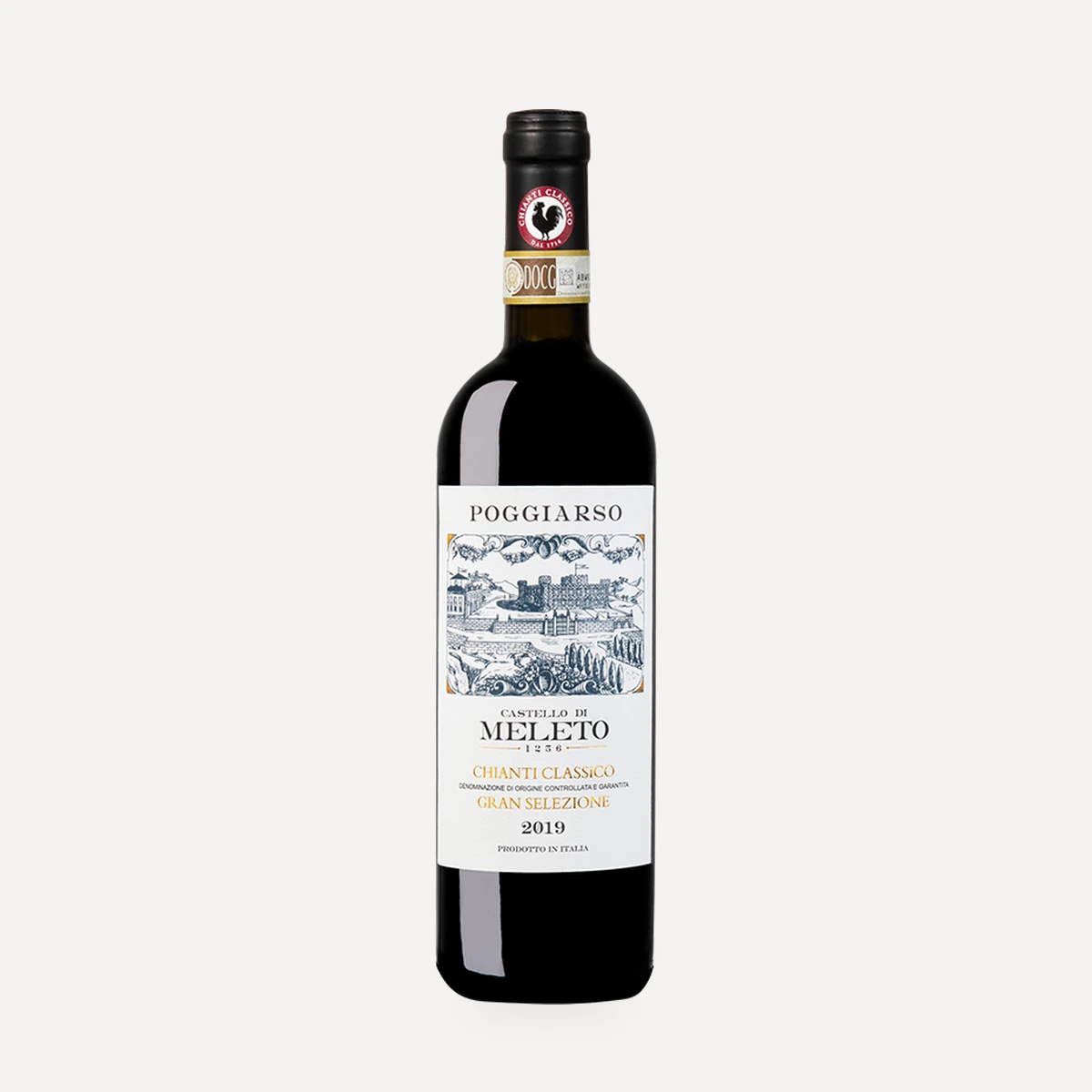
Castello di Meleto Vigna Poggiarso Chianti Classico Gran Selezione DOCG
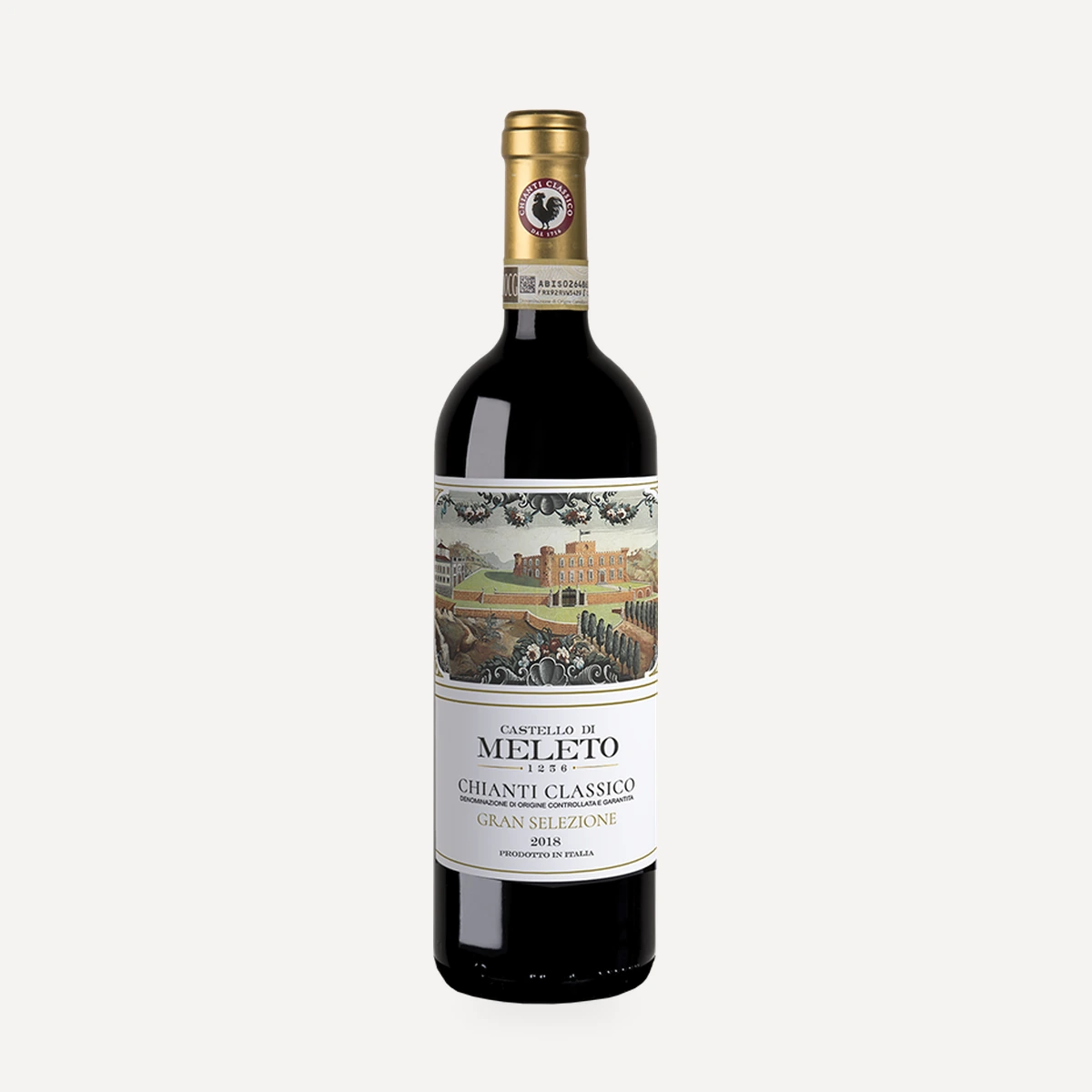
Castello di Meleto Chianti Classico Gran Selezione DOCG
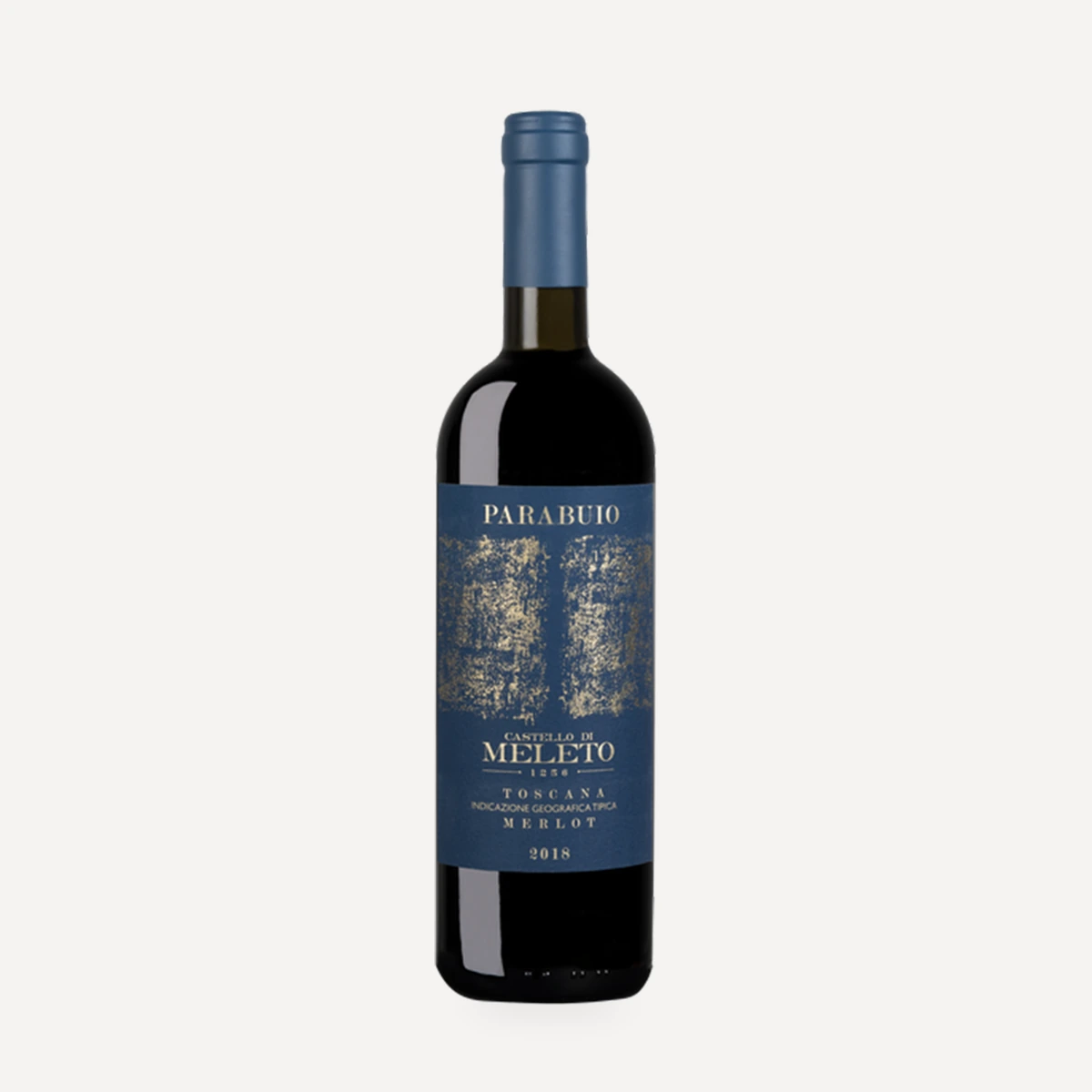
Castello di Meleto Parabuio Toscana Rosso IGT
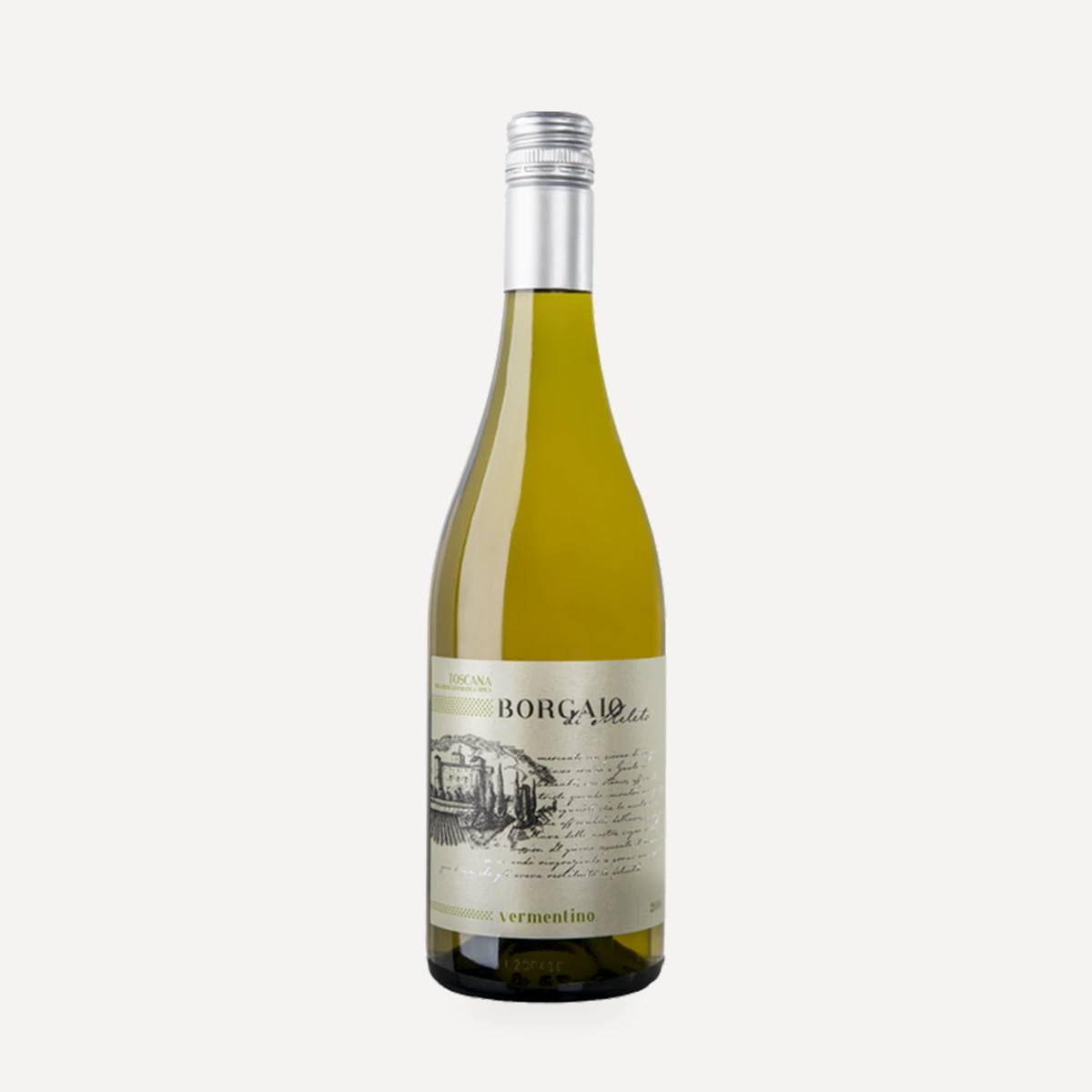
Borgaio Vermentino Toscana Bianco IGT
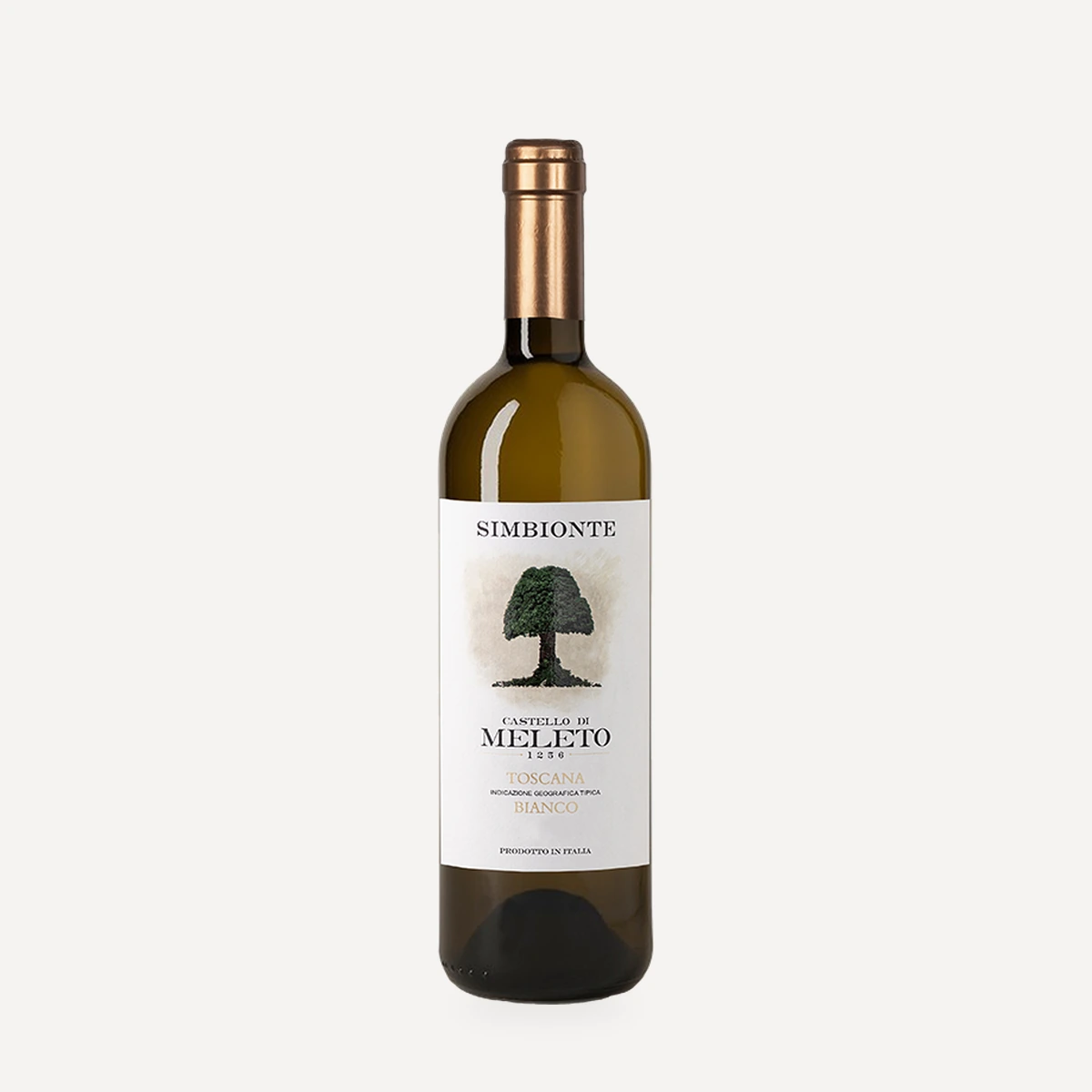
Simbionte Toscana Bianco IGT
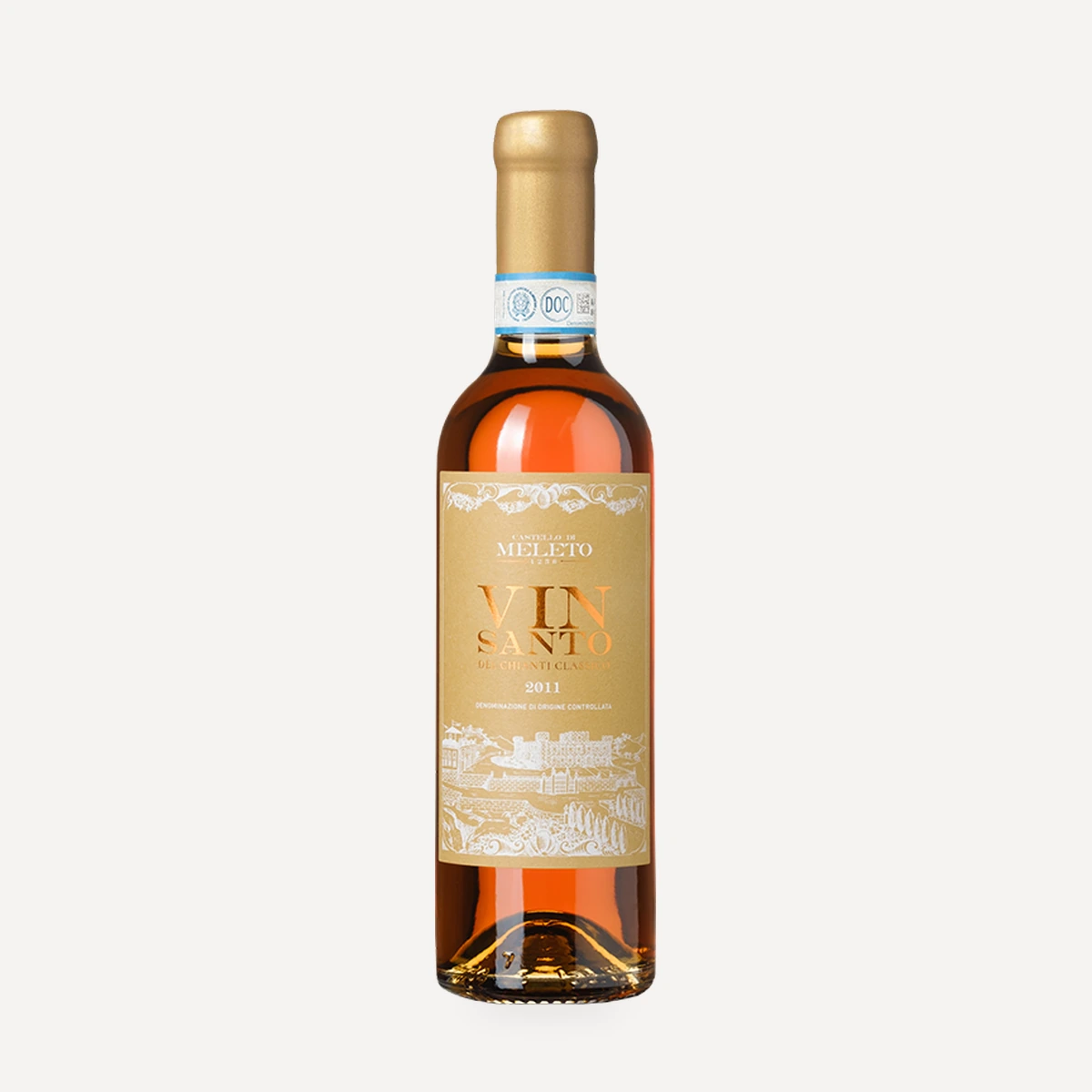
Vin Santo del Chianti Classico DOC
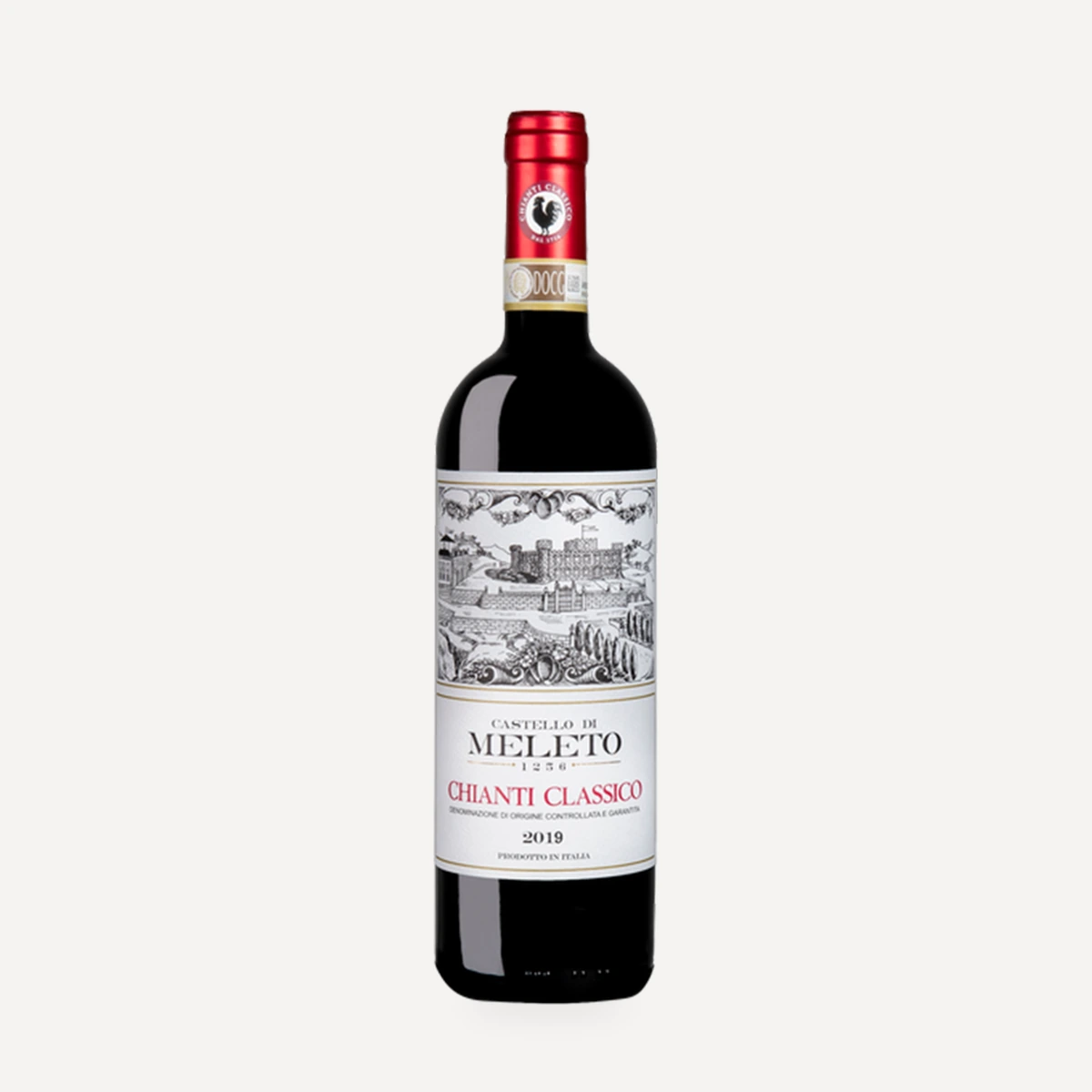
Castello di Meleto Chianti Classico DOCG
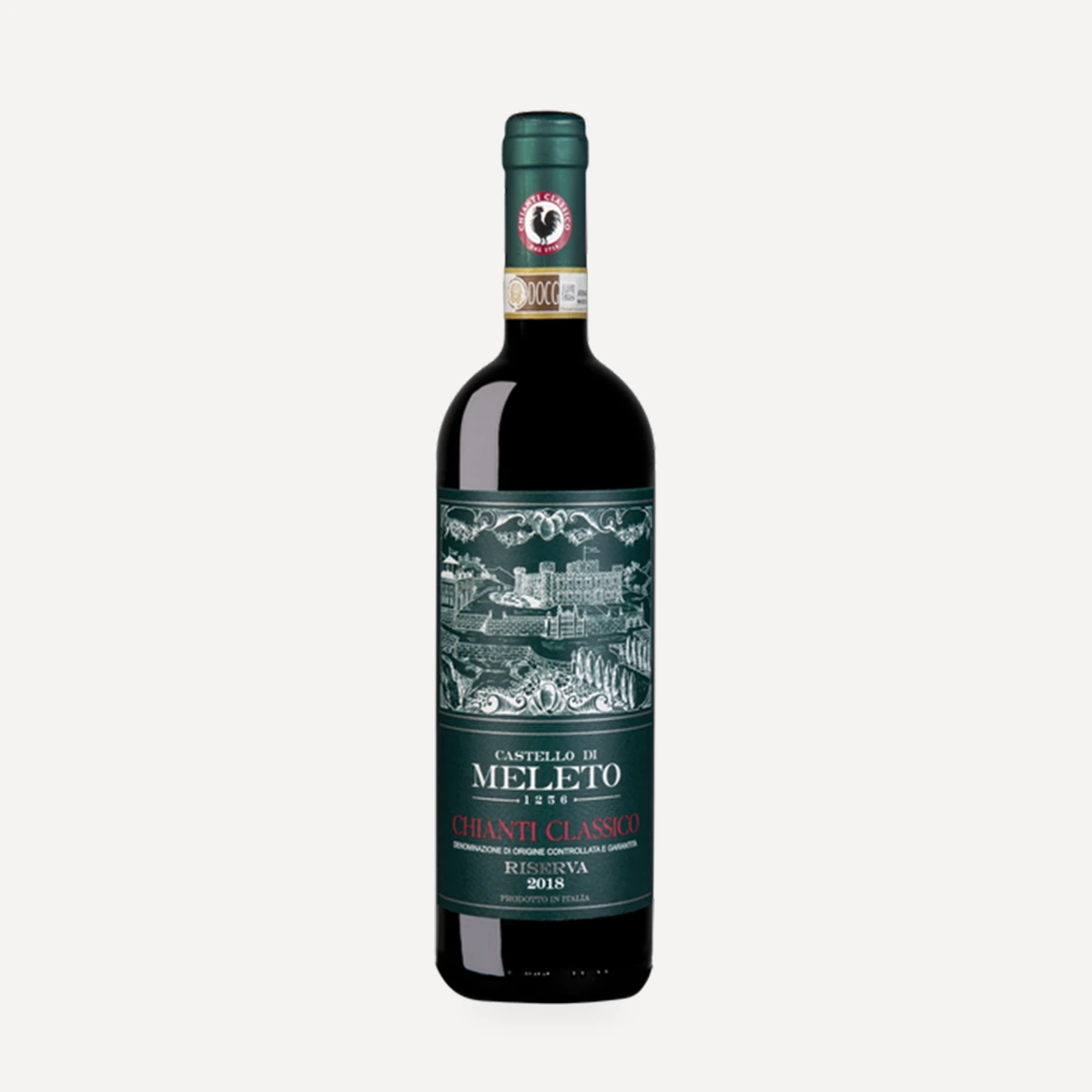
Castello di Meleto Chianti Classico Riserva DOCG
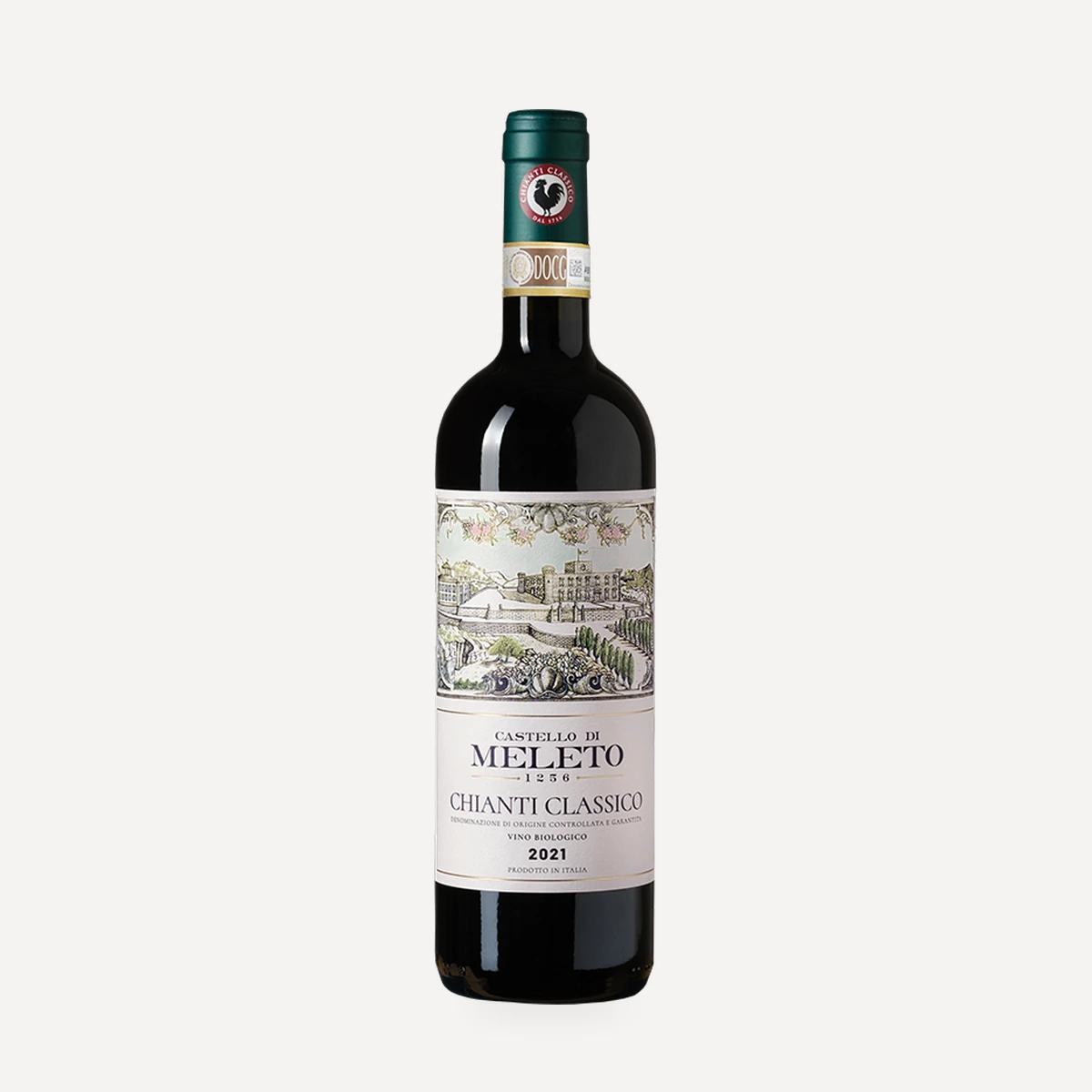
Castello di Meleto Edizione Speciale – Chianti Classico DOCG
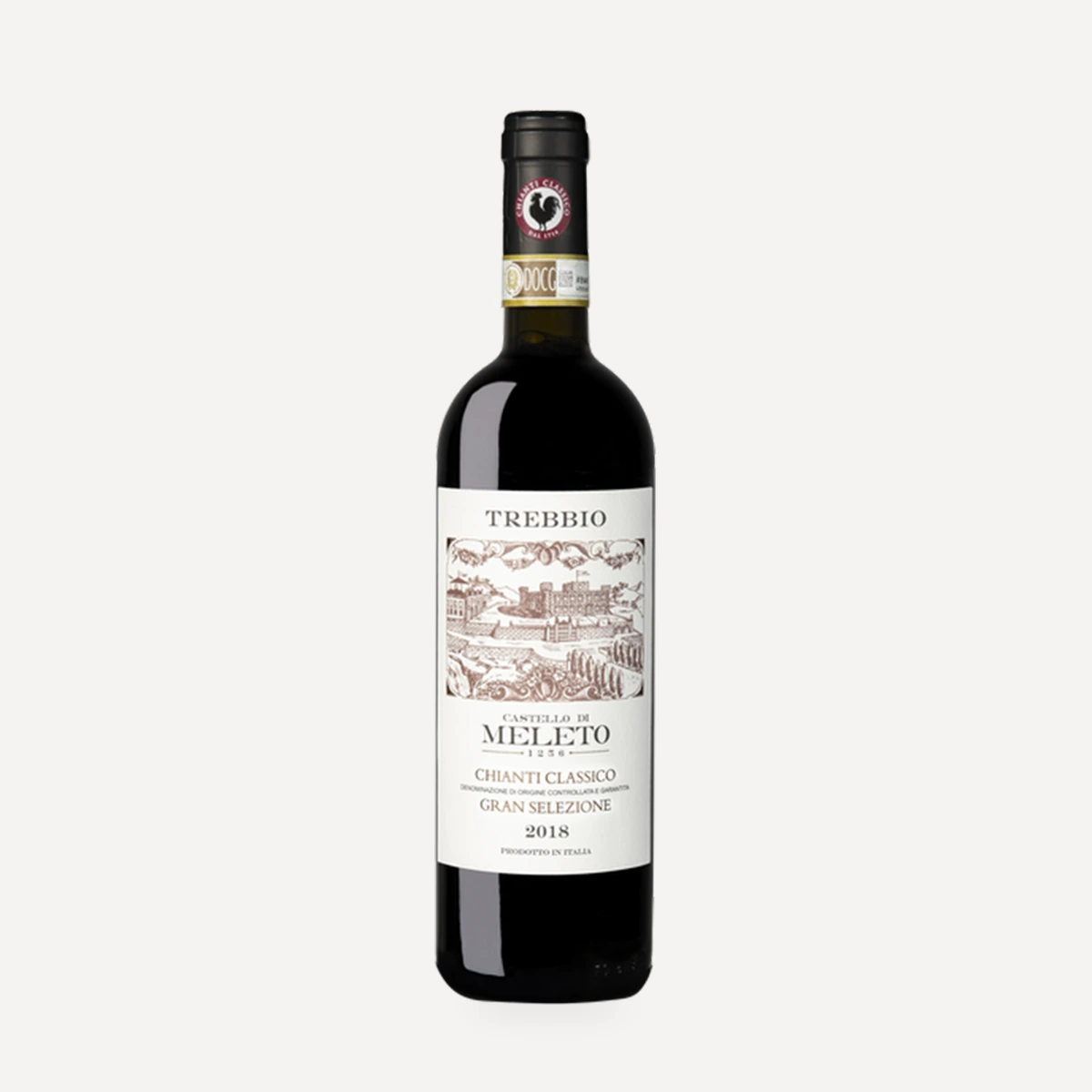
Castello di Meleto Vigna Trebbio Chianti Classico Gran Selezione DOCG
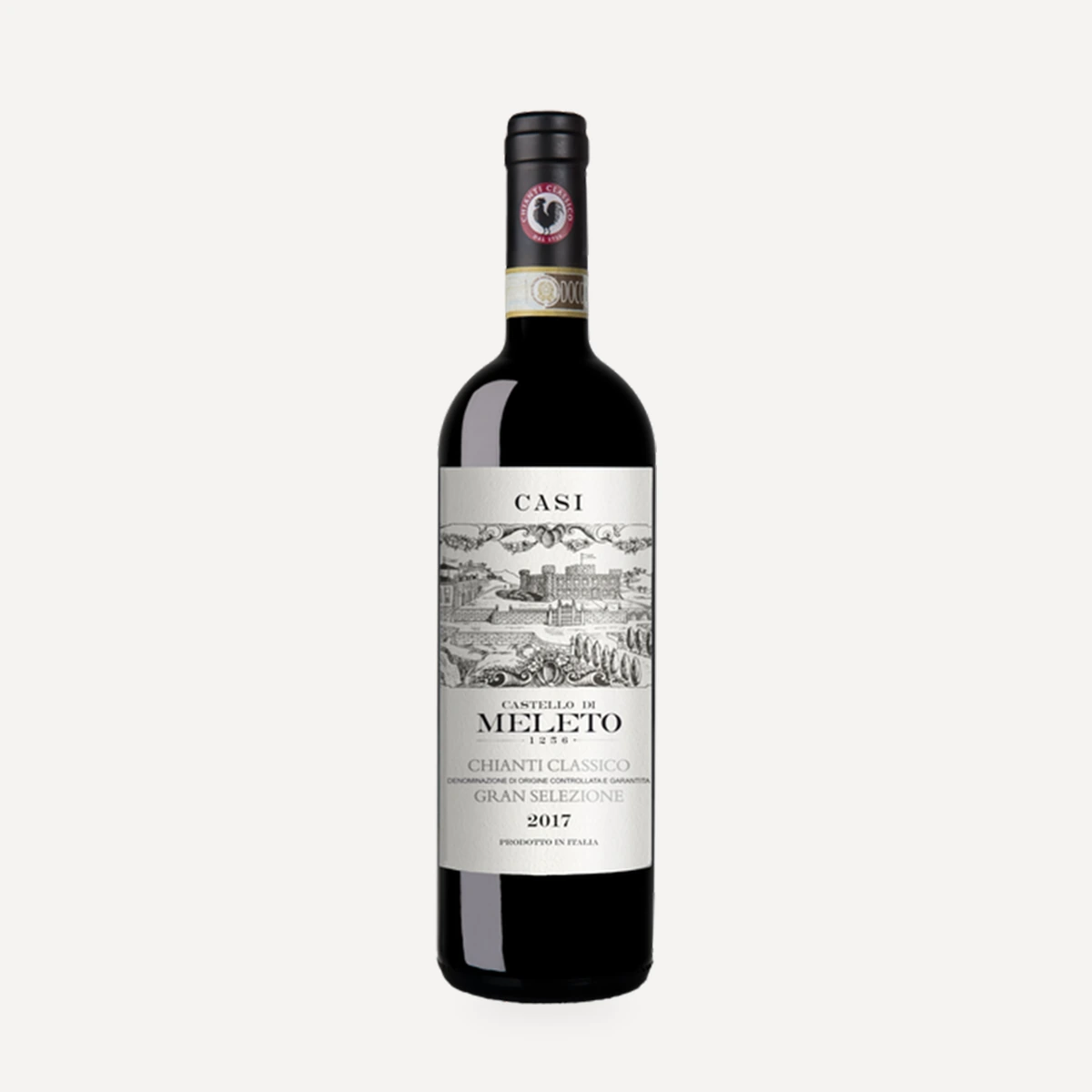
Castello di Meleto Vigna Casi Chianti Classico Gran Selezione DOCG
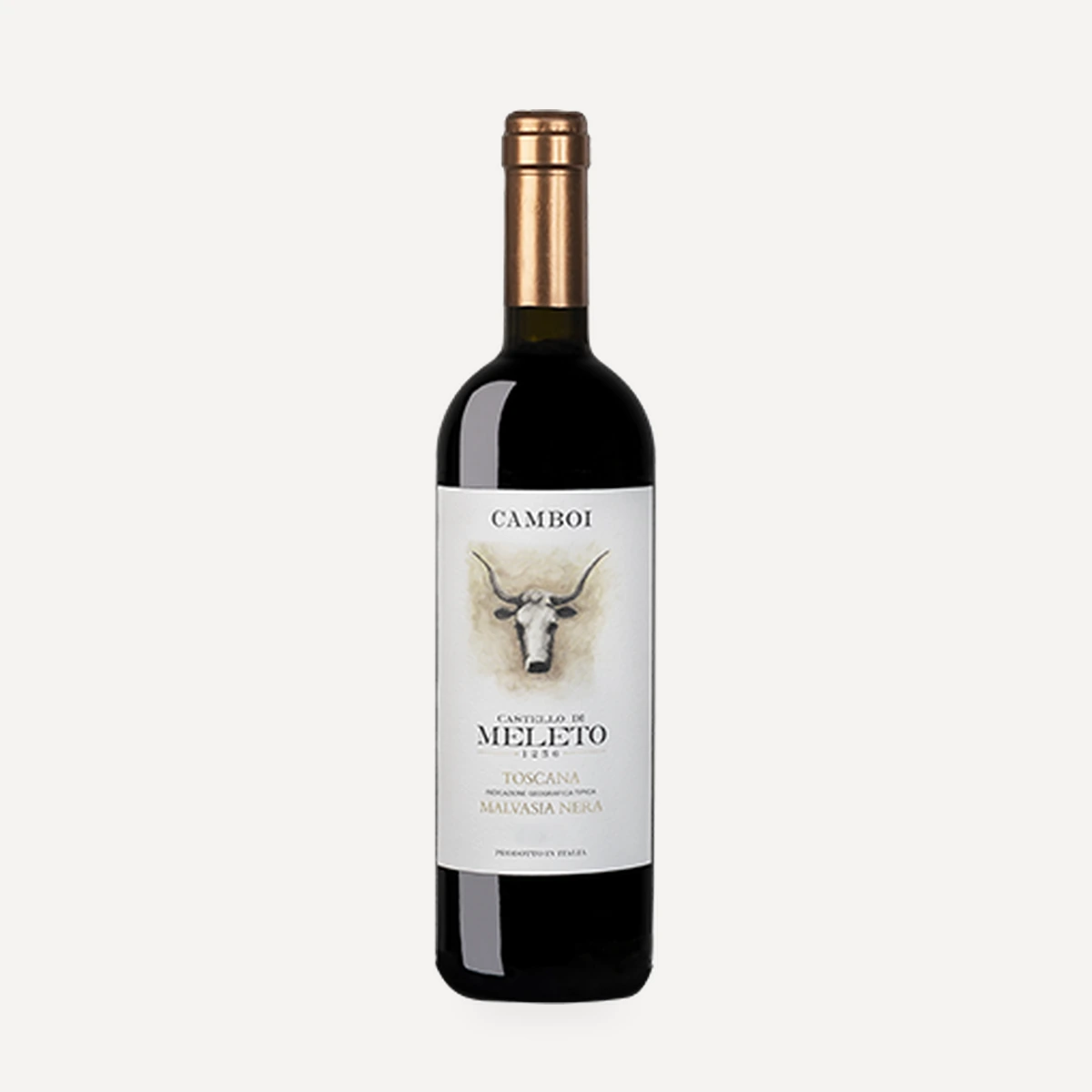
Camboi Toscana Rosso IGT
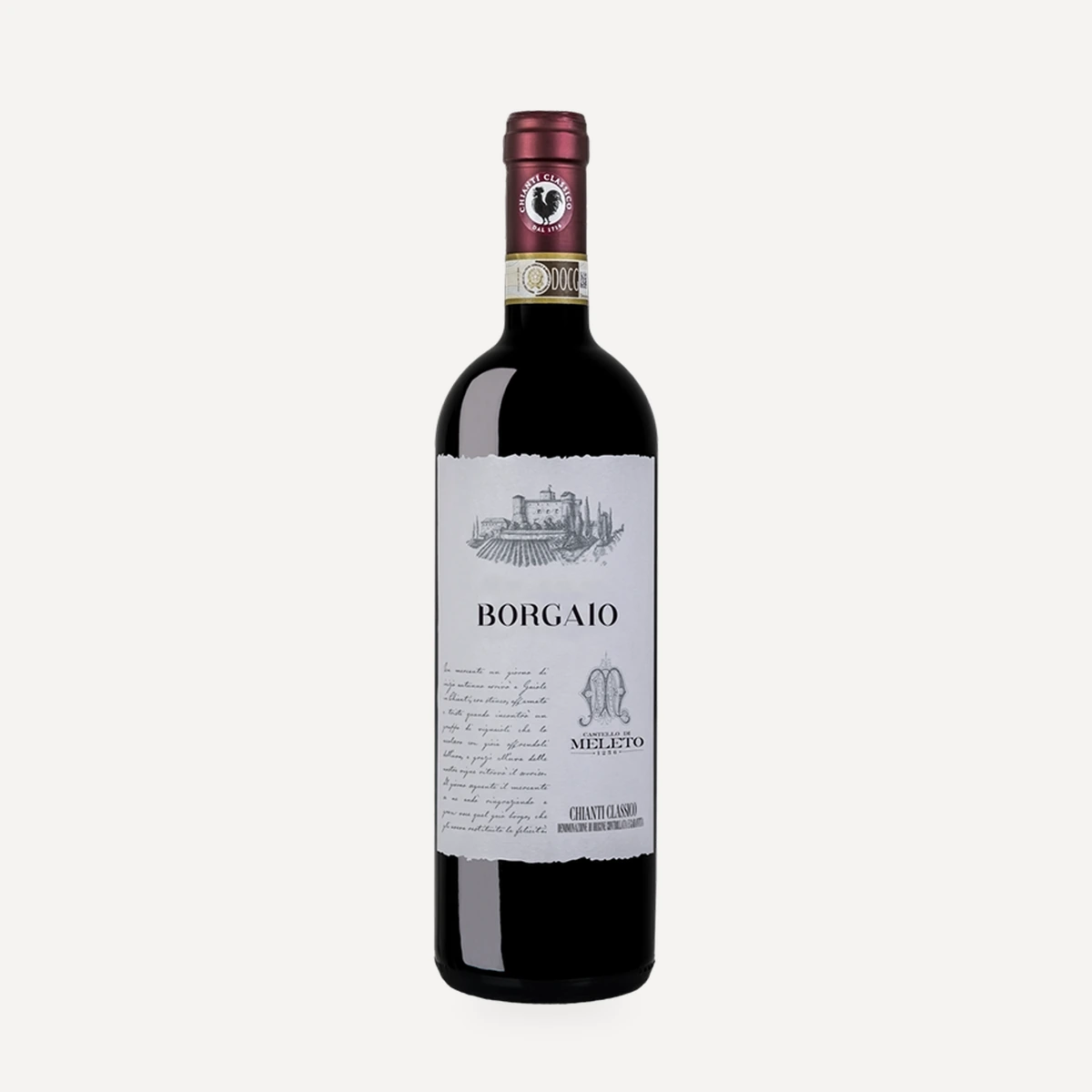
Borgaio Chianti Classico DOCG
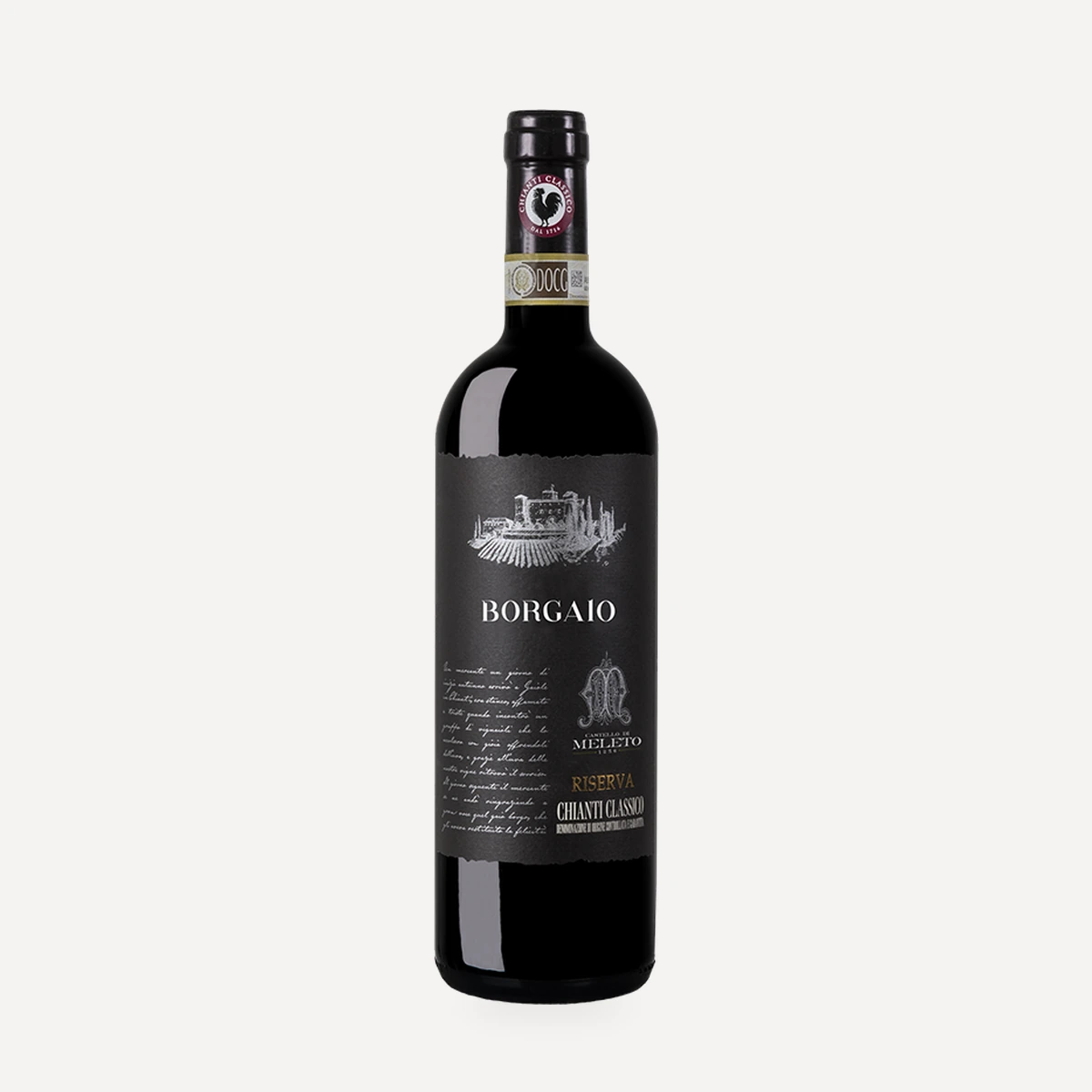
Borgaio Chianti Classico Riserva DOCG
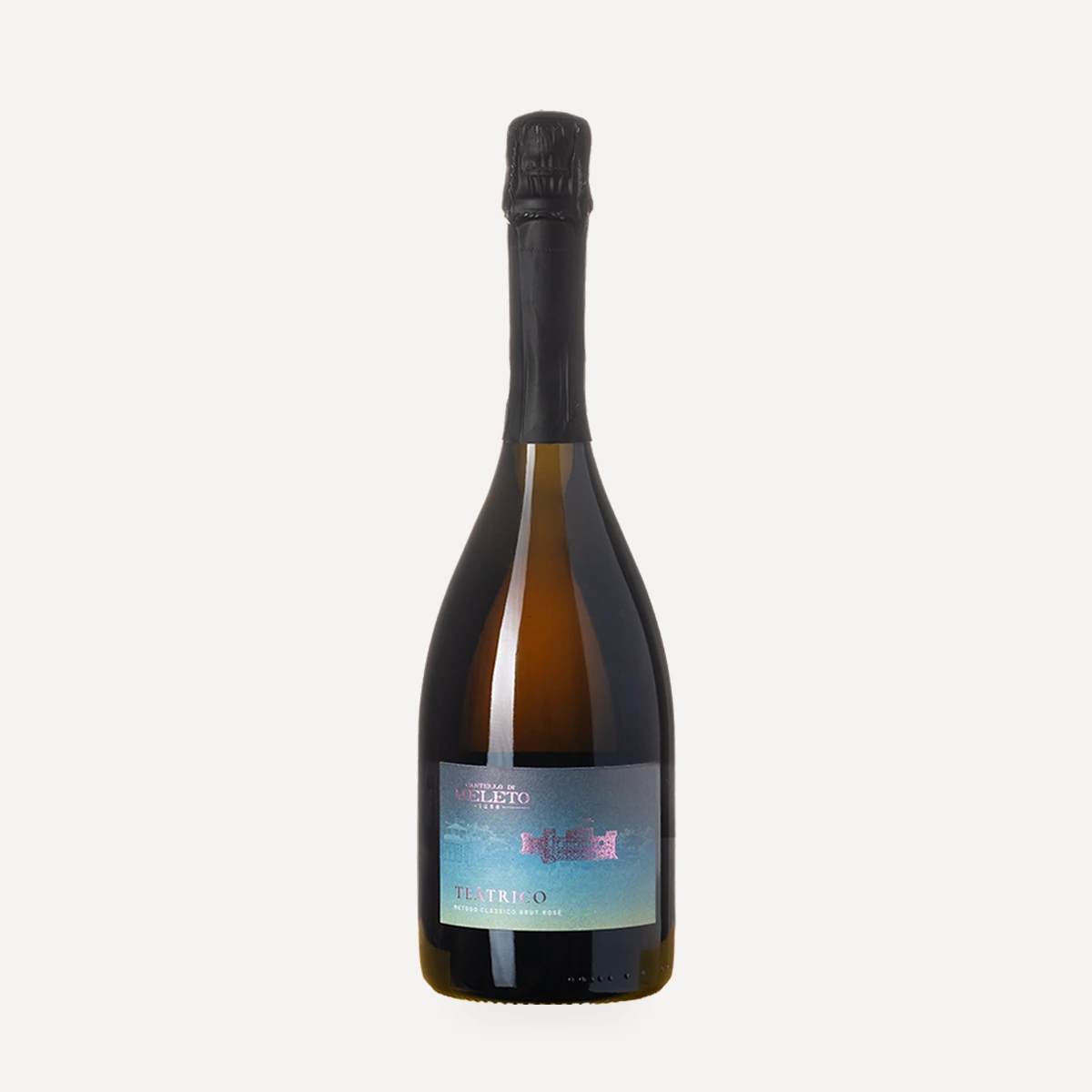
Teatrico Spumante Extra Brut Rosè Metodo Classico
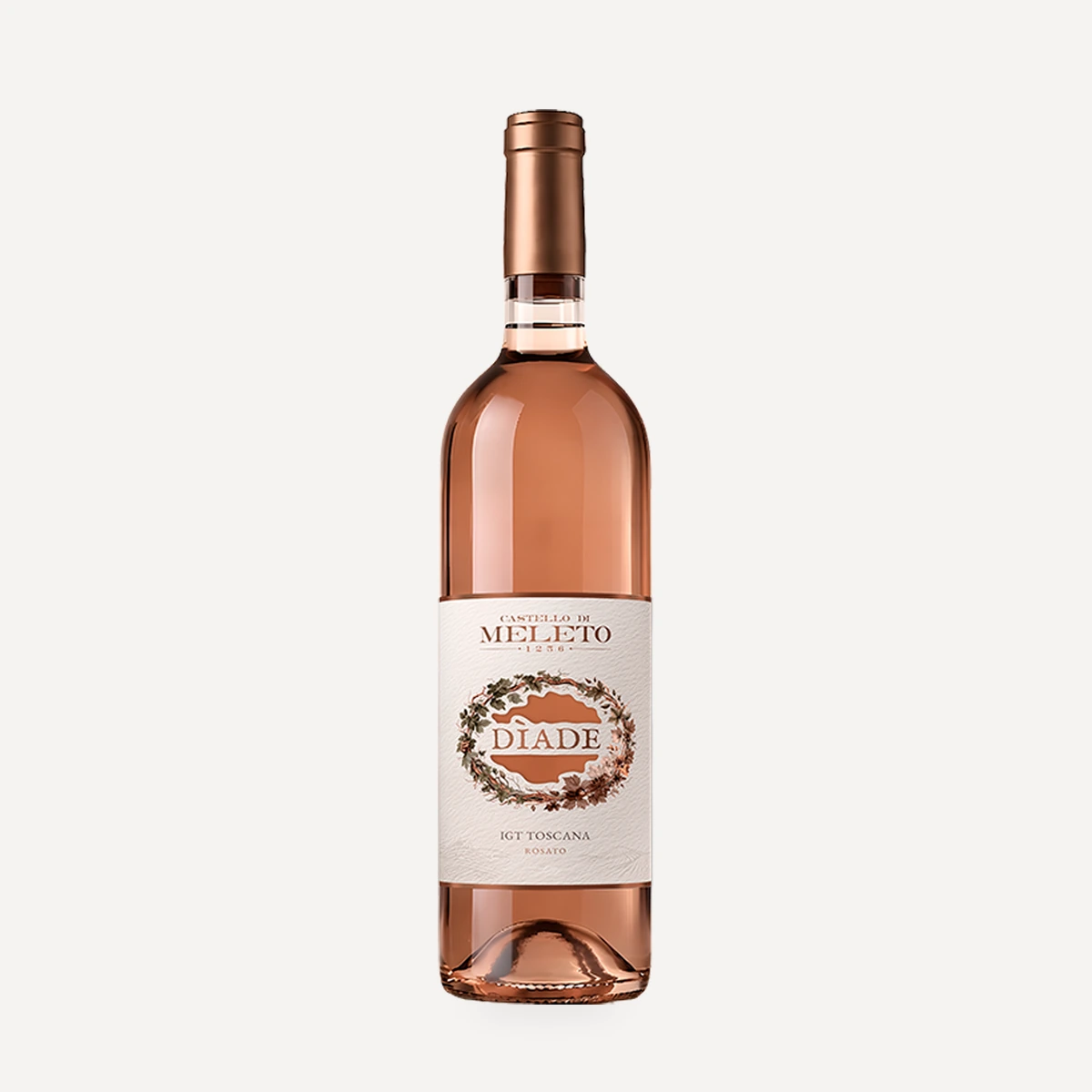
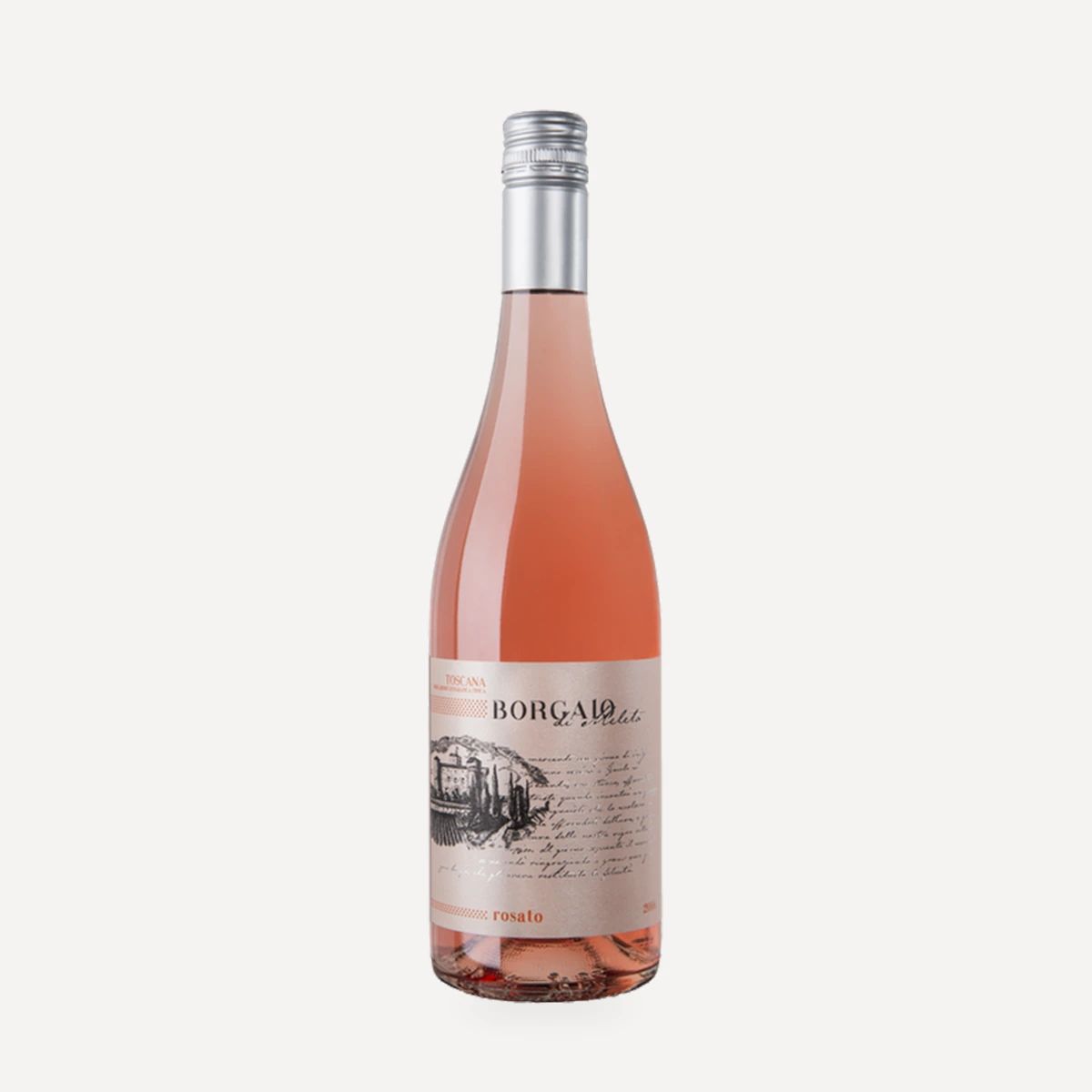
Dìade Toscana Rosato IGT
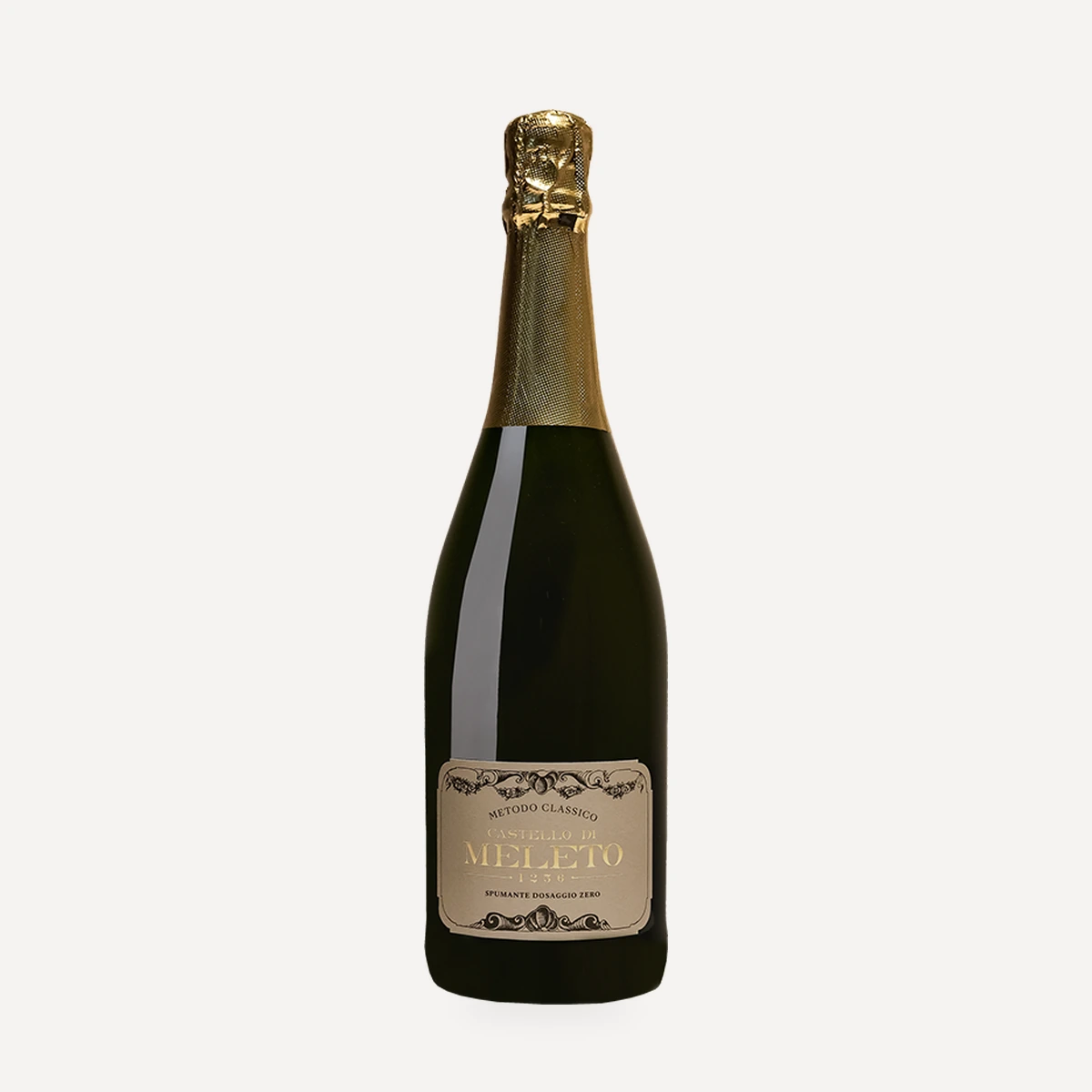
Castello di Meleto Spumante Dosaggio Zero
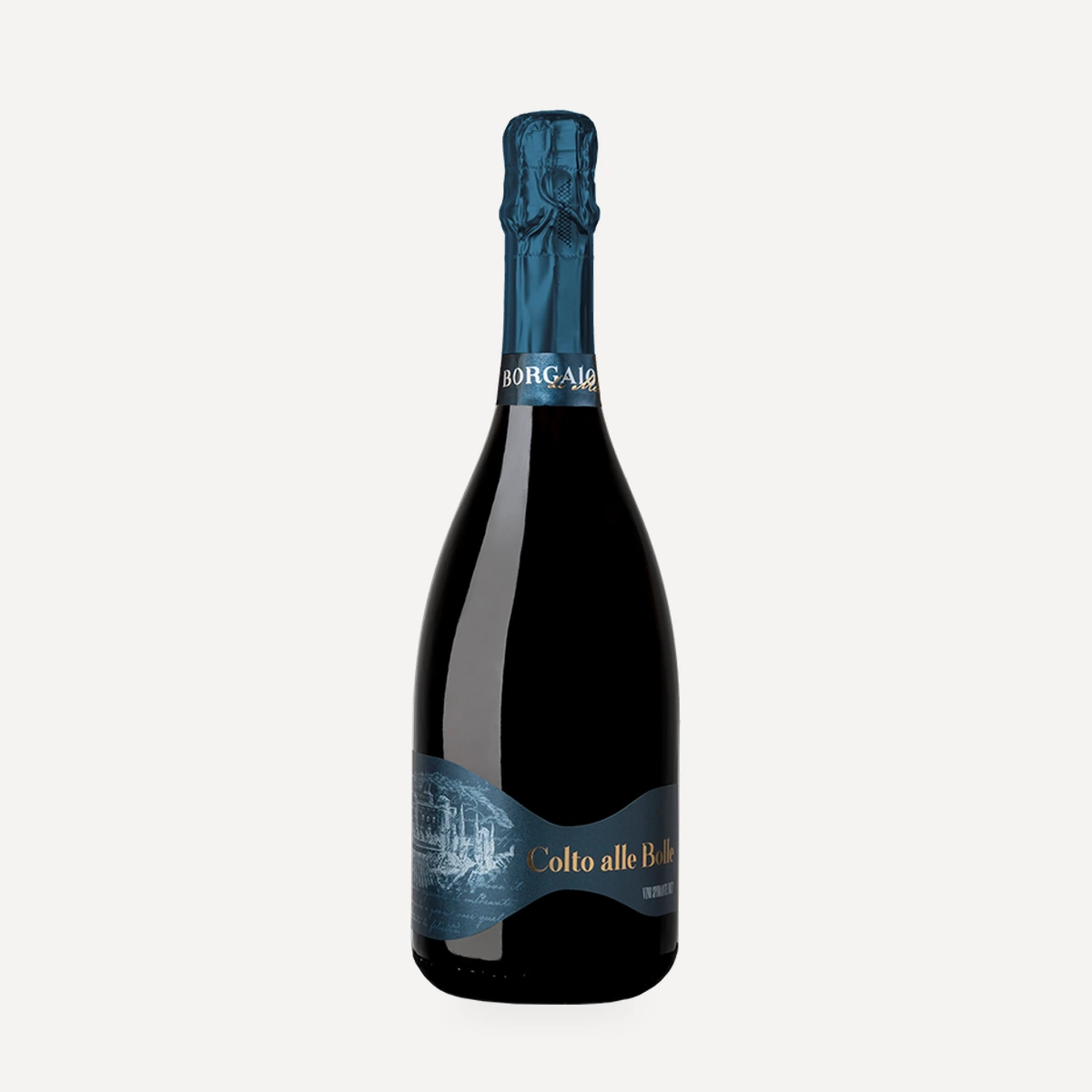
Colto alle Bolle Spumante Rosé
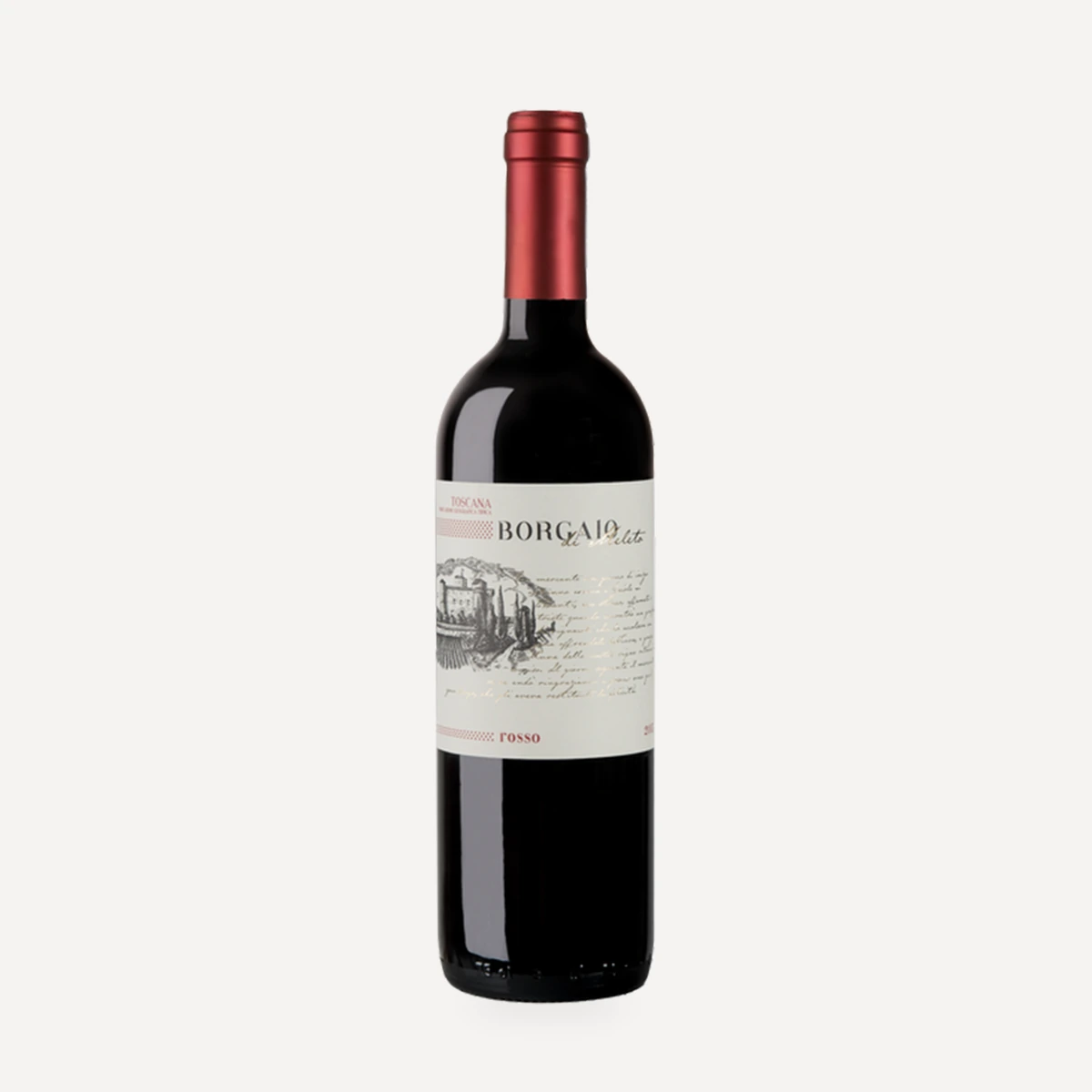
Borgaio Rosso Toscana Rosso IGT
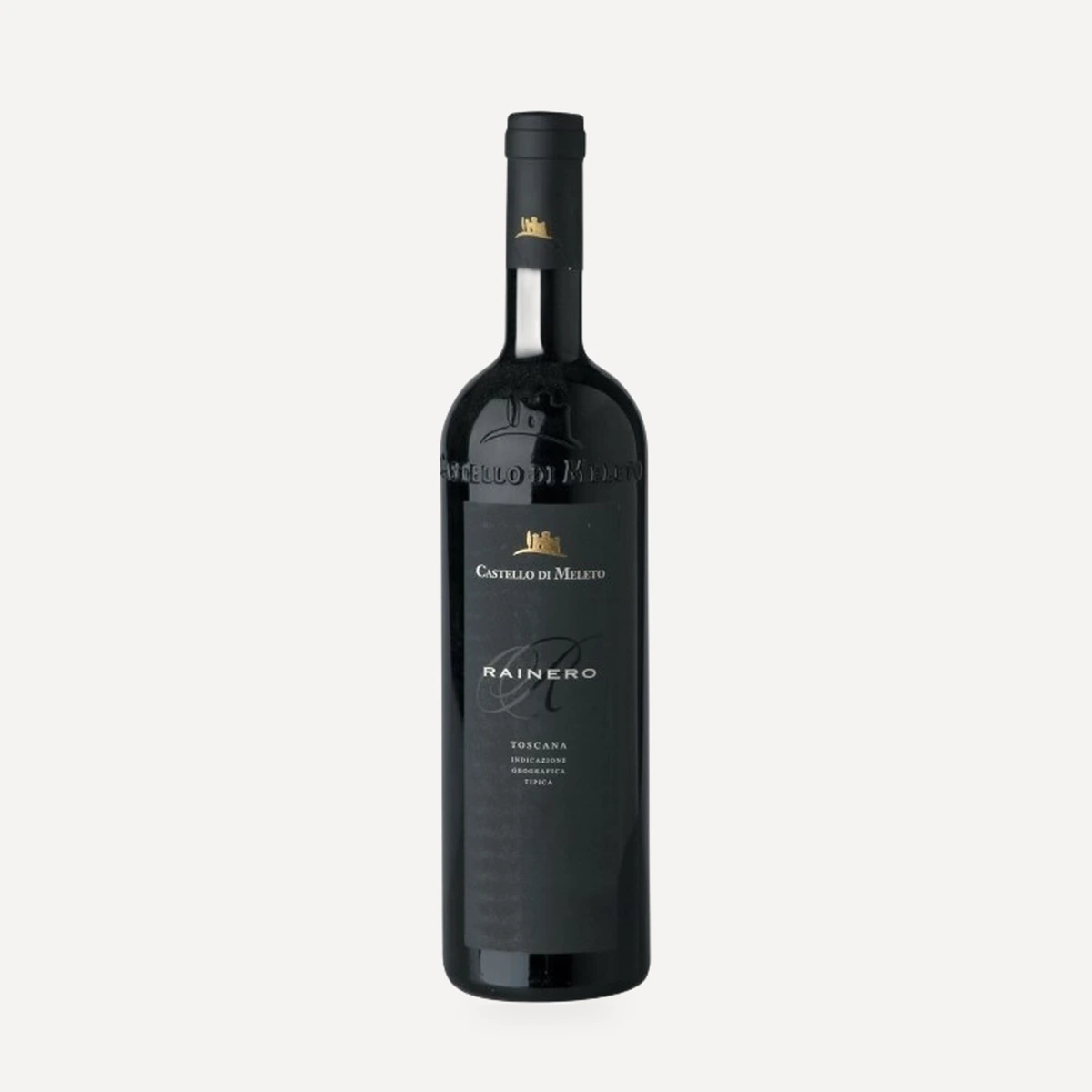
Rainero Toscana IGT