History
Vittorio Fiore’s formation and career
Vittorio Fiore was born in Fortezza, in the province of Bolzano, in 1941. His childhood in the Alpine environment preceded technical studies at San Michele all’Adige and then Conegliano. In the early 1960s he began working for wine estates in northern Italy.
In 1970 Fiore became General Director of the Associazione Enotecnici Italiani, now the Associazione Enologi Enotecnici Italiani. He held the position until the end of the decade. International study trips during this period broadened his knowledge of viticulture, oenology and emerging techniques.
Fiore moved to Tuscany in 1979 and established himself as an independent consulting oenologist, a professional model he had begun envisioning during the 1960s. His collaborations encouraged changes in both vineyard management and cellar practice at a number of estates. The Tuscan regional government, the Istituto per il Commercio Estero and Enoteca Italiana subsequently engaged him in the international promotion of Italian wine.
Establishment of Podere Poggio Scalette
Podere Poggio Scalette became an autonomous wine-producing estate in 1991. Vittorio Fiore and his wife, Adriana Assjè di Marcorà, acquired several plots and a rural building on the Ruffoli hill in Greve in Chianti. The property resulted from the division of an inheritance and the sale of old farmhouses, vineyards, olive groves, pasture and woodland that had been largely abandoned following the previous owner’s death.
The acquisition gave Fiore the opportunity to make his own wine from an old Ruffoli vineyard dominated by Sangiovese di Lamole. The first vintage of Il Carbonaione followed in 1992, bringing together the variety, the old vines and Fiore’s experience as a consulting oenologist.
Expansion in 1996
In 1996 the family bought the adjoining property, which included a functional cellar and substantial working buildings. This enlarged Podere Poggio Scalette to approximately 40 hectares: 15 hectares of vineyards, 10 hectares of olive groves, 2 hectares of arable land, 5 hectares of woodland, and 8 hectares occupied by buildings or left uncultivated.
The 1996 addition included a second five-hectare nucleus of Sangiovese vineyards planted during the 1960s and 1970s. A 5,000 m² Merlot parcel was also established that year; it later became the basis of Piantonaia, whose first vintage was 1999.
New vineyards and an expanded range
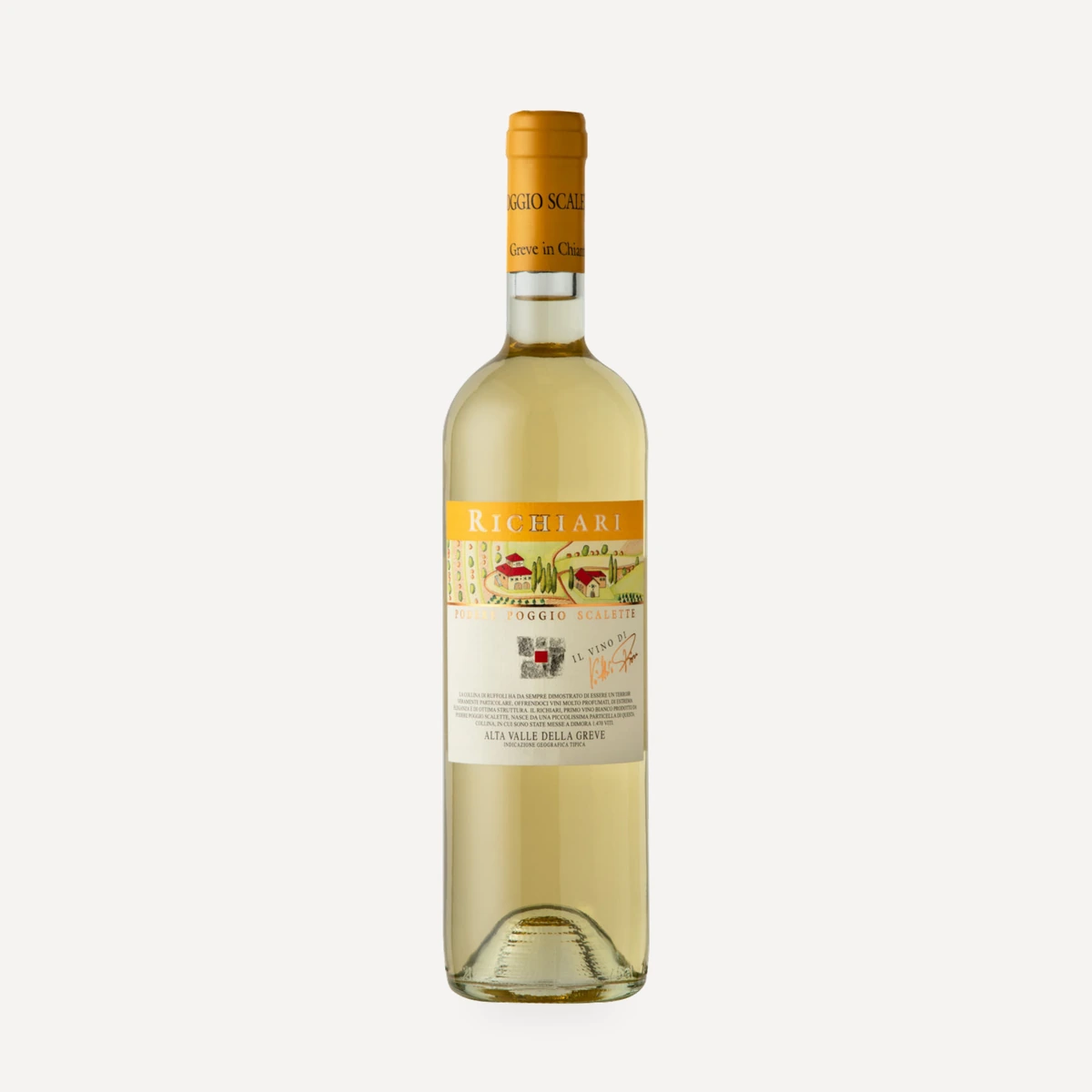
Further vineyards were planted during the 2000s, principally with Sangiovese. A small Chardonnay planting of approximately 1,500 vines became the source of Richiari, first produced in 2003. In 2004 the family planted four rows—1,000 vines each—of Cabernet Franc, Cabernet Sauvignon, Petit Verdot and Merlot. These vines formed the basis of Capogatto, first produced in 2007.
By 2007 the total vineyard surface had reached approximately 15 hectares. Slightly more than one hectare was entered under Alta Valle della Greve IGT, including a small white-grape component, while the balance was registered for Chianti Classico DOCG.
The estate introduced its Chianti Classico in the 2009 vintage. Chiara Aurora first appeared in 2014; a revised version, bringing together white grapes associated with the Ruffoli and Dudda vineyards, began with the 2019 vintage.
Family management
Jurij Fiore, who earned the qualification of Technicien Supérieur en Viticulture et Œnologie in Beaune, Burgundy, is responsible for the direct management of the estate and its winemaking. Vittorio Fiore retains overall supervision. Alessandro Fiore, whose background includes extensive experience abroad, is responsible for export markets, while the estate’s offices manage the Italian market.
From 2003 through 2008, Vittorio served on the Ministry of Agricultural and Forestry Policies’ appeal commission for DOC and DOCG wines of central Italy. He also held a teaching appointment in sensory analysis for viticulture and oenology degree candidates at the University of Pisa’s Faculty of Agriculture.
Terroir
Podere Poggio Scalette occupies the Ruffoli hill on the western side of the Greve valley, between Greve in Chianti and Panzano. The estate lies within a narrow sector known as the Alta Valle della Greve and at the centre of the Chianti Classico production zone. The Greve stream passes through the town and rises in the surrounding hills.
The vineyards and olive groves extend through an elevation band of approximately 350–550 metres above sea level. Ruffoli’s slopes face predominantly west, with individual vineyards also oriented southwest or south. The terrain is hilly and frequently terraced.
Dry-stone retaining walls support terraces of different sizes. Vines and olive trees alternate across them according to local soil conditions. Seen from a distance, these rising terraces resemble small stairways, the feature from which the name Poggio Scalette derives.
The individually documented vineyard sites share sandy-silty soils with a very high proportion of coarse mineral fragments, locally described as being rich in scheletro. The combination of elevation, slope, aspect and terracing creates distinct settings within Ruffoli: the old Il Carbonaione vines occupy west- and southwest-facing terraces at about 450 metres; the Merlot parcel lies around 430 metres with a similar aspect; the Volpe vineyard faces south at approximately 400 metres; and the Chardonnay site associated with Richiari lies at about 370 metres with a southwest exposure.
Winemaking
The vineyard is conceived from the site outward: the first task is to place each variety in the location considered most suitable. The family describes this as an exercise in patience and foresight—imagining the mature vineyard before planting, preparing a durable home for the young vines and tending them over a long life.
Terraces retained by dry-stone walls allow vines and olive trees to occupy Ruffoli’s steep slopes, with the choice between the two crops responding to soil conditions. The vineyard expansion of the 2000s concentrated mainly on Sangiovese, while small, deliberately scaled parcels were reserved for Merlot, Cabernet Franc, Cabernet Sauvignon, Petit Verdot and Chardonnay.
Training systems vary with site and variety. Guyot and spurred cordon are documented for the Sangiovese terraces; the Merlot parcel uses spurred cordon; and the Volpe plantings use low spurred cordon, with Guyot for Cabernet Franc. Harvest periods differ among the individual varieties, extending from the second half of September for white grapes and Merlot-related parcels into the first half of October for Sangiovese.
The cellar acquired with the adjacent property in 1996 provided functional production facilities and substantial working spaces. The production route moves through tanks and, where required by the individual lot, barriques before bottling. Both stainless-steel and cement tanks are represented in the estate’s cellar work, alongside 225-litre barriques, 228-litre barrels and 350-litre tonneaux.
Jurij Fiore directs winemaking with Vittorio Fiore’s overall supervision. Their work combines Vittorio’s long technical and consulting experience with Jurij’s viticultural and oenological training in Beaune. Cellar choices are adapted to the grape and parcel: documented techniques across the range include temperature-controlled fermentation, cold maceration, gentle pressing, alcoholic and malolactic fermentation in cement, stainless-steel fermentation, maturation in cement or steel, barrel fermentation, élevage sur lie, bâtonnage and ageing in barriques or tonneaux.
Philosophy
Winegrowing is treated as an agricultural art founded on patience and foresight. Quality begins before a vine is planted: the grower must understand the site, choose the right position and prepare a place in which the vine can live for many years.
The estate’s philosophy centres on passion for the land, the vine and the people who cultivate it, together with respect for the surrounding terroir. Long-lived vineyards are sustained through the grower’s care and patience, while winemaking decisions are intended to preserve the relationship between variety, parcel and Ruffoli’s landscape.
Tradition and technical preparation are complementary rather than opposed. Vittorio Fiore’s experience in renewing Tuscan vineyard and cellar practice is joined to Jurij Fiore’s Burgundian education, but the declared objective remains the expression of the site and its grapes rather than adherence to a single cellar formula.
Wines
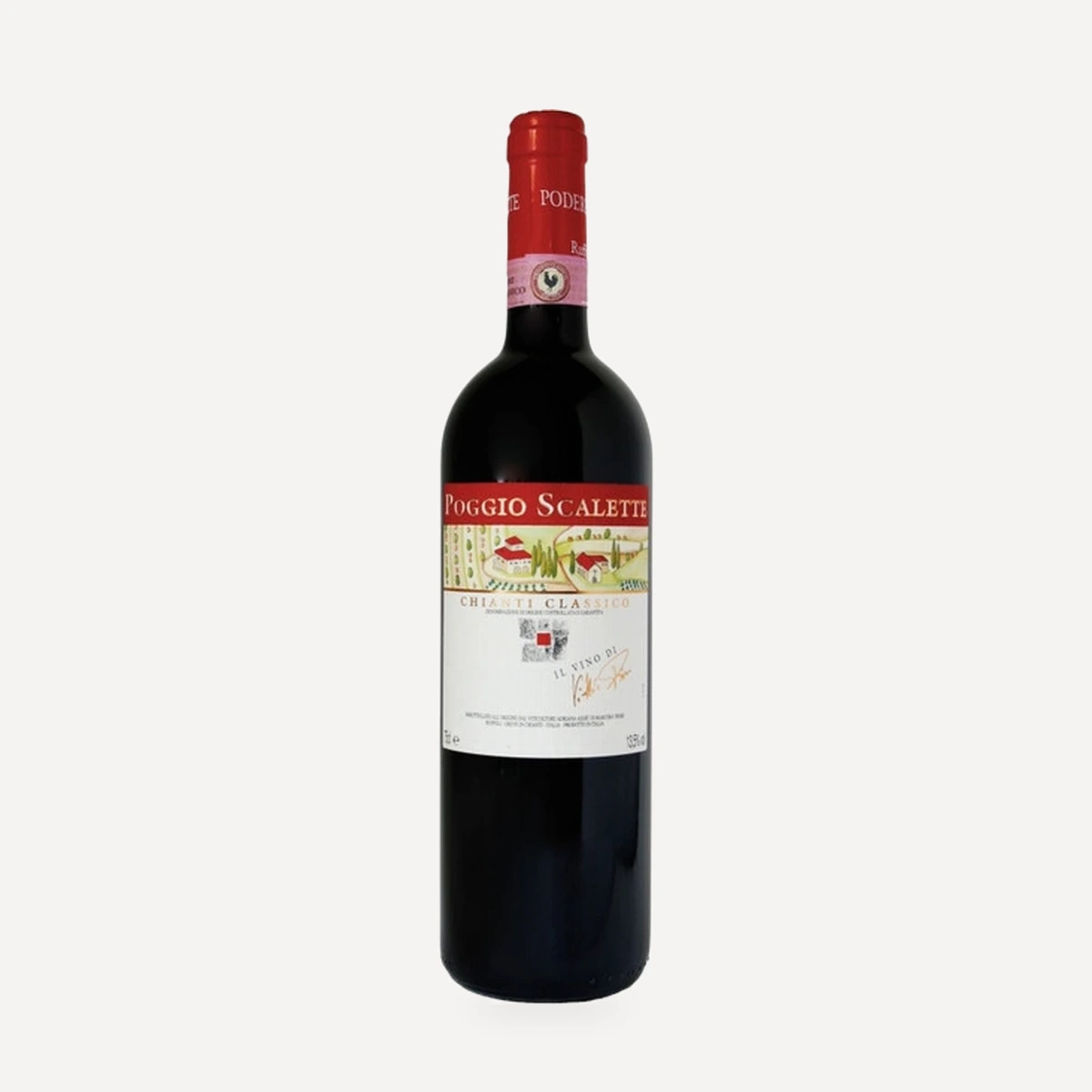
Poggio Scalette Chianti Classico DOCG
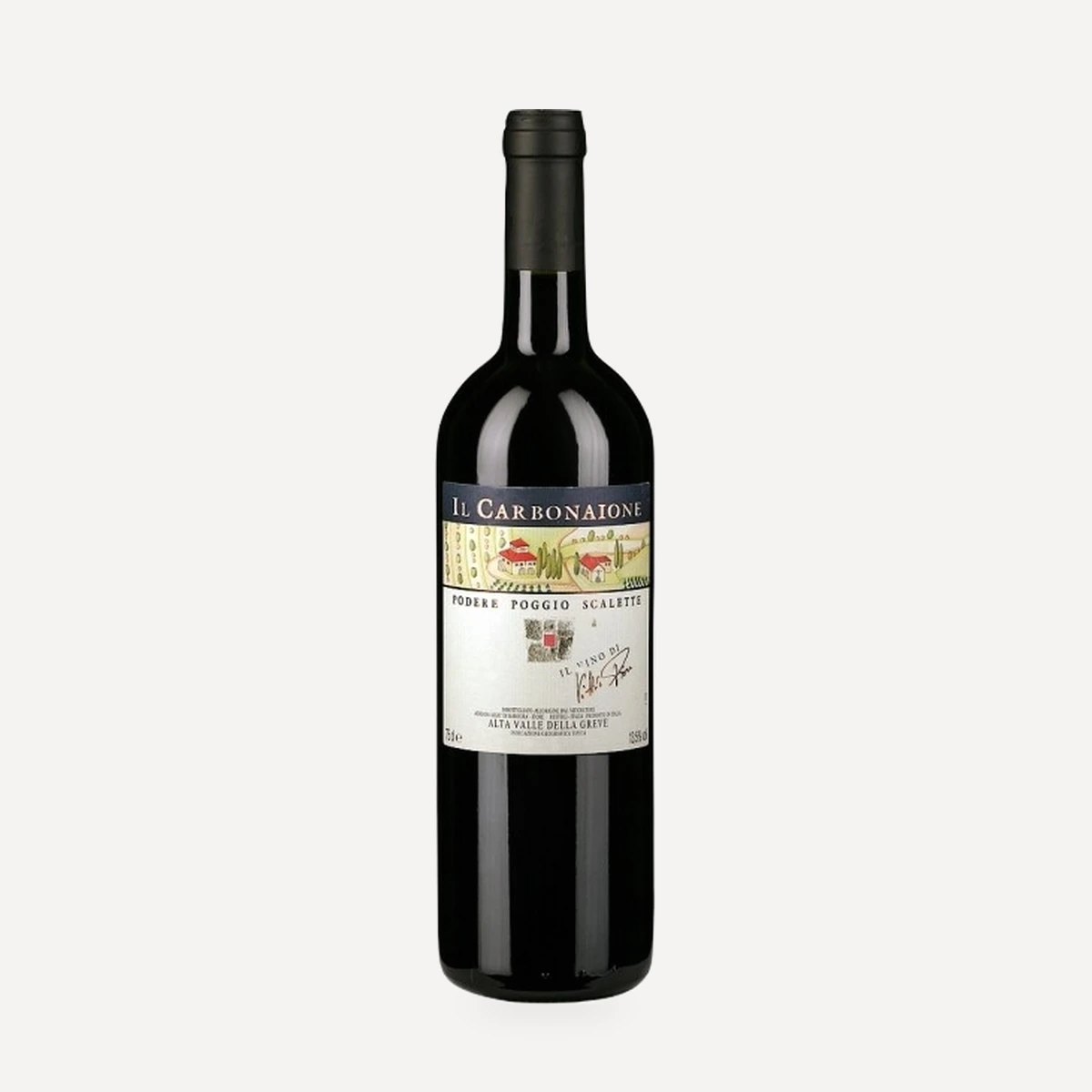
Il Carbonaione Alta Valle della Greve IGT
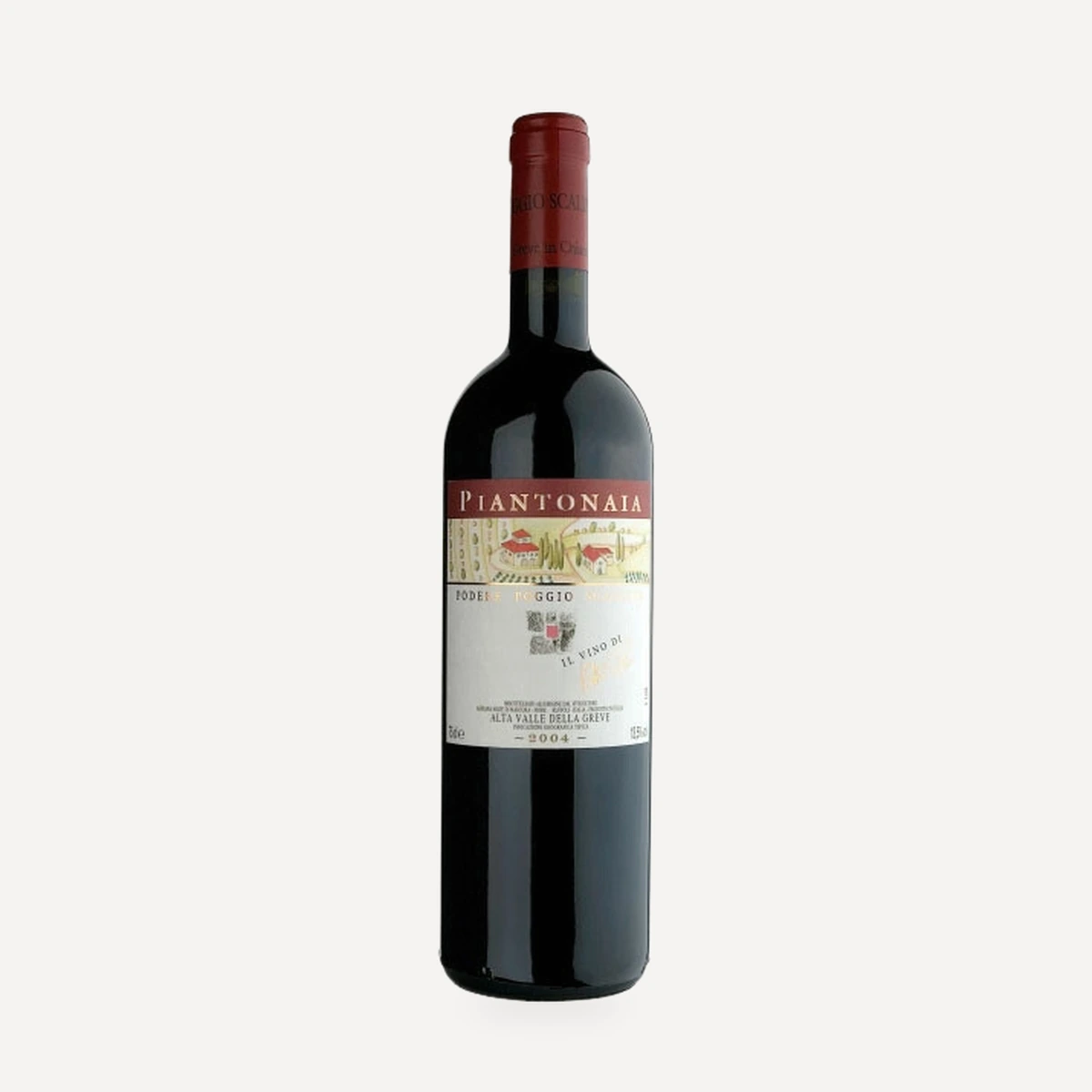
Piantonaia Alta Valle della Greve IGT