History
The name before the modern estate
The place name Riecine appears in records connected with the Abbey of San Lorenzo a Coltibuono from the 12th century. Its earliest identified occurrence is dated December 1112, when an exchange entered in the abbey archives transferred several pieces of vineyard in Camprato, Riecine, San Donato in Perano and other locations to the monastery.
The hillside later occupied by the modern estate retained old agricultural traces. The Palmina vineyard was planted around the end of the 1960s with vigorous Kober 5BB rootstock and was described in the subsequent purchase contract as a low-production hillside vineyard. Another small site, Chiara, was cultivated until 1950 but then abandoned during the depopulation of the countryside.
John Dunkley and Palmina Abbagnano
Riecine in its modern form began in 1971. John Dunkley, an English advertising executive, and his wife, Palmina Abbagnano, purchased the original 1.5 hectares from the neighbouring monastery of Badia a Coltibuono. They began restoring the old stone villa, rehabilitating the existing plants and establishing new vines.
Dunkley became closely associated with pure Sangiovese and with an interpretation of Chianti Classico centred on Gaiole in Chianti. Riecine’s first Chianti Classico vintage was 1973 and reached the market in 1975. The Chianti Classico Riserva label also dates from 1975. A letter of 15 March 1977 records Luigi Veronelli asking Dunkley for samples of the estate’s white wine, part of an extensive correspondence between the two men.
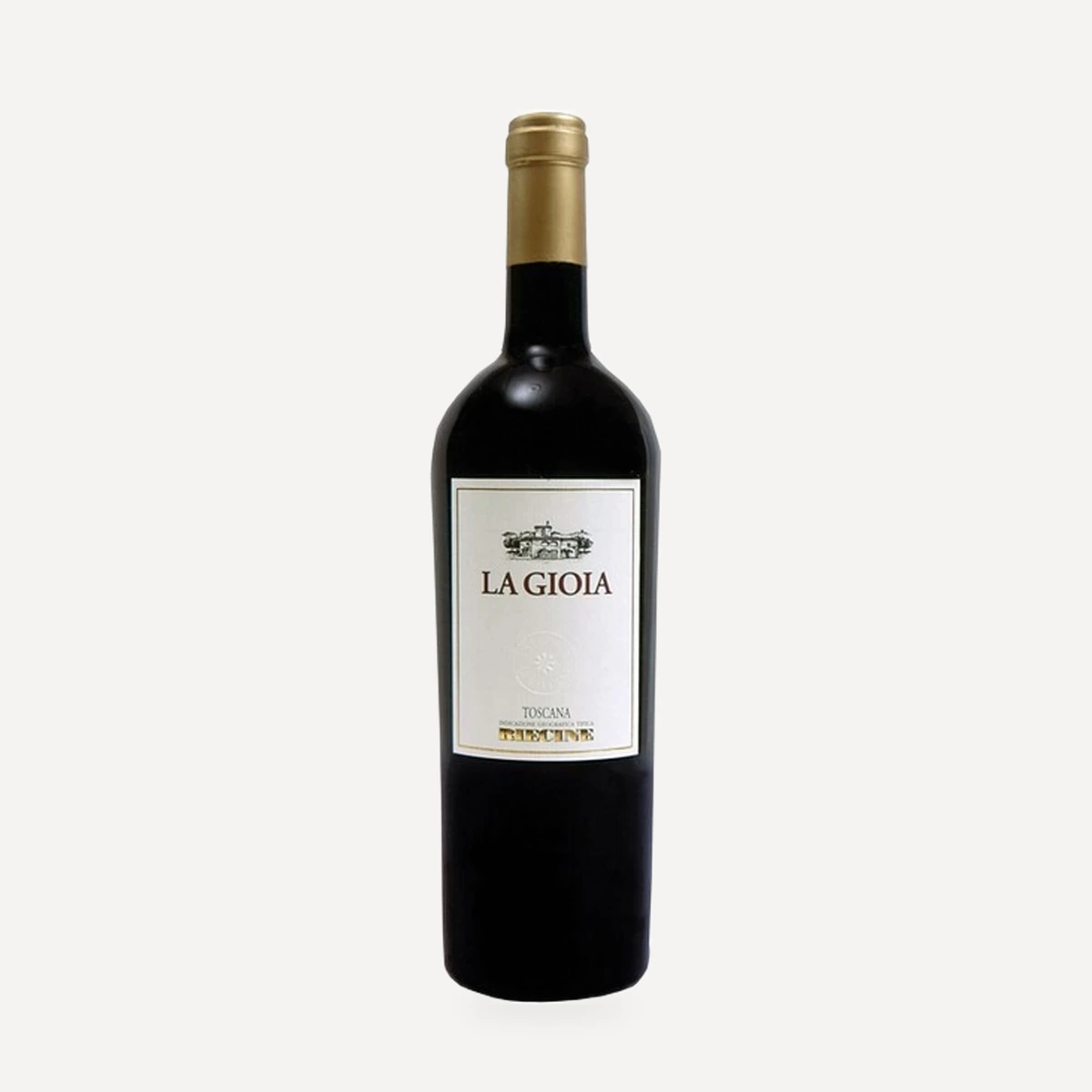
La Gioia followed in 1982. It presented Sangiovese within the emerging Supertuscan category at a time when that category was more commonly associated with Cabernet Sauvignon and Merlot. In 1991, John and Palmina engaged the young Sean O’Callaghan as an apprentice. He became the in-house winemaker and developed his own interpretation of the established Riecine style. John added the almost 2-hectare Vertine vineyard in 1997, choosing a high, windy site near San Donato in Perano.
The Baumann period
John Dunkley and Palmina Abbagnano died in 1998. Ownership passed to Gary and Marlene Baumann of New York, who continued the founders’ direction and began renovating and constructing a new cellar. Working with Sean O’Callaghan, the Baumanns expanded Riecine’s markets and production and carried the estate into the new millennium. Their period of ownership continued until 2011.
Lana Frank and the rebuilt winery
Lana Frank acquired Riecine in December 2011. Her programme was to preserve its recognisable, artisanal style while providing first-class production equipment. A major cellar reconstruction followed. Completed in 2013, it increased winemaking space from 400 m² to 1,100 m². Twelve new unlined concrete vats designed by the French firm Nomblot were installed during the work and became central to production.
The vineyard programme also advanced. In 2014, Lana planted the 2-hectare Teodoro vineyard, dedicating it to her grandson, and replanted Carlo, named for Palmina’s brother. New and older sections of Alberello were developed as experimental bush-trained plots, including a densely planted section established in 2014. Bosco, a vineyard planted in 2001, was also acquired during the Frank period.
Alessandro Campatelli first met Lana Frank in 2014 and joined Riecine as general manager on 31 July 2015. After working alongside Sean O’Callaghan for one year, he assumed technical responsibility in 2016. Sean thereby passed responsibility for the wines to Alessandro after a tenure encompassing both the Dunkley and Baumann eras. Carlo Ferrini, a close friend of John and Palmina who had already contributed technical and oenological expertise to Riecine’s development, continued as consultant.
New and recovered vineyard projects
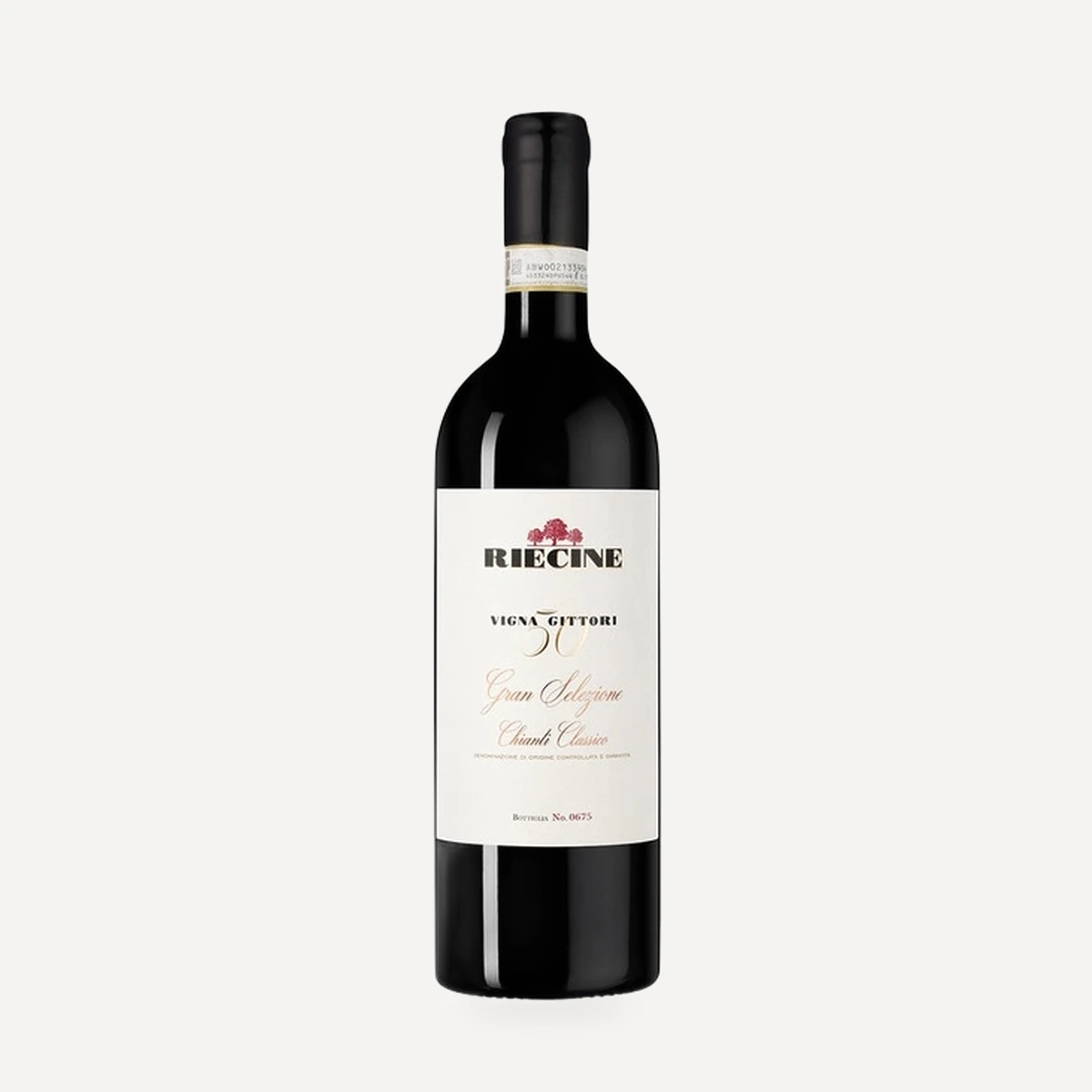
Riecine had managed Gittori under lease for more than two decades before acquiring it in 2019. The old, high-density vineyard dates from the early 1970s; a 2.7-hectare, three-parcel portion planted in 1974 became the source of Chianti Classico Gran Selezione Vigna Gittori. The parcels ripen at different times and are vinified independently. The inaugural Gran Selezione vintage was 2019.
The historic white-wine idea was revived after Lana Frank, Alessandro Campatelli and Carlo Ferrini revisited Luigi Veronelli’s writings about the wine made by John and Palmina in the 1970s. Bianco di Riecine returned with the 2020 vintage, based on Trebbiano from vineyards connected with the estate’s early history.
The more recent vineyard programme also includes Chiara, a small site set into the slope above the winery. Once cultivated until 1950, it is being brought back into the estate after decades of abandonment.
Alessandro Campatelli’s ownership
In July 2024, Alessandro Campatelli purchased Lana Frank’s shares and became Riecine’s owner and sole shareholder. He retained responsibility as director, winemaker and head of production, with Carlo Ferrini supporting him as an external consultant.
Terroir
Riecine’s vineyards occupy elevated, often steep sites around Gaiole in Chianti, San Donato in Perano and Barbischio. The individually documented vineyards range from approximately 450 to 550 metres above sea level. Limestone and clay recur across the estate, but the sites are not uniform.
Gittori represents the rockiest expression: its ground contains large pieces of limestone and abundant iron. Its southwest-facing landscape opens towards Brolio and, in the distance, Monte Amiata. The named Gran Selezione portion faces south and comprises three parcels that ripen at different times.
La Casina, isolated at 550 metres among oak, beech and especially chestnut woodland, differs markedly. Its soil is predominantly sand and loose clay, with only a limited presence of macigno del Chianti. Its steep, south-southeast-facing slope and elevation make it the estate’s latest normally harvested vineyard, usually after mid-October.
Palmina begins at about 480 metres and faces south-southeast; Traborri lies approximately 30 metres lower, with its younger Sangiovese section facing southwest. Teodoro curves around a hill from south to southwest, while Carlo occupies the southern part of the estate above the winery. Bosco lies on an irregular plateau at 450–470 metres, enclosed by forest dropping steeply away on every side.
Vertine occupies a natural amphitheatre at 520 metres with a south-southwest exposure. A constant presence of southerly winds distinguishes it from Gittori. Woodland is a major element across the landscape: Bosco is surrounded by forest, La Casina is approached through oak, beech and chestnut woods, and conifers around Riecine are associated with the aromatic recognisability and elegance sought in its Sangiovese. Increasing solar radiation, evaporation and hotter summers have directly influenced training and canopy decisions.
Winemaking
All Riecine vineyards have operated under an ICEA-certified organic regime since 2006. Permanent or seasonal plant cover is maintained, and inter-row weed control is entirely mechanical.
Canopy management has been adjusted in response to hotter summers, stronger irradiation and greater evaporation. Topping, leaf stripping and early leaf removal have been eliminated. The resulting foliage protects fruit from direct sun and helps shade the soil, while the ground cover limits excessive moisture loss and supports the establishment of native microfauna.
Guyot is the preferred system because it distributes bunches more evenly than capovolto. Capovolto and standard cordon training were abandoned years ago, although Bosco remains the one cordon-trained vineyard. At Gittori, the old vines have evolved into an adapted form resembling cordon. Alberello provides the principal climate-adaptation experiment: an older Guyot block was converted to bush training, and the self-supporting summer canopy creates a natural umbrella over the fruit.
Vineyard interventions are limited to those considered strictly necessary. Planting densities vary substantially by site, from wide 3 × 1 metre spacing in the old Palmina and Gittori vineyards to approximately 8,000–9,000 vines/ha in Alberello. Palmina’s old vines produce no more than around 1 kg per plant, while Alberello has the lowest per-hectare yields of the estate’s named sites.
Cellar and vessels
The major reconstruction completed in 2013 expanded winemaking space from 400 m² to 1,100 m². Twelve unlined concrete vats designed by the French firm Nomblot were installed and became the foundation of much of the production. The cellar also employs unlined concrete eggs, large untoasted oak casks, used and new tonneaux, 700-litre barrels and, for selected work, truncated-cone French-oak vats and cocciopesto amphorae.
Fermentation
Fermentations are spontaneous. No cultured yeast, selected bacteria, clarifying agents or chemical stabilisers are added. Following destemming—or the retention of whole bunches when required—the fruit enters concrete vats and remains there until fermentation begins.
The weight of the fruit initially crushes at least part of the berries and induces partial carbonic maceration, used to preserve fresher fruit character. Fermentation generally begins on the fourth or fifth day. Because intact grapes take time to break down, pumping over is avoided during the first 48 hours. Gentle punch-downs are used to crush the berries, followed by short pumping over on the second or third day. During the initial four or five days, one punch-down or one pump-over is normally performed daily.
Between 24 and 36 hours after alcoholic fermentation begins, the wine undergoes a délestage lasting as long as 12 hours to achieve complete oxygenation. For the remainder of fermentation, two daily operations follow: either two punch-downs, or one punch-down and one pump-over. Fermentation averages 13–14 days. Depending on the intended cuvée, the wine then remains under a submerged cap for approximately 5–25 days.
Post-fermentation and maturation
For the principal red-wine paths, submerged-cap maceration in partially filled tanks lasts approximately 4–10 days. Volatile acidity is continuously monitored; when it reaches 0.40–0.45 g/l, the tanks are drained and the lots move to their respective maturation vessels.
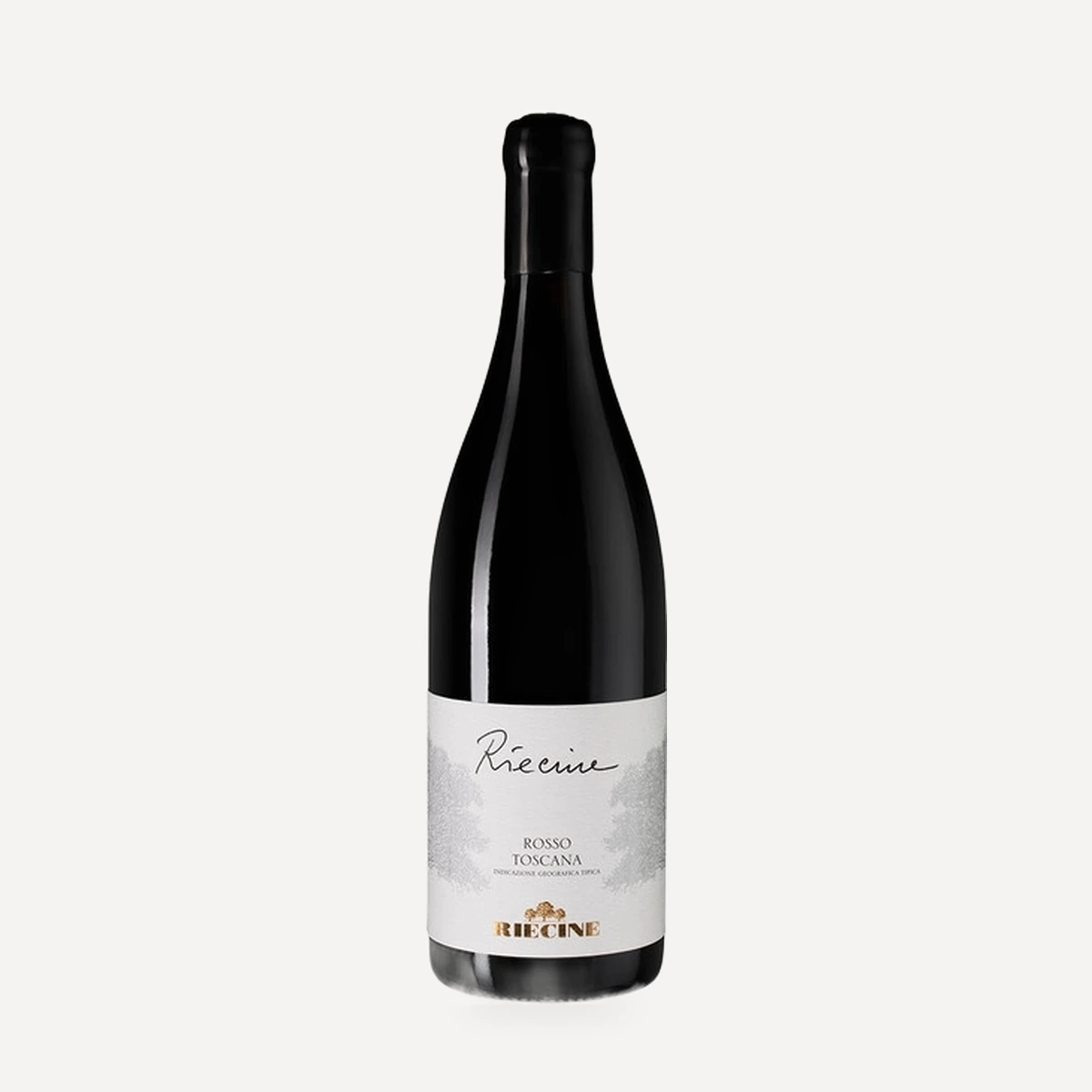
Chianti Classico lots are divided among unlined concrete, large untoasted oak casks and used barrels. Riserva moves to one large untoasted oak cask. La Gioia matures in new barrels, while TreSette uses 700-litre barrels. Riecine di Riecine remains on its skins longer—sometimes up to 25 days at this stage—with the tank filled to limit excessive oxygenation; after racking, it matures in unlined concrete and never contacts wood during vinification or ageing.
Three months before bottling, the wines return to outdoor concrete vats for natural tartaric and protein stabilisation without added processing aids. This normally begins around the end of October, using low winter temperatures to assist the process.
Philosophy
Riecine’s declared ambition is to resemble its past while looking toward the future. Its approach places the land and vineyard work before cellar intervention: the team describes its task as growing wine rather than simply making it, with meticulous work and no shortcuts or compromises.
Sangiovese is the central historical and stylistic reference. John Dunkley’s commitment to the variety remains emblematic, while the present direction seeks recognisable wines rooted in the rocky terrain of Chianti Classico and Gaiole in Chianti. Alessandro Campatelli associates their structure and elegance with both the Sangiovese and the conifers surrounding the vineyards.
Traditional Tuscan practice is treated as a foundation rather than a fixed formula. Unlined concrete, spontaneous fermentation and the avoidance of yeasts, selected bacteria, clarifiers, chemical stabilisers and stabilisation aids reduce intervention in the cellar. At the same time, the estate remains open to experiments such as high-density alberello planting, climate-adapted canopy management, concrete eggs and cocciopesto amphorae.
The human contribution is presented as inseparable from the agricultural one. Knowledge, talent, commitment and continuity across founders, owners, consultants, vineyard workers and cellar staff support the objective of expressing each site while retaining an artisanal scale.
Wines
La Gioia
Chianti Classico Gran Selezione Vigna Gittori
Riecine di Riecine
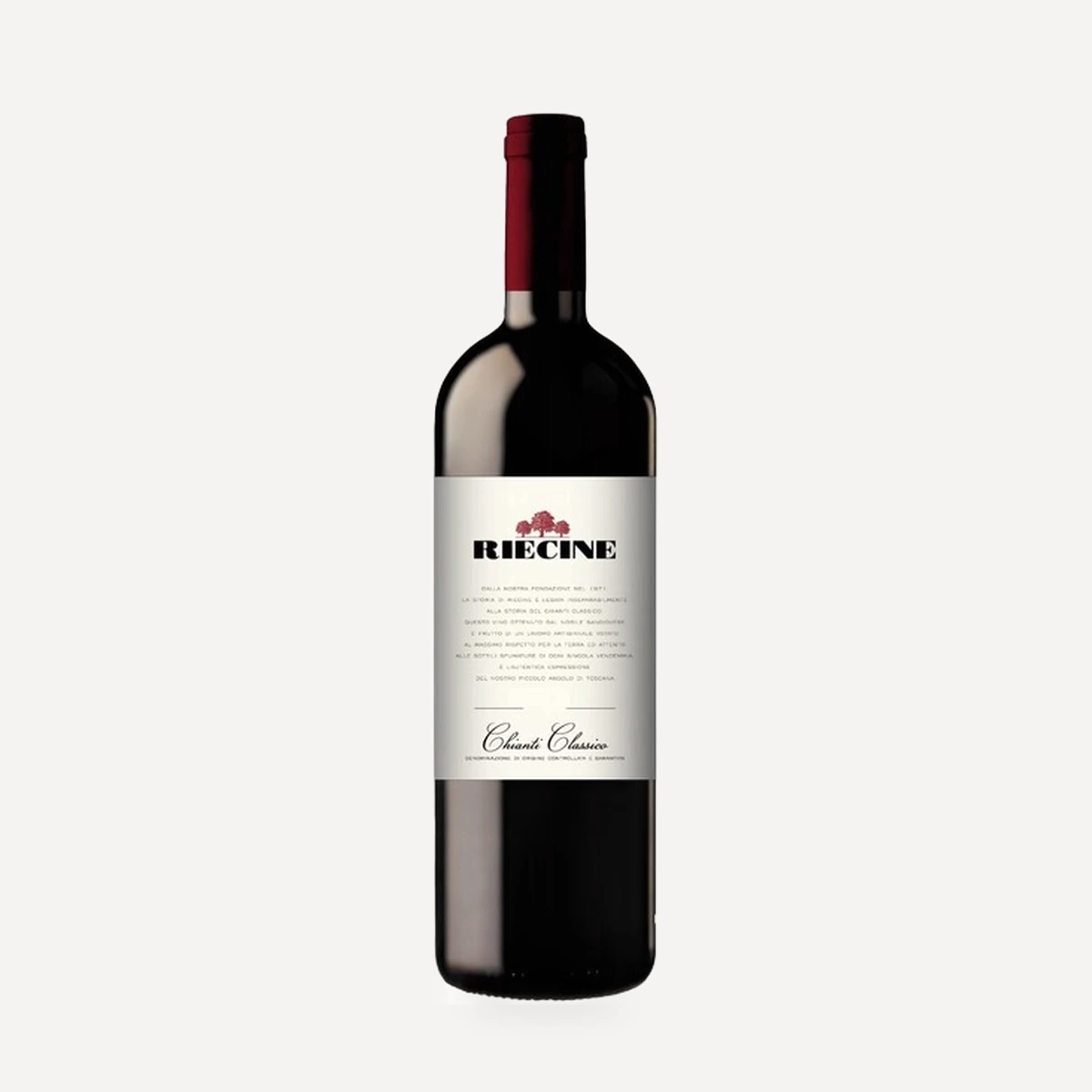
Chianti Classico
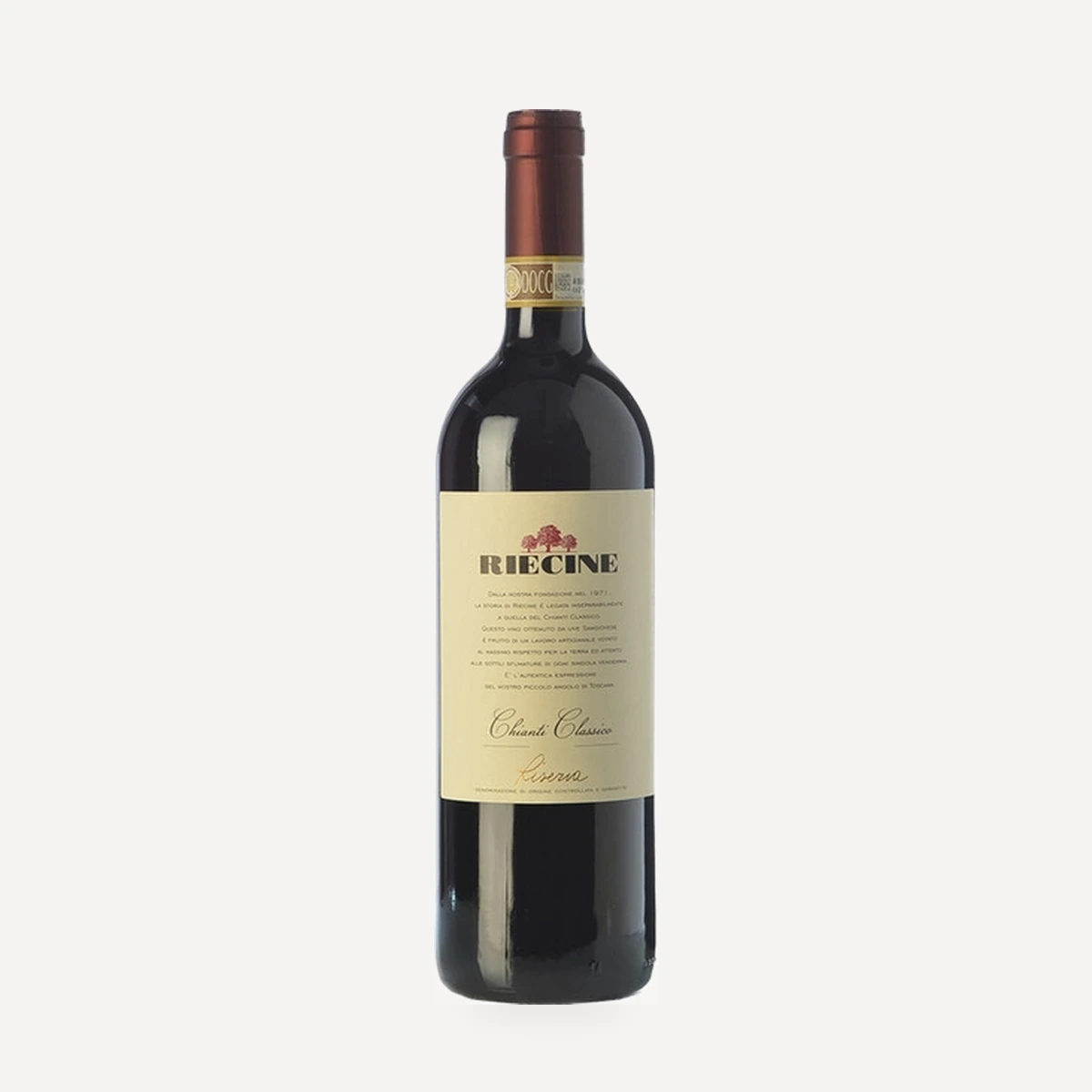
Chianti Classico Riserva
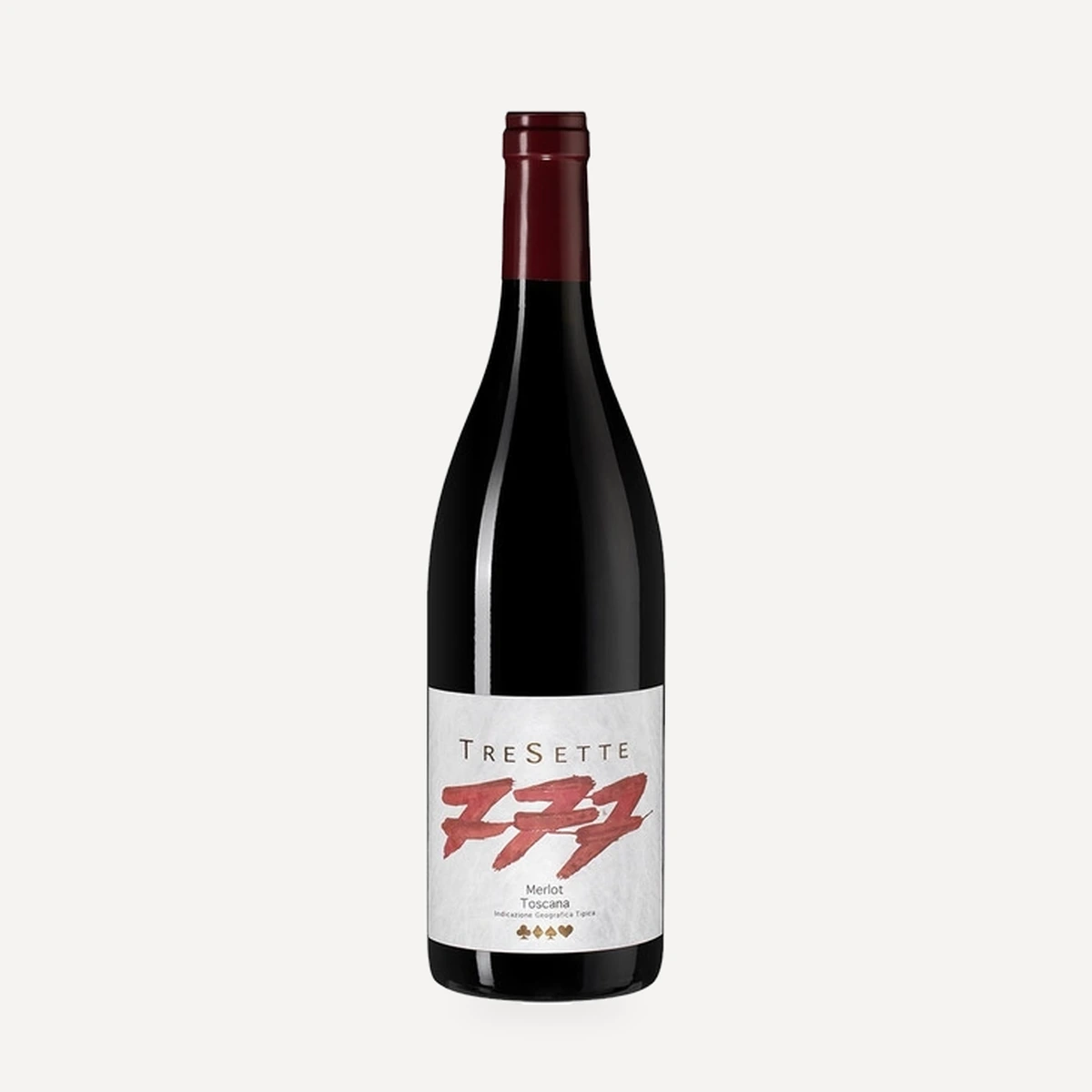
TreSette
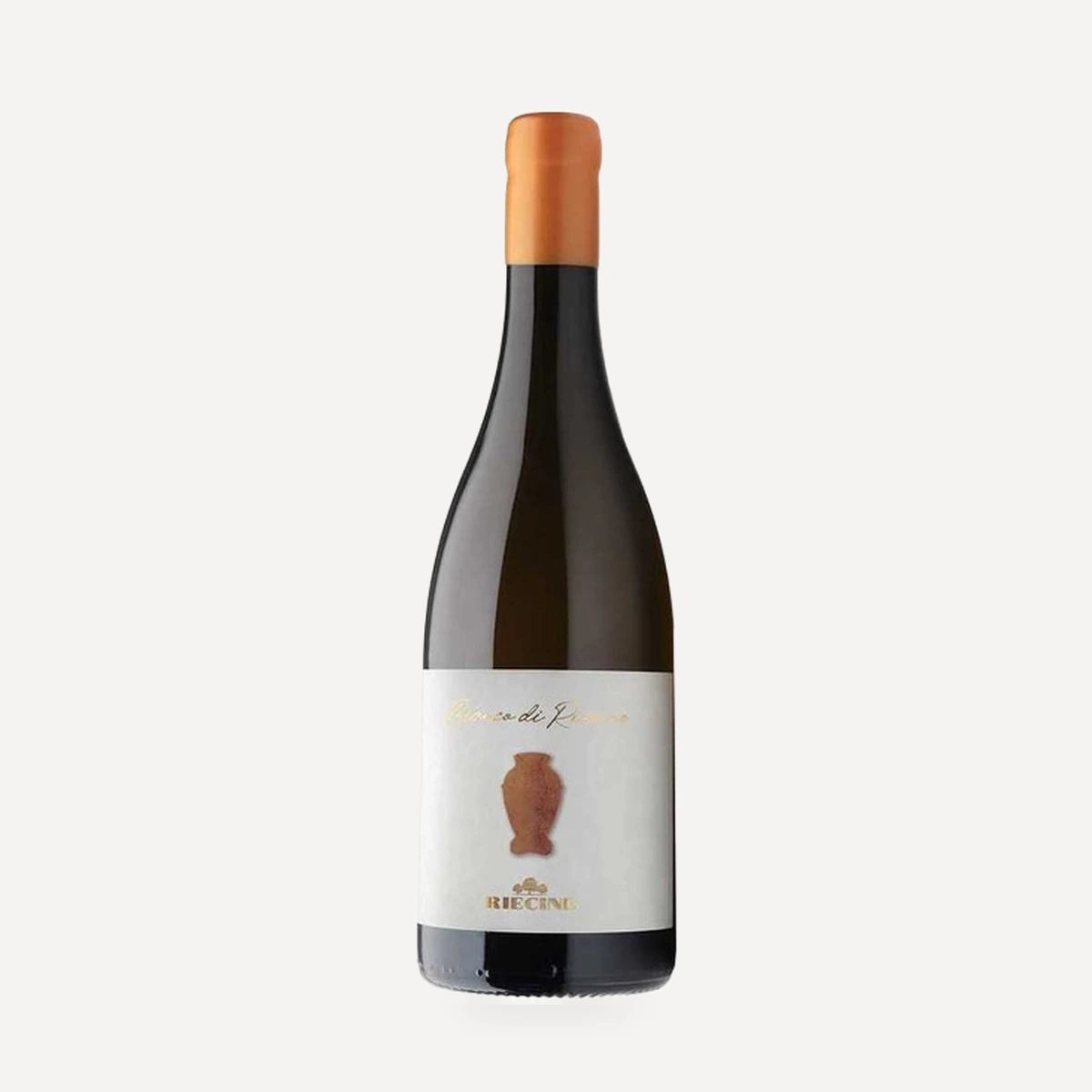
Bianco di Riecine
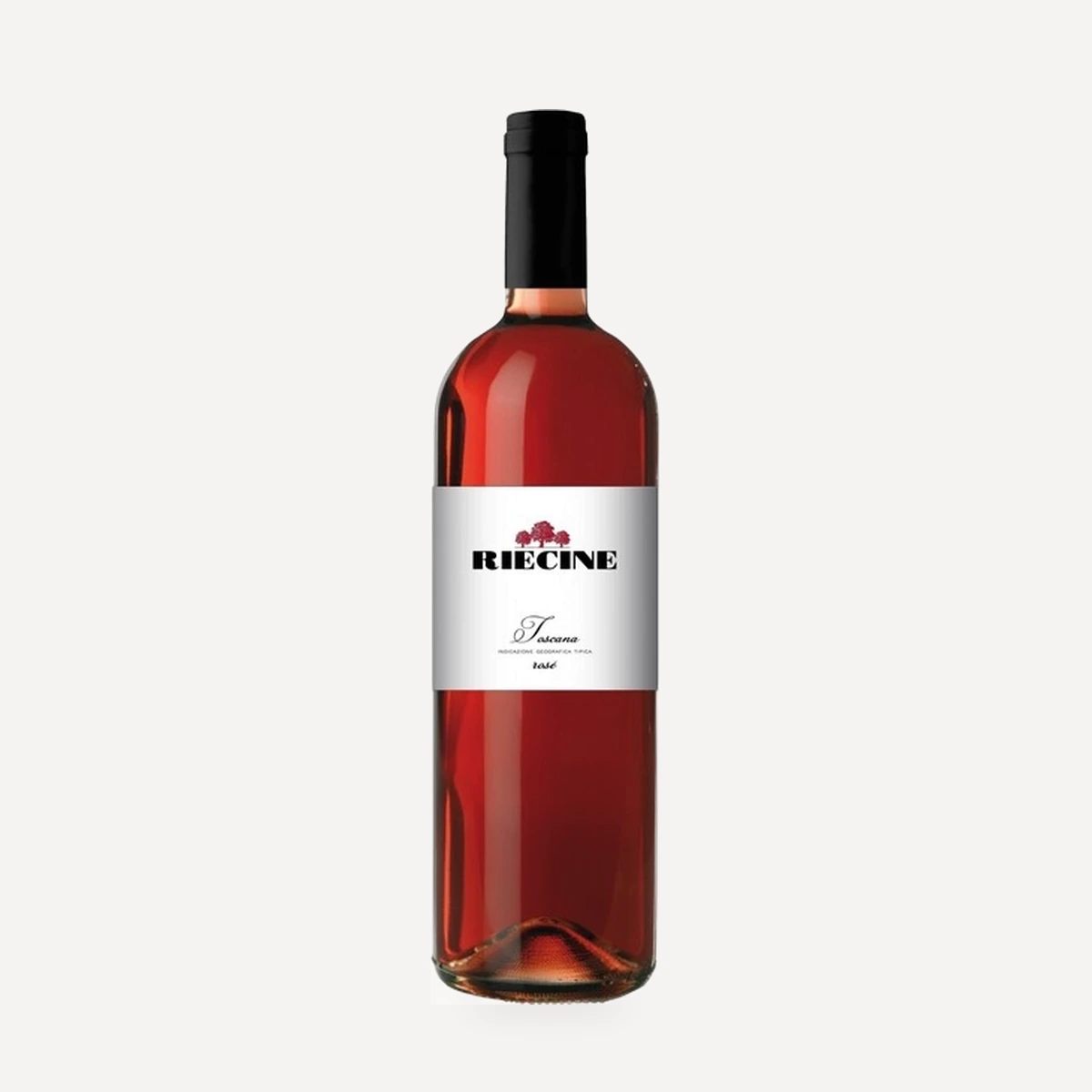
Rose Toscana IGT
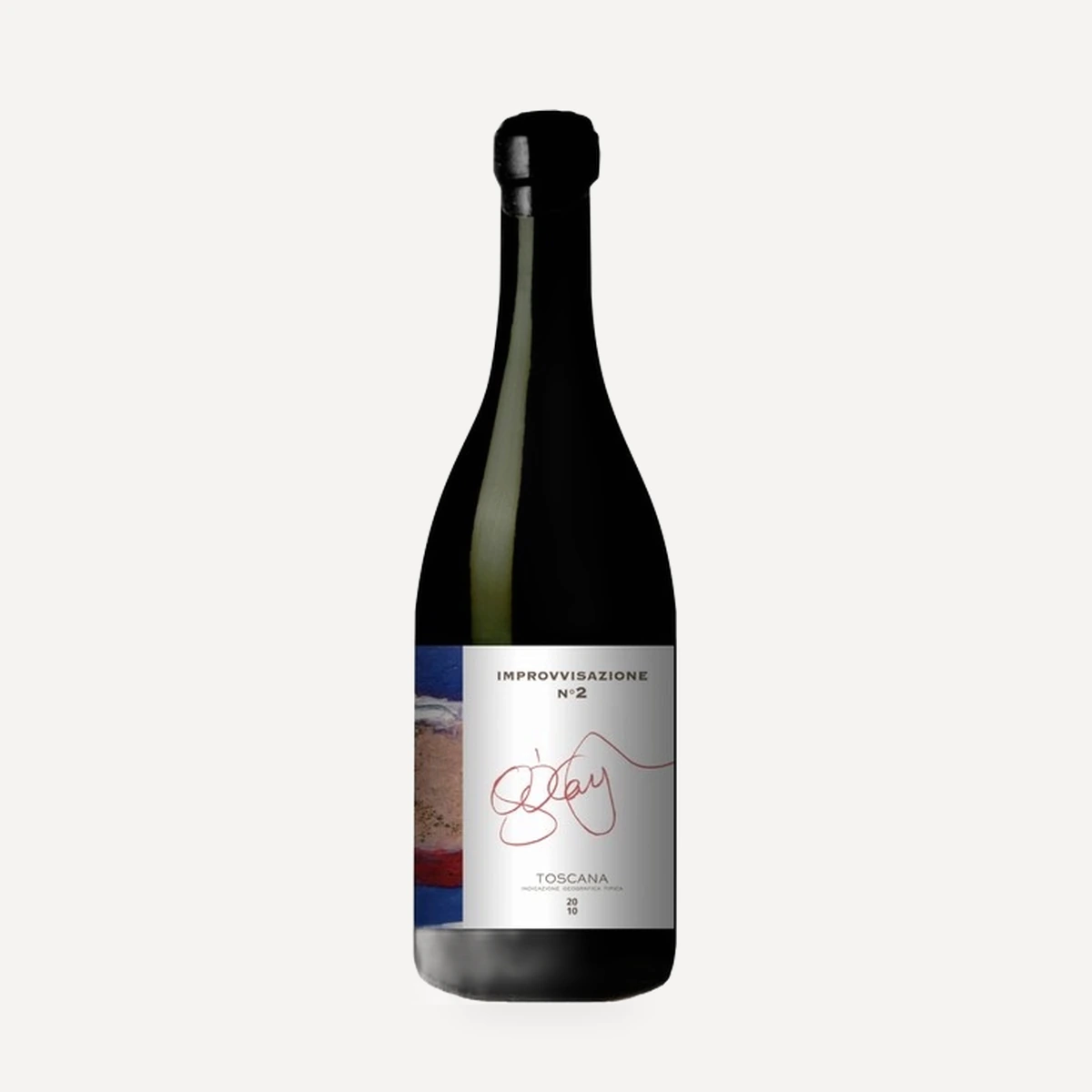
Improvvisazione №2 Toscana IGT