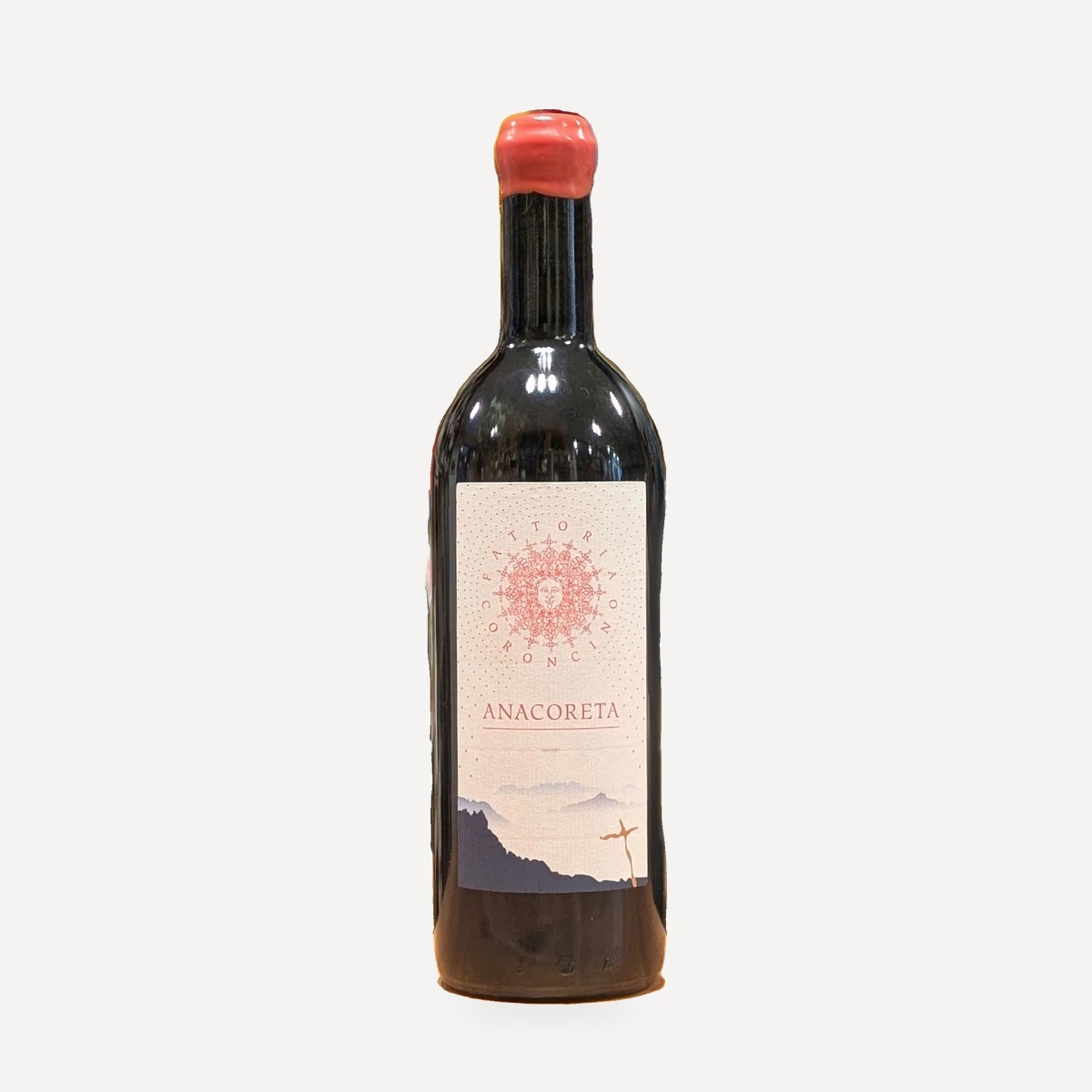
Storia
Family roots
Lucio Canestrari grew up in Rome, where he helped his father run the family’s small trattoria in Piazza Mazzini. His grandparents had opened the Roman osteria in the mid-1920s, and his father subsequently built its reputation. The restaurant taught Lucio to seek balance between the quality of raw materials and the skill with which they are handled.
Fiorella De Nardo grew up at Bibano, near Conegliano, in a farming family that already made wine. Rural life and the seasonal rhythm of agricultural work were therefore familiar to her from childhood.
Lucio and Fiorella met at Milan railway station and fell in love. After completing school and military service, Lucio chose not to return to the restaurant awaiting him in Rome. His great-grandparents had come from Staffolo and still owned a house there, enabling the couple to settle in the town.
1981: foundation in Contrada Coroncino
Fattoria Coroncino was founded at Staffolo in 1981 by Lucio Canestrari and Fiorella De Nardo. That year they bought a house in Contrada Coroncino. With very limited resources and no previous building experience, Lucio spent three years dismantling and reconstructing it piece by piece. The surrounding land then held only a few vine rows, some vines trained to trees, olive trees, walnuts and mulberries.
The physical demands and poor returns of general farm work led the couple to look for an activity capable of sustaining their growing family. Lucio concluded that wine was the one agricultural product for which a grower could establish a price reflecting the work invested in it.
They first planted 0.5 ha of vines, followed by another 7,000 m² and, in the following year, a further 2 ha. Much of this material came from small massal selections recovered from old local vineyards that their owners were preparing to uproot. Lucio and Fiorella financed the development by working in local wineries and restaurants.
On 27 December 1983, while undertaking an ambitious renovation of his father’s restaurant in Rome, Lucio answered a sceptical observer with the Roman expression “’ndo arivo, metto ’n segno”—approximately, “wherever I get to, I will leave a mark.” The phrase became the estate’s motto and appeared on its bottles.
Their children were born during the estate’s formative years: Gaia in 1983, Valerio in 1985 and Fulvio in 1994.
1988–1989: Spescia and independence from outside work
In 1988 Lucio and Fiorella first leased and then purchased a 1.8 ha vineyard at Spescia, on the hills toward Cupramontana. The site was available on favourable terms because it was considered diseased and was planted on very steep ground. It later became the vineyard associated with Gaiospino.
By 1989 the young vineyards were bearing enough fruit for the couple to leave their outside jobs. Production grew in stages from 600 bottles to 1,200 and eventually to a historical level of 16,000 bottles. Over the following two decades they continued planting and brought the business to stability through their work as grower-winemakers.
1993: a decisive change in vineyard management
During the early 1990s, Lucio and Fiorella began questioning fertilisation intended to produce a predetermined or supposedly perfect grape. In 1993 they took direct control of vineyard management, stopped using outside technical direction and discontinued fertilisation throughout the vineyards. They did not subsequently resume it.
They associated this choice with lower yields, more distinctive flavours and a clearer relationship between the vines and their soils. Their reasoning was that unfertilised vines must explore the ground more deeply for nutrients, whereas surface or foliar feeding diminishes the influence of the site. They also chose to harvest fruit when fully mature and flavoursome rather than picking early simply to retain acidity.
Recognition and the development of the range
In 1999 Fattoria Coroncino received the Premio Città di Staffolo. The award recognised the estate’s role in taking Staffolo’s name into international guides and the first historic Tre Bicchieri received by Gaiospino. The distinction was notable because the civic prize generally honoured an individual artist or intellectual rather than an agricultural business representing its territory.
As the estate became better known, buyers at fairs sought guarantees about quality and available quantities. Lucio and Fiorella nevertheless declined to buy outside grapes: bottling remained limited to what their own vineyards provided. The motto “’ndo arivo, metto ’n segno” came to express this acceptance of natural limits. Wines including Il Bacco, Il Coroncino, Gaiospino and Stracacio emerged over time, sometimes reflecting exceptional vineyards or particular vintages rather than a predetermined commercial plan.
2005: Valerio joins permanently
Valerio Canestrari, born in 1985, joined Fattoria Coroncino on a permanent basis in 2005 after six years of oenological education, four of them at Conegliano. Lucio taught him to seek balance, question received advice and observe with critical distance. Valerio introduced a more attentive approach to individual stages of the work while seeking to preserve the strength and richness historically associated with the estate rather than imitating the past.
His aim is to make wine with a personal identity that remains a product of its ground, without attempting to design the grapes in advance for a fixed result.
Since 2021
Lucio died in 2021. Valerio now runs the work with Fiorella, tending 14 ha registered for Castelli di Jesi Verdicchio Riserva Classico as well as red-variety plantings. He also collaborates with other young growers in Staffolo, sharing ideas and working collectively to strengthen the identity of the territory.
Terroir
Fattoria Coroncino is based at C.da Coroncino 7 in the hills of Staffolo, within the Castelli di Jesi area of Marche. The cellar stands on a hill with views toward the sea, while the estate’s vineyards extend through Staffolo, San Paolo di Jesi and Cupramontana.
Most sites are characterised by high proportions of clay and little coarse mineral skeleton. These clay-rich soils provide a substantial substrate capable of storing water, although their structure is described as mobile. Contrada Coroncino, Cerrete and Mimosa contribute to this predominantly clay-based group.
A distinct calcareous sector lies at Spescia in Cupramontana. Here the strongly sloping ground occupies a former gypsum quarry and contains calcareous marl with significant calcium carbonate mixed with clay. The combination gives the soil both cohesion and friability. The Spescia hillside lies opposite the winery and supports the historic Gaiospino vines as well as adjacent Verdicchio and red-variety parcels.
Estate vineyard elevations generally fall between 250 and 350 m, with north-west, north-east, south-east, south-west and west-facing sites represented. The contrast between Staffolo’s clay soils and Cupramontana’s calcareous marl is treated as a basis for obtaining materially different grapes from different vineyards.
Vinificazione
Fertilisation was discontinued across the vineyards in 1993, when Lucio and Fiorella assumed direct management without outside technical direction. Their intention was to make the roots search the soil deeply for nutrients rather than remain near surface-applied inputs or depend on foliar feeding. The family associates this approach with lower production, more distinctive flavours and a stronger role for vineyard origin.
Spontaneous vegetation is retained between the rows. Depending on the site, it is cut approximately twice when necessary. Most established parcels receive no tillage; the historic Spescia vineyard has not been worked since 1988, while occasional cultivation is used in parts of the Contrada Coroncino group. Young plants receive closer under-row attention. Under-row vegetation is controlled manually, or by a combination of manual and mechanical work in certain Spescia parcels.
Vines are pruned by hand according to their individual form and capacity, using single and double Guyot systems. The red parcels may receive cluster thinning at veraison in high-yielding years. Much of the white-vine material comes from historical massal selections: some grafting wood was recovered from the Gaiospino vineyard and from a vineyard dating to the early 1900s, while several 1970s vineyards originated from massal selections maintained by small local nurseries.
Harvest decisions are normally based on full flavour and physiological maturity rather than early picking for acidity. Fruit is collected in clean crates, with individual clusters checked during picking. In the variably ripening Stracacio parcel, harvest is timed to balance slightly underripe clusters with others moving toward natural dehydration. The estate neither purchases grapes nor sells wine in bulk.
The cellar is treated as a place for attentive observation of each vineyard and must rather than for imposing a fixed result. Grapes are checked cluster by cluster at harvest, placed in clean crates and generally pressed gently. White must may undergo static settling, with limited temperature control rather than a strongly managed fermentation regime.
Fermentations begin spontaneously with indigenous yeasts. Stracacio, normally the first must to start fermenting, acts as a natural pied de cuve whose indigenous yeast population helps initiate the other cellar fermentations. Depending on the parcel and the character found in a given vintage, fermentation and maturation may take place in stainless steel, cement or vitrified cement, 500-litre French-oak tonneaux, smaller French-oak barrels or cocciopesto vessels. Skin contact is used for selected white lots, while the red fruit ferments on its skins in tank.
The wines are allowed to mature on their fine lees, often for extended periods, with time determined by their development. Racking is kept to a minimum in long-aged oak lots. Used oak is favoured where the objective is to refine tannins without masking fruit, although both new and previously used French oak may be employed when a particular lot calls for it.
Blending is based on repeated tasting. Only lots judged to harmonise or “sound together” are combined, and not every available lot must enter a blend. Variations between vats from the same vineyard and vintage are not automatically corrected; a distinct lot may instead be bottled separately. This practice underlies the family’s description of itself as trovatori di vini—finders or troubadours of wine—rather than producers following a reproducible formula.
The estate works with low additions of sulphur dioxide. Current general figures are 30–60 mg/L total SO₂, while earlier cellar guidance gave an average of 50–60 mg/L and contemplated up to 70 mg/L for wines intended for longer ageing. A lightly filtered bottling is used in at least part of the range. Only estate-grown wine considered suitable for bottling is released; no purchased grapes or wine are used and no bulk wine is sold.
Filosofia
Fattoria Coroncino describes its role as that of trovatori di vini, not conventional wine producers. The distinction expresses a refusal to force nature into a fixed protocol or reproduce a market-defined result. The harvest determines the possibilities of a vintage, and even two vats from the same vineyard and year may develop into different wines; such differences can be retained rather than corrected.
The family’s aim is to bring grapes to maturity without poisoning the land, vines or people, then allow the musts comparable freedom in becoming wine. Vineyard work accommodates the individuality of each vine, while cellar work emphasises listening, patience and respect for each vineyard and fermentation.
Lucio’s motto, “’ndo arivo, metto ’n segno,” accepts practical limits while calling for the fullest and most honest use of what is available. Applied to wine, it means bottling what the vineyards and vintage provide rather than purchasing fruit or promising a predetermined quantity. Blending is therefore an act of finding compatible lots, not forcing every component into a planned formula.
Quality is understood through balance, continuity of flavour, a palpable relationship with the ground and digestibility. A good wine should remain a pleasant memory rather than a burden the following day. Valerio’s approach preserves the historical strength of the wines while avoiding imitation: he seeks personal expression that remains inseparable from the soil and resists constructing grapes for an outcome decided in advance.
The same territorial outlook informs Valerio’s collaboration with other young Staffolo growers. He regards cooperation among local protagonists as an important means of strengthening the identity and value of the area.
Vini
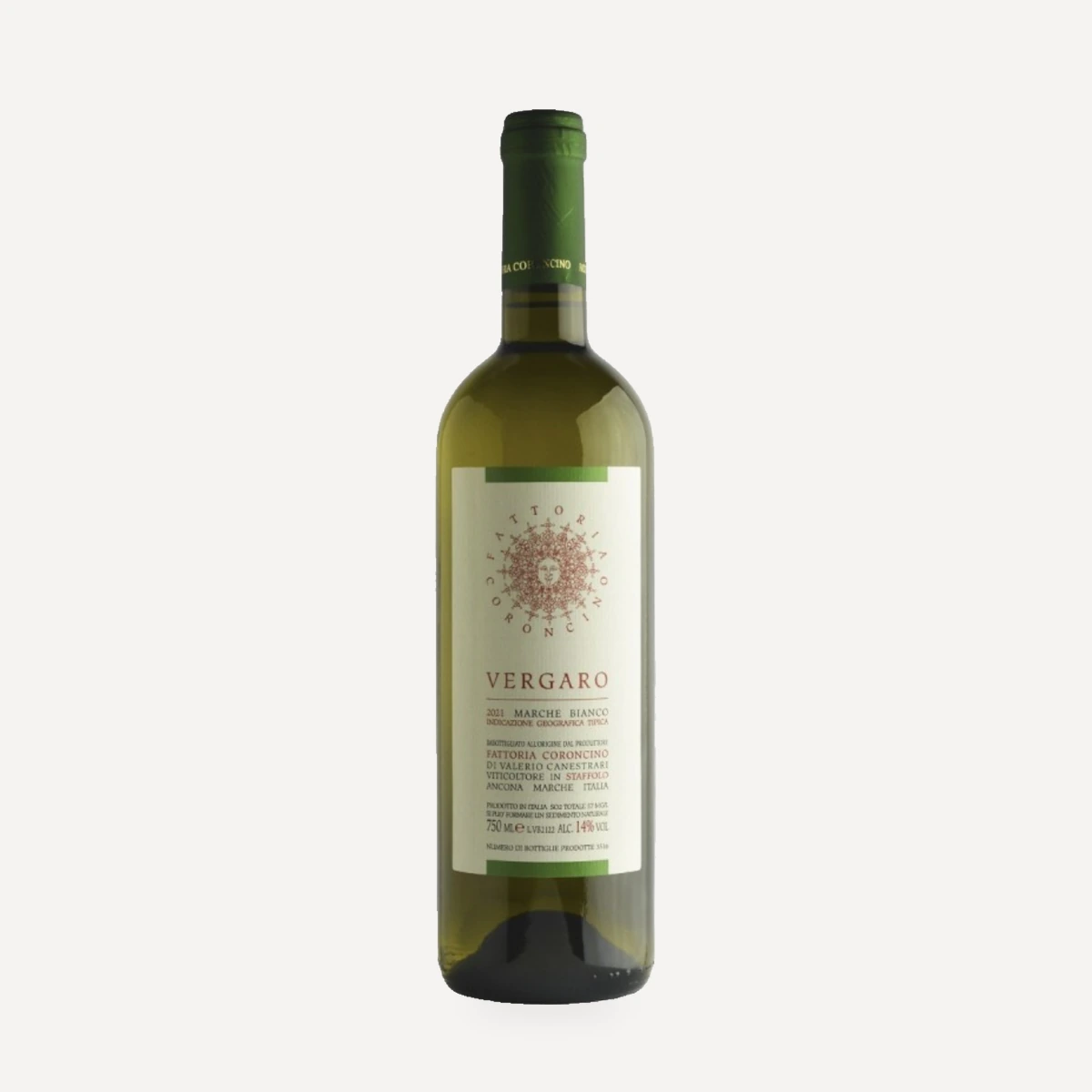
Vergaro Marche Bianco IGT