Storia
Before Vigna Traverso
The winery building at Prepotto originated in the 1970s. Giancarlo Traverso was already producing wine in the Piave area with his wife, Ornella Molon, when, toward the end of the 1980s, he began travelling to encounter other wineries, territories and production techniques. These journeys strengthened his interest in the wines of the Colli Orientali and prepared the ground for a separate estate in Friuli.
1998: the estate is founded
Vigna Traverso began in 1998, when Giancarlo purchased six hectares of vineyards at Prepotto. The initial plantings included the traditional local varieties Ribolla Gialla, Schioppettino di Prepotto and Friulano.
2000: vineyard renewal
In 2000, the vineyards were restructured. Existing supports were replaced with wooden installations and Guyot training was introduced as the principal system. The estate retained its approximately 50-year-old vines and continued cultivating varieties associated with the territory. Production per vine was deliberately restricted in pursuit of quality.
The vineyard holding subsequently reached 22 ha, encompassing white- and red-berried varieties. No date is attached to the expansion from the original six hectares.
2011: redesigning the winery
In 2011, the original 1970s cellar was comprehensively rethought by Giancarlo and Stefano Traverso. They designed the renovated facility around functionality and sustainability. Stainless steel became the principal winery material; French oak was reserved for reds and Sottocastello Bianco, while the other whites matured in steel or concrete. Concrete was selected in part for its ability to insulate and maintain an appropriate temperature without mechanical refrigeration. The building’s position within the hill also allows the earth’s natural temperature to support wine storage.
The present generation
Giancarlo’s passion was passed to his children. Stefano Traverso, an oenologist, now takes the leading role in running the estate. His approach combines the wine culture learned from his father with formal education, technology, research, experimentation and attachment to the Prepotto territory.
Terroir
Location and landscape
Vigna Traverso is based at Prepotto in the Colli Orientali, a few kilometres from the Slovenian border. The vineyards occupy hills and terraces amid woods of chestnut, oak and wild cherry. The surrounding habitat supports roe deer, foxes, badgers and squirrels.
The winery stands within the hill, overlooking terraced vine rows and the surrounding woodland. Several estate sites lie at approximately 160 m above sea level, with exposures ranging from east and north-east to south-east.
Climate
The local microclimate supports both white and red varieties. The Julian Alps shelter the vines from cold northern winds, while the nearby sea supplies mild breezes and ventilation.
Geology and soils
The area’s geology developed through slow sedimentation after the retreat of the sea that once reached the Julian Prealps. The characteristic soil, locally called ponca, consists of alternating marl—calcareous clay—and sandstone formed from cemented or calcified sands.
Soils differ between sites. Ronco vineyards are associated with clay-rich ponca. Ronco della Fiorella and Ronco del Canzutti have Eocene marl rich in potassium and trace elements, with balanced proportions of clay and rock fragments but little organic matter. Ronco Vigna Traverso includes marl with balanced clay and abundant flysch-derived rock fragments; its Castello di Albana sector, near the Judrio River, contains stones and minerals transported from the Julian Prealps. Sottocastello includes moderately textured soil with a substantial stony component.
Vinificazione
The estate comprises 22 ha of vineyards. Its white varieties are Ribolla Gialla, Pinot Grigio, Friulano, Sauvignon and Chardonnay; red varieties are Schioppettino di Prepotto, Refosco dal Peduncolo Rosso, Merlot and Cabernet Franc. Moscato Rosa is also used within the range.
Approximately 50-year-old vines form an important part of the holding, with the Sottocastello Merlot specifically described as more than 50 years old. In 2000 the vineyards were restructured by replacing earlier installations with wooden supports. Guyot is the principal system identified in the estate account, while the individual sites also employ short Sylvoz and Cappuccina according to variety and parcel.
Production per vine is restricted. Published parcel figures range from about 0.8 kg per plant at Sottocastello to 1.60 kg per plant for Friulano; stated hectare yields range from 4,000 kg/ha for the old-vine Sottocastello Merlot to 9,000–10,000 kg/ha for Ribolla Gialla.
Harvesting is manual and uses crates. Picking is scheduled several days apart from one vineyard to another so that parcels can be vinified separately. Timing also varies within individual sites: Friulano is collected in two passes ten days apart, while Moscato Rosa combines a mid-September selection dried for several months in a fruit-drying room with a later-picked portion.
Winery and maturation spaces
The cellar occupies the centre of the hill, facing the terraced rows and woodland. Its original structure dates from the 1970s and was completely redesigned in 2011 by Giancarlo and Stefano Traverso to improve function and sustainability.
Stainless steel is the principal material. French-oak barrels are used for red wines and Sottocastello Bianco, while the other whites mature in stainless steel or concrete. Concrete provides insulation and maintains an appropriate temperature without mechanical refrigeration. The natural temperature of the surrounding earth further assists wine conservation.
Technical approach
The cellar follows an experimental approach. Stabulation and cryomaceration are used to develop aromatic expression, with temperature control and the thermal properties of the building and vessels supporting preservation. The estate harvests its vineyards several days apart to permit separate vinification by site.
Across production, white grapes may undergo soft pressing, cold static settling and temperature-controlled fermentation, with selected lots receiving brief cold maceration. Several whites remain on their lees until spring. Red grapes are destemmed and crushed, with skin maceration and daily délestage; malolactic fermentation and maturation may involve French oak. Sottocastello Bianco ferments in barrique after cold maceration under inert gas and soft pressing, then receives topping-up and bâtonnage until March before decanting, filtration, bottling and a further six months’ bottle rest. Sparkling Ribolla Gialla undergoes secondary fermentation in autoclave at 13°C and remains on its lees for six months.
Filosofia
Vigna Traverso defines its approach as one in which technique serves nature. Giancarlo Traverso’s attachment to the wines of the Colli Orientali developed through travel and direct study of other wineries, places and methods. Stefano Traverso combines the culture inherited from his father with formal oenological training.
The resulting philosophy brings together technology, research and experimentation with affection for the Prepotto territory. In practice, this is expressed through parcel-by-parcel harvesting, separate vinification, controlled vine yields, the preservation of mature vineyards, and a cellar designed to use the thermal properties of concrete and the earth in place of unnecessary refrigeration.
Vini

Schioppettino di Prepotto

Friulano

Sauvignon

Troj

Pinot Grigio

Sottocastello Bianco

Merlot

Cabernet Franc

Ribolla Gialla

Sottocastello Rosso

Moscato Rosa
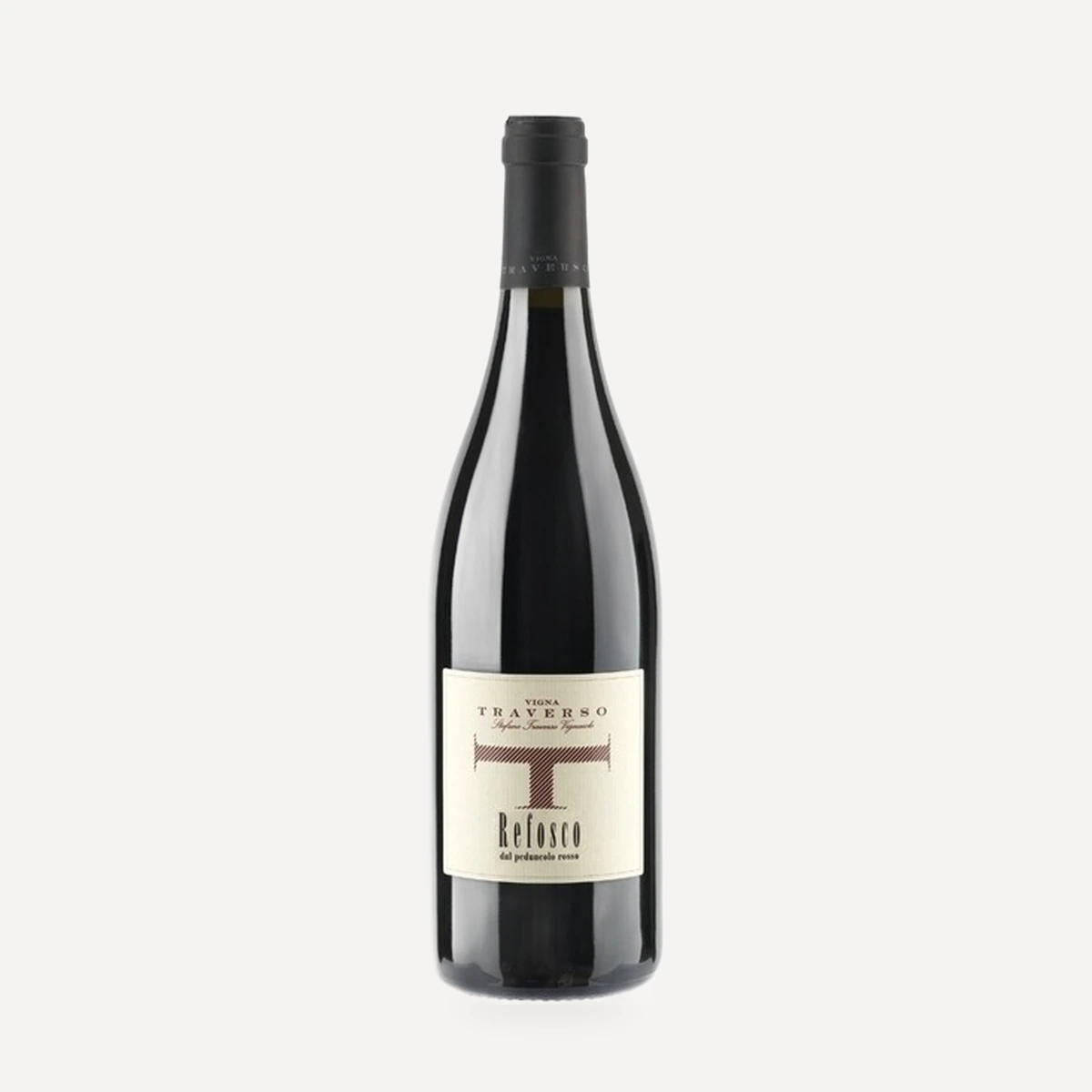
Refosco dal Peduncolo Rosso
