History
Agricultural and mechanical roots
The Cosimi family’s story begins at Castelnuovo dell’Abate, where Bramante Cosimi worked as a sharecropper. During the 1930s, he opened a workshop in S. Angelo and repaired tractors. His son Roberto subsequently established a widely known agricultural-machinery business in S. Angelo Scalo.
1971: the creation of Il Poggiolo
In 1971, Roberto Cosimi used savings accumulated through the sale of agricultural machinery to acquire Il Poggiolo: 65 hectares in an elevated position approximately 1 km southwest of Montalcino. The property was uninhabited and had neither a cellar nor a single vine. At that time, Montalcino had only 28 Brunello producers, and Brunello had not yet developed the economic and commercial stature it would acquire in later decades.
Roberto planted the first 3 hectares of vines and equipped the new operation with cement vats and 30-hectolitre Slavonian-oak casks. His ambition was to produce and bottle wine under the family’s own responsibility.
1975–1980: the first Brunello
The estate identifies 1975 as its starting vintage. In 1980, the cement vats and Slavonian-oak casks were used to produce the first 4,000 bottles of Brunello di Montalcino from the 1975 harvest.
1984–1985: Rudy Cosimi and Sassello
Rudy Cosimi’s decisive encounter with the wine trade came in 1984, when he attended Vinitaly for the first time. In 1985, he began adding his own ideas to the family project and created Sassello. Conceived according to the logic of French crus, Sassello was a selection offered at twice the price of the basic wine. Rudy presents it as the first Brunello di Montalcino cru, introduced when this type of market positioning was not yet customary.
1989: generational succession
Roberto Cosimi died in 1989. Rudy consequently assumed responsibility for the estate and continued making wine in the manner he associated with his father’s work. His objective has remained the refinement of an artisanal product rooted in the wines of Montalcino.
The family today
Il Poggiolo remains a family-run winery. Rudy describes a tradition carried from his grandparents to his parents and then to himself and his brother. The next generation is represented by his daughter, while his partner, Cecilia, also participates in the family project. Cecilia has consistently supported Rudy while providing a critical counterpoint to his ideas, encouraging his creative impulses while moderating excesses; Rudy credits many of his intuitions to her influence.
The estate characterizes itself as a small-scale producer with relatively few bottles but numerous labels, each developed with its own history and underlying idea. The fourth generation continues the family connection to Montalcino, sustainable Sangiovese cultivation and artisanal production.
Terroir
Il Poggiolo lies at Podere Sasso al Vento, approximately 1 km southwest of Montalcino in Tuscany. The estate occupies an elevated position, and its wine-growing locations are identified at approximately 450 metres above sea level. Rudy Cosimi associates this altitude with elegance and pronounced acidity in the wines.
Montalcino’s landscape consists of rolling hills surrounding the medieval settlement. Its climate is characterized by mild winters and hot, dry summers.
The principal estate soils have a sandy-loam texture with clay and abundant coarse galestro material. South-eastern exposures associated with Sassello and Sasso Nero combine sandy loam with limestone plates and plentiful skeletal material. The Chardonnay component is grown on red soils with a substantial mineral presence. The Pinot Nero vineyard occupies the eastern side of the Il Poggiolo vineyard and shares the sandy-loam, clay-rich, galestro-strewn profile.
Winemaking
Sangiovese is cultivated through methods characterized as sustainable. The estate’s viticultural principles centre on respect for the vineyard, natural rhythms, biodiversity and soil health. Its stated framework favours avoiding pesticides and chemical fertilizers in favour of biological or biodynamic methods, encouraging useful insects through flowers and other plants between the rows, using water and energy responsibly, reducing waste, and harvesting at the point considered best suited to the natural cycle and terroir.
This environmental position is paired with Rudy Cosimi’s skepticism toward organic terminology used chiefly as a marketing device. He does not reject organic products, but places greater emphasis on the substance of farming and artisanal work than on promotional claims.
Establishing the cellar
When Roberto Cosimi acquired Il Poggiolo in 1971, the property had no cellar or winemaking equipment. He installed cement vats and 30-hectolitre Slavonian-oak casks. These vessels formed the production base for the first 4,000 bottles of Brunello di Montalcino, bottled in 1980 from the 1975 vintage.
Current approach
Rudy Cosimi defines his cellar practice as classical and artisanal, with the work performed by hand. He aims to continue the production ethos inherited from Roberto while making the resulting wines progressively more refined and pleasurable. The range combines the traditional Brunello project with cru selection and later experiments in varieties, styles and sparkling-wine methods, but retains small-scale family production as its organizing principle.
Philosophy
Il Poggiolo’s philosophy links winegrowing to a personal and generational relationship with Montalcino. For the Cosimi family, making wine is presented not merely as an occupation but as a way of respecting the land in which the family was born and carrying its traditions forward.
Nature is treated as the primary creative reference. Work among the vines is understood as a relationship that should deepen through daily attention, with passion, family tradition and respect for the natural environment carried into the wines. Quality is associated with dedication to the land, sustainable cultivation and careful artisanal production.
Rudy Cosimi combines continuity with creative independence. He seeks to preserve the classical style and hands-on work inherited from Roberto while refining the wines and developing labels with distinct identities. Sassello’s cru concept and the playful names and designs across the range reflect this experimental, artistic side.
His position on organic wine is deliberately nuanced. He is not opposed to organic products, but is critical when the term functions primarily as marketing. His emphasis remains on how the vineyard and cellar are actually handled rather than on fashionable language.
Family participation is central to the estate’s identity. Cecilia’s critical perspective balances Rudy’s creative impulses, while the involvement of his brother and daughter maintains continuity between generations.
Wines
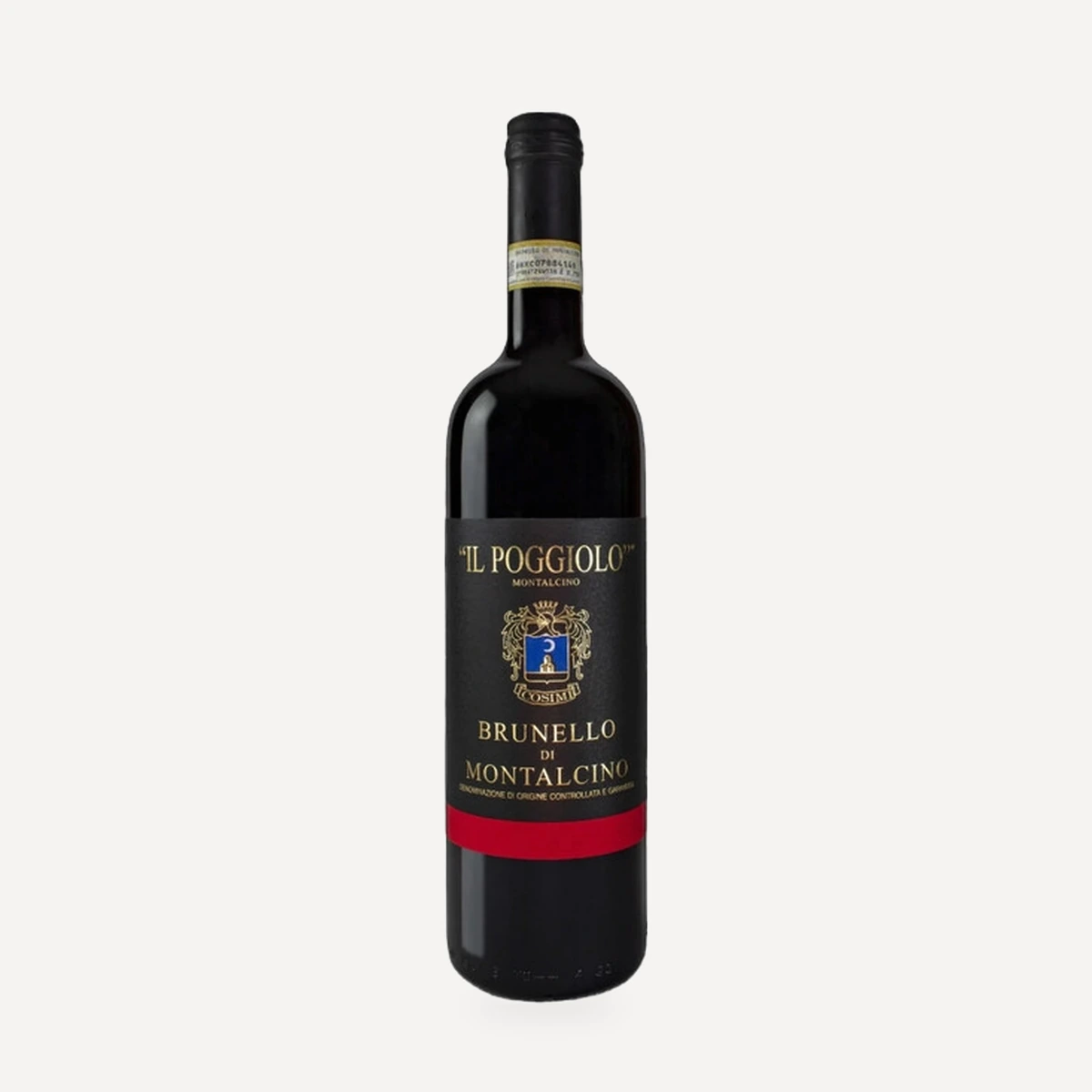
Brunello di Montalcino Il Poggiolo 2020
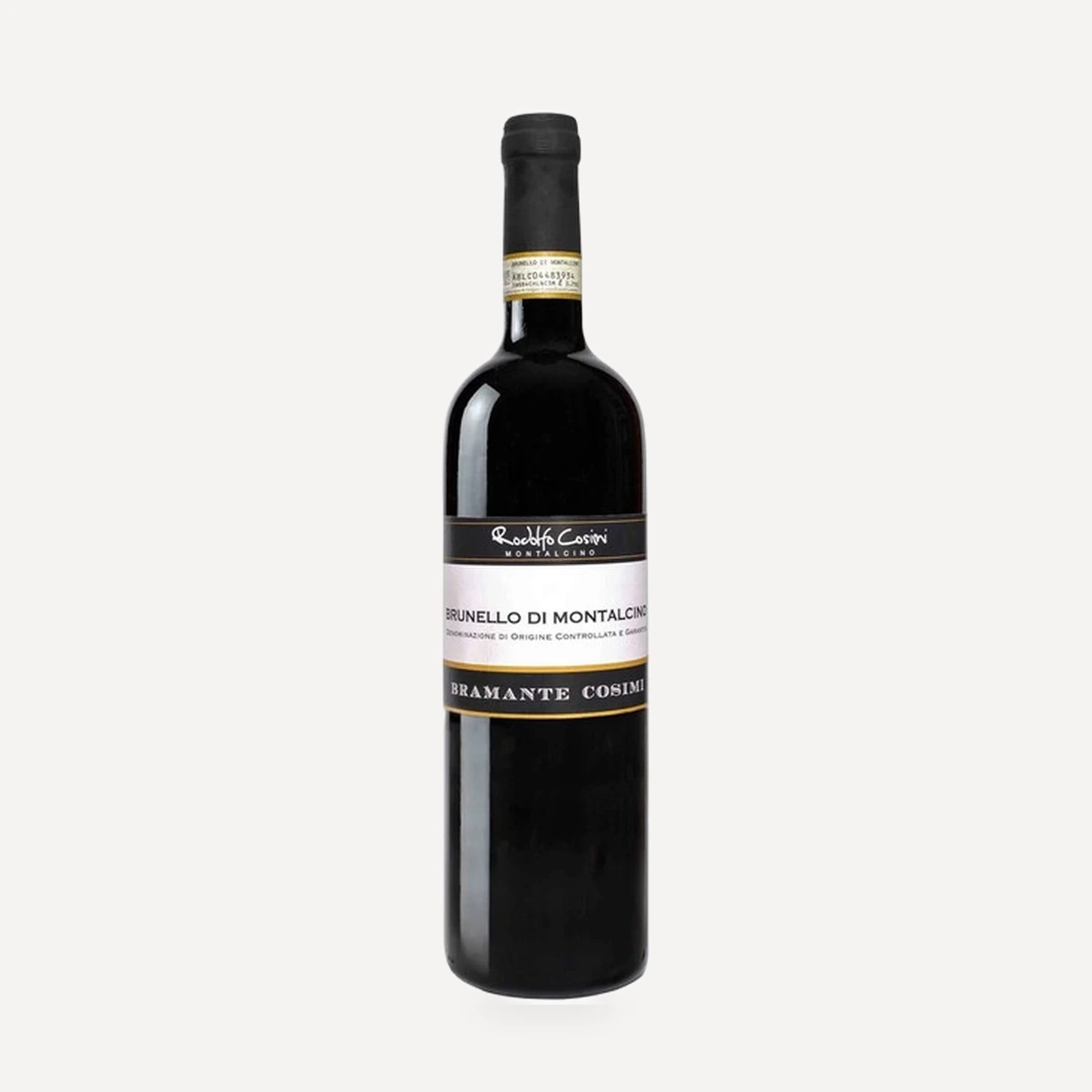
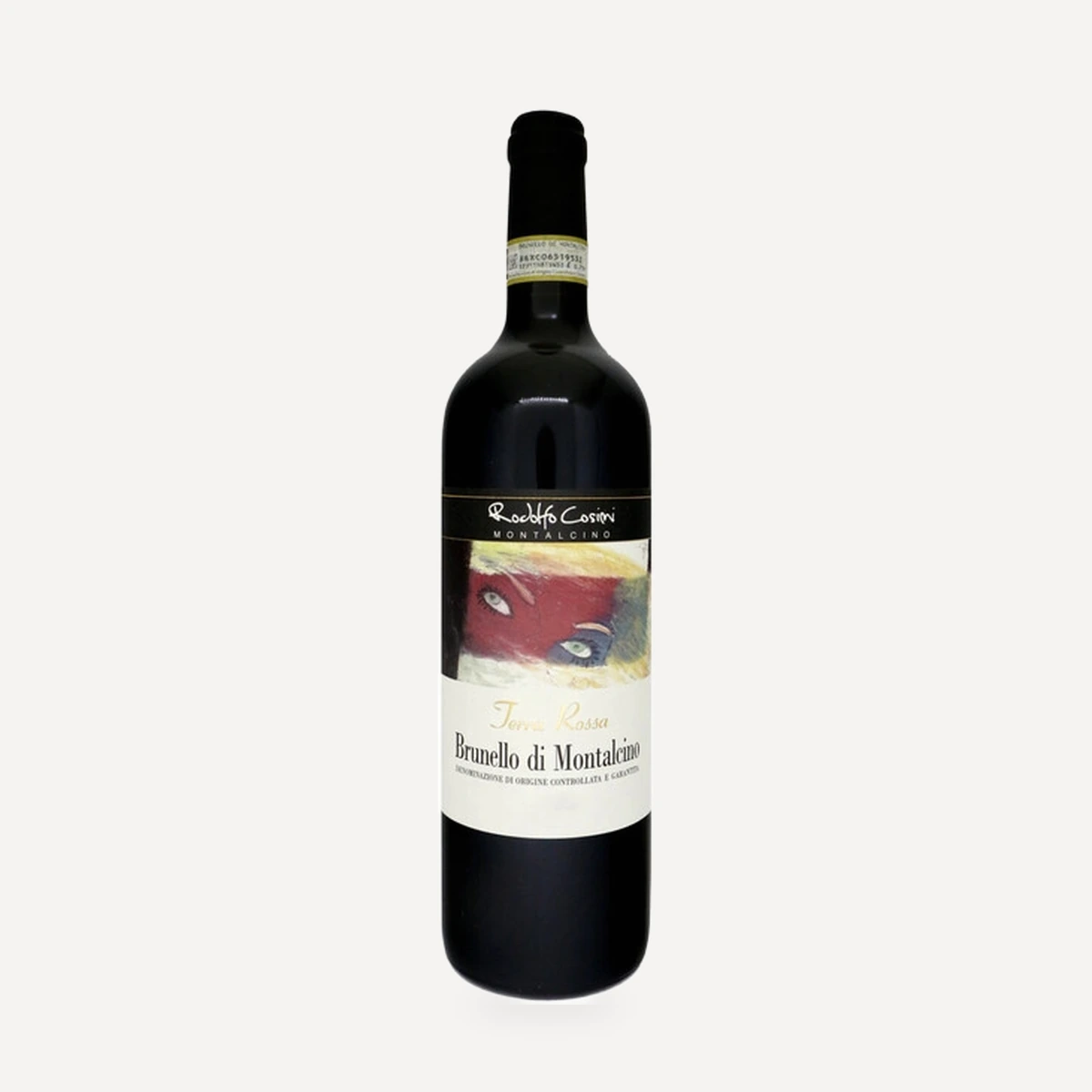
Bramante Cosimi Brunello di Montalcino DOCG
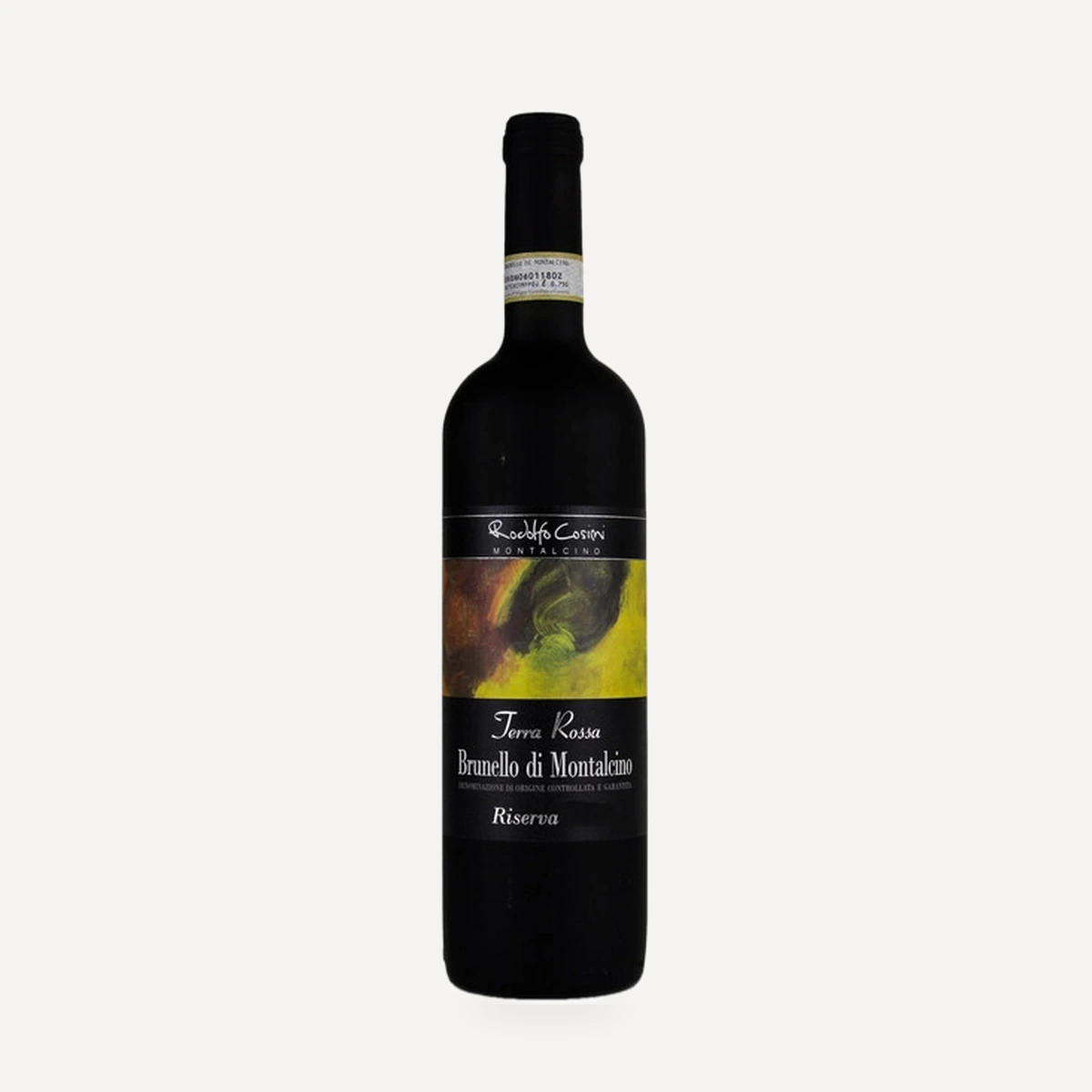
Terra Rossa Brunello di Montalcino Riserva DOCG
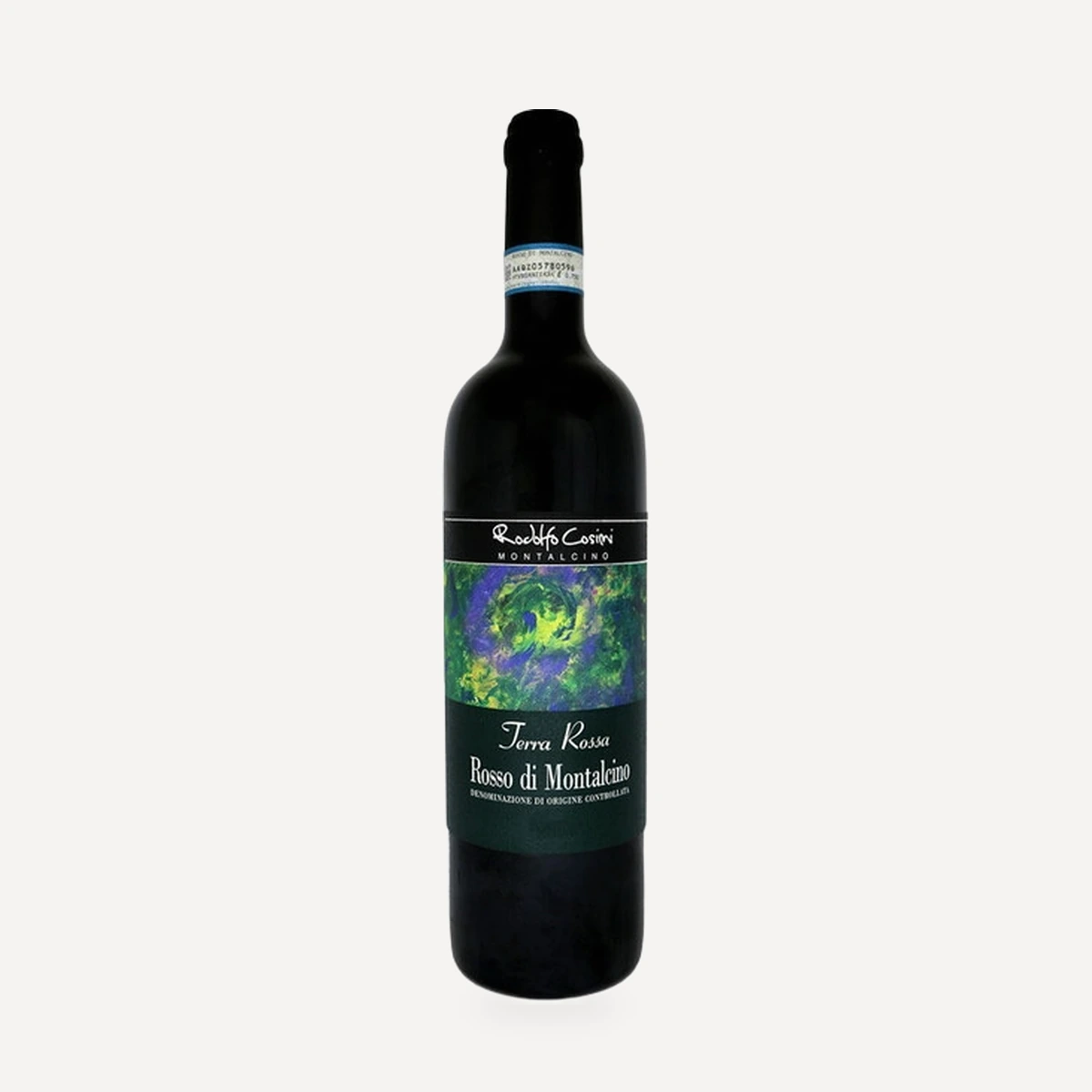
Terra Rossa Rosso di Montalcino DOC
Brunello di Montalcino Riserva Il Poggiolo 2019
Brunello di Montalcino Il Mio Brunello Riserva 2012 Magnum 1,5 l
Brunello di Montalcino Sassello
Rosso di Montalcino Il Poggiolo Sassello 2023
Rosso Il Poggiolo Sasso Nero 2022 IGT
Bottaccio Rosso Merlot Il Poggiolo 2018 IGT
Pinot Nero Toscana Il Poggiolo 2018 IGT
Chardonese Il Poggiolo 2022