History
Monastic origins
The oldest surviving part of the property dates from the mid-15th century. It was an outlying establishment of the Discalced Carmelite friars of Santa Maria de Senioribus, whose principal monastery stood about 8 km away, on the site of today’s Museo Rambotti in Desenzano del Garda. The friars used the estate for productive purposes. A few hectares of vines were entrusted to local sharecroppers, who made wine for Mass. This establishes more than five centuries of viticulture around the original house.
An old marble portal bearing the friars’ coat of arms survives in the historic room. Its emblem became the Ca’ dei Frati mark. The estate’s name—literally the house or place of the friars—preserves this monastic history.
1782: the documented cellar
The property entered the written record in 1782. The document described a house with a cellar in Lugana, in the territory of Sermion, known as the place of the friars. This documentary reference predates the Dal Cero family’s arrival but confirms that a cellar already formed part of the property.
1939: the Dal Cero family arrives
In 1939, Felice Dal Cero, son of Domenico and already a winegrower in Montecchia di Crosara near Verona, moved into the historic house at Lugana di Sirmione. He recognized the area’s aptitude for vines and began the modern family chapter of Ca’ dei Frati. The estate identifies 1939 as its foundation year and presents its work as the continuity of four generations of winegrowers.
Felice’s son Pietro subsequently assumed a central role. Pietro gave his son Igino responsibility in the cellar before Igino had reached adulthood, allowing him to make decisions, learn through mistakes and develop his own judgment while remaining under close paternal supervision.
1967–1969: Lugana DOC and the first bottled wine
In 1967, Pietro Dal Cero joined other local growers in establishing and signing the first Lugana DOC production rules. Lugana became the first recognized denomination in Lombardy. The initiative helped move a locally appreciated wine beyond the earlier practice of selling it loose in demijohns.
In 1969, Ca’ dei Frati bottled its first Lugana under the name Lugana Casa dei Frati. The label was subsequently renamed Ca’ dei Frati. This first 1969 vintage became the foundation of I Frati and the winery’s long association with bottled Lugana DOC.
New expressions under Pietro Dal Cero
Brolettino was created in 1987. It was among the early Lugana wines matured in French oak and developed as a more structured expression of Turbiana.
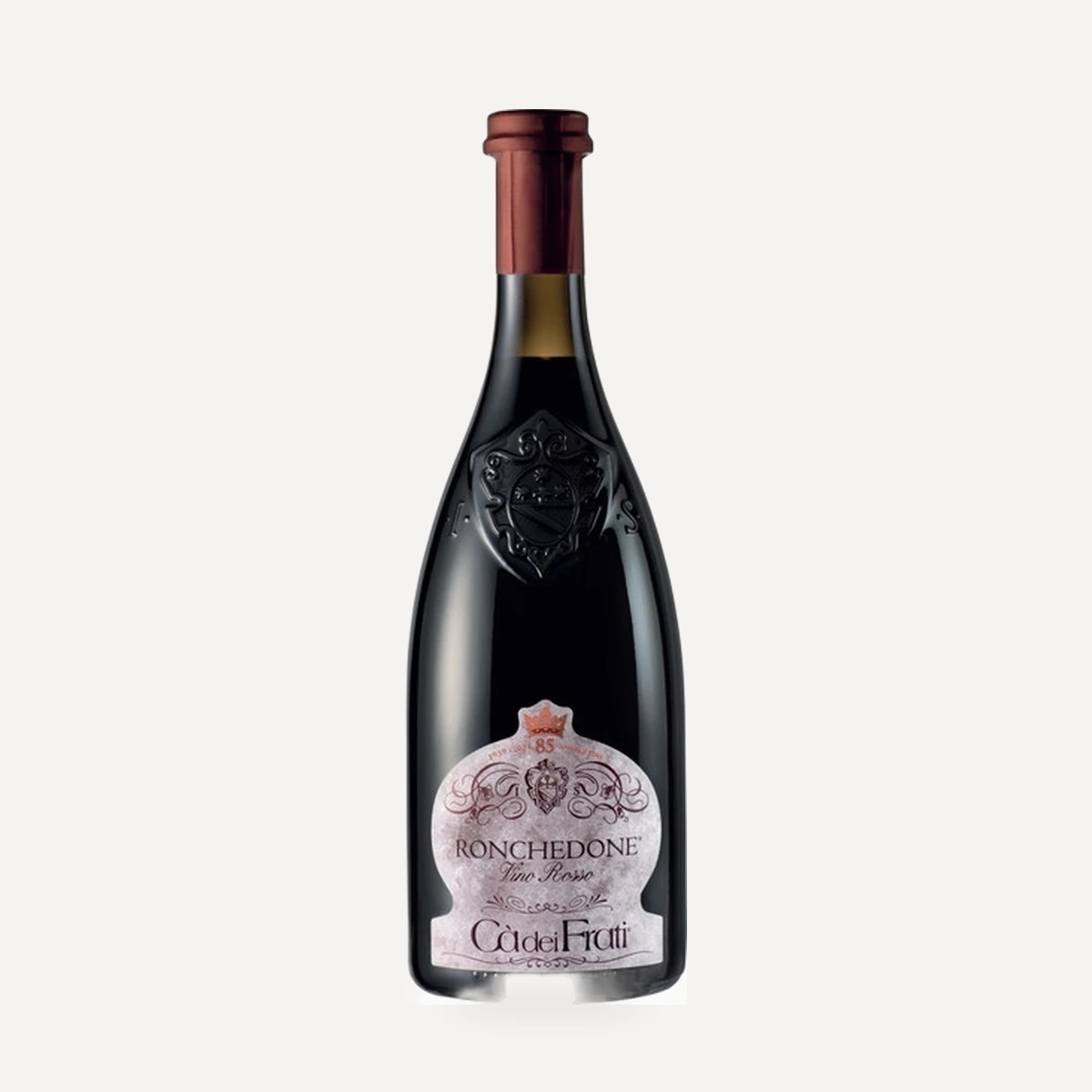
Ronchedone followed in 1989 at Pietro’s initiative. Its creation reflected the family’s recognition that selected sites and microclimates in an area identified primarily with white wine could also support a substantial red wine.
Pratto was already part of Pietro Dal Cero’s work during the 1980s. Originally made with an oak passage, it later moved away from wood to emphasize freshness while retaining its identity as a late-harvest blend of Turbiana, Chardonnay and Sauvignon Blanc.
Expansion into Valpolicella
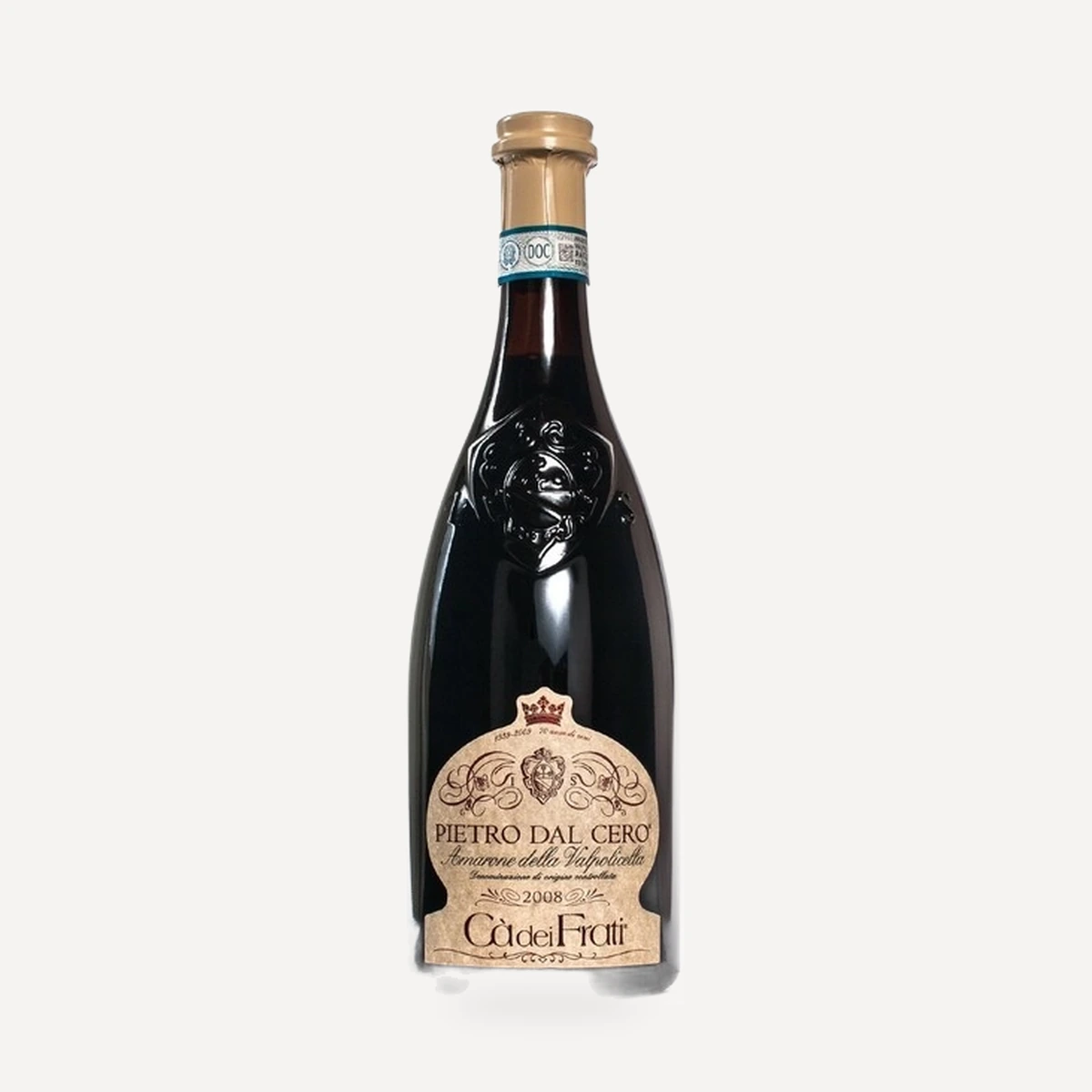
At the beginning of the 21st century, the estate added 11 ha in Valpolicella at Pian di Castagnè, including the Luxinum vineyard. The move returned the family to the eastern Veronese lands associated with Pietro’s origins. Corvina, Corvinone and Rondinella from these holdings became the basis of Amarone della Valpolicella Pietro Dal Cero DOCG, dedicated to him.
2012: succession within the family
Pietro Dal Cero died in 2012. His cultural and viticultural legacy passed to his wife, Santa Rosa, and their children Igino, Gian Franco and Anna Maria. Igino leads the estate and works as producer and oenologist; Gian Franco is the agronomist responsible for vineyard supervision; Anna Maria manages office administration and bureaucracy. The estate also presents a fourth generation as the current guardian of the family legacy.
Technical modernization
Trials with Vinventions technical closures began in 2015 and included visits to the manufacturer’s Belgian headquarters. In 2017, Ca’ dei Frati adopted Nomacorc across its still-wine range. Select Green 100 closures, made from recyclable sugar-cane polyethylene, were chosen for most wines, while a different-permeability Riserva closure was selected for the Amarone. The system was adopted to control oxygen transfer, eliminate the risk of cork taint and preserve varietal aromas during bottle development.
A new grape-reception and pressing installation was inaugurated in 2020. Grapes can enter the presses by gravity as whole berries, crushed fruit or destemmed fruit. The reception tanks, presses and subsequent handling operate under protection from oxygen, using carbon dioxide or nitrogen where required. Four presses apply gradual, uniform pressure and separate the free-run juice and first press fractions. The winery has continued to expand its production spaces and upgrade its in-house analytical laboratory.
In 2022, Ca’ dei Frati introduced a dosage-zero traditional-method sparkling wine, presented at Vinitaly as a counterpart to its Extra Brut Cuvée dei Frati.
Privilegio di Famiglia
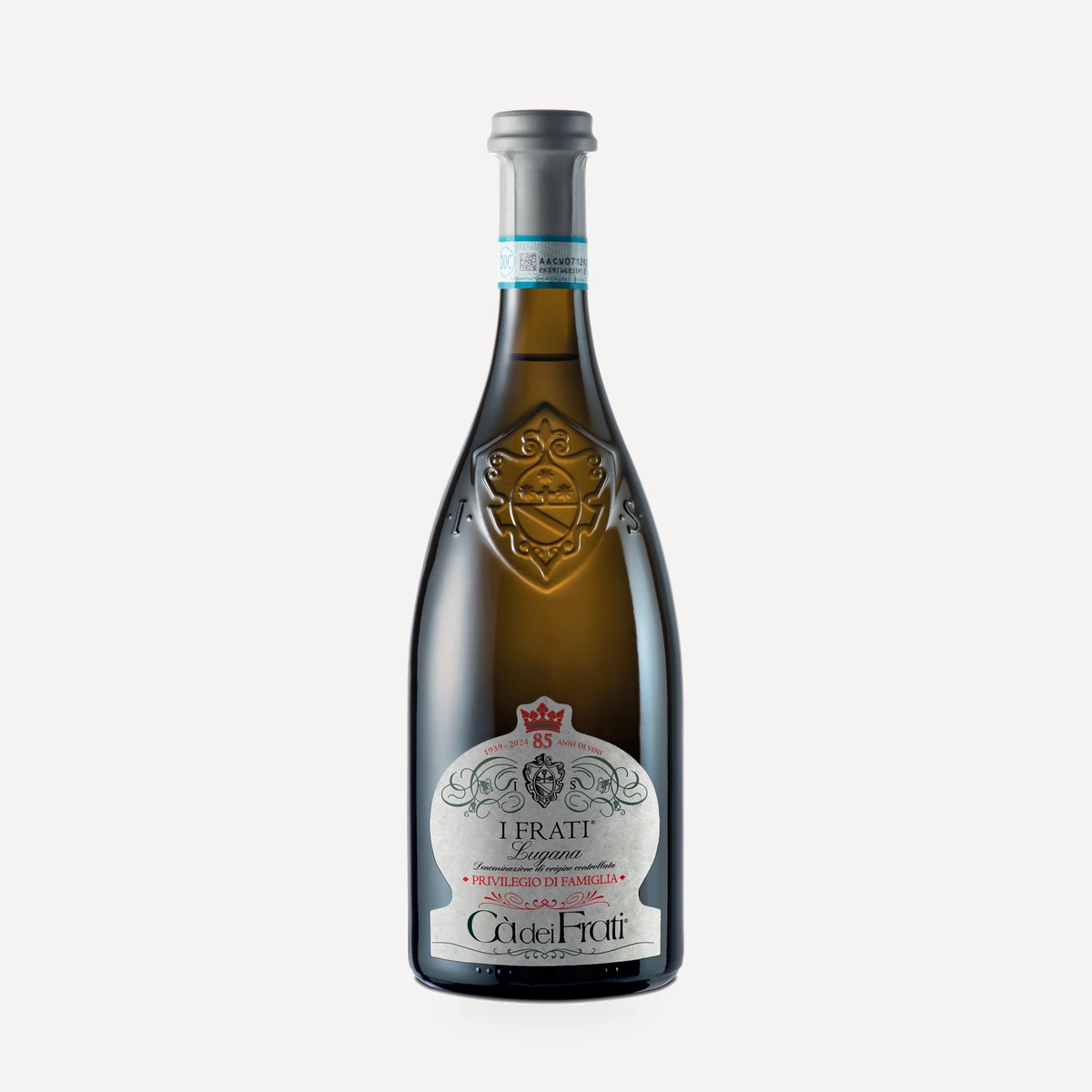
The registered Privilegio di Famiglia range was inaugurated at Vinitaly in 2023. Its origin lay in the family’s decision to retain selected wines from the 2017 vintage—the 50th anniversary of the 1967 Lugana DOC rules—and mature them for five years in bottle under temperature-controlled, dark cellar conditions. The range began with I Frati and Brolettino and later included Ronchedone. Production remains deliberately restricted: a recent release comprised 5,000 bottles of I Frati and 4,000 bottles each of Brolettino and Ronchedone.
Terroir
Southern Lake Garda and Lugana
The principal owned vineyards lie in Lugana di Sirmione and around the tower of San Martino della Battaglia, with further sites around Pozzolengo. Grapes can reach the winery from holdings within a maximum radius of about 20 km, limiting the interval between picking and processing.
Lake Garda forms a Mediterranean-like enclave between the Lombard and Venetian Prealps. The landscape is predominantly level, while the lake acts as a thermal regulator. It softens climatic extremes, reduces the danger of spring frost and supports gradual ripening. Olive trees, lemons, citrons, almonds, agaves and palms grow alongside vines in this mild environment.
The soils are described as calcareous, clayey and silty. Their clay matrix retains water and supported the vines through the dry summer of 2024. In areas approaching the first morainic hills, limestone-clay soils can also contain silt and sand. The broader southern Garda landscape has glacial and morainic origins.
Wind is fundamental. The Pelér blows from north to south and contributes to day–night temperature variation. Around the Bay of Lugana, the constant Luganott breeze dries the berries after nocturnal humidity, helping keep bunches sound until harvest. Cool summer nights slow vine metabolism after daytime heat and help retain freshness and aromatic definition. The lake, evening breezes, light and temperature variation together encourage gradual ripening.
The district was once covered by woodland and marsh known as Silva Lucana, a name connected with Lugana. Deer, fallow deer and wild boar inhabited this former landscape.
San Martino della Battaglia
Vines grow around the historic tower in the battle park. Some are more than 40 years old and are trained either to Guyot or pergola. The setting combines open sun with the historical landscape of San Martino and Solferino.
Eastern Valpolicella
The Valpolicella holdings lie at Pian di Castagnè, Luxinum and Marcellise on the hills and valleys east of Verona. Luxinum takes its name from the Latin lux, light: its exposure provides approximately 12 hours of sunlight. In Marcellise, Corvina grows on ancient, stratified calcareous marl. These soils combine drainage with mineral reserves. Other descriptions of the Amarone sites identify limestone, white shingle and clay.
Winemaking
Viticulture begins with daily observation of the land, vines and annual vegetative cycle. The estate treats every growing day as part of the finished wine and adapts harvest timing to each parcel, grape and intended style.
All grapes are harvested manually in both Lugana and Valpolicella, even where denomination rules do not require it. Picking begins at dawn and can continue into the afternoon under the supervision of Gian Franco and Igino. Harvesters select bunches one by one, place them gently in crates without crushing and exclude damaged berries. More than 200 people can work under the field manager during harvest.
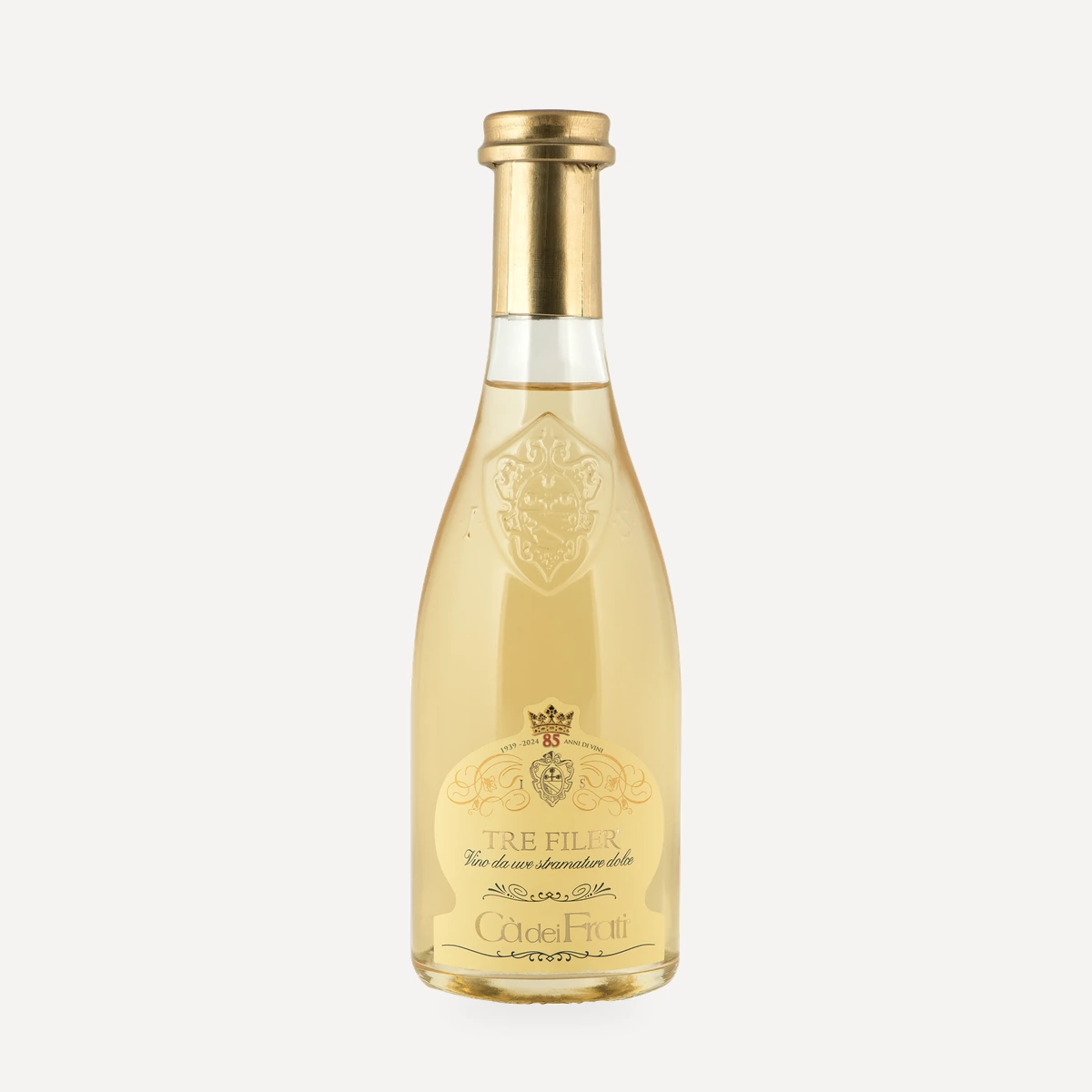
Maturity decisions consider sugar, acidity, phenolic development, variety, parcel and intended wine. Turbiana is collected at several degrees of ripeness. Some vineyards receive two passes, with selected grapes left on the vine for a second harvest about 45 days later. Chardonnay for sparkling bases is among the first fruit collected; most Turbiana follows, while overripe Turbiana, Chardonnay and Sauvignon Blanc are retained for late-harvest material. Grapes destined for the sweet wine remain on the vine to dry and are picked last.
The canopy is trimmed through the season to protect bunches while maintaining appropriate exposure. Anti-hail nets are used in Marcellise to defend thick-skinned Corvina from berry damage and subsequent rot without blocking sun, warmth or ventilation. Grapes intended for Amarone are selected by hand for health, compactness and suitability for natural drying.
The 2025 season required fewer phytosanitary treatments because regular rainfall and balanced conditions helped preserve the berries’ natural waxy bloom. A wetter beginning to August required closer attention, but dry weather returned by mid-month. No organic, biodynamic or regenerative certification is claimed.
Young collaborators and interns participate through partnerships with vocational schools, using harvest as practical training in vineyard and cellar work.
Parcel separation and reception
Grapes from every vineyard are vinified separately so that the cellar team can evaluate individual expressions before blending or maturation. Fruit is processed promptly after picking; the core vineyards lie within roughly 20 km of the winery.
The reception and pressing area inaugurated in 2020 is gravity-fed and can process whole, crushed or destemmed grapes. Reception tanks are saturated with CO₂. Removing oxygen prevents premature oxidation and stops uncontrolled fermentation by indigenous yeasts before pressing.
Pressing and juice selection
Four presses operate with gradual, uniform pressure. Soft pressing extracts free-run must and the first, cleanest press fractions while avoiding broken seeds and bitter compounds from excessive skin pressure. Pressing time, pressure and fraction separation are adjusted to the incoming fruit. The must remains protected from oxygen throughout this stage.
Fermentation and laboratory control
Fermentation takes place principally in stainless-steel tanks. Automatic temperature control allows slow, regular development. Temperature, acidity, sugars and fermentation progress are monitored daily in the winery’s own laboratory. Carlo, Igino and the cellar team taste the musts every day and compare lots from different sites. A typical Turbiana fermentation lasts approximately two weeks.
Rosé production involves brief skin contact, followed by low-temperature stainless-steel fermentation. Red wines receive longer maceration in steel. Malolactic fermentation is used for the estate’s substantial reds and omitted for the principal Turbiana and rosé expressions.
Oxygen management and transfers
Protection from oxygen continues through must and wine handling. Nitrogen or CO₂ is used to maintain inert atmospheres where required. Controlled transfers and microfiltration separate coarse lees without unnecessarily stressing the wine. Flow, pressure and transfer timing are adjusted by the cellar team according to the development of each lot. Bottling is conducted without oxygen.
Maturation
Stainless steel and French oak are the principal maturation vessels. Fresh Turbiana expressions remain on fine lees in steel; more structured wines may mature in new, medium-toast French oak. Bottle maturation is an integral part of the program: selected Privilegio di Famiglia wines remain in the dark, temperature-controlled cellar for five years. The line is released in intentionally limited quantities only when the family considers the wine ready.
Traditional-method sparkling wines undergo secondary fermentation and lees maturation in bottle. The Cuvée program includes Extra Brut and Dosaggio Zero styles; a technical sheet specifies at least 24 months on the lees followed by four months in bottle after disgorgement.
Valpolicella grapes for Amarone are hand-selected into ventilated lattice crates and undergo slow natural drying in the fruttaio, losing water and concentrating sugars, acidity, aroma and polyphenols. One technical specification gives four months of drying, prolonged skin contact in steel, malolactic fermentation, 24 months in barriques and a further 12 months in steel.
Closures and by-products
Since 2017, still wines have used Nomacorc technical closures selected for controlled oxygen-transfer rates. Select Green 100 is used broadly, while a Riserva closure with different porosity is used for Amarone. The closures are made from recyclable sugar-cane polyethylene and eliminate TCA risk.
Fresh pomace is retained for two grappas: one based on Turbiana and one on Corvina from Valpolicella. Distillation is slow and controlled, giving the pressed skins a second use.
Philosophy
Ca’ dei Frati places respect for land, vines and raw material at the center of its work. Its preferred wine is one that retains the character given by nature and place rather than displaying the hand of the producer as an end in itself. Harvest is treated as an annual act of interpretation, never a contest with nature: each vintage requires renewed observation, responsibility and research.
Tradition and technology are understood as complementary. Manual picking, family experience and parcel knowledge are combined with gravity, inert-gas protection, laboratory analysis and controlled closures. Technology is used to protect varietal character, not to standardize it.
Time is considered an active production tool. Some wines are intended for immediacy; others are allowed months or years to find greater balance and depth. The Privilegio di Famiglia program embodies the conviction that Lugana and the estate’s reds deserve to have their longevity demonstrated through patient bottle maturation.
Family unity, mutual respect, clearly defined responsibilities and the connection to Lake Garda form the stated basis of the estate. Pietro’s method of teaching—granting responsibility, permitting mistakes and encouraging independent thought—continues in an approach that combines inherited knowledge with continuing technical development.
The estate also treats harvest as a community of family members, cellar workers, pickers, young collaborators and interns. Partnerships with vocational schools give younger participants direct experience of viticulture and vinification.
Wines
Pietro Dal Cero
Tre Filer
I Frati Lugana – Privilegio di Famiglia
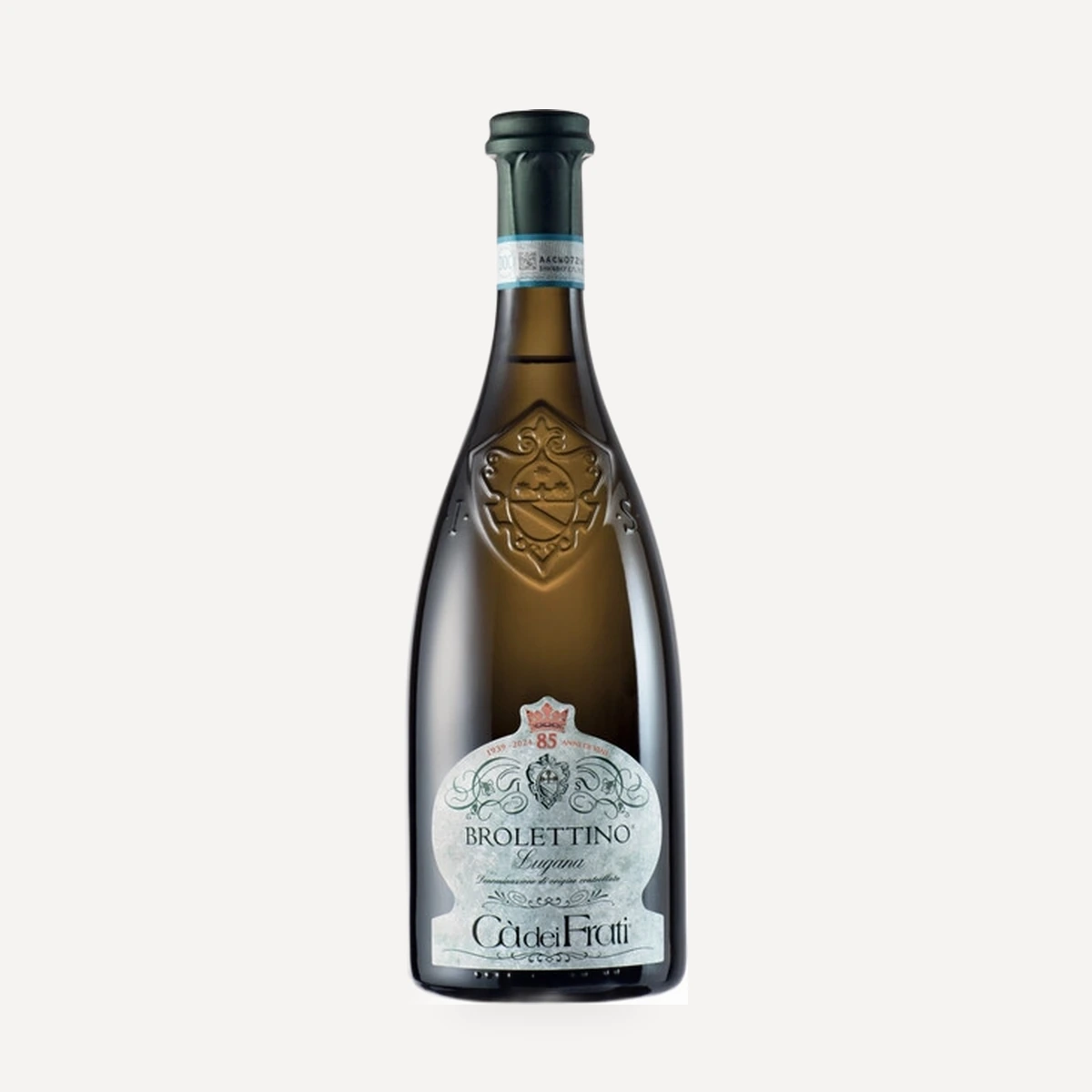
Brolettino Lugana – Privilegio di Famiglia
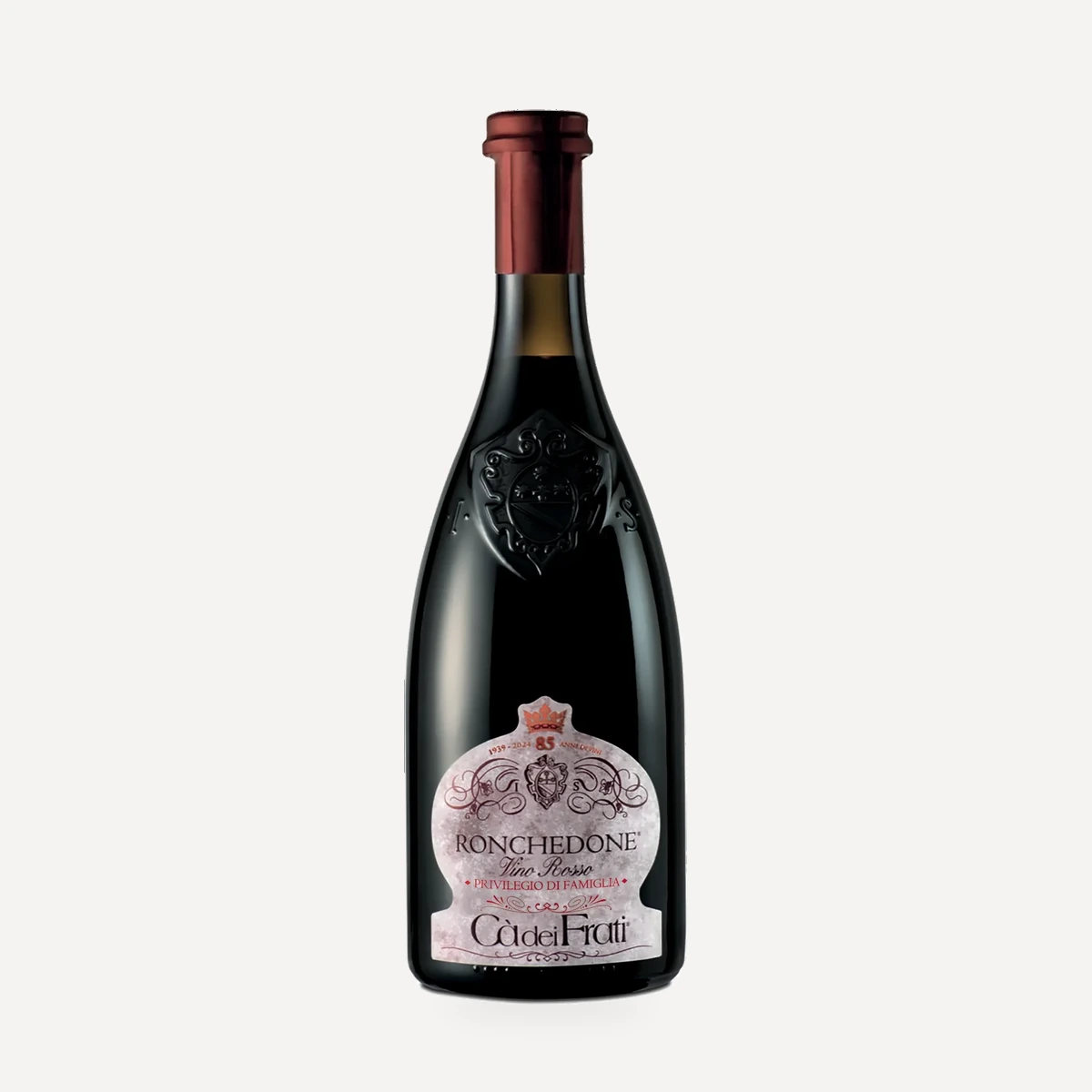
Ronchedone – Privilegio di Famiglia
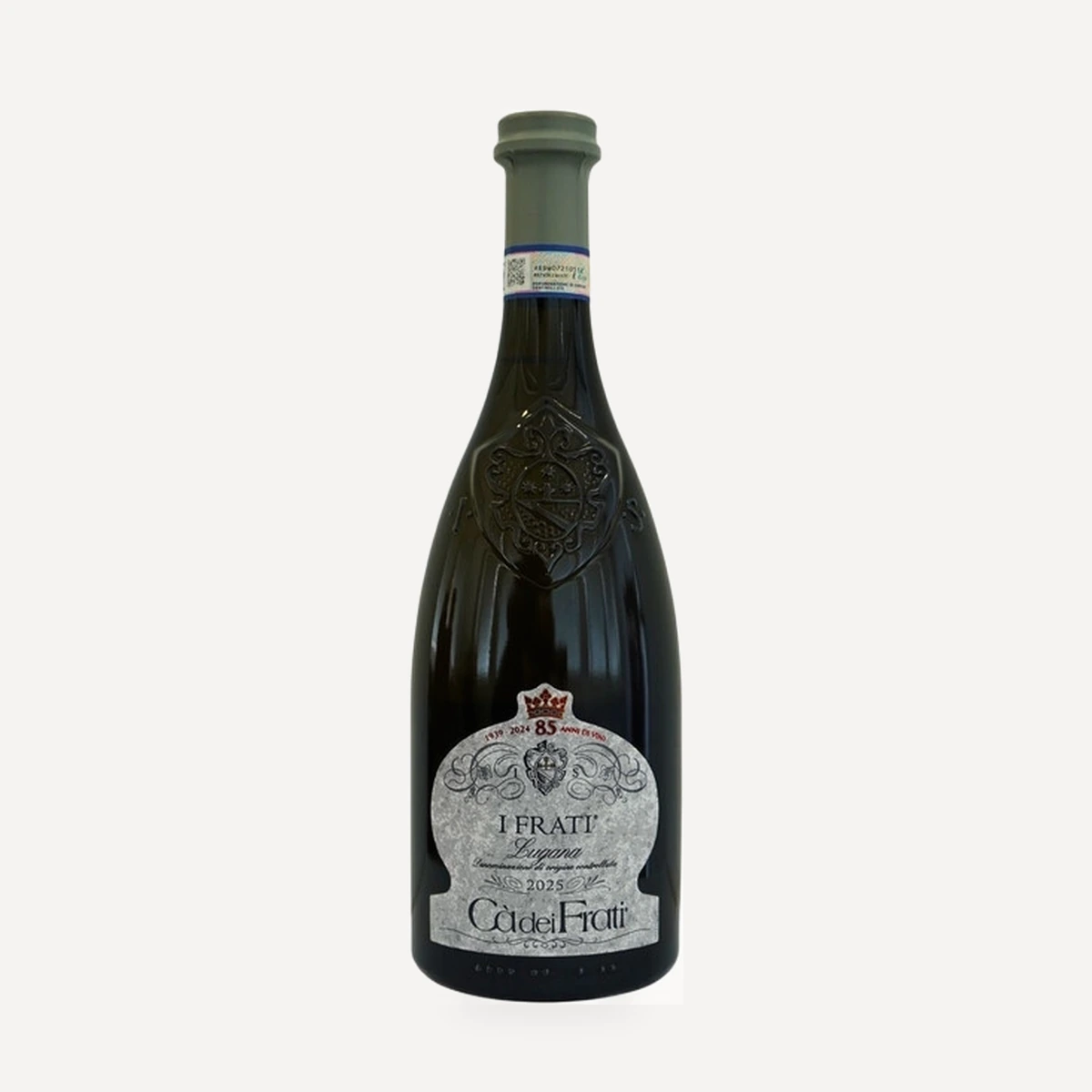
I Frati
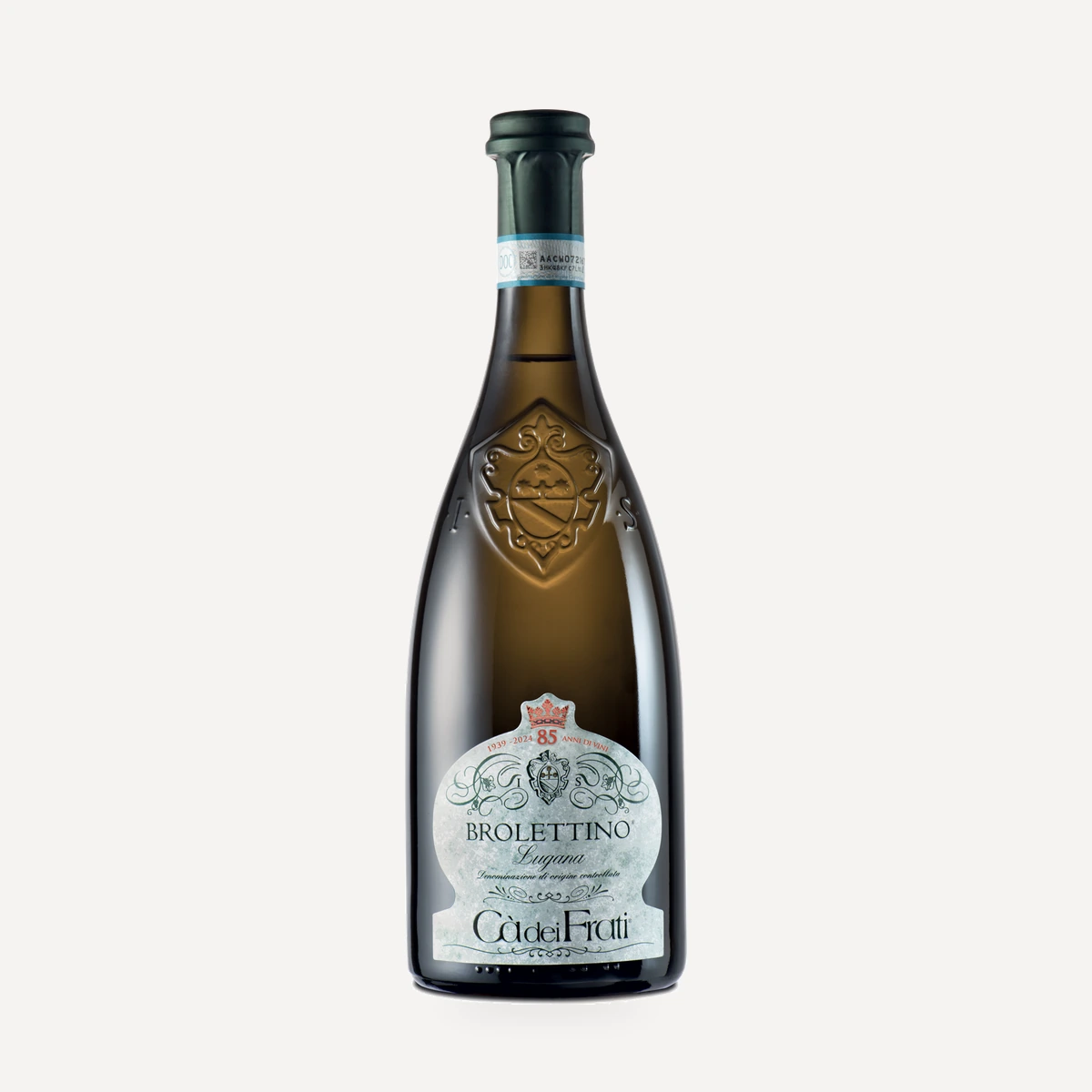
Brolettino
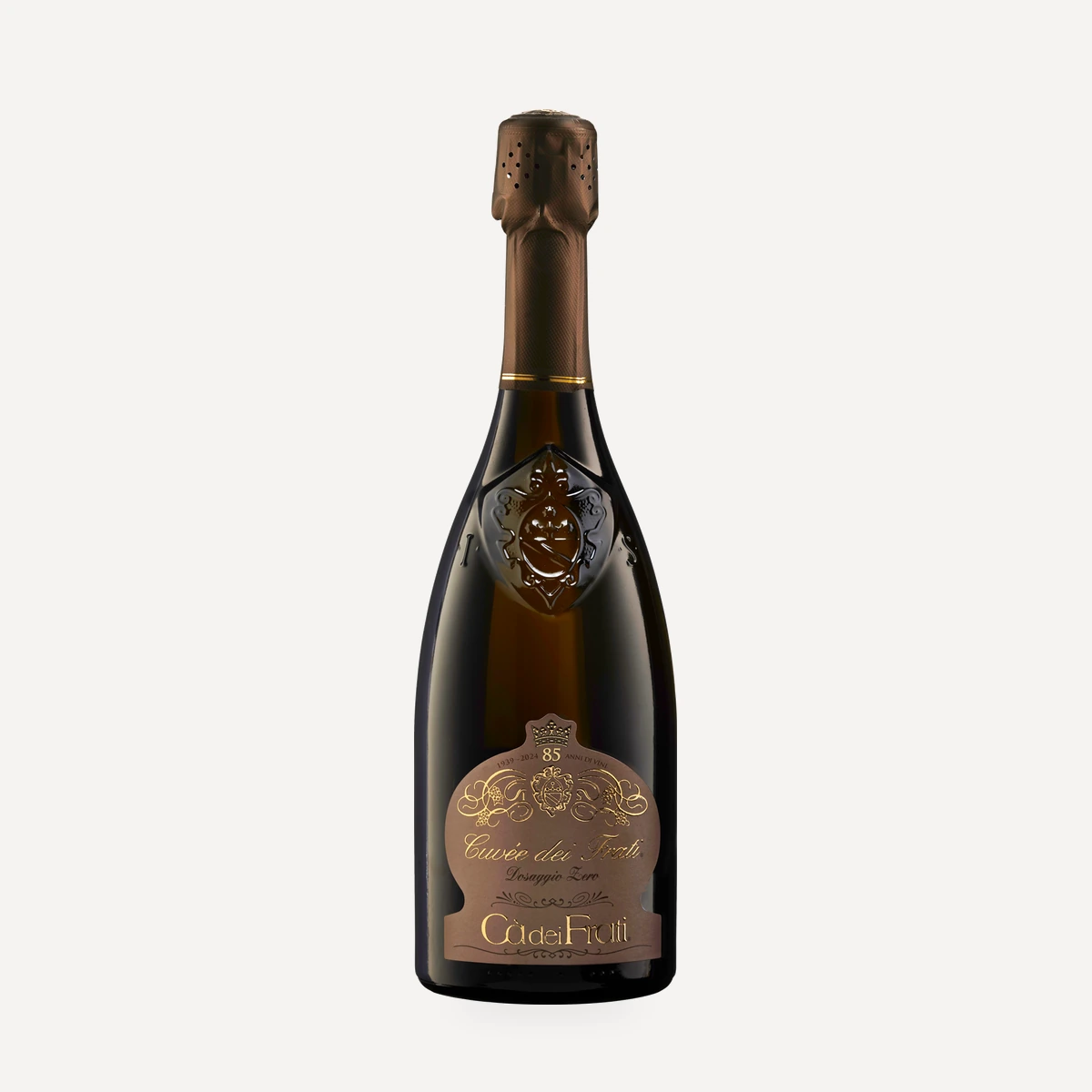
Cuvèe dei Frati – Dosaggio Zero
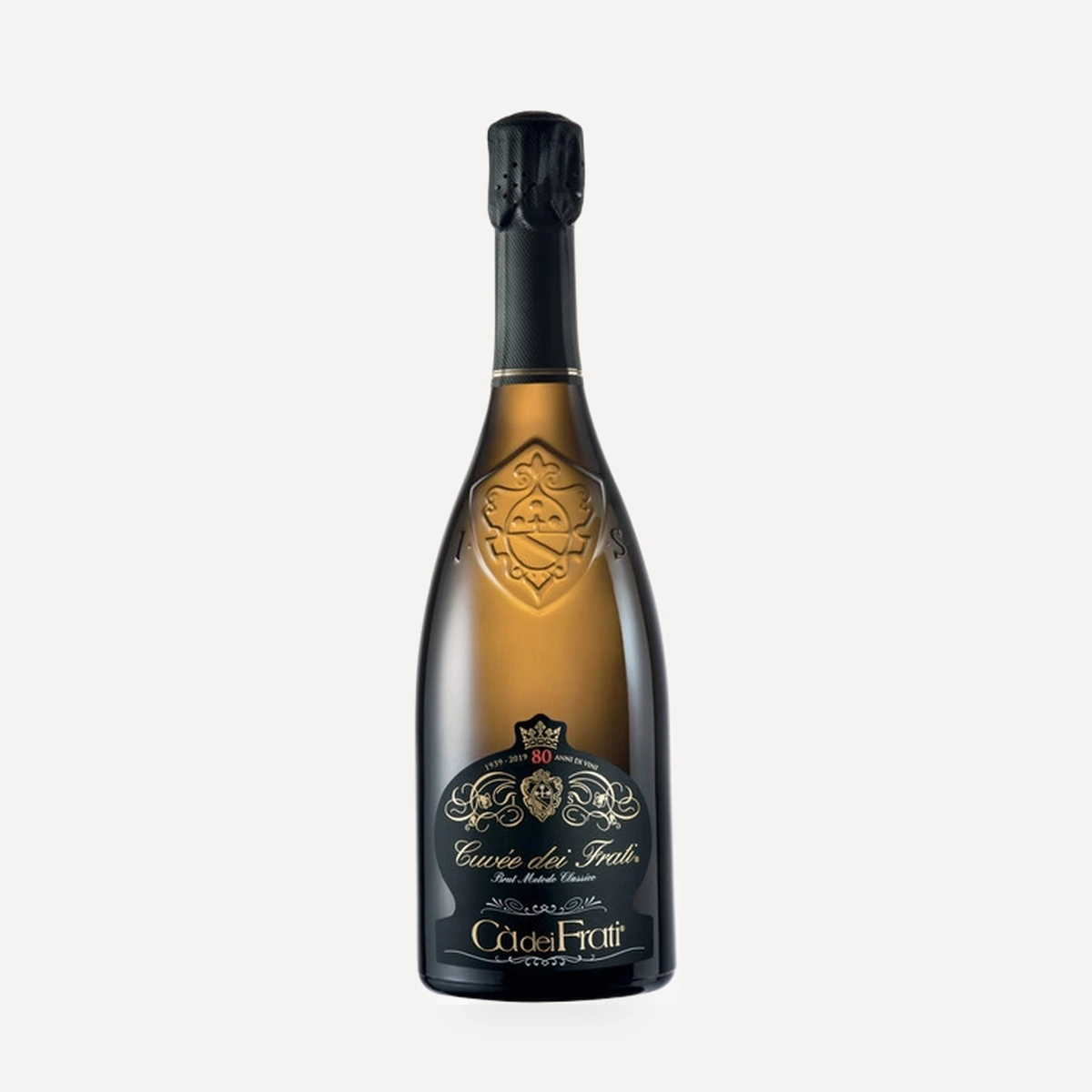
Cuvèe dei Frati – Extra Brut
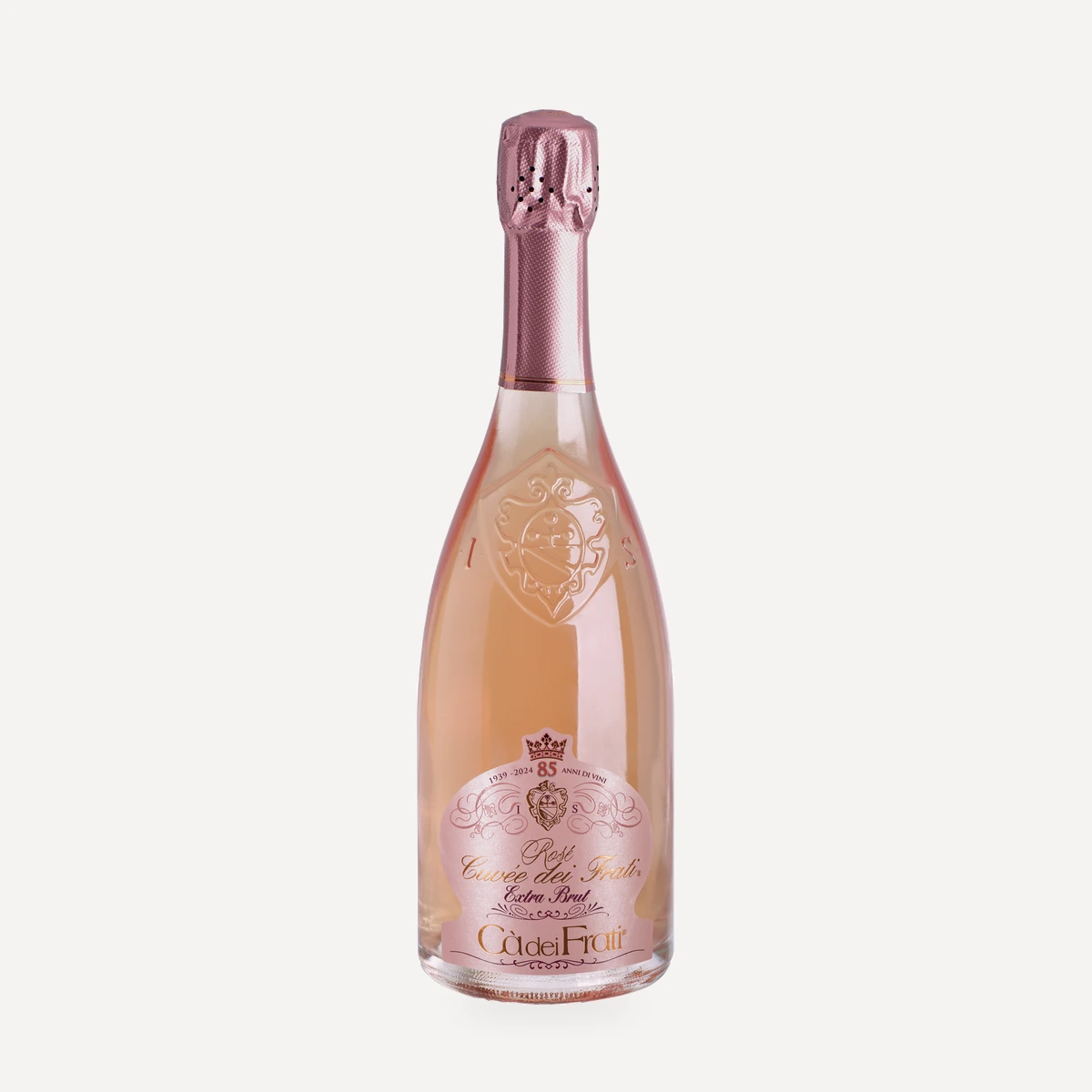
Rosè Cuvée dei Frati
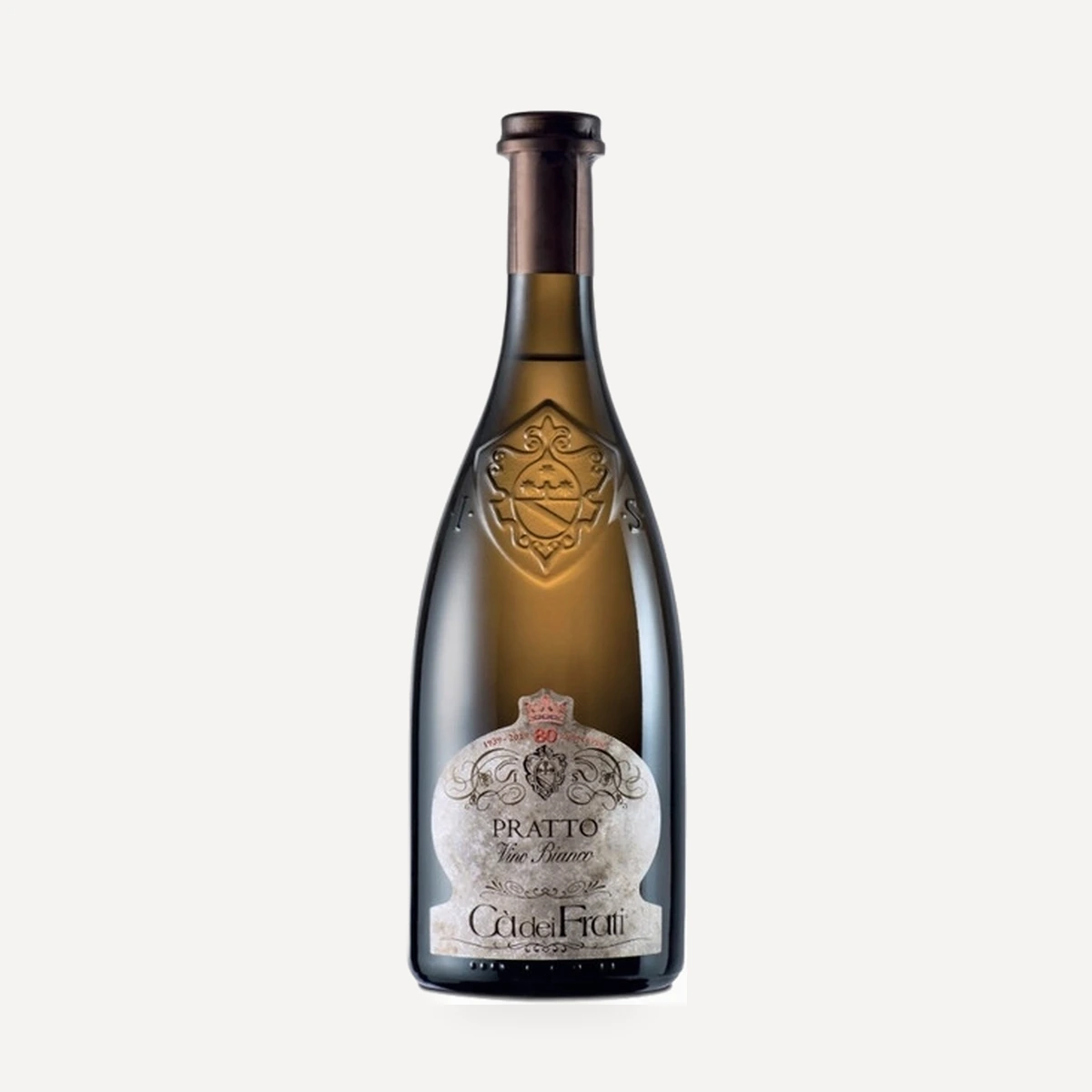
Pratto
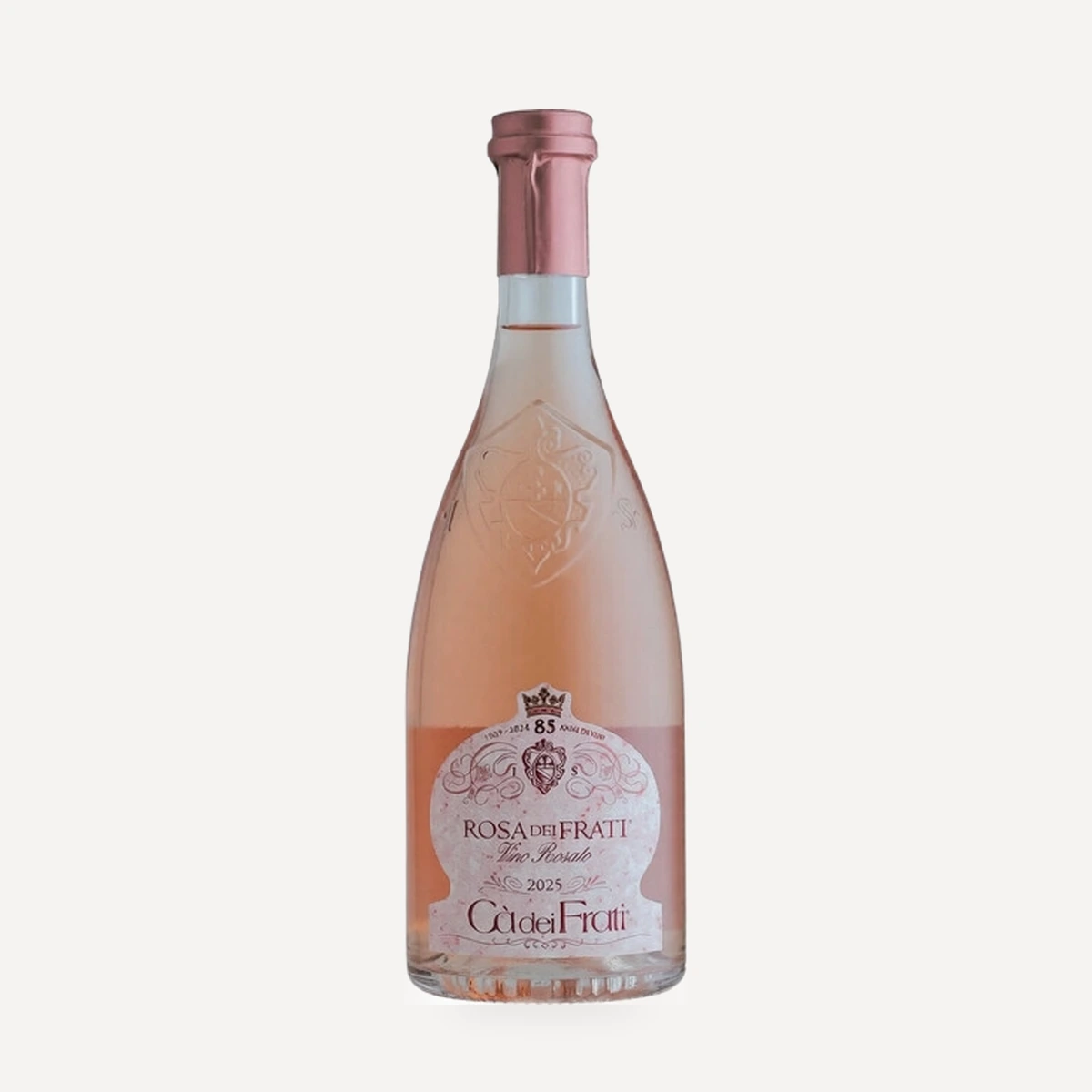
Rosa dei Frati