Dionysus.
ExploreWines
Est. 1904

Prunotto

History

The cooperative origins: 1904–1922

Prunotto’s story began in 1904, when the Cantina Sociale “Ai Vini delle Langhe” was incorporated in the council chamber of Serralunga’s town hall. The meeting was presided over by the notary Giacomo Oddero, with the young Alfredo Prunotto acting as a witness. The participants included numerous small growers alongside prominent citizens connected with Alba and the surrounding communities.

The cooperative completed its first harvest in 1905. Its early development was subsequently hindered by economic uncertainty and the effects of the First World War. When the cooperative’s statutes came up for renewal in 1922, many members stopped supplying grapes. Although the 1922 vintage was considered exceptional, it was small, leaving the cellar with serious financial difficulties and ultimately forcing it into liquidation.

Alfredo and Luigina Prunotto

During this difficult period, Alfredo Prunotto met and married Luigina. The couple acquired the struggling Cantina Sociale “Ai Vini delle Langhe” and renamed it after their family. Their work established the Prunotto name beyond Piedmont. The company began exporting Barolo and Barbaresco first to South America and later to the United States, both recently opened markets for imported wine; Prunotto was among the relatively few local producers to pursue that commercial route.

Beppe Colla and the development of vineyard-designated wines: 1956–1972

In 1956, Alfredo Prunotto retired and sold the company to his friend Beppe Colla, a wine technician. Colla initially worked with Carlo Filiberti and was later assisted by his brother Tino Colla.

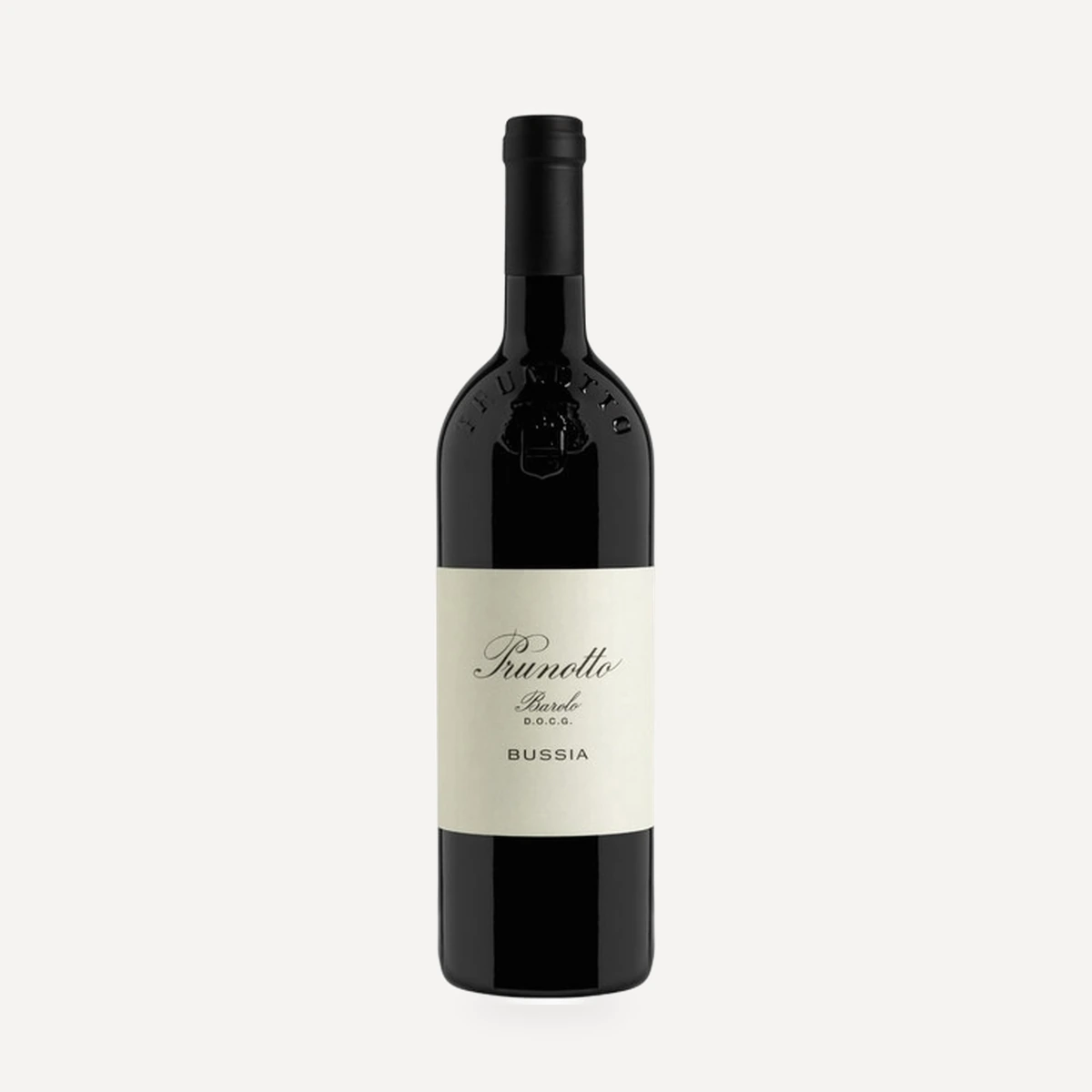
By 1961, the new owners were identifying distinguished individual production zones and vinifying their grapes separately. The first Prunotto Barolo made exclusively from the Bussia vineyard was produced in that year. Pian Romualdo, sourced from Prunotto vineyards around Monforte d’Alba, was also first produced in 1961. This parcel-focused approach laid the foundation for a collection of crus and historical areas.

A new winery near Alba was designed in 1972 by the Piedmontese architect Ugo della Piana. The complex became the location of Prunotto’s main offices.

The Antinori era: 1989–1994

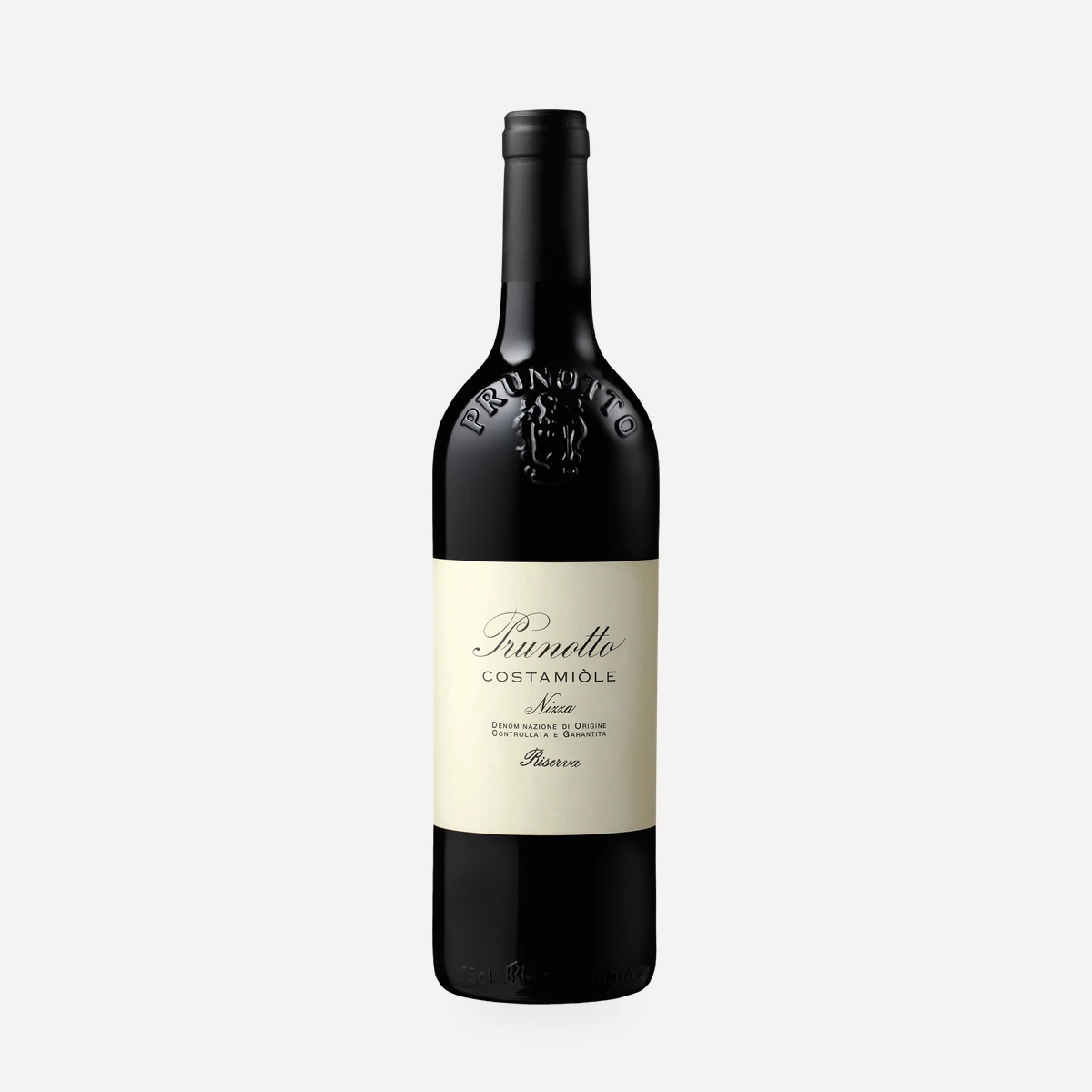
The Antinori family’s involvement began in 1989 with responsibility for distribution. In 1990, Albiera Antinori, the eldest daughter of Marchese Piero Antinori, sharpened the estate’s focus on vineyards. The project centered first on Bussia in the Barolo area, then on Costamiòle at Agliano for Nizza, and on land at Calliano used to investigate varieties new to the area, including Albarossa and Syrah.

When the Colla brothers retired in 1994, the Antinori family took over production, continuing the quality objectives associated with Alfredo Prunotto while exploring the expression of both local and international varieties in Piedmont.

A purpose-built production cellar: 1999

In 1999, Prunotto constructed a new vinification and maturation cellar beside the historic offices designed by Ugo della Piana. The temperature-controlled building expanded and reorganized the spaces needed for the complete production cycle and provided stable year-round conditions for storing and ageing wine.

The cellar’s equipment was progressively renewed. Old 100-hl Slavonian oak casks, used since the 1970s for Barolo, Barbaresco and Nebbiolo, were replaced by Allier and Slavonian oak casks of 27, 32, 53 and 77 hl, allowing maturation to be adapted more precisely to individual vineyard lots. Ageing cement vats were replaced with stainless-steel tanks. New vertical stainless-steel fermenters were designed with reduced height and greater diameter to increase contact between juice and skins during fermentation.

Research into Albarossa: 2001

In 2001, Prunotto and three other Piedmontese wineries entered an agreement with the regional experimental viticulture center Tenuta La Cannona to study Albarossa. The project sought to restore cultivation of the variety, originally bred in 1938 by Professor Giovanni Dalmasso from Nebbiolo and Barbera, and to assess its quality and ageing potential.

Continued development of historical areas

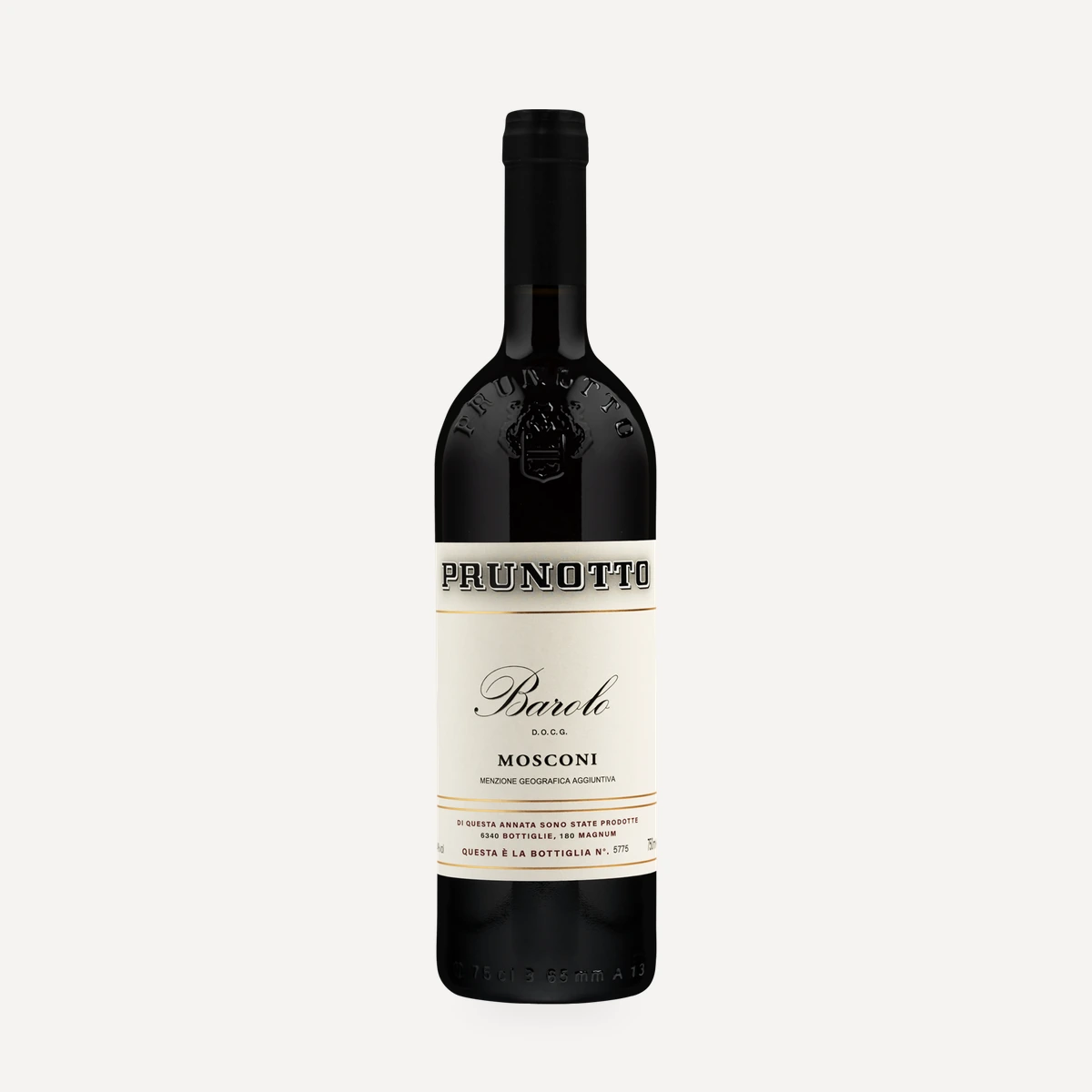
The estate’s parcel-based work now encompasses Bussia, Bussia Vigna Colonnello, Costamiòle, Bansella, Bric Turot, Pian Romualdo and Occhetti, together with further Barolo and Barbaresco sites. Occhetti has been part of the estate’s range since the 1970s. Cerretta entered the Prunotto range with the 2017 vintage. The present portfolio is organized around a single-vineyard wine, a collection of historical areas, a broader Langhe–Monferrato–Roero range and two grape-based spirits.

1904Cantina Sociale “Ai Vini delle Langhe” was incorporated in Serralunga’s town hall under notary Giacomo Oddero, with Alfredo Prunotto serving as a witness.
1905The cooperative completed its first harvest; the year was also the first vintage of Prunotto’s historic Barolo label.
1914–1918Economic uncertainty affecting the young cooperative was aggravated by the First World War.
1922Many members stopped delivering grapes when the statutes came up for renewal. An exceptional but small crop contributed to financial distress and liquidation.
After 1922Alfredo and Luigina Prunotto acquired the cooperative, gave it their name and developed exports to South America and the United States.
1956Alfredo Prunotto retired and sold the company to wine technician Beppe Colla, who worked with Carlo Filiberti and later Tino Colla.
1961Prunotto began systematic separate vinification of distinguished production areas; Bussia became its first single-vineyard Barolo, and Pian Romualdo was first produced from vineyards near Monforte d’Alba.
1972A new winery near Alba was designed by architect Ugo della Piana; Prunotto’s main offices remain at this site.
1970sOcchetti became part of the estate’s historic range, while 100-hl Slavonian oak casks were in use for Nebbiolo-based wines.
1989The Antinori family began its involvement with Prunotto by handling distribution.
1990Albiera Antinori defined a vineyard-centered program involving Bussia, Costamiòle at Agliano and experimental land at Calliano for Albarossa and Syrah.
1994Following the Colla brothers’ retirement, the Antinori family took over production.
1999A temperature-controlled vinification and ageing cellar was built beside the historic Alba offices.
2001Prunotto joined three other Piedmontese wineries and Tenuta La Cannona in a research agreement concerning Albarossa.
2014 harvestNizza received DOCG status, encompassing the Barbera territory associated with Bansella and Costamiòle.
2017Prunotto produced the first vintage of its Cerretta Barolo.

Terroir

Estate geography

Prunotto is based in Alba in southern Piedmont, between the provinces of Cuneo and Asti. The historic headquarters stand in the Langhe, approximately midway between Barbaresco and Barolo, southeast of the Tanaro River. The estate’s vineyards extend through the Langhe and Monferrato, with production also linked to Roero. Rolling hills, small descending valleys and vineyards following the contours of the slopes define the landscape.

Langhe geology and climate

The Langhe’s calcareous clay soils date to the Oligocene, approximately 23 million years ago, when the area lay beneath the sea. They contain marine and terrestrial fossils. During glacial periods, deep deposits of loess accumulated from fragmented material created by rock weathering and erosion. Subsequent compaction produced Lequio formations and Diano Sandstone. Sites with higher proportions of silt and clay are associated with firmer tannic structure and greater ageing capacity in Nebbiolo.

The climate is Apennine with influence from the Po Valley. Summers are hot, while winters are cold, particularly in valley sites where temperatures frequently fall below freezing. Despite the relative proximity of the sea, annual snowfall ranges from approximately 50 to 100 cm.

Roero

Roero lies north of Alba and the Tanaro River in the northeastern part of the province of Cuneo. Its soils have the area’s highest proportion of sand. This sandy composition is associated with floral expression and softer, more balanced tannins in Nebbiolo. Its Apennine climate is influenced by the Po Valley, with hot summers moderated by frequent summer rain and cold winters in the valleys. Nebbiolo, Barbera and Arneis have long been cultivated there.

Monferrato and Nizza

Monferrato lies between the provinces of Alessandria and Asti. Its continental climate brings cold, snowy winters and hot, dry summers, with average temperatures generally about 1 °C higher than in the Langhe. Barbera and Moscato have been grown there for centuries; the warmer conditions favor structure and softness in Barbera.

The Bansella and Costamiòle vineyards occupy a Barbera enclave in the Nizza area, approximately 19 km from Asti. The climate is slightly warmer than at Alba. Silty clay soils contain marl locally known as “Toét.”

Site diversity

The estate encompasses markedly different sites: the sandy clay loam and pronounced day–night temperature range of Vigna Colonnello; the Tortonian loam, sand, clay and fossil Sant’Agata marl of Bussia; the Tortonian soils and varied exposures of Bric Turot; the white tuffaceous soils of Mosconi; the layered sand, gravel, clay and limestone of Occhetti; and the limestone-and-clay soils with sand veins associated with Mompertone. Elevations documented for individual holdings range from approximately 150 m in the Nizza vineyards to 400 m at Mosconi.

Winemaking

Parcel-focused vinificationDistinguished vineyard areas have been vinified separately since 1961.
Temperature-controlled cellarThe 1999 production building maintains stable year-round storage and ageing conditions.
Wide stainless-steel fermentersLow, broad vertical tanks increase contact between skins and juice during fermentation.
Large-format oakAllier and Slavonian oak casks of 27, 32, 53 and 77 hl are matched to individual vineyard lots.
Soil-led developmentSoil studies guide rootstock and clonal selection before new vineyard and cellar projects proceed.
Progressive harvestBussia’s amphitheater is harvested section by section as the grapes reach full ripeness.

Vineyard work is organized around small parcels and separately identified sites rather than a single uniform formula. Detailed soil studies precede new projects and inform the selection of rootstocks and clones suited to each parcel. The purpose is to preserve the distinctions of individual vineyard origins.

Research and experimentation are ongoing. The team reassesses the timing and methods of vineyard management for each season and harvest, responding to vintage conditions and the needs of each variety. Manual vineyard techniques and sustainable agriculture receive particular emphasis, although no named certification or formally defined organic or biodynamic regime is given.

In the Langhe, vines for Barolo and Barbaresco are trained and pruned to single Guyot, as required by their production rules. Harvesting at Bussia proceeds progressively around the amphitheater-shaped vineyard so that each sector can be picked at full ripeness. At Costamiòle, fruit is selected from the oldest vines on the top of the hill. Estate vintage records also document selective cluster thinning when required to regulate yield, preserve vine health and support balanced sugar accumulation and freshness.

The 2001 collaboration with Tenuta La Cannona extended this experimental approach to Albarossa, examining the potential of the 1938 Nebbiolo–Barbera crossing and encouraging its renewed cultivation in Piedmont.

Cellar organization

The winery created in 1999 stands beside the historic Alba offices designed by Ugo della Piana. It was conceived specifically for vinification and maturation, expanding the working spaces so that all stages of the production cycle could be accommodated. The building is temperature controlled and maintains stable conditions throughout the year for wine conservation and ageing.

Fermentation vessels

Older cement tanks were progressively replaced by stainless-steel vessels intended to preserve varietal aromas. The vertical stainless-steel fermenters have a comparatively low profile and broad diameter, increasing the surface of contact between juice and skins during fermentation.

Maturation

For Barolo, Barbaresco and other Nebbiolo wines, the former 100-hl Slavonian oak casks used since the 1970s were replaced with large casks made from Allier and Slavonian oak. Available capacities are 27, 32, 53 and 77 hl, allowing vessels to be matched more closely to individual vineyards and lots. At the Bussia cellar, Nebbiolo from Vigna Colonnello and Bussia is matured in traditional large oak casks.

The production model combines parcel-specific vinification and maturation with modern temperature control. Cellar developments follow vineyard research: soil, rootstock and clonal studies establish the identity of each parcel before equipment and ageing choices are adapted to it.

Philosophy

Prunotto’s production philosophy joins regional tradition with continuing technical development. Its central premise is that wine quality begins with attentive vineyard management: healthy, high-quality grapes are required to convey both varietal identity and place.

Rather than applying one predetermined formula, the estate treats every year and harvest as distinct. Vineyard timing, cultivation choices and production decisions are reconsidered for each vintage. Soil research, parcel-adapted rootstocks and clones, manual work and selective vinification are used to retain differences among individual origins.

Innovation is framed as a means of interpreting territory rather than replacing tradition. Stainless-steel fermentation equipment and a temperature-controlled cellar coexist with large-format Allier and Slavonian oak. The estate applies this approach to both indigenous and non-indigenous varieties, while its Albarossa research illustrates an interest in recovering and evaluating lesser-used Piedmontese material.

Environmental responsibility is expressed through an emphasis on sustainable agriculture, research and improved manual practices. No fixed viticultural recipe is presented; adaptation to the season and to each parcel remains the guiding principle.