History
Historic origins of the land
The land predates the modern wine estate by centuries. I Poggi and Madre appeared in the Leopoldine cadastral survey in 1765, the earliest written record presented for these holdings. The survey belonged to the administrative reforms undertaken under Grand Duke Pietro Leopoldo of Tuscany to document and rationalise land use. Madre also appears in a Grand Ducal land registry dated 1835.
The wider viticultural setting evolved alongside the estate’s land. During the fifteenth and sixteenth centuries, grape growing in Tuscany became increasingly systematic, and in the sixteenth century Leandro Alberti remarked on the quality of the wines from Montalcino’s hills. In 1869, Montalcino growers began moving away from blends that included grapes such as Canaiolo and Ciliegiolo toward varietal Sangiovese, the foundation of Brunello di Montalcino. The denomination received DOC recognition in 1966.
Foundation in 1976
Poggio Antico was founded in 1976 through the union of three historic farms on the southwestern side of Montalcino. Before becoming a specialised wine estate, the property had been a traditional mixed farm producing cheese and other local goods. Its founders chose to concentrate on wine and the character of the high-altitude site, although elevation was then regarded as a disadvantage because achieving full grape maturity was difficult and the market favoured softer, lower-acid wines. Electricity and running water reached Poggio Antico only in 1976.
Elevation, isolation and varied soils shaped the early direction: low-impact cultivation, rigorous selection and restrained winemaking intended to retain the identity of the land. An agronomist working with the estate in the mid-to-late 1970s was considered unconventional by colleagues because they believed grapes planted at such elevations would not ripen.
International recognition and cellar renewal
The 1985 vintage became an early international milestone when it placed fourth in Wine Spectator’s Top 100 in 1990.
At the beginning of the 2000s, Poggio Antico undertook a broad renewal. New cellar technology was introduced, the vineyard layout was progressively reorganised, and the range grew through the addition of two Toscana IGT wines. In 2012, a bottle of Altero 1997 was presented by President Barack Obama to John Boehner for his birthday.
New ownership and territorial research
Marcel van Poecke acquired Poggio Antico in 2017 and began a new phase of development and qualitative consolidation. A locally based team of agronomists and oenologists was assembled, with vineyard health, longevity and a sustainable future as priorities. Detailed zoning also began in 2017. Soil and pedoclimatic research replaced the former reliance on vineyard names alone with a finer system based on comparable soil profiles, vegetative behaviour and ripening patterns.
The research ultimately divided the estate into 6 macro-groups and 15 Soil Units. Units can occupy separate physical plots yet belong together when their soil profiles are similar. They are cultivated, harvested, fermented, matured and assessed separately. This reorganisation changed both vineyard scheduling and cellar logistics and led to the development of Vigna I Poggi, released from the 2019 vintage in spring 2024 as the estate’s first single-vineyard Brunello.
Hospitality and management
The Wine Shop was renovated in 2019 as part of a broader hospitality programme. Its contemporary interior uses Corten steel, Florentine terracotta, wrought iron, woven rope, bamboo and brick to connect contemporary design with Tuscan materials.
Pier Giuseppe D'Alessandro, already responsible for the estate’s major agricultural and oenological developments over the preceding five years, was appointed General Manager in February 2023. In January 2024, Poggio Antico began working with Marco Simonit on a vineyard-management method centred on vine longevity, adaptive architecture and less invasive pruning. During 2024, Pierre Le Hong produced 3D videomaps of the estate, and the project for a new winery by architect Marco Casamonti was unveiled.
Madre, Chardonnay and the next winery
Replanting of Madre began in 2025. The vineyard is conceived as a long-term observational project, divided into four blocks with different training systems positioned alongside a traditional configuration. The structures are designed to remain adjustable as the vines develop. Sangiovese is planted on established rootstocks, while olive trees and Mediterranean scrub are being interplanted to encourage biodiversity and soil vitality. Planting is expected to be completed in 2027; fruit potentially suitable for Brunello is expected five or six years after planting, while the first bottles may take ten or eleven years to reach the market.
On 4 September 2025, Poggio Antico harvested Chardonnay for the first white wine in its history. The grapes came from a small plot planted in 2022 at 612 metres, the estate’s highest point.
The same year linked Poggio Antico more closely with a local cultural tradition. Anda e Bola, jointly owned by Marcel van Poecke and Harry Westerman, won the Palio di Siena on 16 August 2025. The horse visited the estate in September, and the achievement inspired a limited Brunello di Montalcino 2021 Palio Edition and a collaborative visitor experience with Scuderia Milani.
Construction of the new winery is scheduled to begin in 2026. Designed by Marco Casamonti and integrated into the landscape, it is intended to operate entirely by gravity. Smaller, purpose-designed spaces will accommodate the separate handling of Soil Units, while the gravity system will simplify movement from grape reception to bottle and reduce intervention.
Terroir
Position and relief
Poggio Antico occupies the highest vineyard hill in the Brunello di Montalcino denomination, south of Montalcino and on the village’s southwestern side. The vineyards form one contiguous, fan-shaped body around the central winery. The highest established red-wine parcels rise beyond 550 metres, while Vigna I Poggi reaches 550–570 metres. A small Chardonnay plot at the estate’s highest point reaches 612 metres.
Montalcino itself is a solitary rocky hill at the southern edge of the province of Siena. Mount Amiata, an extinct volcano rising to about 1,700 metres, lies to the south. It shields the area from Apennine currents while helping preserve maritime influence. The Val d’Orcia and the Crete Senesi lie to the northeast.
Maritime influence and ventilation
The Tyrrhenian Sea is approximately 50 kilometres west and can be seen from the highest vineyards on clear days. Its influence arrives as persistent airflow that moderates temperature and humidity. West-facing Vigna I Poggi is particularly exposed to these winds. Altitude, ventilation and pronounced day–night temperature changes are central to the estate’s interpretation of Sangiovese.
Soils and micro-terroirs
The estate’s soils are ancient and heterogeneous, with calcareous rock and galestro, the local marl. Geological and pedological work revealed substantial differences inside vineyards previously treated as single entities. Soil type, vine growth and ripening time can change enough within one named vineyard to require different cultivation and harvest decisions.
The resulting system comprises 15 Soil Units grouped into 6 geological macro-groups. A Soil Unit may join sectors in physically separate plots when they share comparable profiles. Each is treated as a micro-terroir and followed independently from vineyard work through fermentation and maturation.
The I Poggi vineyard covers 2.5 hectares and contains five Soil Units. Its strongly calcareous galestro soils include rocky, deep, moderately fertile sectors with more than 35% gravel. The upper slopes are especially rich in galestro, while lower ground becomes deeper and more varied.
Winemaking
Organic management
All 37 hectares are certified organic. Organic farming is used as a precision tool rather than a uniform formula: work is adjusted to the micro-variations of each Soil Unit, row and vine. Synthetic products are excluded. The programme uses natural organic fertilisers, including manure from non-intensive cattle farming; grass cover to limit erosion; manual operations that avoid soil compaction; and natural strengthening preparations.
Soil Units and targeted decisions
Soil analysis, vegetative behaviour and ripening patterns guide vineyard work. Fertilisation is calibrated by Soil Unit, vegetative development is monitored independently, and operations are scheduled for each micro-terroir. Ripeness is followed continuously so that each Unit can be harvested at its own optimum moment. This approach requires longer working periods and considerably more time among the vines because tasks proceed sector by sector rather than vineyard by vineyard.
Training, pruning and vine longevity
Some parcels have moved from spurred cordon to Guyot, and trials include alberello or bush-trained vines. The aim is gradual development and longer plant life. Work with Marco Simonit follows branching, continuity of sap flow and small cuts confined to younger wood, avoiding large wounds. Smaller, targeted pruning cuts are also used to reduce the incidence of Esca. The vineyard team receives classroom and practical training, and the longer-term objective is to create flexible operating procedures for every vineyard.
Winter pruning is performed vine by vine using manual secateurs for precision and battery-powered shears where larger cuts are required. Pruning decisions establish the number and position of shoots while reducing invasive wounds. Canes are subsequently tied to training wires.
Seasonal canopy work
Shoot selection determines which canes will carry the crop, with shoot numbers adjusted to vine vigour and winter pruning decisions. Non-productive shoots emerging from dormant basal buds are removed. Growing canes are tucked between upper wires and their tips are trimmed to encourage lateral shoots whose leaves shade the clusters. Grass is mown to maintain balance between spontaneous vegetation and the vineyard.
Basal leaves are removed manually, plant by plant, to improve airflow, reduce night-humidity risk and increase treatment efficiency, allowing lower treatment quantities. Targeted late-season leaf removal is adjusted to rainfall and cluster humidity. Where bunches overlap or crowd one another, a first thinning pass follows cluster closure. Shortly before harvest, only limited finishing work is performed, including selective leaf removal and trimming overly developed bunches.
Monitoring, crop selection and harvest
The team combines walking and tasting every individual sector with laboratory ripeness analysis and vigour maps created through drone monitoring. Weather determines whether protection is needed; treatments are applied according to assessed necessity. Each Soil Unit has an individual harvest calendar.
Selection occurs three times. Pickers first harvest only sound, fully mature clusters. A manual sorting-table pass removes unsuitable material. Optical sorting then selects individual berries, allowing only pristine fruit into production. Average yield is approximately 45 quintals per hectare.
Biodiversity and climate adaptation
The Madre project interplants olive trees and Mediterranean scrub among Sangiovese, reviving a mixed-planting idea to improve biodiversity and soil vitality. Four training systems and a traditional comparison block will be observed over decades to assess their response to changing conditions. Adjustable vineyard infrastructure is intended to follow natural vine development rather than constrain it.
Reception and selection
Harvest proceeds on separate schedules for the 15 Soil Units. Fruit undergoes three selection stages: hand selection in the vineyard, manual sorting on a conveyor table and optical berry selection. The estate’s objective is to admit only sound, fully ripe fruit to the cellar.
Separate fermentation and maturation
Temperature-controlled, truncated-cone stainless-steel tanks and tulip-shaped concrete vats allow every Soil Unit to ferment and mature separately. The separate lots preserve distinctions among sites until the blending stage. Concrete is used both for fermentation and for gentle post-blending maturation.
Oak ageing is also organised by site and selection. Each Soil Unit receives the vessel and time required for its individual development. Oak is used to refine youthful structure and reveal depth rather than to obscure territorial differences. Once lots reach the desired maturity, they are selected and assembled into wines intended to express the estate as a whole.
The 2024 cellar programme illustrates the range of vessels in use: I Poggi lots rested in 25-hl Austrian oak; Riserva lots in 25-hl French oak; and Brunello lots in 40-hl Slavonian oak before planned blending. Rosso followed a mixed regime, partly in Slavonian and French oak for polyphenolic complexity and softness and partly in stainless steel to retain fruit. Cabernet Sauvignon and pressed-wine lots rested in 225-litre French barriques. The cellar was maintained at approximately 14°C with weekly analytical and organoleptic checks.
The 2022 Vigna I Poggi and Brunello lots subsequently moved to concrete for slow development, while the Riserva remained in 25-hl French oak casks. Routine cellar care includes topping up, targeted rackings, tasting and analytical monitoring. After the 2025 harvest, the wines were racked, separated from gross lees and moved into ageing.
Lees and experimental work
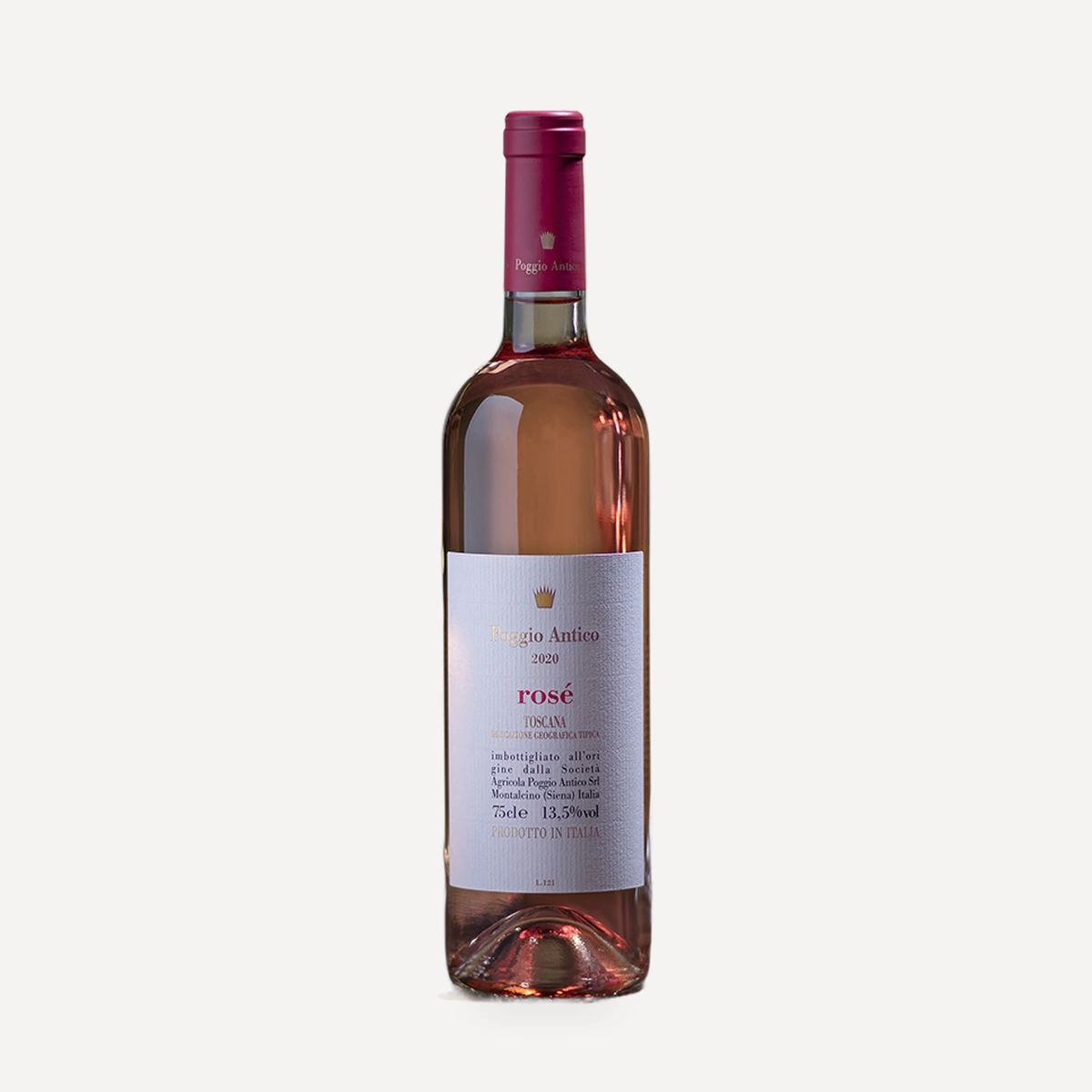
For the 2024 rosé, 70% was held in stainless steel and 30% in barriques for around six months on fine lees, after which the components were racked and reunited in steel before bottling.
The cellar has tested AirMixing, which uses air jets to move the cap gently from below. It is being evaluated as a possible alternative to conventional pump-overs and punch-downs, with the aim of shortening maceration and making extraction more delicate while retaining the required skin-derived flavour and texture.
New gravity-flow facility
The planned winery will operate entirely by gravity from grape reception through the production sequence. Its smaller and more specialised spaces respond directly to Soil Unit vinification, enabling numerous small lots, more precise timing and reduced mechanical handling. The building is designed to sit within the landscape and combine technical precision with lower intervention.
Philosophy
Poggio Antico’s declared objective is not simply to produce Brunello but to create a Brunello recognisably shaped by this particular high-altitude estate. Identity is grounded in elevation, ventilation, soils and close observation rather than in market trends.
Selection is treated as the foundation of quality, beginning with micro-terroir decisions and continuing through fruit sorting, separate fermentation, maturation and final blending. The Soil Units are not managed according to a predetermined recipe: the team aims to respond to what each sector and vine requires. Technical precision therefore supports, rather than replaces, an attentive relationship with the living vineyard.
Pier Giuseppe D'Alessandro defines consistency as continuing to do what the territory permits, using soil, vineyards and technical knowledge without redesigning the wines around short-lived consumer preferences. Vintage variation—including difficult seasons—is part of territorial expression. Consistency lies in the intention and quality of the work, not in mechanically reproducing the past.
Organic farming functions as a means of balancing natural spontaneity with viticultural precision and preserving ecological resilience. Science, research and measured experimentation remain important: changes are introduced gradually, observed over time and retained when the vines respond positively.
Vine longevity is a central long-term objective. Pruning, training systems, adjustable structures, soil care and staff education are designed to support healthy plants beyond the tenure of the people making current decisions. Madre embodies this outlook most clearly: it is conceived as a vineyard for observation over decades, with results intended to benefit future generations.
Marcel van Poecke frames Poggio Antico as a passion project extending beyond profit. The aim is to build something lasting, beautiful and recognisable. The same outlook informs hospitality and participation in local culture: caring for a place includes sharing its wine, landscape, history and traditions with visitors.
Wines
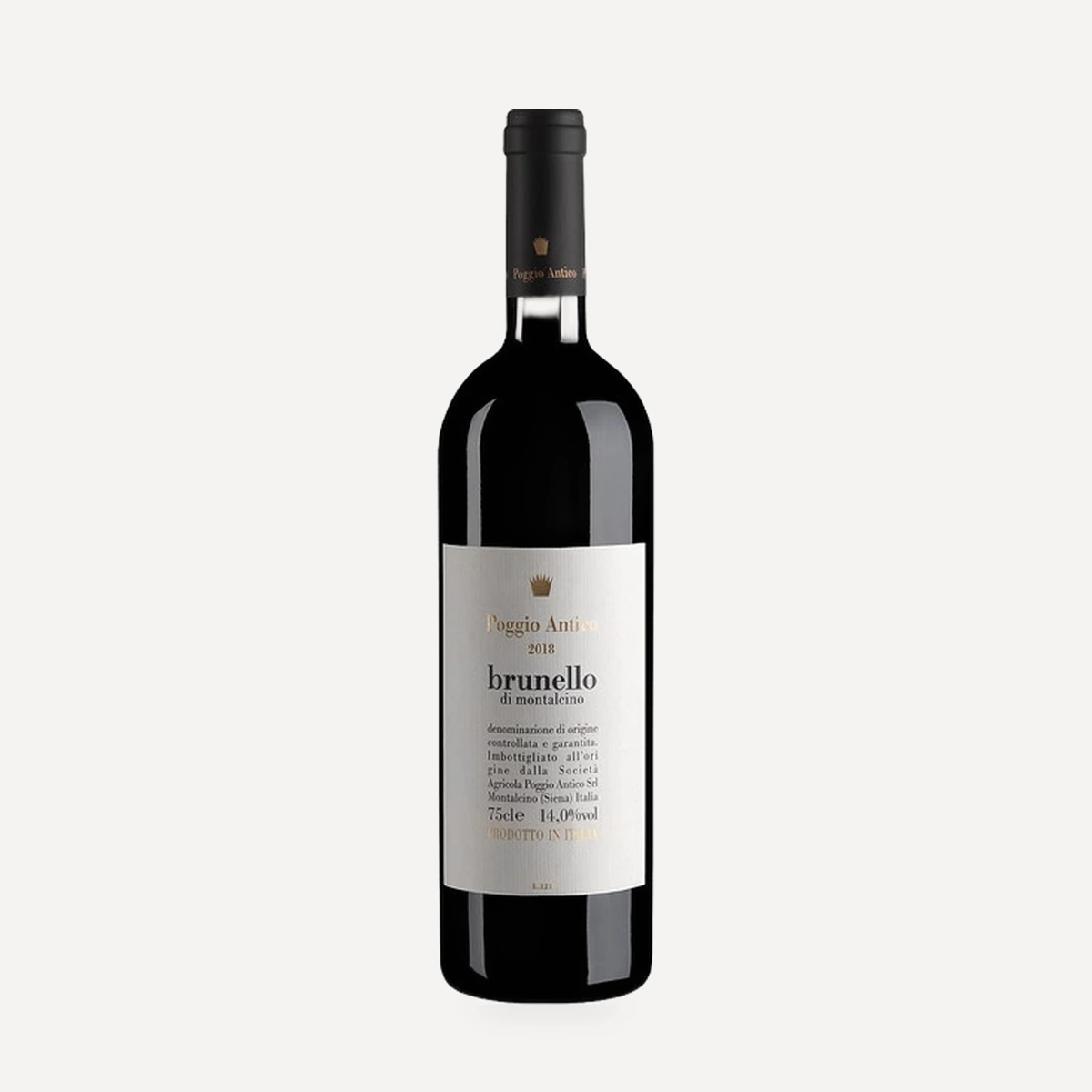
Brunello di Montalcino DOCG
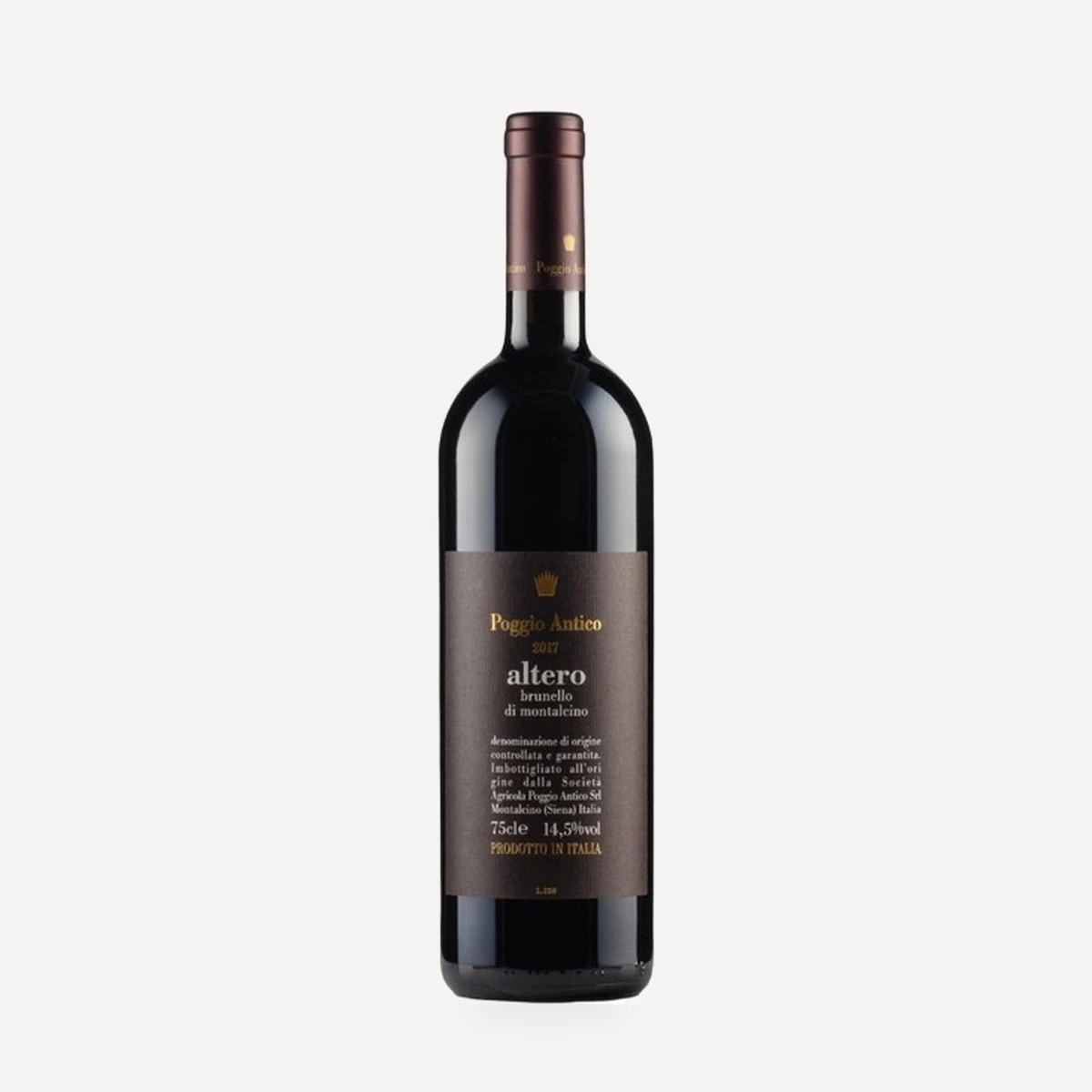
Altero Brunello di Montalcino DOCG
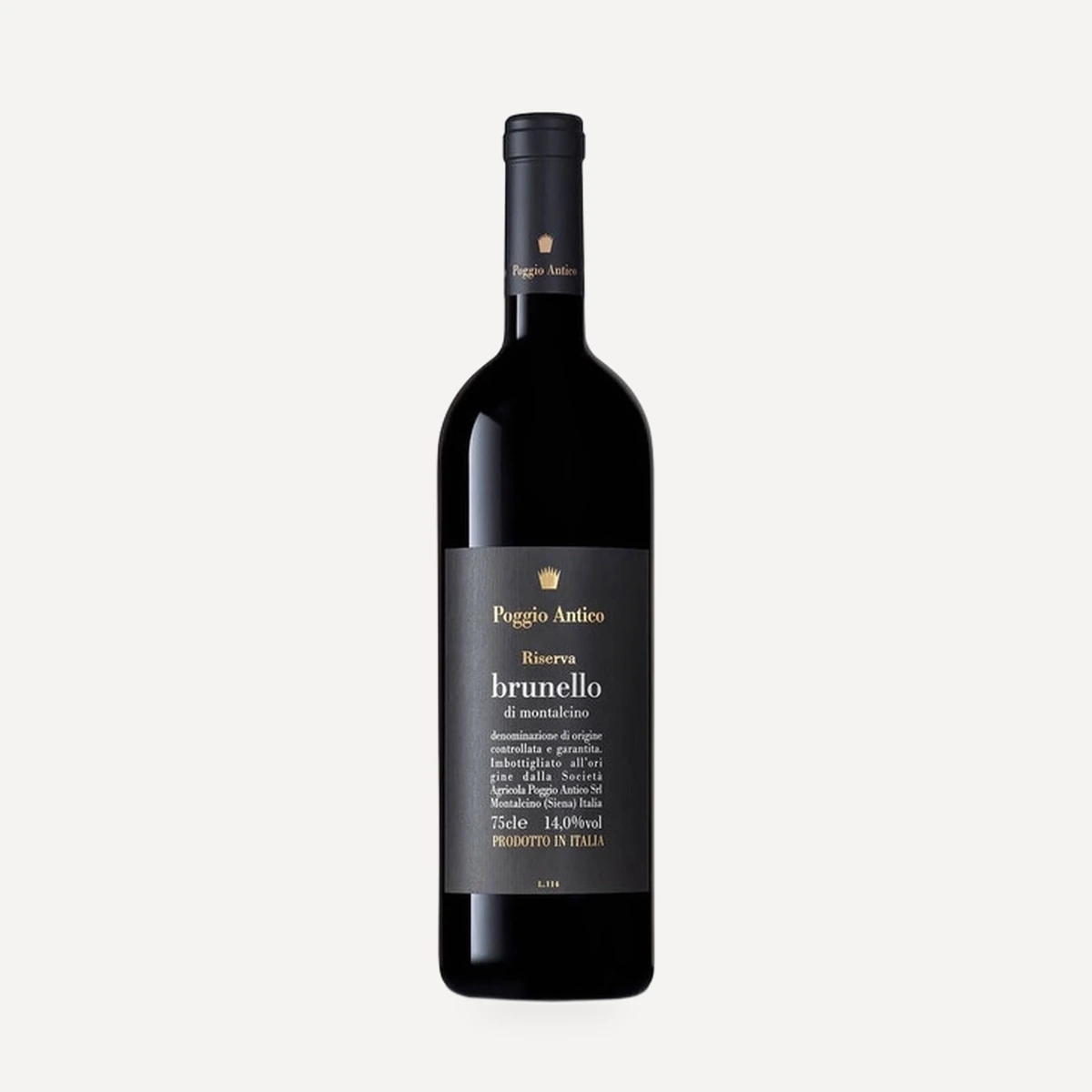
Riserva Brunello di Montalcino DOCG
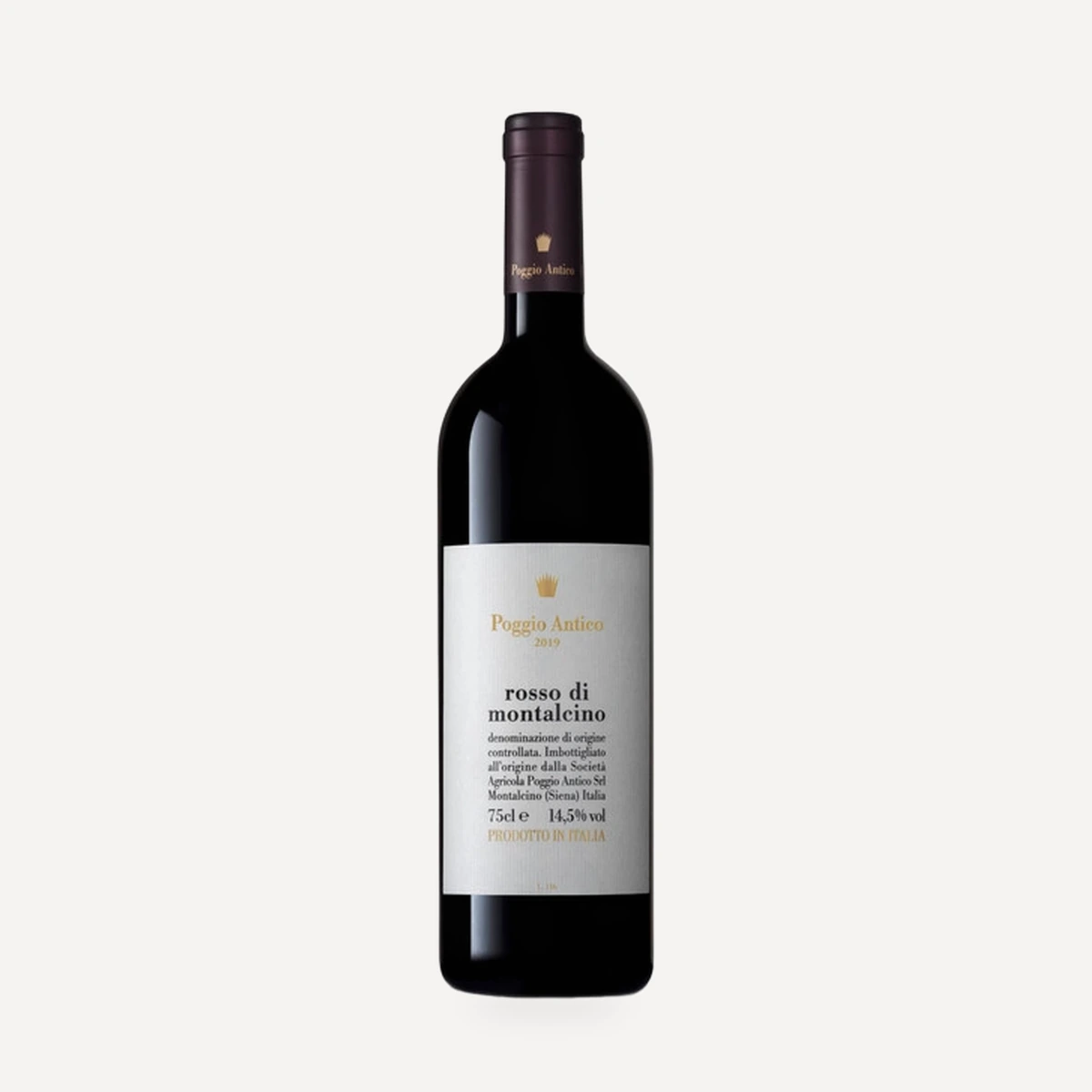
Rosso di Montalcino DOC
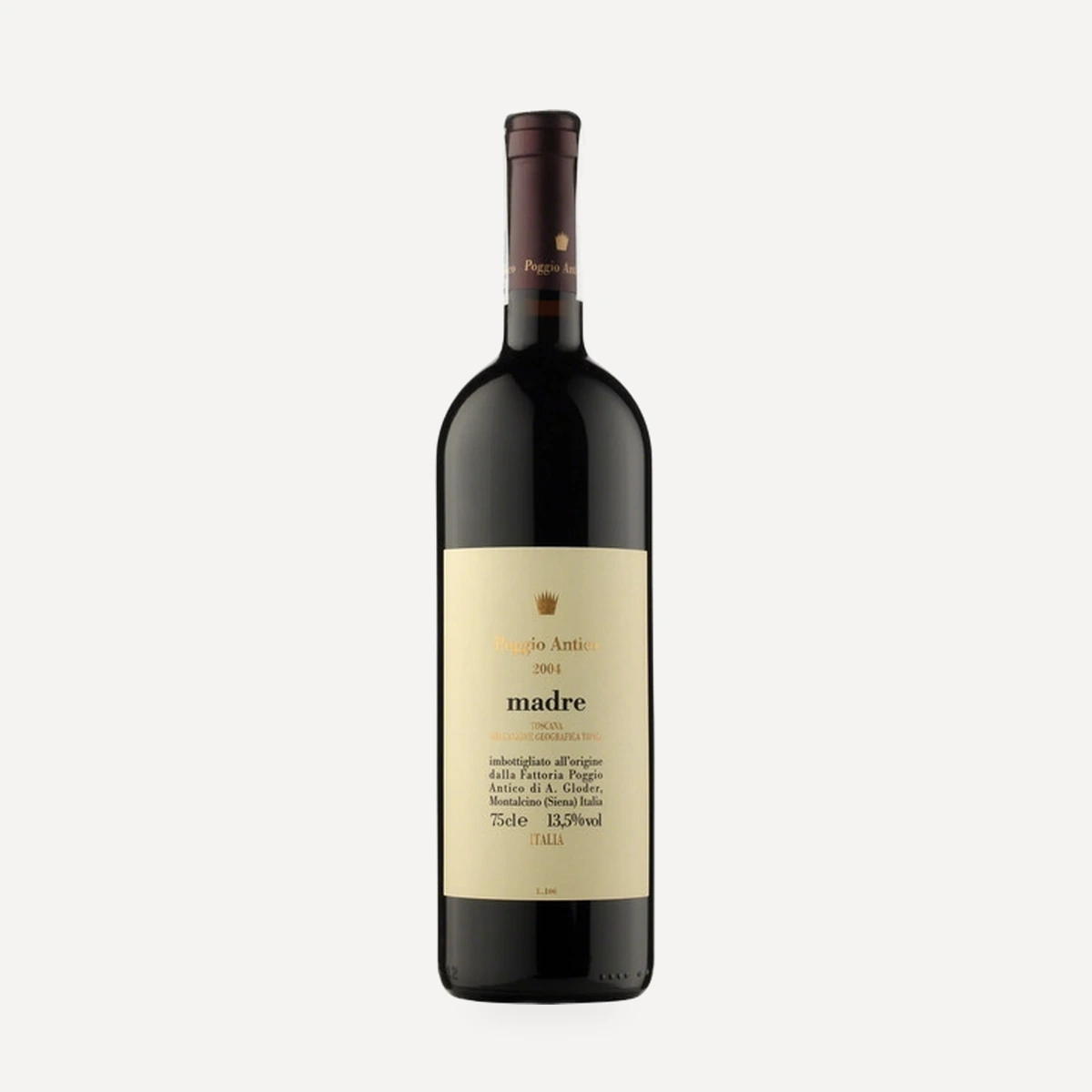
Madre IGT
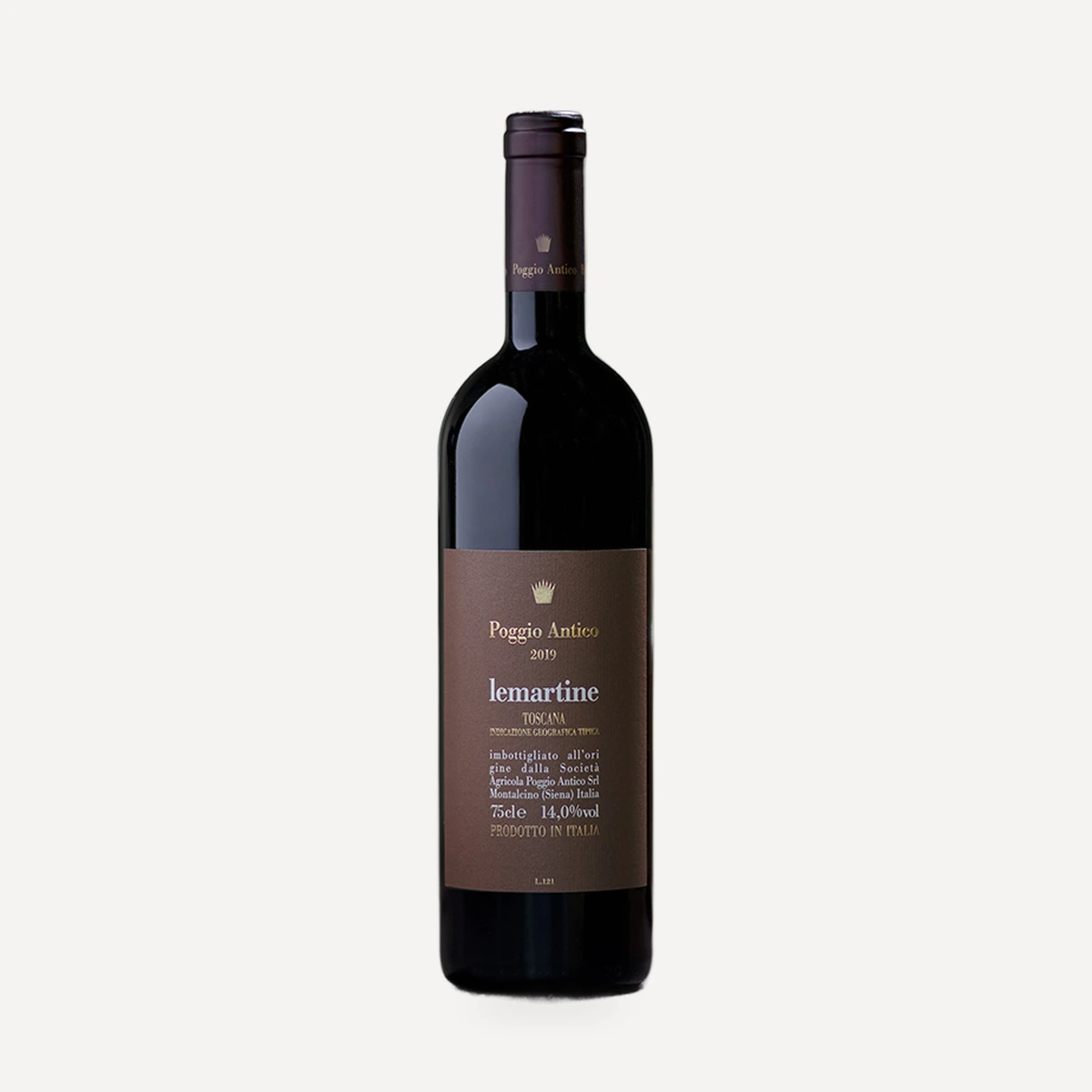
Lemartine IGT