History
Monastic origins
A 1513 entry in the Catasto Onciario records that a monastery had been built in the countryside of Salice Salentino at the end of the fifteenth century. Its founders were monks who combined agriculture with prayer under the Rule of St Basil.
The Perry Graniger estate
In 1865, the Perry Granigers, a family of winegrowers from Burgundy, acquired the monastery after phylloxera had forced them to abandon their French vineyards. They converted the complex into a château, planted 10 hectares of Chardonnay and 10 hectares of Pinot Noir, and added a principal residential floor above the cellar for the family.
De Martino and Antonio Provenzano
The Perry Granigers returned to France in the early twentieth century. The winery was purchased by the aristocratic De Martino family of Puglia and subsequently transferred to Antonio Provenzano in an exchange for another property of equal value.
Provenzano translated “Château” as “Castello” and joined it to a reference to the monks who had founded the original settlement, establishing the name Castello Monaci. He continued planting vineyards and, between 1920 and 1928, constructed another cellar to improve vinification. That building now accommodates the Wine Museum.
The second generation and the modern cellar
In 1970, Maria Provenzano and her husband Enzo Memmo, identified as the family’s second generation, began constructing the third cellar. Their plans also included guest accommodation conceived for wine tourism. The modern winery, distinguished by its geometric design, has been in use since the late 1970s.
In 1979, their daughter Lina married Salento agricultural entrepreneur Vitantonio Seracca Guerrieri. The property subsequently continued under family management, a tradition now spanning four generations.
The contemporary family and winemaking team
Vitantonio Seracca Guerrieri serves as chairman of the estate and remains closely involved in the vineyards. Lina Memmo manages the property and works in hospitality with their daughter Vittoria. Their son Luigi sits on the winery’s board and represents Castello Monaci as brand ambassador.
Leonardo Sergio joined Castello Monaci as oenologist and production manager in 2001. His remit encompasses the interpretation and selection of fruit shaped by the estate’s sun, winds and individual vineyard conditions.
Terroir
Salento between two seas
Castello Monaci’s 210 ha of vineyards extend across the provinces of Brindisi, Lecce and Taranto in south-eastern Puglia, between the Ionian and Adriatic seas. Winds arriving from both seas interact with the intense Salento sunlight and are central to the conditions across the estate.
Masseria Flaminio
Masseria Flaminio lies close to the sea along the old Flaminia road. Its 60 ha of sandy ground are planted predominantly with white varieties, particularly Verdeca, Fiano and Chardonnay. Small plots are also devoted to research and development.
Irrigation is withheld except in cases of extreme necessity. The vines consequently develop deep roots that reach sand enriched with chlorides by the nearby sea. This setting is associated with the mineral and savoury profile of the fruit. A continuous sea breeze acts as a natural defence against mould, making defoliation unnecessary. Clusters remain shaded by the foliage, retain their delicate colour and preserve freshness and acidity.
The vineyards encircle Masseria Flaminio, a long-held family property, in a layout likened to an Italian garden.
Trepuzzi
The 10 ha Trepuzzi site, farther south toward Lecce, is the estate’s preferred location for Primitivo. The vineyard occupies an iron-rich red-clay cru around Masseria Vittorio, a sixteenth-century residence enclosed by a period wall and 650 old olive trees shaped by wind, water and time.
The site is cultivated without irrigation and gives naturally low yields. Its combination of red clay, dry farming and restricted production is used to obtain Primitivo with elegance and structure.
Salice Salentino
At the entrance to Salice Salentino, on the road between Lecce and Taranto, a straight road divides the estate’s 140 ha vineyard area into two. Native Primitivo, Malvasia Nera di Lecce and Negroamaro grow here alongside the principal international varieties, Syrah and Chardonnay.
The upper soil consists of approximately one metre of clay and limestone. Beneath it lies white, porous and friable tufa through which the roots can penetrate readily, finding sustenance even during drought. These conditions are associated with saline and mineral characters in the resulting wines. Harvest takes place at about 02:00, when the cooler temperature helps prevent spontaneous fermentation caused by daytime heat and pressure on the grapes.
Winemaking
The vineyards are cordon-trained and spur-pruned under guidelines designed to reduce the impact of cultivation on the environment and natural resources.
Water use is managed site by site. Trepuzzi is cultivated entirely without irrigation, while Masseria Flaminio receives water only in cases of extreme necessity. These practices encourage deep rooting and naturally restrict yields at Trepuzzi. At Masseria Flaminio, the constant maritime breeze provides natural protection against mould and eliminates the need for defoliation, allowing the canopy to shade the clusters.
Harvesting is conducted at night. At Salice Salentino, picking occurs at around 02:00, taking advantage of lower temperatures to cool the grapes naturally and reduce the risk that heat and pressure will initiate fermentation before processing.
Environmental management has been certified to ISO 14001 since 2004. Electricity comes exclusively from clean sources, either the estate’s photovoltaic installation or other renewable supplies. Green spaces are preserved as carbon sinks; water efficiency is monitored in both vineyard and cellar; and waste is handled through dedicated recycling, disposal and material-recovery processes.
Two hectares are planted with sunflowers as sacrificial wildlife crops, providing food and habitat support for local fauna. The estate also maintains small vineyard plots for research and development at Masseria Flaminio.
The present winery has operated since the late 1970s and is defined by a restrained, geometric design. Its barrel cellar, carved into white tufa of the same type found beneath the vineyards around the castle, contains more than 1,000 barriques. The rock acts as a natural thermal insulator during maturation.
Grapes enter a refrigerated crushing system connected to small-capacity, double-cell, temperature-controlled stainless-steel tanks. The installation permits limited lots to be vinified separately, preserving and highlighting the distinctions among grape parcels.
Night harvesting provides naturally cooled fruit. At Salice Salentino, grapes are collected at approximately 02:00 to limit the danger of spontaneous fermentation before cellar processing.
Leonardo Sergio oversees oenology and production. His previous work covered the entire production chain, from vineyard management to bottling, and his approach at Castello Monaci focuses on selecting and interpreting the characteristics produced by the estate’s sun, winds and individual vineyard sites.
Philosophy
Castello Monaci presents its work as an artisanal interpretation of distinct Salento sites, with sun and winds from the Ionian and Adriatic seas treated as formative elements. Small vineyard and cellar lots are kept separate so their individual characteristics can remain legible.
Its definition of sustainability extends beyond environmental certification to production management, carbon reduction, resource efficiency, biodiversity and the continuity of the surrounding community. Protecting the land is framed as inseparable from protecting the people who live and work in Salento and safeguarding resources for future generations.
The estate’s social approach emphasizes local employment and continuity of skills. Some responsibilities pass from parent to child; its agronomy work, for example, has involved three successive generations from the same family.
Tradition is combined with temperature-controlled cellar technology, renewable energy and research plots. The tufa-carved maturation cellar and dry-farmed sites retain historical and environmental functions, while small tanks and refrigerated processing provide close control over individual lots.
Wines
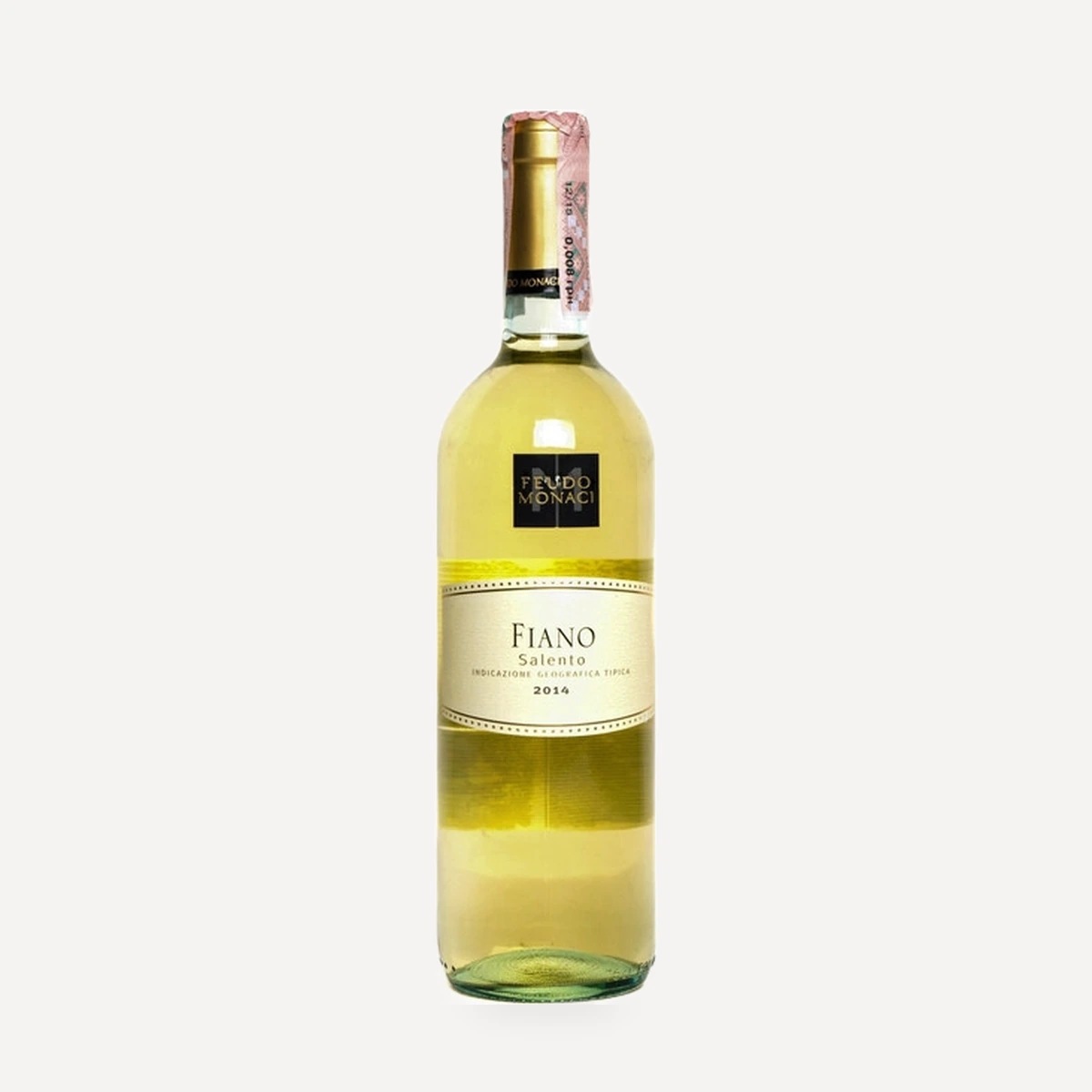
Feudo Monaci Fiano Salento IGT
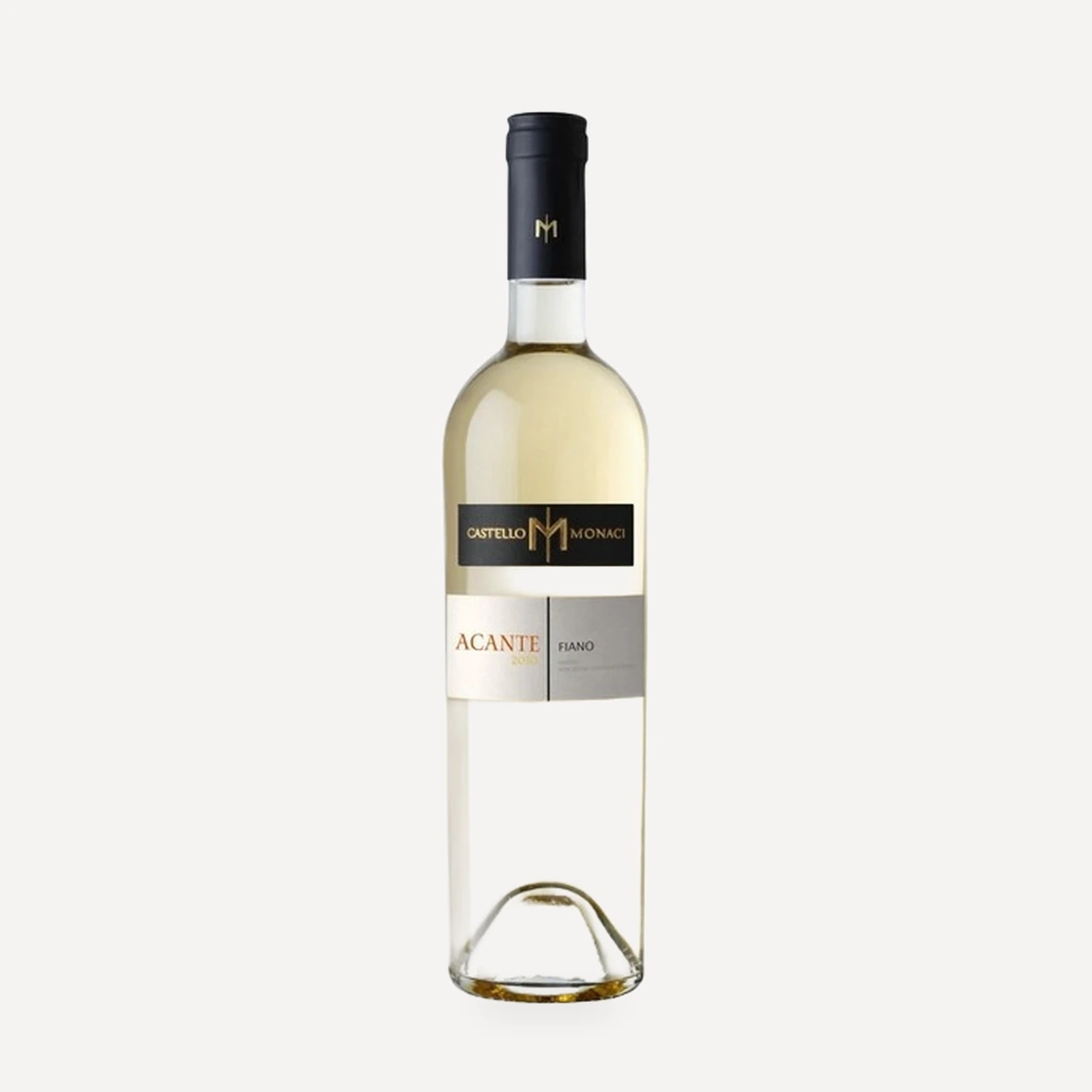
Acante Fiano Salento IGT
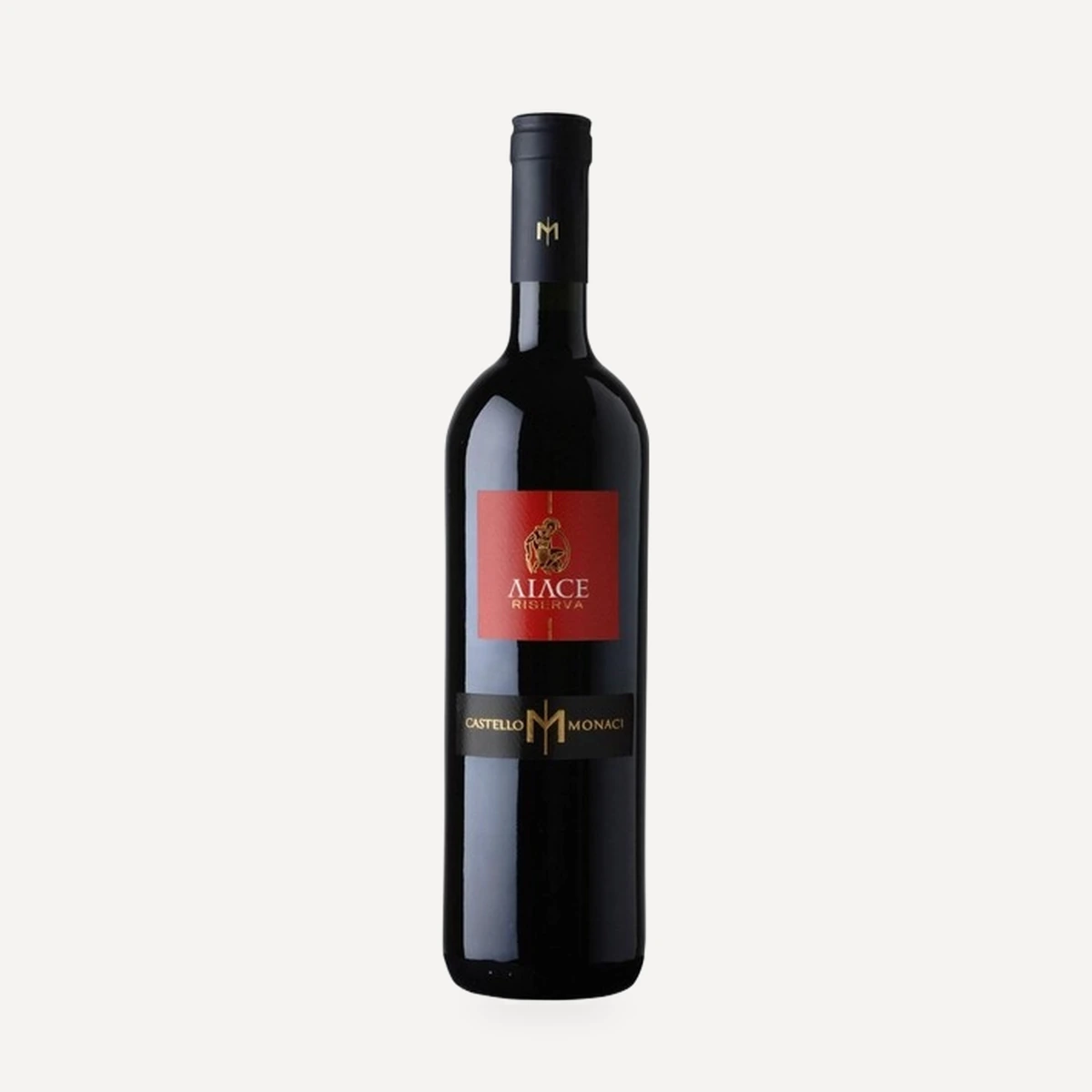
Aiace Riserva Salice Salentino
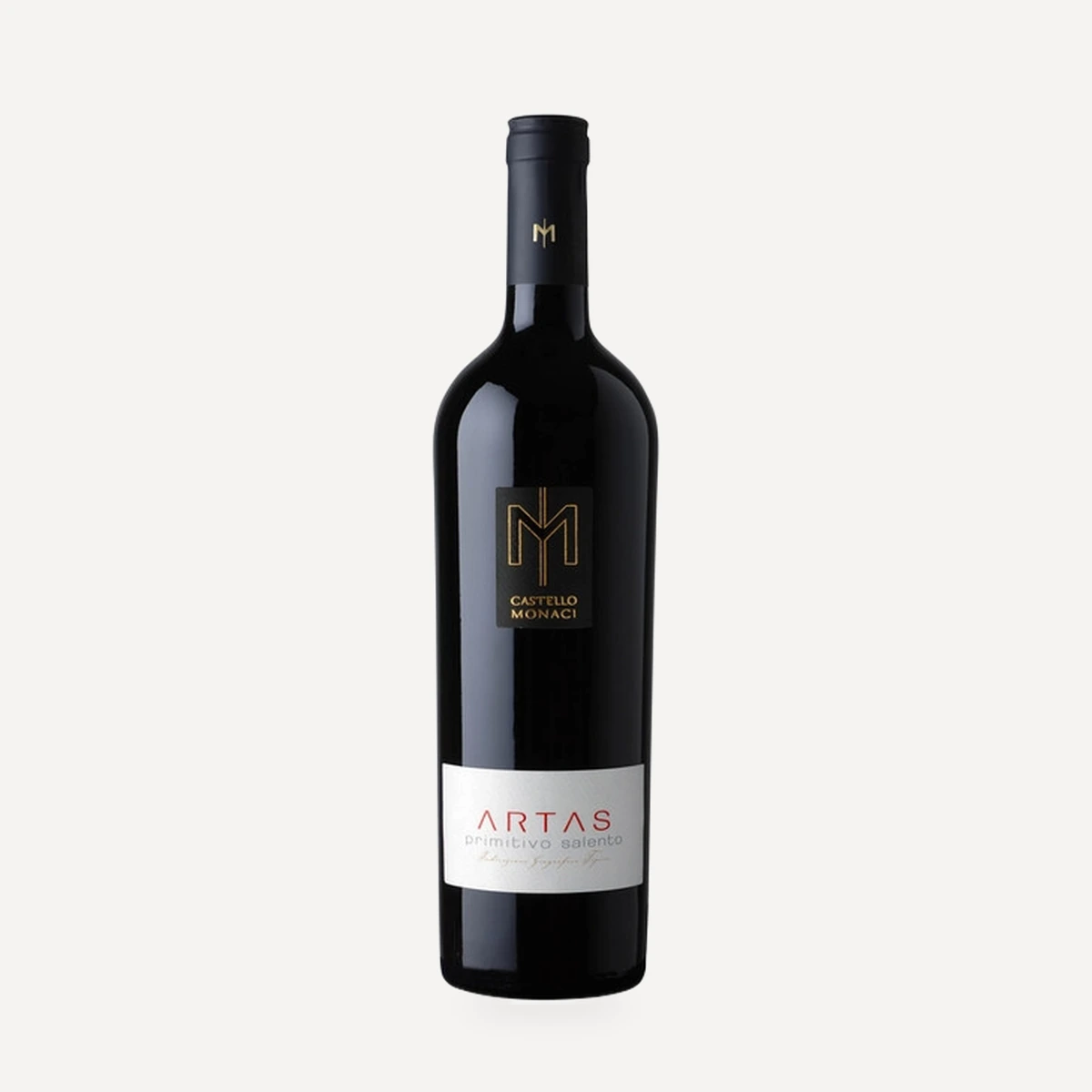
Artas Primitivo Salento IGT
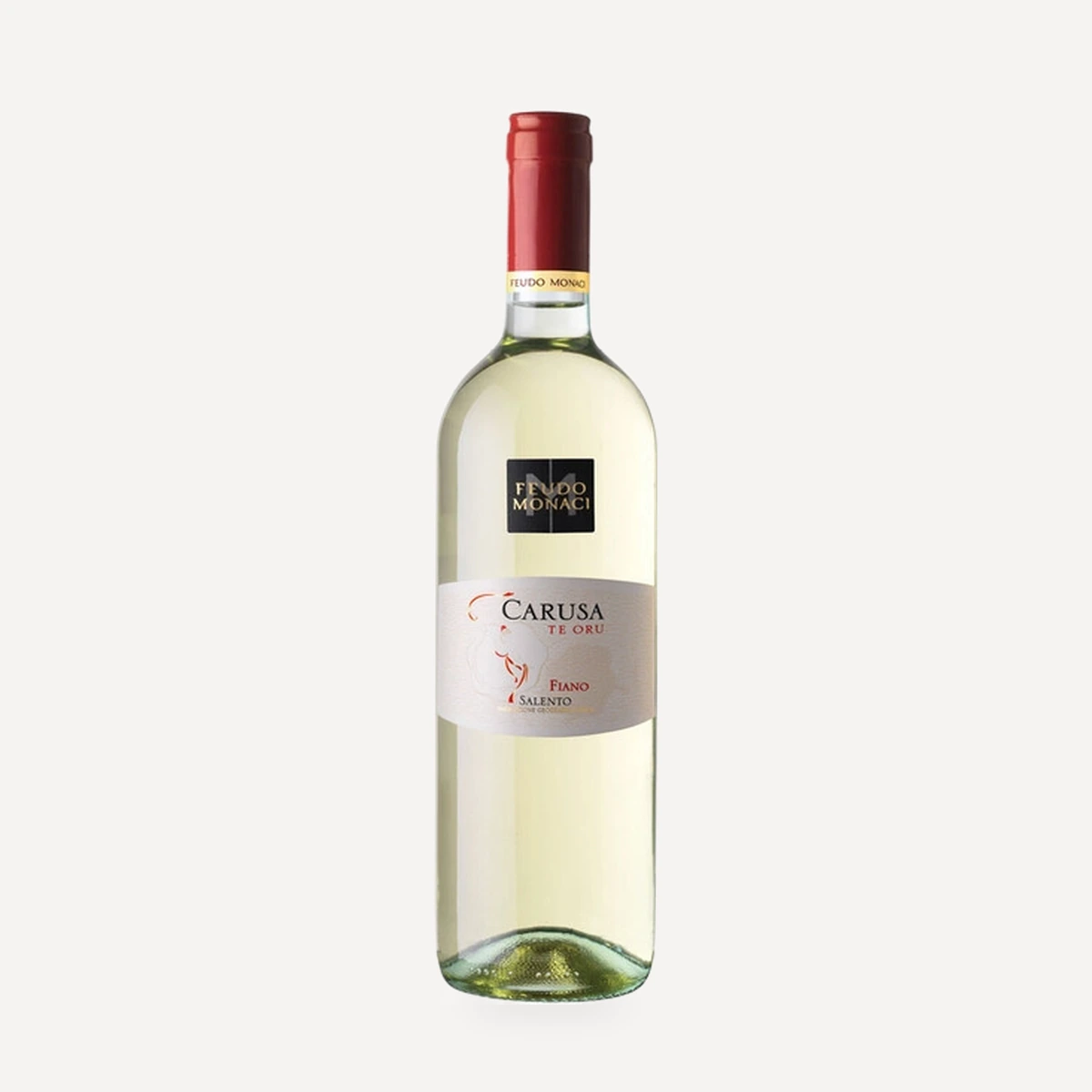
Carusa Te Oru Salento IGT
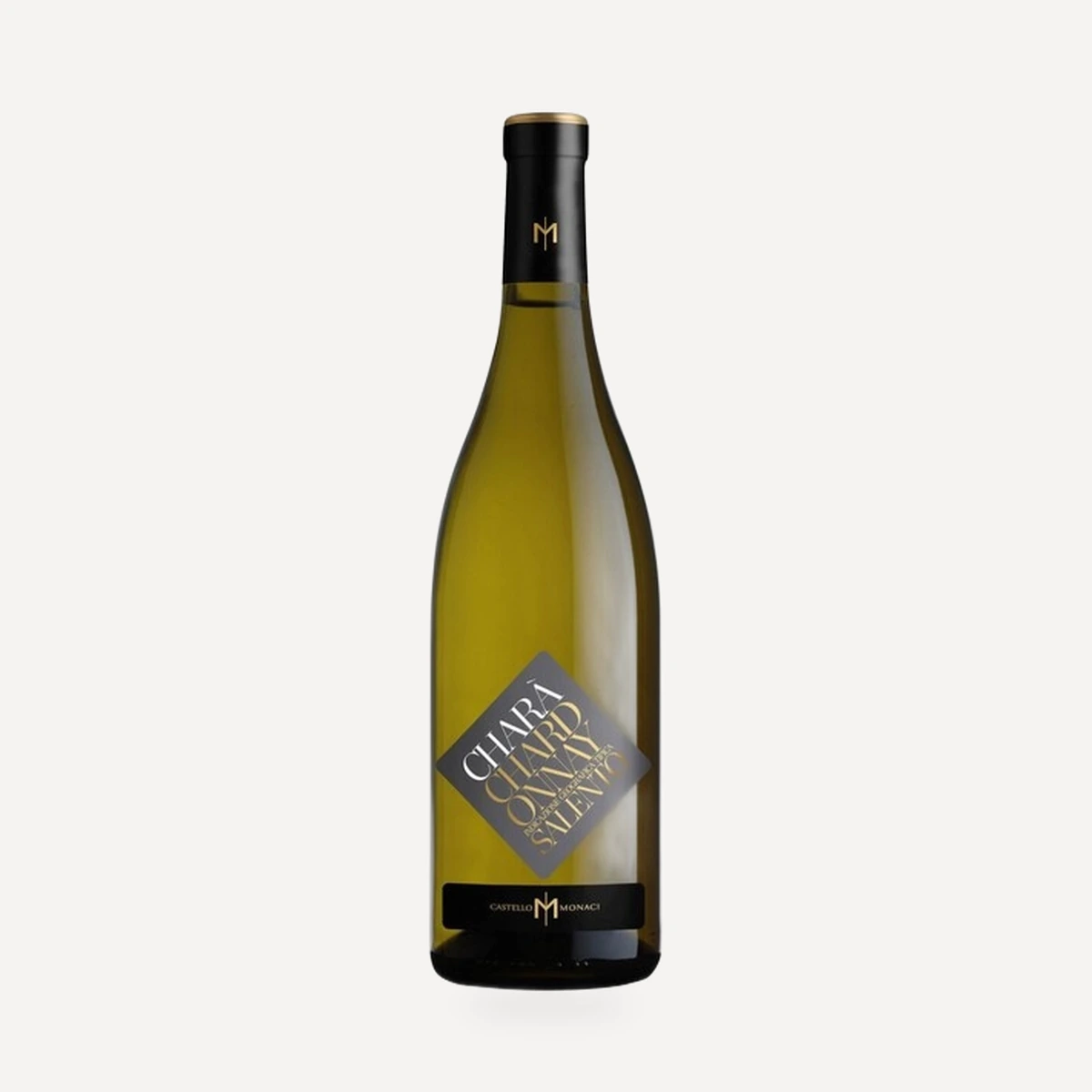
Chara Chardonnay Salento IGT
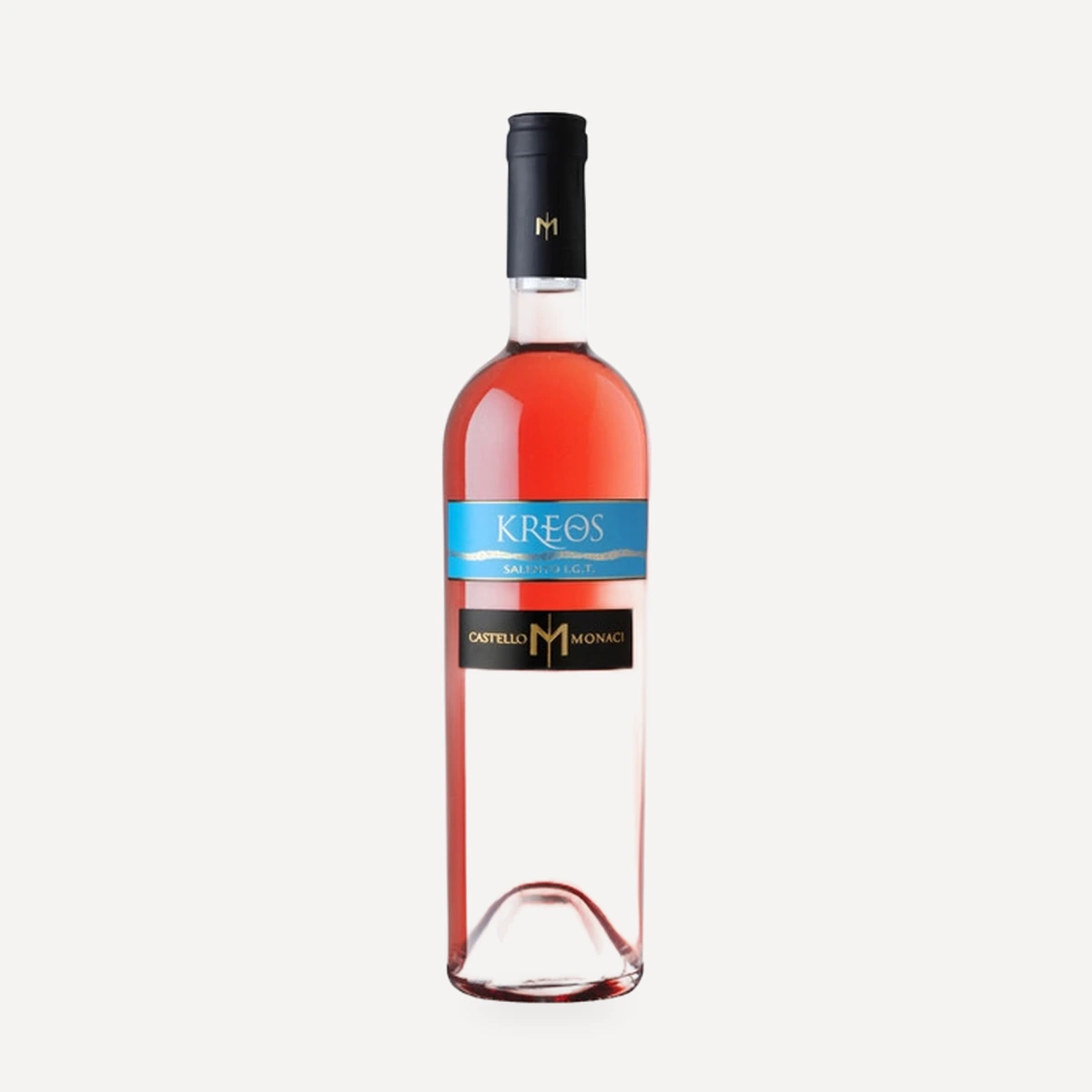
Kreos Salento IGT
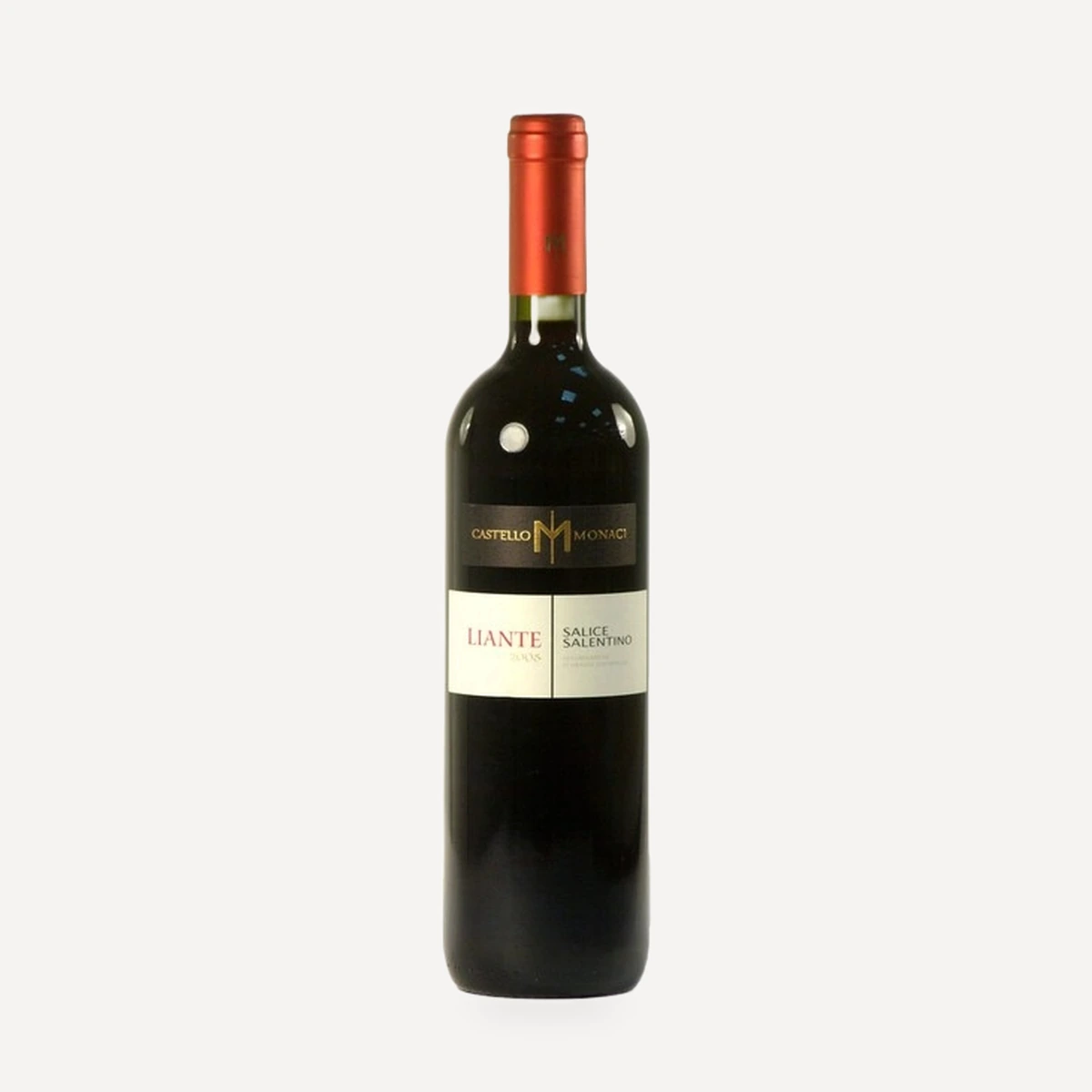
Liante Salice Salentino DOC
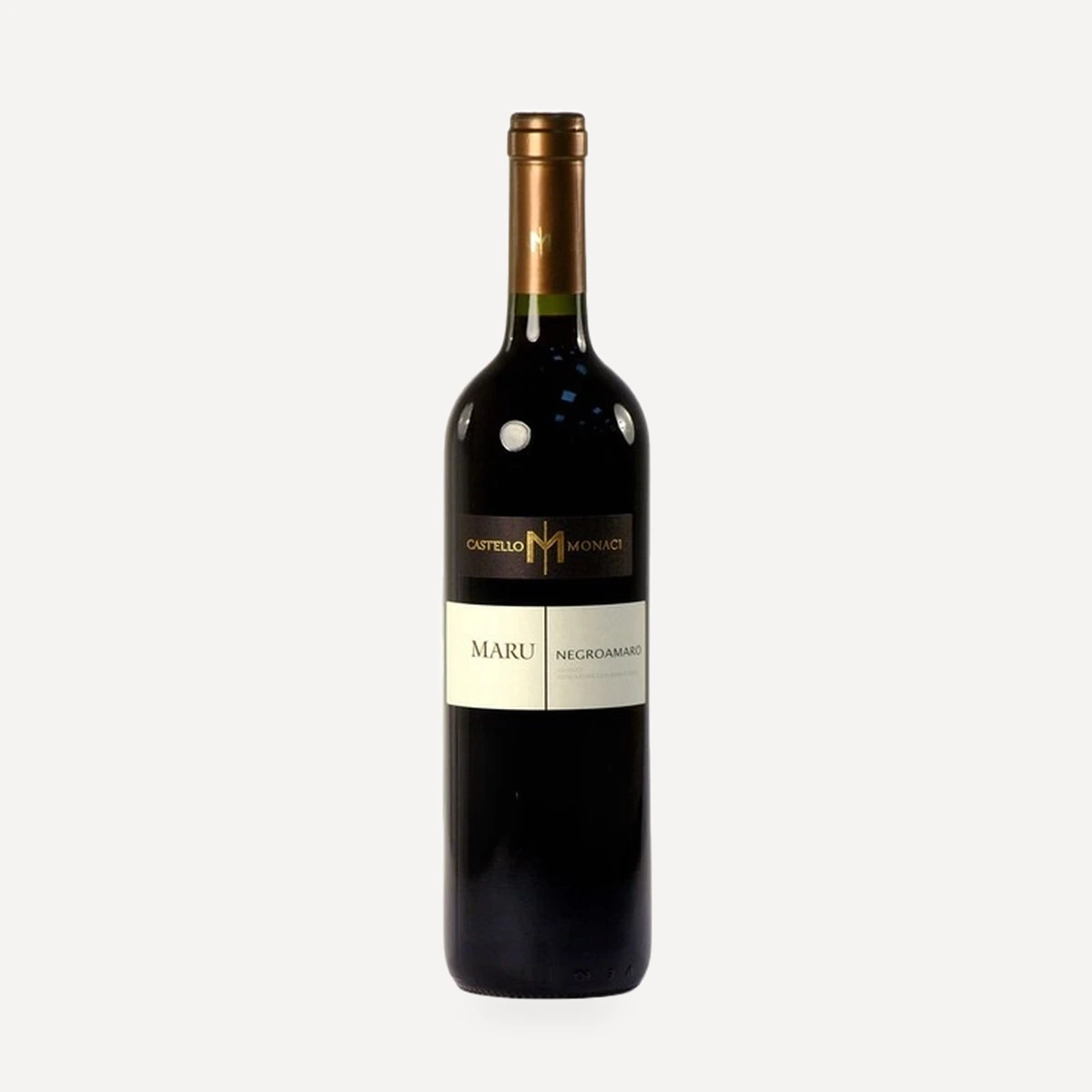
Maru Negroamaro Salento IGT
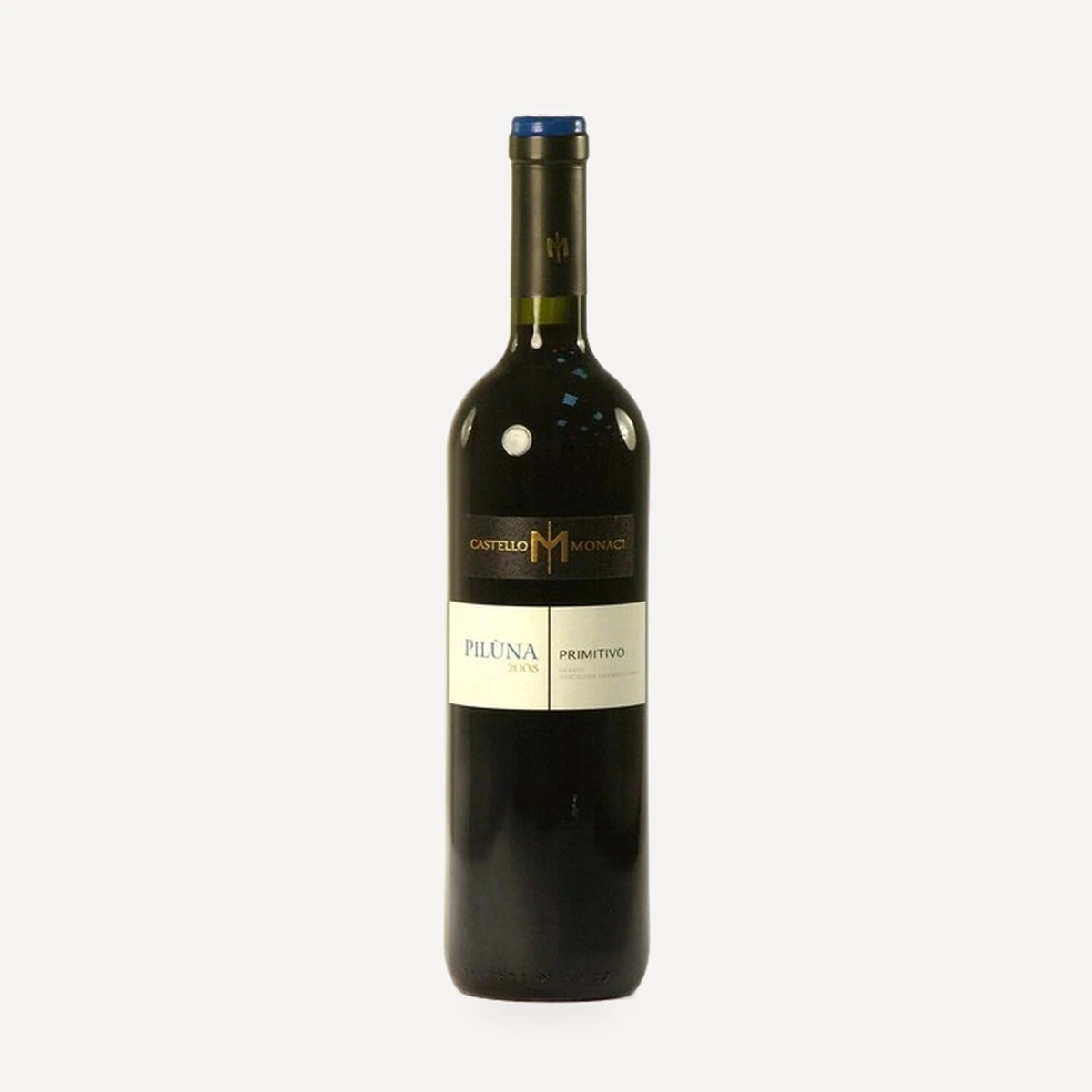
Piluna Primitivo Salento IGT
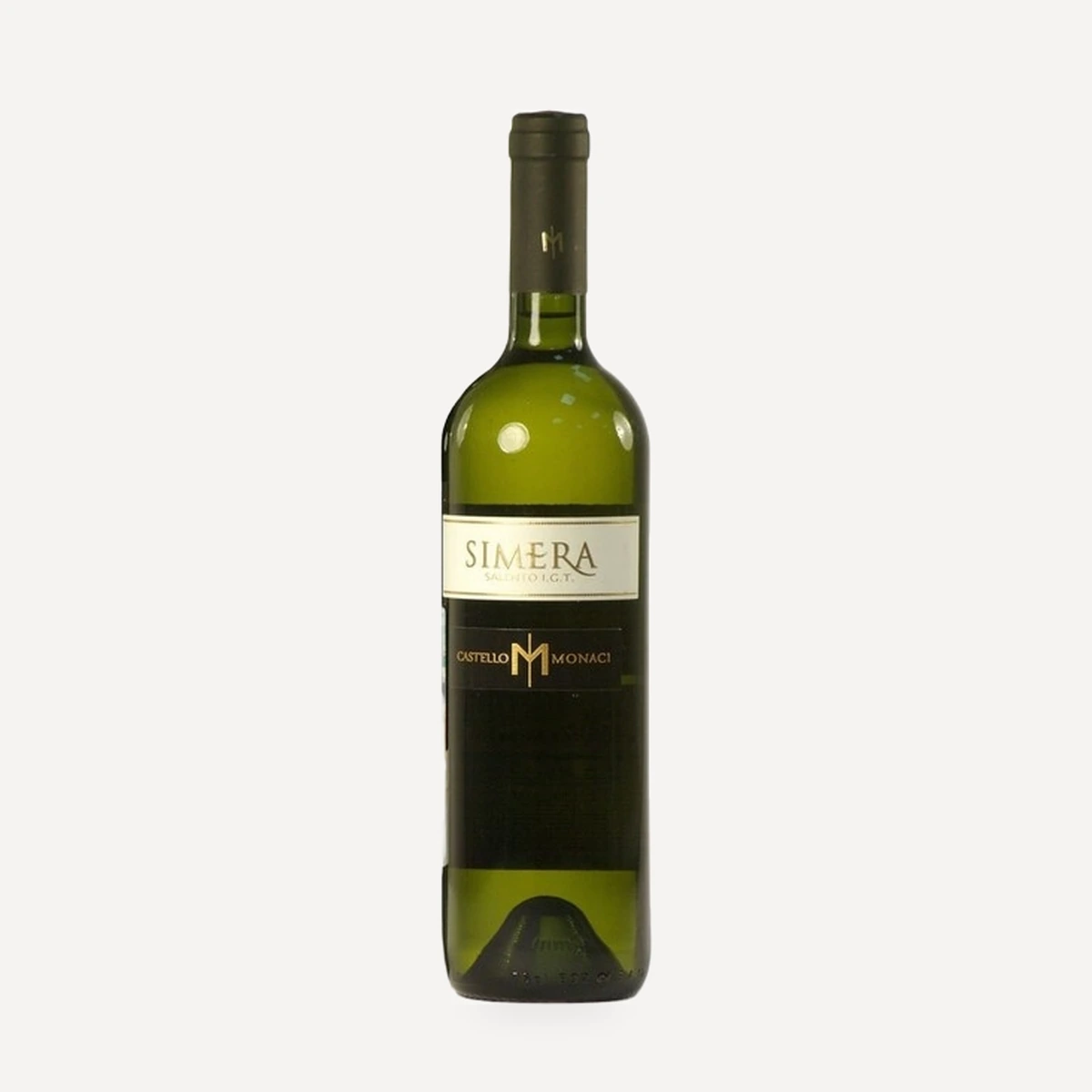
Simera Salento IGT
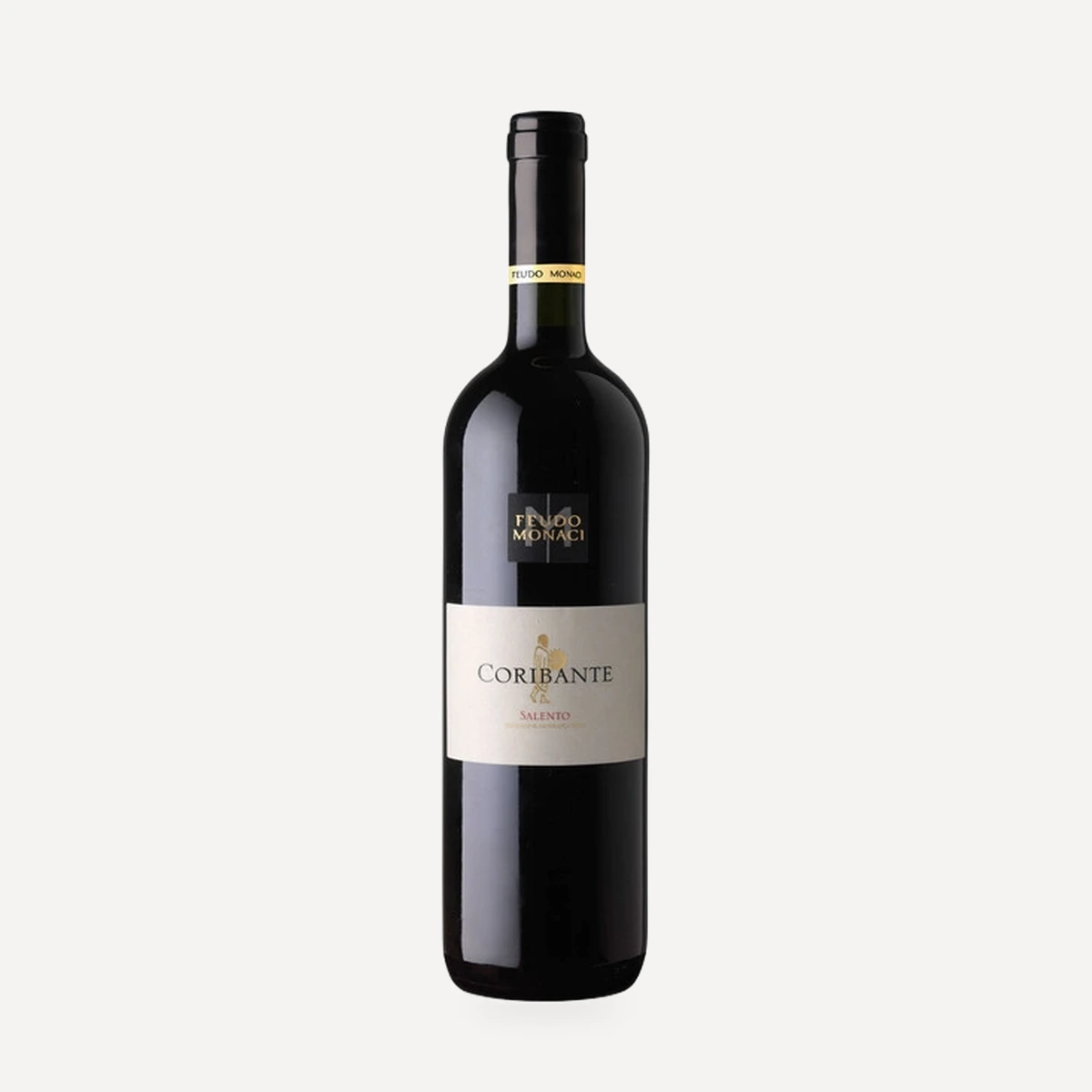
Coribante Salento IGT
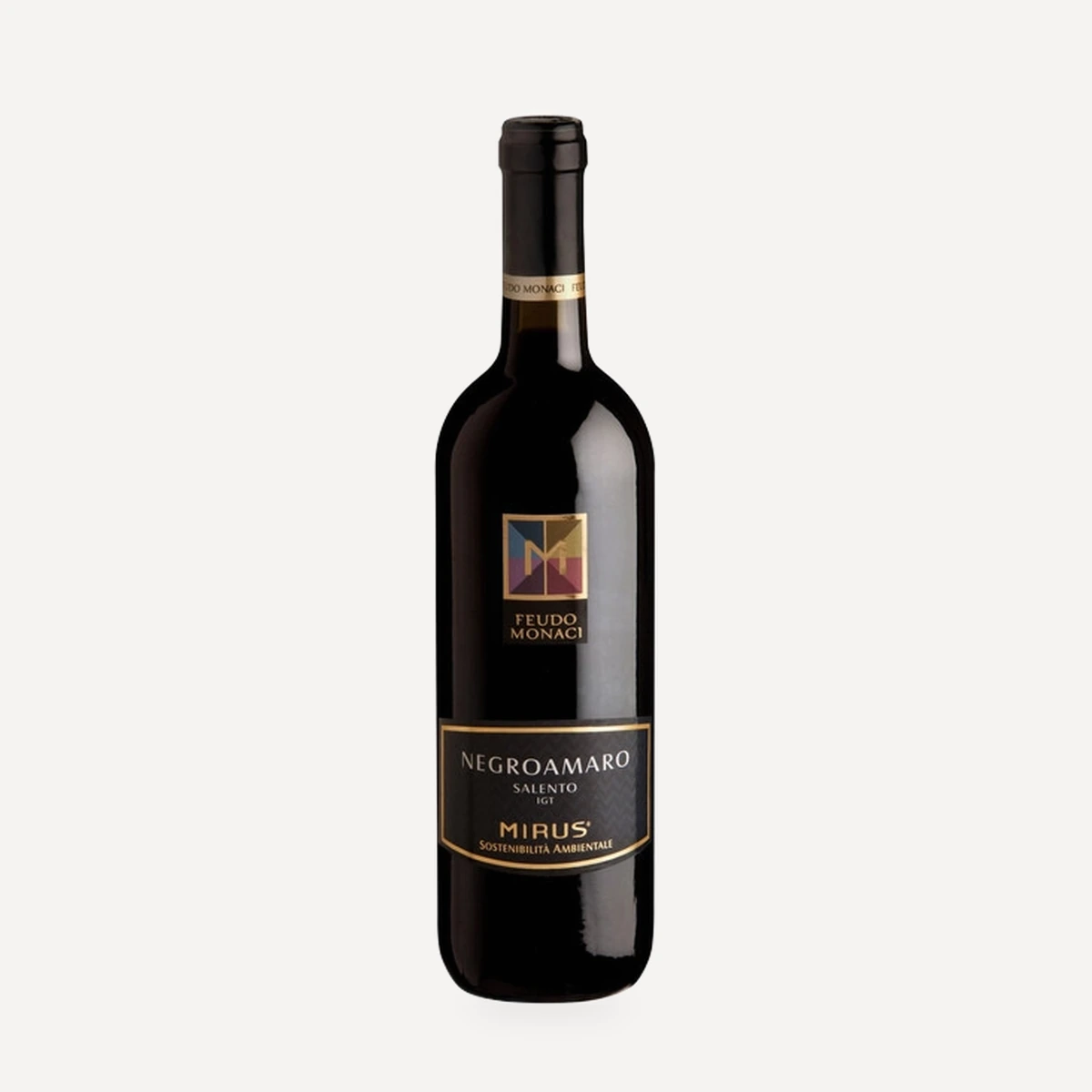
Mirus Negroamaro Salento IGT
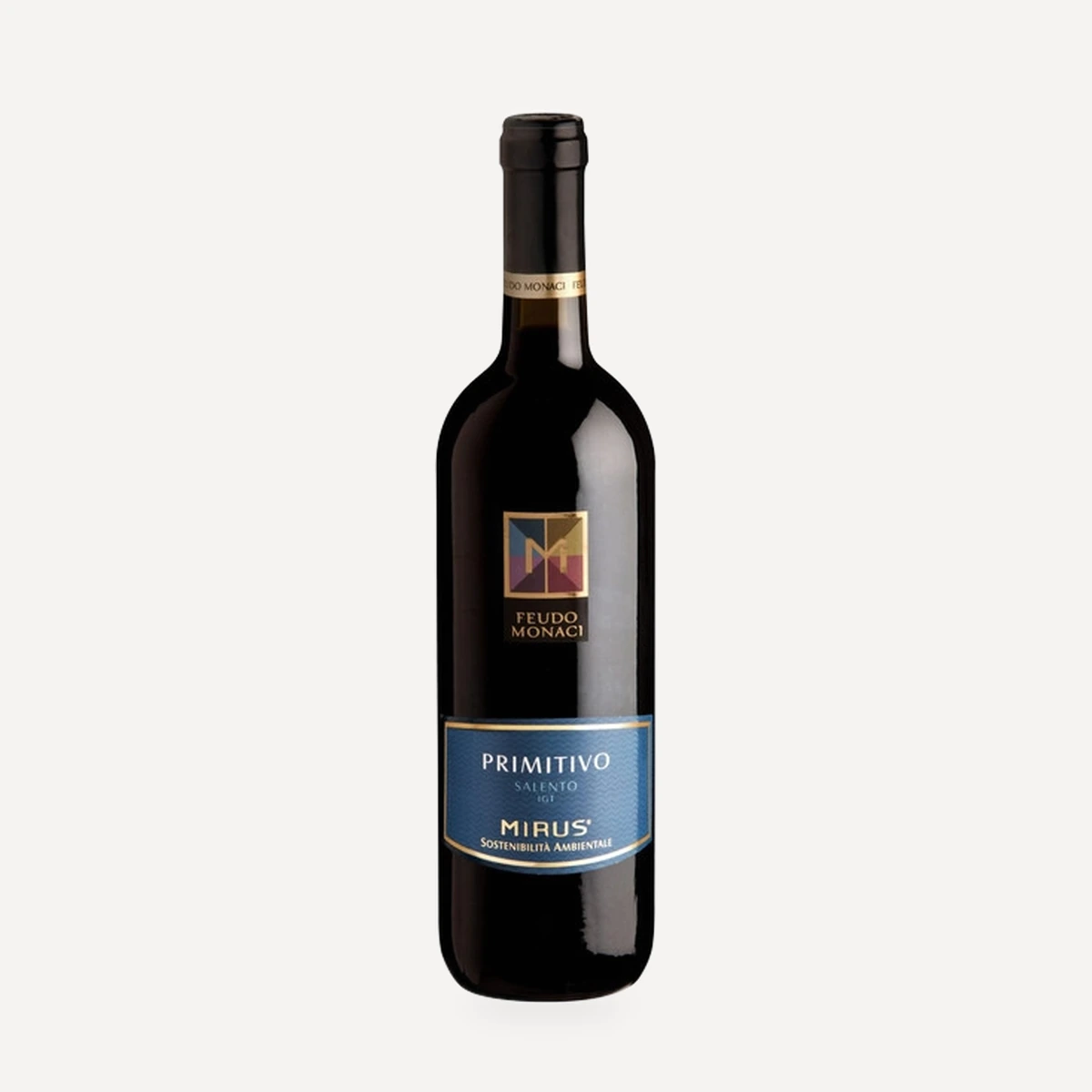
Mirus Primitivo Salento IGT
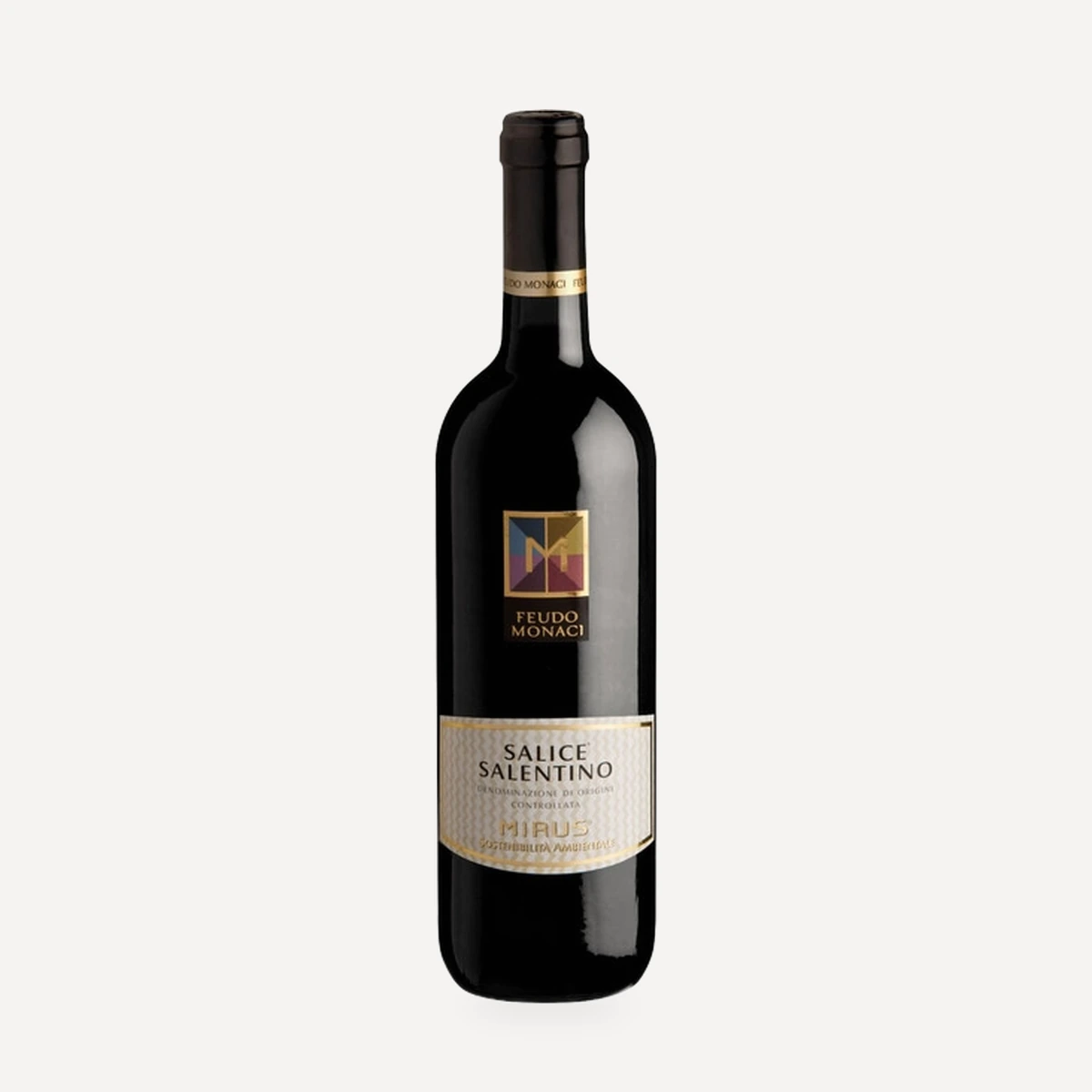
Mirus Salice Salentino DOC
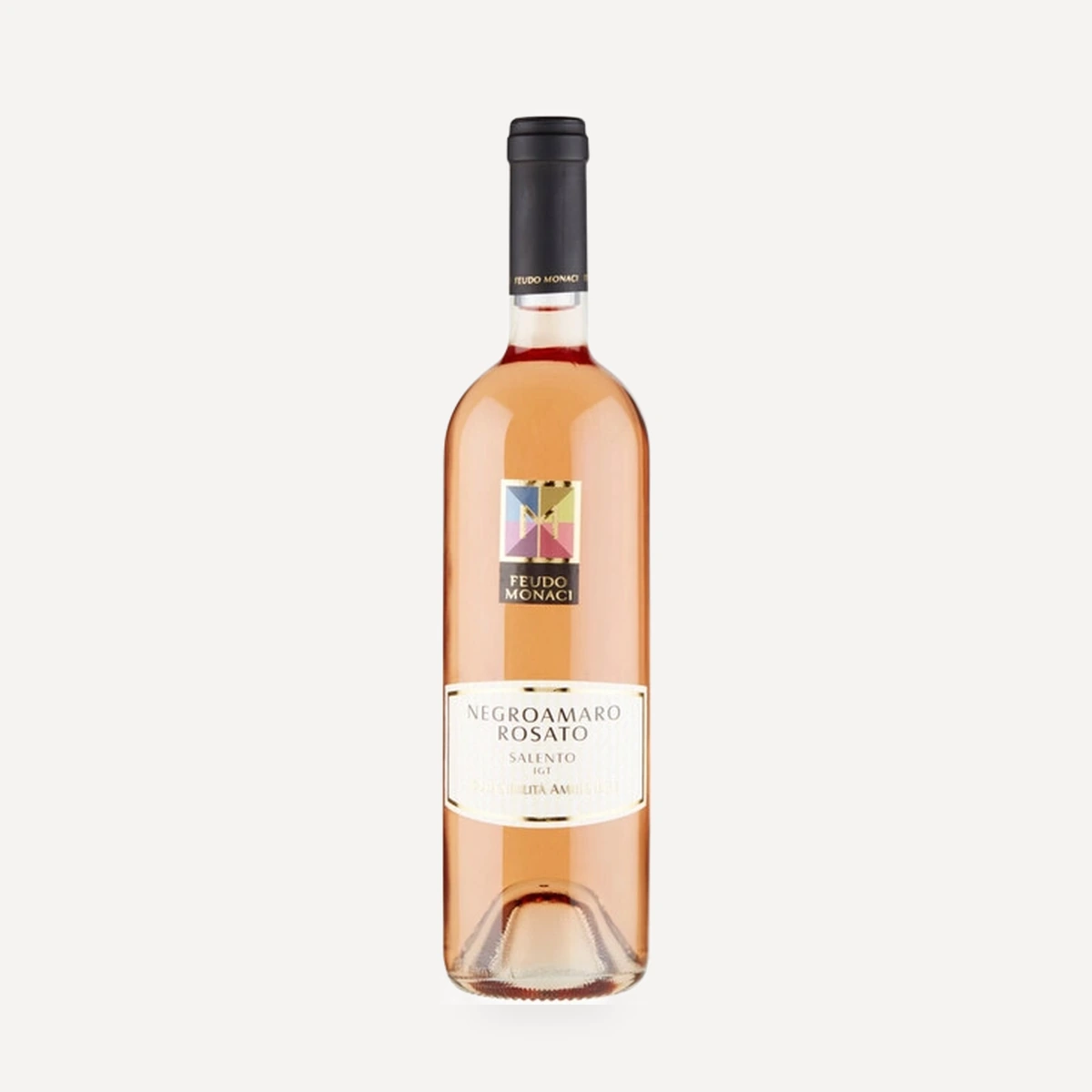
Negroamaro Rosato Salento IGT
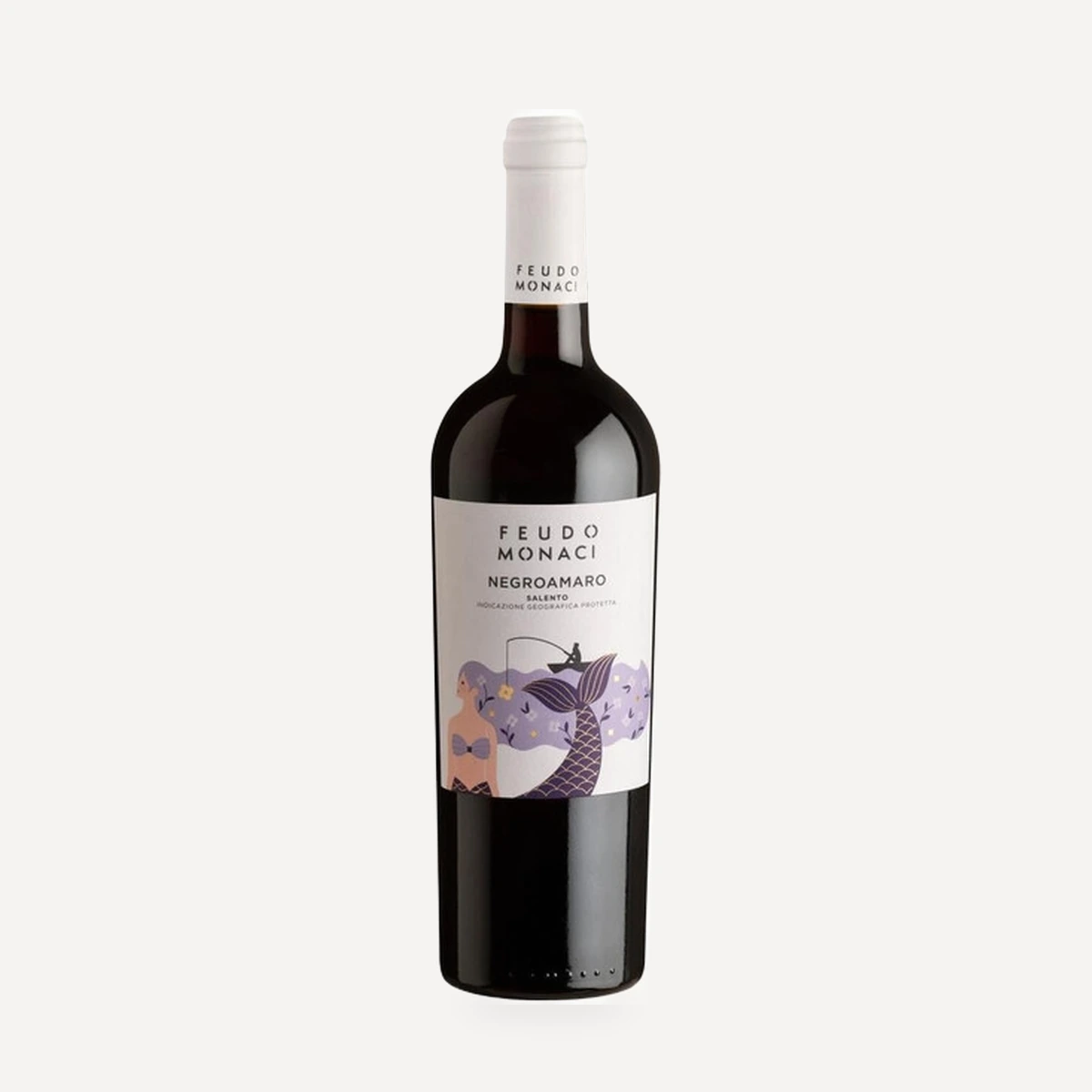
Negroamaro Salento IGT
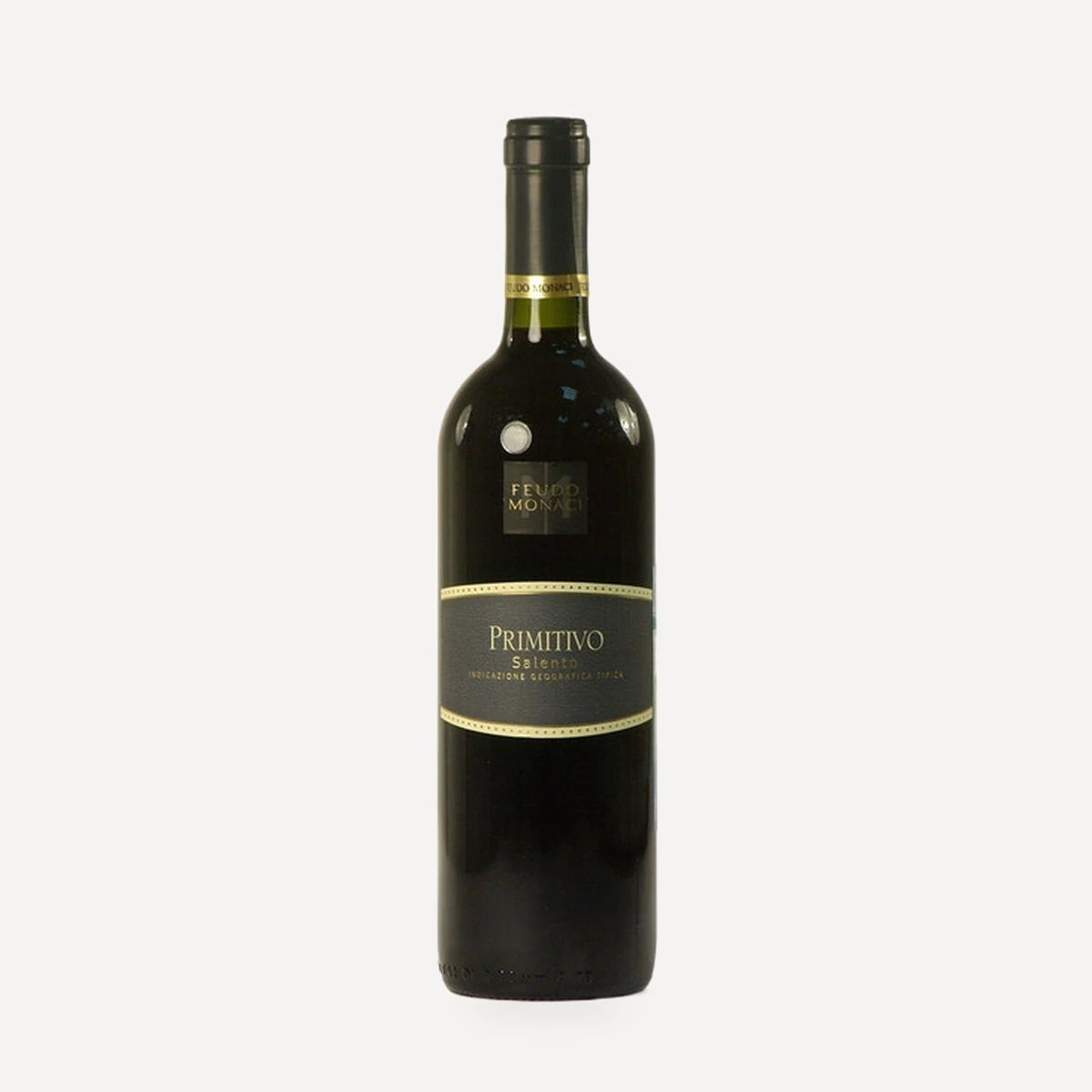
Primitivo Salento IGT
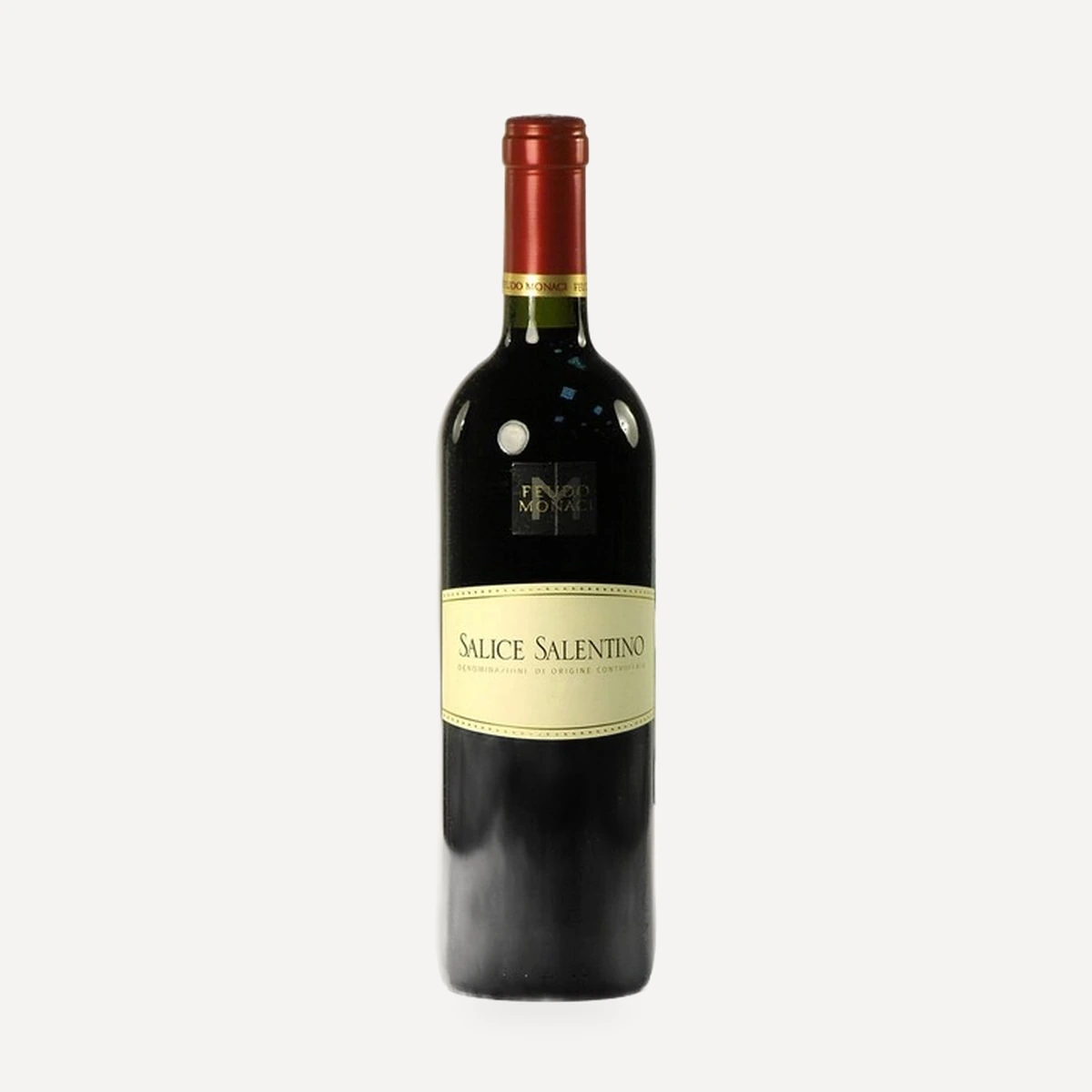
Salice Salentino DOC